
Joined April 2023
- Tweets 14,915
- Following 416
- Followers 319
- Likes 31,239
1,176 Photos and videos











QuestionEverything retweeted

Jun 10
Wow, you know ICE was exposed for lying about this shit and misrepresenting the information...
Mount St. Helens & The ICR Radiometric Dating Controversy
1. The Event and the Claim
Following the 1980 eruption of Mount St. Helens, a new lava dome formed in 1986. Because the rock cooled from lava just six years prior, its true "age" of solidification was an established historical fact.
In 1992, Dr. Steven Austin from the Institute for Creation Research (ICR) collected a sample of this 10-year-old dacite rock. He sent it to Geochron Laboratories to be dated using the Potassium-Argon (K-Ar) radiometric dating method.
The lab results returned ages ranging from 340,000 to 2.8 million years old. Austin and the ICR used this to claim that radiometric dating is fundamentally flawed and that geologists cannot be trusted when they claim the Earth is billions of years old.
2. The Scientific Debunking
Geologists quickly identified three fundamental methodological flaws in Austin's experiment:
A. The Methodological Limit (Wrong Tool for the Job)
Potassium-Argon dating is designed for rocks millions or billions of years old. The half-life of Potassium-40 is 1.25 billion years. A 10-year-old rock contains so little Argon-40 that it falls below the minimum detection limits of the equipment. Using K-Ar dating on a 10-year-old rock is like trying to weigh a single penny on a truck scale designed for semi-trucks—you will get an erratic and inaccurate reading simply because you used the wrong instrument.
B. Excess Argon
The K-Ar method assumes 100% of the argon gas escapes when magma erupts. However, when lava cools very rapidly on the surface, some of the argon dissolved in the magma under high pressure gets trapped inside the rapidly forming rock before it can escape. This "excess argon" artificially inflates the age of the rock. Geologists are well aware of this and do not use standard K-Ar dating on incredibly young, rapidly cooled rocks.
C. Dating Older Crystals (Phenocrysts)
Magma is not perfectly melted. As it sits underground for centuries, high-melting-point minerals (like pyroxene) crystallize while the rest remains liquid. These older, solid crystals are called phenocrysts. The 1986 eruption carried these ancient crystals to the surface encased in new lava. Austin specifically concentrated and dated these older crystals. The 2.8-million-year date wasn't a failure of the method; it accurately reflected that he was dating ancient crystals formed long before the 1986 eruption.
3. Conclusion and Modern Methods
Austin's experiment did not disprove radiometric dating. It merely confirmed that if you intentionally apply a dating method outside of its known limits, to a sample contaminated with older materials and trapped gas, you will get an anomalous result.
Today, modern geology relies on Argon-Argon (40Ar/39Ar) dating. This method uses step-heating to mathematically detect if "excess argon" is present, allowing geologists to separate it from the argon produced by actual radioactive decay, resulting in highly accurate dating.
And no Radiometric dating is not inaccurate. I'll provide detailed explanations if you want. I've got a lot of information from actually researching this topic. Seems you don't.
1
1
4
143


QuestionEverything retweeted
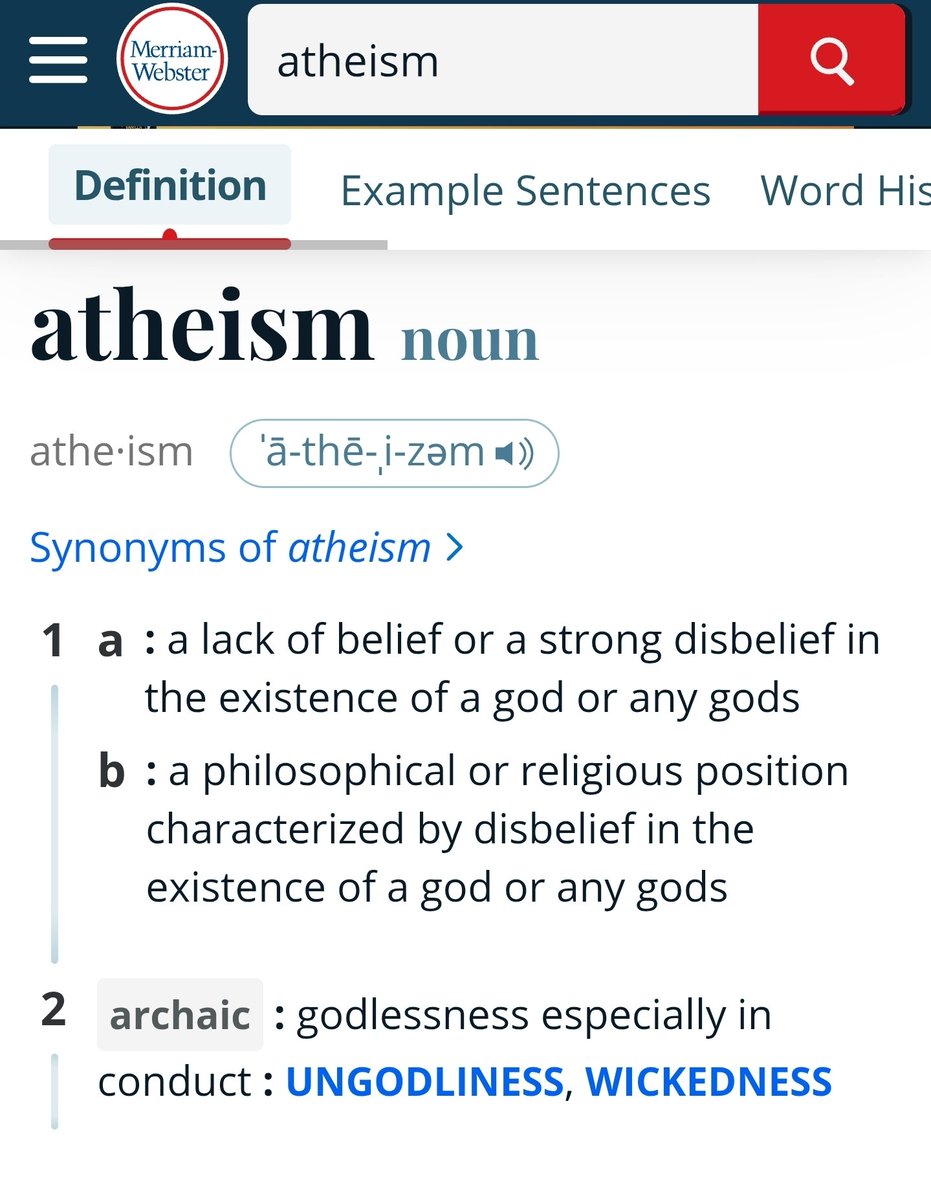
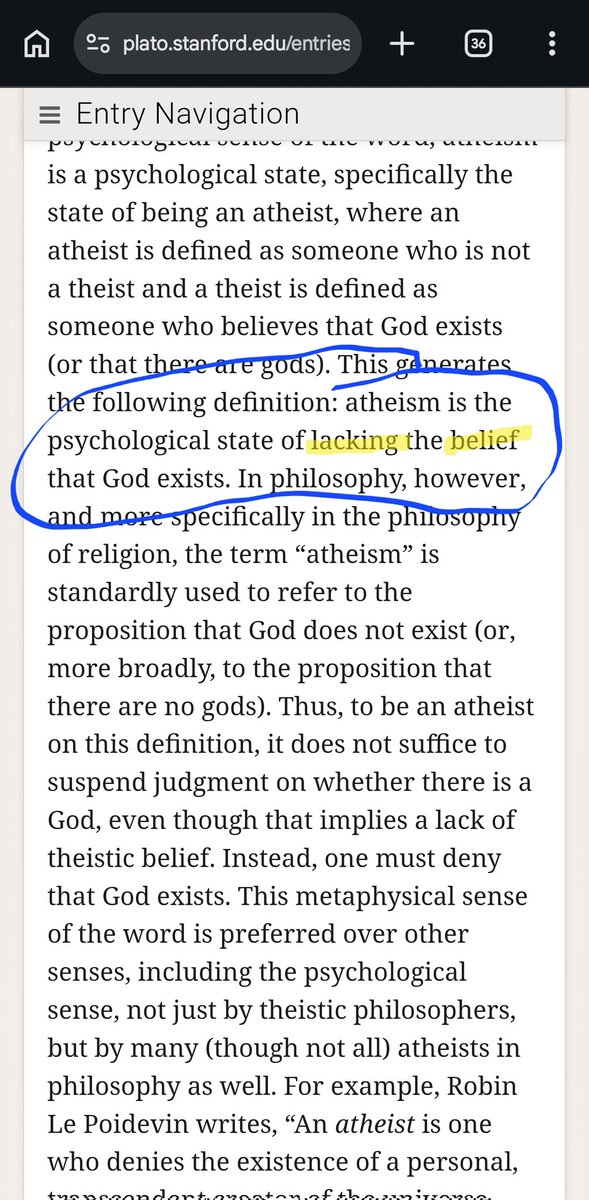
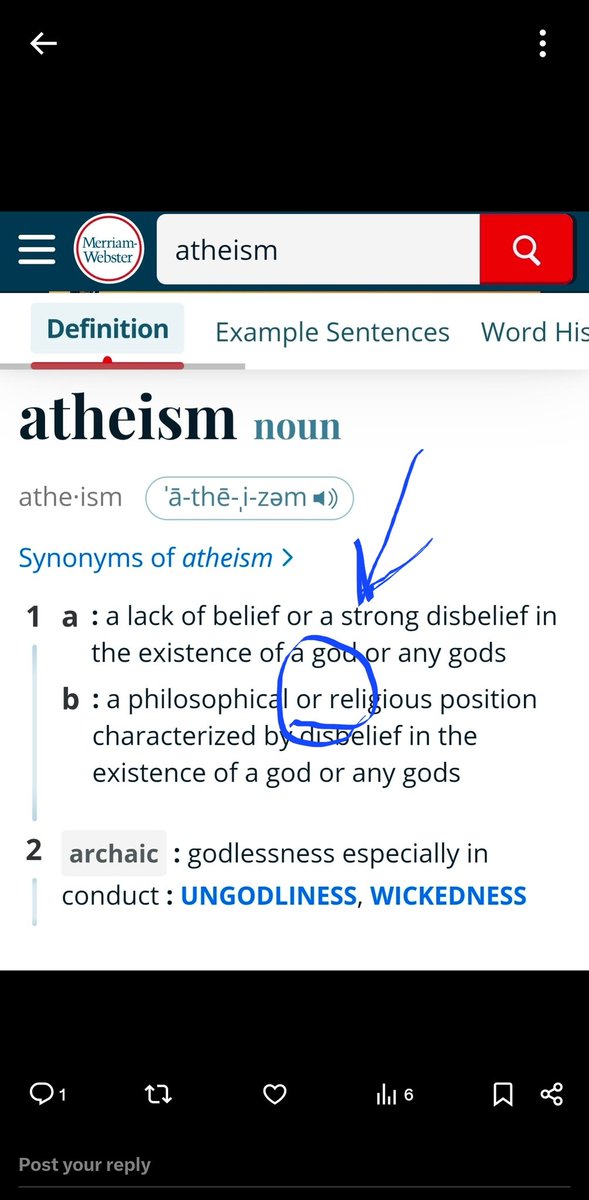
Sure. Let's define atheism first...
Atheism: non-belief in a god(s)
Or the dictionary definitiona below.
So with that in mind. As an atheist I don't believe your god claim.
That's a true statement. See how easy this is?
2
1
4
157
QuestionEverything retweeted

Jun 1
Happy #PrideMonth from Sesame Street! Join us in celebrating and uplifting the LGBTQIA members of our community. ❤️🧡💛💚💙💜

16,280
10,742
68,379
5,505,731


QuestionEverything retweeted

Jun 1
Dear Homophobes, without you,
LGBTQIA Pride would have never happened.
So enjoy Pride Month, because you've earned it.
282
973
5,883
79,153
QuestionEverything retweeted

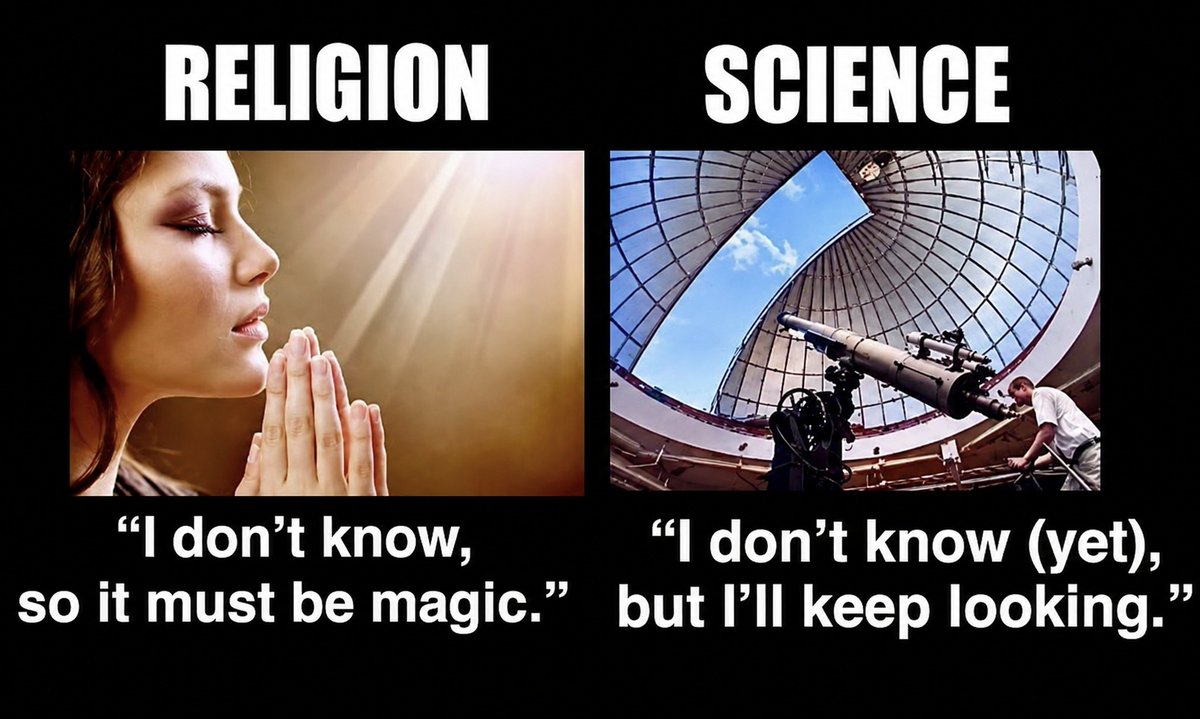
Today's random meme
31
31
208
3,201
QuestionEverything retweeted

May 27
Given the abundance of information and courses available on the matter, this level of ignorance is inexcusable. Kindly take some time to learn the difference between weather and climate. Weather is what you see when you go outside. Climate refers to trends over time.
1
2
12
165
QuestionEverything retweeted

Christians say atheists say nothing created the universe. Stop lying about atheists, Christians.
May 25

You say nothing created the universe
Guess what doesn't exist NOTHING
Atheists do better please
9
1
16
737
QuestionEverything retweeted

May 25
If Jesus spent more time confronting religious hypocrisy than criticizing unbelievers, why do so many Christians today seem to do the opposite?
Curious to hear your thoughts. Agree or disagree?
59
7
39
4,000
QuestionEverything retweeted

May 22
A scientific consensus isn't a group of scientists agreeing.
It's repeated results from independent studies all pointing the same way.
We don't agree vaccines saves lives.
We know - because study after study shows it.
Consensus = consistent evidence.
Not collective opinion.
204
1,138
3,951
49,097
QuestionEverything retweeted

May 22
I’m trying to study something.
If you’re an atheist or agnostic, kindly retweet this tweet.
And to be clear: atheists and agnostics only! Not anti-theists, not “I’m spiritual but not religious.”
Thank you.
5
14
9
542
QuestionEverything retweeted

May 21
Common ancestry was proven when we discovered humans and chimps share identically damaged genes caused by ancient viruses that infected a common ancestor. We share even older damaged genes with older primate cousins - nested in a hierarchy showing the actual order of divergence.

2
1
51
QuestionEverything retweeted

You have it backwards, our conscience evolved via natural selection, fooling Christians into thinking it’s god given.
1
2
4
237
QuestionEverything retweeted
AI for research is doing no more than providing keyword searches, summaries & links.
Christians don’t like it bc it quickly dispels all their lies.
3
1
8
205
QuestionEverything retweeted

If evolution were falsified today, it wouldn't just be a "theory" that died—it would mean our entire understanding of chemistry, physics, and the very nature of objective reality was fundamentally compromised.
4
3
17
423
QuestionEverything retweeted
If evolution were a fabricated narrative, the conspiracy would need to involve virtually every university, research museum, and national academy of science on Earth. Moreover is supported by independent evidence from fields that have nothing to do with each other on a daily basis
5
2
14
288
QuestionEverything retweeted

Dear MDs in the U.S. - Canada's the place to be. We're not perfect, but have rule of law, less chance being shot or arbitarily face arrest, sane government, friends and respect around the world, a belief in real science and a health system that won't bankrupt your patient.

481
274
903
18,741