
16h
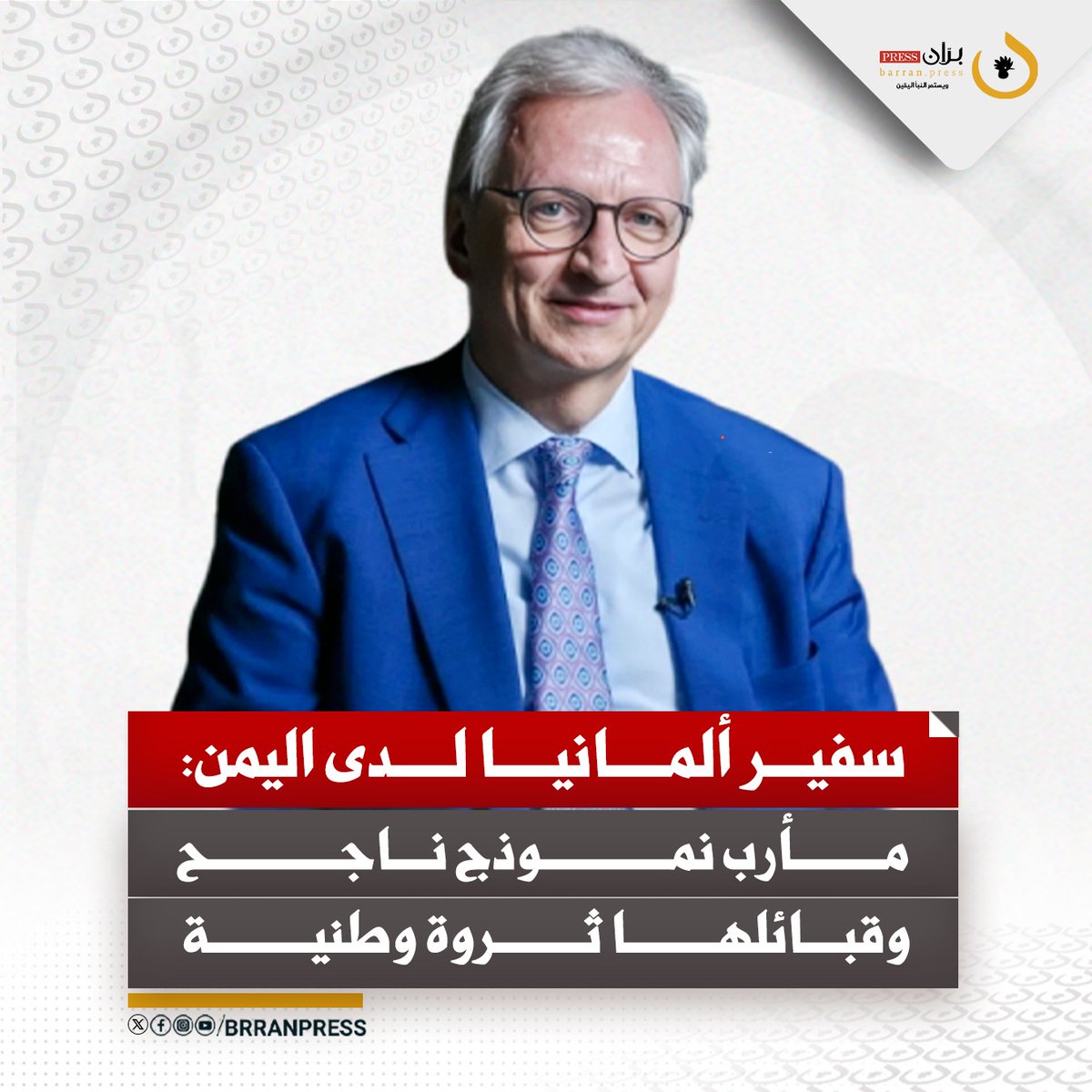
وصف السفير الألماني لدى اليمن، "توماس شنايدر"، الثلاثاء 16 يونيو/ حزيران، تجربة محافظة مأرب (شمال شرقي اليمن) في إدارة الملف الإنساني والتنموي بـ"النموذج الناجح" الذي يمكن الاقتداء به من قبل جميع الأطراف والمنظمات الدولية العاملة في اليمن.
جاء ذلك في تصريحات مع صحيفة "الشرق الأوسط"، أدلى بها قبيل مغادرته مدينة مأرب في ختام زيارة هي الأولى له للمحافظة، شملت لقاءات مع قيادة السلطة المحلية، ومشايخ القبائل، وزيارات ميدانية لمخيمات النازحين ومشاريع الاستجابة الإنسانية.
وقال السفير الألماني، إن زيارته جاءت للتعبير عن تضامن بلاده مع أبناء مأرب والشعب اليمني عموماً في ظل الظروف الصعبة جراء الحرب، مؤكداً حرص الوفد على الاطلاع المباشر على احتياجات السكان وتقييم أثر البرامج الإنسانية المدعومة من ألمانيا وشركائها الدوليين.
وأشار إلى أنه وجد في المحافظة التي استقبلت ملايين النازحين صورة مغايرة تماماً لما توحي به عناوين الصراع والأزمات، لافتاً إلى أن التحديات القاسية الماثلة على الأرض تختلط بروح عالية من التفاؤل والإصرار على الحياة.
واعتبر الدبلوماسي الألماني القبائل اليمنية "ثروة وطنية حقيقية" وعنصراً مهماً يمكن البناء عليه لتعزيز الاستقرار، مؤكداً أنها ستؤدي دوراً محورياً في أي مسار سياسي جاد يقود إلى تحقيق السلام في البلاد.
وقال إن الجلوس مع مشايخ قبائل مأرب كان "تجربة مهمة للغاية"، مشيراً إلى أنه لمس لديهم وعياً سياسياً واضحاً بالتحديات التي تواجه اليمن، ورؤى وأفكاراً هامة بشأن مستقبل البلاد، متجاوزين الدور الاجتماعي التقليدي إلى الإسهام في الحفاظ على تماسك المجتمع.
وفي الملف الإنساني، وصف "شنايدر" الطريقة التي تعاملت بها مأرب مع موجات النزوح المتتالية بـ"إحدى أبرز قصص النجاح اليمنية خلال سنوات الصراع"، لافتاً إلى أن استيعاب المحافظة لأعداد هائلة من النازحين واللاجئين من دول أخرى يعكس كرم أهلها وروحهم الإنسانية العالية.
وأوضح الدبلوماسي الألماني، أن لقاءاته المستمرة مع النازحين والمسؤولين المحليين والأمميين عززت قناعته بأن التنسيق المستمر هو العامل الأهم لمواجهة التحديات الإنسانية المعقدة.
وعبّر السفير الألماني عن إعجابه بالروح المتفائلة ونظرة الأهالي الإيجابية للمستقبل رغم ظروف الحرب والضغوط الاقتصادية، مؤكداً أنه سينقل هذه الصورة وحفاوة الاستقبال إلى عائلته، وإلى وزارة الخارجية في برلين، والشركاء في الاتحاد الأوروبي، كون ما شاهده في مأرب يقدم درساً مهماً في القدرة على الصمود وتجاوز الأزمات.
وفي ختام مقابلته، لخص السفير الألماني انطباعه عن مأرب في ثلاث كلمات قائلاً إنها "الابتسامة والقهوة والترحيب"، مشيراً إلى أن هذه الملامح اختصرت هوية المدينة التي تقف على تخوم الحرب لكنها تصر على استقبال ضيوفها بحفاوة وإيمان بمستقبل أفضل لليمن.
#بران_برس #اليمن #مأرب #mareb #yemen
2
8
784
Jun 16
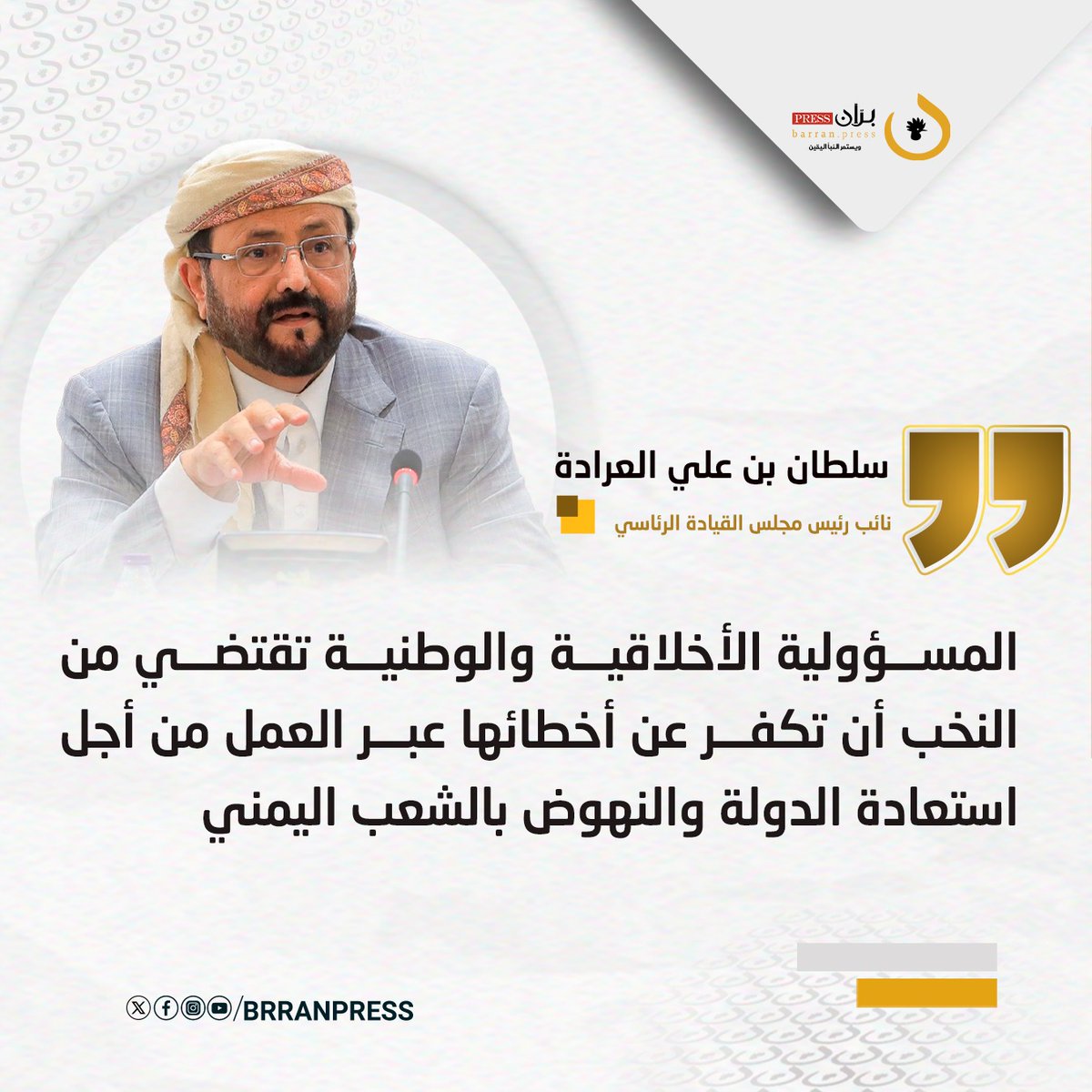
عضو مجلس القيادة الرئاسي "سلطان العرادة":
🔳 السؤال الحقيقي الذي يجب أن تطرحه النخب اليمنية اليوم، لا يتعلق بمصير النخب بقدر ما يتعلق بقدرتها على قيادة الشعب نحو الخروج من محنته واستعادة دولته ومؤسساته.
🔳 على النخبة اليمنية أن تتوقف أمام ما حدث خلال السنوات الماضية، وأن تراجع نفسها بصدق، لأن جزءاً كبيراً مما وصل إليه اليمن كان نتيجة المناكفات والصراعات والخلافات بين النخب المختلفة.
🔳 المسؤولية الأخلاقية والوطنية تقتضي من النخب أن تكفر عن أخطائها عبر العمل من أجل استعادة الدولة والنهوض بالشعب اليمني.
#بران_برس #اليمن #yemen #مأرب #mareb
#حارس_الجمهوريه_الاخير
Jun 15

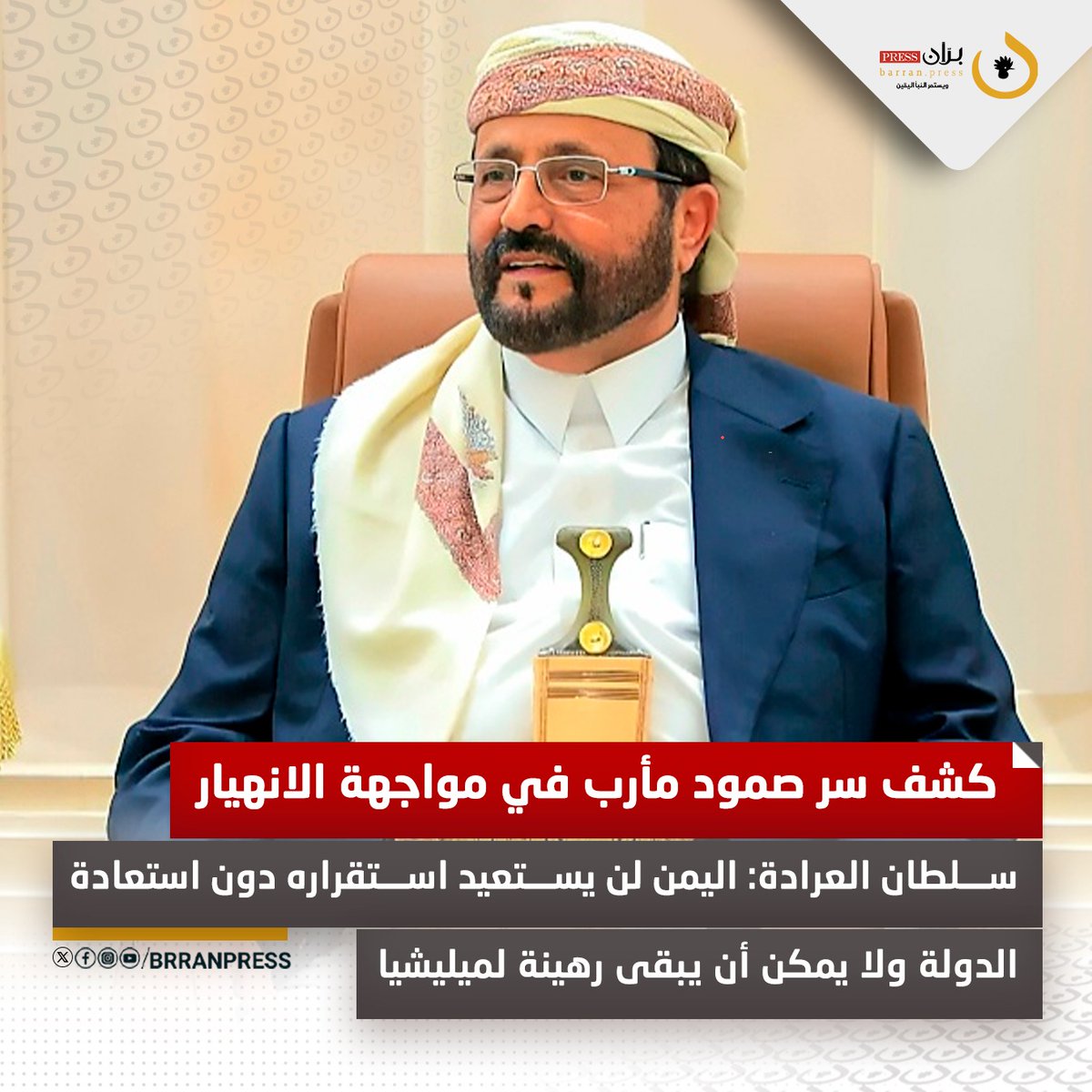
سلطان العرادة: اليمن لن يستعيد استقراره دون استعادة الدولة ولا يمكن أن يبقى رهينة لميليشيا
بران برس |
قال عضو مجلس القيادة الرئاسي محافظ مأرب اللواء "سلطان العرادة"، إن اليمن لا يمكن أن يستعيد استقراره الحقيقي ما لم تستعد الدولة سلطتها ومؤسساتها، مؤكداً أن الدولة الشرعية وتحالفاتها الإقليمية والدولية ستواصل العمل حتى تحقيق هذا الهدف.
وأكد عضو مجلس القيادة في حوار مع "الشرق الأوسط"، أن الشعب اليمني، بما يملكه من تاريخ وحضارة ومكانة لا يمكن أن يظل مرهوناً لميليشيا أياً كان نوعها أو شكلها، مشدداً على أن اليمنيين سيواصلون السعي، بدعم أشقائهم وأصدقائهم وشركائهم في العالم، لاستعادة دولتهم وبناء مؤسساتها من جديد.
وأضاف أن انخراط جماعة الحوثي المصنفة دولياً ضمن قوائم الإرهاب، في الصراع الإقليمي لا يراعي مصالح الشعب اليمني أو مصالح الإقليم، أو الحفاظ على مؤسسات الدولة باعتبارها أولوية.
وتساءل العرادة: "ما مصلحة الحوثي في التدخل بقضايا لا علاقة مباشرة لليمن بها؟" معبّراً أن هذه السياسات جرّت على اليمن كثيراً من الويلات والأزمات، فضلاً عما ألحقته الجماعة بالشعب اليمني من معاناة خلال السنوات الماضية.
وفي ما يتعلق بخارطة طريق السلام مع جماعة الحوثي قال "العرادة"، إن السلام يظل خياراً مفضلاً، لكنه شدد على أن تحقيقه يتطلب وجود أطراف تؤمن به وتقبله. مضيفاً: "نتمنى السلام، لكن السؤال هو: مع من؟ المشكلة أننا لا نملك طرفاً يؤمن بالسلام أساساً؛ بل إن الطرف الآخر يرى في السلام نهاية لمشروعه".
👈المزيد عبر الرابط:barran.press/news/15566
1
3
311
Jun 13
كتابات برّان |
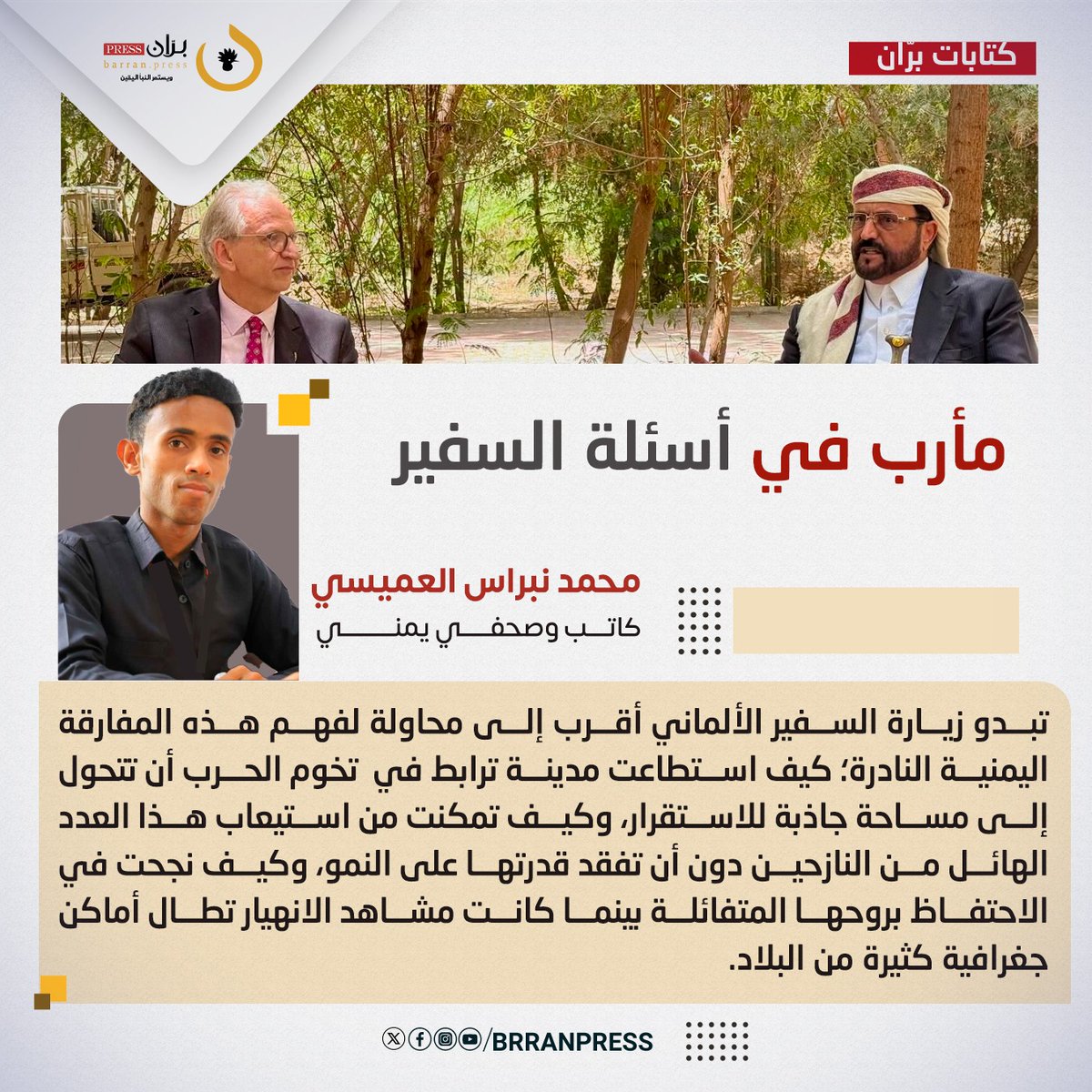
مأرب في أسئلة السفير
الكاتب | محمد نبراس العميسي
لعل السؤال الذي يدور في ذهن السفير الآن: من أين تستمد مأرب كل هذا الصمود، كل هذا التجاسر والثبات، كيف لمدينة يلتف حولها حصار الحوثيين الخانق وتتقدم أشواطاً طويلة في إيجاد نموذج للدولة، وأي عزيمة في قلوب سكانها، حتى إنهم يقاتلون ويحلمون باستعادة دولتهم ويتطلعون إليها من وسط خيمة مهترئة في أحد مخيمات النزوح؟
أفلاطون وهو يكتب عن المدينة الفاضلة تطرق إلى شيء بالغ في العمق، وهو أنه أراد من هذه المدينة أن تتحدث عن ذاتها، دون أن يتحدث عنها أي فيلسوف، إنما تفصح عن ذاتها ملء الأسماع حتى ينجذب إليها التائقون إلى الحكمة، أراد أن يجعل سر قوتها نابعاً منها، من صلابتها، من قوتها الداخلية، من شكلها الخارجي الذي يجتذب الأنظار، ومن تأثيرها في تقدم الفلسفة والعلوم.
وبناء على تصورات أفلاطون في تشييد المدينة الفاضلة، يمكننا من خلال التقاربات أن نجد ثمة قواسم مشتركة بين مأرب وبين مدينة أفلاطون في بعض النواحي حتى لايتهمني القارئ بالمبالغة، ومن خلال هذه القواسم، يمكننا أن نقرأ دوافع زيارة السفير الألماني إليها قبل أيام.
مأرب تمتلك قوة ذاتية غير مرئية بالعين المجردة، كأن لو كانت يد علوية، يد محمد أو المسيح، تباركها وتهبها نفحة من التأثير والخلود، بحوزتها شيفرة خاصة تساعدها على حصد المركز الأول إذا ما وضعناها في بنود المفارقات مع بقية المدن داخل الجغرافيا المحررة.
دعك من كونها تمثل بعداً استراتيجياً جذاباً، ودعك أيضاً من كونها تستند إلى حضارة آلاف السنين، وتأريخ عتيق ضارب بجذوره في التاريخ، وليس كونها أكبر حقل نفطي في البلاد، إنما في قوتها الذاتية التي تمتلكها، في المرونة التي تساعدها على التكيف في مختلف الظروف والتحولات السياسية، وفي إمداد يدها للشراكة الوطنية الصادقة.
لابد قبل أن يزورها السفير الألماني أن يكون قد تساءل: لماذا مأرب؟
ولعل الإجابة التي كان يبحث عنها لم تكن موجودة في التقارير الدبلوماسية التي رفعتها المنظمات ووضعت على مكتبه ، ولا في الإحاطات السياسية التي استمع إليها وشاهدتها قبل أن يأتي لزيارتها، لأن الأرقام مهما بلغت دقتها تعجز أحياناً عن تفسير ظواهر استثنائية كهذه، ولأن ثمة أشياء لا يمكن الإحاطة بها من خلال الجداول والإحصاءات والبيانات، وإنما تفهم من خلال الاقتراب من المكان ذاته، ومن خلال التواجد المباشر فيه لوضع التقييم والملاحظة والاستنتاج الأخير.
في كتابه إنتاج الفضاء الحضري يشبه الفيلسوف هنري لوفيفر، المدن مثل البشر، يقول بأن المدن تمتلك شخصياتها الخاصة، بعضها يستسلم لأول اختبار عسير، وبعضها الآخر يفقد ملامحه شيئاً فشيئاً تحت ضغط الأزمات المتلاحقة والحروب، وأما مأرب بدأت عكس ذلك، بدت وكأنها اختارت منذ وقت مبكر طريقاً مختلفاً، طريقاً يجعلها أكثر التصاقاً بذاتها كلما ازدادت الظروف قسوة، وأكثر تمسكاً بمشروعها الوطني كلما تعاظمت المؤامرات والهجمات من حولها.
ولعل سر هذه المدينة لا يكمن في أنها نجحت في الصمود أمام الانقلاب فحسب، وإنما في قدرتها على تحويل الصمود ذاته إلى طاقة منتجة للحياة، وعلى استثمار المحنة في بناء أشكال جديدة من الاستقرار والتنمية والإعمار، بحيث تبدو وكأنها تعيد اكتشاف نفسها مع كل أزمة، وتعيد إنتاج أسباب بقائها كلما ظن الآخرون أنها استنفدت آخر ما لديها من القدرة على الاحتمال.
ولهذا فإن ظاهرة مأرب لا يمكن اختزالها في النفط أو الموقع الجغرافي أو الامتداد التاريخي للحضارة السبئية، فهذه العناصر على أهميتها ليست سوى جزء من الصورة الكلية، أما جوهر الحكاية فيكمن في تلك الطاقة الكامنة التي استطاعت أن تحافظ على تماسك المجتمع وتدفعه إلى الأمام في أكثر اللحظات قسوة واضطراباً، وفي ذلك الإصرار الجماعي على التشبث بفكرة الدولة والنظام والعمل والإنتاج، رغم كل ما أحاط بالمدينة من ظروف كان من شأنها أن تدفعها إلى الاتجاه المعاكس تماماً.
ومن هنا تبدو زيارة السفير الألماني أقرب إلى محاولة لفهم هذه المفارقة اليمنية النادرة؛ كيف استطاعت مدينة ترابط في تخوم الحرب أن تتحول إلى مساحة جاذبة للاستقرار، وكيف تمكنت من استيعاب هذا العدد الهائل من النازحين دون أن تفقد قدرتها على النمو، وكيف نجحت في الاحتفاظ بروحها المتفائلة بينما كانت مشاهد الانهيار تطال أماكن جغرافية كثيرة من البلاد.
ولعل هذه الأسئلة مجتمعة هي التي تجعل من مأرب حالة تستحق التأمل، لا بوصفها مدينة انتصرت في الحرب فحسب، وإنما بوصفها مدينة استطاعت أن تنتج من قلب الحرب أسباباً إضافية للحياة، وأن تواصل الحديث عن نفسها بالطريقة ذاتها التي تخيلها سقراط لمدينته الفاضلة؛ مدينة لا تحتاج إلى من يشرحها للآخرين، لأن حضورها وحده كفيل بأن يثير الأسئلة، وأن يدفع الزائر إلى البحث عن السر الكامن خلف هذا البقاء المدهش.
#بران_برس #اليمن #مأرب #yemen #mareb
706
Jun 13
#كتابات_بران |
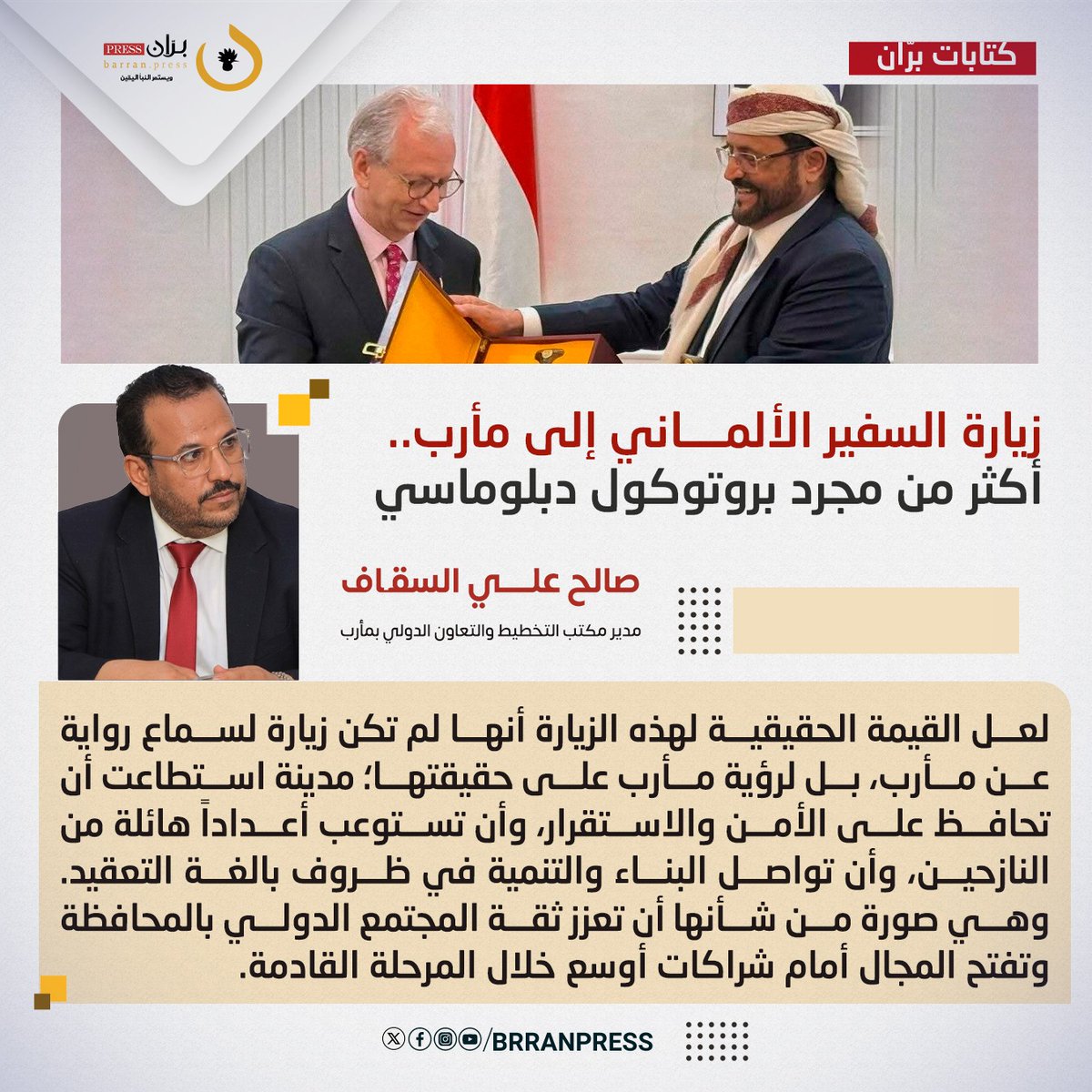
زيارة السفير الألماني إلى مأرب.. أكثر من مجرد بروتوكول دبلوماسي
الكاتب | المهندس صالح السقاف - مدير التخطيط والتعاون الدولي بمأرب
في عالم العلاقات الدولية لا تُقاس أهمية الزيارات الرسمية بعدد اللقاءات أو المواقع التي تُزار، وإنما بما تحمله من رسائل وما تفتحه من آفاق للتعاون والشراكة. ومن هذا المنطلق يمكن قراءة زيارة السفير الألماني والوفد المرافق له إلى مأرب باعتبارها زيارة نوعية تجاوزت حدود البروتوكول إلى الاطلاع المباشر على واقع المحافظة وفرصها وتحدياتها.
ومنذ اللحظات الأولى للزيارة، عكس الاستقبال الذي حظي به الوفد من قبل عضو مجلس القيادة الرئاسي محافظ محافظة مأرب اللواء سلطان بن علي العرادة وقيادة السلطة المحلية مستوى الثقة والاحترام المتبادل بين مأرب وشركائها الدوليين. كما أتاحت الزيارة للسفير فرصة مشاهدة الواقع عن قرب بعيداً عن التقارير والانطباعات المسبقة، والاطلاع على تجربة مأرب في الصمود والاستقرار رغم الظروف الاستثنائية التي تمر بها البلاد.
لقد رأى الوفد محافظة استطاعت أن تواجه تحديات الحرب والنزوح الهائل، وأن تتحول في الوقت ذاته إلى مركز اقتصادي وتنموي نابض بالحياة يحتضن ملايين اليمنيين ويواصل أداء دوره الوطني والتنموي بكفاءة لافتة.
وتميزت الزيارة بتنوع محطاتها، حيث شملت مخيمي السويداء والجفينة للنازحين، وعدداً من منظمات المجتمع المدني العاملة في المجالين الإنساني وبناء السلام، وهو ما عكس استمرار الاهتمام الدولي بالقضايا الإنسانية وإدراك أهمية الدور الذي تؤديه المنظمات المحلية في تعزيز الاستقرار والتعافي.
كما زار الوفد جامعة إقليم سبأ وهيئة مستشفى مأرب، في رسالة تؤكد أن التنمية المستدامة تبدأ بالاستثمار في الإنسان من خلال التعليم والصحة. وشملت الزيارة أيضاً قناة سبأ الفضائية، بما يعكس اهتماماً بفهم البيئة الإعلامية المحلية ودورها في تعزيز الوعي والاستقرار.
وفي مشروع "مسام" لنزع الألغام، اطلع السفير على الجهود الإنسانية الكبيرة التي تبذلها المملكة العربية السعودية في إزالة الألغام وحماية المدنيين وتهيئة المناطق المتضررة لعودة الحياة والتنمية، وهو نموذج عملي للأثر الإنساني الذي يلامس حياة الناس بشكل مباشر.
أما زيارة معبد أوام التاريخي فقد حملت بعداً ثقافياً مهماً، باعتباره أحد أبرز معالم الحضارة اليمنية القديمة، ولما يمثله أيضاً من رمز للتعاون العلمي والثقافي بين اليمن وألمانيا، حيث كان للبعثات الألمانية دور بارز في أعمال التنقيب والكشف عن أجزاء مهمة من هذا الموقع الأثري العالمي.
وقد حققت مأرب من هذه الزيارة جملة من المكاسب المهمة، أبرزها تعزيز حضورها في خارطة الاهتمام الدولي، ونقل صورة واقعية عن تجربتها في إدارة تحديات النزوح والتنمية، وفتح آفاق جديدة للتعاون في مجالات التعليم والصحة والتنمية المحلية وحماية التراث وبناء القدرات. كما عززت الزيارة ثقة الشركاء الدوليين بالمؤسسات المحلية وقدرتها على إدارة المشاريع وتحقيق أثر تنموي ملموس.
ولعل القيمة الحقيقية لهذه الزيارة أنها لم تكن زيارة لسماع رواية عن مأرب، بل لرؤية مأرب على حقيقتها؛ مدينة استطاعت أن تحافظ على الأمن والاستقرار، وأن تستوعب أعداداً هائلة من النازحين، وأن تواصل البناء والتنمية في ظروف بالغة التعقيد. وهي صورة من شأنها أن تعزز ثقة المجتمع الدولي بالمحافظة وتفتح المجال أمام شراكات أوسع خلال المرحلة القادمة.
لقد غادر السفير الألماني مأرب وهو يحمل صورة مختلفة عن مدينة لم تستسلم للتحديات، ومجتمع لم يفقد قدرته على البناء، وسلطة محلية نجحت في ترسيخ نموذج جدير بالدعم والاهتمام. ولذلك فإن أهمية هذه الزيارة لا تكمن فقط فيما شهدته من لقاءات وجولات، بل فيما يمكن أن تؤسس له من تعاون مستقبلي يخدم التنمية والاستقرار ويعزز حضور مأرب كنموذج يمني ناجح في زمن الأزمات.
#بران_برس #اليمن #yemen #مأرب #mareb
1
642

Jun 13
Muxu kawada cadado dhuso mareb ulaban mayne wa iska dhicinayana sow nin aan degan ahayn inu yahay hadalkisa kama muuqato 😂😂😂😂
1
3
83

May 29
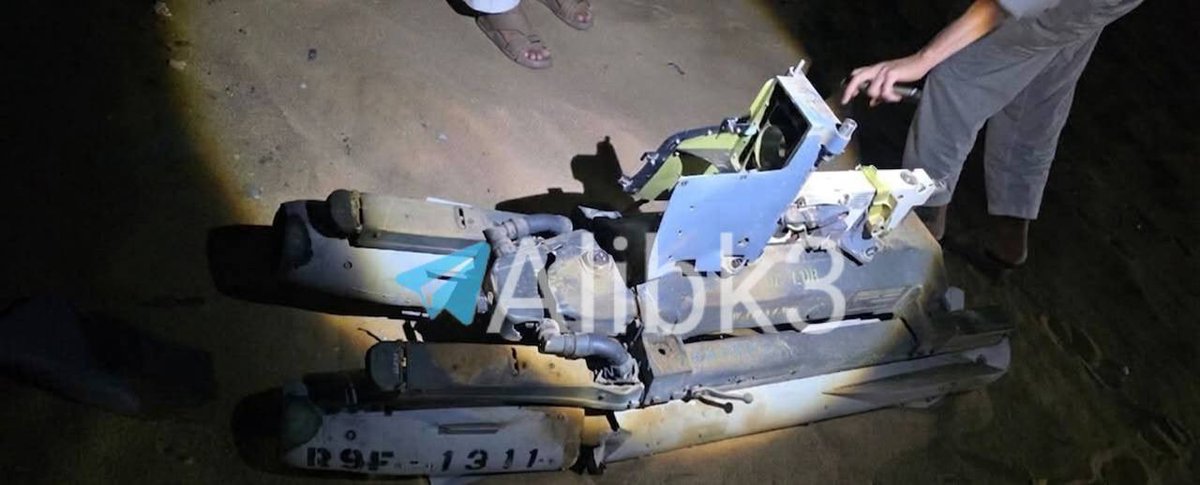
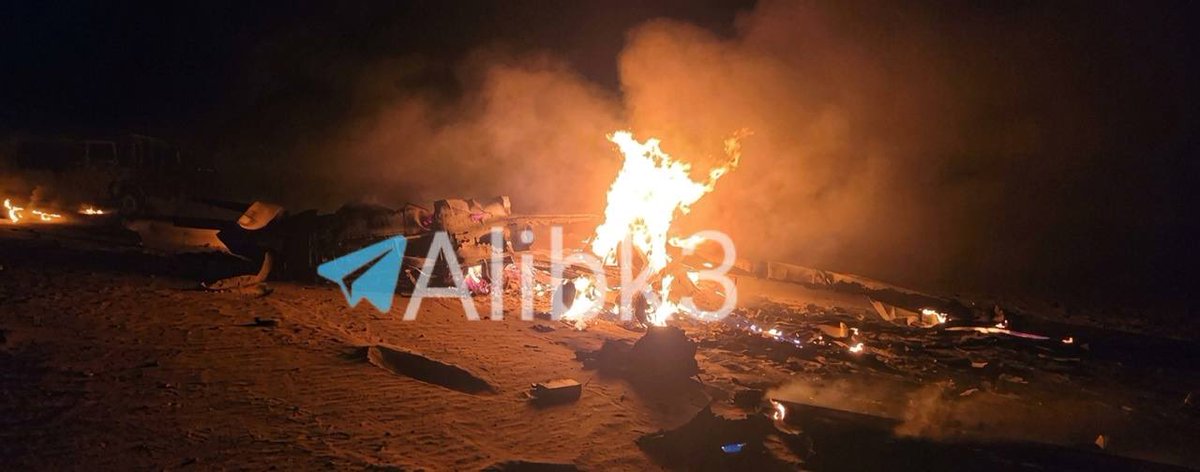
⭕️Yemen Has Shot Down Another U.S. MQ-9 Reaper Drone
It was destroyed with a surface to air missile over Mareb Province.
1
7
588



May 9
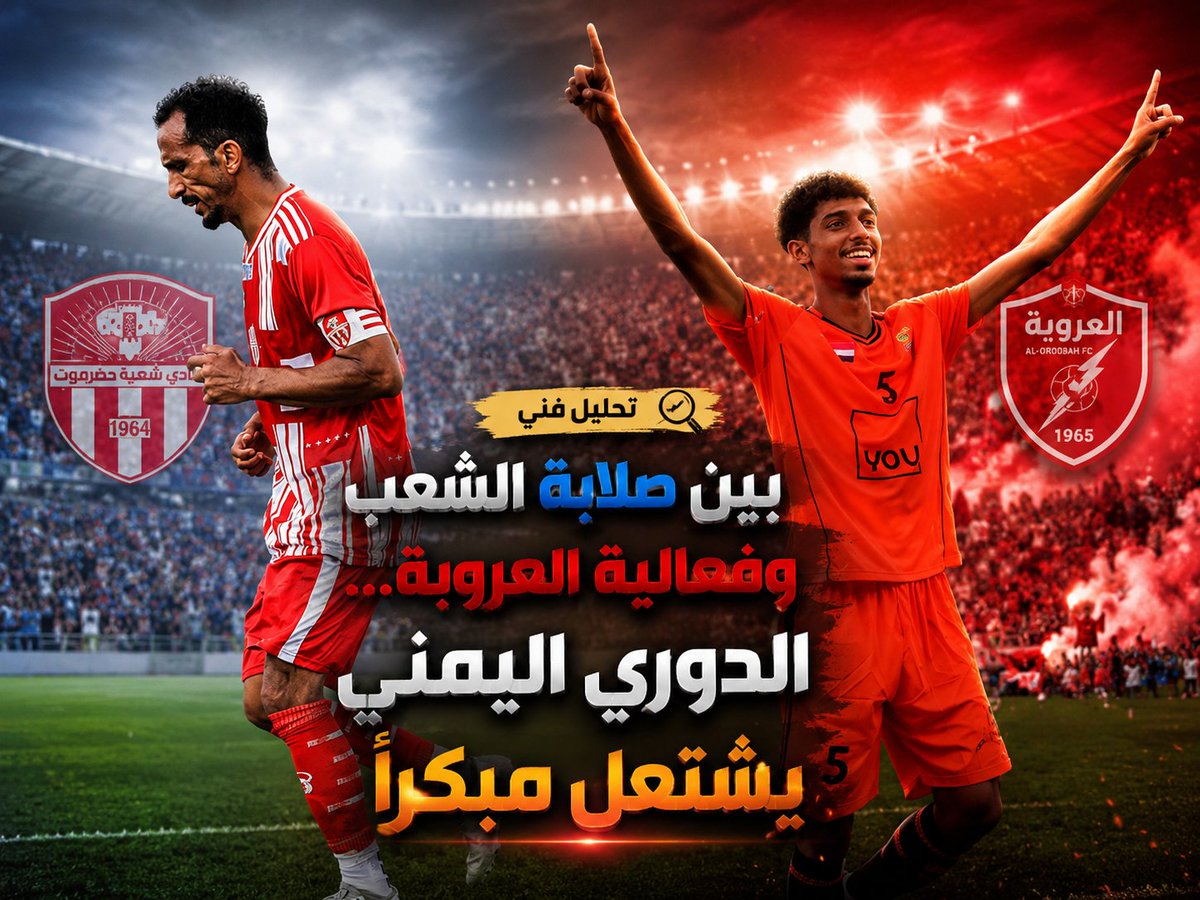
Technical Analysis | Between Shabab Hadramout’s Solidity and Al-Oruba’s Efficiency… The Yemeni League Ignites Early
🚨 Mareb Al-Ward
After only two rounds of the Yemeni Football League, early signs have already begun to emerge regarding the most prepared teams and the clubs still searching for their technical balance in a competition that remains open to many possibilities. Yet, from the very beginning, it has revealed important indicators in terms of defensive organization, attacking efficiency, and mental stability on the pitch.
The tournament, which features fourteen clubs, is already offering statistical insights into the nature of the season’s opening phase, including a shifting balance of footballing power.
Twelve out of fourteen matches ended with victories for one side, while only two matches ended in draws — one goalless and one with goals — a clear indication that most teams entered the season with a mentality focused on winning rather than merely defending cautiously or limiting losses.
Although the league has not yet witnessed heavy scorelines or crushing victories, this does not necessarily reflect weak attacking quality as much as it highlights the close competitive levels among the teams. Twenty-three goals were scored in the opening two rounds, averaging nearly two goals per match, but most games were decided by fine margins: a moment of concentration, a defensive mistake, or a successful counterattack. This has already given the league an open and highly competitive character.
🔴 A Trio That Imposed Itself Early
Al-Oruba, Shabab Hadramout, and Al-Mukalla have been the standout stories of the first two rounds — not only because they achieved a perfect six points, but because each side accomplished this through a different tactical approach, reflecting clear diversity in methods of competition from the outset.
Al-Oruba, nicknamed “The Thunderbolt,” appears so far to be the most balanced side both offensively and mentally. The team achieved two consecutive victories — the first away against Ittihad Ibb and the second against Al-Ahli Sana’a — scoring four goals in two matches to become the league’s strongest attack so far. But more important than the numbers is the team’s character during matches. Al-Oruba successfully came from behind twice after trailing, a clear indication of the mental strength and fighting spirit instilled by young coach Hani Abdulrahman, who emphasized before the match against Ittihad Ibb the importance of fighting until the final minute and never surrendering regardless of the result — a spirit clearly reflected in the team’s performances on the pitch.
As for Shabab Hadramout, last season’s third-place finishers, they currently appear to be the league’s most defensively solid and tactically disciplined team. Credit for this goes to coach Samer Fadl, who has clearly worked on improving the organizational and tactical aspects of “The Seagulls.” Shabab top the table after securing two consecutive victories without conceding a single goal, despite scoring only three goals offensively, reflecting the team’s reliance on balance and discipline rather than aggressive attacking football. The effects of early preparation are also evident in the team’s performances, whether through playing several preparatory matches, maintaining sporting activity compared to some other clubs, or through recruiting quality players while benefiting from the club’s financial stability.
Meanwhile, their neighbors Al-Mukalla, promoted for the first time to the top flight, are sending a strong message that they are among the league’s most offensively prepared teams after scoring three goals in the opening two rounds and securing back-to-back wins, the latest against Ittihad Hadramout. Notably, Al-Mukalla, under coach Anwar Ashour, do not rely solely on possession and control, but possess diverse attacking solutions and the ability to score under various circumstances, including from set pieces, one of which produced the
May 9

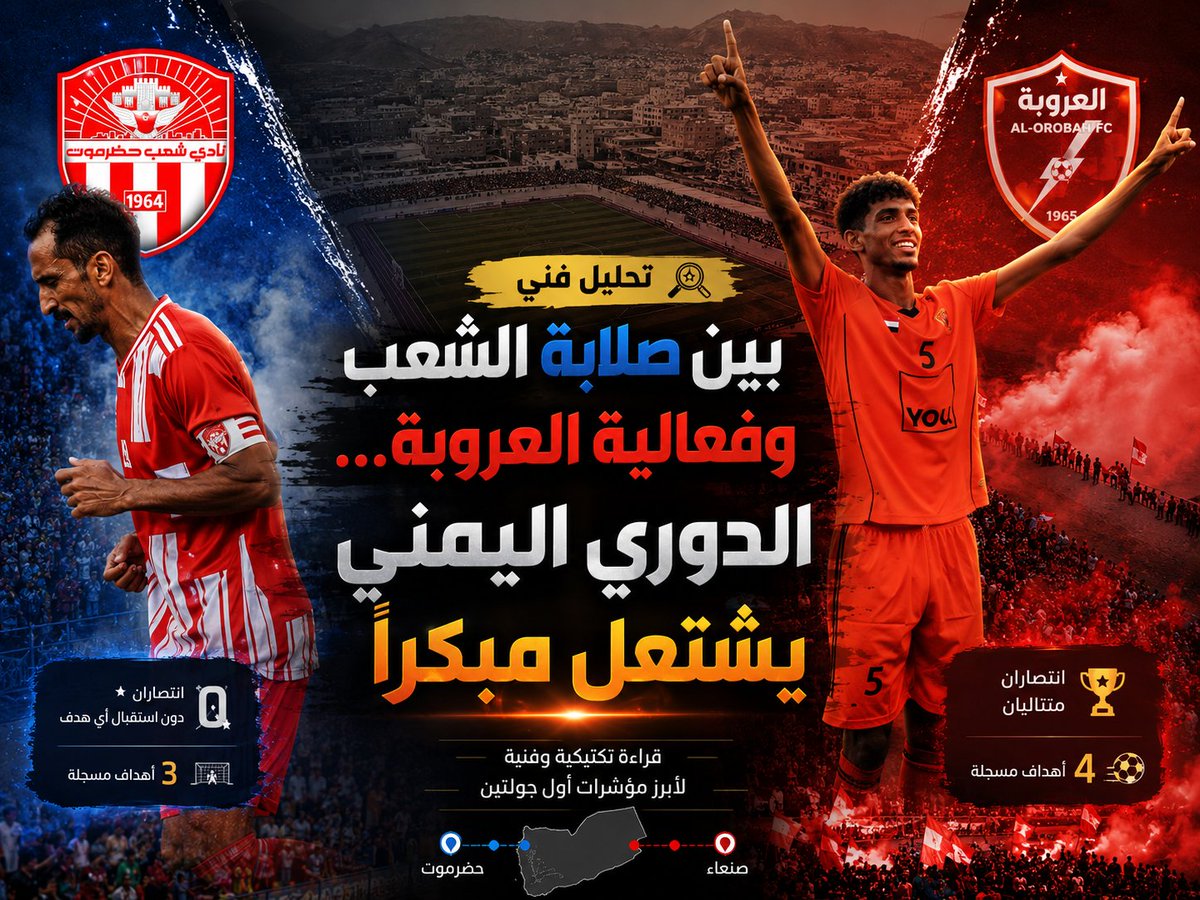
تحليل فني | بين صلابة الشعب وفعالية العروبة… الدوري اليمني يشتعل مبكراً
🚨مأرب الورد
بعد جولتين فقط من انطلاق الدوري اليمني لكرة القدم، بدأت ملامح أولية تتشكل حول الفرق الأكثر جاهزية، والأندية التي ما تزال تبحث عن توازنها الفني، في بطولة تبدو حتى الآن مفتوحة على كثير من الاحتمالات، لكنها كشفت مبكراً عن مؤشرات مهمة على مستوى التنظيم الدفاعي، الفاعلية الهجومية، والاستقرار الذهني داخل الملعب.
البطولة التي يشارك فيها أربعة عشر نادياً، تكشف أرقامها حتى الآن طبيعة البداية بما في ذلك تغير خارطة موازين القوى الكروية.
اثنتا عشرة مباراة من أصل أربع عشرة انتهت بفوز أحد الفريقين، مقابل تعادلين فقط، أحدهما سلبي والآخر إيجابي، في مؤشر واضح على أن أغلب الفرق دخلت الموسم بعقلية البحث عن الانتصار، لا الاكتفاء بالحذر الدفاعي أو الخروج بأقل الخسائر.
ورغم أن البطولة لم تشهد حتى الآن نتائج ثقيلة أو انتصارات كاسحة، إلا أن ذلك لا يعكس ضعفاً هجومياً بقدر ما يكشف تقارباً واضحاً في المستويات. ثلاثة وعشرون هدفاً سُجلت خلال أول جولتين، بمعدل يقترب من هدفين في كل مباراة، لكن معظم المواجهات حُسمت بتفاصيل صغيرة؛ لحظة تركيز، خطأ دفاعي، أو هجمة مرتدة ناجحة، وهو ما يمنح الدوري منذ الآن طابعاً تنافسياً مفتوحاً.
🔴ثلاثي فرض نفسه مبكراً
العروبة وشعب حضرموت والمكلا كانوا العنوان الأبرز للجولتين الأوليين، ليس فقط لأنهم حققوا العلامة الكاملة بست نقاط، بل لأن كل فريق منهم فعل ذلك بأسلوب مختلف تكتيكياً، ما يعكس تنوعاً واضحاً في طرق المنافسة منذ البداية.
العروبة الملقب بـ"الصاعق" يبدو حتى الآن الفريق الأكثر توازنًا هجوميًا ونفسيًا؛ فقد حقق انتصارين متتاليين، الأول خارج أرضه أمام اتحاد إب والثاني على أهلي صنعاء، مسجلًا أربعة أهداف في مباراتين ليصبح أقوى خط هجوم حتى الآن. لكن الأهم من الأرقام هو شخصية الفريق داخل المباراة؛ إذ نجح في قلب النتيجة مرتين بعد التأخر، في مؤشر واضح على القوة الذهنية والروح القتالية التي زرعها المدرب الشاب هاني عبد الرحمن، الذي ركّز قبل مواجهة اتحاد إب على ضرورة القتال حتى آخر دقيقة وعدم الاستسلام مهما كانت النتيجة، وهي الروح التي انعكست بوضوح على أداء الفريق داخل الملعب.
أما شعب حضرموت، صاحب المركز الثالث في آخر نسخة من الدوري، فيبدو حتى اللحظة الفريق الأكثر صلابة دفاعياً وانضباطاً تكتيكياً، وهو ما يُحسب لمدربه سامر فضل الذي عمل بوضوح على تطوير الجانب التنظيمي والتكتيكي لـ"النوارس". ويتصدر الشعب الترتيب بعد تحقيقه انتصارين متتاليين دون استقبال أي هدف، رغم أنه هجومياً سجل ثلاثة أهداف فقط، ما يعكس اعتماد الفريق على التوازن والانضباط أكثر من الاندفاع الهجومي. كما تبدو آثار التحضير المبكر واضحة على أداء الفريق، سواء من خلال خوضه عدداً من المباريات التحضيرية، أو استمراره في النشاط الرياضي مقارنة ببعض الأندية الأخرى، إلى جانب تعاقداته مع عناصر جيدة مستفيداً من حالة الاستقرار المالي التي يعيشها النادي.
بدوره، يرسل جاره المكلا، الصاعد لأول مرة إلى دوري الأضواء، رسالة قوية بأنه أحد أكثر الفرق الجاهزة هجومياً، بعدما سجل ثلاثة أهداف في أول جولتين وحقق انتصارين متتاليين، آخرهما على اتحاد حضرموت. اللافت أن المكلا، بقيادة المدرب أنور عاشور، لا يعتمد فقط على السيطرة والاستحواذ، بل يمتلك حلولاً هجومية متنوعة وقدرة على التسجيل في مختلف الظروف، بما في ذلك الكرات الثابتة التي جاء منها هدف الفوز على اتحاد سيئون. هذا التنوع الهجومي، إلى جانب الشخصية الهادئة التي يظهر بها الفريق، منحه المركز الثالث بفارق الأهداف فقط عن العروبة صاحب المركز الثاني.
🔴فرق تبحث عن الاستقرار
في المقابل، تبدو عدة فرق ما تزال في مرحلة البحث عن توازنها الحقيقي.
السد مأرب، الذي تأهل لأول مرة للدرجة الأولى، يبرز كأحد الفرق التي تمتلك شخصية تنافسية واضحة رغم عدم تحقيق العلامة الكاملة. رجال المدرب عادل التام لا يُفرّطون بالنقاط في أرضهم بسهولة؛ فقد هزموا سلام الغرفة وتعادلوا مع اليرموك، مما يعكس فريقاً منظماً وصعب الخسارة، لديه لاعبين قادرين على الحسم في أي لحظة وإن كانوا يفتقرون لتحولات اللعب المختلفة وهذا ما تجلى في المباراة ضد اليرموك.
فحمان أبين بدوره عاد سريعاً بعد خسارته الافتتاحية أمام التضامن، ونجح في استعادة توازنه بانتصار واضح على سلام الغرفة، في مؤشر على قدرة الفريق على تصحيح أخطائه بين جولة وأخرى، وهذا ما أشار إليه المدرب محمد البعداني حين وصف لاعبيه بأنهم أبطال.
🔴يتبع الجزء الثاني في التعليقات
1
11
1,662

May 7
x.com/i/status/2052438773187…
🔴YEMEN 🔥
The fight against IRAN led Shia militias is going on.
Here in Mareb, Mujahadden targeted Shia militias gatherings turning their positions into ashes.
Allahu Akbar

يوم من أيام مأرب 🔥🇾🇪
مأرب تكتب بالنار تاريخ المواجهة وتلقن مليشيات الحوثي دروسا قاسية في ميادين العزة والكرامة
ضربات موجعة استهدفت تجمعاتهم فأصبحت مواقعهم رمادا تحت أقدام رجال لا يعرفون التراجع.
هنا مأرب حيث تكسر الأطماع وتدفن الأوهام
1
1
3
185
May 7
By/Mareb Al-ward
When Al-Salta is served on the table, steam rises from the stone pot, carrying the aroma of fenugreek and spices, with the scent of the dish reaching the palate before the first bite. Al-Salta is known as Yemen’s national dish, a staple lunch in most households, especially in mountainous areas like Sana’a. The dish is based on whipped fenugreek and can be cooked with meat, in which case it is called Fahsa, or prepared vegetarian for those who prefer it. Yet Al-Salta is not just a meal; it is a daily memory that preserves family stories and the spirit of the table.
note.com/mareb2025/n/ne8524d…
1
1
783
Apr 29
x.com/i/status/2049524618852…
🔴YEMEN.
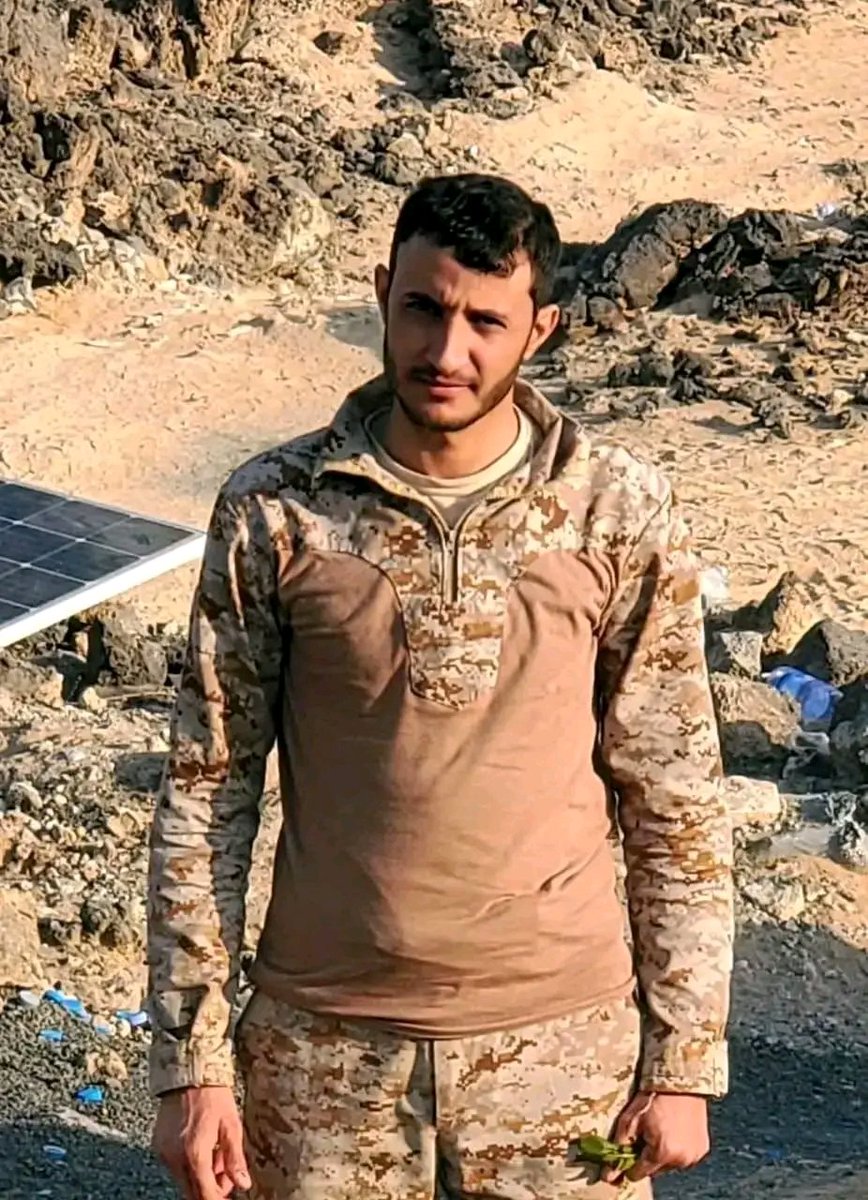
Our brother, Hafez al Quran Mahmoud Sabir has been martyred today in Mareb, YEMEN following the martyrdom of his 2 brothers fighting IRAN led Shia militias.
Inna lilahi wa inna ilayhi rajiuun.
Apr 29
مأرب اليوم إستشهاد البطل الحافظ لكتاب الله محمود صبر في جبهات العزه والكرامه مأرب يلتحق بإثنين من اخوانه تقبلهم الله!
1
2
107

Froncé bouuuuum kétienne mareb ezijences 🤷♀️🤣🤣🤣🤣🤣🤣🤣🤣😂🤣
1
78

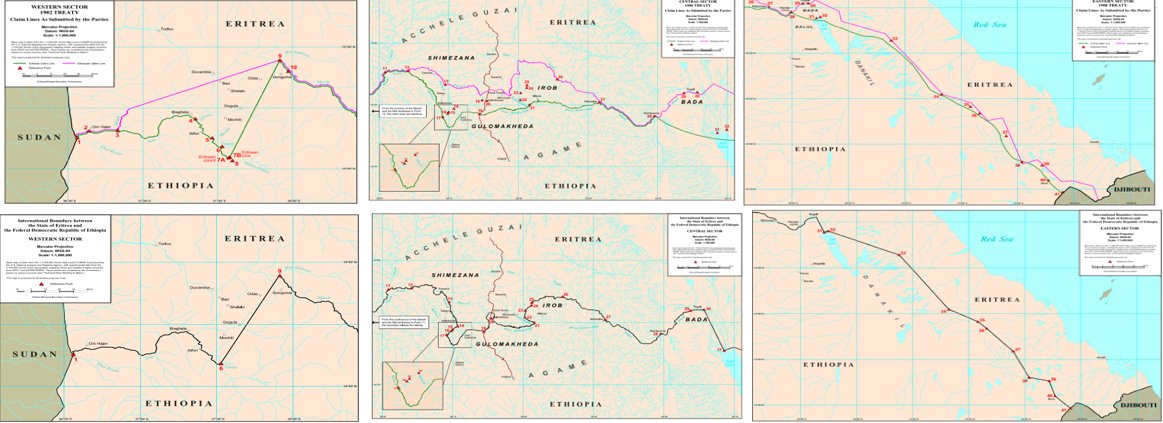
Eritrea-Ethiopia Boundary Commission Decision.
13 April 2002
-Important Paragraphs.
-“The Commission’s mandate… [is] to delimit and demarcate the colonial treaty border based on pertinent colonial treaties (1900, 1902 and 1908) and applicable international law… [and] shall not have the power to make decisions ex aequo et bono.”
-“The parties reaffirm the principle of respect for the borders existing at independence… [to be determined] on the basis of pertinent colonial treaties and applicable international law.”
-“A treaty should be interpreted by reference to the circumstances prevailing when the treaty was concluded…”
-Article 14(A) of the Demarcation Directions provides: “The Commission has no authority to vary the boundary line. If it runs through and divides a town or village, the line may be varied only on the basis of an express request agreed between and made by both Parties”
-“The borders… are to be determined as of the date of independence of Eritrea (27 April 1993)… subsequent developments [are limited].”
-“ The Commission has examined the major elements in the course of events since 1935: the Italian invasion of Ethiopia; the outbreak of the Second World War; the British military occupation of Eritrea; the post-war developments including the treatment of the political future of Eritrea; the creation of the federation between Ethiopia and Eritrea; and the eventual termination of that federation. However, the Commission can perceive nothing in that chain of developments that has had the effect of altering the boundary between the Parties. The boundary of 1935 remains the boundary of today. ”
-"These references represent the bulk of the items adduced by Ethiopia in support of its claim to have exercised administrative authority west of the Eritrean claim line. The Commission does not find in them evidence of administration of the area sufficiently clear in location, substantial in scope or extensive in time to displace the title of Eritrea that had crystallized as of 1935."
-"Since Badme village (as opposed to some other parts of the Badme region) lay on what was found to be the Eritrean side of the treaty line, there was no need for the Commission to consider any evidence of Eritrean governmental presence there, although Eritrea did in fact submit such evidence. Moreover, even some maps submitted by Ethiopia not only showed the distinctive straight line between the Setit and Mareb Rivers, but also marked Badme village as being on the Eritrean side of that line. The Commission must also observe that the Ethiopian invocation of the findings of the OAU in respect of Badme in 1998 (Comment, para. 1.4, footnote 4) failed to mention the OAU's express statement that those findings did not "prejudge the final status of that area which will be determined at the end of the delimitation and demarcation process and, if necessary, through arbitration."
-“The Parties agree that the origin of the “sixty kilometers from the coast” formula was a recommendation by Emperor Menelik in 1897 to Major Nerazzini, the Italian negotiator. Eritrea adduced material to sustain its contention that from 1897 until the conclusion of the 1908 Treaty, the “60 kilometres-from-the-coast” formula served as a modus vivendi. Some map evidence, which is examined below, supports this contention. Ethiopia did not contest the existence of the modus vivendi prior to 1908. ”
-"The first question that arises in the application of Article I of the Treaty [1908] is the definition of the coast. Ethiopia abandoned its conception of the coast as including islands and submitted in its concluding argument that “the coastline” should be understood as “adhering continuously to the continent itself, and not any coastlines of islands as such.” This was also the position presented by Eritrea. As the Parties are in agreement on this point, the Commission will take as the coastline the line adhering to the continent itself, and not any coastlines of islands."
Virtual Demarcation
"As the Commission evidently cannot remain in existence indefinitely, it proposes that the Parties should, over the next twelve months, terminating at the end of November 2007, consider their positions and seek to reach agreement on the emplacement of pillars. If, by the end of that period, the Parties have not by themselves reached the necessary agreement and proceeded significantly to implement it, or have not requested and enabled the Commission to resume its activity, the Commission hereby determines that the boundary will automatically stand as demarcated by the boundary points listed in the Annex hereto and that the mandate of the Commission can then be regarded as fulfilled. " (Nov. 27, 2006)
1
67
86
3,193


Mar 27
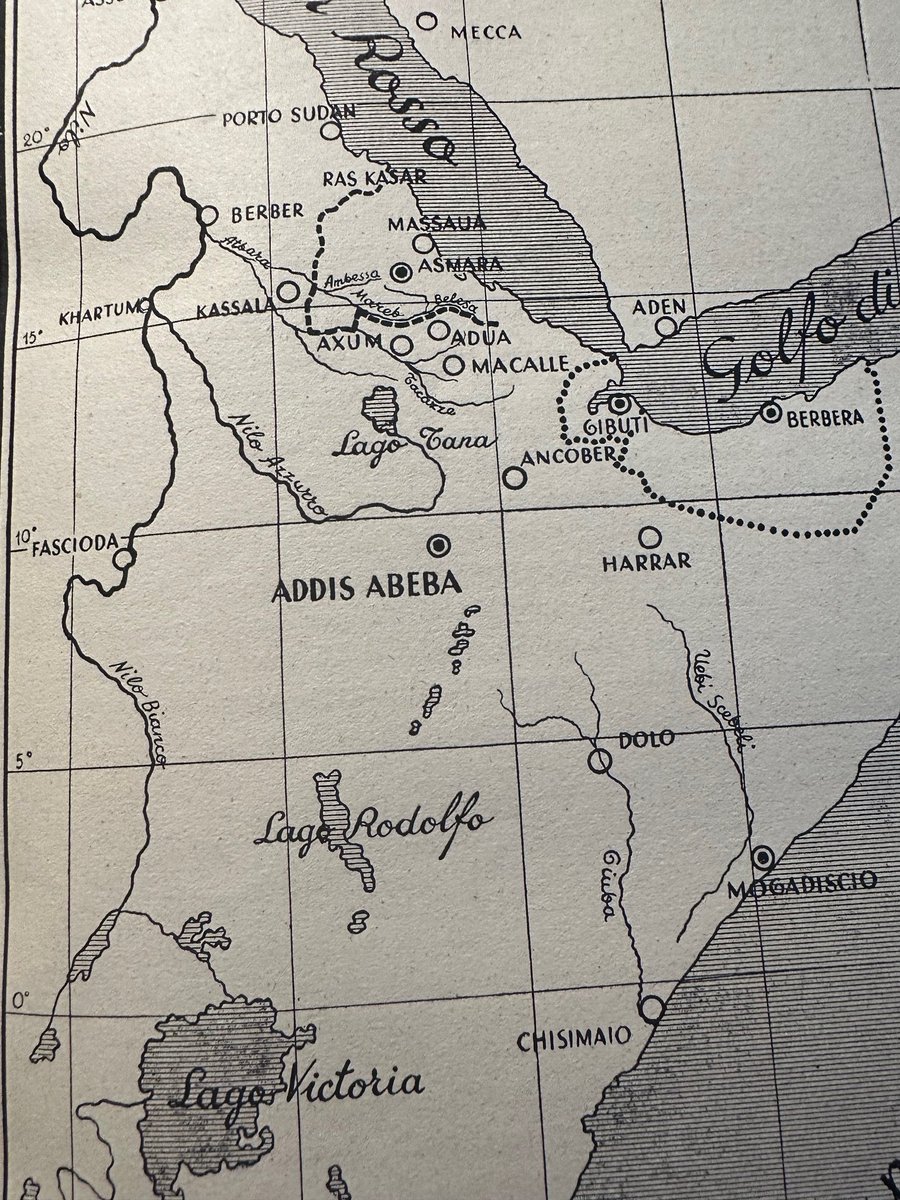
For those asking about the historical basis of the Eritrea–Ethiopia border: the boundary was defined by the 1900 convention and subsequent agreements — from the Mareb River to Assab.
Full analysis in English: eritrealive.com/il-trattato-…
Mar 26

Even after the abrogation of the Treaty of Wuchale, the recognized border between Eritrea and Ethiopia runs from the Mareb River to Assab.
A historical fact that should not be overlooked.
eritrealive.com/il-trattato-…
#Eritrea #Ethiopia #HornOfAfrica #History
1
19
51
2,654
Mar 27
The Treaty of Wuchale was indeed abrogated.
However, the Eritrea–Ethiopia border was later defined by the 1900 convention and subsequent agreements.
The Mareb–Assab line reflects those later legal arrangements, not the disputed treaty itself.
2
3
48

Mar 27
Important read from @cheib1970 who has been on the ground for almost 3 years and is our eyes and ears of everything happening. Part 1
About the latest developments in the field and the confrontation in the border area :
Since the start of the confrontations, the resistance has declared its refusal of this reality that controls every Lebanese citizen, from the head of state to the last citizen, starting from the moment the state failed to protect its people and territory after the failure of the project to disarm the resistance, which the government embraced to fulfill the enemy's wishes and those of America.
The enemy launched a war that was inevitably going to happen after the failure of the project to disarm the resistance, which the government embraced to fulfill the enemy's wishes and those of America.
The state withdrew again from assuming responsibility for defending its territory, and the enemy's army expanded its deployment in Lebanese territory, starting from the positions the army withdrew from in the absence of the resistance and its weapons in the border area, in implementation of Resolution 1701, which was implemented unilaterally.
The resistance began its operations from outside the area first, and being a native of the land, its fighters were able to reposition themselves within it where there was a possibility of clashing and targeting Israeli military movements under heavy aerial bombardment and unprecedented raids targeting all civilian properties, without establishing a solid defensive wall to prevent the invasion of 5 military brigades, but rather they operated on the principle of mobile operations and set up scattered ambushes via guided missiles and direct confrontations where possible within the border towns, which happened in Khiam, Wadi Ais, Taybet Al-Imam, Aytaroun, Qozzah, and Naqoura, where the resistance fought until martyrdom, relying on guided missiles to target tanks and military gatherings, in addition to intensifying missile strikes on the positions of the invading forces.
More than three weeks have passed since the confrontation began, and the enemy is still trying to control the first line of border towns. Until today, the enemy continues to target parts of the city of Khiam with aerial raids and artillery bombardment after a direct confrontation within the city's neighborhoods at 5 PM today and until yesterday, the enemy's tanks were burning in the "project" of Taybet Al-Imam and in the town square and in the eastern neighborhood of "Bedr Al-Fiqi", replacing its inability to position and entrench with carrying out explosions that destroyed citizens' homes, a scene that was repeated in Kfarchala, Wadi Ais, Rubat Al-Thalath, Mareb, Aytaroun, and Khiam.
As for Houla, Mays Al-Jabal, and Aytaroun, the enemy's positions in the two towns are still under the fire of the resistance on a daily basis, despite attempts to approach the city of Bint Jbeil and intensifying aerial raids and artillery bombardment on the opposite towns in the central sector.
As for the main confrontation axes in Khiam, Taybet Al-Imam, Qozzah, and Naqoura, the scene was as follows:
- In Khiam, the enemy is still carrying out explosions of houses and fortification in the southern, eastern, and central neighborhoods, and continuing to bomb the northern and western neighborhoods with raids and artillery.
- In Taybeh, after destroying about 18 tanks in the neighborhoods it entered and after amassing a large number of tanks and hundreds of soldiers who are subjected to intensive raids and missile strikes, the resistance carried out a double deception and a well-prepared ambush with guided missiles through 2 axes, the 1st towards Al-Qantara via the area of the Muhaysibat, and the second towards Deir Sariyan, where the invading forces in the first axis reached the ambush field and guided missiles rained down on the tank columns, and the resistance clashed face 2 face with the enemy's forces near the mosque
2
22
64
4,104

Mar 26
Thank you for bringing this important historical point to light. Your comment highlights a well-documented reality that is too often overlooked, and it adds valuable clarity to the discussion.
A factual way to reinforce that point would be:
The abrogation of the Treaty of Wuchale in 1896 did not erase the territorial realities that had already been consolidated through subsequent agreements.
The Treaty of Addis Ababa explicitly recognised Ethiopia’s sovereignty while leaving Italy in control of Eritrea, thereby maintaining a practical separation between the two entities.
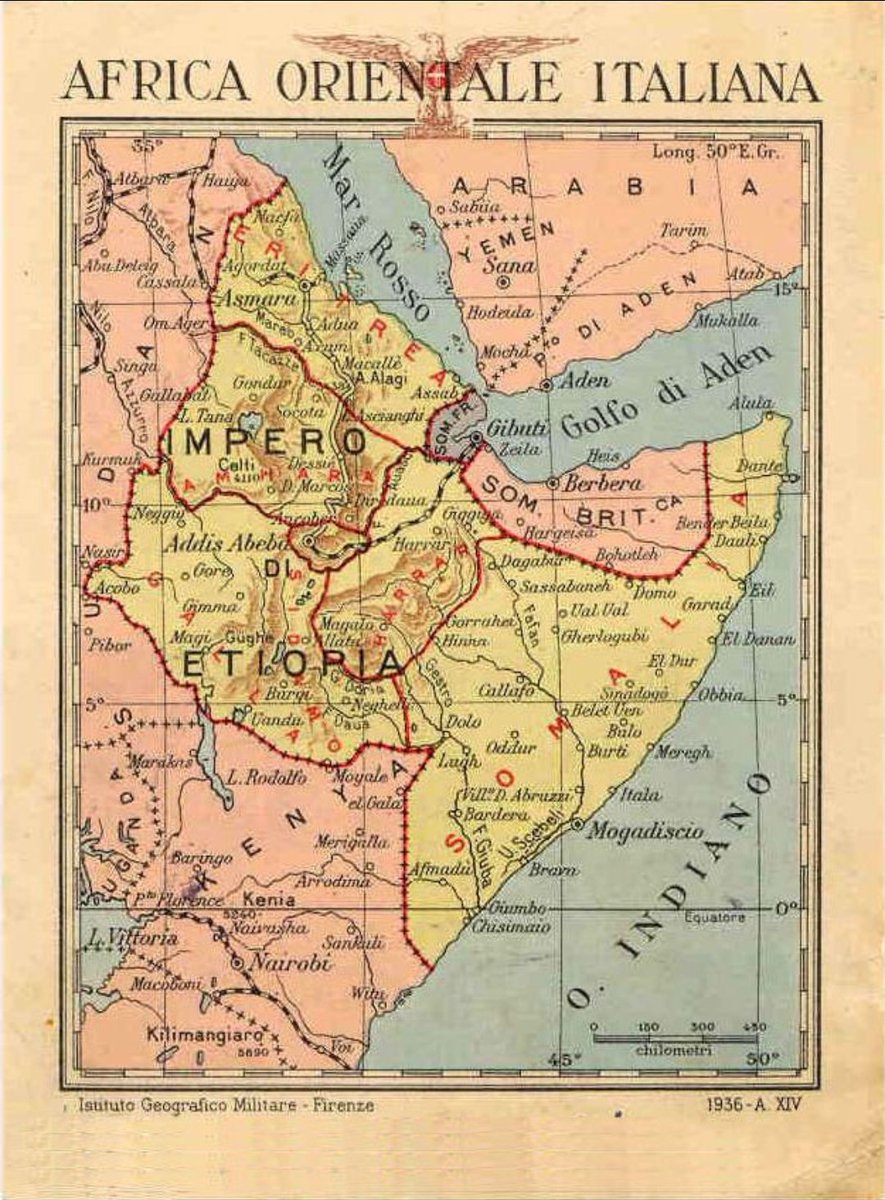
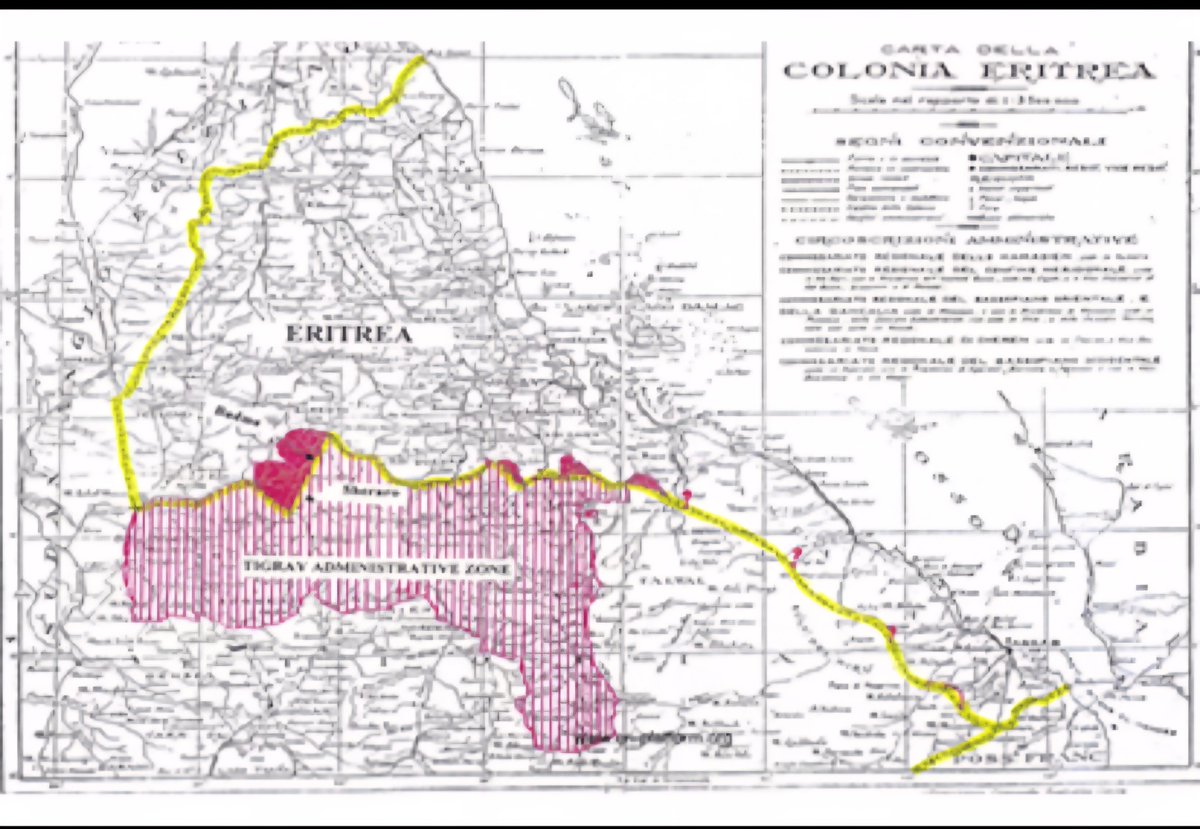
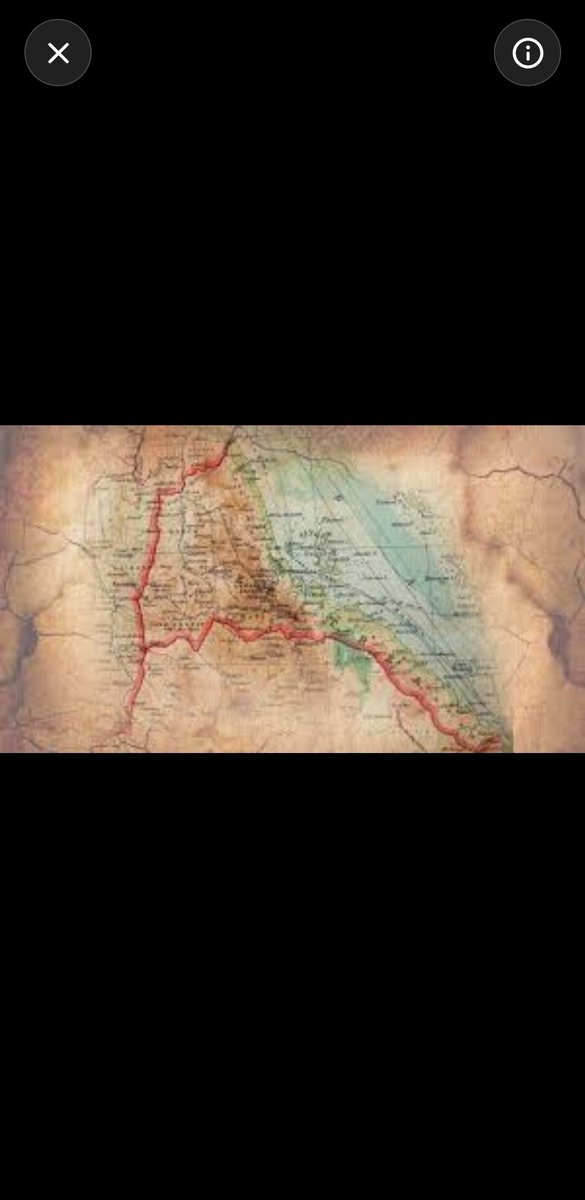
Crucially, the boundary was later formalised through a series of colonial treaties in 1900, 1902, and 1908, which defined the border from the western sector near the Setit–Mareb system eastwards toward the Red Sea coast, including the area of Assab.
This sequence of legal instruments confirms that the Mareb-based boundary extending toward Assab was not incidental, but part of a structured and internationally recognised delimitation process grounded in treaty law and later reaffirmed under the principle of respecting colonial borders at independence.
In that sense, the continuity of the Mareb-to-Assab line reflects not a post hoc interpretation, but a historically codified frontier embedded in multiple binding agreements.
ITALIAN COLONIAL MAP OF ERITREA C. 1900-1910
3
9
256

Mar 26
Well written thank you. The Hamasen of Eritrea are a distinct tribe, different from the Tigray in northern Ethiopia, with their traditional boundary at the Mareb River. They actively resisted expansionist attacks by Ras Alula and the armies of Menelik.
The Hamasen share ethnic kinship with the Beja, not with the Tigray.
When Italy began establishing its colony along the coast and highlands of Eritrea, it had a good awareness of the strategic locations, coastal areas, and elevated regions.
In drawing the borders, the Italians relied on:
Old Ottoman and Egyptian maps
Reports from explorers and diplomats such as Count Pietro Antonelli
Actual military control over key areas such as “,“Eritrea”], the Hamasen highland group”], Serae highland group”], and Akli-Guzay
3
1
13
805