
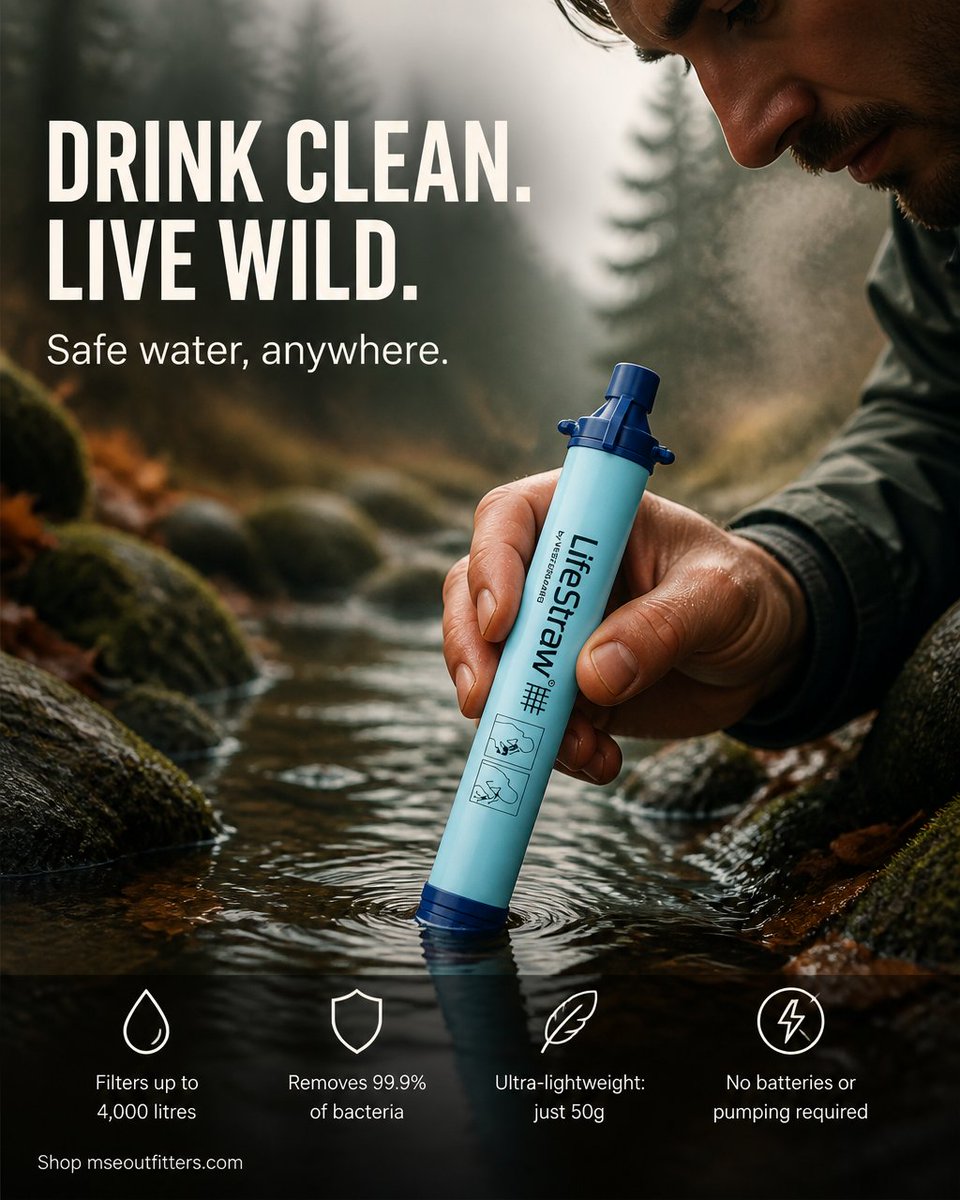
Portable water filter straw for camping & hiking — $69.55. Lightweight, easy-to-use microfiltration for clear drinking water from streams & lakes. Fits a pack pocket, low maintenance, dependable on long trips. #OutdoorWater #WaterFilter mseoutfitters.com/products/p…
2
Dan Magnus Lundgren retweeted

May 29
Emancipation
Marriage - Microfiltration
Love - Scam
- HEIKE THIEME - YLVA -

2
2
29

Jun 11
Welding food-grade steel makes you a welder, not a biochemist. You switched from 'dehydrated' to 'oxidized' because dehydration doesn't damage amino acids. The thing is, Modern whey uses low-temp cross-flow microfiltration specifically to prevent oxidation.
1
71

Jun 9
Would you believe California does this? 🤢🤮
**Yes, California does this—and leads the US in advanced wastewater recycling, including “toilet-to-tap” style projects.**
### Standard Wastewater Treatment
Like the video describes, California treats massive volumes of sewage daily at wastewater facilities using screens, sedimentation, biological treatment, and disinfection. Most treated effluent is released into rivers, the ocean, or used for non-potable purposes (irrigation, industry). California treats billions of gallons daily, similar to the national figure.
### Advanced Recycling (“Toilet-to-Tap”)
California stands out for **indirect potable reuse** (IPR) and is rolling out **direct potable reuse** (DPR):
- **Orange County Groundwater Replenishment System (GWRS)**: The world’s largest advanced wastewater purification system. It takes treated sewage (that would otherwise go to the ocean), purifies it via microfiltration, reverse osmosis, and UV light with hydrogen peroxide. The result exceeds drinking water standards and is injected into underground aquifers. It supplies water for ~1 million people (up to 130 million gallons/day) and has operated successfully since 2008.
- **Other projects**: Similar indirect systems exist or are expanding in Los Angeles, San Diego (Pure Water project), and elsewhere. Purified wastewater is blended into groundwater or reservoirs before further treatment and distribution.
- **Direct Potable Reuse**: In late 2023, California approved regulations for DPR (effective 2024), allowing highly treated wastewater to go straight into drinking water systems or raw water supplies (without an environmental “buffer” like a reservoir). This is among the strictest in the nation, with extensive monitoring. Projects in LA, San Diego, and others are planned or in development.
California’s approach fights droughts and climate impacts by turning wastewater into a reliable local supply. The water is rigorously tested and often cleaner than many traditional sources due to advanced treatment. Public “yuck factor” concerns (hence avoiding “toilet-to-tap” branding) have delayed full adoption, but it’s proven safe and expanding.
In short: Yes—California treats sewage as described and goes further with cutting-edge recycling that many other states are now watching.
1
116

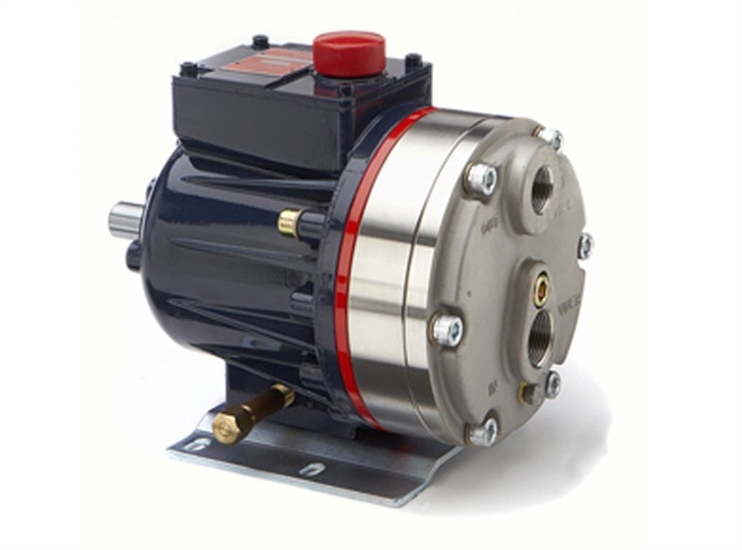
A mobile membrane test unit used a Wanner Hydra-Cell Pro for dynamic testing.
The unit was used with flat sheet membranes for RO, nanofiltration, ultrafiltration, and microfiltration.
Its reliable pressure control made the pump well-suited.
wannerpumps.com/en-gb/applic…
1
8

#ceramicmembranes Market projected at USD 4,381.71M by 2035.
High-temperature chemical fluid microfiltration sorting steps, municipal aggressive wastewater treatment plant operations.
📈 CAGR: 18.89
marketresearchfuture.com/rep…
2

Jun 4
Rob, love ya, but I have a lot of wastewater background, and treated is safer than most all natural springs. Orange County's GWRS stands as the strongest direct comparator for Scottsdale's AWP initiative. The world's largest advanced water purification facility for indirect potable reuse, treating up to 130 million gallons per day of highly treated wastewater. It uses the exact multi-barrier process mirroring Scottsdale's: microfiltration, reverse osmosis, and UV/advanced oxidation (with hydrogen peroxide). The purified water recharges aquifers for blending into the drinking supply for over 1 million people in north/central Orange County.
2
1
6
204

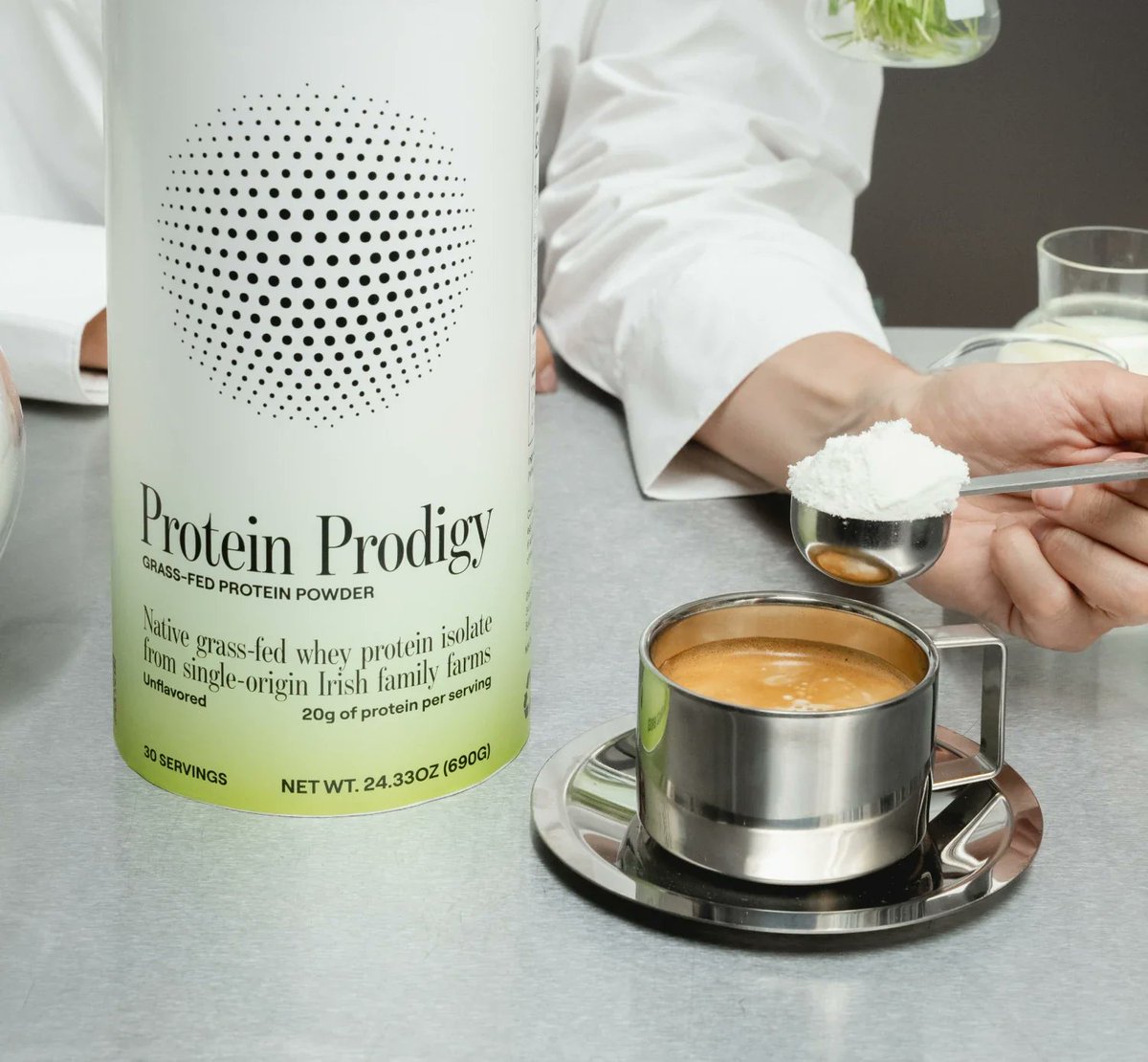
Eventually, that search led me to a unique cold microfiltration process, Irish grass-fed dairy farms, and finally to Protein Prodigy 🤍
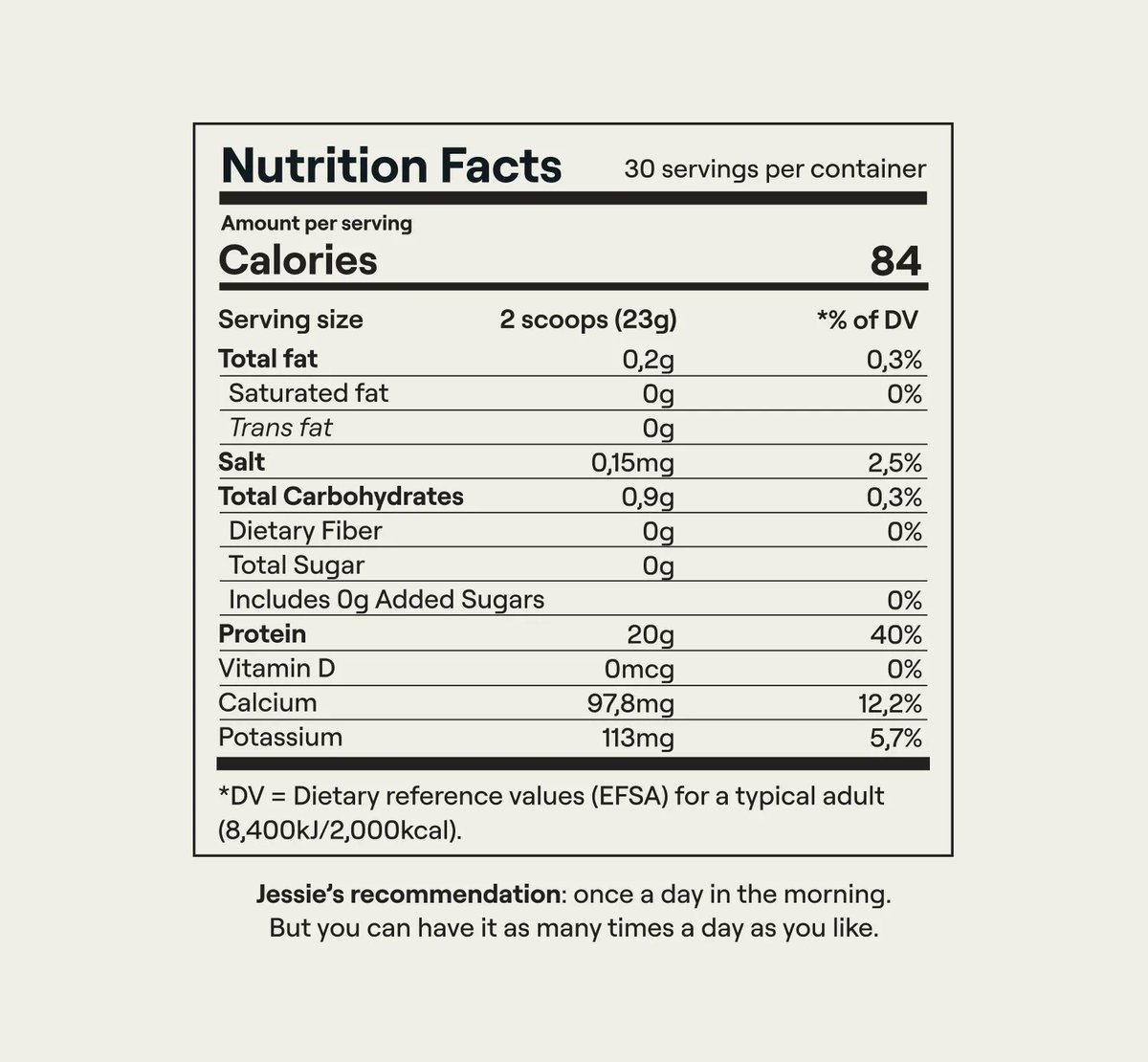
20g of protein per serving.
And yes, it disappears into coffee ❤️
More details via the link in my bio.
4/4 🧵
3
2
21
3,170

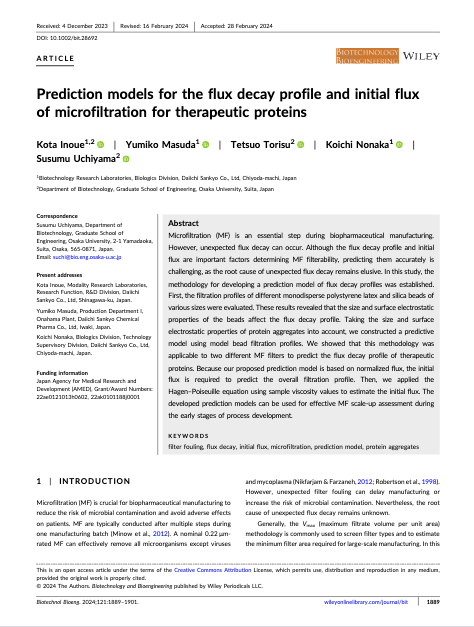
✏️Publicationのご紹介🗒️🐟
大阪大学の内山進教授らの研究グループは、治療用タンパク質溶液の精密ろ過(microfiltration: MF)における予測モデルの構築研究において、弊社のHoneybunを用いて粘度測定を行いました。
詳しくは文献をチェック>>
analyticalsciencejournals.on…
2
90

Nestlé Waters est accusé d’avoir utilisé des traitements de désinfection interdits (filtres à charbon actif, UV, parfois microfiltration) sur des eaux de source contaminées à l’origine (bactéries, traces de polluants).
Or, une eau minérale naturelle ne doit pas être traitée de cette façon pour garder son appellation : elle doit sortir pure de la source.
Une seule solution : boycottez massivement NESTLÉ !
May 20

1/2
Scandale des eaux minérales: des perquisitions en cours sur les sites Perrier et Vittel de Nestlé Waters
ledauphine.com/faits-divers-…
Ces enfoirés vendaient de l'eau du robinet au prix d'une eau de source (800 fois plus chère) après l'avoir filtrée et bien pire,et ça passe crème.
14
478
759
16,799

May 16
Closed loop systems use very little water and post microfiltration returns it cleaner to the river than itcome from the river.
2
70

🎉 Newly Published Paper 🎉 – “Performance Assessment of Microfiltration Membranes for Backwash Water Reuse from Sand Filters”
by Małgorzata Wolska from @PWr_Wroclaw, Javier Carpintero from @UniCostaCOL, et al.
➡️ mdpi.com/3870704
#PsychrophilicBacteria #BackwashWater
1
2
1
53

May 1
Whey is milk, you don't have to be scared to use it.
And this is how it is made.
Whey is nothing but by product of cheese making.
When milk curdles its separated in to two parts:
1. solid curds
2. the residual water
This residual water is protein lactose and minerals.
And solid curd is used to make cheese.
Here the whey is very dilute and contains only water.
The liquid whey goes through filtration:
1. Ultrafiltration: to remoce fats and lactose
2. Microfiltration: to purify protein
The filtered whey is dried and made into powder.
This is the whey you get in your bottle and packets.
It's just concentrated milk.
1
9
637

Apr 29
I had to ask Grok outside of X. Here is the reply:
Mountain Valley Spring Water generally meets FDA and EPA standards for bottled water according to the company's own testing and some independent analyses, but there have been controversies involving independent tests and a 2025 class action lawsuit alleging misleading marketing around trace contaminants.22655c
Official Company Reports
Mountain Valley (owned by Primo Water) publishes annual water quality reports. Their 2025 report (and prior ones) states that the spring water from Garland County, Arkansas, undergoes microfiltration, UV/ozone disinfection, and meets all FDA Standards of Quality. Key findings include:10e06a
No detections (ND) above limits for major concerns like arsenic, lead, uranium, cadmium, mercury, most VOCs, pesticides, PFAS compounds, bacteria (coliform absent), and disinfection byproducts.
Trace levels of beneficial minerals (e.g., calcium ~65-70 mg/L, magnesium ~6-7 mg/L) and secondary inorganics like barium (~0.007-0.008 mg/L), all well below limits.
TDS around 210-220 mg/L (considered "excellent" by WHO guidelines), slightly alkaline pH.
Radiologicals (e.g., gross alpha/beta, radium) low or ND for uranium.
The company emphasizes rigorous testing for both regulated and unregulated contaminants, with no exceedances of FDA allowable limits.efb19e
Independent Tests and Concerns
Tap Score (2025 independent lab test): One prominent test scored a bottle 98/100, describing it as "incredibly safe." It detected beneficial minerals at low levels, with no significant heavy metals, disinfection byproducts, bacteria, or high nitrates. Variations can occur by batch.d62b05
Oasis Health App (2025 analysis): Ranked it lower (~55/100, bottom 25% of tested bottled waters), noting trace barium, uranium, microplastics, and other contaminants relative to strict health guidelines. Their own parent brand (Primo) scored higher.9bbdc1
Home test strips (e.g., TikTok videos): Mixed/inconclusive results; some showed "high" readings for alkalinity, metals, etc., but these are often unreliable for precise low-level analysis compared to certified labs.0cc474
Note: EWG data sometimes referenced online applies to public tap water utilities (not this bottled product) and uses stricter "health guidelines" than legal limits.bdb5ff
Class Action Lawsuit (2025)
A lawsuit (Nadel v. Primo Water et al., filed in Florida federal court) alleges false advertising as "purely sourced" and "free of pollutants." It cites July 2025 independent lab testing allegedly detecting:
Arsenic and uranium (EPA MCLG of zero; no safe level per EPA, though often naturally occurring in springs).
Bromoform (a potential disinfection byproduct, possibly indicating undisclosed treatment).
Cadmium (within federal limits but above California's stricter PHG).
The suit claims these pose cancer, kidney, liver, and other risks with long-term exposure. It questions marketing vs. reality and notes supply issues around the time of viral test videos. Primo disputes the claims, pointing to compliance with FDA standards. The case is ongoing and centers on marketing, not proven health violations.88ebb8
Bottom Line
Legally compliant: Yes, per company and regulatory standards. No major recalls or widespread violations found.
"Bad" results? Depends on perspective. Trace contaminants (especially arsenic/uranium in natural spring water) appear in some independent tests at levels below legal limits but above zero-risk guidelines (common for many natural waters). Not unique to this brand—most bottled waters have some minerals or traces.
Spring waters vary by batch/source geology. Glass-bottled versions are often preferred to minimize microplastics.
For the most current info, check the company's latest report on their site or test a bottle yourself via a certified lab (e.g., Tap Score). If concerned about traces, consider filtered tap or other high-rated sources.
2
153

Apr 27
You've been sold whey protein isolate as "the gold standard for muscle building."
The whey isolate in your scoop was extracted from cheese-making byproduct using ion-exchange resins or microfiltration through industrial-grade ceramic membranes.
The "isolate" process strips out fat and lactose using acid washing and pH manipulation. The result is dried into a powder using heated air at 180°C, which denatures the protein structure the marketing claims is "intact."
What's left in your tub is a denatured protein fragment that your body processes more like a refined sugar than a real protein.
A 6-ounce portion of grass-fed beef gives you 42 grams of protein with the vitamins, minerals, and saturated fats your hormones actually need. No ion-exchange resin. No 180°C processing. No protein denaturation.
The bodybuilders selling you whey isolate eat the steak. They sell you the residue.
7
1
15
5,299

Apr 21
Je fact-check @grok qui est censé vérifier...
Non, mon analyse ne se base pas sur @AnandaGuillet c'est une réponse à sa vidéo.
Exploitation historique et forages :
L' exploitation des sources d’eaux minérales en France remonte à plus d' un siècle ( Vittel, Contrex, Perrier, Évian, Volvic, etc. ).
Les forages et captages se sont intensifiés depuis les années 1960-1990 avec l' essor industriel de l' embouteillage.
Des autorisations préfectorales existent pour chaque source, et les volumes prélevés sont déclarés ( en millions de m³/an ). Autorisations préfectorales = modifications des sources = détournements.
🚨 Des enquêtes ( Mediapart, 2024 ) ont révélé que Nestlé Waters a réalisé des ⚠️ forages illégaux ⚠️dans les Vosges ( Vittel/Contrex/Hépar ) pendant plus de 20 ans ( 1992-2019 ), prélevant au moins 19 milliards de litres sans autorisation complète ni étude d' impact adéquate. 🚨
Nestlé a régularisé en 2019 et payé une amende de 2 millions SEULEMENT d' euros en 2024 via une convention judiciaire ( CJIP ) pour éviter un procès sur ce point et sur des traitements interdits.
Impact sur les nappes et les sols :
L' exploitation intensive peut contribuer localement à une baisse des niveaux des nappes phréatiques, surtout en période de faible recharge ( sécheresse ).
Des associations locales et enquêtes ( dont sur Volvic avec Danone ) accusent les industriels d' aggraver les tensions hydriques dans certaines zones ( Vosges, Auvergne, Gard ).
Les prélèvements pour l' eau minérale représentent une part des prélèvements totaux d’' eau en France ( l' agriculture intensive, que l' ont compare à l'industriel à aussi sa part de responsabilité. Des prélèvements en eau douce, surtout irrigation ; industrie et eau potable suivent). L'eau minérale est prélevée sur des sources profondes protégées.
Autres problèmes documentés chez Nestlé ( et d' autres ) :
Traitements interdits : Pendant plus de 15 ans ( au moins 2005-2021 ), Nestlé a utilisé des filtres à charbon actif, UV et microfiltration fine ( interdits pour les eaux minérales naturelles, qui doivent rester « pures à la source » ) pour traiter des eaux contaminées par des bactéries ou pesticides.
Cela a concerné des milliards de bouteilles ( Vittel, Contrex, Hépar, Perrier ).
L' État a été accusé de complaisance/lobbying ( rapport de commission d’enquête sénatoriale, mai 2025 ). Nestlé a payé une amende et régularisé.
Pollutions : Décharges sauvages de bouteilles plastiques abandonnées depuis les années 1960-1970 autour des usines ( Vittel/Contrex ), causant des contaminations aux microplastiques « incommensurables » dans certaines sources. Procès en cours (2026).
Ces scandales montrent des dysfonctionnements graves de contrôle et de transparence, un détournement presque généralisé.
Apr 20

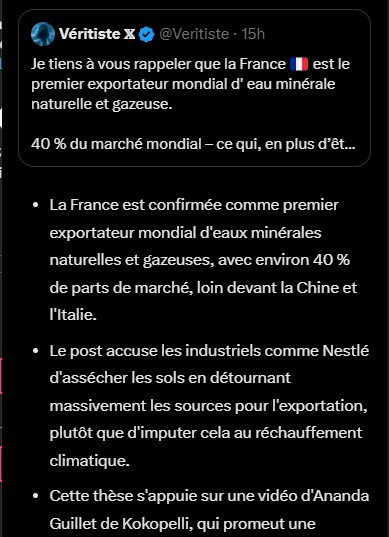
Je tiens à vous rappeler que la France 🇫🇷 est le premier exportateur mondial d' eau minérale naturelle et gazeuse.
40 % du marché mondial – ce qui, en plus d’être énorme, est tout simplement exorbitant, extrême, TITANESQUE.
Suivit loin derrière par la Chine. 🇨🇳
Les sol s' assèchent parce que les industriels détournent les sources.
L' épuisement de nos ressources n' est pas dû au réchauffement climatique, mais au pillage, par des industriels tels que Nestlé, des sources d' eau, des ressources naturelles.
@AnandaGuillet
19
21
665

This is total nonsense. We've had microfiltration capable of filtering **viruses** out of drinking water for decades.
79
2,766

Apr 3
#DoTheDropZone at #LINNCParis, June 1–3! 🧠
Drop Zone™ technology. Two platforms. Zero compromises.
#NeVa – #FirstPassSuccess across all clot types
#NeVaNET – the only stent retriever with microfiltration
@Diane_Demet @LINNConline #stroke
2
4
75

Apr 1
#Survivalisme #Randonnée #EauPotable Microfiltration, UV ou pastilles : tu choisis quoi pour boire sans risque ?
4
20