Advances in neural decoding are reshaping neuromodulation research. Join the Frontiers in Neuroscience Research Topic From Neural Decoding to Neuromodulation and help translate sensorimotor–affective circuit biomarkers into clinical tools.
Submit by 31 May 2026 your manuscript summary→ fro.ntiers.in/RT76200
#neuroscience #neuromodulation #neuraldecoding
3
8
543
📢New #ResearchTopic📢
We are happy to announce a new exciting collection on "From Neural Decoding to Neuromodulation: Translating Sensorimotor–Affective Circuit Biomarkers into Neuromodulation Control", led by Dr Huan Gao, Kai Zhang and Xiaowei Zheng.
More info 👉 fro.ntiers.in/RT76200
Interested in contributing? fro.ntiers.in/wTV4WIHJZ0b
#Neuroscience #neuromodulation #neuraldecoding
1
5
562

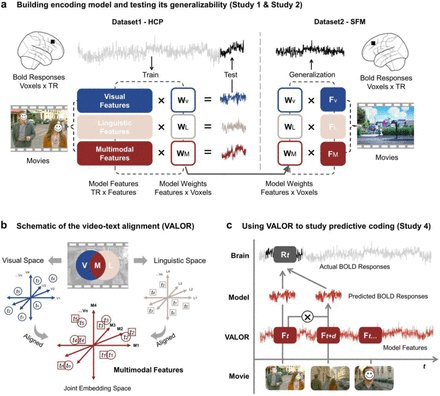
Comprehensive Neural Representations of Naturalistic Stimuli through Multimodal #DeepLearning 🧠
biorxiv.org/content/10.1101/…
#neuraldecoding
#AI
16
58
2,581

20 Apr 2025
Scientists use AI to reveal the neural dynamics of human conversation
gadget2.in/Right-Now/Scienti…
#Technology #Science #ArtificialIntelligence #NeuroAI @ChatGPTapp #AIinNeuroscience #BrainAndLanguage #NeuralDecoding #MassGeneralHospital #BrainActivity @OfficialGadget2

2
2
27
#neuraldecoding stuff:
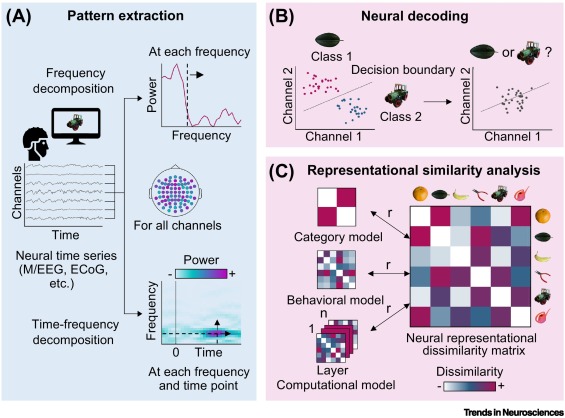
Decoding the rhythmic representation and communication of visual contents
cell.com/trends/neuroscience…
#neuroscience #AI
10
77
3,896

13 Mar 2025
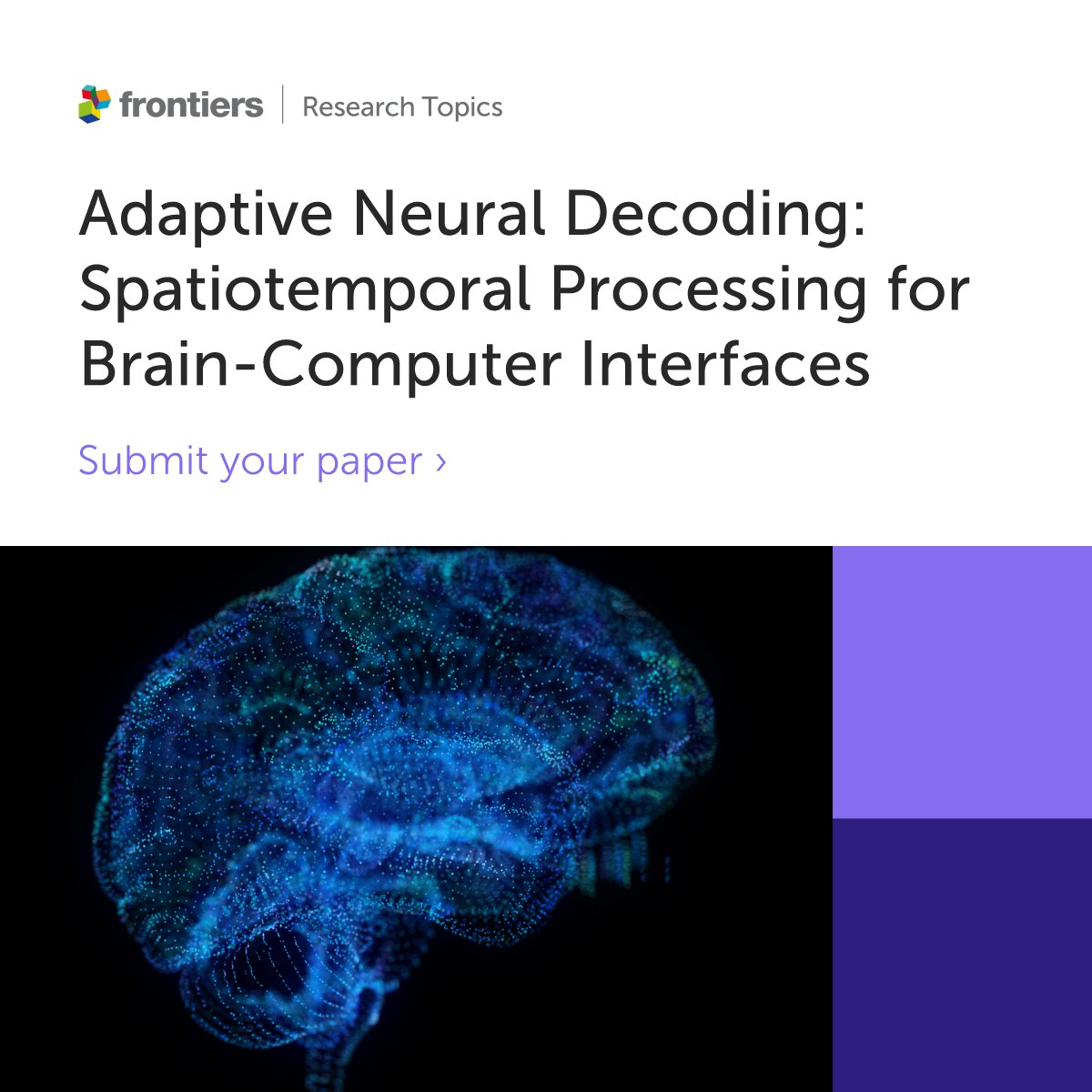
📢New #ResearchTopic📢
Interested in the field of Adaptive Neural decoding? Check out our recent Topic on "Adaptive Neural Decoding: Spatiotemporal Processing for Brain-Computer Interfaces", led by Profs. Nicoladie Tam and George Zouridakis.
More info: fro.ntiers.in/67908
Interested in contributing? fro.ntiers.in/81XB
#neuroscience #neuraldecoding #BCI
1
6
969

25 Feb 2025
February publication: In vivo electrophysiology recordings and computational modeling can predict octopus arm movement #BioelectronicMedicine #octopus #electrophysiology #neuraldecoding #machinelearning bioelecmed.biomedcentral.com…
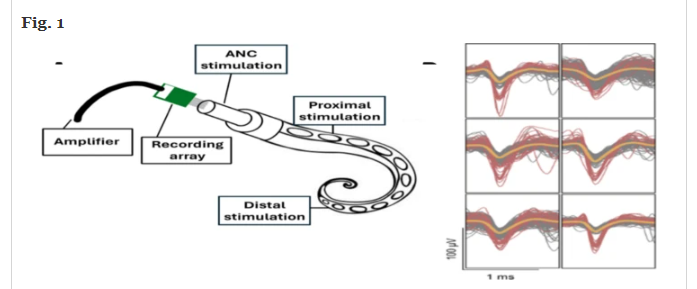
ALT The experiment setup. A The 16-electrode array was inserted into the exposed axial nerve cord (ANC). Tactile and electrical stimulation were delivered into three different locations: directly onto the ANC, proximal, and distal to the electrodes’ placements. The carbon electrode array recorded spikes. B Representative spikes are shown on the right
2
290

2 Nov 2024
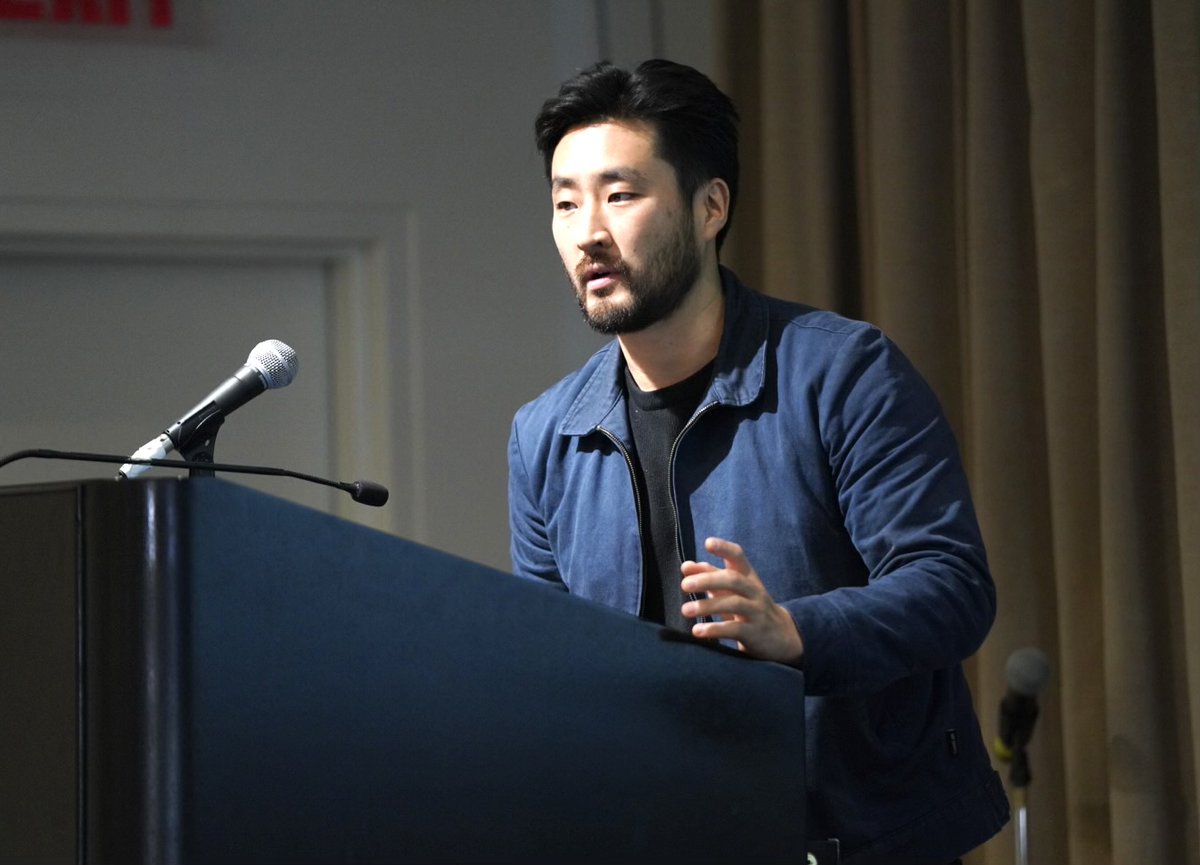
🌟🧠 In session at #NYBCI24! Peter Yoo, PhD, Senior Director at @synchronin, is exploring "Integration of AI & Machine Learning in BCI, Neural Decoding, Signal Processing, and Microelectronics"! #neuroscience #neuraldecoding #stentrode #synchron
2
8
951

17 Oct 2024
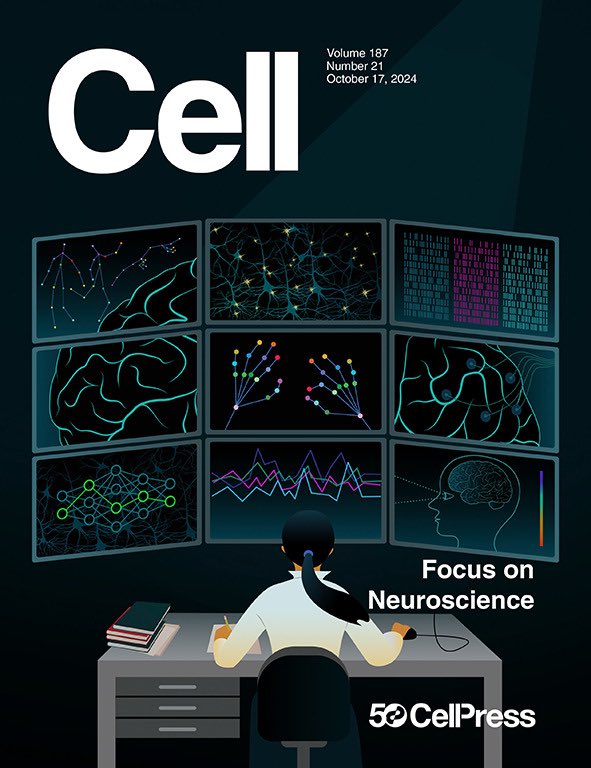
✨🥰 check out our article - and cover 🤩- about Decoding the Brain in @CellCellPress
cell.com/cell/fulltext/S0092…
We review the mathematics, current approaches, and muse about the future…
#BCI #neuraldecoding #neuroAI
Thanks to my awesome co-authors Adriana Perez Rotondo, Edward Chang, @AToliasLab & @TrackingPlumes
10
87
413
55,533

24 Jul 2024
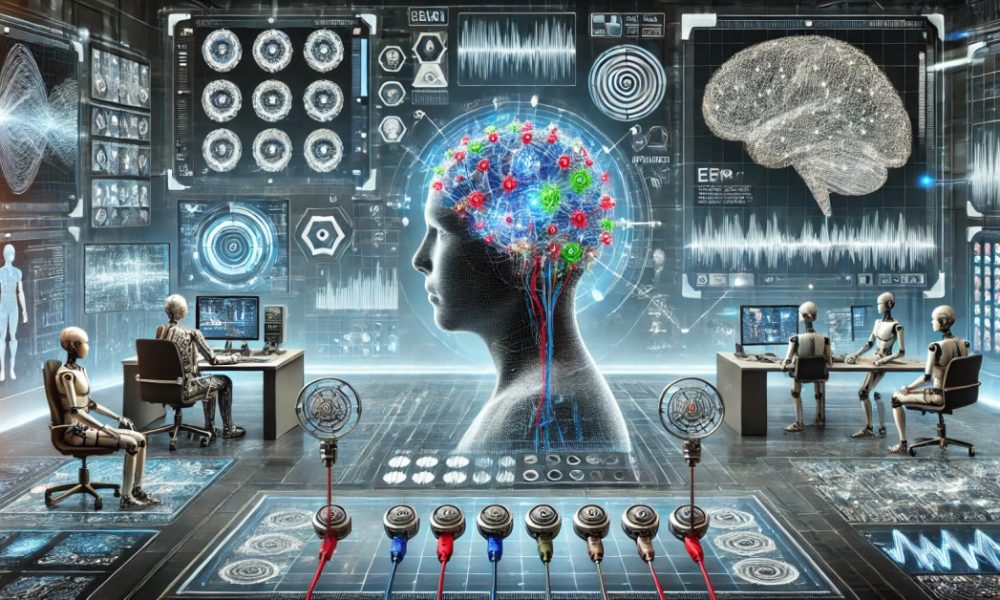
Reading Your Mind: How #AI Decodes Brain Activity to Reconstruct What You See and Hear
ow.ly/hSWz50SIA2F
#BrainDecoding #NeuroTech #MindReading #AIResearch #NeuroScience #TechInnovation #CognitiveComputing #NeuralDecoding #BrainInterface
3
3
190

4 Jul 2024
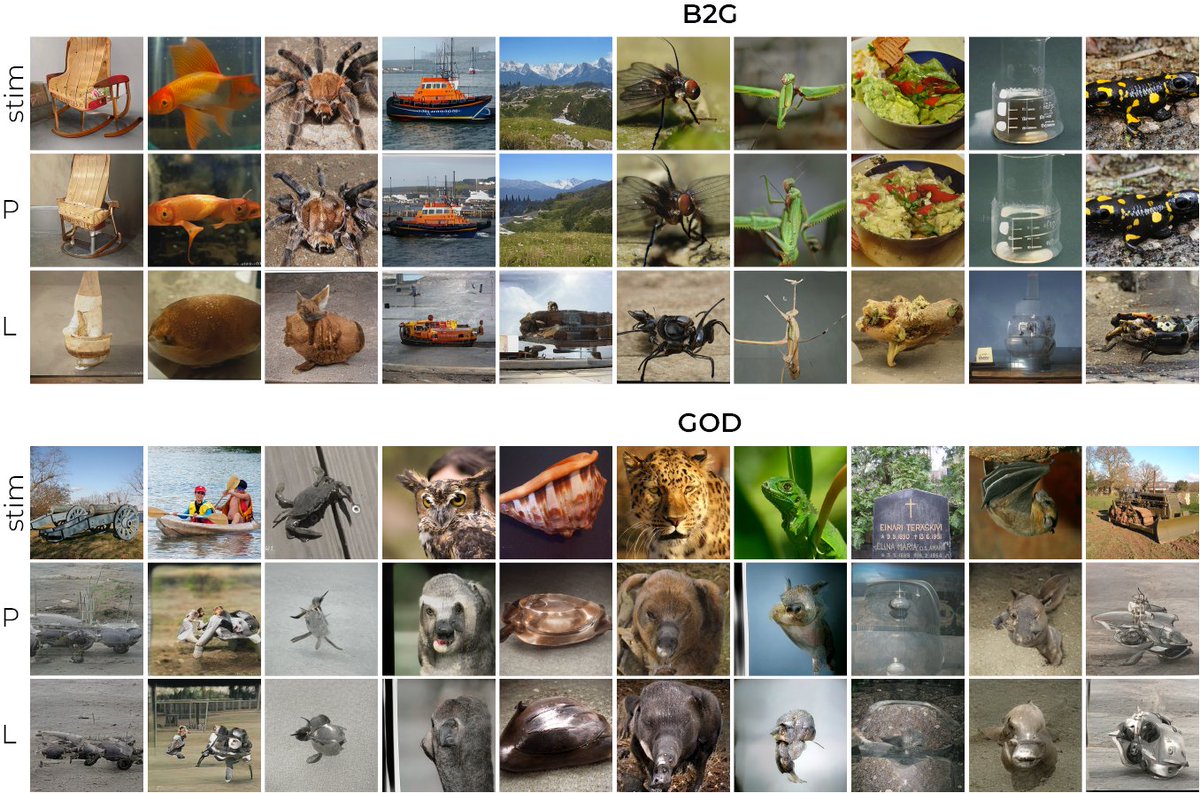
Our preprint on "PAM: predictive attention mechanism for #neuraldecoding of #visualperception" is featured on @newscientist! 🧠📖♥️
w/ @umuguc (neuralcod.ing/) @DondersInst
newscientist.com/article/243…
(Preprint: doi.org/10.1101/2024.06.04.5…)
#attentionmechanism #brainreading
2
6
24
2,864
25 Jun 2024
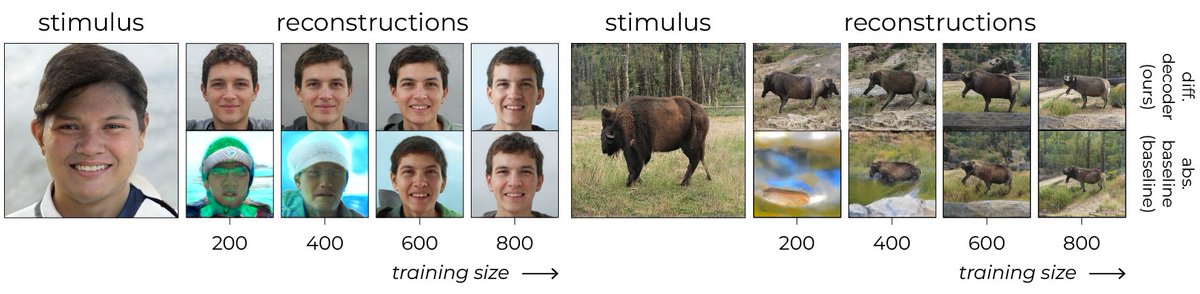
[1/7] 🎉 Our paper 'Get more from less: Differential neural decoding for effective reconstruction of perceived naturalistic stimuli from noisy and scarce neural data' has been accepted for a talk at #cogsci2024! w/ @umuguc #neuraldecoding
Paper: escholarship.org/uc/item/7vt…
1
1
2
975

23 Jun 2024
Excited to present at #AREADNE2024 in Milos 🌞!
Check out my poster on "Neural Decoding of Temporal Features of Zebra Finch Song" 🧠🎶. Watch the neural activity in action!
Can't wait for your comments and discussions!
#Neuroscience #AI #ZebraFinche #NeuralDecoding #Auditory
2
8
829

6 Nov 2023
Come see us at #SfN2023!
We are going to present our latest research on both #motorcontrol and #somatosensation in human #intracortical #BCI 🦾🧠
SUN, NOV. 12 - 2:30 PM NANO25.07 "#NeuralDecoding and #Neuroprosthetics":
Finding the groove in neural space, Drew Sheets, WCC 201
1
2
26
1,287

16 Oct 2023
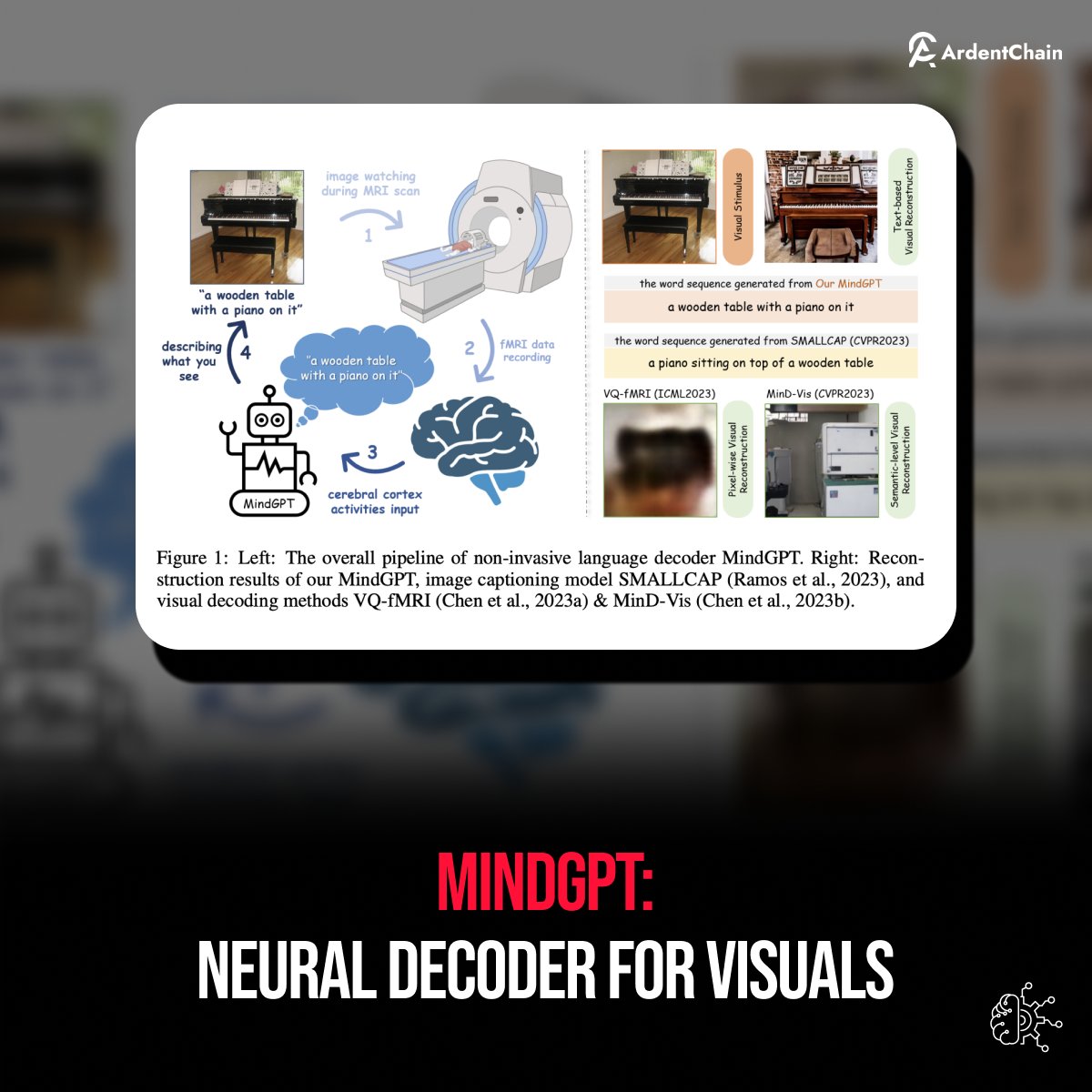
MindGPT - a neural decoder, translating visual signals into natural language using fMRI data. This breakthrough hints at a future where we can understand brain responses to visuals without invasive methods.
#MindGPT #NeuralDecoding #Innovation
4
57

11 Oct 2022
⭐ @b_cratos focus on Machine Learning ⭐
"Machine Learning for Neural Decoding" - Research article
💡Learn more about it during our upcoming #Webinar with Paolo Viviani, Andres Agudelo-Toro and Brian Dekleva, PhD.
👇 lnkd.in/ePUmzwEZ
#machinelearning #neuraldecoding
2
4 Oct 2022
An uncanny valley or cliff? Wrote a new blog post on decoding syntheticity from the brain!🧠✨ @umuguc
medium.com/neural-coding-lab…
#fMRI #GANs #neuraldecoding #syntheticity #uncanny #uncannycliff #uncannyvalley
(same post also on thirzadado.com/uncanny/)
2
11
27 Sep 2022
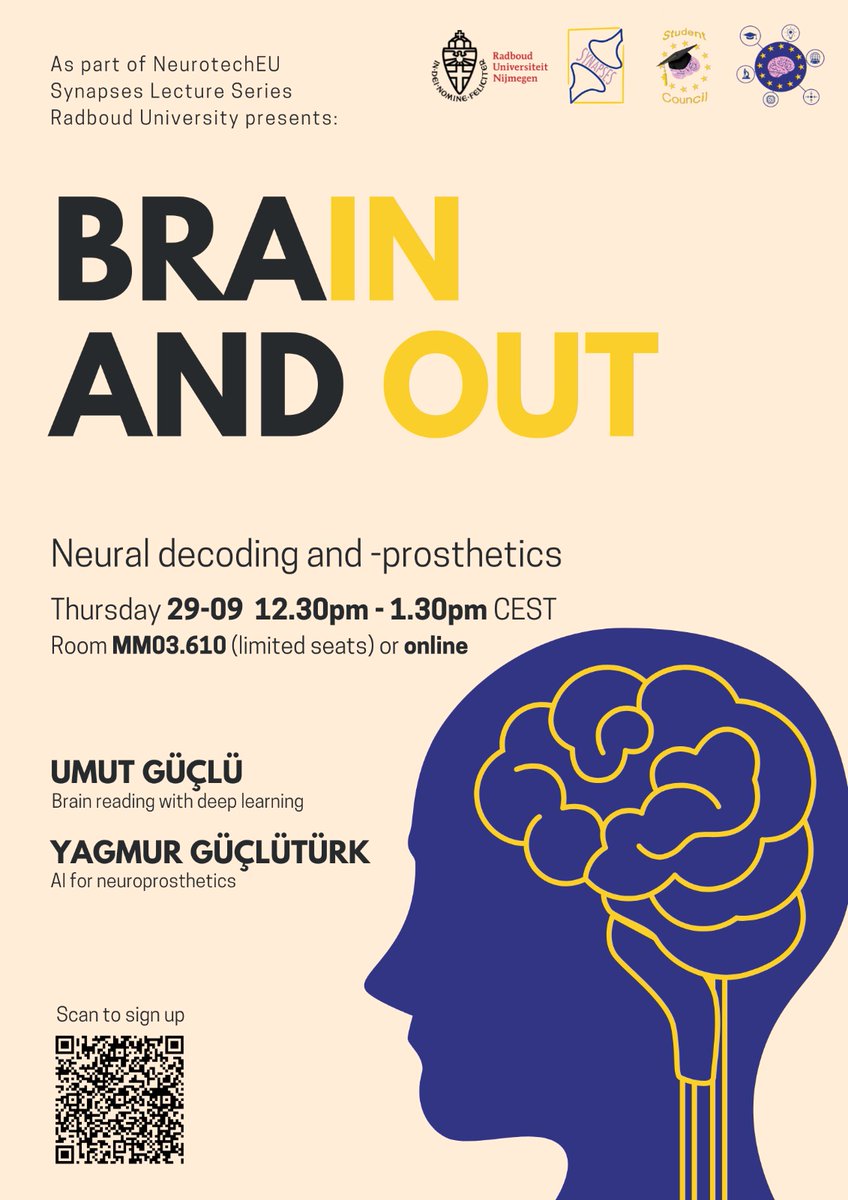
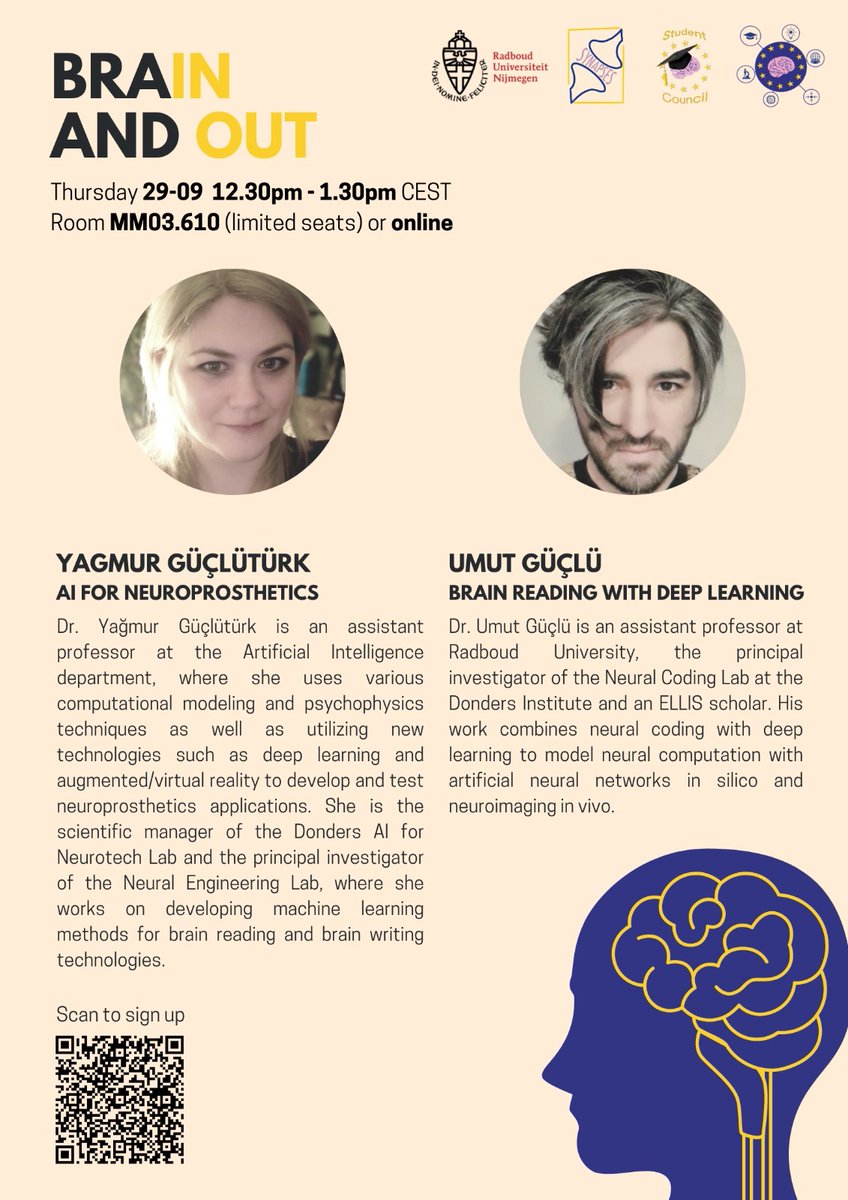
📢✨ @NeurotechEU invites you to the synapses lecture on #neuraldecoding and #neuroprosthetics organized by @Radboud_Uni on Thursday 29th of September at 12.30-01:30 pm (CEST).
Online or in-person (limited seats available), save your seats: forms.gle/bznvQ15xvWJ2KT6L8
2
8

26 Jul 2021
Scientists led by Krishna Shenoy, a Howard Hughes Medical Institute investigator at Stamford University, have turned brain signals into legible text via a brain-computer interface.
More at: go.nature.com/3eJOlDi
#ThisIsOR #ORMS #NeuralDecoding

2

22 Jan 2021
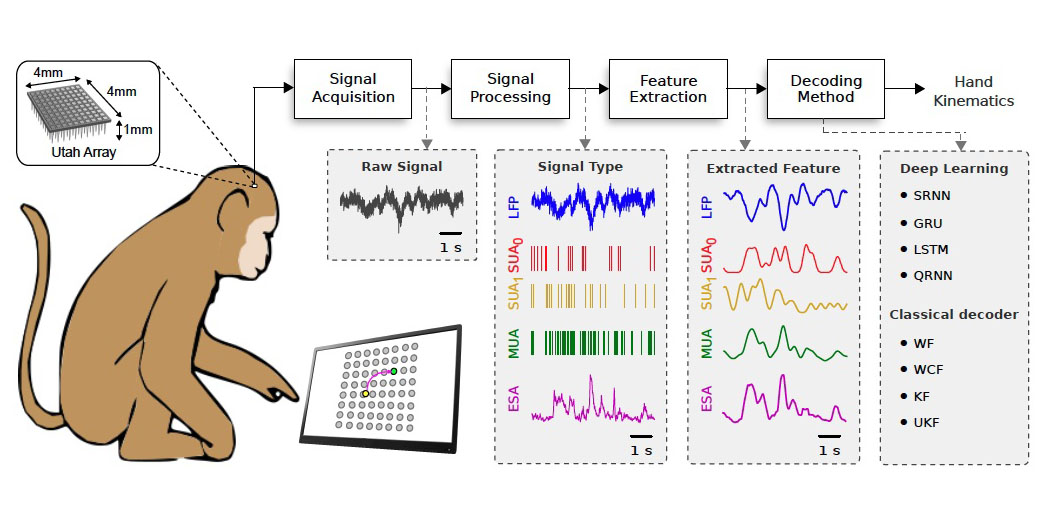
Our latest paper on brain-machine interface (BMI) decoding with entire spiking activity (ESA) and deep learning has just been published in J. Neural Eng. #BMI #NeuralDecoding #DeepLearning
22 Jan 2021

Latest paper with @ahmadi_nur @CBouganis published in J. Neural Eng. doi.org/10.1088/1741-2552/ab…
We show here how using deep learning (QRNN) on the entire spiking activity (envelope signal) can outperform all combinations of commonly used signals and methods for neural decoding.
5
15