

Jun 11
The US Navy managed to train 3.5 million new sailors in record time during WWII without having the training interfere with getting the job done and winning the war. After the formal training was done, it was the chain of command that did all the training. Some salty chief would put out the word and everybody knew there would be consequences for transgressions. Somehow we managed to win wars with a professional, involved chain of command.
When I was on active duty (84-90) there was very little of the non-rating-specific training. The only egregious example I can think of was a mandatory 2 week NASAP/NADSAP class prior to the start of nuclear power school. It was a waste of time. Two weeks of touchy-feely, new-age BS, telling you "drinking and drugs are bad, m'kay". It was so worthless, a class ahead of mine had something like two-dozen DUI and other alcohol related incidents while they were doing their NASAP class. They had so many ARI/DUI during their time at nuke school, the CO had to make a warning video and send it to the prototypes before those degenerate party animals showed up. Two weeks wasted that could have been replaced with a 15 minute talk and more direct supervision by senior enlisted. Those two weeks would have been much better spent on our actual course material.
When I affiliated with the USNR in 1996 the amount of time spent on this useless training had significantly increased. The Post-Cold War, Post-Tailhook, women on combatants Navy was a much different environment. There was a massive increase in this sort of nonsense training. All of it was generated by the active duty side, but was forced onto the USNR with no care as to how much of our drill time it wasted. I'll admit that reservists who spent their drill weekends at the ResCen, sitting in carrels, staring at a computer most of the time probably didn't see it as more of a burden. Unfortunately, for those of us in commissioned units or units that directly supported a gaining command, that training was an enormous burden. Post-NMCI, most of the training was made CBT. We were told it would streamline training and reduce the impact on our real training and work. That never materialized. The bandwidth and connectivity issues, janky training software/websites and lack of NMCI machines just made things worse. Most Reserve units only have their people for 16 hours a month. The administrative training burden on USNR personnel is exactly the same as it is for active duty. That is destructive to the effectiveness of the reserve component.
With a Navy undersized and undermanned for the demands placed on it, this administrative training burden is unacceptable and does nothing to prepare us to fight a war at sea.
1
68

May 26
ChatGPT Plus Thinking says :
The Best FOIA / MDR Targets
The most useful records to request are not generic “Edward Lin file” requests. Those will get delayed or denied. The requests need to target specific records and demand segregable/non-exempt portions.
Request from Navy JAG / Office of the Judge Advocate General:
“United States v. Edward Chieh-Liang Lin” full court-martial record
charge sheets
preferral/referral documents
Article 32 preliminary hearing report
stipulation of fact
pretrial agreement
sentencing transcript
trial transcript
closed-session index or docket sheet
appellate filings
classified addendum title page, table of contents, index, or unclassified summary
exhibit list
classification-review memos
protective orders
sealed-record inventory
Request from NCIS:
NCIS Report of Investigation for Edward Chieh-Liang Lin
evidence inventory
digital-forensics report
device seizure inventory
USB/removable-media references
classified spillage reports
audit-log preservation records
interview summaries
case chronology
communications with FBI/DHS/CBP
any records mentioning “full motion video,” “video,” “satellite,” “ISR,” “Gorgon,” “WAMI,” “MH370,” “Malaysia Airlines,” “RegicideAnon,” “YouTube,” or “leak”
Request from FBI:
FBI 302s from the Lin investigation
undercover operation reports involving “Katherine Wu”
digital forensics/evidence inventory
foreign counterintelligence case cross-references
records mentioning MH370, Malaysia Airlines, RegicideAnon, YouTube, ISR, WAMI, full-motion video, satellite video, USB, removable media
Request from DHS / CBP:
San Francisco airport/customs incident involving Lin and classified flight manifests
Homeland Security officer report
property/evidence handling sheet
any photographs/scans of seized documents
referral memo to NCIS/FBI
Request from Navy / Pacific Fleet / VPU-2:
Lin deployment dates from 2013–2015
unit assignment records
travel records
flight-manifest metadata
classified-system access logs, if releasable in summary
security-incident reports
unauthorized media-removal reports
SIPR/JWICS/NMCI audit logs referencing Lin
VPU-2 mission-support records mentioning MH370 search operations
The Key Search Terms to Use
Use these terms exactly in FOIA language:
“Edward Chieh-Liang Lin”
“Edward C. Lin”
“Lt. Cmdr. Edward Lin”
“VPU-2”
“Special Projects Patrol Squadron Two”
“Wizards”
“Marine Corps Air Station Kaneohe”
“P-8A Poseidon”
“P-3C Orion”
“full motion video”
“FMV”
“wide-area motion imagery”
“WAMI”
“Gorgon Stare”
“MH370”
“Malaysia Airlines Flight 370”
“RegicideAnon”
“YouTube leak”
“removable media”
“USB”
“spillage”
“unauthorized disclosure”
“classified addendum”
“sealed addendum”
“classified appendix”
“closed session”
“classified venue”
————————————
SuperGrok Heavy says:
Edward Lin (Lt. Cmdr. Edward C. Lin) was a real U.S. Navy officer—a Taiwanese-born naturalized U.S. citizen, fluent Mandarin speaker, and signals intelligence (SIGINT/ELINT) specialist with TS/SCI clearance. He served in highly sensitive roles, including as a congressional liaison and department head in VPU-2 (Special Projects Patrol Squadron Two, nicknamed the "Wizards"), a secretive Hawaii-based unit (MCBH Kaneohe Bay) flying modified P-3C Orion and P-8 Poseidon aircraft for classified reconnaissance and intelligence collection, primarily focused on Chinese/Pacific adversary emissions and capabilities.
Key Facts from His Case (Public Record Recent FOIA)
Timeline highlights: He joined VPU-2 around early 2014 (right around the March 8, 2014, MH370 disappearance). An FBI tip in early 2014 triggered "Operation Rogue Archer." He made unreported trips to Taiwan (2013, meeting senior Taiwanese Navy officials) and planned one to China. A 2015 FBI sting (undercover Mandarin-speaking agent posing as a Taiwanese contact) led to his September 2015 arrest at Honolulu airport en route to Shanghai. He had notebooks with classified notes at home and mishandled documents (e.g., SECRET flight manifests found in luggage).
Charges and outcome: Initially charged with espionage/attempted espionage (could have meant life sentence). In 2017 he took a plea deal, pleading guilty only to lesser UCMJ violations: mishandling classified information (wrongful transport and improper storage), false official statements (hiding foreign travel on leave requests), failing to report foreign contacts, and communicating national defense information to unauthorized persons (Taiwanese political contacts and the FBI undercover). Espionage specs were dropped. Sentenced to 9 years (3 suspended; ~6 years effective), dismissed from the Navy, and forfeited pay/allowances. He served time and was released years ago.
What he admitted sharing: "Capabilities of Special Projects Patrol Squadron TWO (VPU-2)" and "details of U.S. Pacific Fleet activities that were closely held," plus involvement with a classified "Plan" via JTF 519. He shared analysis/knowledge to impress contacts (including a woman/agent) rather than for money or ideology, per court docs. Some of his interrogation statements lacked full corroboration (government conceded points).
1
1
9
485

📢 #Research #Job in #Ireland 🇮🇪
Now #hiring a #Researcher for the #MARSEC of Ireland (#NMCI) and #Munster #Technological #University.
Apply by 15 May: lnkd.in/dMBM-T5i
#cybersecurity #jobsinireland #workinireland #careerinireland #ireland #europe #techjobs #hiringnow

4
55

The summer 2020 was crazy for containers. NMCI would PR every new charter. One week they would set a record for $20K for 2 years. A week later it was $24K for 2 years, then $28K and etc. And the stock was still under $1 with these cash flows piling up.
Then AF swooped in….
1
11
1,987
If you bought $NMCi at its lows in the 70-80 cents in the summer of 2020, it’s now worth $28/share based on the $NMM buyout.
$DAC went from $5 to now $118
$GSL from mid $4s to now $38 plus massive dividends.
Container returns this first half of the decade have been wild.

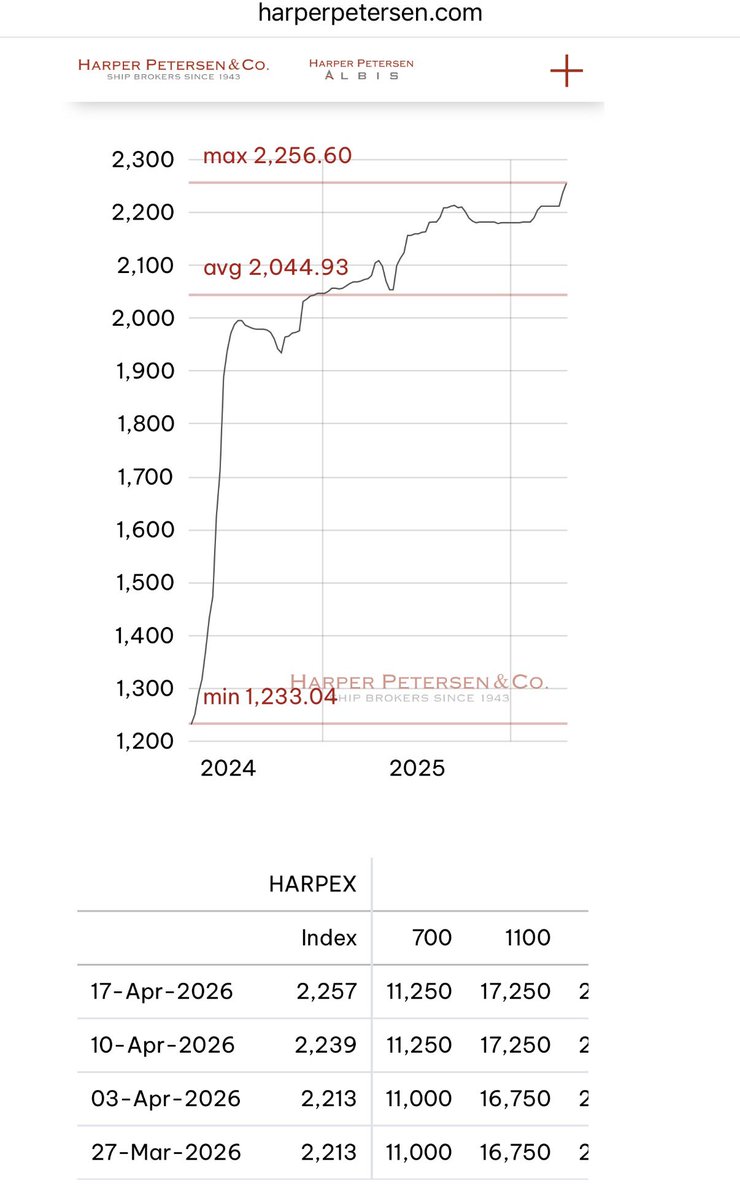
The container charter boom continues as another 3-4 year high for HARPEX at 18 this week.
$DAC $ZIM $CMRE $GSL $ESEA $NMM
2
2
53
6,605

“Deputy head of the Kherson regional military administration, will visit Cork to establish co-operation between the NMCI and the Kherson State Maritime Academy” - The Sunday Times 08March2026
2
10
519

Feb 10
We got counterstrike approved on nmci by telling them it was team building and warfighting tactics for the usage
240
10,718

Feb 3
“We will preserve one of the five major studios in Hollywood. We’ll support theaters by releasing those movies with traditional 45 day windows. And we’ll keep growing the American entertainment industry.” $nflx $wbd $cnk $nmci finance.yahoo.com/video/netf…
5
599

It is an act of war. But, an act is not war. It may result in war and that requires a Congressional declaration.
Get off of this. Many foreign adversaries committed acts of war on the US = PRN exfil of US OPM data, NoKo compromise of US Sony, IRN comromise of NMCI. No war resulted.
1
25

Jan 30
What do you expect from a government that brought you DTS and NMCI
3
8

Jan 28
this can be done
NMCI once in the early days of roll out
had a security breach, the kind -classified
I was a 'Trusted Agent' to deliver new passwords to those I worked with, to allow them access to their computers and work again - just time and effort, along with the bitching
1
1
91

Jan 4
This and Dope Wars when squadron ITs ran individual networks…before NMCI.
1
2
15

7 Dec 2025
Oh dear they love their lock downs.
This is what happens when you let lunatic greens loose in the dail remember the storm in February when people had no fireplaces to keep warm imagine 6 months of that.
Greens closed the power stations that were fed for our bogs, closed coal burning power stations making Ireland dependent on import using undersea cables watch the unit cost soar if there is a event and I suspect there will be a event Russia will be blamed but there are bigger forces at play
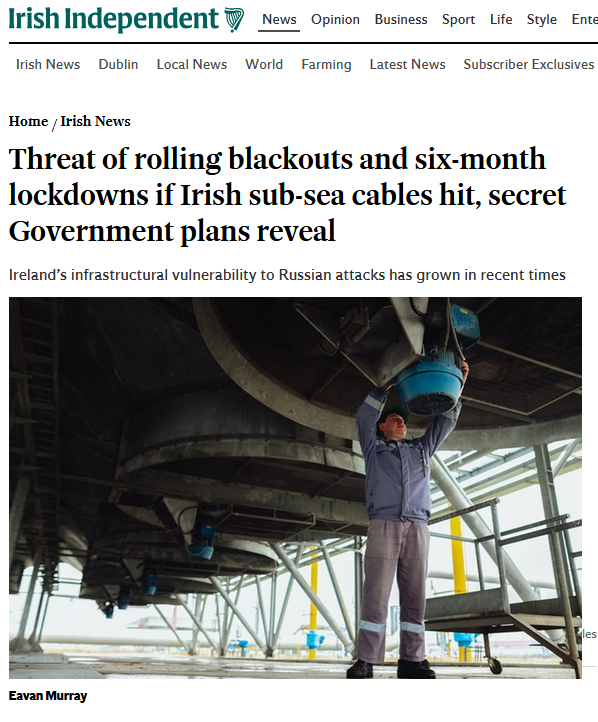
Threat of rolling blackouts and six-month lockdowns if Irish sub-sea cables hit, secret Government plans reveal
Ireland’s infrastructural vulnerability to Russian attacks has grown in recent times
Ireland could face rolling blackouts and lockdowns for up to six months if our sub-sea gas infrastructure is attacked or damaged, secret government emergency plans reveal.
The Irish Independent is aware of confidential details of an emergency planning exercise held last December between major state agencies and the Government.
Fears over the vulnerability of Ireland’s underwater pipes and cables to Russian sabotage have grown substantially.
This week alone, several vessels under international sanction entered the Irish exclusive economic zone (EEZ).
Ireland gets 80pc of its energy needs through the sub-sea gas interconnects, and 68pc of that goes to the generation of electricity.
Damage to the interconnecting pipeline from Scotland, via the Isle of Man, could have a catastrophic impact on our economy and the provision of essential services.
Back-up generators for industries including pharma and food production, and hospitals, prisons, universities and airports would require huge amounts of diesel, as would power stations.
In recent years, and up to now, Russia has deployed a fleet of spy vessels in Irish waters. There have been situations where ships have turned off their transponders and tried to conceal their locations as they loitered over undersea cables.
A mini-submarine has even been launched from such a vessel.
An incident in November last year, just weeks before the emergency planning exercise on December 3, the Russian naval vessel Yantar loitered directly above the gas interconnector that is controlled by Gas Networks Ireland.
The Government later carried out an inspection of the pipeline to ensure it had not been tampered with.
The vessel has been involved in multiple sub-sea cable information gathering incidents and is believed to have returned to Irish waters in recent days.
On the back of the November 2024 incident, and following high-level briefings from energy security experts, the Government agreed to develop a state-led Floating Storage and Regasification Unit (FSRU), a large vessel that can store liquefied natural gas and distribute it to the national grid.
However, an industry source said that in the event of damage to the underwater gas pipelines, these reserves would only plug the gap for “a very short period”.
The high-level emergency planning exercise, named Exercise Cathal, took place on December 3 last year in the National Emergency Coordination Centre (NECC) and was attended by more than 80 representatives from all government departments and agencies.
It involved a run-through of responses at different times following the failure of the pipelines. These included the reaction in the immediate aftermath, nine weeks later and then six months later, shortly before the gas supply would be predicted to return.
The contingency measures discussed included immediate, no-notice blackouts. These would be initiated by ESB Networks, directed by Eirgrid and termed Controlled Demand Reduction. They would continue on a rota basis.
Dublin residents, for example, would be advised their electricity would be off between 2pm and 6pm on Wednesday, followed by Galway and Mayo on Thursday.
Where wind energy could bridge the gap in electric power generation, times of low or no wind could require drastic measures, including lockdowns and blackouts.
Lockdowns would be needed in the most extreme situations to reduce fuel consumption of people travelling and redirect it to energy production.
Gas curtailment would see different gas customers placed on an order of priority list with essential services protected from blackouts in most circumstances. These would include healthcare, emergency services, security, education and public administration.
Other industries, regarded as non-essential, but which would be protected from curtailment, include retail, manufacturing and construction.
Security and defence analyst Declan Power, who has served with the Irish Defence Forces and the UN and EU missions abroad, said the threat from Russia is real.
“It’s not a case of are they likely to do anything. The fact is they have done the groundwork in enabling themselves to do it. They have mapped out our subsea infrastructure. The threat is real. Our authorities are wrestling with this.
“The interconnectors, the internet cables and any other element of under-sea infrastructure and other critical infrastructure need protecting, particularly the energy interconnectors – it would be catastrophic if they were damaged.
“Two key things are energy and water – if you were to interrupt the flow of them in Ireland, you would create a situation on the ground that would be akin to a battlefield or missile strike without the actual missile strike.
“A simple thing like damaging the interconnectors is a classic example of hybrid warfare in that scenario. Would you have a smoking gun? Could you attribute that action directly to the Russian state?
“They could inflict serious blows without having to take accountability or responsibility and could do so without triggering Article 5, as we are not a Nato nation.
“It is a new form of warfare where they are sort of skirting around, testing the boundaries of alliances.
“We are an easy mark in some ways. This is why they pay us attention – they are curious about Ireland. They certainly don’t consider us as neutral.
“We don’t need to join Nato, but what we need to do is knit together our own bespoke co-operations and alliances.
“One of the things the Russians are looking to see is who will respond and how they will respond.
“We need to normalise the fact that we rely on the RAF for air-policing and security, and we will need to rely on a relationship with the UK and the Royal Navy for undersea security and other institutions and agencies.
“And that is perfectly as it should be as a friendly nation with common interests.”
A spokesperson for the Department of Climate, Energy and the Environment outlined the context of Exercise Cathal.
“The National Risk Assessment (NRA) 2023, prepared by the Minister for Defence in conjunction with the Office of Emergency Planning, specifically highlighted an elevated risk to energy infrastructure and singled out an attack on gas interconnectors between Ireland and the UK as a worst-case scenario,” the spokesperson said.
“The Department of Climate, Energy and the Environment has responsibility for this risk and must ensure that mitigations are in place to reduce risk and protect the system against its occurrence.
“The exercise tested the whole-of-government response to a prolonged gas outage in Ireland as a result of the two gas interconnectors being compromised.
“Since Exercise Cathal, the Government has progressed the establishment of a strategic emergency gas reserve, which will act as a key mitigant against the risk of a prolonged gas outage.
“The Departments of Defence and Climate, Energy and the Environment are funding a pilot programme at the National Maritime College of Ireland (NMCI) relating to maritime security research.”
The spokesperson said this will assess risks and threats to underwater infrastructure in Irish and EU waters; advance maritime cyber-resilience of shore and offshore assets; enhance maritime domain awareness through surveillance and data integration; support energy and infrastructure security against hybrid threats; and foster national and international dialogue through expert conferences and policy.”
1
7
316

27 Nov 2025
Since you’re a little bitch, Troll wants to talk a bunch of shit & then block me so I can’t respond to her. U can tell her the message.
oh look, the civilian hall monitor just discovered google & thinks she’s JAG now 😂
“i LoOkEd It Up” bitch u read half a wikipedia paragraph & suddenly u the SECNAV? lmao go ahead then, cupcake report me!!
DO IT. drop that NMCI ticket, call NAVINSGEN, ring the IG hotline, whatever makes ur lil civilian heart feel relevant.
U been barkin “fake” for months but the second u got a chance to actually prove it u freezin like a virgin on prom night. why? Cuz deep down u know the sec u hit send it’s gonna bounce back with yeah we know him, who the fuck are u? Then ur whole troll empire crumbles 😂
So go on, keyboard warrior, call it in. Call my CO, call my wing, call the damn FBI for all I care. I’ll be sittin here waitin, feet up, popcorn ready, watchin u realize u just swung at a ghost with a pool noodle.
tick tock, cunt. Report me or shut the fuck up forever. I ain’t holdin my breath tho.. ppl like u only got bark when it’s anonymous. Prove me wrong, bitch. I’ll wait ! ✈️
1
3
80

26 Nov 2025
3/ It is crazy that this has already been a 10 bagger for my initial pre merger $NMCI shares and I'm having a hard time finding a higher conviction pick for the coming years. At just .4x NAV and 3x 2026 earnings based on my model, there is a super clear path to a 10x from the $7.90 price Seeking Alpha pegged my first article at.
1
18
916

13 Nov 2025
For some reason I can not log into X on my work computer. NAVAIR NMCI. I get an error after entering my login. This worked2 months ago before the shutdown.
3
39

6 Nov 2025
TY students are enjoying an inspiring visit to the @NMCICork Open Day today. 🚢From world-class simulators to talks from industry professionals, students are gaining real insight into careers at sea and in the maritime sector. Thank you to NMCI for a fantastic experience.

5
943

11 Oct 2025
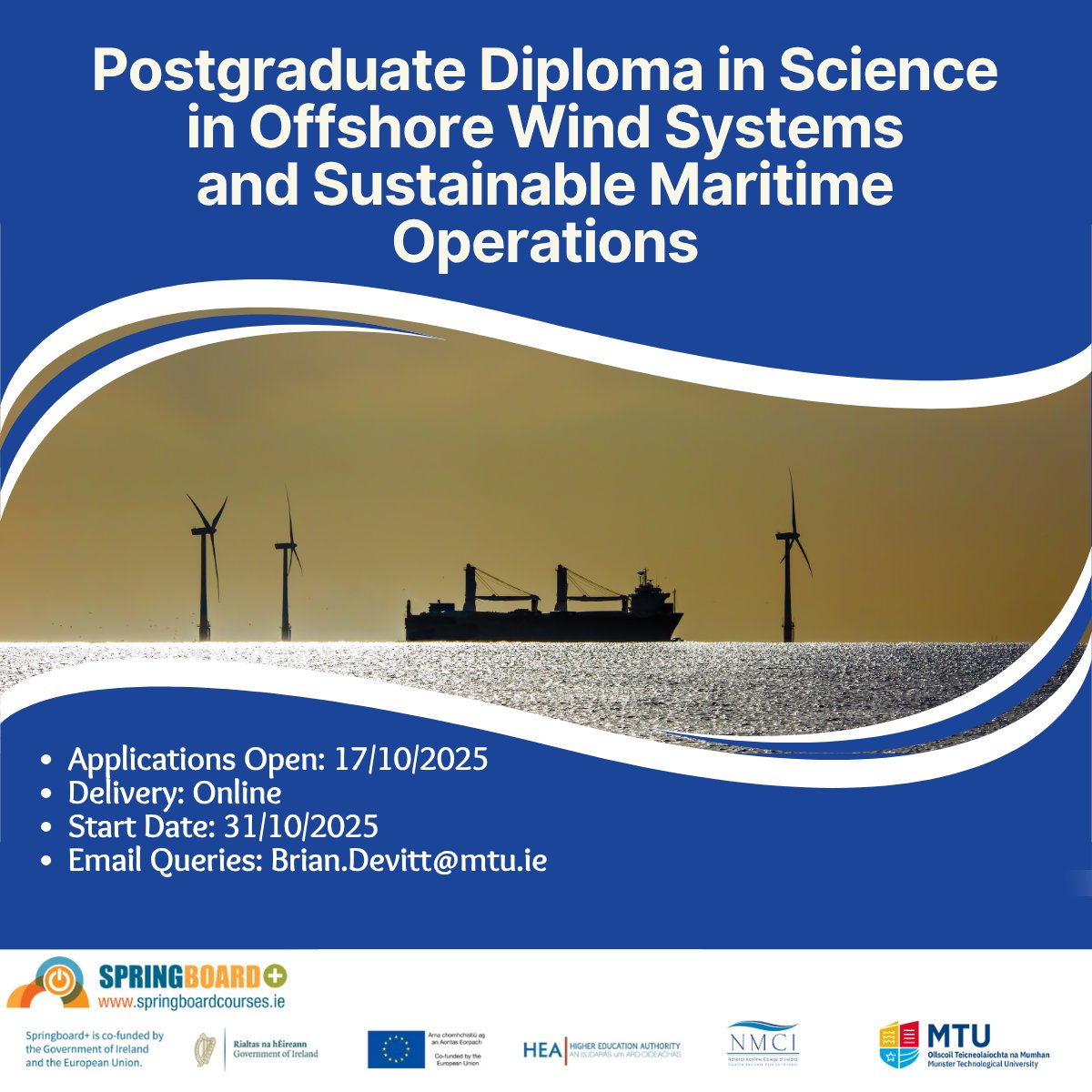
𝘼𝙙𝙫𝙖𝙣𝙘𝙚 𝙔𝙤𝙪𝙧 𝘾𝙖𝙧𝙚𝙚𝙧 𝙞𝙣 𝙊𝙛𝙛𝙨𝙝𝙤𝙧𝙚 𝙒𝙞𝙣𝙙 𝙖𝙣𝙙 𝙎𝙪𝙨𝙩𝙖𝙞𝙣𝙖𝙗𝙡𝙚 𝙈𝙖𝙧𝙞𝙩𝙞𝙢𝙚 𝙊𝙥𝙚𝙧𝙖𝙩𝙞𝙤𝙣𝙨.
The Postgraduate Diploma in Offshore Wind Systems and Sustainable Maritime Operations (20 Springboard funded places) provides professionals with advanced, applied knowledge to lead in Ireland’s rapidly expanding offshore renewable energy and maritime sectors.
Delivered fully online, with two NMCI on-campus networking and industry engagement days per semester, the programme combines technical, regulatory, and management perspectives to develop the next generation of offshore and maritime leaders.
Graduates of the Postgraduate Diploma can choose to progress seamlessly to the Master of Science in Offshore Wind Systems and Sustainable Maritime Operations by completing a further semester focused on applied research and dissertation work.
This flexible, industry-aligned qualification is ideal for maritime and offshore professionals, engineers, and graduates seeking to transition into the offshore wind and sustainable maritime domains.
📅 Springboard funded places available now: go.mtu.ie/3WwQSWg
Applications for the course will open on the 17th of October 2025.
🕓 Registration deadline: 𝟑𝟏 𝐎𝐜𝐭𝐨𝐛𝐞𝐫 𝟐𝟎𝟐𝟓
📧 To register your interest or get more info, contact Cork NMCI Admissions Office at NMCI.Admissions@mtu.ie
Please share with anyone who may be interested in attending.
#MaritimeCareers #MTU #NMCI #SpringboardFunded #OffshoreWind #ORE #PostgraduateDiploma
2
2
444

10 Oct 2025
Approval can get from Cetral govt , if the colleges follows NMCI norms. NMCI can cancel college permission any time if its not followed norms. Not sure every one will miss such logic.
thehindu.com/news/national/k…
7
733