
Nahh that wasn’t a curse out she hasn’t been with offset in over two years and as a gay man you shouldn’t be trying to shame women for having children cause Nicki can’t produce and we still got it so next
Sean Taylor 🇺🇸 retweeted

More carbon offset fraud: "Trees may not be able to store as much planet-heating carbon as hoped, a study suggests, with researchers finding photosynthesis does not always lead to wood growth."
theguardian.com/environment/…

2
11
32
1,520


51s
Not that reliable honestly,,,lots of fluctions,,very efficient when used side but side by grid AC,,use it to offset some utilities things like security lights etc,,not entirely

☀️ What if your summer getaway could also build long-term wealth?
🌊 Enjoy it when you want
💰 Offset costs with rental potential
📈 Benefit from long-term value growth
Let’s connect and explore what makes sense for your goals.


There's no investment engine behind SS. It is a government run Ponzi scheme that should be dismantled. But don't punish the people forced to participate. Give it back with interest. Offset taxes you already pay and subsidize with tariffs.
3

Yall literally just got cursed out last month lmaoo like you just lied … how many times cardi left yall to argue with offset ? Or to be knocked up ? Or for surgery?Yall got all that but had to waited 7 years
1
1
6

Ask Offset and Scoop if you don’t believe me they’ll tell you for free as well.
3
Marina Archer retweeted

Quadruple guideline-directed medical therapy in #HeartFailure with reduced ejection fraction was projected to offset hospitalization costs by nearly $10 000 per patient-year, frequently yielding net health care savings.
ja.ma/4vJj9Z8
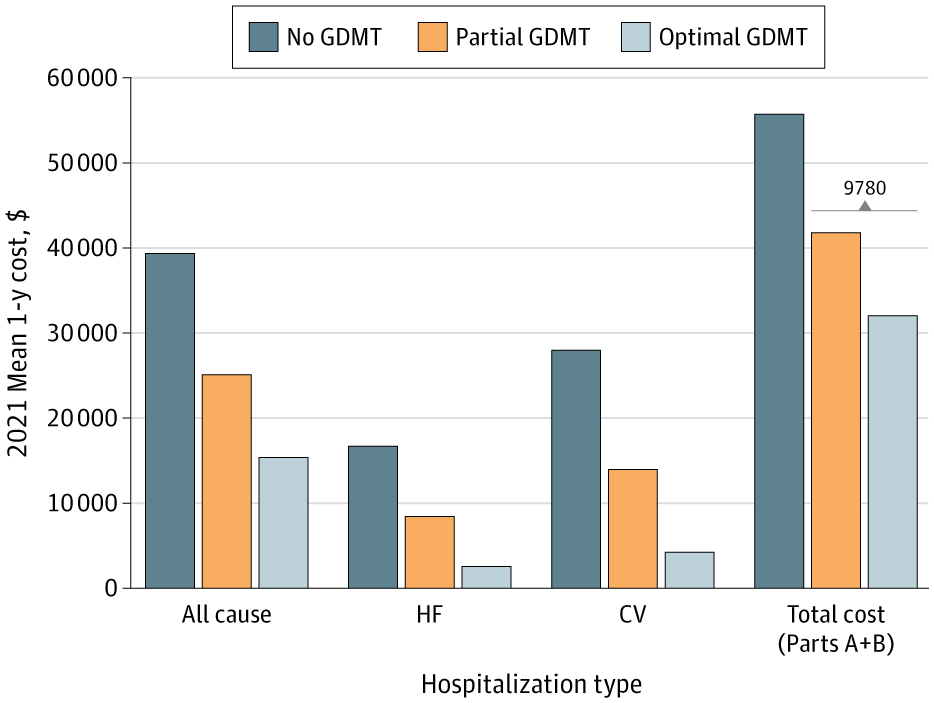
ALT Bar chart of 2021 mean 1-year costs ($) for hospitalization types: All cause, HF, CV, and Total cost. Costs are consistently highest for 'No GDMT', lower for 'Partial GDMT', and lowest for 'Optimal GDMT' across all types. E.g., Total cost for 'No GDMT' is ~$56K, 'Partial GDMT' ~$41K, 'Optimal GDMT' ~$32K.
6
7
469

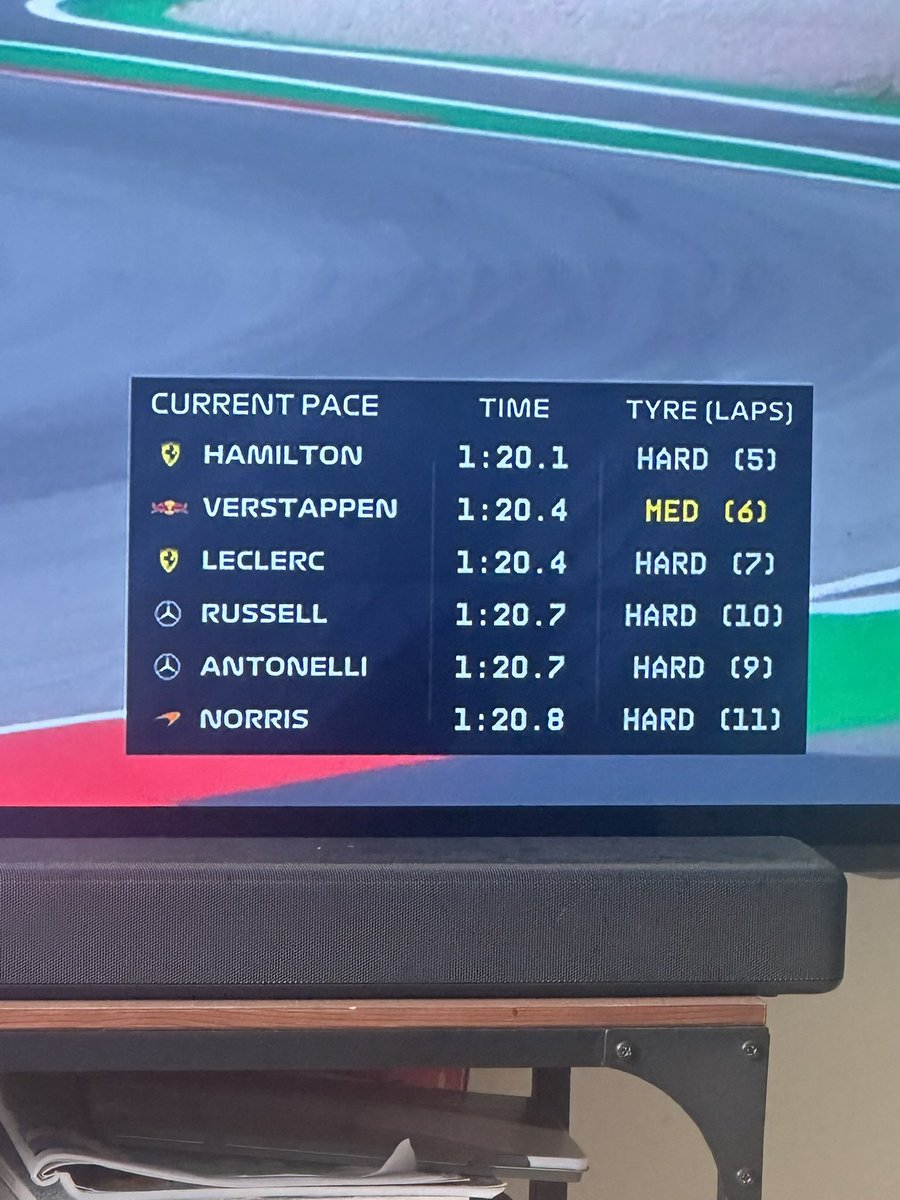
It wasn’t any more than 6 laps offset to the other top runnera
Wasn’t a big difference
So that last stint pace was serious
10

Stars have to be a little dirty and annoying to offset the stuff they have to take. Rasmus Dahlin is a perfect example. Other fan bases hate him for the same reason. SGA, Matthew Tkaczuk, even our beloved Josh Allen. It comes with the territory.
11

Last question, and feel free to pass on this one if you’re not comfortable answering.
Does the return offset the cost in any meaningful way?
I see folks discuss how they’re making money on here, but I always assumed it was a very small percentage.
1
1
9

Kulture will become a prostitute like her mom and I think Cardi is in denial. Offset should file for sole custody
8

DESIGN SOFTWARE AND PACKAGE CO-DESIGN BENEFICIARIES
Synopsys (SNPS) — multi-die, 2.5D/3D, HBM routing, multiphysics, and signoff beneficiary. Synopsys benefits because packaging is becoming part of system architecture rather than a back-end afterthought. Its 3DIC Compiler supports multi-die and advanced package co-design for 2.5D and 3D designs, including feasibility exploration, floorplanning, high-speed die-to-die routing, multiphysics analysis, and signoff verification. It also supports HBM and die-to-die routing, thermal, power integrity, signal integrity, and mechanical-stress analysis.
The Ansys acquisition increases Synopsys’s relevance because mechanical stress, thermal, warpage, signal integrity, power integrity, and package-level physics are central constraints in glass substrates and large AI packages. Synopsys stated that its integrated roadmap will fuse multiphysics across the EDA stack, including multi-die advanced packaging. The stock has less direct unit upside than equipment/material names, but software margins, recurring revenue, and design-flow lock-in make it a high-quality secular beneficiary.
Cadence Design Systems (CDNS) — package-aware 3D-IC design, thermal, signal/power integrity, and chiplet co-design beneficiary. Cadence is similarly positioned as advanced packaging shifts complexity into the design environment. Its Integrity 3D-IC platform is a unified design and analysis platform for multiple chiplets across 2.5D and 3D package styles, supporting fan-out wafer-level packaging, RDL/silicon interposers, wafer-on-wafer, chip-on-wafer, and full 3D stacking. Its broader multi-die 3D-IC solution supports static timing, signal/power integrity, EMI, thermal analysis, and co-design across IC, package, and board.
Cadence should benefit as customers need to co-optimize chiplets, HBM, interposers, package substrates, power delivery, thermal behavior, and boards. The key investment advantage is software durability and high incremental margins. The risk is valuation sensitivity and the fact that EDA upside is broad-based across chiplet/AI design rather than specifically tied to PLP or glass substrates.
AI SILICON AND MEMORY BENEFICIARIES
NVIDIA (NVDA) — largest demand-pull beneficiary, but not a supplier of PLP/glass tools or materials. NVIDIA benefits because packaging capacity is a gating factor for AI accelerator shipments, and improvements in panel-level packaging, glass substrates, CoWoS capacity, and HBM integration can enable larger packages, higher HBM counts, better power delivery, and lower yield-adjusted cost. NVIDIA’s FY2026 10-K states that it uses a fabless/contract manufacturing strategy across wafer fabrication, assembly, testing, and packaging; uses foundries including TSMC and Samsung; directly procures memory, substrates, and components; and secures supply/capacity during periods of growth.
The magnitude of the demand pull is clear: NVIDIA reported Q1 FY2027 revenue of $81.6 billion, up 85% YoY, and data-center revenue of $75.2 billion, up 92% YoY. NVDA benefits if advanced-packaging bottlenecks ease because it can ship more accelerators and support larger next-generation architectures. The offset is that NVIDIA often pays to secure scarce capacity, and custom ASIC adoption by hyperscalers could reduce some future merchant GPU share.
AMD (AMD) — chiplet and HBM-intensive AI accelerator beneficiary. AMD benefits from advanced packaging because its CPU and GPU architectures are highly chiplet-oriented, and its Instinct AI accelerators require high-bandwidth memory and sophisticated package integration. AMD reported Q1 2026 data-center revenue of $5.8 billion, up 57% YoY, driven by EPYC demand and continued Instinct GPU ramp. It also highlighted collaborations around next-generation AI memory and HBM4 supply for future Instinct GPUs.
The packaging significance is straightforward: AMD’s competitive position in AI accelerators depends on memory bandwidth, package-level integration, chiplet communication, power delivery, and thermal design. PLP/glass progress would not be AMD-specific, but it could lower cost and expand supply for large AI packages. The risk is that NVIDIA remains the dominant platform, while AMD must prove ecosystem, software, and rack-scale execution.
Broadcom (AVGO) — one of the strongest U.S. beneficiaries among custom AI ASIC suppliers. Broadcom is a major demand-side beneficiary because custom AI accelerators and AI networking are packaging-intensive. Broadcom reported Q2 FY2026 semiconductor revenue from AI of $10.8 billion, up 143% YoY, driven by custom AI accelerators and AI networking, and guided Q3 AI semiconductor revenue to $16.0 billion, up more than 200% YoY.
The investment case is that Broadcom is positioned at the intersection of hyperscaler custom silicon, high-speed networking, Ethernet scale-out, and advanced packaging. Custom XPUs can be extremely package-intensive because hyperscalers push HBM capacity, die-to-die bandwidth, and power density. AVGO is not a substrate supplier, but it is one of the strongest U.S. demand beneficiaries of the trend toward larger, custom, advanced-packaged AI silicon. The key risks are customer concentration, lumpy program ramps, and potential insourcing by hyperscalers.
Marvell Technology (MRVL) — custom AI silicon and connectivity beneficiary with higher execution beta than Broadcom. Marvell benefits from the same custom AI infrastructure trend as Broadcom, albeit at smaller scale. Marvell has positioned its technology platform around next-generation custom AI infrastructure and custom silicon.
The link to PLP and glass is indirect but meaningful. Custom AI accelerators increasingly require high-speed SerDes, die-to-die interconnect, HBM, package-level signal integrity, and large substrate/interposer area. If hyperscaler ASIC programs proliferate, Marvell’s custom silicon and connectivity franchise should benefit from the same package-complexity cycle. The risks are program timing, concentration, margin variability, and the need to prove sustained custom AI execution versus Broadcom.
Micron Technology (MU) — U.S. HBM beneficiary tied to package complexity. Micron benefits because HBM is a central component of advanced AI packages, and higher HBM stack count increases the value of memory bandwidth, TSV stacking, advanced packaging, and test. Micron began volume production of HBM3E in 2024, with its 24GB 8-high HBM3E used in NVIDIA H200 GPUs, and cited >1.2TB/s bandwidth for AI accelerators, supercomputers, and data centers. Micron also shipped HBM4 samples to key customers, with a 2048-bit interface, >2.0TB/s per stack, >60% better performance versus the prior generation, and a planned 2026 ramp aligned with next-generation AI platforms.
MU is not a PLP/glass supplier, but it is a direct beneficiary of advanced package scaling because more capable AI accelerators require more HBM capacity and bandwidth. The stock’s risk remains memory cyclicality, HBM qualification share versus SK Hynix and Samsung, capex intensity, and gross-margin volatility.
HYPERSCALER CUSTOM-SILICON BENEFICIARIES
Alphabet (GOOGL) — TPU beneficiary through lower AI infrastructure cost and differentiated cloud silicon. Alphabet benefits from advanced packaging because TPU performance depends on HBM, inter-chip interconnect, thermal design, and package-level integration. Google’s Ironwood TPU is its 7th-generation TPU, designed for inference, scaling to 9,216 liquid-cooled chips with increased HBM capacity/bandwidth and improved inter-chip interconnect networking.
The benefit is not supplier revenue; it is improved AI cost curve, cloud differentiation, and less dependence on merchant GPUs. Advanced packaging improvements can enhance TPU performance per watt and reduce total infrastructure cost. The risk is that Alphabet’s AI capex burden is very large, and any packaging savings may be reinvested rather than converted to near-term margin expansion.
Amazon (AMZN) — Trainium beneficiary through AWS cost/performance and supply-chain control. Amazon benefits from the ability to package increasingly capable custom accelerators with more HBM and better scale-up interconnect. AWS’s Trainium3 UltraServers use Trainium3 chips with 144GB of HBM3e memory and 4.9TB/s of memory bandwidth per chip; a fully configured Trn3 UltraServer delivers up to 20.7TB of HBM3e and 706TB/s aggregate memory bandwidth.
The investment logic is that custom silicon improves AWS AI infrastructure economics and reduces reliance on external GPU supply. PLP/glass advances could help future Trainium generations scale package size, memory bandwidth, and power delivery. The risk is that AMZN’s stock is driven by AWS growth, retail margins, advertising, and aggregate capex discipline; custom silicon is strategically important but not a pure-play earnings lever.
Microsoft (MSFT) — Maia beneficiary through Azure inference economics and internal AI workload optimization. Microsoft’s Maia 200 is a direct example of hyperscaler demand for larger, HBM-rich, advanced-packaged custom silicon. Microsoft stated that Maia 200 is built on TSMC 3nm, has 216GB of HBM3e at 7TB/s, 272MB of on-chip SRAM, and is engineered to improve the economics of AI token generation.
Advanced packaging matters because Maia-class chips are constrained by memory bandwidth, chip-to-chip communication, thermal design, and power density. MSFT benefits if packaging improvements lower token-generation cost and improve Azure/OpenAI inference economics. The offset is that Microsoft’s AI capex is very large and the stock impact depends on whether infrastructure efficiency translates into gross-margin support rather than merely funding more capacity.
Meta Platforms (META) — MTIA beneficiary through inference cost reduction and internal silicon leverage. Meta is increasingly relevant because its custom silicon program is accelerating. Meta has said it is developing and deploying 4 new generations of MTIA chips within 2 years for ranking, recommendations, and GenAI workloads, with MTIA positioned at the center of its AI infrastructure strategy.
The link to PLP/glass is that MTIA and future custom accelerators will need better memory bandwidth, package-level interconnect, thermal control, and power efficiency as GenAI inference scales. Meta benefits economically if custom accelerators reduce inference cost across ads, recommendations, content ranking, and GenAI products. The risk is that internal chip development is complex, and Meta may still rely heavily on NVIDIA and merchant accelerators for frontier training.
LOWER-PURITY OR SECONDARY U.S. BENEFICIARIES
DuPont (DD) should be treated as a lower-purity residual exposure after the Qnity separation. The relevant electronics-materials business was separated into Qnity, which now trades as Q. DD may retain indirect industrial/materials exposure, but it is no longer the clean public way to express semiconductor packaging materials.
Coherent (COHR), Lumentum (LITE), and other AI optics names benefit from adjacent AI data-center scale-out, not specifically from PLP/glass substrates. They are relevant because advanced packages, co-packaged optics, and AI clusters all address the same bandwidth and power bottleneck, but their primary exposure is optical interconnect rather than package substrates.
Arista Networks (ANET) and Cisco (CSCO) are also adjacent beneficiaries through AI networking, Ethernet scale-out, and cluster interconnect. Their exposure is downstream of the package-level bottleneck. They may benefit if larger AI accelerators drive more east-west data-center traffic, but they are not direct PLP/glass beneficiaries.
PRACTICAL RANKING BY THEME PURITY
Highest direct PLP/glass and advanced-package-enablement purity: ONTO, MKSI, Q, KLAC, AMAT, AMKR.
Best recurring materials/consumables exposure: Q, MKSI, ENTG, GLW.
Best inspection/test/yield-control exposure: ONTO, KLAC, FORM, TER, COHU.
Best U.S. advanced-packaging capacity exposure: AMKR, INTC.
Best broad semiconductor-equipment exposure to AI package complexity: AMAT, LRCX, KLAC.
Best EDA/software exposure to chiplet and package co-design: SNPS, CDNS.
Best demand-side AI silicon beneficiaries: NVDA, AVGO, AMD, MRVL, MU.
Best hyperscaler custom-silicon beneficiaries: GOOGL, AMZN, MSFT, META.
The most compelling objective basket for a U.S.-listed expression of the PLP/glass transition would emphasize ONTO, MKSI, Q, KLAC, AMAT, AMKR, FORM, TER, SNPS, CDNS, AVGO, AMD, MU, and NVDA, with INTC and GLW as higher-uncertainty optionality names. The key discipline is to avoid confusing technical relevance with earnings sensitivity: many companies are essential to the ecosystem, but only a subset will have material EPS leverage before 2028.
246

I was unironically told by a Brit during the vicious murderous 80° heatwave that they couldn't drink enough water to offset a fan, saying that the fan would make them dehydrated. No bullshit I'll link the QT.
4

6/6 📊 Market StatusTrading at a reasonable P/E of ~15.7x with a market cap around ₹823 Cr, the market is actively digesting its rapid scaling. Will its robust order book offset its lumpy cash flows?
Disclaimer: Not financial advice.DOYR
4
RosesrRed retweeted

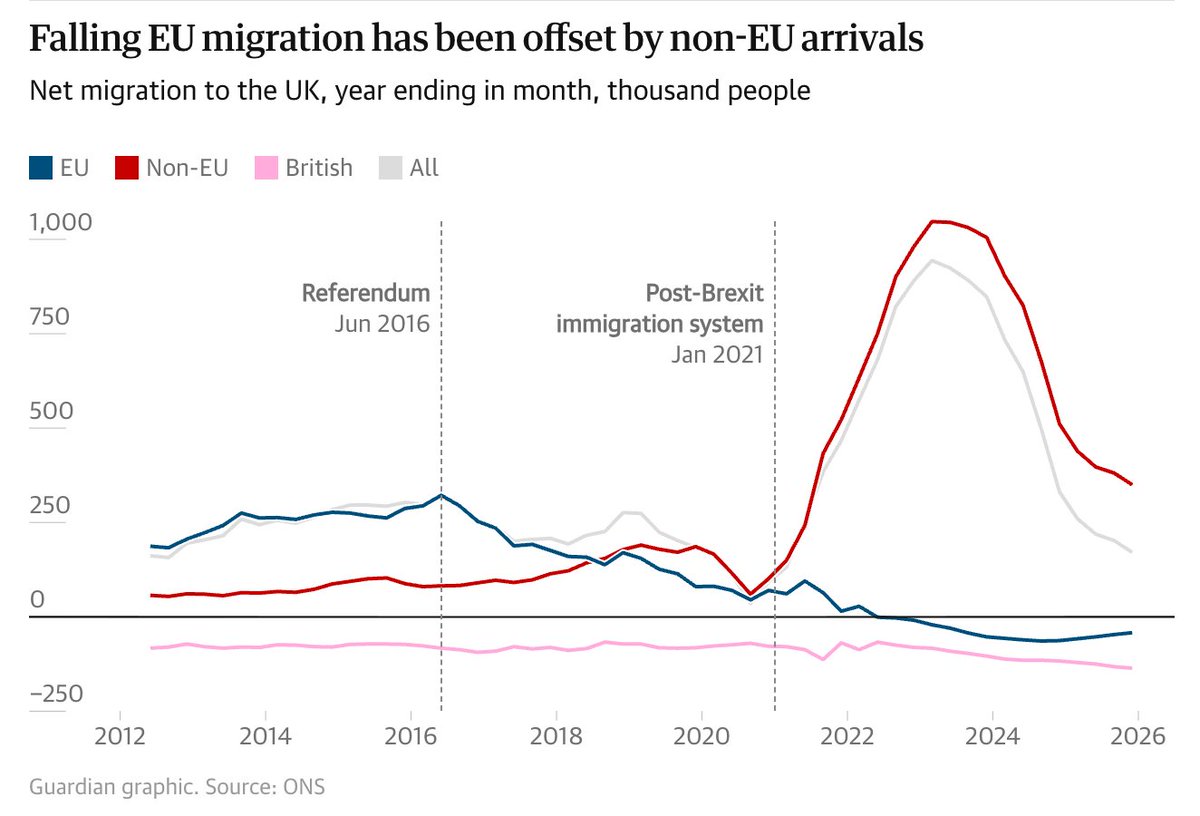
Falling EU migration has been offset by non-EU arrivals
1
5
12
1,334
