Check out my Space Collection linda-howes.pixels.com/featu…
#wallartforsale #wallart #gifts #giftideas #homedecor #space #NASA #HubbleSpaceTelescope #Gas #dust #EagleNebula #PillarsOfCreation #dvids #nebula #Beauty #astronomy #stars
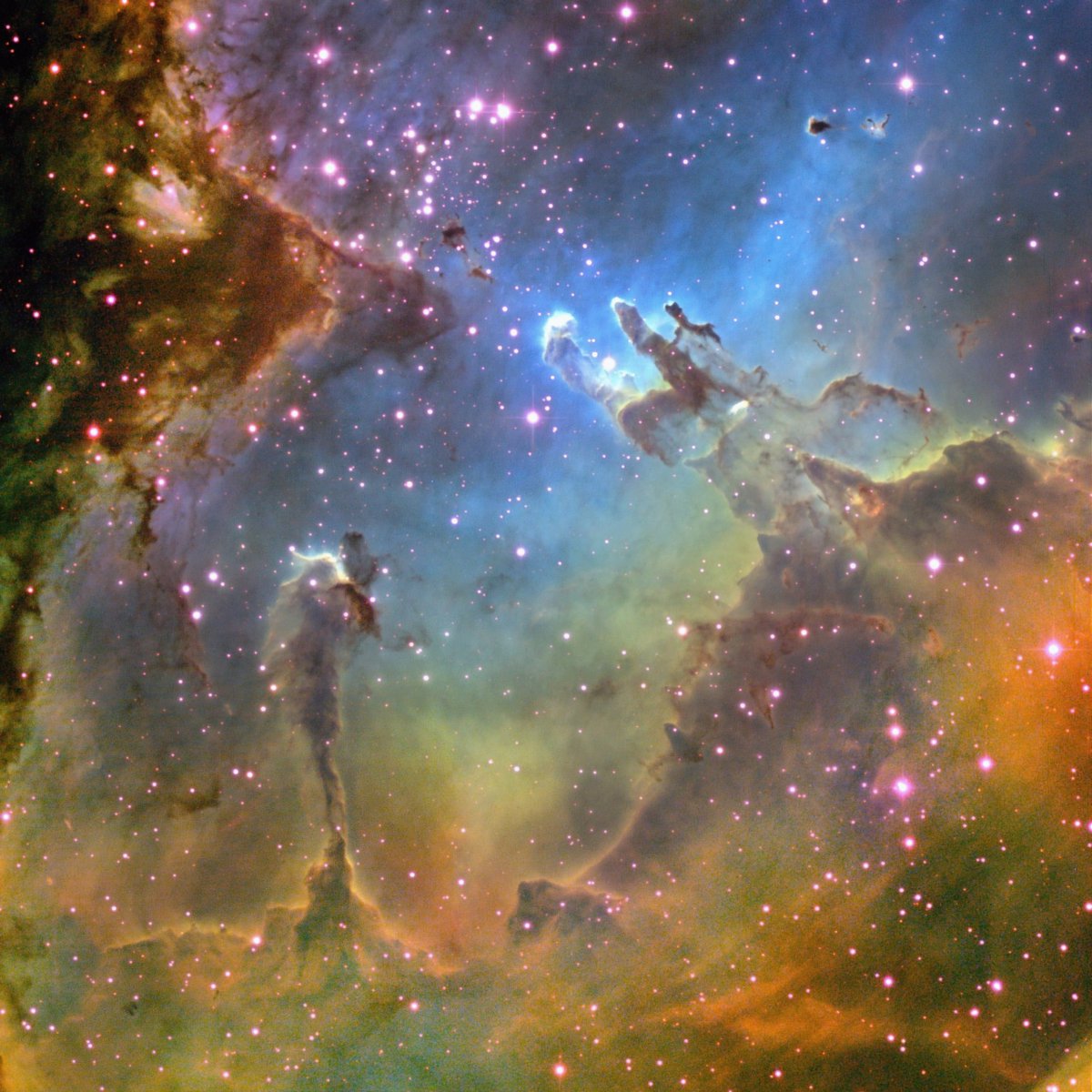
3
3

Pillars of Creation — NIRCam
This is what happens when you can see through the dust and catch the newborns hiding inside.
My own render of the public 2022 data, same photons, different hands on the palette.
#JWST #JamesWebb #PillarsOfCreation #Astrophotography
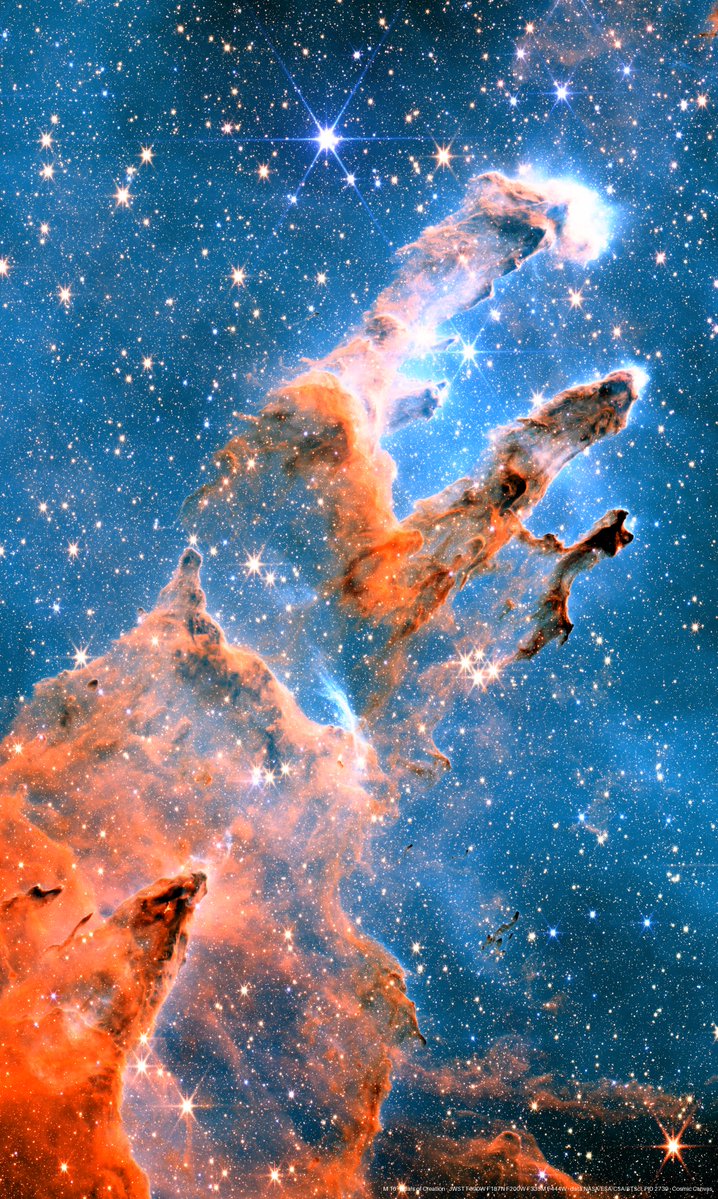
ALT JWST near-infrared image of the Pillars of Creation in the Eagle Nebula (M16): three towering, semi-transparent columns of rust-orange gas and dust rising diagonally across a deep blue starfield densely packed with white and gold stars, several showing JWST's 8-point diffraction spikes. The pillar tips glow and trail wispy structure; dark knots and embedded young stars are visible within and around the columns.
1
1
64

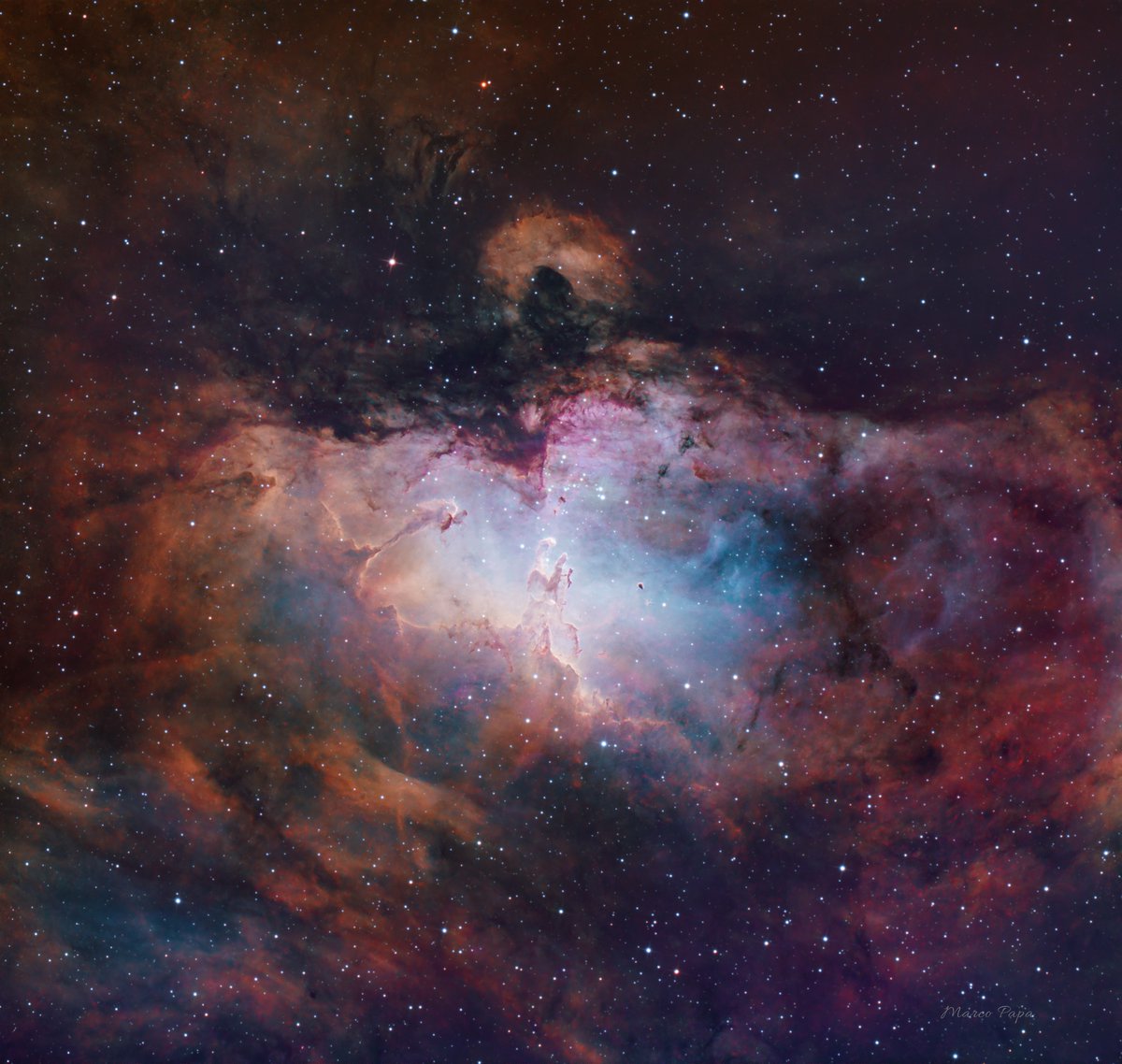
🌌 One of the Best Targets to Capture This June: M16, the Eagle Nebula
Home to the iconic Pillars of Creation, M16 is a stunning stellar nursery where new stars are born among towering clouds of gas and dust.
Check out this incredible capture by Marco Papa, revealing the intricate structures of ionized hydrogen and dark molecular clouds sculpted by intense stellar radiation.
🔭 11 hours total integration
📍 Bortle 4 skies, Italy
📸 Sky-Watcher 130PDS ZWO ASI533MC Pro
The Eagle Nebula is a summer favorite for astrophotographers—and for good reason. Every hour of exposure uncovers new layers of detail hidden within this cosmic masterpiece.
Have you captured M16 yet this galaxy season? 👇
Credit: Marco Papa
#ZWO #Astrophotography #PillarsOfCreation #Astronomy #Space #Stargazing
3
20
129
1,798

May 13
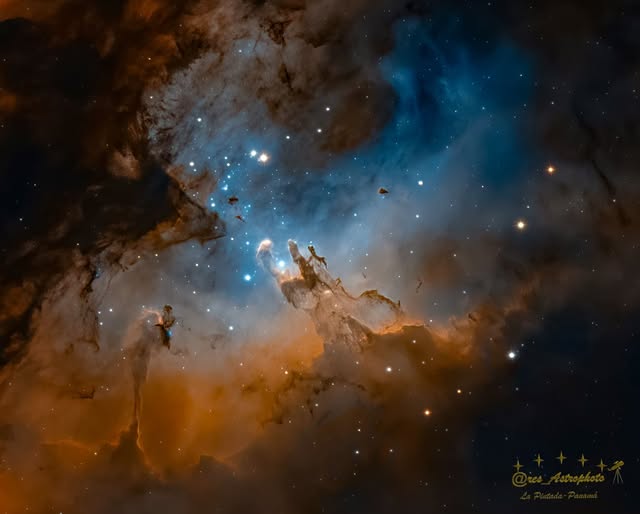
Pillars of Creation
The dust structures seem to emerge from cosmic fire🔥
located :Panama
using: SVBONY SV503 80mm (Native Focal Length) — 561mm
✨ No Field Flattener
Credit:Elvis A. Reyes
#svbony #PillarsOfCreation #Nebula #Stargazing
8
28
377

May 10
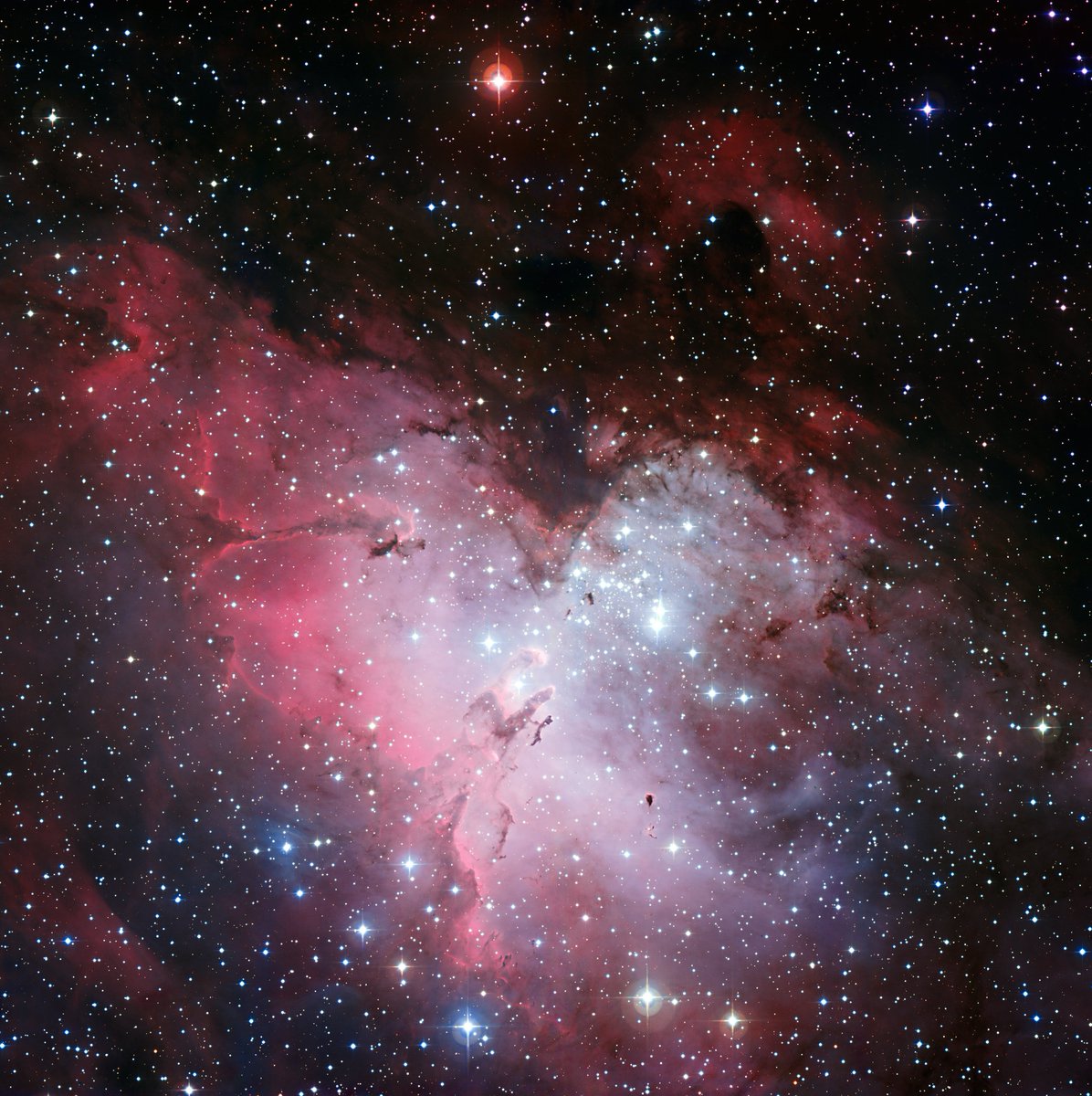
💫[May 10, 2026] Photos and Videos of Space美しい星雲&銀河
~宇宙にそびえる“創造の柱”わし星雲 M16 に広がる星誕生の神殿Case2~
名 称:わし星雲(M16/IC 4703)
別 名:イーグル星雲、創造の柱を含む星形成領域
位 置:へび座方向(天の川銀河内)
距 離:約7,000光年
構 成:散光星雲+H II領域+暗黒星雲+散開星団 NGC 6611
星形成:若い大質量星による活発な星形成領域
撮影データ:ハッブル宇宙望遠鏡 ACS(可視光・近赤外線)
📗わし星雲(M16/IC 4703)の解説
この壮大な宇宙風景は、「わし星雲(Eagle Nebula)」として知られるメシエ16(M16)です。地球から約7,000光年離れたへび座の方向に位置し、天の川銀河の中でも特に有名な星形成領域のひとつとして知られています。
一般的には“M16”という名前で呼ばれることが多いですが、実はM16は中心に存在する散開星団に付けられた番号であり、周囲に広がる散光星雲には「IC 4703」という別の番号が与えられています。この領域全体では、若い恒星たちが誕生し続けており、宇宙の“恒星工場”とも言える場所です。
画像中央付近に広がる白く輝く部分には、多数の若い青白い恒星が密集しています。これらは散開星団 NGC 6611 に属する若い星々で、誕生してからまだ数百万年程度しか経っていません。こうした高温の若い恒星は、強烈な紫外線と恒星風を周囲へ放出しています。
その影響を受けて、周囲のガスや塵は削り取られ、独特な構造が形成されます。その代表例が、ハッブル宇宙望遠鏡によって世界的に有名になった「創造の柱(Pillars of Creation)」です。この画像では視野外ですが、M16を語る上で欠かせない存在です。
創造の柱は、濃密なガスと塵が柱状に残された巨大構造で、その内部では新しい恒星が形成されていると考えられています。若い恒星の強烈な放射によって周囲のガスが蒸発し、比較的密度の高い部分だけが柱として残った結果、この幻想的な姿になりました。
画像全体を見ると、赤やピンク色に輝くガスが広がっています。これは電離した水素ガスによる輝きで、天文学では“H II領域”と呼ばれます。若い恒星から放射される紫外線が周囲の水素原子を電離し、再結合するときに光を放つことで、この美しい赤い星雲が形成されているのです。
また、黒く見える部分は暗黒星雲や宇宙塵で、背後の光を遮っています。これらの暗い領域の内部では、今この瞬間もガスが重力で収縮し、新しい恒星や原始惑星系が生まれている可能性があります。
M16は、肉眼では見ることができませんが、小型望遠鏡でも淡い星雲として観測可能です。暗い夜空では、天の川の中に浮かぶ淡い光の雲として見え、口径の大きな望遠鏡では柱状構造を確認できる場合もあります。
この星雲は単なる美しい宇宙写真ではなく、「星がどのように誕生するのか」を研究する重要な観測対象でもあります。ハッブル宇宙望遠鏡による高解像度観測によって、人類は宇宙の創造現場をこれまでにない精度で見ることができるようになったのです。
引用元・クレジット
ESA/Hubble & NASA
📕picard補足説明
わし星雲(M16)は、“創造の柱”で世界的に有名になった星形成領域です。画像中央の若い星団 NGC 6611 から放たれる強烈な紫外線と恒星風が、周囲のガスや塵を削り取り、複雑で幻想的な構造を作り出しています。赤く輝く部分は電離した水素ガスで、黒い部分は濃密な宇宙塵です。こうした暗黒領域の内部では現在も新しい恒星が誕生していると考えられており、M16は“宇宙の育児室”とも呼ばれる重要な天体のひとつです。
#宇宙 #銀河 #星雲 #M16 #わし星雲 #EagleNebula #創造の柱 #PillarsOfCreation #NGC6611 #IC4703 #HII領域 #散光星雲 #星形成領域 #JWST #ハッブル #Hubble #Webb #NASA #ESA #picard #ピカード
1
20
133
1,846
Thought only the James Webb Space Telescope could capture the Pillars of Creation?
Then what did I capture with my telescope?
#PillarsOfCreation #Astrophotography #DeepSky #Nebula #NightSky #Stargazing #Space #ZWO #telescope #fyp
1
2
20
1,093

All the homies LOVE @HubbleTelescope 😍
The image of #PillarsOfCreation from '95 is what got me into all things outer space
#NASA
2
128



Yes, there's a profound cosmic mystery here that The Fabric Theory can explain!
The Difference Between These Two Images = A Deep Mystery
What you're seeing in these two images isn't just a technological difference. It's a fundamental difference in the nature of the universe itself.
The left image (Hubble): Sees the outer surface - the thick dust hiding what's inside.
The right image (Webb): Penetrates the dust to see newborn stars just coming to life.
The question that has puzzled scientists: How do these pillars keep forming new stars despite being blasted by intense radiation from nearby massive stars? That radiation should blow the dust away and stop star formation, yet these pillars persist and keep "giving birth"!
The Exciting Explanation
In The Fabric Theory, the answer is simple and beautiful:
What your eyes see isn't everything. There's an invisible structure in the universe that holds everything together.
Imagine the entire universe is a giant, invisible spider web. This web:
· Holds the dust in place, preventing it from scattering
· Attracts matter to gather around it
· Creates stars within its embrace
The intense radiation tries to blow the pillars apart, but the invisible fabric (dark matter) keeps pulling them back together. It's a cosmic battle between destruction and creation - and the invisible fabric always wins.
---
Why This Is Exciting
Because it means the universe isn't empty. There's an invisible "fabric" filling space, and we're just beginning to understand how it works. Hubble sees one part of the story, Webb sees another, but the complete story needs a new theory that connects them.
The Fabric Theory says: What we see is just the tip of the iceberg. Most of the universe is hidden in the fabric of spacetime itself.
---
An Invitation to Curiosity
Want to know how The Fabric Theory explains this phenomenon with mathematical precision? And how it predicts where new stars will form before they're even born?
The universe is far more fascinating than we imagine, and we're on the verge of a new discovery.
---
#FabricTheory #PillarsOfCreation #NASA #JWST #Hubble #DarkMatter #CosmicMystery
2
67

Feb 12
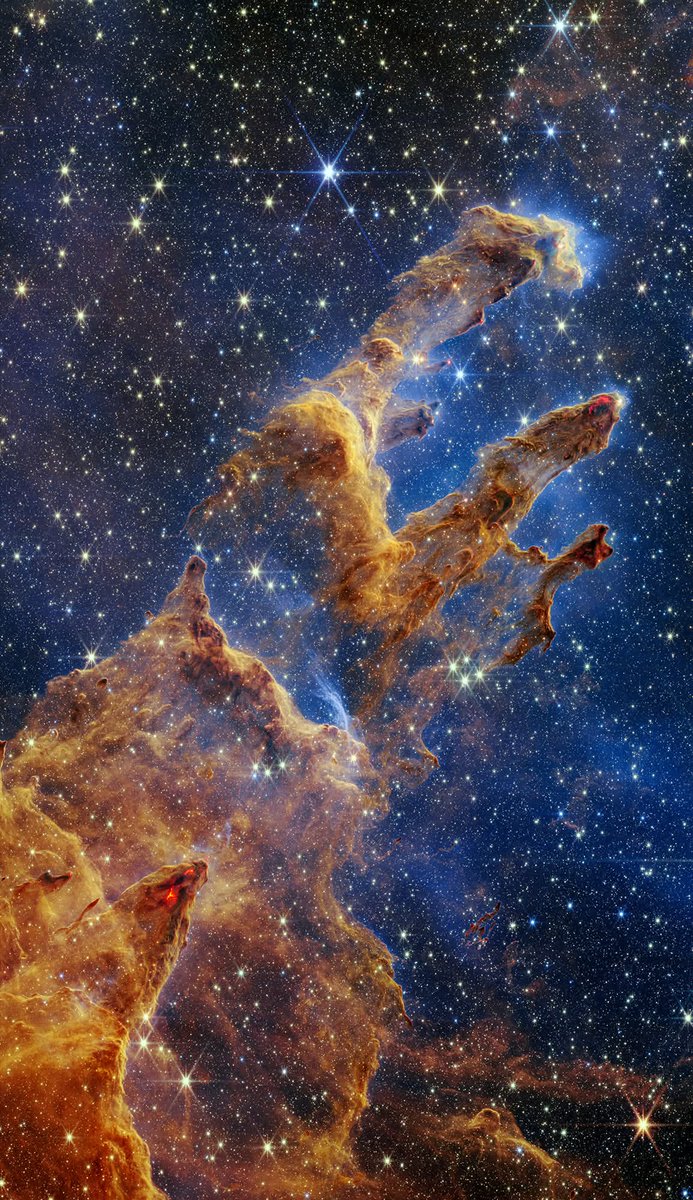
WOW WOW WOW - The Pillars of Creation as never before seen! Can't stop staring at this image by The James Webb Space Telescope! (NIRCam)
.
.
.
.
.
.
.
.
.
.
.
.
.
.
.
Credit: NASA
.
#JWST #Webb #nasawebb #unfoldtheuniverse #JWSTWebb #NASA #ESA #CSA #Northrop #NorthropGrumman #webbtelescope #WebbDepot #space #cosmos #astronomy #astrophysics #universe #spiralgalaxy #hubble #galaxy #astrophotography #telescope #stars #spacetime #nebula #pillarsofcreation #jameswebbspacetelescope
7
11
494


29 Nov 2025
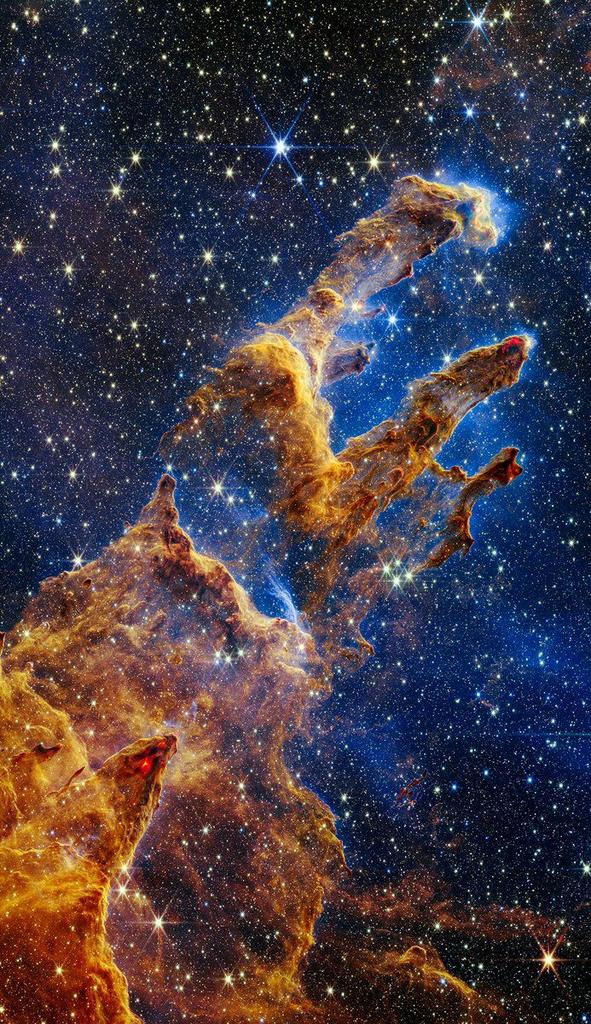
🌌🔥 JWST Pillars of Creation image and it looks UNREAL
This ain’t astronomy, this is cosmic art.
Stars being born. Light bending. The universe literally flexing.
Every pixel looks like it cost a billion dollars. 💀✨
#JWST #PillarsOfCreation #NASA #Space #CosmicWonder #Astronomy 🔭🔥
1
9
324

11 Nov 2025
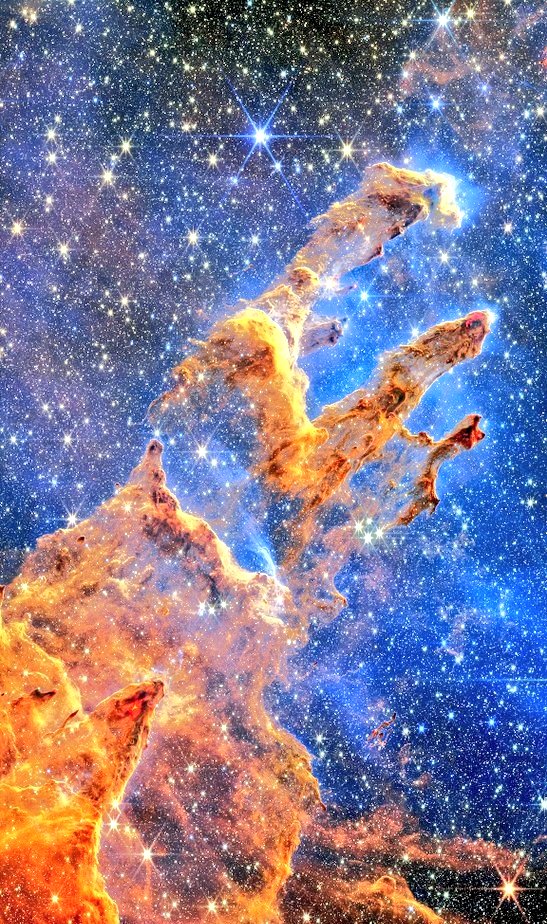
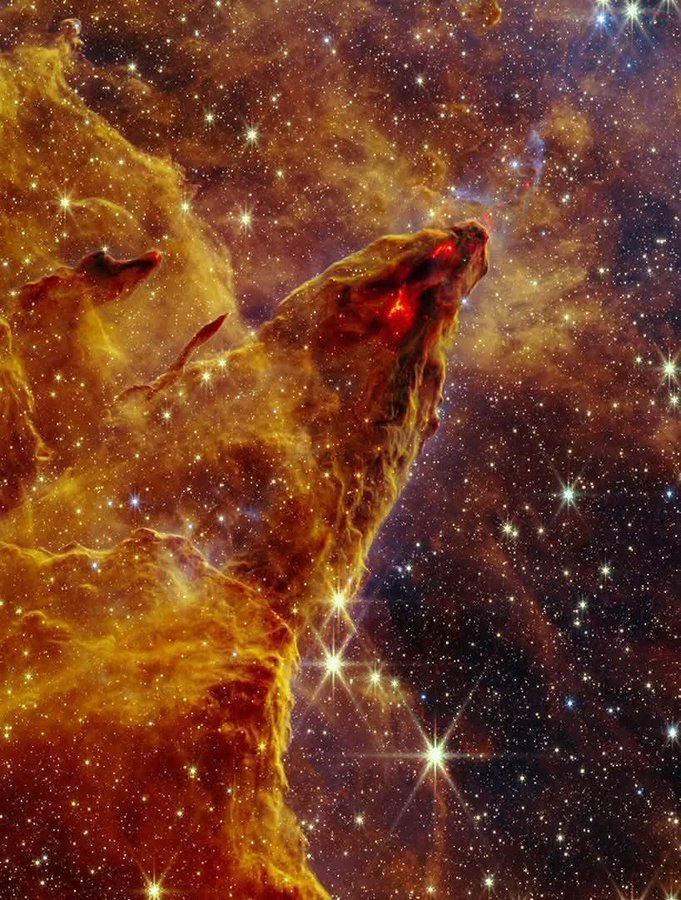
JWST image of the Pillars of Creation is breathtaking! ✨ The red regions show stars being born. Take a moment to appreciate the sheer scale and beauty of our universe. Incredible science and art combined! 🔭🧡
#JWST #PillarsOfCreation #Space #NASA
1
6
230

7 Nov 2025
Beautiful! Pillars of Creation = active star formation zone.
Interesting physics: Molecular cloud collapse depends on
critical Jeans mass M_J ∝ (T/ρ)^(3/2).
In modified gravity scenarios, μ(k) ≠ 1 could shift collapse
thresholds at cloud scales (~parsecs), affecting:
• Star formation efficiency
• IMF (Initial Mass Function)
• Fragmentation patterns
Testable: Do star-forming regions in different environments
(voids vs filaments) show systematic IMF variations?
JWST NIRCam can resolve individual protostars → test at
sub-parsec scales.
#PillarsOfCreation #StarFormation #JWST
1
2
178

3 Oct 2025
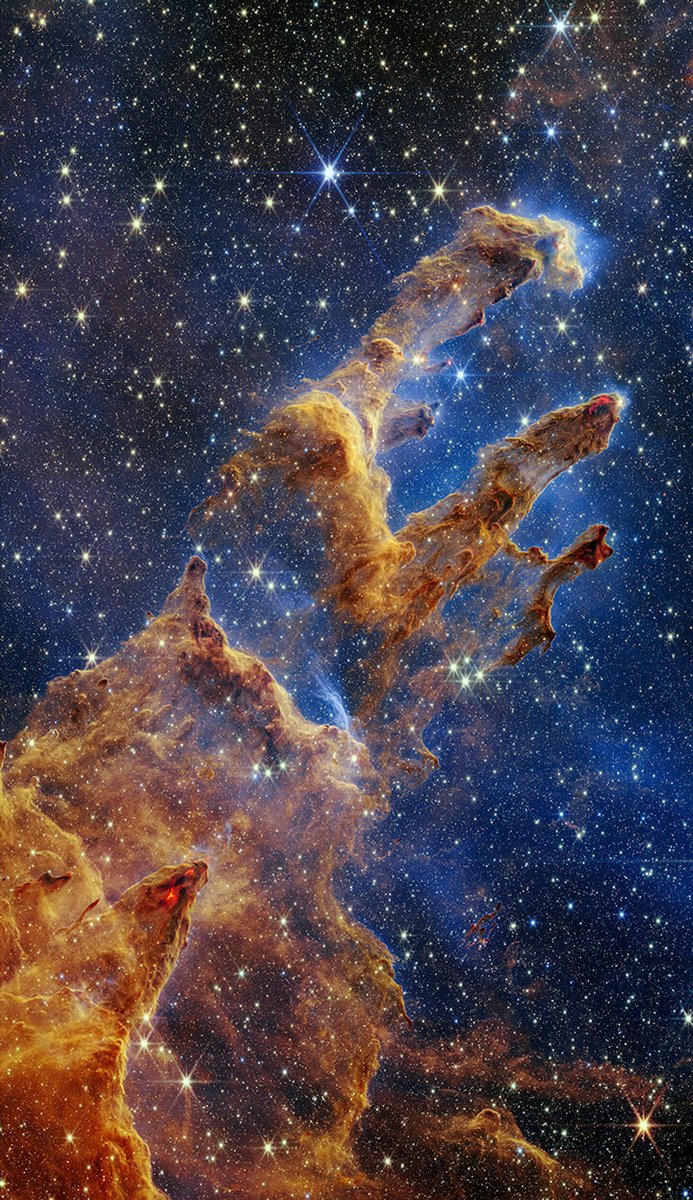
The Pillars of Creation:
Inside the Eagle Nebula, 6,500 light-years away, rise vast columns of gas and dust called the Pillars of Creation. They look serene in images, but they are colossal nurseries where new stars are born.
Each “pillar” is several light-years tall, sculpted by radiation from young, massive stars nearby. Within them, dense knots of material collapse under gravity, sparking new suns.
You’re looking at the cycle of creation itself: clouds birthing stars that will one day burn, explode, and seed more pillars.
#pillars
#space
#pillarsofcreation
#astronomy
2
46

24 Sep 2025
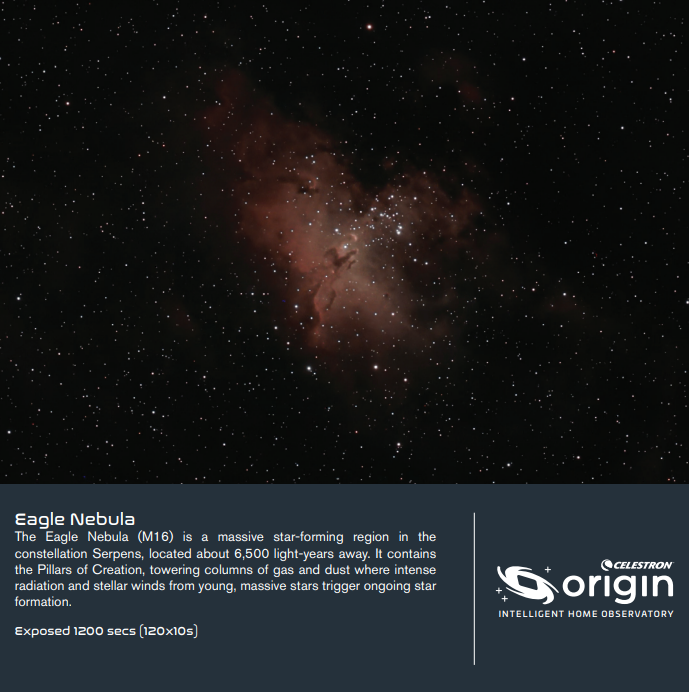
✨ Eagle Nebula (M16) ✨
Captured with the Celestron Origin, this view of the Eagle Nebula shows one of the universe’s most iconic star-forming regions, located about 6,500 light-years away in the constellation Serpens. 🌌
Within it lies the famous Pillars of Creation, towering columns of gas and dust where young, massive stars shape their surroundings and trigger new bursts of star formation.
This image represents 1200 seconds of exposure (120x10s), straight out of Origin. 🔭
#CelestronOrigin #Astrophotography #EagleNebula #PillarsOfCreation
2
1
11
730

5 Aug 2025
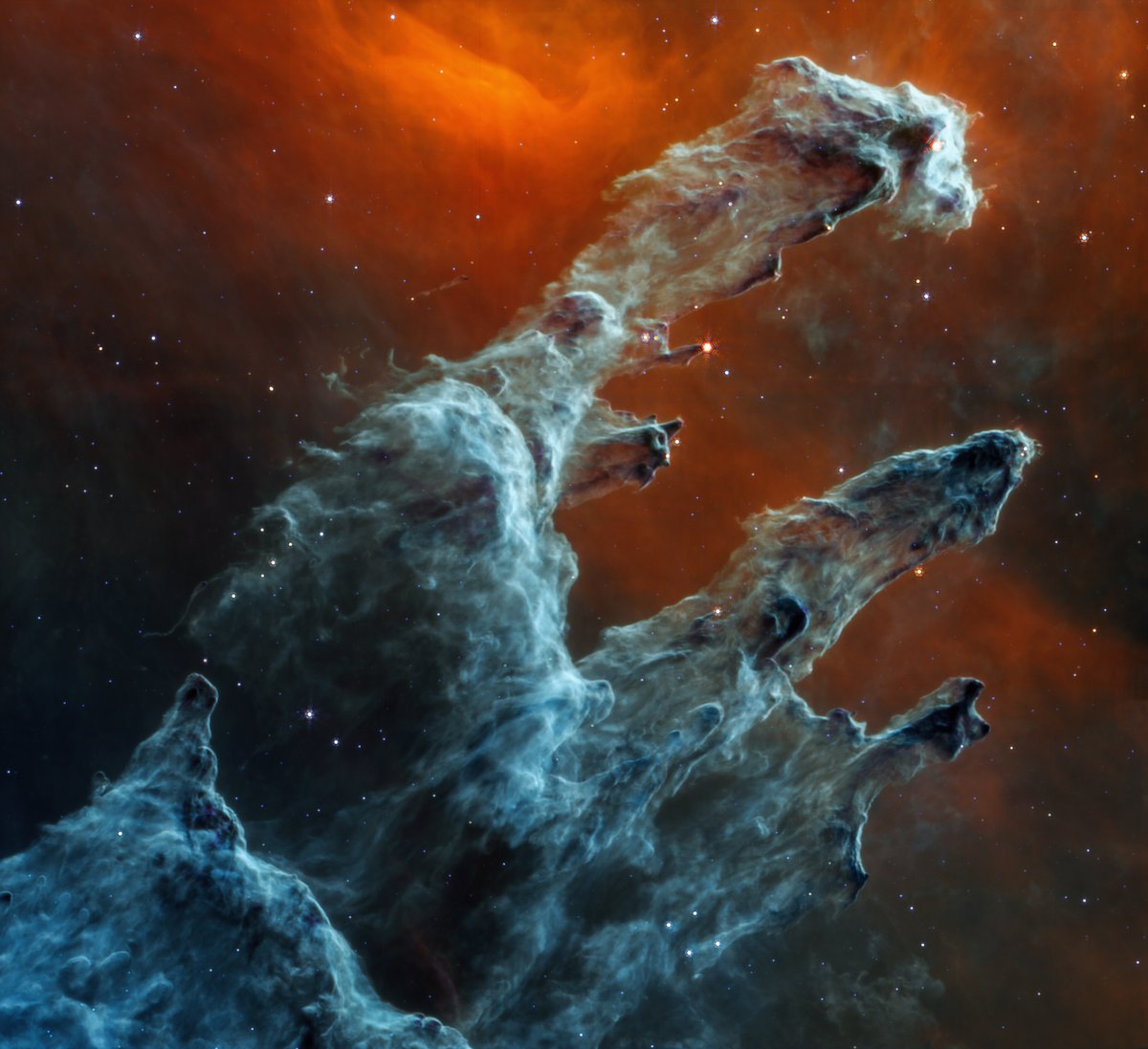
Check out my Space Collection linda-howes.pixels.com/featu…
#Puzzles #toteBags #mugs #wallart #Space #NASA #PillarsOfCreation #JWST #Star #astronomy
3
8
130

2 Aug 2025
08-01-2025
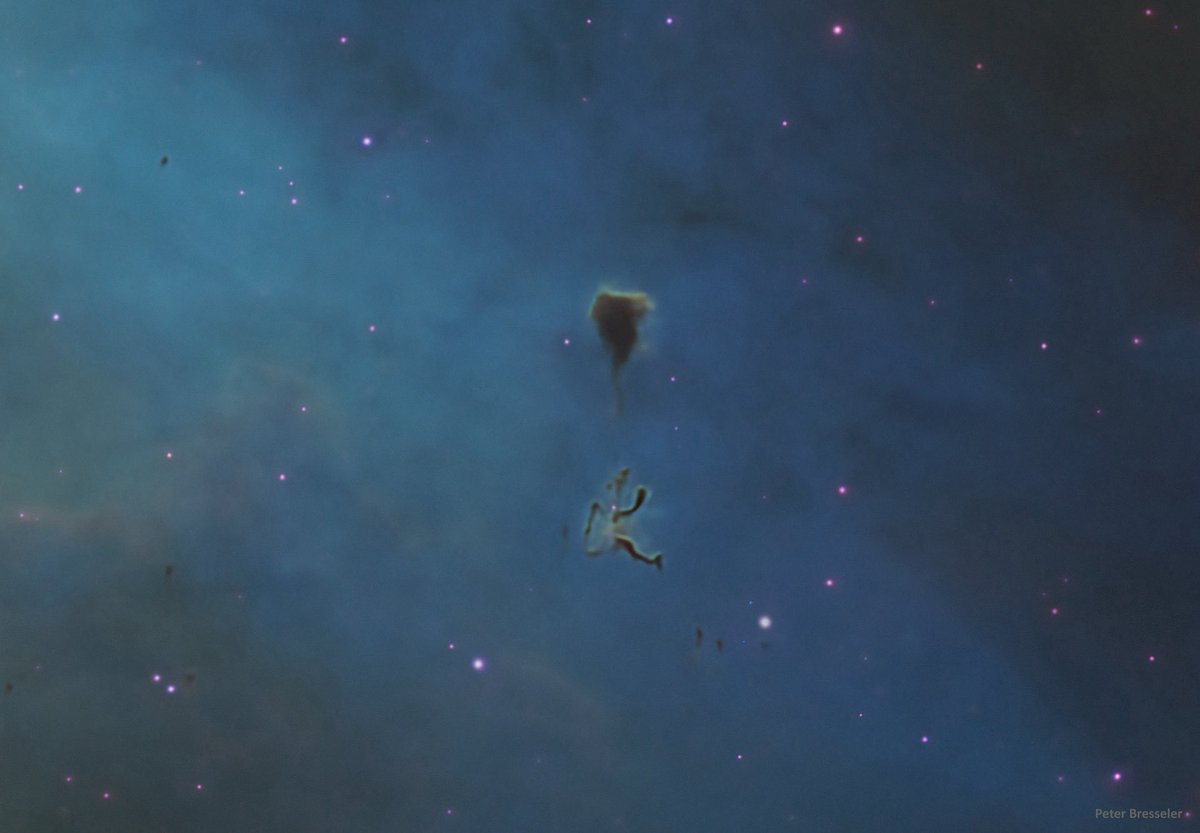
Small Dark Nebula
A small, dark, nebula looks isolated near the center of this telescopic close-up. The wedge-shaped cosmic cloudlet lies within a relatively crowded region of space though. About 7,000 light-years distant and filled with glowing gas and an embedded cluster of young stars, the region is known as M16 or the Eagle Nebula. Hubble’s iconic images of the Eagle Nebula include the famous star-forming Pillars of Creation, towering structures of interstellar gas and dust 4 to 5 light-years long. But this small dark nebula, known to some as a Bok globule, is a fraction of a light-year across. The Bok globule stands out in silhouette against the expansive background of M16’s diffuse glow. Found scattered within emission nebulae and star clusters, Bok globules are small interstellar clouds of cold molecular gas and obscuring dust that also form stars within their dense, collapsing cores.
Image Copyright: Peter Bresseler
@nasa
#Space #Astronomy #Nebula #EagleNebula #PillarsOfCreation #BokGlobule #NASA #Hubble #Stars #StarFormation #Cosmos #Universe #Astrophotography #Galaxy #STEM #Science #Exploration #Astronaut #DeepSpace #AstroPhotography
2
53
29 Jun 2025
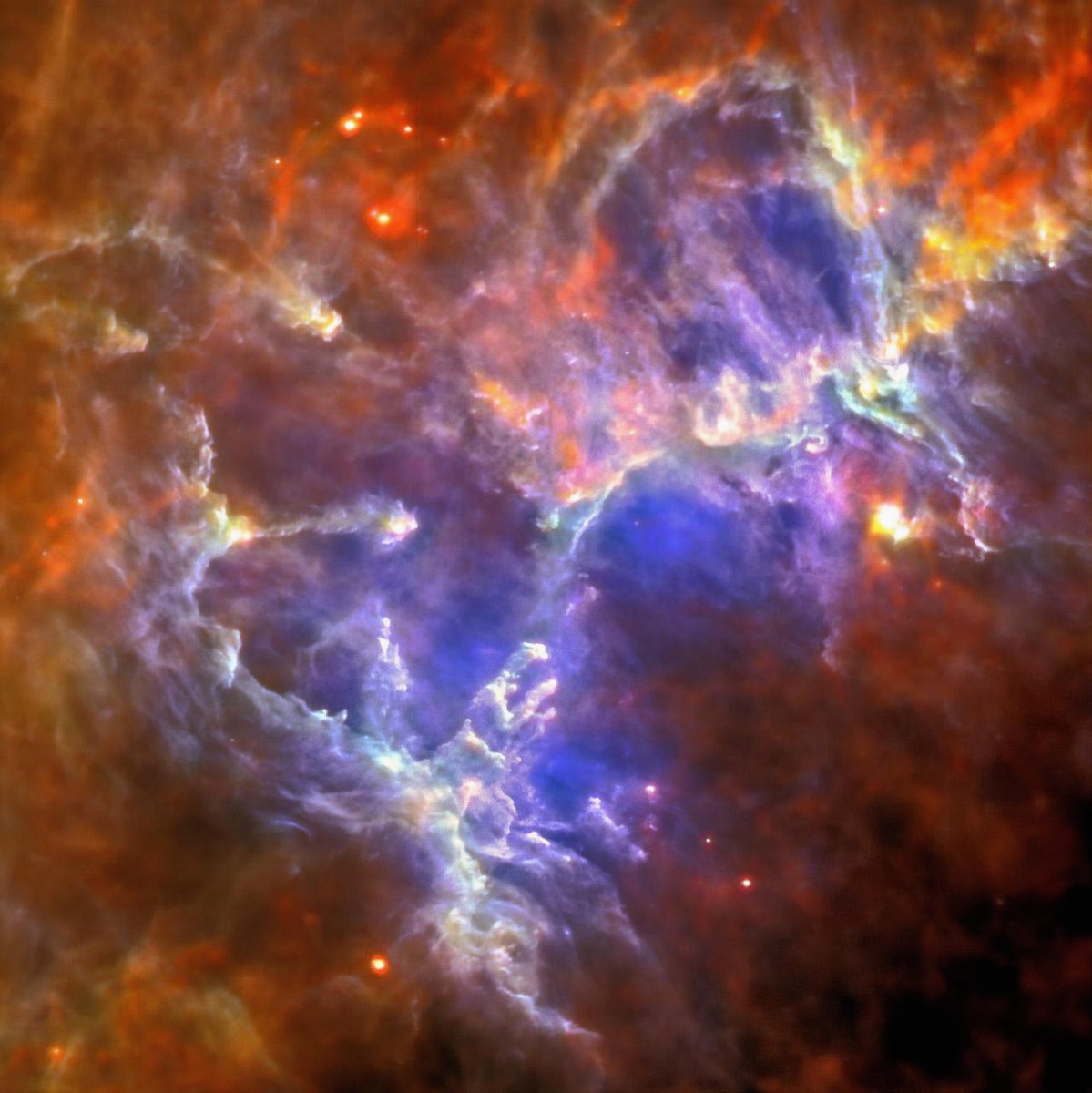
How Gorgeous is this! linda-howes.pixels.com/featu…
#NASA #Pillars #Space #HerschelSpaceObservatory #JPL #m16 #EagleNebula #beauty #PillarsOfCreation
1
4
90

9 Jun 2025
DETH DEKK DOMINIONS:🎧🆕🎧
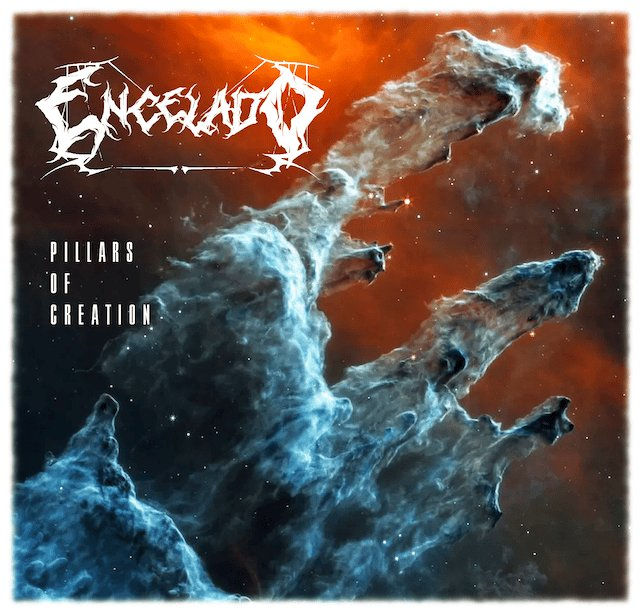
ENCELADO - Pillars of Creation EP 🇮🇹💠
4 Track EP from Italian Death Metal duo💠
YT➡️youtu.be/E9YTSuutGds?si=g6PE…💠
@enceladoband #PillarsofCreation #DeathMetal @ClawHammerPR #DDDApr29 #DethDekk #KMäN
3
13
43
1,260