

You’re really an inspiration Elon.
Are you perfect?? Nahh..
Do I agree with everything about you??
Nahh..
But one thing for sure??
You’re a living embodiment that polymaths can win…
You didn’t stop at being nerdy.. you actually made things happen 💙💪🏼🙂
1
9

AI is dangerous in the hands of the ADHD grifter crowd because it plays into their tendency to switch between 1000 different things
but with a twist
Previously, agency - the ability to execute - was a barrier to entry but AI now fools the biggest fools on the planet into thinking they're generating real output.
The modicum of personal agency that used to act as a firewall from their endless aimless thought streams is now gone
Now we'll see:
-Mass UGC / AI influencer slop on the creative side
-Garbage spaghetti code on the dev side
-Superficial AI generated gaming content on the gaming side
-and endless more...
A lot of this stuff looks good at the surface level. Take gaming for example: at a glance, it builds really interesting stuff.
Stuff that looks good in a quick demo, but how much technical debt is accumulating under the surface if you were to actually scale and add complexity? And how much novelty does one really have if everyone is running a million different permutations of the same thing spawned from the same training data?
The future belongs to the true polymaths and the creatives, not the ADHD addled and mentally bankrupt. You know the kind, the ones that pivoted from drop-shipping to crypto and now to AI UGC trash.
Its low effort output, mascaraing as competence being delivered in the form of an ever growing avalanche of suffocating trash. It will bring about the dead internet.
But the market will force adjustments. It always does. And in the swarm of endless options the market will force
- Taste -
Careful. deliberate. curation. honed from true technical depth,
And Creatively
that can only come from cross pollinating between multiple domains where one has * legitimate * competence (1000 hrs)
The arc of the time bends in favor of the patient
Stay deliberate
21

My tribe = the Polymaths in all of history.
All groups try to murder us, from Archimedes to Spinoza, to Alan Turing, and a lot more.
Humanity is my enemy, a war of millennia.
9

i'd prefer Ada but that's just me. Maybe ms kirk is sexist against languages named of female polymaths?
4
654

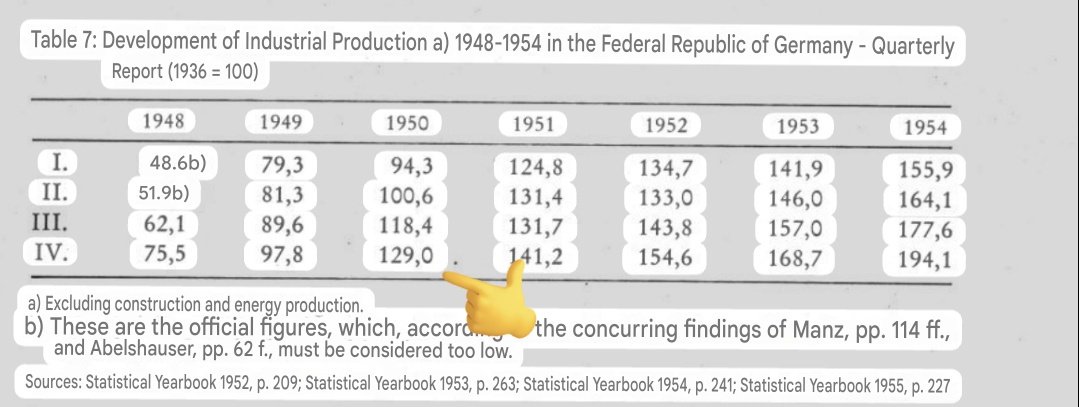
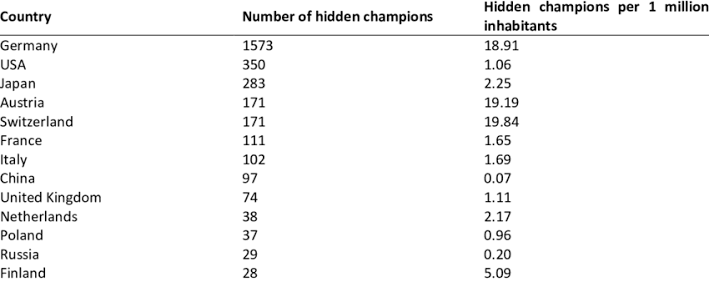
Indeed. Germany ranks first in established subfields in natural sciences, has most polymaths of last 2,000 years most hidden champions, and is top 3 in most transformative contributions to humanity. Industry in 1950 was already higher than 1936. Germans are capable
2
9
84

Do you hyperfocus on learning math or do you juggle different interests? I'm interested how a mathematician approaches learning. IK a lot of polymaths hyperfocus on one subject at a time, & when they achieve proficiency, they put it on the back burner/"maintenance mode" & move on
1
22

Analysis paralysis is something that polymaths endure almost all the time.
Too many options cripples the mind sometimes
1
1
67


Polymaths don’t just master their interests we are also highly professional in our subjects of choice and what we choose to master. It’s not about knowledge but more about curiosity and understanding/learning.
1
3

15h
moi obsédé par les polymaths de l’époque de baghdadi, basra, l’Andalousie, fès

pendant les vacances, j'ai envie de reprendre les maths et la physique à zéro, c'est une honte d'être maghrébin et nul en sciences, J'accepterai jamais d'être un littéraire dans l'âme
1
130

15h
The bottleneck isn't finding polymaths.
It's building a culture where specialists actually want to become one.
19
meanwhile | Bitcoin Life Insurance retweeted

Jun 14
Of the 25 of us at @meanwhile, 10 of us are former founders.
“rebuild teams around load-bearing polymaths who own business outcomes” is exactly what we are hiring for around global savings and protection in Bitcoin and stablecoins
If that’s of interest, DMs are open
Jun 13

THE TOKEN HANGOVER
@matanSF (Matan Grinberg), CEO and co-founder of @FactoryAI , interviewed by @HarryStebbings (@20vcFund )
This is a special for me since I've been an investor in @FactoryAI since their seed round, and think Matan is a very very special founder.
Summary: Grinberg argues the next 24 months in enterprise AI are a resource-allocation problem: tokens, dollars, and people. Most CIOs are now waking up to bills they cannot justify. The fix is to spend frontier tokens only on the 10-20% of work that requires planning intelligence, run the other 80-90% on open models, and rebuild teams around load-bearing polymaths who own business outcomes. The single-frontier-monopoly fear is fading: four roughly-equivalent labs is the emerging reality, which puts pricing power back in the application layer.
1. The Token Hangover. Enterprise AI adoption ran through three phases this year: boards yelling at CEOs about AI strategy, "token maxing" with AI usage written into perf reviews, and now the morning-after bill. One CIO Grinberg spoke to was spending hundreds of thousands of dollars a month on engineers asking Opus 4.8 things like "how's it going" and "what are my macros from lunch." The frontier model became the default surface for every question, no matter how trivial. Phase 3 is the moment routing matters: every call to a frontier model needs to earn its price.
2. Resource Allocation Is the Job. For the next 24 months every C-suite is solving the same problem: how to allocate dollars, tokens, and headcount against business outcomes. Engineering teams used to be judged by features shipped per quarter, a metric with no link to revenue, market share, or retention. A logistics company adding more engineers to ship more features was always solving the wrong problem; AI made the misallocation visible. Tie every person's work to the metric that actually moves the business, then re-allocate.
3. Load-Bearing Individuals. The "10x engineer" frame measures lines of code, the wrong unit. Grinberg's unit is the load-bearing individual: the person whose absence breaks something. With AI the load-bearing few compound roughly 10,000%; the others get close to nothing, so any org enforcing one token-spend-per-engineer number is painting with too wide a brush. Average token spend per engineer will land on the same order of magnitude as their salary within three years, with a wildly bimodal distribution.
4. Frontier for Decisions Only. 80-90% of software development tasks can run on open models; the remaining 10-20% is planning, where the frontier still wins. This mirrors how human orgs work: leadership is a tiny share of total hours but decides the company's fate. The ego trap is engineers assuming their work is too important for an open model. The router decides better than the engineer, and the cost curve falls only if you wire the routing.
5. The Kirkland Mistake. Kirkland & Ellis announced a $500M, five-year internal AI build, which Grinberg reads as validation for Harvey rather than a threat. Building AI is not a law firm's core competency, and Kirkland's spend will teach them how hard it is. The general rule: just because you can build it does not mean you should, and the discipline is naming the few things you and your team own end-to-end. Outsource everything else, even when you technically know how to do it yourself.
6. Model-App Separation. When the model provider also sells the app, the incentives split: an API business wants you to spend more tokens. A healthy market keeps the application layer independent, so model providers compete on price, speed, and quality every week. Enterprises do not want to vendor-lock again; every CIO carries scars from the cloud era's three-year discount-then-jack-the-price trap. The application layer survives precisely because it forces that competition.
7. Sales as Product. Name a legendary company with a weak sales or marketing team. You can't. The Silicon Valley fallacy that research sits at the top and sales is "dirty work" produces companies that win the gold rush and then collapse when gravity returns. At Factory, engineers and salespeople sit intermixed; when sales closes, engineering says "we closed"; when engineering ships, sales says "we shipped." Atrophied sales muscles will not regrow once enterprise buyers stop saying yes to everything.
8. Polymath Era. Da Vinci, Newton, Euler could be polymaths because their fields were shallow. By the 2010s a theoretical physicist needed 50 years to reach the frontier before contributing anything new. AI collapses that catch-up time, so one person can push forward developer marketing, token-caching infrastructure, and solution engineering at once. The engineer of the future is a GM who owns marketing copy, product metrics, and sales enablement.
9. Build the Factory. Factory's name is literal: engineers in the next era design the assembly line that produces software. The DevX investments that used to scale linearly with headcount (good docs, CI/CD, linters, pre-commit hooks) now scale with the number of agents you run, which is 10x or 100x larger. Every dollar spent making agents production-ready compounds against thousands of PRs a week. Humans move up the stack, from writing code to designing the system that writes code.
10. Seal Team Six. Mandating beds in the office is a hiring failure dressed up as commitment. Grinberg's image: a basketball game judged by who sweat the most, when the scoreboard is what counts. Factory bought eight sleeps for all 30 team members at the time, because recovery is where the gains come from when work requires every ounce of brain power. If your load-bearing engineer can do their best work on two hours of sleep, they were not doing load-bearing work in the first place.
11. Four Frontier Labs. Grinberg's biggest mind-change this year: a single dominant model is unlikely, and four roughly-equivalent frontier providers is the more probable steady state. That outcome is the win for humanity. A one-lab monopoly was the dangerous scenario, and four equivalent labs is also the structural bull case for the application layer because it forces real ongoing price competition. Every CIO Grinberg meets has already decided not to throw their lot in with a single provider.
12. Dario's Self-Serving Doom. "AI will take your jobs" was the pitch that helped raise hundreds of billions, and Grinberg thinks it damaged public psychology and fed the slow-AI lobby. Watch the rhetoric flip at IPO: humans will suddenly become important again, because humans are the ones buying the stock. Founders who never needed to raise that money, like Zuckerberg and Hassabis, never made that argument. Incentives drive the labor-displacement rhetoric more than philosophy does.
2
11
1,990
3R retweeted

Jun 14
Oui.
Tous ceux que je connais qui ont le meilleur avis sur le futur.
Sont ingénieurs et polymaths.
L’ingénierie puis la culture, combo gagnant.
La France aura bientôt cette chance.
Jun 13

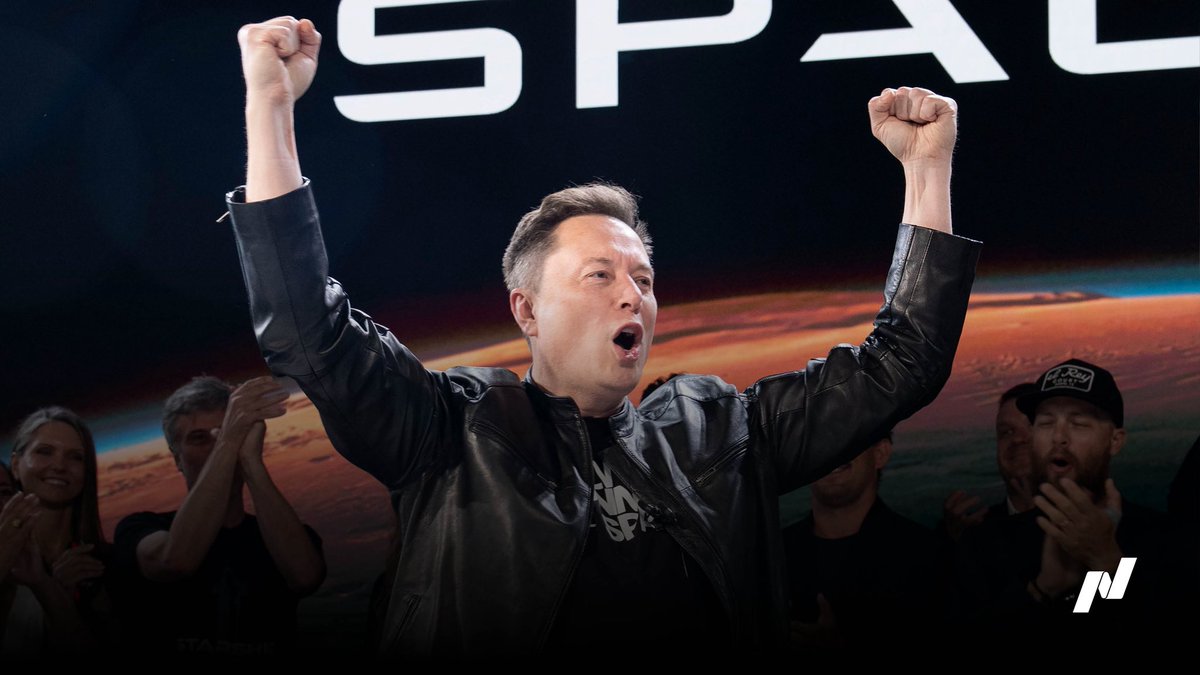
Elon Musk is an engineer.
Jeff Bezos is an engineer.
Larry Elison is an engineer.
Larry Page is an engineer.
Sergey Brin is an engineer.
Jensen Huang is an engineer.
Turns out capitalism does reward skills and intelligence, and the richest people are indeed engineers.
8
11
100
6,361
experquisite retweeted

Jun 13
“rebuild teams around load-bearing polymaths who own business outcomes”
This is an incredible post. This is where we are right now, full stop. You are either part of an organization that is currently processing this and trying to find the optimal way to function, or your organization is dead already. There are only two forks ahead in the road, operate wisely.
Engineers and competence are back.
Jun 13
THE TOKEN HANGOVER
@matanSF (Matan Grinberg), CEO and co-founder of @FactoryAI , interviewed by @HarryStebbings (@20vcFund )
This is a special for me since I've been an investor in @FactoryAI since their seed round, and think Matan is a very very special founder.
Summary: Grinberg argues the next 24 months in enterprise AI are a resource-allocation problem: tokens, dollars, and people. Most CIOs are now waking up to bills they cannot justify. The fix is to spend frontier tokens only on the 10-20% of work that requires planning intelligence, run the other 80-90% on open models, and rebuild teams around load-bearing polymaths who own business outcomes. The single-frontier-monopoly fear is fading: four roughly-equivalent labs is the emerging reality, which puts pricing power back in the application layer.
1. The Token Hangover. Enterprise AI adoption ran through three phases this year: boards yelling at CEOs about AI strategy, "token maxing" with AI usage written into perf reviews, and now the morning-after bill. One CIO Grinberg spoke to was spending hundreds of thousands of dollars a month on engineers asking Opus 4.8 things like "how's it going" and "what are my macros from lunch." The frontier model became the default surface for every question, no matter how trivial. Phase 3 is the moment routing matters: every call to a frontier model needs to earn its price.
2. Resource Allocation Is the Job. For the next 24 months every C-suite is solving the same problem: how to allocate dollars, tokens, and headcount against business outcomes. Engineering teams used to be judged by features shipped per quarter, a metric with no link to revenue, market share, or retention. A logistics company adding more engineers to ship more features was always solving the wrong problem; AI made the misallocation visible. Tie every person's work to the metric that actually moves the business, then re-allocate.
3. Load-Bearing Individuals. The "10x engineer" frame measures lines of code, the wrong unit. Grinberg's unit is the load-bearing individual: the person whose absence breaks something. With AI the load-bearing few compound roughly 10,000%; the others get close to nothing, so any org enforcing one token-spend-per-engineer number is painting with too wide a brush. Average token spend per engineer will land on the same order of magnitude as their salary within three years, with a wildly bimodal distribution.
4. Frontier for Decisions Only. 80-90% of software development tasks can run on open models; the remaining 10-20% is planning, where the frontier still wins. This mirrors how human orgs work: leadership is a tiny share of total hours but decides the company's fate. The ego trap is engineers assuming their work is too important for an open model. The router decides better than the engineer, and the cost curve falls only if you wire the routing.
5. The Kirkland Mistake. Kirkland & Ellis announced a $500M, five-year internal AI build, which Grinberg reads as validation for Harvey rather than a threat. Building AI is not a law firm's core competency, and Kirkland's spend will teach them how hard it is. The general rule: just because you can build it does not mean you should, and the discipline is naming the few things you and your team own end-to-end. Outsource everything else, even when you technically know how to do it yourself.
6. Model-App Separation. When the model provider also sells the app, the incentives split: an API business wants you to spend more tokens. A healthy market keeps the application layer independent, so model providers compete on price, speed, and quality every week. Enterprises do not want to vendor-lock again; every CIO carries scars from the cloud era's three-year discount-then-jack-the-price trap. The application layer survives precisely because it forces that competition.
7. Sales as Product. Name a legendary company with a weak sales or marketing team. You can't. The Silicon Valley fallacy that research sits at the top and sales is "dirty work" produces companies that win the gold rush and then collapse when gravity returns. At Factory, engineers and salespeople sit intermixed; when sales closes, engineering says "we closed"; when engineering ships, sales says "we shipped." Atrophied sales muscles will not regrow once enterprise buyers stop saying yes to everything.
8. Polymath Era. Da Vinci, Newton, Euler could be polymaths because their fields were shallow. By the 2010s a theoretical physicist needed 50 years to reach the frontier before contributing anything new. AI collapses that catch-up time, so one person can push forward developer marketing, token-caching infrastructure, and solution engineering at once. The engineer of the future is a GM who owns marketing copy, product metrics, and sales enablement.
9. Build the Factory. Factory's name is literal: engineers in the next era design the assembly line that produces software. The DevX investments that used to scale linearly with headcount (good docs, CI/CD, linters, pre-commit hooks) now scale with the number of agents you run, which is 10x or 100x larger. Every dollar spent making agents production-ready compounds against thousands of PRs a week. Humans move up the stack, from writing code to designing the system that writes code.
10. Seal Team Six. Mandating beds in the office is a hiring failure dressed up as commitment. Grinberg's image: a basketball game judged by who sweat the most, when the scoreboard is what counts. Factory bought eight sleeps for all 30 team members at the time, because recovery is where the gains come from when work requires every ounce of brain power. If your load-bearing engineer can do their best work on two hours of sleep, they were not doing load-bearing work in the first place.
11. Four Frontier Labs. Grinberg's biggest mind-change this year: a single dominant model is unlikely, and four roughly-equivalent frontier providers is the more probable steady state. That outcome is the win for humanity. A one-lab monopoly was the dangerous scenario, and four equivalent labs is also the structural bull case for the application layer because it forces real ongoing price competition. Every CIO Grinberg meets has already decided not to throw their lot in with a single provider.
12. Dario's Self-Serving Doom. "AI will take your jobs" was the pitch that helped raise hundreds of billions, and Grinberg thinks it damaged public psychology and fed the slow-AI lobby. Watch the rhetoric flip at IPO: humans will suddenly become important again, because humans are the ones buying the stock. Founders who never needed to raise that money, like Zuckerberg and Hassabis, never made that argument. Incentives drive the labor-displacement rhetoric more than philosophy does.
7
14
297
83,606

A neck for an eye approach is needed here to fix the precedent set by the Westoids with the scientific human capital of the Orient world. What makes this even more tragic is that it was the Persian polymaths who taught European savages the knowledge of Science & Mathematics.
2
54
abhinit ابھنت retweeted

Jun 14
We @realfastai are working on scaling the supply of load-bearing polymaths who own business outcomes - out of India, for the world.
Thanks @gokulr for this most excellent definition.
Jun 13
THE TOKEN HANGOVER
@matanSF (Matan Grinberg), CEO and co-founder of @FactoryAI , interviewed by @HarryStebbings (@20vcFund )
This is a special for me since I've been an investor in @FactoryAI since their seed round, and think Matan is a very very special founder.
Summary: Grinberg argues the next 24 months in enterprise AI are a resource-allocation problem: tokens, dollars, and people. Most CIOs are now waking up to bills they cannot justify. The fix is to spend frontier tokens only on the 10-20% of work that requires planning intelligence, run the other 80-90% on open models, and rebuild teams around load-bearing polymaths who own business outcomes. The single-frontier-monopoly fear is fading: four roughly-equivalent labs is the emerging reality, which puts pricing power back in the application layer.
1. The Token Hangover. Enterprise AI adoption ran through three phases this year: boards yelling at CEOs about AI strategy, "token maxing" with AI usage written into perf reviews, and now the morning-after bill. One CIO Grinberg spoke to was spending hundreds of thousands of dollars a month on engineers asking Opus 4.8 things like "how's it going" and "what are my macros from lunch." The frontier model became the default surface for every question, no matter how trivial. Phase 3 is the moment routing matters: every call to a frontier model needs to earn its price.
2. Resource Allocation Is the Job. For the next 24 months every C-suite is solving the same problem: how to allocate dollars, tokens, and headcount against business outcomes. Engineering teams used to be judged by features shipped per quarter, a metric with no link to revenue, market share, or retention. A logistics company adding more engineers to ship more features was always solving the wrong problem; AI made the misallocation visible. Tie every person's work to the metric that actually moves the business, then re-allocate.
3. Load-Bearing Individuals. The "10x engineer" frame measures lines of code, the wrong unit. Grinberg's unit is the load-bearing individual: the person whose absence breaks something. With AI the load-bearing few compound roughly 10,000%; the others get close to nothing, so any org enforcing one token-spend-per-engineer number is painting with too wide a brush. Average token spend per engineer will land on the same order of magnitude as their salary within three years, with a wildly bimodal distribution.
4. Frontier for Decisions Only. 80-90% of software development tasks can run on open models; the remaining 10-20% is planning, where the frontier still wins. This mirrors how human orgs work: leadership is a tiny share of total hours but decides the company's fate. The ego trap is engineers assuming their work is too important for an open model. The router decides better than the engineer, and the cost curve falls only if you wire the routing.
5. The Kirkland Mistake. Kirkland & Ellis announced a $500M, five-year internal AI build, which Grinberg reads as validation for Harvey rather than a threat. Building AI is not a law firm's core competency, and Kirkland's spend will teach them how hard it is. The general rule: just because you can build it does not mean you should, and the discipline is naming the few things you and your team own end-to-end. Outsource everything else, even when you technically know how to do it yourself.
6. Model-App Separation. When the model provider also sells the app, the incentives split: an API business wants you to spend more tokens. A healthy market keeps the application layer independent, so model providers compete on price, speed, and quality every week. Enterprises do not want to vendor-lock again; every CIO carries scars from the cloud era's three-year discount-then-jack-the-price trap. The application layer survives precisely because it forces that competition.
7. Sales as Product. Name a legendary company with a weak sales or marketing team. You can't. The Silicon Valley fallacy that research sits at the top and sales is "dirty work" produces companies that win the gold rush and then collapse when gravity returns. At Factory, engineers and salespeople sit intermixed; when sales closes, engineering says "we closed"; when engineering ships, sales says "we shipped." Atrophied sales muscles will not regrow once enterprise buyers stop saying yes to everything.
8. Polymath Era. Da Vinci, Newton, Euler could be polymaths because their fields were shallow. By the 2010s a theoretical physicist needed 50 years to reach the frontier before contributing anything new. AI collapses that catch-up time, so one person can push forward developer marketing, token-caching infrastructure, and solution engineering at once. The engineer of the future is a GM who owns marketing copy, product metrics, and sales enablement.
9. Build the Factory. Factory's name is literal: engineers in the next era design the assembly line that produces software. The DevX investments that used to scale linearly with headcount (good docs, CI/CD, linters, pre-commit hooks) now scale with the number of agents you run, which is 10x or 100x larger. Every dollar spent making agents production-ready compounds against thousands of PRs a week. Humans move up the stack, from writing code to designing the system that writes code.
10. Seal Team Six. Mandating beds in the office is a hiring failure dressed up as commitment. Grinberg's image: a basketball game judged by who sweat the most, when the scoreboard is what counts. Factory bought eight sleeps for all 30 team members at the time, because recovery is where the gains come from when work requires every ounce of brain power. If your load-bearing engineer can do their best work on two hours of sleep, they were not doing load-bearing work in the first place.
11. Four Frontier Labs. Grinberg's biggest mind-change this year: a single dominant model is unlikely, and four roughly-equivalent frontier providers is the more probable steady state. That outcome is the win for humanity. A one-lab monopoly was the dangerous scenario, and four equivalent labs is also the structural bull case for the application layer because it forces real ongoing price competition. Every CIO Grinberg meets has already decided not to throw their lot in with a single provider.
12. Dario's Self-Serving Doom. "AI will take your jobs" was the pitch that helped raise hundreds of billions, and Grinberg thinks it damaged public psychology and fed the slow-AI lobby. Watch the rhetoric flip at IPO: humans will suddenly become important again, because humans are the ones buying the stock. Founders who never needed to raise that money, like Zuckerberg and Hassabis, never made that argument. Incentives drive the labor-displacement rhetoric more than philosophy does.
2
3
51
6,701