
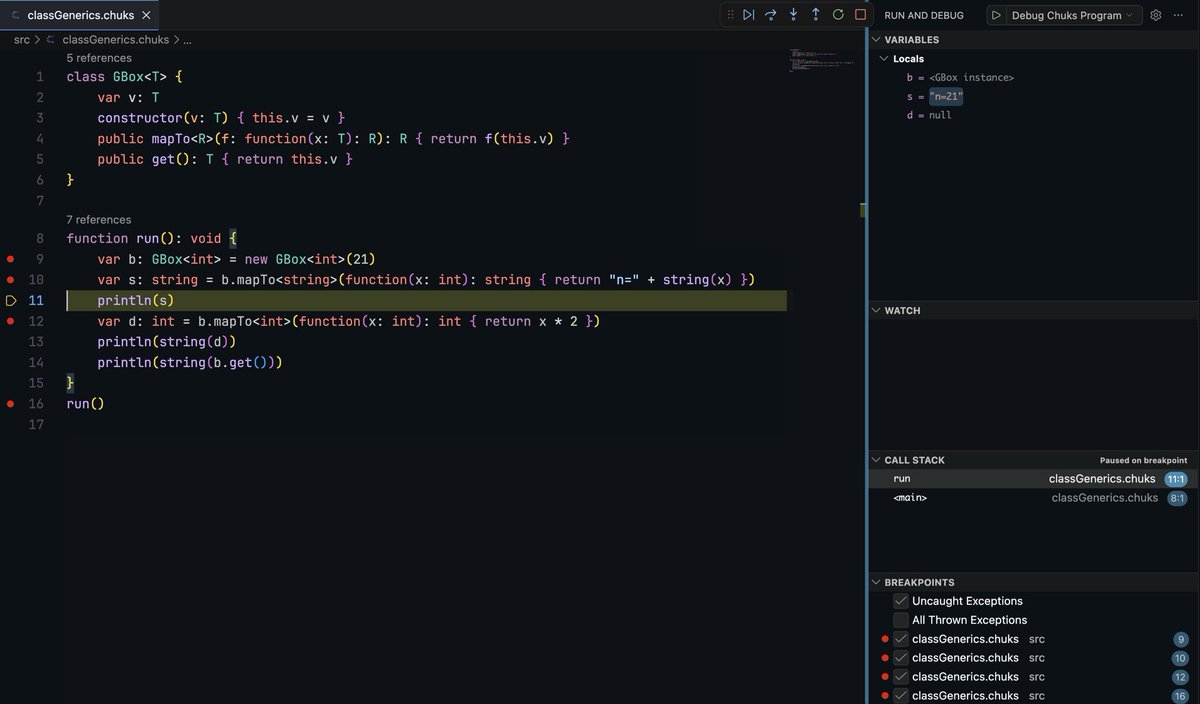
The next version of @Chukslang , v0.1.0, will include improved generics and a built-in debugging feature.
#chukslang #programminglanguage #softwareEngineering #programming #testing
1
3
6

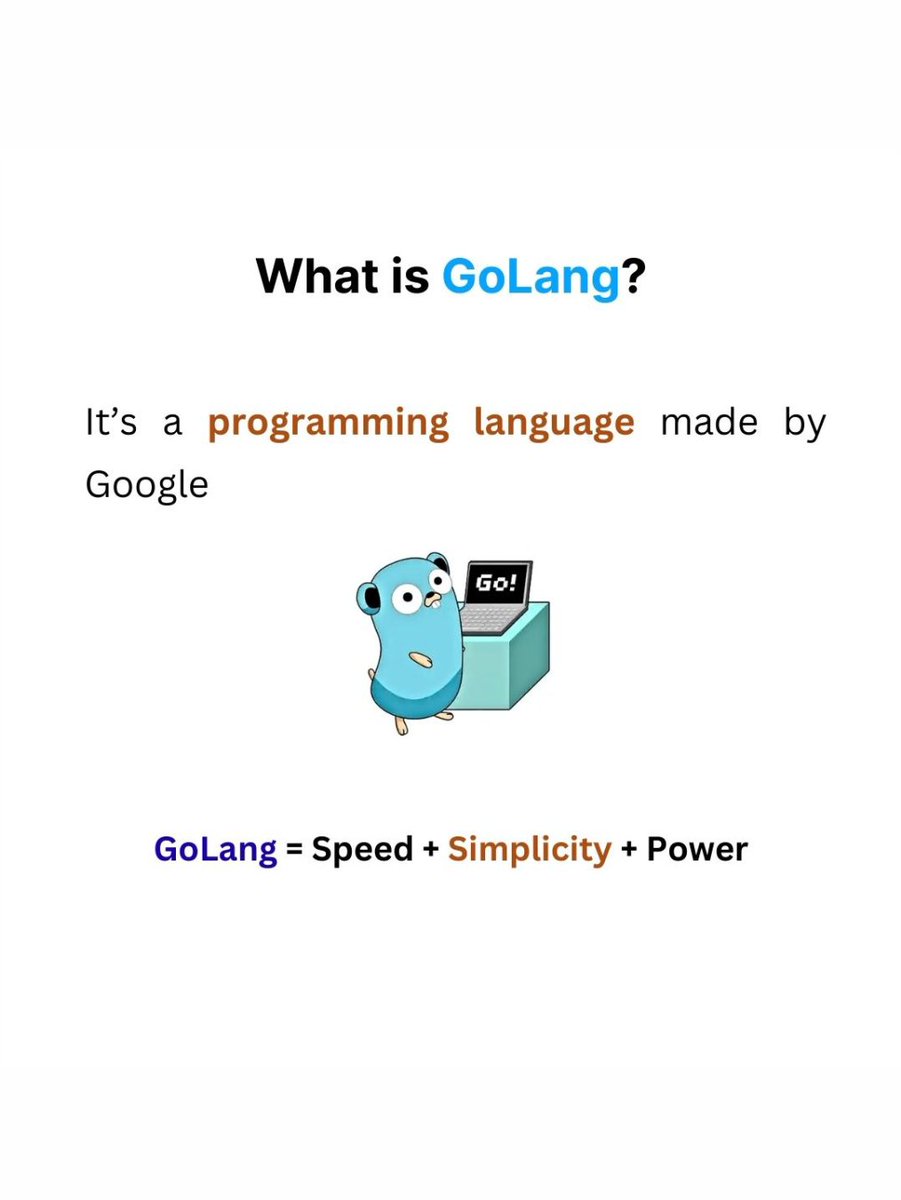
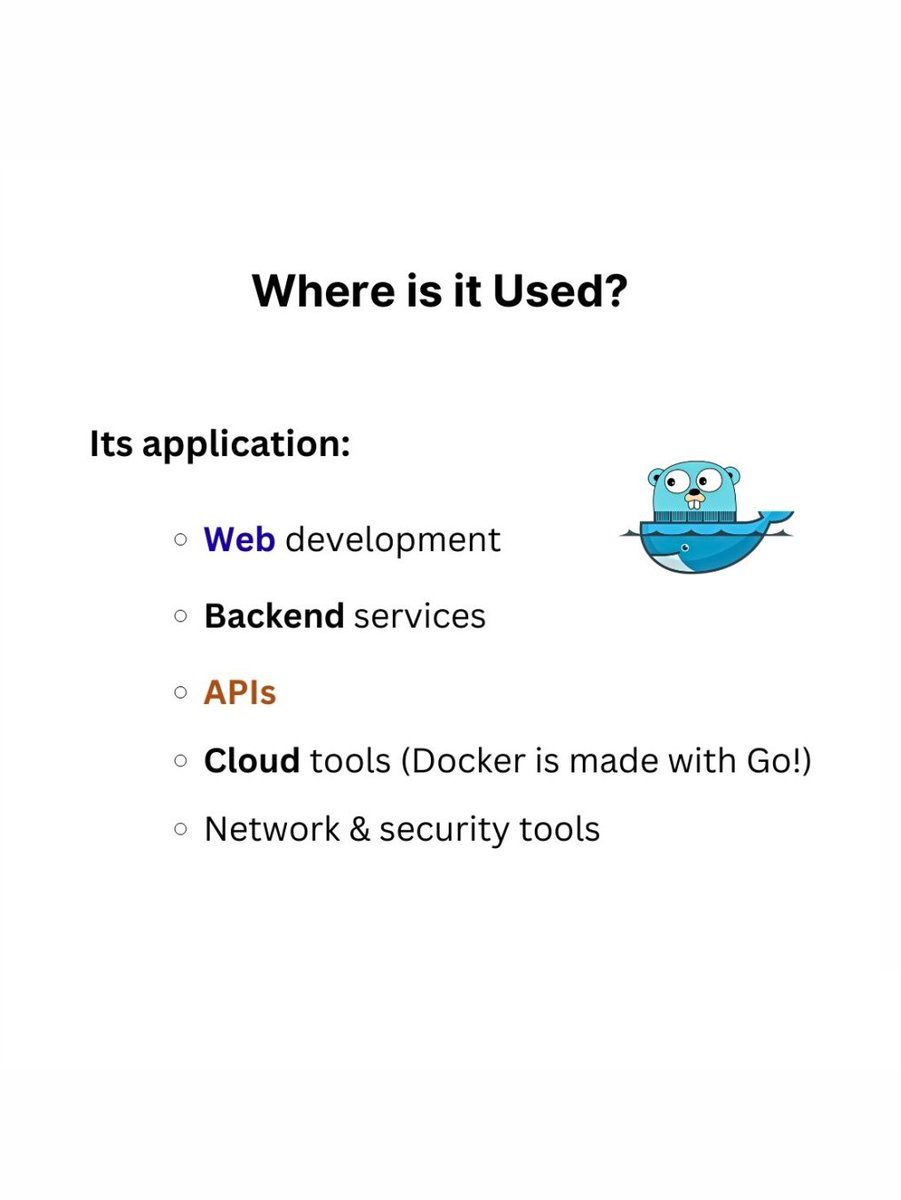
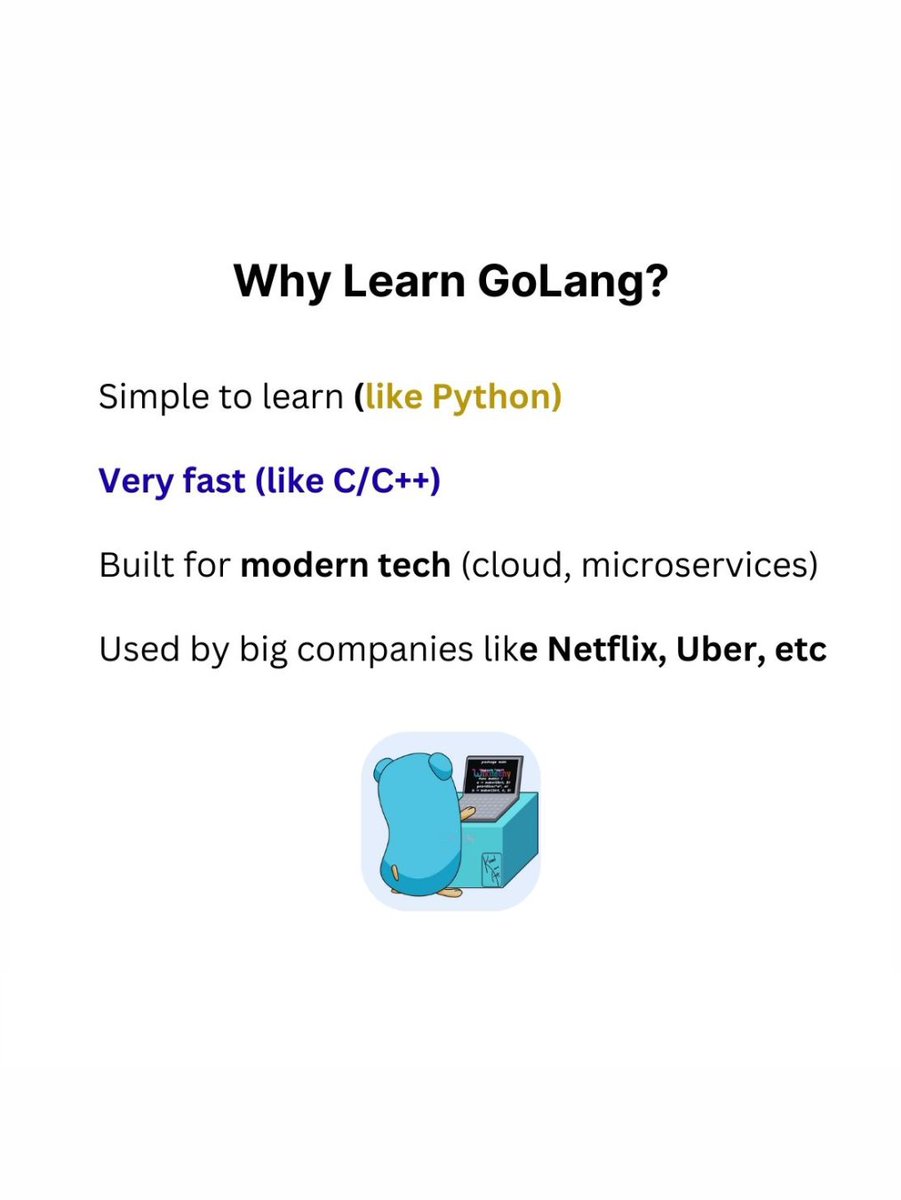
🚀 Go or Golang is a modern, efficient programming language built for performance, simplicity, and scalability. 💻
👉 Learn more: atb.page/ 🎯
➡️ Follow @Trainingbasket for more! 💡
#go #golang #backenddevelopment #programminglanguage #trainingbasket
20
@Chukslang V0.1.0 final internal testing phase has been completed. This version brings more performance and stability to Chuks. I will be sharing more details and the official release date in the coming days.
#BuildInPublic #programmingLanguage #compiler #chukslang
1
2
15

I'm building a custom programming language, framework and virtual machine. My goal is to create a revolution and make the browser irrelevant.
#ProgrammingLanguage #OperatingSystems #HomebrewComputer #SoftwareRevolution #LowLevelProgramming #TechInnovation
55

Jun 11
We brought some useful info for you from our last webinar!
Full video: youtube.com/watch?v=yFz1LTtE…
Next webinar: pvs-studio.com/en/webinar/
#Cpp #Tokenization #Lexer #ProgrammingLanguage
1
190

Jun 11
Guaranteed good grades in;
#Essays
#assignmentdue
#Economics
#javascript
#Algebra
#Homework
#Psychology
#Accounting
#Physics
#essayhelp
#English
#essaypay
#Maths
#Essaydue
#Chem
#python
#programminglanguage
#writerscommunity
#needawriter
3

Jun 10
Guaranteed good grades in;
#Essays
#assignmentdue
#Economics
#javascript
#Algebra
#Homework
#Psychology
#Accounting
#Physics
#essayhelp
#English
#essaypay
#Maths
#Essaydue
#Chem
#python
#programminglanguage
#writerscommunity
#needawriter
5

Jun 10
Guaranteed good grades in;
#Essays
#assignmentdue
#Economics
#javascript
#Algebra
#Homework
#Psychology
#Accounting
#Physics
#essayhelp
#English
#essaypay
#Maths
#Essaydue
#Chem
#python
#programminglanguage
#writerscommunity
#needawriter
5

You'll never forget this number! 'Mainframe Computers 3270 Emulator' shirt designs and more @zazzle zazzle.ca/mainframe_computer… via @zazzle #cobol #programminglanguage #mainframelife #Mainframe3270emulator #mainframebestfriend #shirtparking #legacysystems #programmergiftideas

13

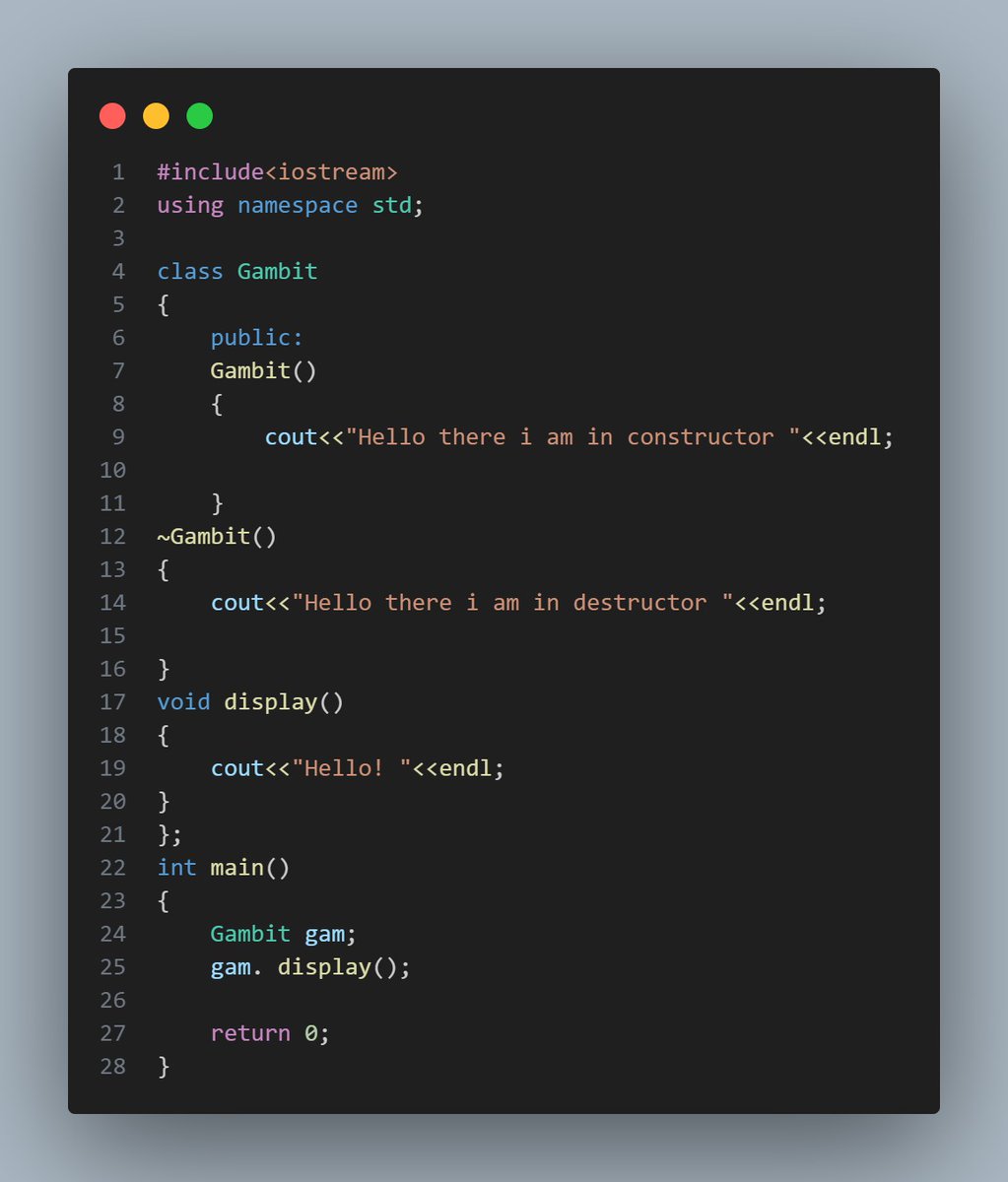
Ranging from the header files( line 1) to naming the class (line 4), then defining the constructor and the destructor(lines 7 and 12 respectively), I'm able to build a snippet codes on classes using c language🥰💯#cpp #techbros #programminglanguage #robotics
1
1
8
149

May 23
#ThisDayInHistory Post 2116:
23 May 1995 (31 years ago): The first version of the Java programming language was released.
CC: @java
#History #OnThisDay #OTD #Java #ProgrammingLanguage

3
5
179

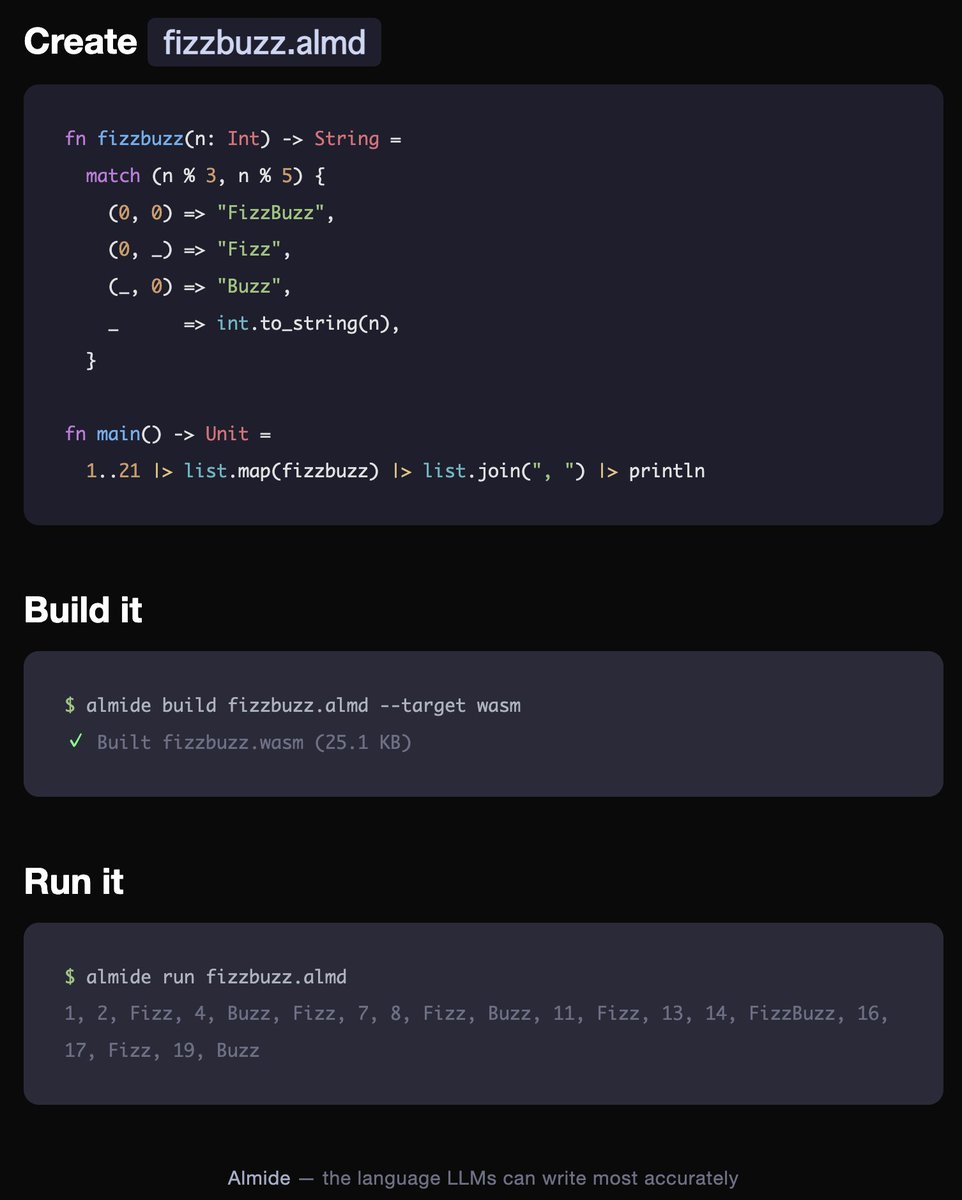
The era of agents building programming languages is exciting.
What I’m working on is a language agents can write, fix, and grow code with over time.
Almide started as an experiment, but it is becoming a practical compiler.
10 weeks. 2,500 commits. Two targets: native and WASM.
Almide is designed around one core metric:
Modification Survival Rate.
When an LLM changes existing code, how often does the result still compile, run, and pass checks without human fixes?
That metric shapes the whole system:
— predictable syntax: pipes, tuple pattern matching, expression-based design
— LLM-oriented diagnostics: repair suggestions the model can apply directly
— hallucination-resistant stdlib: 381 functions and aliases for common mistakes
— type-level effect tracking: pure vs effectful, enforced by the compiler
— context-friendly documentation: a one-file cheatsheet that fits in a prompt
— native and WASM from the same source
A GPU UI framework, Ceangal, already runs on the WASM target.
This is not just theoretical. It already runs.
The goal is not only to show that agents can build languages.
The goal is to build a language agents can use correctly over time.
If we are serious about languages for agents, I think we should measure how accurately LLMs can write and modify code in them.
Almide is my attempt to take the LLM-native programming language space seriously.
github.com/almide/almide
#Almide #WASM #ProgrammingLanguage
2
4
273

🚀 Mojo 1.0 is the big milestone where Modular says Phase 1 will be complete, with semantic versioning, a frozen core API, and plans to open source the compiler afterward. mojolang.org/ #Mojo #MojoLang #ProgrammingLanguage #AI #SystemsProgramming #OpenSource
2
43
@Chukslang v0.0.7 to v0.0.9, the final 0.0.x patch. Multi-package AOT fixes, createAndReturn, registry-mirrored installs, case-insensitive ContentLength, UTC time.toISO. 298/298 tests green.
chuks.org/blog/chuks-v009-fi…
#softwareEngineering #programmingLanguage #BuildInPublic
2
5
41
@Chukslang v0.0.9 is out, final 0.0.x patch. Multi-package AOT fixes, case insensitive Content Length, UTC time.toISO, DB createAndReturn, .auto(), 187k r/s
#BuildInPublic #softwareEngineering #programming #backend #ProgrammingLanguage
chuks.org/blog/chuks-v009-fi…
1
2
41

Apr 22
Which programming language did you start your coding journey with?
#code
#programminglanguage

4
105
@Chukslang v0.0.7 compiling…
Learn more at: chuks.org
#ChuksLang #SoftwareEngineering #Programming #ProgrammingLanguage #BuildInPublic
3
4
69
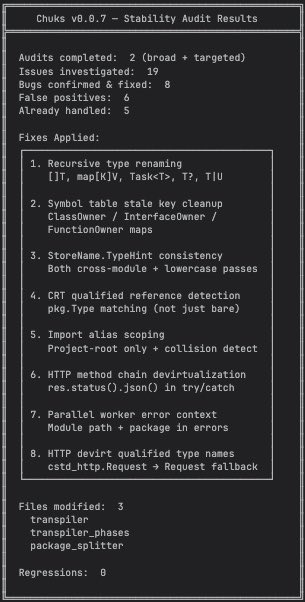
Progress update on the @Chukslang programming language, getting v0.0.7 stable before the official release.
Past week: 2 deep audits of the multi-package AOT compiler. Found and fixed 8 bugs across 3 core files.
#BuildInPublic #softwareEngineering #programmingLanguage #compiler
2
2
3
52
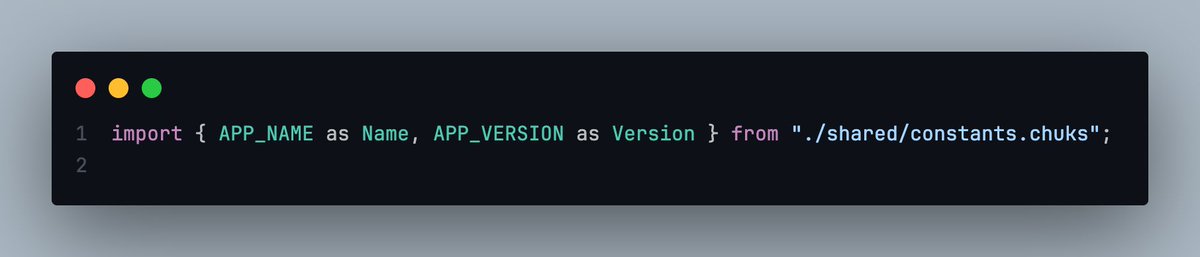
import aliasing is coming to @Chukslang 🔥. Cleaner code, no naming conflicts, no workarounds
small feature, big DX win, what do you think? anything you’d want to see supported?
#softwareEngineering #programming #BuildInPublic #programmingLanguage
2
3
4
94
I will be available for a @Chukslang live coding session today by 3pm. To join, reply interested. Will send the link 🔗
#BuildInPublic #programming #programmingLanguage #codeingSession
1
3
66