
Jun 13
🎓 PhD Positions in Computer Science (Formal Methods) 🇩🇰 | University of Southern Denmark
📌 Position: PhD in Computer Science (Formal Methods)
🏫 University: University of Southern Denmark (SDU)
📍 Location: Odense / Vejle, Denmark 🇩🇰
🏢 Department: Mathematics & Computer Science
👨🏫 Supervisor: Fabrizio Montesi
📅 Deadline: August 16, 2026
⏳ Duration: 3 years (fully funded)
🔬 About the Project
The Centre for Formal Methods and Future Computing (FORM) invites applications for PhD positions focused on advancing the formalisation of computing. The research aims to combine human intelligence and AI to build reliable digital systems grounded in rigorous mathematical foundations.
Key research areas include:
• Computational complexity
• Distributed systems & cloud computing
• Logic and theorem proving
• Programming languages & type systems
• Security, cryptography & privacy
• Human factors in computing
A major initiative includes contributing to the Computer Science Library (CSLib) using Lean, a global effort to formalise computer science knowledge.
👤 Ideal Candidate
• Master’s degree in Computer Science or related field
• Strong interest in formal methods (theory or applications)
• Solid analytical and programming skills
• Ability to work in an international research environment
• Fluency in English
🌟 Why Apply?
• Join a leading research centre in formal methods and AI
• Work on foundational challenges in computing and software reliability
• Collaborate within a strong interdisciplinary research cluster (AI, cybersecurity, programming languages)
• Access to international collaborations and global initiatives
• Supportive and inclusive academic environment
🌍 Location Highlight – Odense
Odense, Denmark’s third-largest city, offers a high quality of life with a mix of historic charm and modern living. Located on the island of Funen, it provides easy access to Copenhagen and Aarhus, along with beautiful coastal areas.
🔗 More Info:
phdscanner.com/opportunities…
#PhD #ComputerScience #FormalMethods #ProgrammingLanguages #DistributedSystems #Cybersecurity #Denmark #ResearchOpportunity #AcademicJobs #PhDPositions
8
353


Jun 6
When you try to learn everything you end up getting confused and finally learn nothing 😂😂😂 where should someone specialize
#Programminglanguages
Python
JavaScript
Html
Css
Node js
Java
React
Dart
C
C
Php
Mysql
Typescript
Etc
#frameworks
Django
Flutter
Laravel
WordPress
Flask
React native
Etc
#Cybersecurity from
Udemy
Hack the box
Try hack me
Cisco
Owasp
Coursera
#cybersecurity certifications
Cisa
Comptia A
Pen Testing
Ethical hacking
Etc
2
8
240

Jun 4
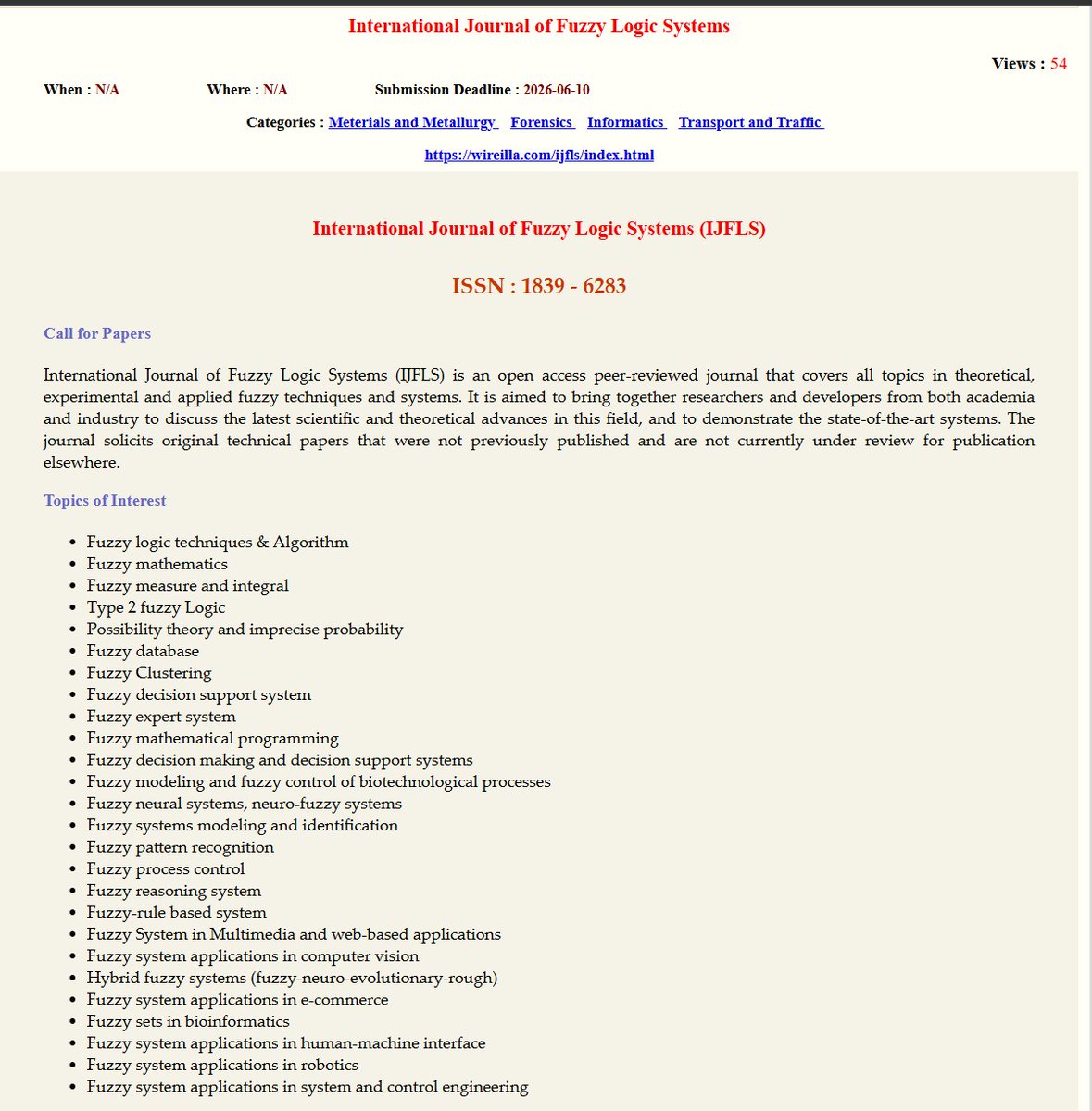
Call For Papers...!
International Journal of Fuzzy Logic Systems (IJFLS)
wireilla.com/ijfls/index.htm…
Contact us
Here's where you can reach us : ijfls@wireilla.com
Submission Link
wireilla.com/submission/inde…
#ProgrammingLanguages #SoftwareDevelopment #Coding #ComputerScience #Programming
1
10
Call For Papers...!
International Journal of Programming Languages and Applications ( IJPLA)
wireilla.com/ijpla/index.htm…
Contact us
Here's where you can reach us : ijplajournal@yahoo.com (or) ijplajournal@wireilla.com
Submission Link
wireilla.com/submission/inde…
#ProgrammingLanguages

1
1
9



Jun 3
1/ Elixir v1.20 just crossed a line most dynamic languages never cross gracefully:
it is now gradually typed without asking developers to rewrite their code with annotations.
That is a much bigger deal than a normal language release. #Elixir #ProgrammingLanguages
2/ The first milestone is type inference gradual type checking for every Elixir program.
The compiler can now report dead code and “verified bugs” — type violations that are guaranteed to fail at runtime if that path executes.
No type signatures required.
That last sentence is the whole strategy.
3/ The interesting design choice is `dynamic()`.
In many gradual systems, the escape hatch behaves like “anything goes.”
Elixir’s `dynamic()` is different: it preserves compatibility, but still narrows through ordinary code paths.
Guards, pattern matches, clauses, maps, tuples, and conditionals become sources of type information. #TypeSystems
4/ Example of the direction:
If one clause handles `nil`, the next clause can be narrowed to the non-nil case.
If a guard proves a tuple has at most two elements, accessing element 3 can be flagged.
If a map is checked for a key, later access can be typed more precisely.
The language is mining information from code developers already write.
5/ That is why this release matters beyond Elixir.
Most mature dynamic ecosystems have the same problem:
- too much legacy code
- too much runtime behavior
- too much productivity tied to flexibility
- too much risk in bolting on a “static rewrite” story
Elixir v1.20 takes the more pragmatic route: make the compiler smarter before making developers louder. #OpenSource
6/ There are still real migration details: v1.20 requires Erlang/OTP 27 , is compatible with OTP 29, and the type system is still at its first development milestone.
But the architectural signal is clear.
The future of dynamic languages is not “no types” vs “static types.”
It is compilers extracting more truth from normal code, then surfacing it only when it prevents real bugs. #SoftwareArchitecture
29
International Journal of Programming Languages and Applications ( IJPLA)
ISSN : 1839-6291
wireilla.com/ijpla/index.htm…
Contact us
Here's where you can reach us : ijplajournal@yahoo.com (or) ijplajournal@wireilla.com
Submission Link
wireilla.com/submission/inde…
#ProgrammingLanguages

1
7

May 30
Java vs Python: Which Should Beginners Learn First in 2026? tech-wonders.com/?p=46869
#Java #Python #LearnToCode #CodingForBeginners #ProgrammingLanguages #JavaDeveloper #PythonDeveloper
15

May 30
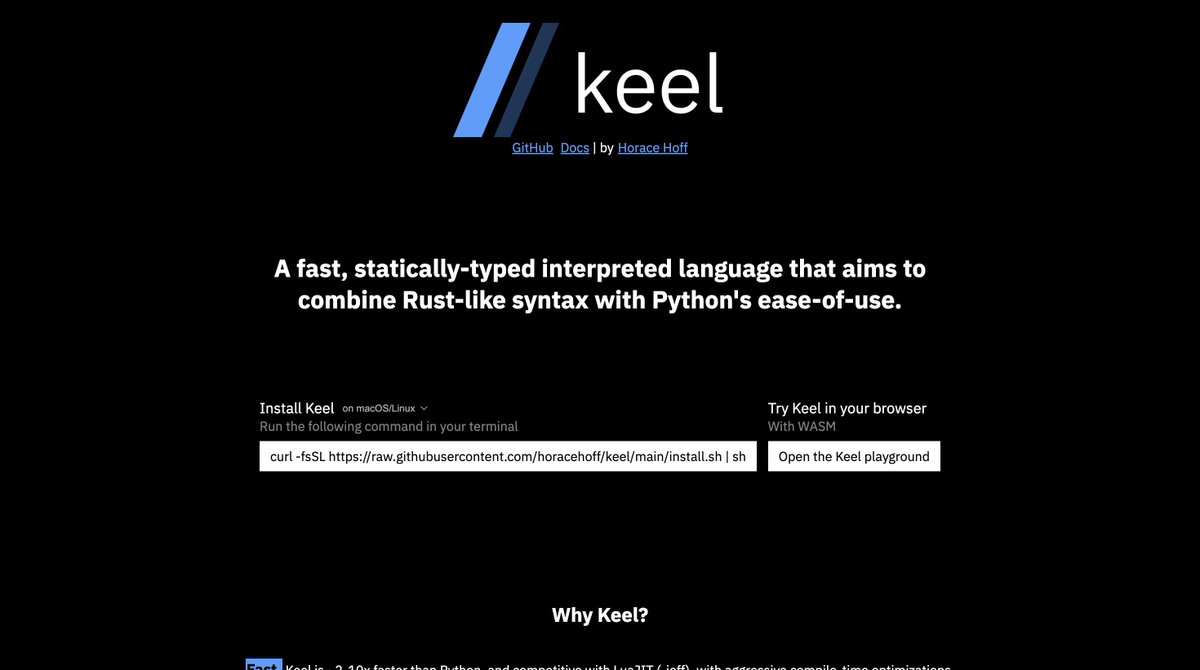
Rust syntax. Python ease of use. 2-10x faster than Python. 🦀
Keel is a new statically-typed interpreted language built in Rust. Full type inference, no annotations needed. FFI support, built-in REPL, and aggressive compile-time optimizations.
Very early stage but actively shipping. Worth watching.
🔗 github.com/horacehoff/keel
#Rust #RustLang #ProgrammingLanguages #OpenSource #Compilers #Python
4
9
95
5,823

May 29
AI broke key assumptions that kept software secure for decades. This article analyses what this means and what the long-term solution looks like.
medium.com/@toplinesoftsys/s…
#VisualProgramming #programminglanguages #cybersecurity
1
32


May 28
دليل حل مشاكل أندرويد 16 ومراجعة أداء بايثون 2026
#اندرويد16
#تحديث_اندرويد
#حل_مشاكل_الاندرويد
#تكنولوجيا
#Android16
#AndroidOS
#بايثون
#برمجة
#لغات_البرمجة
#Python
#PythonProgramming
#Coding
#Backend
#SoftwareReview
#ProgrammingLanguages
jrose7.club/2026/03/android-…