
Good security isn’t about more tools; it’s about the right ones. 💡🔐
Comment below 👇
Help someone else avoid the same mistake.
#Cybersecurity #IEHD #SecurityLessons #ToolSprawl #CyberAwareness #CyberCommunity
3

Apr 2
Mercor's $10B AI training breach: developers handed credentials to ChatGPT. LiteLLM supply chain attack exposed 4TB. The irony: companies building AI can't secure themselves. This is why agents need guardrails, not just guardrails by promise.
#AI #SecurityLessons
86


🧠 A Hard Security Lesson from Shared-Control Environments
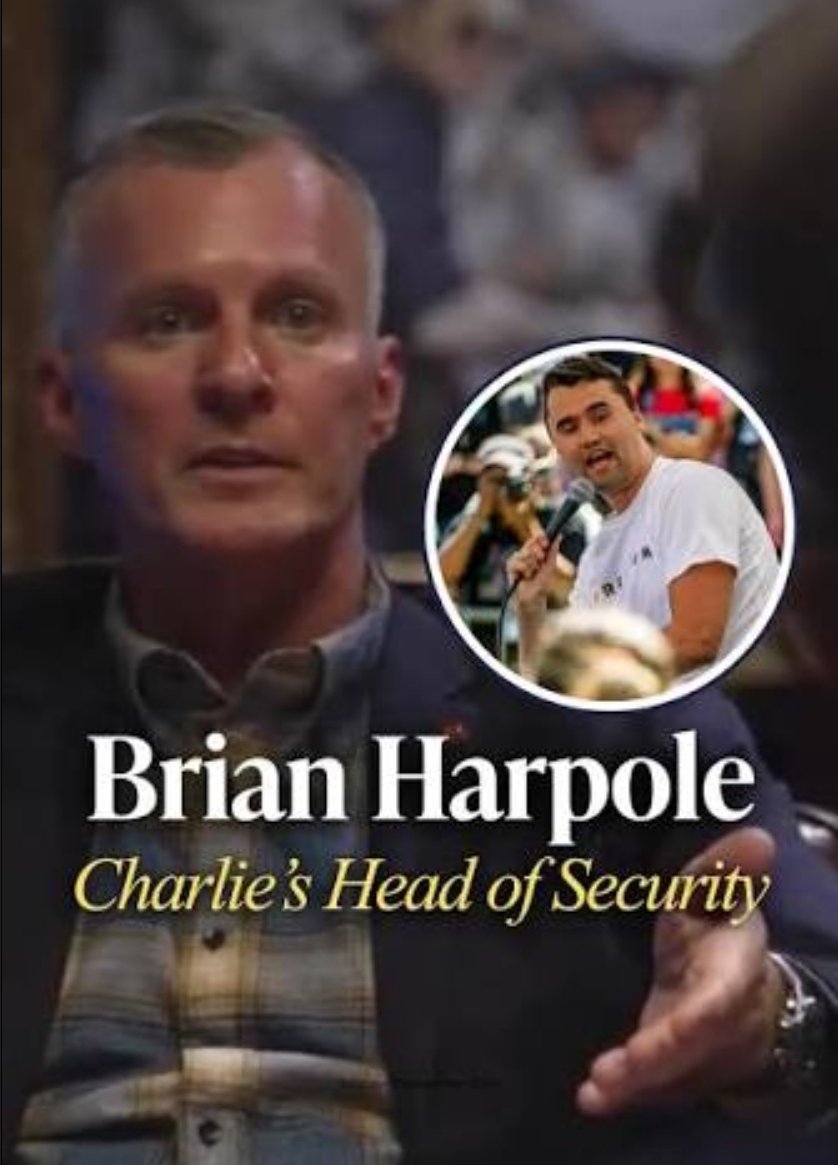
After watching the TPUSA Super Bowl halftime event, it sent me back to re-examining security discussions surrounding Charlie Kirk and an interview I revisited on The Shawn Ryan Show with Brian Harpole, his head of security.
Here is the link:
youtu.be/S0fmq1zffGw?si=4Ht3…
If you haven’t watched that interview, it’s worth your time.
One detail stood out clearly.
Brian explained that specific elevated vantage points — including rooftop areas — were identified ahead of time as potential risks and were coordinated with campus security to ensure those areas would be covered.
They were not.
That highlights one of the most difficult realities in protective and event security.
In environments like college campuses and large public venues, protection teams often do not control the entire security ecosystem. We operate within a defined footprint and must rely on campus security, venue staff, or law enforcement to secure areas outside our authority.
That reliance creates risk.
Not because people don’t care — but because ownership becomes diluted.
There’s a reason Ronald Reagan’s phrase still applies in security operations today:
Trust, but verify.
Identifying a vulnerability and communicating it is only step one. Verifying that coverage is actually in place — visually, continuously, and with accountability — is just as critical.
In hindsight, assigning a dedicated liaison to campus security to confirm coverage of identified high-risk positions may have helped close the gap. Not as a critique — but as a lesson.
Shared environments demand: • Clear ownership
• Redundant confirmation
• Real-time verification
• Embedded coordination when authority is split
These incidents are rarely the result of one failure.
They happen when assumptions replace confirmation.
This isn’t political.
It’s operational.
In security, communication without verification is assumption — and assumption is where failures begin.
#CharlieKirk
#TPUSA
#ProtectiveSecurity
#EventSecurity
#CampusSecurity
#SecurityLeadership
#RiskManagement
#SituationalAwareness
#TrustButVerify
#SecurityLessons
1
52

Jan 22
Most festive-season crimes shared one failure: gate security. Convenience wins, vulnerability follows. One open gate can change everything. #SouthAfrica #SecurityLessons
linkedin.com/pulse/crime-did…
@afriforum
@ActionSocietySA
@CityofCT

4

हमने किसी के मंदिर नहीं तोड़े Ajit Doval Gen Z | National Security #AjitDoval #NSA #GenZ #Delhi #NationalSecurity #IndianHistory #SecurityLessons #StrategicAffairs #ViralSpeech
12

Jan 10
India’s NSA Ajit Doval delivered a stark & thought-provoking message when he said:
“We were a very advanced civilization. We never broke anyone's temples. We did not attack any foreigners even when the rest of the world was weak we did not understand the threats to our security. And so history taught us a lesson.”
The statement reflects a deep historical introspection highlighting India’s civilizational values, its restraint in times of dominance and the costly consequences of failing to recognize emerging security threats.
#AjitDoval
#NationalSecurity
#IndianCivilization
#CivilizationalWisdom
#HistoryTeaches
#StrategicAwakening
#SecurityLessons
1
27

'અમારા મંદિરોને લૂંટવામાં આવ્યા, અને આપણે...', જાણો NSA અજીત ડોભાલએ કેમ આવું કહેવું પડ્યું?
vtvgujarati.com/news-details…
#AjitDoval #NationalSecurity #IndiaIndependence #SecurityLessons #NationBuilding #VTVDigital
1
161

Jan 10
हमने किसी के मंदिर नहीं तोड़े, अजित डोभाल का Gen Z को सीधा सन्देश
@narendramodi @AmitShah @myogiadityanath @BJP4India
#AjitDoval #NSA #GenZ #Delhi #NationalSecurity #IndianHistory #SecurityLessons #StrategicAffairs #ViralSpeech #ReportBharat
50

4/ Key Lesson:
Even multisig cold wallets can be compromised through UI manipulation.
Verify EVERYTHING at the blockchain level.
Never trust the interface alone.
#SecurityLessons #CryptoEducation #BlockriumShield
1
24

10 Dec 2025
Remember the $600M Poly hack? Weak auth was the door. Lesson: Multi-factor with local biometrics stops it cold. G-Knot built for this. Thoughts on recent breaches? #SecurityLessons
2
67

17 Nov 2025
CRYPTO NEWSWIRE: How to Not Get Kidnapped for Your Bitcoin...
NEW YORK TIMES: Escaping zipties, hiring bodyguards and other practical lessons in self-defense for crypto traders, after a series of gruesome crimes spooked the community.
AVOIDING "WRENCH ATTACKS"... Pete Kayll, a musclebound veteran of Britain’s Royal Marines, had an unusual instruction for the Bitcoin investors gathered in Switzerland in late October.
“Just bite your way out,” he told them.
It was the final day of a weekend-long cryptocurrency convention on the shore of Lake Lugano, near the Italian border.
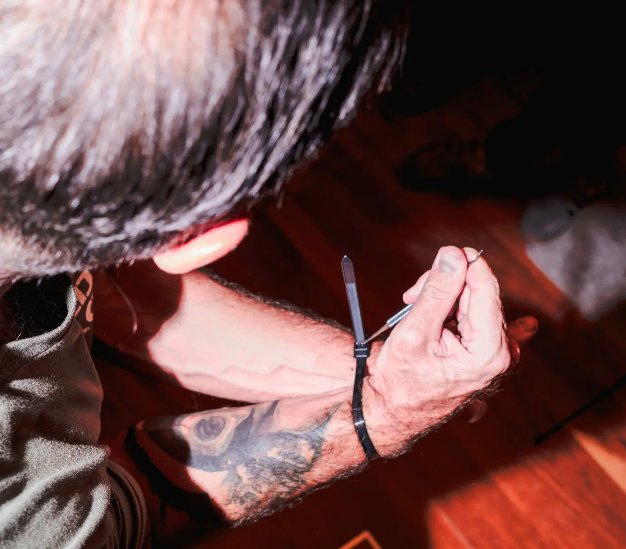
A small group of investors had lined up in a conference room to have their hands bound with plastic zipties.
Now they were learning how to get them off.
“Your teeth will get through anything,” Mr. Kayll advised. “But it will bloody well hurt.”
Most people don’t go to an international crypto conference expecting to learn how to gnaw through plastic.
But after hours of panels devoted to topics like Bitcoin-collateralized loans, these investors were looking for something more practical.
They wanted to know what to do if they were grabbed on the street and thrown into the back of a van.
Already paranoid about scams, hacks and market turmoil, wealthy crypto investors have lately become terrified about a much graver threat: torture and kidnapping.
This year, crypto investors or their families have been targeted by assailants more than 60 times, according to a tallies of public reports, a string of gruesome attacks that has shocked the industry and made headlines worldwide.
In France, the father of a crypto influencer was found in the trunk of an attacker’s car — bound, beaten and covered in petrol.
Thieves in Minnesota held a family at gunpoint for nine hours, demanding access to $8 million in crypto.
And in Manhattan, federal prosecutors charged two men with kidnapping and torturing a crypto trader inside a luxurious 17-room townhouse.
In crypto circles, these episodes are known as “wrench attacks,” a reference to a widely shared cartoon in which a computer expert’s high-tech security is foiled by a thief who threatens to hit him with a wrench until he gives up his password.
The recent surge of wrench attacks has been fueled partly by the rising price of Bitcoin, which hit a record of $126,000 last month, minting a new generation of millionaires and even billionaires, many of whom have little personal security....
nytimes.com/2025/11/17/busin…
#CryptoNewswire, #Crypto, #CrimeNews, #CryptoSecurity, #BitcoinKidnapping, #WrenchAttacks, #CryptoSelfDefense, #BitcoinSafety, #CryptoCrime, #AvoidKidnapping, #CryptoBodyguards, #ZiptieEscape, #CryptoTraders, #BitcoinWealth, #CryptoThreats, #PersonalSecurity, #CryptoInvestors, #BitcoinHacks, #CryptoViolence, #SelfDefenseTips, #CryptoConvention, #BitcoinMillionaires, #CryptoScams, #WrenchAttack, #CryptoTorture, #BitcoinProtection, #CryptoParanoia, #SecurityForCrypto, #CryptoKidnap, #BitcoinRisks, #CryptoSafety, #EscapeTechniques, #CryptoNews, #BitcoinNews, #CryptoWorld, #FinancialSecurity, #CryptoHorrors, #BitcoinBillionaires, #CryptoVulnerable, #SelfDefenseCrypto, #CryptoAssault, #BitcoinPriceSurge, #CryptoRiches, #SecurityLessons, #CryptoCommunity, #BitcoinThreat, #CryptoGuard, #WrenchThreat, #CryptoSurvival
4
179

7 Oct 2025
The Morris Worm (1988)
Lets talk about cyber security history……In November 1988, graduate student Robert Morris released a self‑replicating worm onto the early internet. At the time roughly 60 000 computers were online; the worm spread to about 6 000 UNIX systems, causing them to slow down or crash and becoming the first widely publicized “cyberattack” . It exploited weaknesses in sendmail, finger and password-guessing mechanisms. Administrators disconnected networks and cobbled together fixes as the worm repeatedly created new processes and crashed services at universities and military research labs . Morris later said he wanted to gauge the Internet’s size, but a coding error caused exponential replication. The FBI eventually tracked him down, and the incident led to the creation of the Computer Emergency Response Team (CERT). Beyond the headlines, the Morris Worm underscored how fragile interconnected systems were and catalyzed modern incident-response practices. Its legacy reminds us that even well‑intentioned code can behave unpredictably at scale; it also highlighted the need for timely patching. CyberSecurityHistory #MorrisWorm #CyberAttack #Infosec #IncidentResponse #NetworkSecurity #ComputerWorm #EthicalHacking #CERT #SecurityAwareness #SystemVulnerability #DigitalForensics #CyberDefense #UNIX #CyberThreats #SecurityLessons #PatchManagement #MalwareHistory #InternetSecurity #CyberResilience
127

14 Sep 2025
Your Loyalty Card is a Liability: Lessons from the Co-op Hack #LoyaltyCardRisk #CoopHack #DataBreach #ConsumerPrivacy #SecurityLessons substack.com/home/post/p-168…
1
3
1,202

13 Sep 2025
Charlie Kirk's Death Explained
#HBGary #Anonymous #Cybersecurity #HackingHistory #Hubris #DataBreach #EmailLeak #OpSec #SecurityLessons #Cybercrime #TechHistory #SecurityAwareness
221


26 Mar 2025
⏰ If you could send a cyber security tip to yourself 5 years ago, what would it be?
Share your time-traveling tip below!
Let’s help our past selves (and maybe some newbies too). 😄
hubs.la/Q038r_pR0
#NetworkOutsource #K12Technology #TechTip #CyberAdvice #SecurityLessons

1

21 Feb 2025
#AIincidents are making headlines—what
#securitylessons can we learn?
From real-world failures to key takeaways, learn how to navigate AI risks, strengthen resilience, and prevent costly mistakes.
Don’t let AI security be an afterthought: hubs.la/Q0357vFh0
146

15 Feb 2025
Learning from the Treasury hack - Dec. 2024:
Strengthen your architecture today to prevent being the next headline.
#SecurityLessons
11

20 Jan 2025
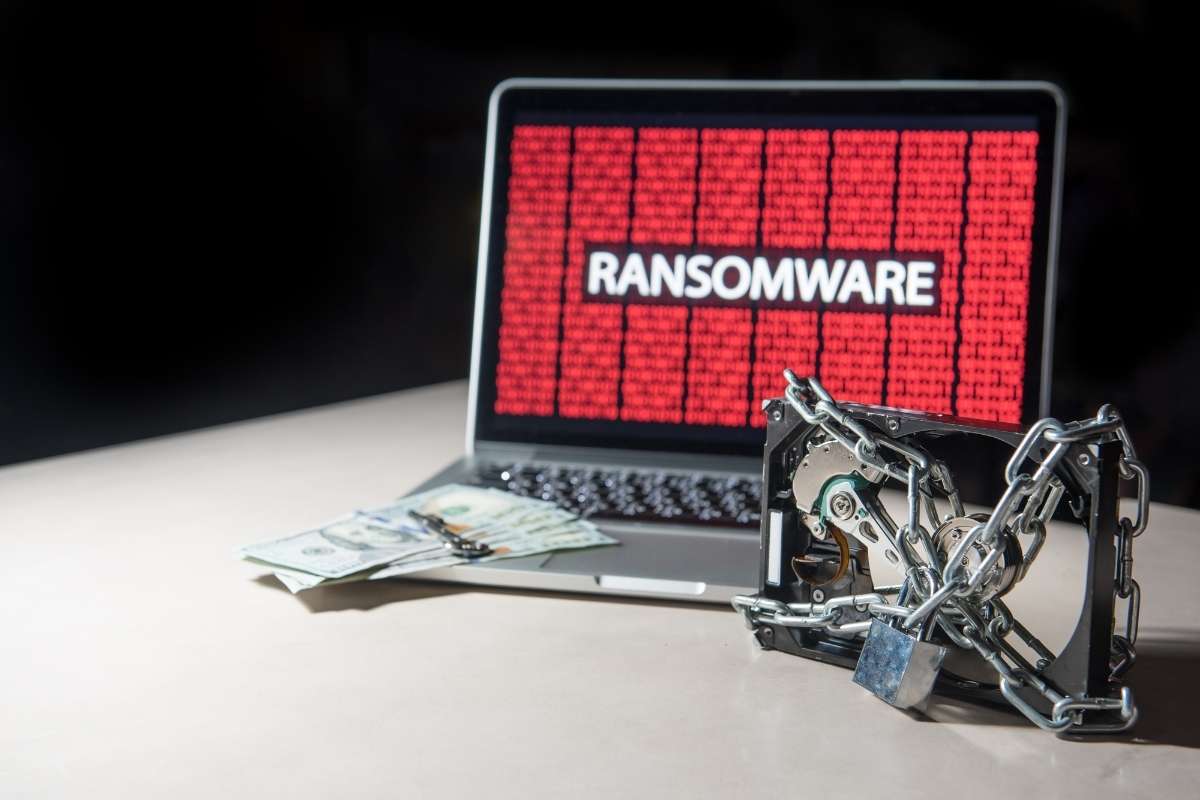
Ransomware attacks have shaken industries worldwide. Learn from the most notorious cases to better protect your business.
Read more: cybrpro.com/famous-ransomwar…
#RansomwareAttack #CyberThreats #SecurityLessons
7