21 Feb 2025
2. **Optimize Buffy Coat Preparation** ⚙️ #BuffyCoatPrep
- Use a standardized centrifugation protocol (e.g., 1,200–1,500 g for 10–15 minutes) to ensure consistent leukocyte yield 🧪. Aim for a WBC concentration of 10^7–10^8 cells/mL ⚪ #Standardization.
- *Tip*: Collaborate with your blood bank 🤝 to streamline buffy coat extraction and minimize processing delays ⏱️ #Teamwork.
3. **Tailor Desensitization Regimens** 💉 #DesensitizationProtocol
- Combine buffy coat infusion with a multi-modal approach: plasmapheresis (3–5 sessions), IVIG (1–2 g/kg), and rituximab (375 mg/m²) for robust DSA clearance 🚀 #MultiModalTherapy.
- *Tip*: Adjust the timing and dosage based on DSA response—re-assess MFI 48 hours post-infusion to guide additional cycles 🔄 #DynamicAdjustment.
4. **Monitor Immune Dynamics** 📡 #ImmuneMonitoring
- Track not only DSA levels but also complement activation (e.g., C1q-binding assays) and T-cell responses to ensure broad immune modulation 🛡️ #ComprehensiveMonitoring.
- *Tip*: Use serial monitoring (days -7, -3, and 0 pre-transplant) to fine-tune the protocol dynamically ⏰ #SerialTesting.
5. **Mitigate Risks** ⚠️ #RiskManagement
- Watch for infusion-related reactions (e.g., fever 🌡️, cytokine release) due to leukocyte content in the buffy coat. Pre-medicate with antihistamines or steroids if needed 💊 #SafetyFirst.
- *Tip*: Start with a low-dose test infusion (10–20 mL) in high-risk patients to assess tolerability ✅ #PatientSafety.
6. **Post-Transplant Follow-Up** 👩⚕️ #PostTransplantCare
- After graft infusion, maintain vigilant monitoring for engraftment (e.g., neutrophil recovery by day 14–21) 🌱 and signs of DSA rebound 🚨 #FollowUp.
- *Tip*: Have a contingency plan, such as additional immunosuppression (e.g., cyclophosphamide), if engraftment stalls 🛠️ #ContingencyPlanning.
#### Benefits and Future Directions 🌍 #TransplantFuture
The buffy coat technique offers a cost-effective 💰, donor-specific method to tackle DSAs, reducing reliance on extensive immunosuppression or alternative donors 🌟 #CostEffectiveCare. Early data suggest improved engraftment rates (up to 90% in some cohorts) 📈 and lower rejection incidence when DSA is adequately managed ✅ #OutcomeImprovement. Looking ahead, research into optimizing leukocyte subsets within the buffy coat (e.g., regulatory T cells) or integrating it with novel agents like bortezomib could further enhance outcomes 🔮 #ResearchDirections.
#### Conclusion 🎯 #TransplantSuccess
For transplant programs, the buffy coat technique represents a practical and innovative tool in the haplo-SCT armamentarium 🛡️ #InnovativeTherapy. By systematically lowering DSAs, it bridges the gap between mismatched donors and recipients 🌉 #BridgingTheGap, offering hope to patients with limited options 🙌 #PatientHope. With careful planning 📋, precise execution ⚙️, and tailored monitoring 👀, this approach can elevate the standard of care in haploidentical transplantation 🏆 #StandardOfCare.
5
1
3
175

11 Oct 2022
This is not something any child should have to live with.
#MaskUp #ventilation #layerprecautiona #stayhomewhensick #serialtesting
10 Oct 2022

Long Covid in their own words.
"My heart is beeping funny". Three year old girl.
#longcovidkids

1
5

9 Apr 2022
Key to the new “self-management” phase of the pandemic is #SerialTesting.
9 Apr 2022

As more & more ppl use rapid tests, they recognize how important frequent testing is to detect when infectious
This is great!
Selfishly, I get frustrated when ppl accuse me of not talking enough about how important serial testing is
I guess maybe it’ll be enough after 3 yrs..
2
4

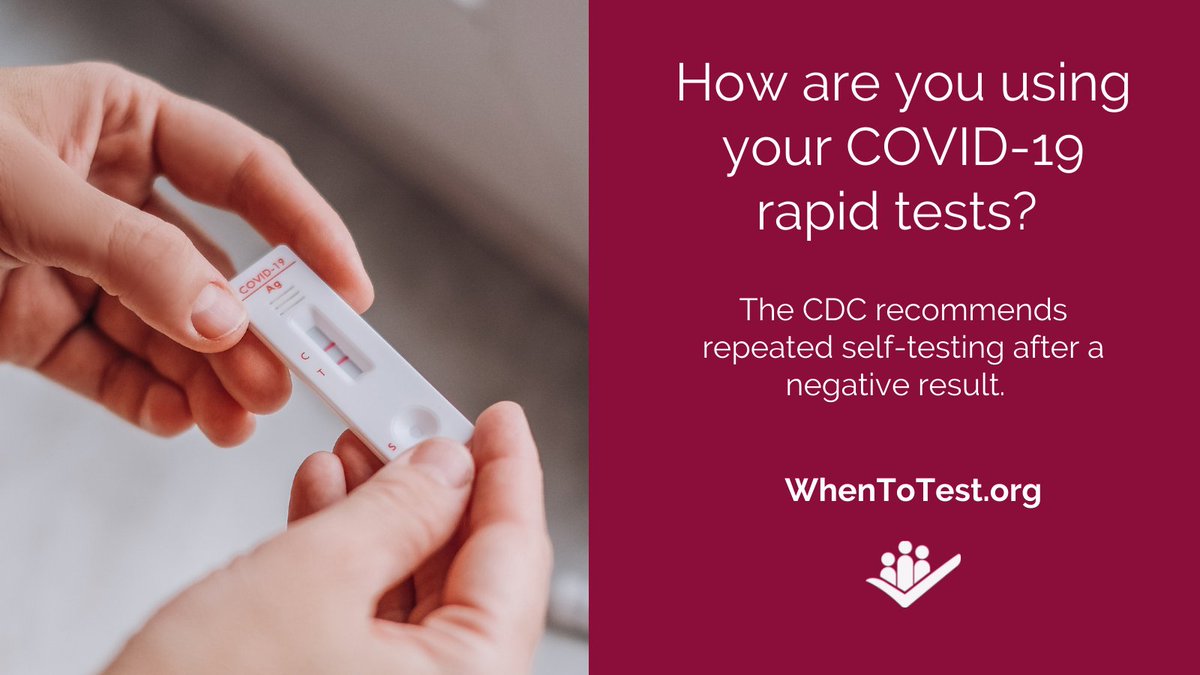
Did you know some COVID #RapidTests should be used twice (AKA #SerialTesting)? How are you using your at home #COVID19 testing kits? #WhenToTest #TestTwice
bit.ly/3tXiab7
IN PARTNERSHIP WITH:
@MITIDSS @NIBIBgov
1