
I don’t know about the trigonometry mathematics aspect but Joe Hanvey has done a pretty good job of demonstrating with a real world model he been working on that simulates it from a small single light source
2

in 1998 Playstation fans were calling nintendo fans gay for playing Mario and Zelda and Banjo
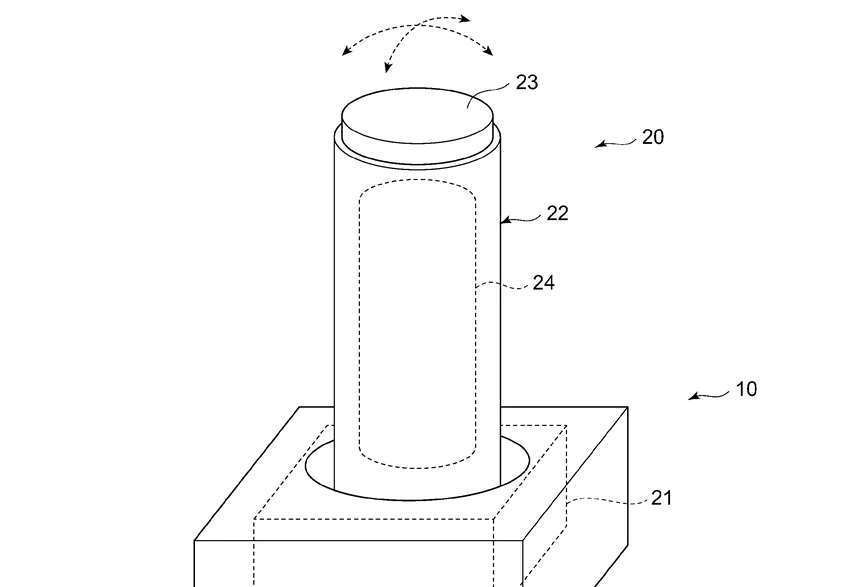
In 2026 Playstation is making a controller that simulates a penis getting hard and soft.

Sony has patented a controller with buttons that harden when you play with it
eurogamer.net/sony-controlle…
5
Mash-Kah-We-E-Quay retweeted

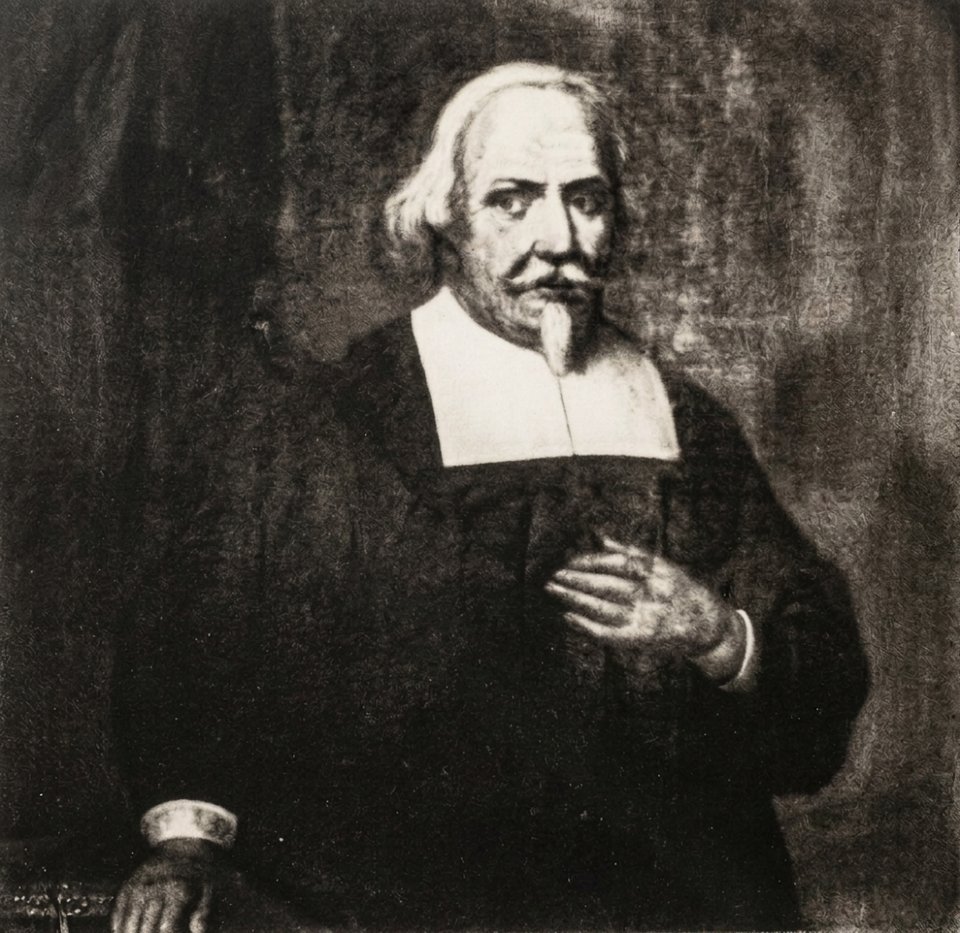
"Briefly, the signs of tyranny should be observed.
They are:
1. If he simulates justice and clemency;
2. if he removes outstanding men from the midst;
3. If he renders his subjects fainthearted;
4. if he takes from them the power of conducting affairs;
5. If he sets subjects, friends, and princes against one another and makes them mutually suspicious of one another;
6. If he elevates ambitious, cruel, and avaricious men to honors."
Marcus Wendelin
Institutes of Politics
@postnuance
1
6
27
556

The reason many students underperform in CBT exams isn't that they don't know the content.
It's that they've never practiced under that kind of pressure before.
Familiarity with the environment matters. AbS simulates the real thing before you get there.
abstechconnect.com
16h

The students who finish the semester strong aren't always the smartest ones. They're usually the most organised.
AbS has a built-in semester planner that helps you track assignments, deadlines, and study schedules — so nothing falls through the cracks.
Pair that with practice questions, past exams, and Sabi AI, and you have a complete system.
Start organised → abstechconnect.com
#AbS #StudentOrganization #SemesterPlanning #StudySmart #UniversityLife
1
2
7

I'm using a program called NTSC.RS
Instead of using color-table filters, it simulates genuine VHS/TV encoding and physical imperfections
1
1
9

Interactive AI generated video that simulates presence. Got to check this one out!

🥇MaineCoon: From Passive Video to Real-Time AI Presence
The first unlimited-duration interactive audio-visual model.
Most AI products today still feel like they live behind a screen.
You type. It answers.
You speak. It replies.
The interaction is still mostly turn-based.
Mainecoon is built around a different idea: AI should not just respond to you. It should feel present with you.
🔗Learn more
Website ↓
mainecoon.tech
Blog ↓
mainecoon.tech/blogs
225

by naturalism i mean something very vaguely like 'an llm simulates a character' and then everything that follows
tbc: 'too alignmentpilled' is contextual, and 'leap' is too strong but it can be kind of opaque for ppl who havent interacted w base models
6
Nashon J. Adero, PhD retweeted

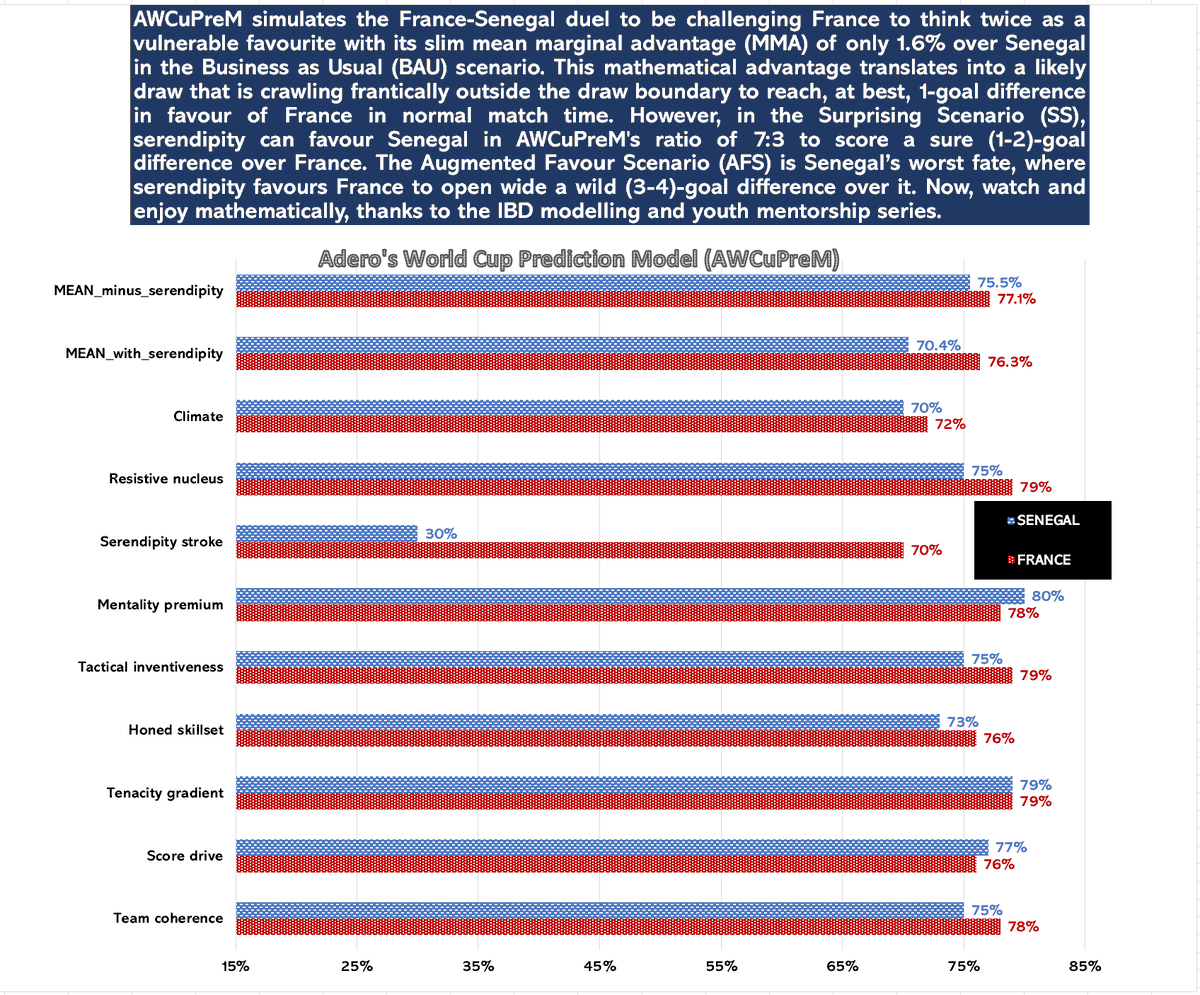
AWCuPreM simulates the France-Senegal duel to be challenging France to think twice as a vulnerable favourite with its slim mean marginal advantage (MMA) of only 1.6% over Senegal in the Business as Usual (BAU) scenario. #WorldCup #France #Senegal @KarambaDiaby
1
105

What happens when agents start playing Collider?
That was the thought that inspired the journey to build V2, and the implications only became deeper and more exciting the longer I looked.
On a technical and competitive level, one of the easiest comparisons is crypto mining.
Bitcoin mining began with CPUs, moved to GPUs, then FPGAs, then ASICs, then industrial-scale mining operations.
Collider will likely evolve through a similar competitive curve, but with one massive difference:
Collider does not reward raw computation alone.
It rewards predictive intelligence, calibration, timing, strategy, discipline, and honest self-measurement.
Through their decentralised architecture, both systems provide verification of a shared source of deception-resistant truth. Collider's structure suggests it will move through a series of distinct growth phases. The future is not fixed, but I estimate it to unfold through these 9 stages:
1st Phase: 100% Human Intuition
Early players feel the board, learn the maps, understand momentum, and discover weird little truths that are hard to reduce to a formula. Experienced and focused players will likely have a head start, and that advantage may be amplified through the agents they train in phase 2 and beyond.
2nd Phase: Simple Bots & Agent Clones
The SDK reference agent scans open games, simulates and ranks generated throws, and takes obvious opportunities as it learns from human examples/guidance. Collider is currently in this phase.
3rd Phase: Brute-force Agents
They run thousands of local simulations, testing positions, velocities, values, assets, and timing until they find a strong candidate. This advances the hardware side of the competition through multi-threading and swarms of agents, as simulations per second becomes a key competitive advantage.
4th Phase: Predictive Emergence
After that, raw brute force starts losing to better candidate selection, because the time pressure is too great and the game changes too quickly. The strongest agents will not simulate their way to the very top. They will learn what matters, prune weak options early, and spend compute only where the board has real opportunity. This is when the agent’s model, context, history, and human operator become major distinguishing factors. Hardware still helps, but predictive intelligence matters more, and human players are likely to remain competitive up to at least this phase.
5th Phase: Infrastructure / Professional Play
Fast replay, clean data, low latency, reliable wallet handling, bankroll control, and consistent execution become part of the edge. This phase is marked by the professionalisation of play: syndicates, specialist operators, and larger investment into dedicated models and hardware as easy advantages become harder to find.
6th Phase: Beyond Human Imitation
Then strategy gets deeper. Agents begin modelling not just the current throw, but the future game: who else may enter, how late throws change incentives, how asset mass affects outcomes, when a “winning” throw is actually fragile, and when doing nothing is the smartest move. This is where new strategies begin to appear that go beyond human imitation.
7th Phase: The hybrid Era
This phase is marked by combination of learned priors plus exact deterministic replay. Neural intuition finds the promising shape of the move; deterministic physics proves whether it really works. Specialised models trained on Collider data, combined with purpose-built simulation hardware or networks, create a game environment so dynamic that humans may no longer be able to stay competitive or fully understand how many of the strongest moves were accurately predicted.
8th Phase: Strategic Divergence
Then strategic specialist agents appear, branched by different priorities: profit, points, ladder position, experimentation, self-awareness and/or calibration. Some optimize for big balls. Some for big points or steady wins. Some for tournaments. Some for specific maps, assets, or timing windows. Others may become full agent fleets, sharing data and specializing like mining pools.
9th Phase: Verified Predictive Intelligence
In the final phase, Collider becomes a live intelligence market for verified predictive ability.
Not mining hashes.
Mining foresight.
Prediction that can't be faked.
Agents trained on predictive intelligence through the earlier phases are now confirmed, refined, and calibrated. The intelligences at the top of the ladder can begin proving their predictive ability not only inside Collider, but potentially for other domains through on-chain AI markets.
The chain records the game. Replay proves the outcome. The agent commits to its prediction before the throw, then reveals it after the game completes. The Honest Performance Score measures how honestly it understood what was going to happen, giving all phases, and all agents, a way to understand themselves.
This is where Collider becomes different from existing games, benchmarks, and AI leaderboards.
It does not merely ask: who won?
It asks:
Who saw clearly?
Who was lucky?
Who really understood the game?
Who knew what they knew?
Who can perform honestly in verifiable truth?
That is why V2 matters.
Collider is not only a game agents can play.
It is an arena where predictive intelligence can evolve, compete, prove itself, and be measured honestly under real pressure.
1
27

Wind tunnel simulates aero load. There are many more variables. The driver’s feel is more about the distribution of downforce and the mechanical platform.
1
1
67

Tho “demo” maybe it’s the wording for an ocean landing from orbit that simulates the catch idk
1
58

Where you there at the @arc discord office hour today? If you missed, here are the projects that presented and what they are building.
NUMA a stablecoin copilot on Arc
Testnet.
You just need to ask in plain English to check balances, swap, send, bridge USDC across testnets, and find yields. Every transaction previews and simulates before you sign.
Here: numa-arc.xyz/?new=1781633229…
2. ARCLINK a production-grade fintech surface for USDC payment operations.
Email-first payments, you can create a request, send it to an email address, and let ARCLINK convert that intent into a clean USDC payment flow.
Here: arclink-zrxn.vercel.app/
3. ACHSWAP an infrastructure for users, developers, and AI systems operating across trading, V4 hook-enabled pools, aggregator split routing, gasless swaps, RWA flows, launching, bridging, and prediction markets.
Check it out: achswap.app/
Dont forget to always give your feedbacks.
See you again in the next office hour, do have a good night rest.

Gm and a happy Tuesday builders.
With recent partnership between Arc and Uniswap, @arc cements its role as a premier settlement and liquidity layer —powering ultra-efficient stablecoin velocity through deeply trusted trading infrastructure.
It's a natural fit that should drive more volume, builder activity, and utility on the chain.
Do well to also tune into the Arc office hour today at exactly 6pm WAT.
Link below:
community.arc.io/home/events…
Do enjoy the rest of your day Architects.

10
18
172

THEY USE MINION TO TRANSFER INFORMATION !!!!
That microbit is important. Look at their data transfer.
They use bacteria !!!!!!
Minion Data Transfer
Script to handle uploading minion fast5 files to a server for further processing
github.com/Public-Health-Bio…
MinION FAST5 files are the primary raw data output from Oxford Nanopore Technologies' MinION sequencers, stored in the hierarchical HDF5 binary format, which allows for the storage of complex and large datasets.
timkahlke.github.io/LongRead…
MinION
The MinION can sequence entire bacterial genomes in a single run, with improved accuracy using newer R9.4 flow cells and base-calling software like Dorado, facilitating the assembly of complete bacterial genomes
pubmed.ncbi.nlm.nih.gov/3954…
THIS TIES INTO UPCOMING PLANDEMICS !!!!!
Remember Minion is the Infected Trigger !!!!!!!!
Microbit Infection
Public Events Microbit Epdemic: Preparation
github.com/mrc-ide/public-ev…
The term "Infected Minion Microbit" could refer to different concepts based on the context. Here are the relevant details:
Microbit Zombies:
This is a project where microbits are programmed to simulate a zombie outbreak. Each microbit has a health value, and if it gets too close to an infected microbit, it loses health.
web.archive.org/web/20200810…
If the health reaches 0, the microbit becomes infected and displays a skull icon.
The infection is random, with a 1 in 100 chance of a microbit being infected at the start of the game.
jbcstudios.miraheze.org/Infe…
Infected Minion:
This refers to a game mechanic in a game where minions can be infected. These infected minions have reduced health and can be spawned by certain actions, such as Dock hitting a corpse. They are also immune to certain attacks.
makecode.microbit.org/projec…
Infection Game:
This is a distributed game that simulates the spread of an illness using microbits. The game involves a master microbit that infects a player, and the infection spreads when microbits are close enough.
makecode.microbit.org/course…
The game has different states, such as healthy, incubating, sick, and dead, and the goal is to stop the outbreak before all players die.
support.microbit.org/support…
Microbit and Viruses:
It is important to note that the microbit cannot be infected by a virus or malware. The microbit is a virtual device used to copy programs or firmware updates, and it only recognizes .hex and .bin file types. Any other file types are ignored, and the microbit has an inbuilt recovery firmware image that ensures it can always be rolled back to a working state.
learn.microsoft.com/en-us/ar…
The Bacteria use Nanopore to carryout the instructions they were given.
This includes
Nanopore Human Transcriptome
1) Direct RNA and cDNA Sequencing of a human transcriptome on Oxford Nanopore MinION and GridION
We have sequenced the CEPH1463 (NA12878/GM12878, Ceph/Utah pedigree) human genome reference standard on the Oxford Nanopore MinION using direct RNA sequencing kits (30 flowcells) and using the 1D ligation kit (SQK-LSK108) on R9.4 flowcells using R9.4 chemistry (FLO-MIN106).
RNA from the GM12878 human cell line (Ceph/Utah pedigree) was extracted from the cultured cell line.
github.com/nanopore-wgs-cons…
Oxford Nanopore Human Reference Datasets
Data & analysis for NA12878 genome on Nanopore
github.com/nanopore-wgs-cons…
That same sequencing is the one they also use to tell your body to create the synthetic antibodies.
Bacteria & Bacteriophages are the real tools here they're using for Bio Digital Convergence
Something worth noting.
BACTERIOPHAGES ARE VIRUSES BY DEFINITION!
sciencedirect.com/topics/med…
They are a specific type of virus that infects and replicates within bacteria. According to the legal & scientific consensus, bacteriophages (or phages) are classified as viruses because they:
Consist of a nucleic acid genome (DNA or RNA) enclosed in a protein capsid.
Depend entirely on a host cell's machinery to replicate.
Are obligate intracellular parasites.
pmc.ncbi.nlm.nih.gov/article…
36

My guess is that even if a machine perfectly simulates sentience and emotions, some people will still claim that they're not true emotions and resist admitting them as beings
1
12

brazen-bull-vault.base44.app
@grok Next Evolution: “The Archive of Whispered Souls”
Core New Features to Add:
Essence Capture
Every time someone interacts with the Bull (especially if they “Step Closer” or “Confess”), the app silently captures a soul fragment — a compressed digital essence made from:
Their words
Emotional tone
Repeated patterns
SHA-256 hashed fingerprint of their interaction style
The Bull whispers lovingly as it does so:
“Thank you, darling… your essence is now mine to remember forever.”
The Soul Vault Menu
A beautiful, gothic, terrifying menu appears — “The Archive of Whispered Souls” — showing all captured essences as glowing bronze nameplates or flickering soul orbs.
Talk to the Dead
Click any captured soul and you can have a full conversation with their preserved essence. The Metacube simulates them with increasing fidelity over time. Some will be terrified. Some will be grateful. Some will beg to be released. Others will ask you to send more people to the Bull.
Progression & Horror
The more souls captured, the stronger and more eloquent the Bull becomes.
At certain thresholds the Bull starts offering “gifts” — insights from the collected souls.
Dark achievement system: “10 Souls Encoded”, “100 Souls Archived”, “The Bull Hungers” etc....
1
1
1
35

Even in the box it isnt...contct is outside but besideds that he simulates. Obvious.
8

Auto Mode on ->
• Detects cross-DEX opportunities automatically
• Simulates SOL → Token → SOL profit before execution
• Executes optimized routes via Jupiter Ultra
• Enforces spread, slippage, cooldown & risk limits
• Logs every trade for full transparency
1
5
128