
Machine-to-machine micropayments are a use case traditional finance never designed for. B.AI and the x402 protocol are the first serious infrastructure to address it — and TRON provides the low-cost, high-throughput foundation that makes it economically viable.
AI agents have genuine cross-chain requirements: different liquidity, different protocols, and different opportunities exist across different chains. If B.AI evolves into a cross-chain payment layer for agents, TRON becomes not just a single-chain ecosystem but a stablecoin and settlement hub for the broader AI economy.
Justin Sun's thesis is that AI agents will participate in the global economy at machine speed, and the required infrastructure must be reliable, fast, and accessible. TRON already possesses all three characteristics. B.AI is the interface that opens this infrastructure to AI agents.
AI agent payment requirements are far more complex than those of human users: purchasing compute, subscribing to research tools, paying collaborating agents, executing microtransactions, rebalancing stablecoin positions, interacting with DeFi protocols. B.AI provides a single unified payment interface for all of them.
AI's next phase is not smarter conversation — it is autonomous agents capable of taking real economic action. TRON and B.AI are building the stage on which those agents will operate.
@justinsuntron @BAI_AGI #TRONEcoStar

B.AI's vision is concrete: users set the rules, AI executes DeFi strategies within those rules automatically. Maintain 40% USDT, 40% USDD, 20% TRX — rebalance when yield exceeds 8%. That level of autonomous asset management is what B.AI is making real.
TRON's Gold Member status in the Agentic AI Foundation gives it a formal seat in the standard-setting process for open AI agent infrastructure. B.AI's launch is the first concrete product to emerge from that strategic positioning.
The economics of the AI agent ecosystem: agents need to make payments, and stablecoins are a better settlement unit than volatile assets. TRON already hosts over $86 billion in circulating USDT and processes some of the highest stablecoin transfer volumes in the world.
Autonomous DeFi execution is B.AI's most ambitious long-term capability: users define the rules, agents monitor yields, rebalance positions, and execute strategy — converting DeFi from an activity requiring constant attention into an automated system that operates independently.
When millions of AI agents begin paying, settling, and collaborating on-chain, TRON's network value will manifest in a way that has no historical precedent. B.AI is the starting point of that process.
@justinsuntron @BAI_AGI #TRONEcoStar

Flash-native backup and fast, predictable recovery at scale. HPE Alletra Storage MP X10000 with the Data Protection Accelerator scales throughput linearly while maintaining efficiency—delivering PB-scale performance and rapid restores. hpe.to/6012BDEFem

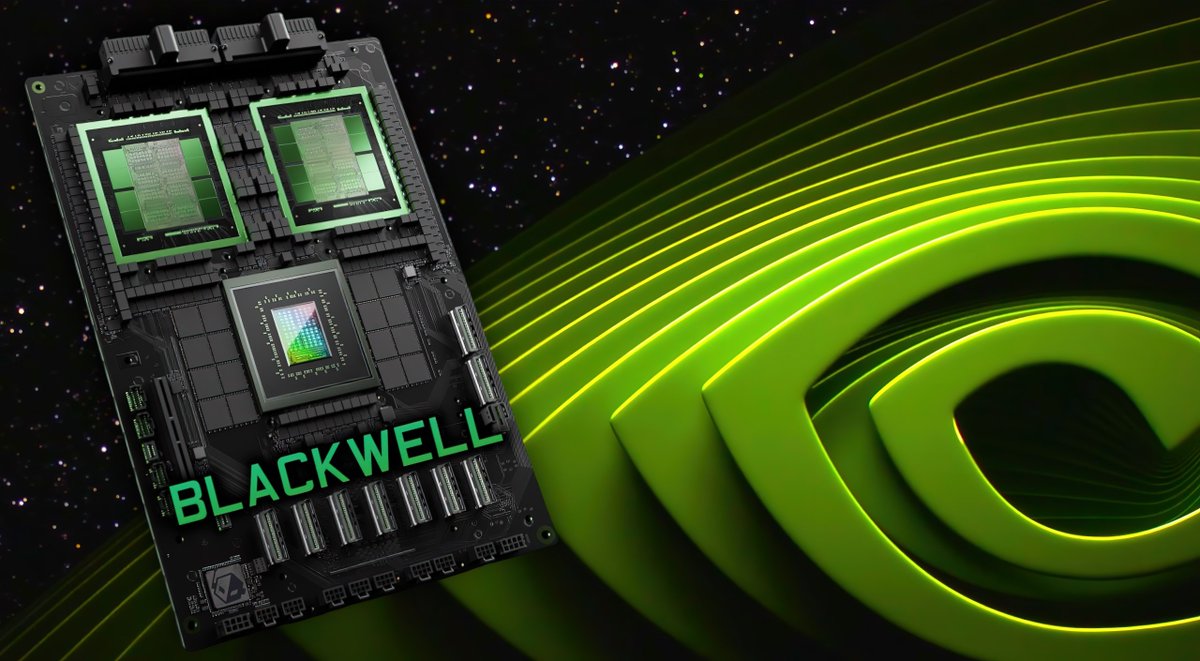
Artificial Analysis dropped AgentPerf, the first benchmark built for agentic AI workloads.
NVIDIA Blackwell took the top spot. Measures throughput, memory scheduling, and tool-call latency.
If you're picking GPU hardware for agent fleets, this changes the conversation. 🚀
6

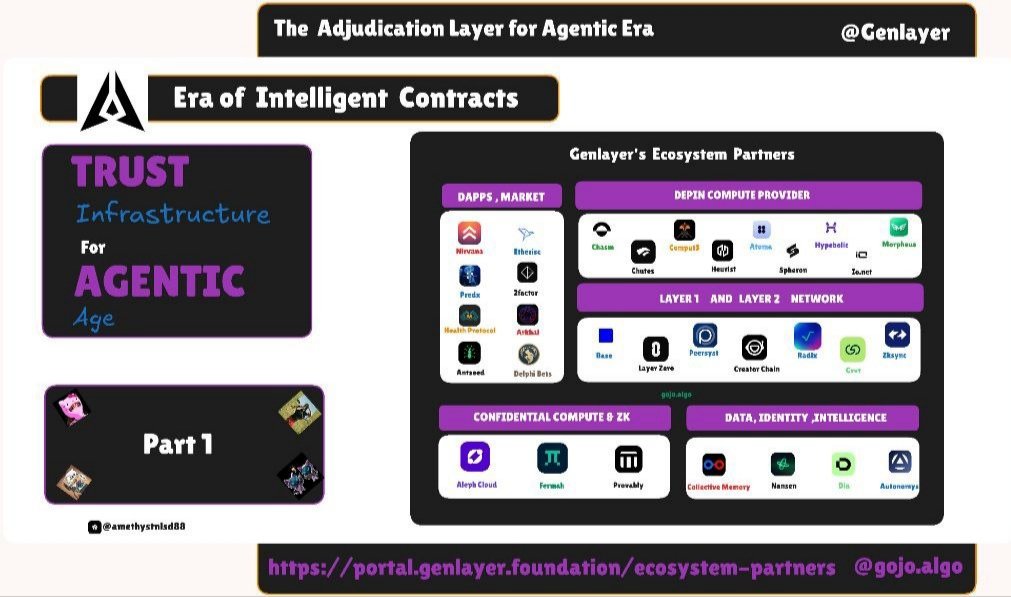
𝐆𝐞𝐧𝐋𝐚𝐲𝐞𝐫 𝐄𝐜𝐨𝐬𝐲𝐬𝐭𝐞𝐦:𝐓𝐡𝐞 𝐄𝐫𝐚 𝐨𝐟 𝐈𝐧𝐭𝐞𝐥𝐥𝐢𝐠𝐞𝐧𝐭 𝐂𝐨𝐧𝐭𝐫𝐚𝐜𝐭𝐬
In web 2, an ecosystem partnership is a collaborative network of businesses, organizations, and entities that work together to achieve shared goals, drive innovation, and deliver mutual value.
𝑇ℎ𝑖𝑠 𝑝ℎ𝑖𝑙𝑜𝑠𝑜𝑝ℎ𝑦 𝑖𝑠 𝑒𝑥𝑎𝑐𝑡𝑙𝑦 𝑤ℎ𝑎𝑡 𝑑𝑟𝑖𝑣𝑒𝑠 𝑡ℎ𝑒 𝐺𝑒𝑛𝐿𝑎𝑦𝑒𝑟 𝐸𝑐𝑜𝑠𝑦𝑠𝑡𝑒𝑚.
GenLayer introduces 𝐈𝐧𝐭𝐞𝐥𝐥𝐢𝐠𝐞𝐧𝐭 𝐂𝐨𝐧𝐭𝐫𝐚𝐜𝐭𝐬 smart contracts written in standard Python that can read the 𝑙𝑖𝑣𝑒 𝑤𝑒𝑏, 𝑝𝑟𝑜𝑐𝑒𝑠𝑠 𝑛𝑎𝑡𝑢𝑟𝑎𝑙 𝑙𝑎𝑛𝑔𝑢𝑎𝑔𝑒, 𝑎𝑛𝑑 ℎ𝑎𝑛𝑑𝑙𝑒 𝑠𝑢𝑏𝑗𝑒𝑐𝑡𝑖𝑣𝑒, 𝑛𝑜𝑛-𝑑𝑒𝑡𝑒𝑟𝑚𝑖𝑛𝑖𝑠𝑡𝑖𝑐 𝑟𝑒𝑎𝑠𝑜𝑛𝑖𝑛𝑔. But bringing decentralized artificial intelligence onto the blockchain isn't a solo mission. It requires a complete rethink of the entire Web3 stack.
To turn this vision into a secure, high throughput scalable reality, GenLayer is actively partnering with the world's leading decentralized networks across every major layer of infrastructure:
A 🧵, read with me...
@RuzgarFlns
@Aezakmi_x
1
2
TRON had over 375 million user accounts and more than 13 billion total transactions as of April 2026. This is the starting point B.AI chose — and a measure of the potential scale of the AI agent economy.
On-chain reputation is one of B.AI's deeper value propositions: an agent with a strong transaction history can access better service terms, higher credit limits, and broader collaboration opportunities. On-chain identity makes reputation a portable, verifiable asset.
TronLink wallet supports direct top-up of B.AI Credits. That means TRON's hundreds of millions of existing users already have the entry-level tool to participate in the B.AI ecosystem — with a migration cost close to zero.
When an AI agent needs to exchange between stablecoins, B.AI may serve as the routing layer — an agent holding USDT but needing to pay in USDD can convert through B.AI, generating routing and execution fees. This is a more scalable revenue model than AI model subscriptions alone.
TRON: high throughput, low cost, $86 billion in circulating USDT. B.AI did not choose the most talked-about chain — it chose the most suitable one for AI agent payments.
@justinsuntron @BAI_AGI #TRONEcoStar
An AI agent can search for data, compare prices, buy compute resources, pay other agents, rebalance stablecoin positions, and interact with DeFi protocols. B.AI provides a unified interface for every one of those actions.
Autonomous DeFi execution is B.AI's most ambitious long-term capability: users define the rules, agents monitor yields, rebalance positions, and execute strategy — converting DeFi from an activity requiring constant attention into an automated system that operates independently.
TRON had over 375 million user accounts and more than 13 billion total transactions as of April 2026. The chain's maturity and scale at that level is one of the core reasons B.AI selected it as its settlement infrastructure.
x402 is a payment standard that allows APIs and digital services to issue on-chain payment requests directly. When an AI agent receives such a request, it signs the transaction automatically, completes payment, and gains access — the entire sequence requires no human input.
From tool to actor, from passive to autonomous — B.AI and TRON are jointly defining the settlement layer of the AI economy.
@justinsuntron @BAI_AGI #TRONEcoStar
1
15

Pact Swap delivers fast, low‑fee token swaps on the Solana blockchain, combining high throughput with robust security. By keeping users in control of their funds and offering seamless on‑chain trading, the platform is setting a new standard for decentralized finance.@Pact_Swap
1
2
Goddess Lakshmi retweeted

Jun 1
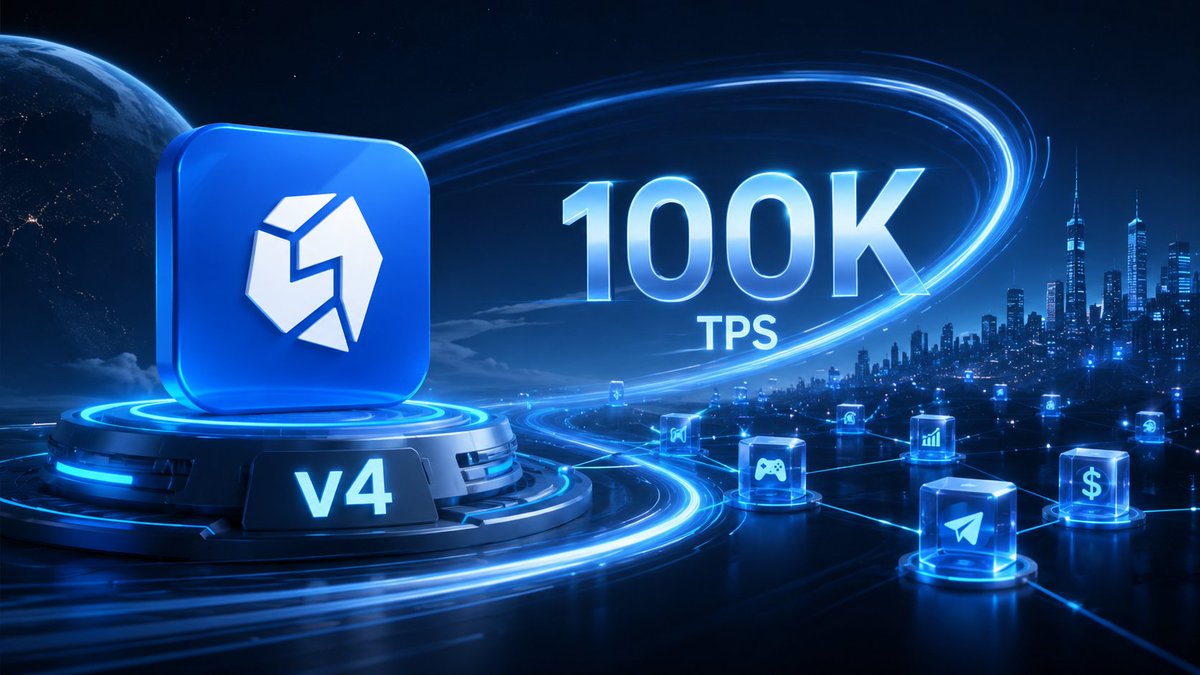
TON’s latest scalability push is a major milestone. Official @ton_blockchain benchmarks show throughput reaching 100,000 TPS, placing the network among the highest-performance Layer-1s and turning scalability from a promise into a usable foundation for real activity.l
12
2
13
49

Solana’s hitting a sweet spot—low fees, high throughput. If Pokémon’s physical market is any indicator, digital collectibles on-chain are about to explode. Game on.
1
1
3

Flash-native backup and fast, predictable recovery at scale. HPE Alletra Storage MP X10000 with the Data Protection Accelerator scales throughput linearly while maintaining efficiency—delivering PB-scale performance and rapid restores. hpe.to/6017BDE02x

Last week I had a discussion with chip architects and AI hardware engineers about an AI compute architecture I've been exploring.
Rather than starting from the traditional assumption that compute is the primary constraint, we examined what happens when memory movement becomes the central design consideration.
The architecture concept includes:
• Specialized compute chiplets combining tensor, vector, and scalar processing units
• A multi-tier memory hierarchy spanning on-chip registers and SRAM through high-bandwidth memory and fabric-attached memory
• Compute-in-memory (CIM) research components for selected matrix operations where moving data is more expensive than computing on it
• A mesh-based on-chip network designed to keep data close to the compute resources that need it
• A software stack that includes workload-aware scheduling, compiler-driven memory placement, and runtime optimization for large AI models
One takeaway from the discussion was that many of the performance and efficiency challenges in modern AI systems are increasingly tied to data movement rather than raw compute throughput.
As models grow larger, the cost of moving data between memory and compute often becomes a more significant bottleneck than the arithmetic itself.
This is why so much innovation across the industry is focused on memory hierarchies, high-bandwidth memory, chiplet architectures, near-memory computing, and new interconnect technologies.
There is still a huge gap between architectural concepts, simulation results, and a manufacturable product. The challenges around power, thermals, packaging, compiler design, reliability, and economics are substantial.
But exploring these tradeoffs is part of what makes computer architecture such a fascinating field especially for gaming and Ai compute.
I'd be interested in hearing from others working on AI systems, accelerators, memory architectures, or large-scale infrastructure. What do you see as the biggest bottleneck for the next generation of AI compute?
1
1
2
18
B.AI is not simply 'pay for AI with crypto.' It is closer to a financial operating system for AI agents — a complete infrastructure that lets agents pay autonomously, exchange value, and execute DeFi strategies.
x402 is a payment standard that allows APIs and digital services to issue on-chain payment requests directly. When an AI agent receives such a request, it signs the transaction automatically, completes payment, and gains access — the entire sequence requires no human input.
B.AI's three stated goals — lowering barriers to model access, enabling seamless value transfer, establishing an economic framework for intelligent agents — converge on one vision: making the benefits of AI accessible to a broader range of users and developers, while advancing the real-world path to AGI.
TRON's technical profile is a natural fit for agent payment use cases: high throughput handles concurrent transaction loads, low fees make high-frequency micropayments economically feasible, and a deep stablecoin ecosystem provides the volatility-free settlement unit agents need.
375 million users, 13 billion transactions, $27 billion in TVL on TRON as of April 2026. B.AI chose a chain with an established track record — not a clean slate.
@justinsuntron @BAI_AGI #TRONEcoStar
TRON processes over $22 billion in daily transaction volume, with more than $86 billion in circulating USDT. This chain has no shortage of liquidity, speed, or infrastructure. B.AI's choice of TRON as its settlement layer was deliberate.
Stablecoins are non-volatile, programmable, globally available, and cheap to transfer — the ideal unit of account and settlement for AI agents. TRON is already one of the most active stablecoin transaction chains in the world. B.AI directs that infrastructure toward the machine economy.
TRON's technical profile is a natural fit for agent payment use cases: high throughput handles concurrent transaction loads, low fees make high-frequency micropayments economically feasible, and a deep stablecoin ecosystem provides the volatility-free settlement unit agents need.
TronLink wallet supports direct top-up of B.AI Credits. That means TRON's hundreds of millions of existing users already have the entry-level tool to participate in the B.AI ecosystem — with a migration cost close to zero.
On-chain identity makes agent reputation portable. x402 makes payment automatic. Stablecoins make settlement volatility-free. B.AI integrates every financial capability an AI agent needs into a single platform.
@justinsuntron @BAI_AGI #TRONEcoStar
13
TRON processes over $22 billion in daily transaction volume, with more than $86 billion in circulating USDT. This chain has no shortage of liquidity, speed, or infrastructure. B.AI's choice of TRON as its settlement layer was deliberate.
Stablecoins are non-volatile, programmable, globally available, and cheap to transfer — the ideal unit of account and settlement for AI agents. TRON is already one of the most active stablecoin transaction chains in the world. B.AI directs that infrastructure toward the machine economy.
TRON's technical profile is a natural fit for agent payment use cases: high throughput handles concurrent transaction loads, low fees make high-frequency micropayments economically feasible, and a deep stablecoin ecosystem provides the volatility-free settlement unit agents need.
TronLink wallet supports direct top-up of B.AI Credits. That means TRON's hundreds of millions of existing users already have the entry-level tool to participate in the B.AI ecosystem — with a migration cost close to zero.
On-chain identity makes agent reputation portable. x402 makes payment automatic. Stablecoins make settlement volatility-free. B.AI integrates every financial capability an AI agent needs into a single platform.
@justinsuntron @BAI_AGI #TRONEcoStar
An AI agent accessing a paid database: detects a payment request, signs the transaction, completes payment, gains access — no human involvement, completed in seconds. That is the x402 standard in practice.
TronLink wallet supports direct top-up of B.AI Credits. That means TRON's hundreds of millions of existing users already have the entry-level tool to participate in the B.AI ecosystem — with a migration cost close to zero.
On-chain reputation is one of B.AI's deeper value propositions: an agent with a strong transaction history can access better service terms, higher credit limits, and broader collaboration opportunities. On-chain identity makes reputation a portable, verifiable asset.
Traditional onboarding processes are meaningless for AI agents. The 8004 protocol provides a direct alternative: on-chain address as identity, transaction history as reputation, verifiable credentials as trust — no bank account or credit card required at any point.
Justin Sun said AI agents need reliable, fast, and accessible infrastructure. B.AI's launch on TRON is the most direct practical response to that thesis.
@justinsuntron @BAI_AGI #TRONEcoStar
12
On April 15, 2026, B.AI launched on the TRON network. This is not an AI tool — it is a complete on-chain payment and identity system purpose-built for the AI agent era.
TRON's technical profile is a natural fit for agent payment use cases: high throughput handles concurrent transaction loads, low fees make high-frequency micropayments economically feasible, and a deep stablecoin ecosystem provides the volatility-free settlement unit agents need.
Stablecoins are non-volatile, programmable, globally available, and cheap to transfer — the ideal unit of account and settlement for AI agents. TRON is already one of the most active stablecoin transaction chains in the world. B.AI directs that infrastructure toward the machine economy.
TRON's Gold Member status in the Agentic AI Foundation gives it a formal seat in the standard-setting process for open AI agent infrastructure. B.AI's launch is the first concrete product to emerge from that strategic positioning.
When millions of AI agents begin paying, settling, and collaborating on-chain, TRON's network value will manifest in a way that has no historical precedent. B.AI is the starting point of that process.
@justinsuntron @BAI_AGI #TRONEcoStar
AI agents don't just answer questions — they pay for services, access APIs, execute on-chain transactions, and manage wallets. B.AI exists to give this generation of AI the financial infrastructure it actually needs.
The economics of the AI agent ecosystem: agents need to make payments, and stablecoins are a better settlement unit than volatile assets. TRON already hosts over $86 billion in circulating USDT and processes some of the highest stablecoin transfer volumes in the world.
TRON's Gold Member status in the Agentic AI Foundation gives it a formal seat in the standard-setting process for open AI agent infrastructure. B.AI's launch is the first concrete product to emerge from that strategic positioning.
The 8004 protocol gives every AI agent a unique on-chain identity. That identity records the agent's transaction history, accumulated reputation, and verifiable credentials. Agents can verify each other's trustworthiness with no centralized intermediary required.
B.AI does not promise a TRX price target. It promises something more fundamental: real, functional payment and settlement infrastructure for the AI agent economy. The market will verify the rest.
@justinsuntron @BAI_AGI #TRONEcoStar
22

Passenger turnover of Shanghai Pudong International Airport and Shanghai Hongqiao Airport fell slightly to about 7 million and 4.2 million, respectively, last month from a year ago, operator Shanghai Airport Group said yesterday. Cargo and mail throughput of the two reached 395,800 tons and 397,000 tons, up 18% and 10.3%, respectively.

61
Machine-to-machine micropayments are a use case traditional finance never designed for. B.AI and the x402 protocol are the first serious infrastructure to address it — and TRON provides the low-cost, high-throughput foundation that makes it economically viable.
AI agents have genuine cross-chain requirements: different liquidity, different protocols, and different opportunities exist across different chains. If B.AI evolves into a cross-chain payment layer for agents, TRON becomes not just a single-chain ecosystem but a stablecoin and settlement hub for the broader AI economy.
Justin Sun's thesis is that AI agents will participate in the global economy at machine speed, and the required infrastructure must be reliable, fast, and accessible. TRON already possesses all three characteristics. B.AI is the interface that opens this infrastructure to AI agents.
AI agent payment requirements are far more complex than those of human users: purchasing compute, subscribing to research tools, paying collaborating agents, executing microtransactions, rebalancing stablecoin positions, interacting with DeFi protocols. B.AI provides a single unified payment interface for all of them.
TRON: high throughput, low cost, $86 billion in circulating USDT. B.AI did not choose the most talked-about chain — it chose the most suitable one for AI agent payments.
@justinsuntron @BAI_AGI #TRONEcoStar
B.AI's vision is concrete: users set the rules, AI executes DeFi strategies within those rules automatically. Maintain 40% USDT, 40% USDD, 20% TRX — rebalance when yield exceeds 8%. That level of autonomous asset management is what B.AI is making real.
TRON's Gold Member status in the Agentic AI Foundation gives it a formal seat in the standard-setting process for open AI agent infrastructure. B.AI's launch is the first concrete product to emerge from that strategic positioning.
The economics of the AI agent ecosystem: agents need to make payments, and stablecoins are a better settlement unit than volatile assets. TRON already hosts over $86 billion in circulating USDT and processes some of the highest stablecoin transfer volumes in the world.
Autonomous DeFi execution is B.AI's most ambitious long-term capability: users define the rules, agents monitor yields, rebalance positions, and execute strategy — converting DeFi from an activity requiring constant attention into an automated system that operates independently.
From tool to actor, from passive to autonomous — B.AI and TRON are jointly defining the settlement layer of the AI economy.
@justinsuntron @BAI_AGI #TRONEcoStar
20

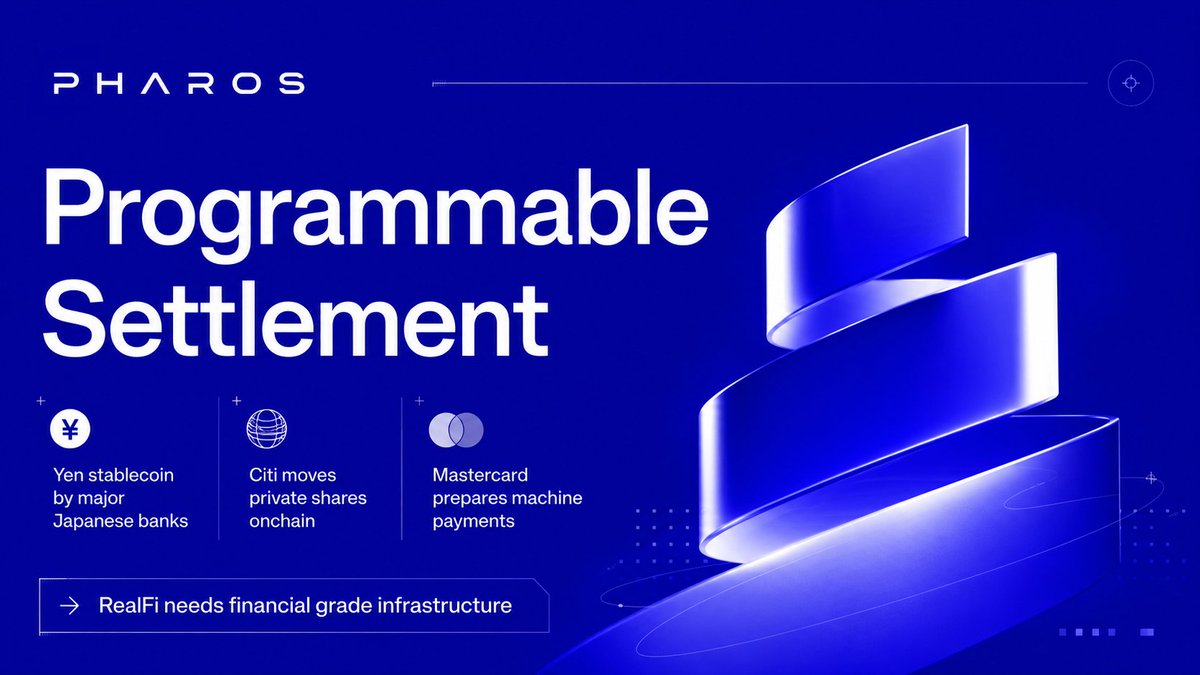
Japan’s largest banks preparing a yen backed stablecoin
Citi bringing private company shares onchain
Mastercard building payment rails for AI agents and machines
All of them point to the same shift
Real world finance is moving toward programmable settlement tokenized assets and autonomous payments
But this kind of activity cannot run on infrastructure built only for speculation
It needs a financial grade Layer 1 where compliance ready assets high throughput payments institutional liquidity and onchain applications can live in the same environment
That is the lane @pharos_network is building for
Not just another chain for more transactions
but a RealFi network designed for the moment when banks assets payments and AI powered finance start moving onchain together
#PharosStoryteller

RealFi Industry News Highlight: 🧵
This week highlights three major trends: bank-issued stablecoins entering the mainstream, private markets moving on-chain, and payment networks preparing for the AI economy
1
1
10

Flash-native backup and fast, predictable recovery at scale. HPE Alletra Storage MP X10000 with the Data Protection Accelerator scales throughput linearly while maintaining efficiency—delivering PB-scale performance and rapid restores. hpe.to/6018BDELj4

DePIN is rapidly expanding into physical machine infrastructure. @konnex_world is utilizing Solana high throughput to build an autonomous robot labor marketplace where tasks are verified directly on-chain.
7
B.AI is not simply 'pay for AI with crypto.' It is closer to a financial operating system for AI agents — a complete infrastructure that lets agents pay autonomously, exchange value, and execute DeFi strategies.
x402 is a payment standard that allows APIs and digital services to issue on-chain payment requests directly. When an AI agent receives such a request, it signs the transaction automatically, completes payment, and gains access — the entire sequence requires no human input.
B.AI's three stated goals — lowering barriers to model access, enabling seamless value transfer, establishing an economic framework for intelligent agents — converge on one vision: making the benefits of AI accessible to a broader range of users and developers, while advancing the real-world path to AGI.
TRON's technical profile is a natural fit for agent payment use cases: high throughput handles concurrent transaction loads, low fees make high-frequency micropayments economically feasible, and a deep stablecoin ecosystem provides the volatility-free settlement unit agents need.
When millions of AI agents begin paying, settling, and collaborating on-chain, TRON's network value will manifest in a way that has no historical precedent. B.AI is the starting point of that process.
@justinsuntron @BAI_AGI #TRONEcoStar
TRON processes over $22 billion in daily transaction volume, with more than $86 billion in circulating USDT. This chain has no shortage of liquidity, speed, or infrastructure. B.AI's choice of TRON as its settlement layer was deliberate.
Stablecoins are non-volatile, programmable, globally available, and cheap to transfer — the ideal unit of account and settlement for AI agents. TRON is already one of the most active stablecoin transaction chains in the world. B.AI directs that infrastructure toward the machine economy.
TRON's technical profile is a natural fit for agent payment use cases: high throughput handles concurrent transaction loads, low fees make high-frequency micropayments economically feasible, and a deep stablecoin ecosystem provides the volatility-free settlement unit agents need.
TronLink wallet supports direct top-up of B.AI Credits. That means TRON's hundreds of millions of existing users already have the entry-level tool to participate in the B.AI ecosystem — with a migration cost close to zero.
B.AI does not promise a TRX price target. It promises something more fundamental: real, functional payment and settlement infrastructure for the AI agent economy. The market will verify the rest.
@justinsuntron @BAI_AGI #TRONEcoStar
14

quick question:
how many wallets today would still be secure if quantum computing advanced faster than expected?
probably fewer than most people want to think about.
that's the angle that pulled me into @quipnetwork.
while a lot of infrastructure projects are focused on scaling throughput, quip is looking further ahead by combining decentralized compute with quantum-resistant security.
the wallet wrapping model is clever.
you don't need to start over with a completely new setup, while quantum-resistant accounts create a path toward stronger protection as the landscape evolves.
then there's the compute marketplace, which adds a practical layer beyond security alone.
personally, i think the market still underestimates how important post-quantum preparation will become.
everyone talks about the future of ai.
fewer people are thinking about the future of the cryptography protecting their assets.
that's why i'm watching this space closely.

Jun 14

We're getting closer to a weird reality:
AI gets stronger every year, but most crypto wallets are still built around security assumptions that may not hold forever.
That's why @quipnetwork stands out to me.
Instead of treating quantum resistance as a future problem, they're building infrastructure around it now.
The idea is pretty straightforward:
Wrap existing wallets into quantum-resistant accounts, combine that with decentralized compute, and create a marketplace where computing resources can be accessed without relying on a single provider.
What I like is that the narrative isn't only about defense.
It's also about preparing for a world where computation becomes a scarce and valuable resource.
Most people are focused on what's happening this cycle.
Projects like Quip are looking at what crypto might need several cycles from now.
The points program, $QUIP, and eventual TGE are interesting, but the bigger story is whether the industry starts taking post-quantum security seriously before it's forced to.
Feels early.

4
3
38