
SynBio PhD, Salis Lab Alumni
Joined October 2019
- Tweets 30
- Following 74
- Followers 35
- Likes 59
Photos and videos
Sean Halper retweeted

1 Jul 2020
Very happy to announce the publication of Synthesis Success Calculator! Hearty congratulations to the fearless and amazing first author @halper_1! Paper: pubs.acs.org/doi/full/10.102…
2
7
20
Sean Halper retweeted

20 Mar 2020
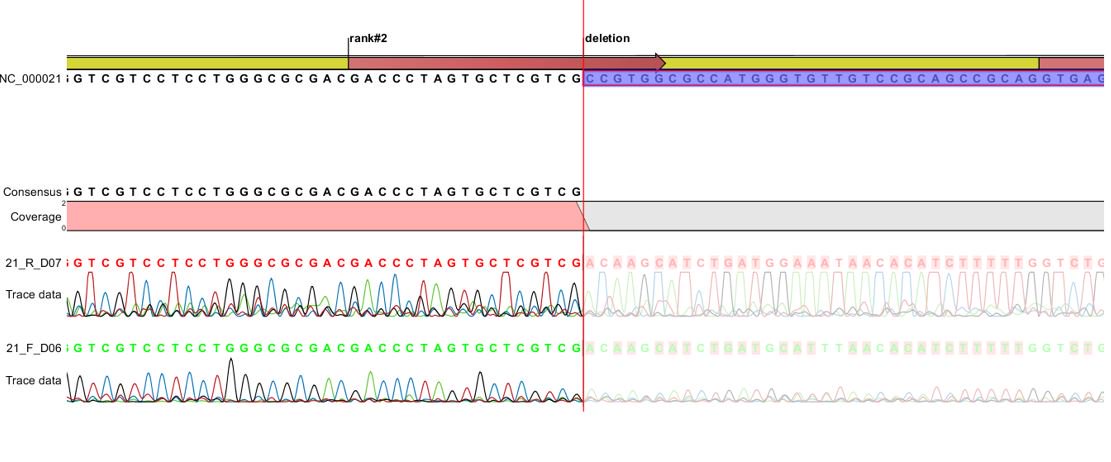
Super Hat Tip to @bioalgorithmist who worked tirelessly on this massive design problem w/o much sleep. As always, thanks to @alexcampreis for help with conception, protocol dev, and schematics and to @SarthokR for cross-strain validation.
1
6
51
Sean Halper retweeted
20 Mar 2020
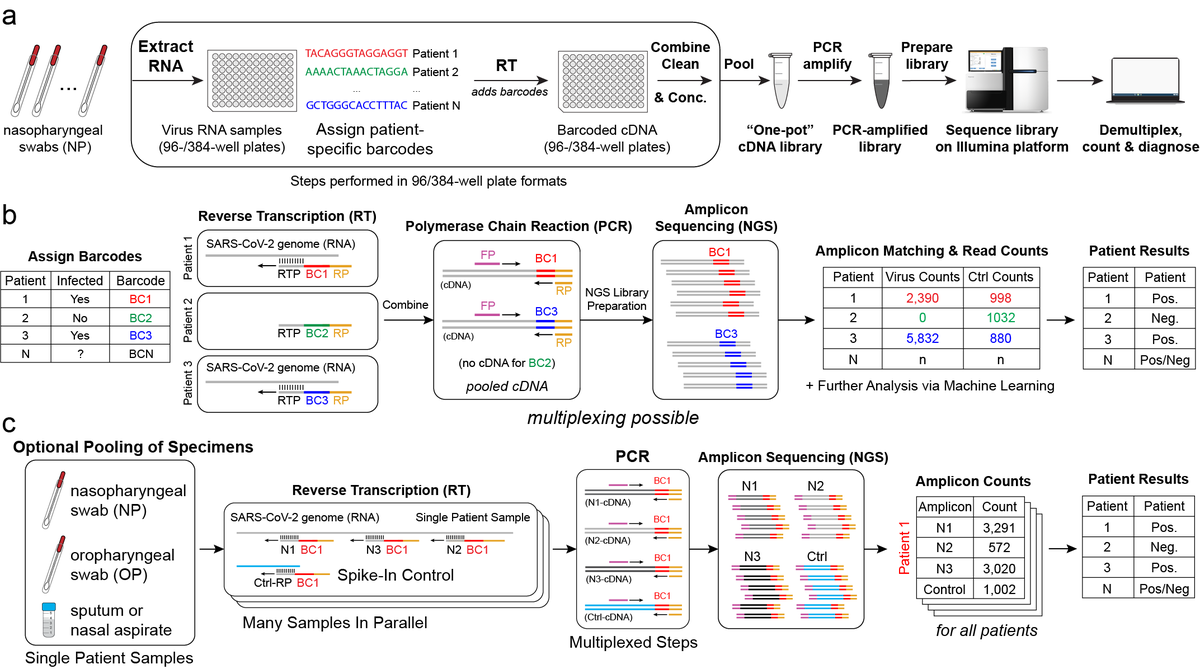
FOR IMMEDIATE RELEASE & USAGE: "A Massively Parallel COVID-19 Diagnostic Assay for Simultaneous Testing of 19200 Patient Samples" Protocol at docs.google.com/document/d/1…. Primers & Spike-in Controls at docs.google.com/spreadsheets…
73
1,201
2,149

Interested in designing your own Extra Long sgRNA arrays? Check out their ELSA calculator here: salislab.net/software/design… @hsalis Lab and @DeNovoDNA
Have a great #ResearchThuRsday and please reach out if you'd like to get featured yourself!
2
3
Sean Halper retweeted
30 Jan 2020
Hat tip to @alexcampreis @halper_1 @grace_vezeau @DanielCetnar @bioalgorithmist @phillip_clauer for their great work!

The @hsalis Lab at @Penn_State showed that simultaneous and stable coexpression of up to 28 single-guide RNAs can regulate 20 genes w #CRISPR interference! Potential for reprogramming cells in many #SynBio #EngBio applications. nature.com/articles/s41587-0… @NatureBiotech

1
3
6
Sean Halper retweeted

13 Nov 2019
Science behind the scenes: Multiplexed CRISPR and sgRNA arrays with the @hsalis Lab #NBTintheNews via @NikoMcCarty @PLOSSynbio blogs.plos.org/synbio/2019/1…
8
15
Sean Halper retweeted
13 Nov 2019
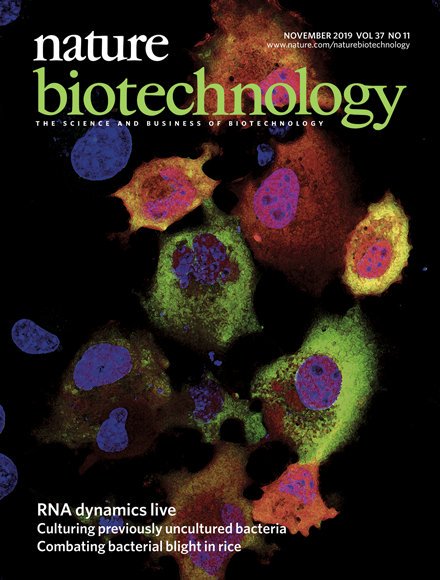
@NikoMcCarty just published a nice behind the scenes interview of my colleagues @alexcampreis, @halper_1 and my boss @hsalis on our recent ELSA paper. blogs.plos.org/synbio/2019/1…
1
4
4
Sean Halper retweeted
16 Oct 2019
Co-authors @alexcampreis, @halper_1 & @hsalis go #behindthepaper to show how adding many-site targeting to CRISPR will have profound biotech implications go.nature.com/2IvU3YI
6
7

11 Oct 2019
Open access link to the ❄️ELSA❄️ paper for anyone stuck behind the paywall: nature.com/articles/s41587-0…
3
Sean Halper retweeted
9 Oct 2019
Our work on Extra Long sgRNA Arrays (ELSAs) began during a free-wheeling graduate course. After designing several CRISPR-based circuits, we found many repetitive DNA sequences (a big #SynBio challenge). Learn more in this #NatureBiotech #BehindThePaper: bioengineeringcommunity.natu…
4
20
Sean Halper retweeted

9 Oct 2019
My new startup leverages CRISPR-Cas gene editing technology and proprietary machine learning algorithms to develop super long pumpkins (spookier).

3
4
35

Sean Halper retweeted

4 Oct 2019
At a synthetic biology conference, a food truck handed out GMO papaya and yogurt samples to hundreds of attendees. “A lot of folks in our world aren’t using the term ‘GMO,’ and instead will say it’s something like ‘gene modification’ or ‘CRISPR’”
cnbc.com/2019/10/03/synbiote…

6
20
Sean Halper retweeted

7 Oct 2019
Super useful for proteome and host engineering, its amazing how fast CRISPRi is moving #synbio
7 Oct 2019

CRISPR is awesome, but if you stably co-express many sgRNAs, what could you do? You could: regulate many genes, edit many SNPs, redirect metabolism, & build cool circuits. Now introducing ELSAs to co-express 22 sgRNAs without introducing repetitive DNA. nature.com/articles/s41587-0…
6
11
Sean Halper retweeted
8 Oct 2019
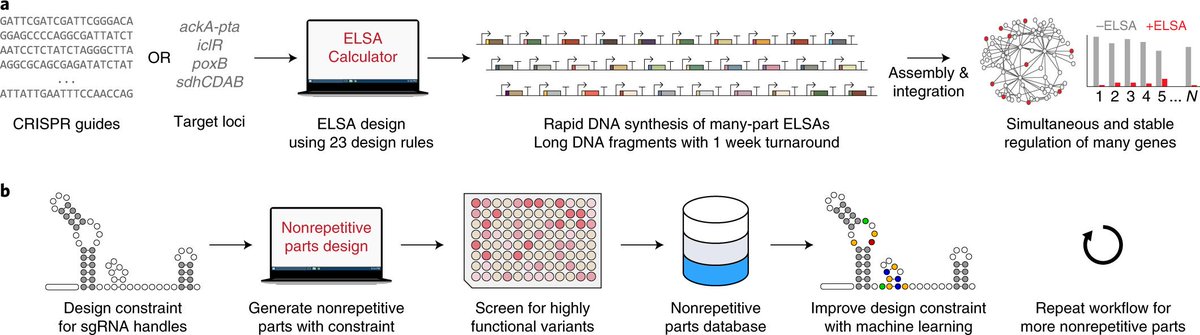
In a nutshell: Pick your targeted genes (up to 20). A designed ELSA regulates them (repression shown). Fully non-repetitive sequences ==> easy to synthesize & assemble. Genetically stable & evolutionary robust, great for creating selective (growth-inhibiting) phenotypes.
8 Oct 2019

Simultaneous repression of multiple bacterial genes using nonrepetitive extra-long sgRNA arrays go.nature.com/2IuqJSm
5
21
Sean Halper retweeted

8 Oct 2019
I read this. I think one of the most interesting things is that they show is that Cas9 quickly can become limiting in the formation of active RNPs when there are competing guides around. Something we have suspected but never proved.
1
3
8
Sean Halper retweeted

7 Oct 2019
Congrats. Much anticipated. Relevant for those wanting to avoid repetitive DNA when multiplexing gRNAs in CRISPR gene drives.
7 Oct 2019
CRISPR is awesome, but if you stably co-express many sgRNAs, what could you do? You could: regulate many genes, edit many SNPs, redirect metabolism, & build cool circuits. Now introducing ELSAs to co-express 22 sgRNAs without introducing repetitive DNA. nature.com/articles/s41587-0…
1
2
12
Sean Halper retweeted

If repetitive sequences are holding back your CRISPR d/Cas9, here is ELSA to the rescue. Very neat!! Congratulations @hsalis and team.
7 Oct 2019
CRISPR is awesome, but if you stably co-express many sgRNAs, what could you do? You could: regulate many genes, edit many SNPs, redirect metabolism, & build cool circuits. Now introducing ELSAs to co-express 22 sgRNAs without introducing repetitive DNA. nature.com/articles/s41587-0…
1
4
9