
Open-source AI agent that collects insights & drives alignment. Edit system prompts, create templates, share with others. Supported by @metagov_project & @nwspk
Joined July 2023
- Tweets 98
- Following 403
- Followers 292
- Likes 242
8 Photos and videos

Harmonica 🪗 retweeted

Jun 10
Hey everyone! Haven't posted here for a while... Feels a bit awkward. Over the last ~6 months I've been working hard on a new version of Harmonica. It's been a looong sprint and I feel burnt out, but also satisfied with the end result. Considering that I had never written any code until December 2025, it feels a bit surreal to me. Building my own product with Opus 4.5 has been the quickest education I've ever received in my life, a real speedrun. Of course if wouldn't be possible if I started from scratch, so I'm super grateful to our developers who laid out the important foundations in the prior versions.
Since its inception at Newspeak House I wanted Harmonica to execute facilitation methods from well-known "traditions" such as Wardley Mapping, Team Topologies, Cynefin, Sociocracy 3.0, Agile, etc. I think of these protocols for "thinking together" as distilled sensemaking wisdom, but I've always struggled with deploying them in a community or with clients. You can make a Wardley map yourself but unless other stakeholders are interested in this kind of activity, it's going to be YOUR map, created in single-player mode. Without collective input it's going to be biased and lack the domain knowledge that's critical for making strategic decisions. But to collect that input you need to understand the methodology, explain it to others and find time for the workshops. The friction is too high, so the protocol gets deferred more often than not.
After dozens of interviews with our ICPs -- who we broadly identified as change managers, org designers, governance leads and consultants -- we knew there's enormous value in "collecting deeper insights at scale" but their workflows are sophisticated and surveys, even if very adaptive and multi-lingual thanks to LLM, can have a limited impact.
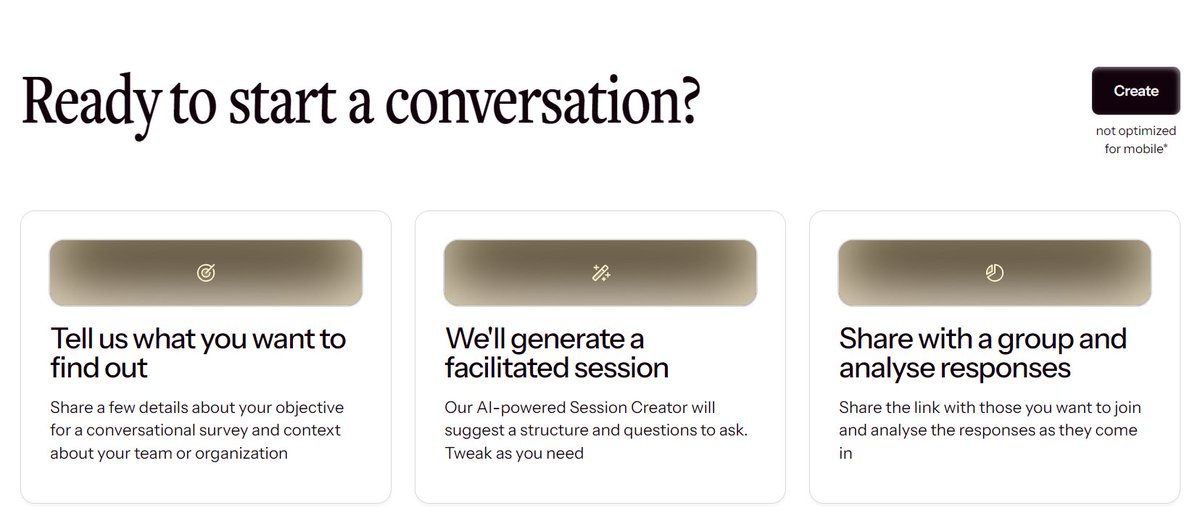
Harmonica 0.4 is finally solving this problem with what I provisionally call "a runtime for facilitation" or "a methodology execution engine". I'm still searching for a better term, but the most important thing is that it's not "a mere AI interviewer" anymore. It's probably a worse interviewer than Listen, Juno or Genway. But now it's capable of something they're not designed to do, and whiteboards like Miro are not designed to do either: execute facilitation protocols, following the best practice in context engineering and AI evaluation.
Read the full story in our blog: blog.harmonica.chat/runtime-…
1
53

Feb 25
100%, the context layer is where the real value lives. But the knowledge that arguably matters most is tacit, trapped in people's heads.

1
1
1
143
Feb 25
Our new blog post on why facilitation is the missing infrastructure for the context layer — and what we're building to make it happen.
blog.harmonica.chat/context-…
68
Harmonica 🪗 retweeted

17 Dec 2025
Most "DAOs" are quickly transforming into traditional top-down management, keeping information private, and oversight based on KPIs, 1990s style.
Why?
1. No more regulation requiring decentralisation theater.
2. Bad memories of the poorly designed DAOs of 2018-2024, requiring a rapid shift to executing at least something.
3. Lack of understanding in outside-in innovation (i.e., open innovation, platform designs, etc.)
4. Lack of skills in facilitation and co-creation
1 and 2 are more temporary circumstances that lead to a specific form of groupthink, but they will cycle.
3 (lack of understanding) and 4 (lack of skills) are more fundamental issues that keep web3 organisations stuck in old-fashioned organisation design.
The opportunity is there for ecosystems that get curious enough to learn why organisations that nurture open innovation tend to lead their industries. And then do the work to bring in those skills.
I ballpark open innovation will become a wave in 2, maybe 1.5 years. Those who start now will become the leading case studies then. And for those who can't, some basic training in facilitation skills and co-creating strategies internally (e.g., running a strategy workshop, like a real process with input and feedback) will mean you're not completely archaic. Ecosystems can start upgrading their management style now, avoid falling too far behind, and benefit from improved internal coordination.
To my facilitator friends, I wish you good luck selling in this environment. You're badly needed, even if underappreciated.
And to those who are more experienced in organisation design but trapped in old-fashioned structures, I invite you to try small experiments like doing a team retrospective with harmonica.chat or a quarterly priorities workshop using negationgame.com
"Trying a tool" is less risky than changing the structure, so you don't need to go against the zeitgeist and can still improve things internally.
5
4
38
1,828
17 Dec 2025
2026 is shaping up to be the year of multiplayer AI. @gregisenberg and @far33d have made this call in recent weeks, pointing at the same pattern we've seen before: G Docs > Word, Figma > Sketch, Airtable > Excel. All single-player tools eventually lose to multiplayer counterparts
1
3
8
183
17 Dec 2025
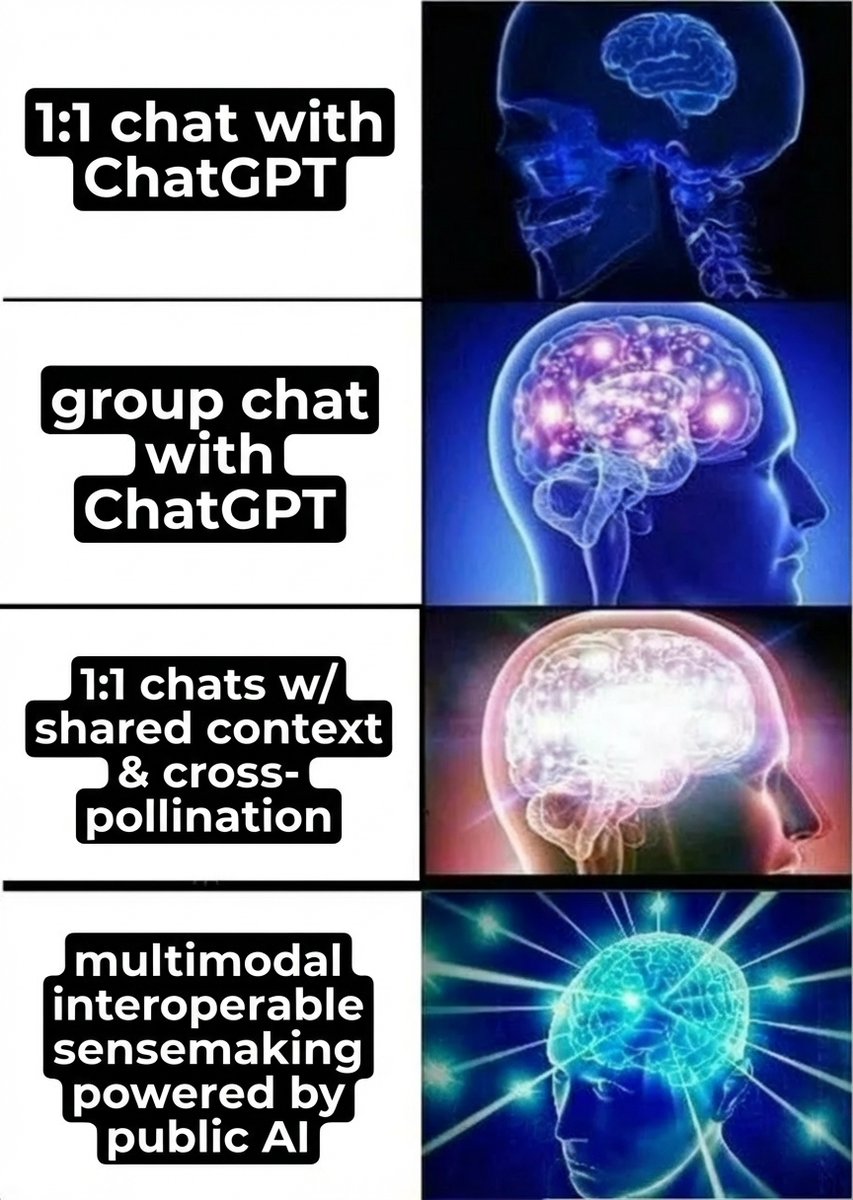
That's the next frontier. Real multiplayer AI isn't "group chat with vanilla LLM" (sorry, OpenAI). It's AI that facilitates structured async conversations across many people, cross-pollinates and then synthesizes the patterns, tensions, and shared understanding that emerge.
1
1
3
151
17 Dec 2025
Try Harmonica for multiplayer sensemaking, powered by community-created prompts and various LLMs, incl. models provided by publicai.co/ and BYOM. It's not about replacing human facilitators. It's about making great facilitation accessible to every team, at any scale.
2
65
Harmonica 🪗 retweeted
29 Jun 2025
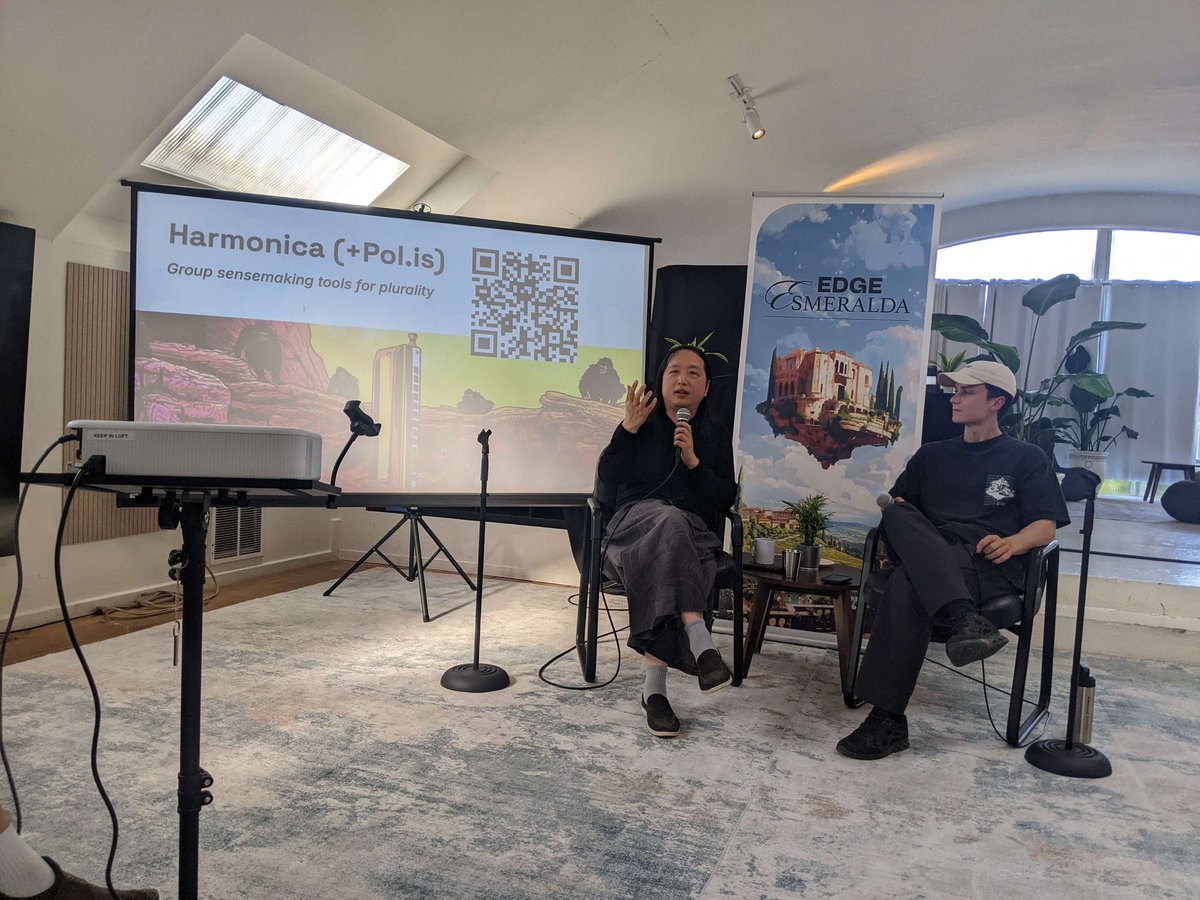
last week we were invited to present @harmonica_chat at the @TransformComm webinar youtube.com/watch?v=8ecRSZ_j…
it was really cool to watch someone else doing a demo of the tool we've built! thank you for having us!
1
5
470
Harmonica 🪗 retweeted

16 May 2025
One of the least discussed drawbacks of voting is that it's divisive.
Choose one option from => Get a team rooting for each option.
This can be very detrimental to communities and also lead to non-rational behaviour and suboptimal outcomes.
What we really want is deliberation and inclusion. A way to get heard and seen, even, or especially, if members do NOT have decision making power.
IRL communities have long figured that out and use a plethora of formats for facilitating exactly this. At scale it becomes harder. But doable.
9
7
20
1,218
5 May 2025
100% agree, editing of system prompts is a key feature of the upcoming version of Harmonica
23 Apr 2025

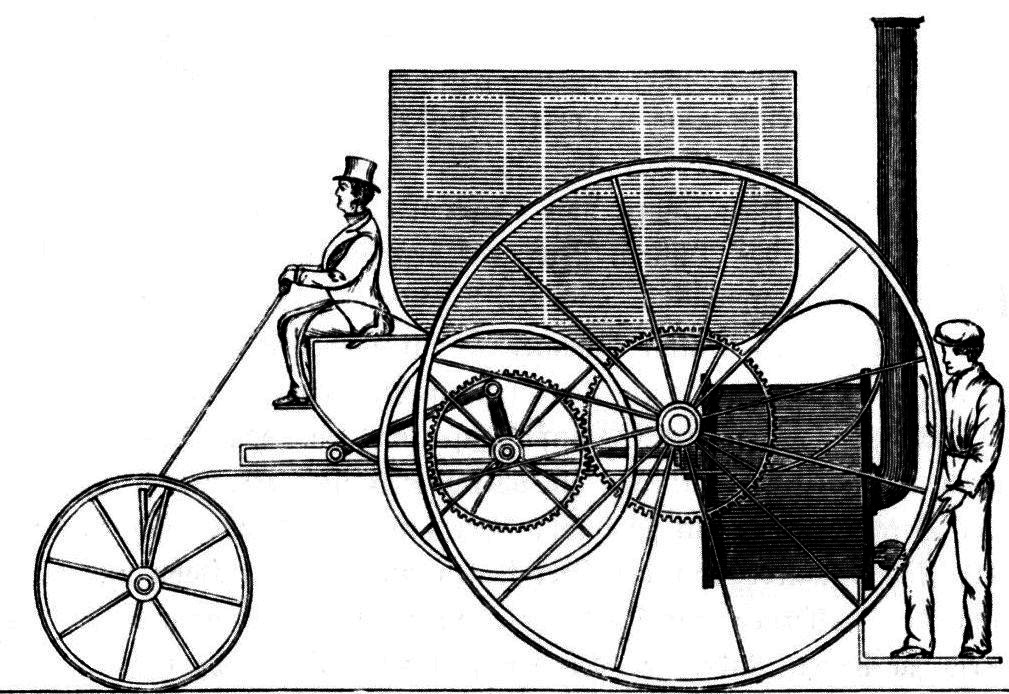
I wrote an essay about Gmail’s useless email-writing AI assistant: “AI Horseless Carriages”.
link and TLDR in thread
3
235
Harmonica 🪗 retweeted

22 Apr 2025
Every protocol that built their governance to centre around referendum based delegate voting will pivot or die.
It’s a brutal reality and it will be painful.
Incentive alignment was always the key and shortcuts around it all have an expiry date.
3
4
30
1,400
7 Apr 2025
Harmonica is in Gitcoin GG23 round!
In GG22, 530 people helped us raise $4,349 in matching funds, and every dollar was carefully invested in building the app. If you want to see us keep building stuff — please support us now through 16th April: explorer.gitcoin.co/#/round/…
3
12
23
954
Harmonica 🪗 retweeted
7 Mar 2025
Actually the "AI prototype" is called @harmonica_chat
"Facilitated by Missions Publiques, the assembly featured an AI prototype to synthesize input entered by students at various stages of the deliberation and link summaries back to the original discussion with search function."

On the sidelines of a global AI Summit in Paris, @landemore helped organize a student assembly to help chart the future of this rapidly evolving technology. bit.ly/41IxM2N
@audreyt @ENS_ULM @Antolw @tpenig
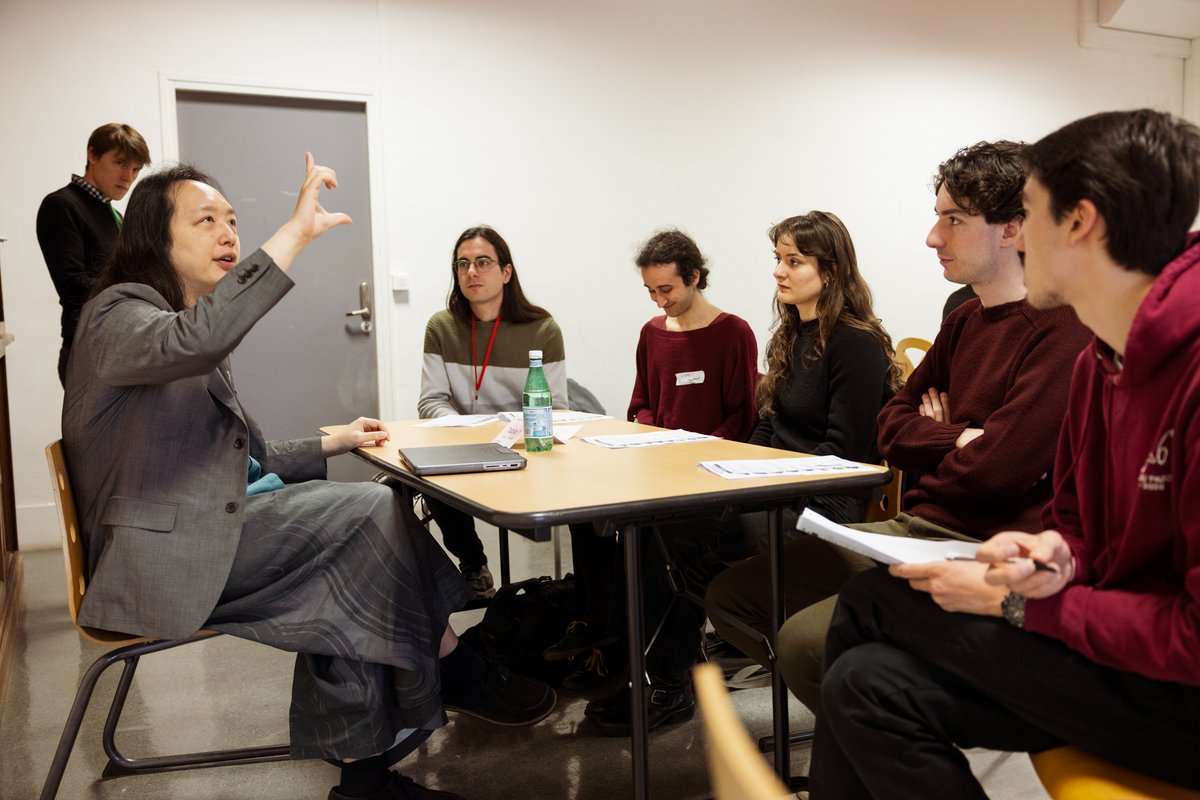
ALT Audrey Tang gestures while talking to students at a table.
2
5
364
26 Feb 2025
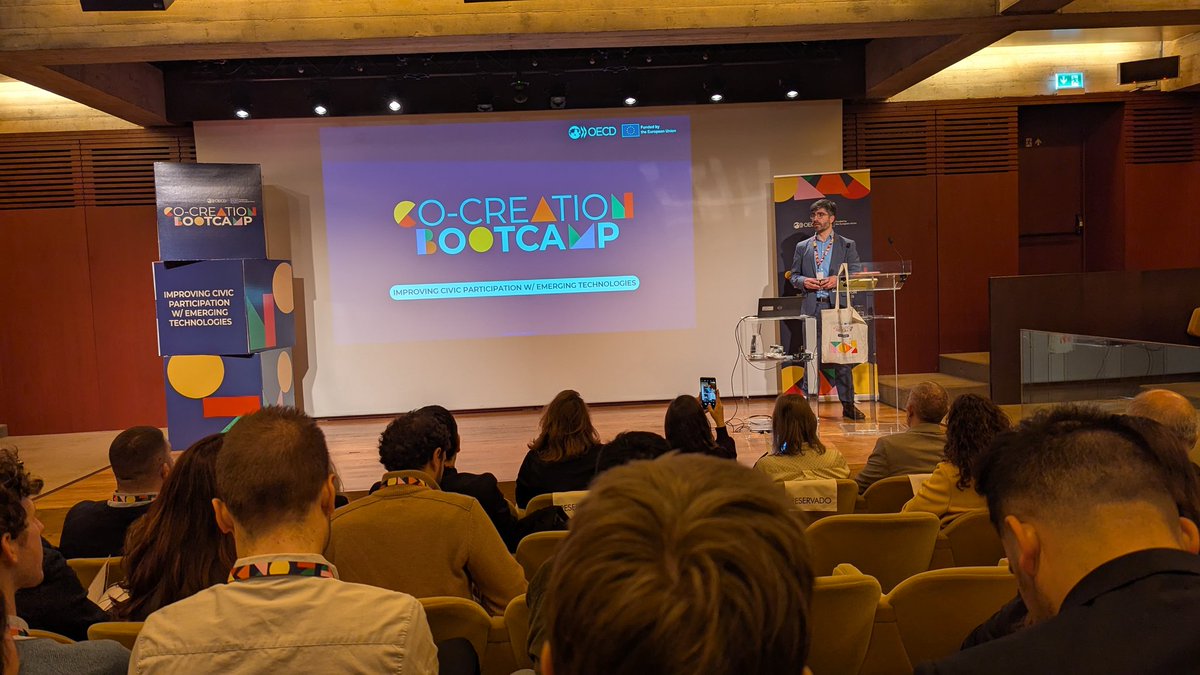
🚀 Harmonica is at the OECD Co-Creation Bootcamp in Lisbon! 🎉
We're working on solutions to surface, discuss & prioritize societal needs and streamline policy-relevant insights from public participation. Excited to prototype civic engagement tools! 🔎💬⚖️ #OECD #CivicTech
3
9
219
Harmonica 🪗 retweeted

4 Feb 2025
CollabTech is growing - the energy is clear in this Loving on Public Goods QF Round! 💜
Join us with @Giveth and @Pairwisevote @BrightIDProject @together_crew @collabberry @harmonica_chat @meetwithhq @breadchain_ to learn how we’re evolving collaboration.
x.com/i/spaces/1BdGYEZyMQDGX
11
16
32
2,381