
30 Photos and videos





Colin Humphreys retweeted

26 May 2024
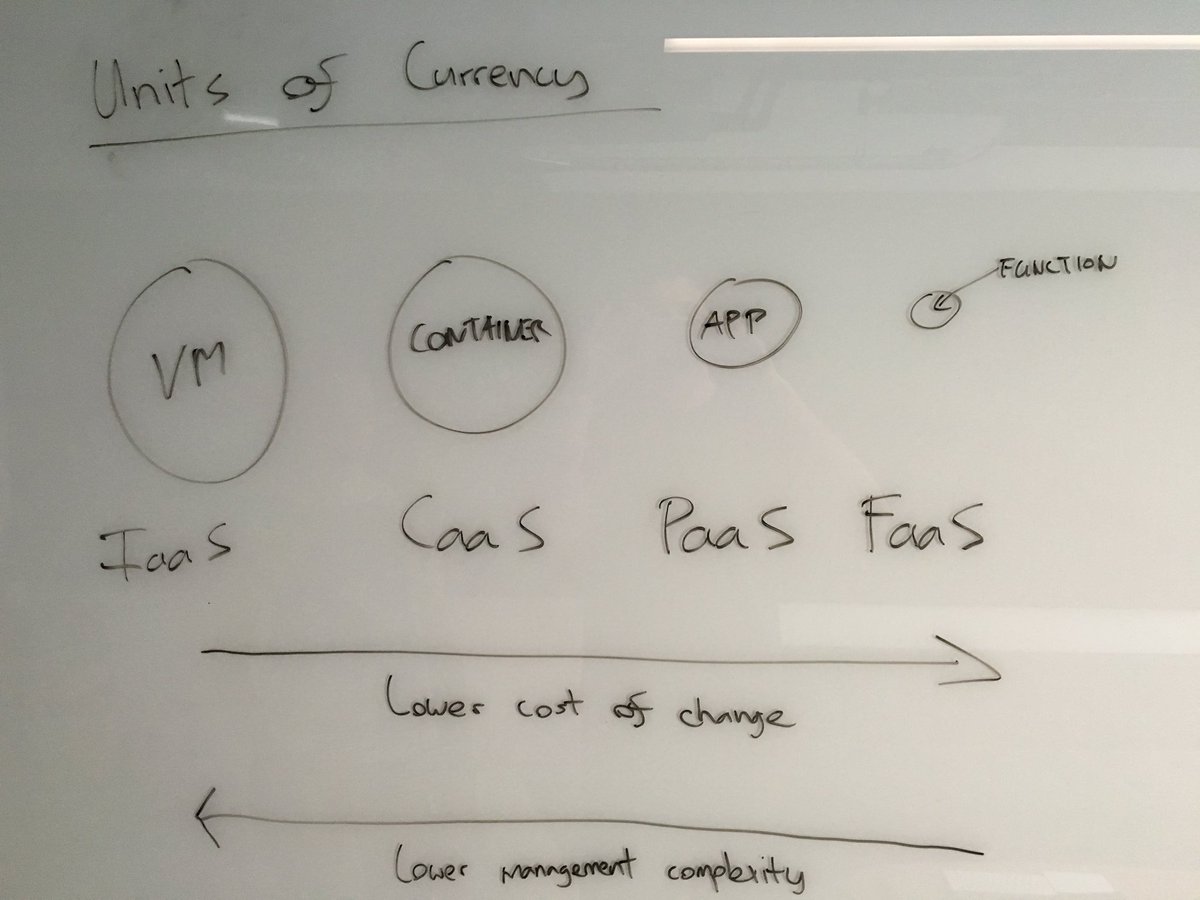
Sunday morning ☕ musings: How do you create a platform that supports self-service and is tailored to support your business needs (workflows, compliance, governance, etc)? 🤔 History provides a lot of good lessons:
🤷♂️ No platform (a.k.a. YOLO): Without a platform, there is no self-service, and every app/deployment/config is a snowflake ❄ This is how I started my career in the 2000s. In 2024 there is a lot of amazing tech to bootstrap apps and infra now, and this is a good approach for many startups that just want to find product-market fit. But for enterprise use cases, this doesn't typically scale beyond a handful of services.
🏗 IaaS platform: With an IaaS platform (think "access to the Azure console" 👩💻), there is self-service, but business needs are not implemented consistently. This is a dark side of the "you build it, you run it" approach that was championed with DevOps. You can get pretty far with this approach, but reacting to a Log4Shell incident or ensuring that all of your systems are PCI-DSS compliant can be super challenging.
🚉 PaaS: With PaaS, you clearly get self-service (I ❤️ “cf push”), but business needs are implemented in a generic or "one size fits all" way. And if you're using a SaaS-based PaaS, you often have limited control of the upgrade and deprecation cycle of the underlying platform (think AWS Lambda deprecating a runtime version)
🏎 Bespoke PaaS: If you can build your own PaaS, you can implement self-service and provide composable (and reusable) building blocks that support the team’s/department’s/organisation’s business needs 🧱 If you’re an old-school Java programmer like me, think of it as providing “aspects” (from AOP) for your platform. You also control the upgrade and maintenance cycles across your fleet.
This is why I'm bullish on the recent development of platform frameworks and orchestrators.
As Kelsey said in 2017, we all want to build our own PaaS, but maybe now this is a reality for most enterprises...
1
3
9
2,083
Colin Humphreys retweeted
17 May 2024
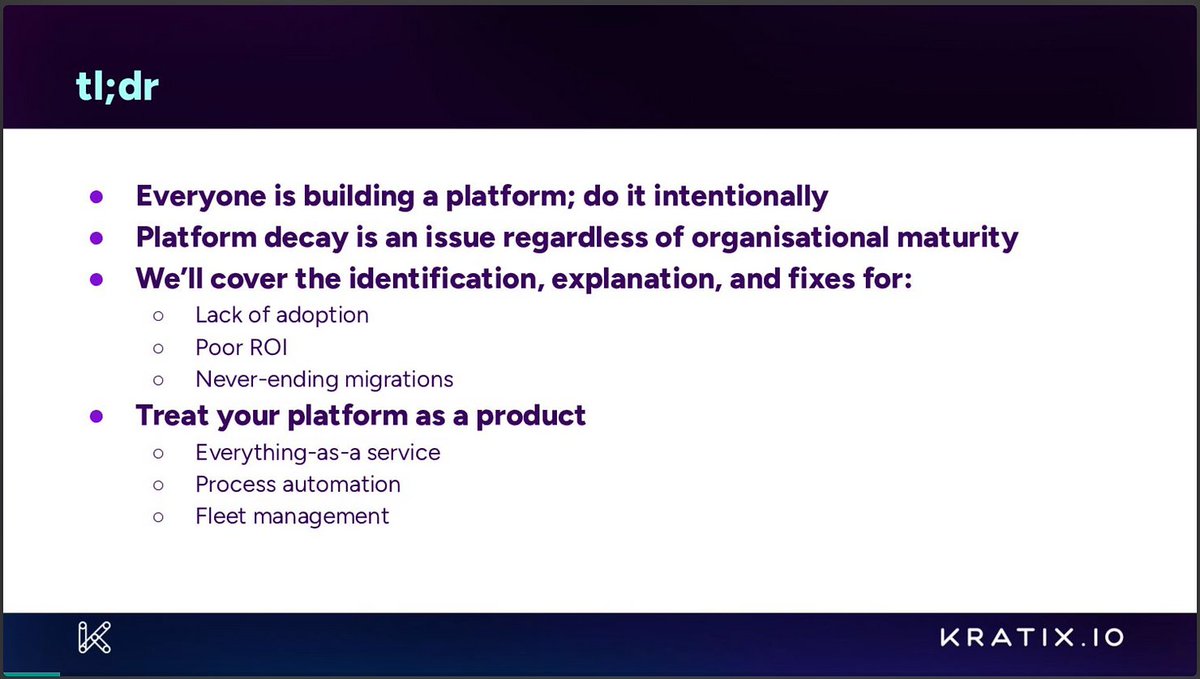
My latest @syntasso blog post summarises @a_bangser's excellent webinar from last week -> "The #1 Platform Engineering Problem You've Never Heard Of: Platform Decay (Webinar Recap)"
syntasso.io/post/the-1-platf…
4
9
936

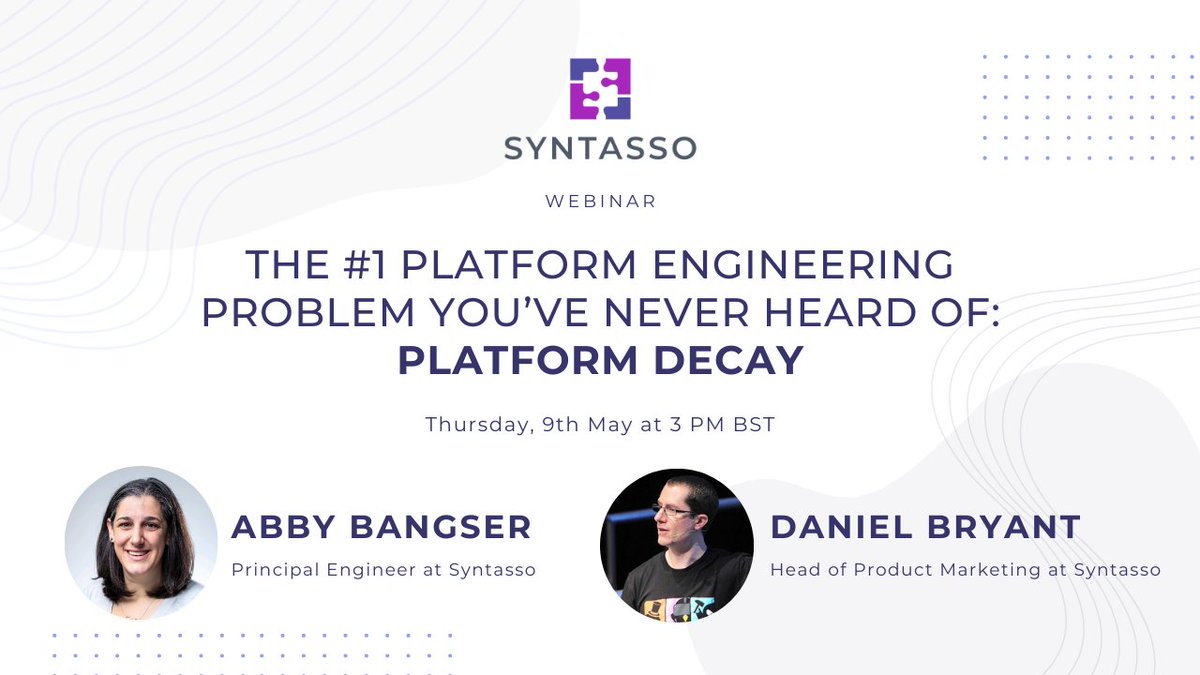
Join @a_bangser and @danielbryantuk tomorrow (Thursday, May 9th) at 3pm for a webinar covering "The #1 Platform Engineering Problem You've Never Heard Of: Platform Decay"
bigmarker.com/orbitalx-webin…
5
7
739
🎉 As part of #PlatEngDay (at #KubeConEU), we’re pleased to announce that @syntasso has donated €1,000 to @MSF!
🙏 Thanks to everyone who joined #Kratix slack channel, looking forward to chatting #PlatformAsAProduct with you all!
#PlatformEngineering syntasso.io/post/syntasso-s-…
5
7
613
How have NatWest used platform engineering to drive innovation? Chris and Derik talk to use about their #KubeCon #PlatEngDay talk in our #newblogpost
syntasso.io/post/unlocking-b…
1
1
135

Maintaining a fleet of databases across infrastructures used to be a full-time job. With Kratix, your platform team can keep your entire fleet secure and updated with a single API call. @kirederik shows you how in this short demo: youtu.be/lI41jOV1C8k?feature… #PlatformEngineering
6
8
579
We're very excited to appear in the latest @thoughtworks Technology Radar 🎉
#PlatformEngineering and #PlatformAsAProduct practices are helping our users to build internal platforms that reduce cognitive load for devs with self-service APIs.
x.com/thoughtworks/status/17…
27 Sep 2023

📢 Exciting news!
Volume 29 of the Thoughtworks Technology Radar is now live! Explore our perspective on the tech we have tried and tested over the last six months.
Get your copies now: thght.works/3RCOFHF
#TWTechRadar

ALT Find it hard to keep track of changes in tech? We can help Volume 29 of the Technology Radar is out now!
4
12
2,715
Colin Humphreys retweeted

16 Sep 2023
I dis a short video about it yesterday youtu.be/OrrdDdfZuV8?si=sYZG…
1
1
226

Only 2 more sleeps!! Our next meetup is this, Weds 6th Sept, 6.30pm @Accurx offices. We've 2 fab speakers:
- Steve Judd: "Serverless & chill: stress-free container hosting"
- Alexandra Craciun: "Making an impact as a platform product manager"
#PlatformEngineering #LOPUG

One week until our next meetup! It's next Weds, 6th Sept from 6.30pm @Accurx offices.
We've got two great speakers and there'll be food, drinks, and lots of fab conversations! There are still spaces available, you can register here: meetup.com/london-platform-u…
#PlatformEngineering

ALT London Platform User Group (LoPUG). Next meetup: Wednesday 6th Sept, 6.30pm. Accurx, 7 Curtain Road, London, EC2A 3LT. Steve Judd, Chief Architect @ Jetstack Alexandra Craciun, Senior Product Manager, Platforms @ Zoa
2
2
1,439
Join us for our 11th birthday party, Weds 19th July 6.30pm @OpenCredo office for 2 amazing talks:
- @andyburgin: "Curating a Platform Experience"
- Charlotte Binstead: "Failure, heal thyself? Creating a culture of digital immunity"
meetup.com/london-platform-u…
#PlatformEngineering
2
2
244
Join us for our 11th birthday party, Weds 19th July 6.30pm @OpenCredo office for 2 amazing talks:
- @andyburgin: "Curating a Platform Experience"
- Charlotte Binstead: "Failure, heal thyself? Creating a culture of digital immunity"
meetup.com/london-platform-u…
#PlatformEngineering
4
4
325
Colin Humphreys retweeted

7 Jun 2023
Hey @adrianamvillela, check out the (new) 3rd item in the marketplace 👀
kratix.io/marketplace
On demand, as-a-Service #vcluster that self-registers with @kratixio giving it the ability to schedule more services automatically 🎉
Thanks to @aclevernamedev for pairing on this!
1
2
7
784
Colin Humphreys retweeted

1 Jun 2023

Didn't catch the live Community Call today? No worries, you can watch the recording here: youtube.com/watch?v=PRWYX4lb…
Kratix ❤️ Dapr demo
🔎 Cryptography API (alpha)
🏞️ Service invocation and streaming
🌍 Discord show-and-tell: people are giving Dapr talks around the world!

5
11
687
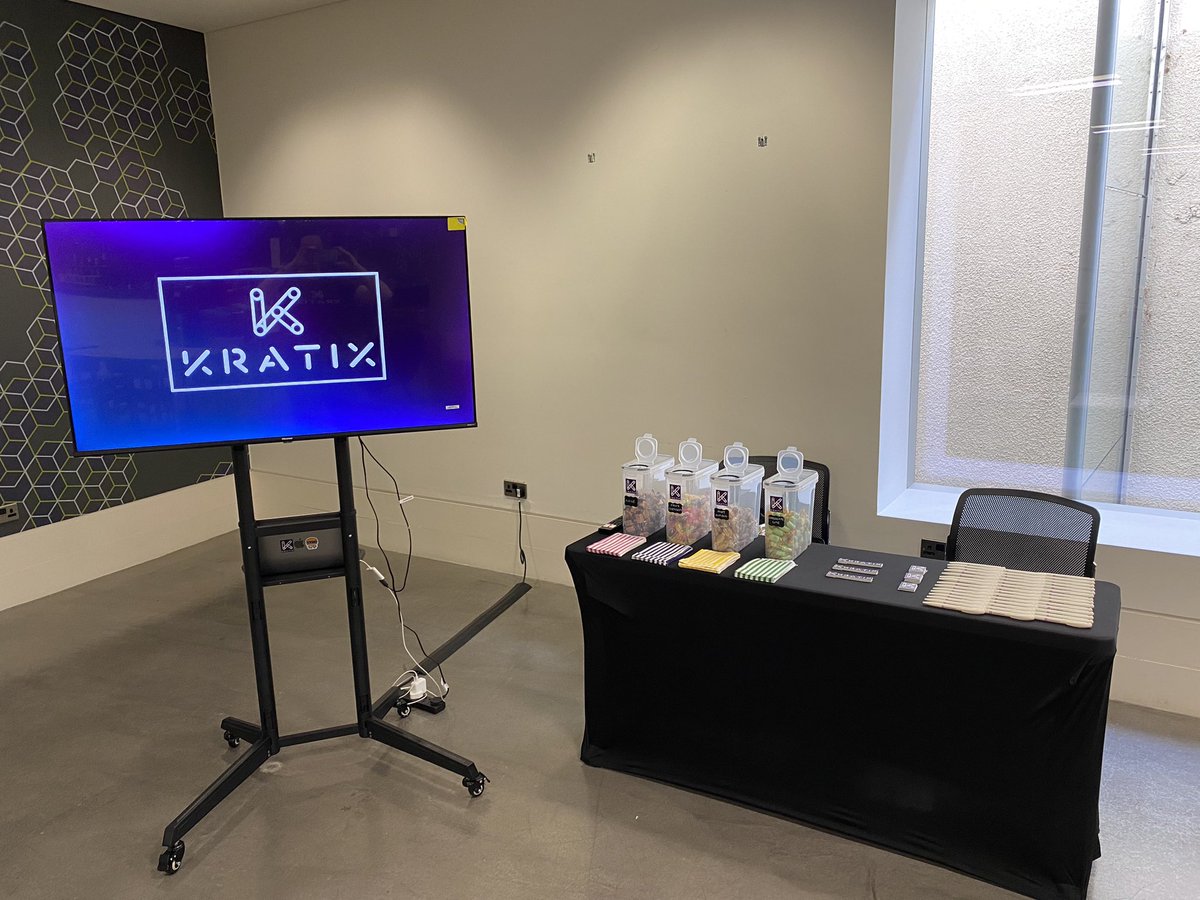
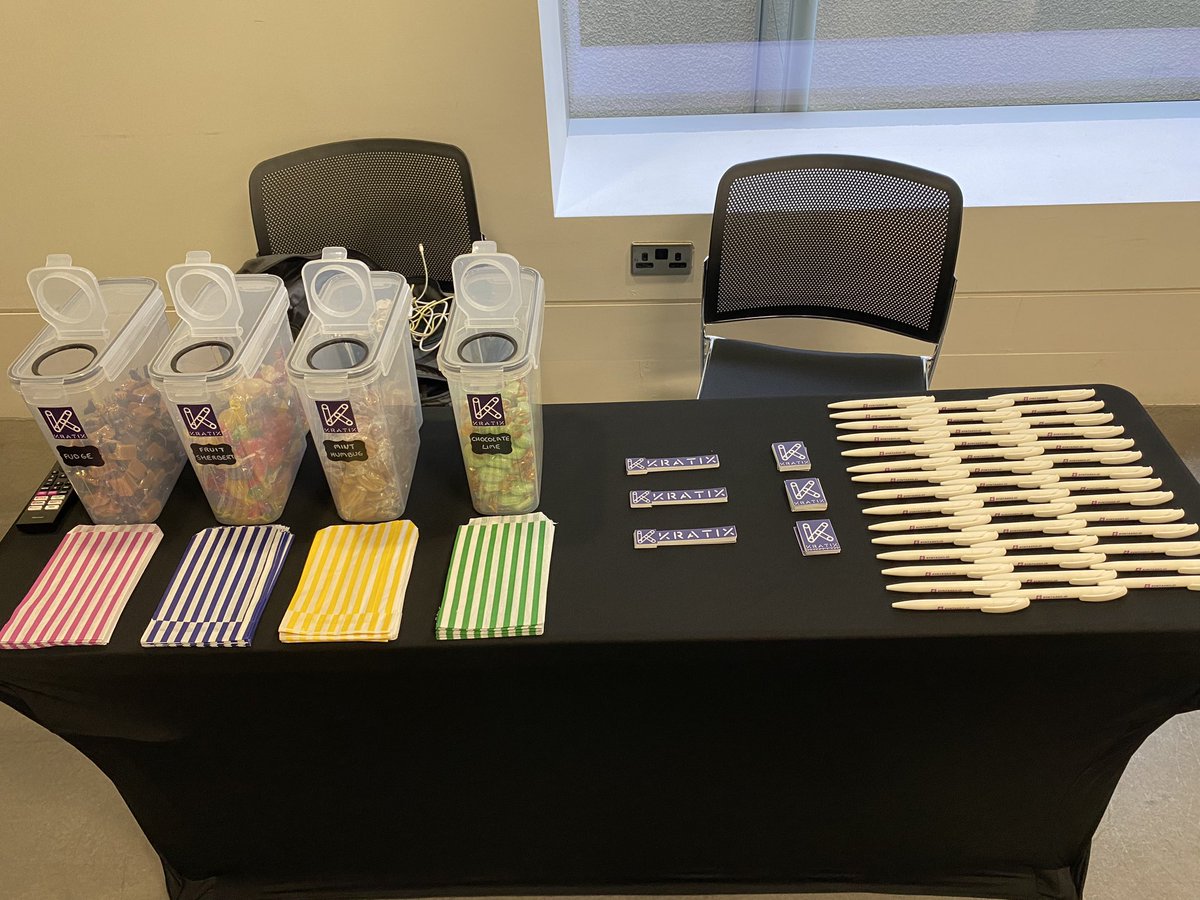
We’re all ready for @FastFlowConf tomorrow. Come to our stand, grab some sweets, stickers and pens, and learn how you can can use @kratixio to build your internal platform and help your platform teams thrive! #FastFlowConf #PlatformAsAProduct #TeamTopologies
5
7
742
Huge THANK YOU to @maryliag_ and @adrianamvillela for showing @kratixio to the lovely folks @KubeHuddle. Adriana also created this fantastic video, which we're delighted to share: youtu.be/eWFPspHme8E
#DevEx #PlatformEngineering #OpenSource #Community

5
7
784
Kratix adds feature flag capability to the Promise marketplace with @getunleash, the open-source feature management solution. syntasso.io/post/unleash-add…
#PlatformEngineering #OpenSource
1
4
6
975
Colin Humphreys retweeted

6 May 2023
Whatever your views on monarchy, arrest of anti-royalist campaigners for exercising right to peaceful protest is chilling. Many of us warned about exactly this when govt rushed thro the illiberal public order bill. This is not what democracy looks like inews.co.uk/opinion/most-dra…
1,862
8,588
27,907
1,455,376
Colin Humphreys retweeted
26 Apr 2023
I am excited to be a part of this first draft & to continue learning from the process of improving this as part of the @CNCFTAGApp!
I have worked with the TAG since last yr and have been blown away by the humans and work that is going on. Pls join us! 👀
tag-app-delivery.cncf.io/

📢Syntasso donates Platform Maturity Model to CNCF Working Group.🎉
We've been working on a platform maturity model & have been blown away by the interest in it.
We've donated it to the @CloudNativeFdn TAG for App Delivery & can't wait to see where the community takes this👀
1
3
9
890
📢Syntasso donates Platform Maturity Model to CNCF Working Group.🎉
We've been working on a platform maturity model & have been blown away by the interest in it.
We've donated it to the @CloudNativeFdn TAG for App Delivery & can't wait to see where the community takes this👀
1
7
21
2,925
Colin Humphreys retweeted

21 Apr 2023
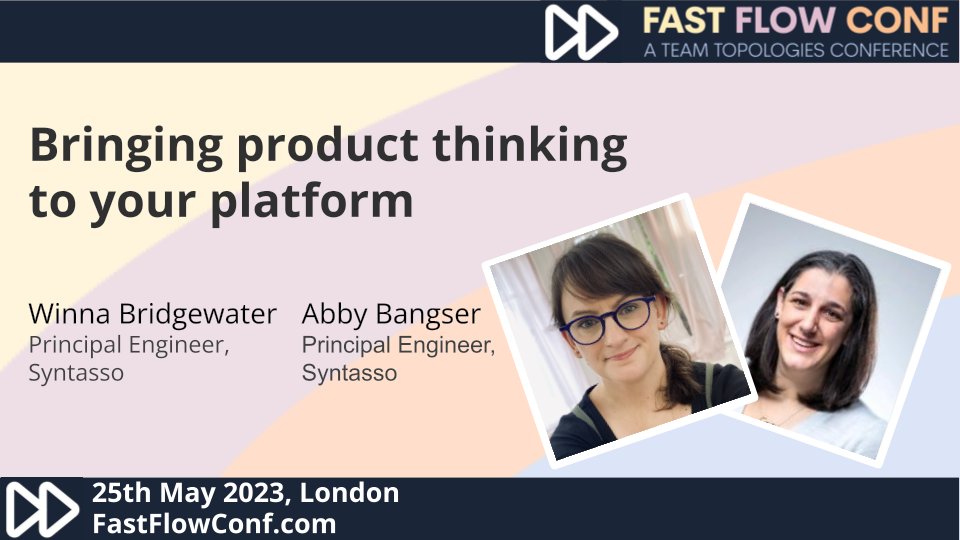
We’re delighted to announce @a_bangser & @thepreviewmode will be presenting “Bringing Product Thinking to Your Platform”.
Tickets available ti.to/fast-flow-conf/fast-fl…, full details at fastflowconf.com/
#FastFlow #TeamTopologies #FFC23
4
5
353