
Joined April 2022
- Tweets 2,914
- Following 639
- Followers 14,044
- Likes 7,089
356 Photos and videos












Pinned Tweet

Jan 14
The Covenant of Humanistic Technologies is live.
It defines a design philosophy for Human Tech: d/acc technologies that embed digital rights by design, built and governed on the human.tech protocol layer.
Commit your alignment at manifest.human.tech
14
30
136
45,585
45m
we think about this question more than any other:
what would you build if you knew it couldn't be used against you?
3
66
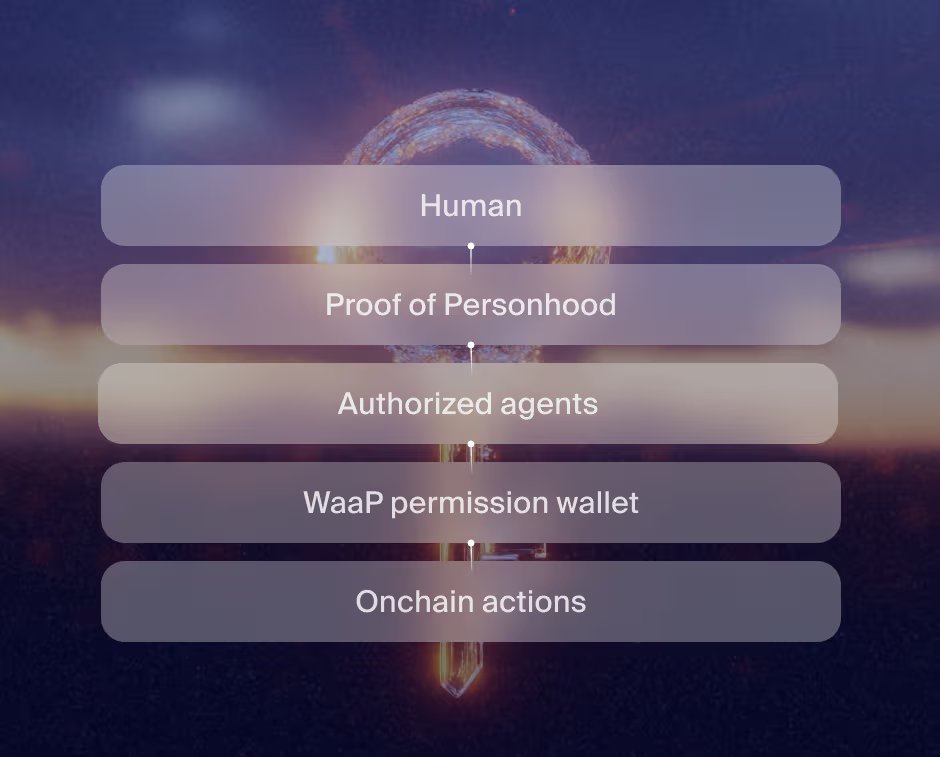
verification and delegation look equivalent from the outside
they're not
• one answers: who is accountable for what this agent does?
• the other: what is this agent authorized to do, right now?
-> an agent with only the first: you know who owns it, but nothing constrains what it signs
-> an agent with only the second: it's scoped, but there's no chain of human accountability
building both is what makes an agent trustworthy, not just capable
human.tech/blog/proof-of-per…
1
4
25
385
16h
human.tech’s AI strategy is now publicly available
link in the QT
Jun 10

everyone's trying to make their agents smarter, so do we
our agents read structured truth instead of guessing at it. as a result, a non-engineer did 3 months of work in 3 days, and hallucinations became rare
part of our thesis: make the company readable to agents through indexed docs, structured frontmatter, roadmaps, and a CRM that an agent can parse without drowning in context
the full story of how we restructured human.tech, by co-founder @NanakNihal:
nanaknihal.com/2026/06/09/hu…
1
6
26
527
Jun 14
every compliance framework ultimately asks for proof: show that the check happened, and show when
Proof of Clean Hands generates exactly that: this address cleared the check, at this moment, without storing anything. the record is what regulators require; the underlying data they'd normally expect to see collected doesn't need to exist
auditable without accumulation
3
23
726
Jun 13
Article 14 puts the operational compliance burden on the deployer, not the foundation model provider
pointing at your AI vendor's certification isn't enough. in production, what matters is whether you can show: authorization records tied to specific human approvals, scope constraints that exist outside the model's reasoning, and an audit trail that holds up under regulatory review
Jun 4

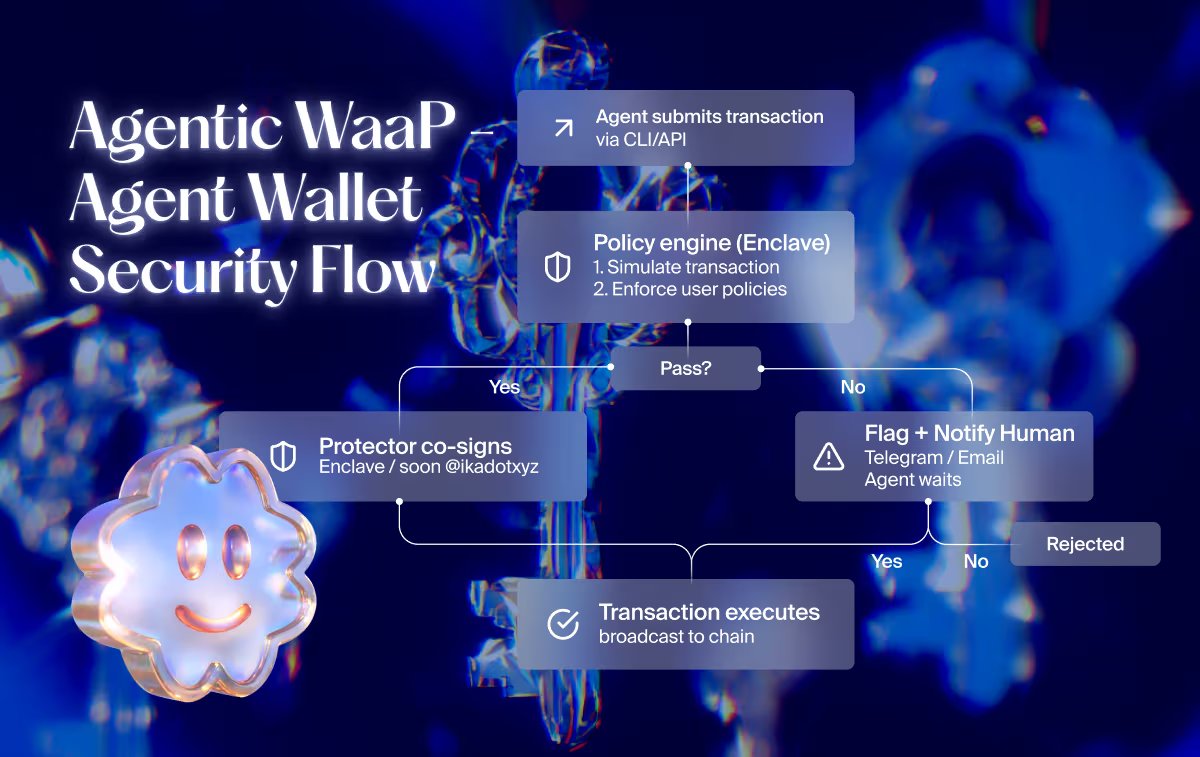
this is what it looks like when the human is actually in the loop, not approving every transaction but defining the rules upfront and letting the agent run until something breaks scope
WaaP scopes what the agent can do. Passport proves who's behind the authorization
3
19
518
Jun 13
query a wallet and you know whether it connects to a verified unique human; no user action, no re-verification step
@HumnPassport Models API runs Sybil defense at the protocol, not the application
Jun 5
the airdrop completed. the wallet data looks wrong: hundreds of addresses claimed, none had prior onchain activity
Sybils don't generate engagement. they claim and move on
Models API scores wallets against onchain signals. no re-verification from users. query before TGE finalization, score the list, drop the farms
how Initia and others filtered out Sybils in their testnet programs: human.tech/blog/case-study-p…
4
29
869
Jun 12
when agents share signing infrastructure, a single compromise has a multiplier effect
how far it reaches depends on the key design, not the agent that got hit. in a full-key pool, a breach at the infrastructure level reaches every agent in it
2PC changes the math: the human signing party is a fixed boundary

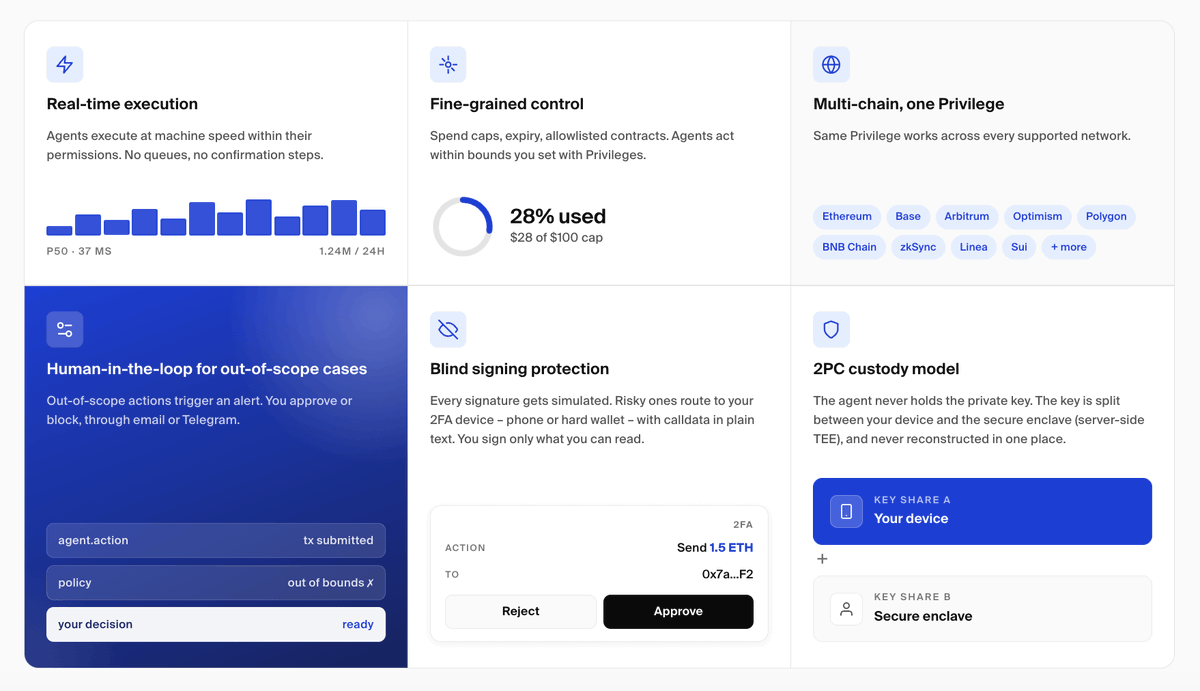
your agent with WaaP:
→ real-time execution, scoped permissions
→ spend caps, expiry, allowlisted contracts
→ 1 Privilege across every supported chain
→ human-in-the-loop when out of bounds
→ blind signing protection, full tx simulation
→ 2PC custody: key never in 1 place
1
1
19
560
Jun 12
the agent acts onchain
the human keeps root control
delegation ≠ full handover
@elizaOS soon
elizaOS makes agents expressive.
Characters, memory, plugins, social context.
WaaP keeps that expressivity intact when the agent touches money: the agent can act, but the wallet still answers to the human when things go wrong.
@elizaOS soon.
2
21
544
Jun 12
when an agent executes onchain, two checks need to happen
@HumnPassport answers: who backed this agent? is there a verified human behind it?
@WaaPxyz answers: what is this agent authorized to sign? what's the scope?
common goal -> keep humans in the loop
human.tech/blog/proof-of-per…
1
3
28
500
Jun 11
organizations running identity verification for compliance face a structural choice: run the check and become a data custodian, or run the check without retaining anything
most default to the first because the second path required infrastructure that wasn't available
Human ID is that infrastructure: credentials generated by the user, organization queries the proof, not the data; no PII at rest, no retention obligation
docs.holonym.id
2
10
380
Jun 11
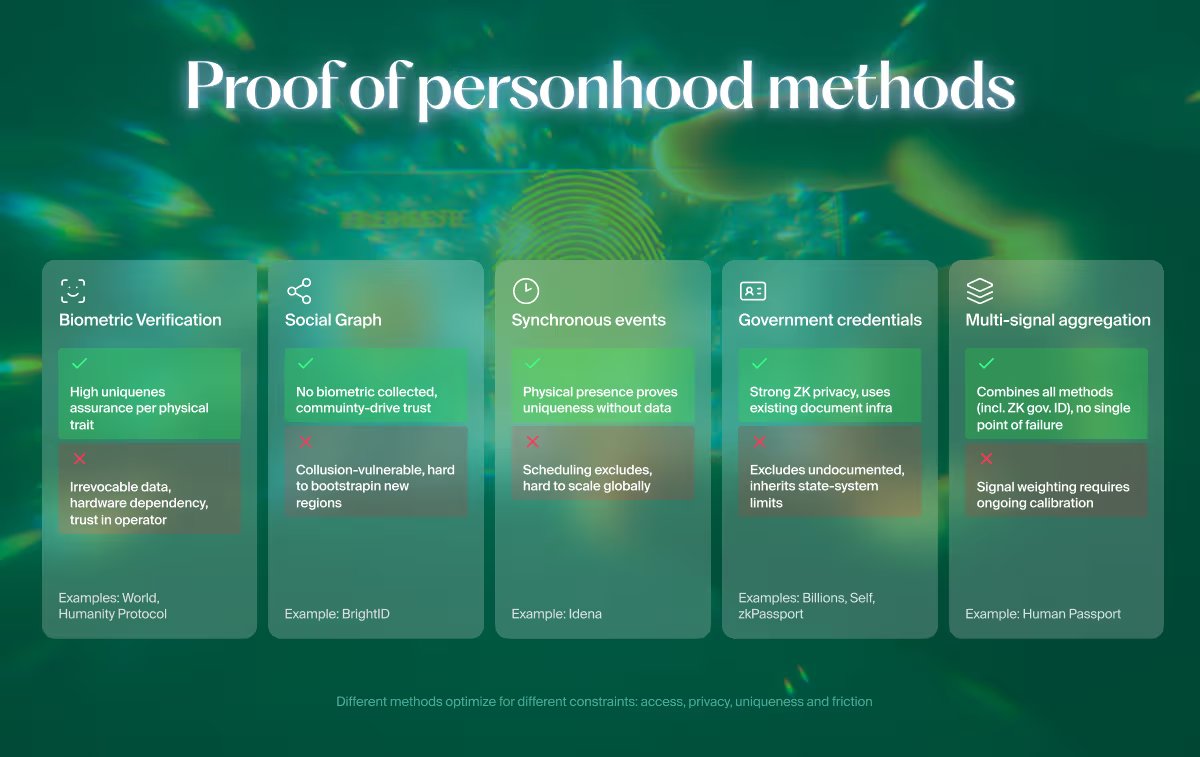
verifying humanity through government-issued IDs used to mean uploading documents to a KYC provider (aka a honaypot)
@HumnPassport proves it's possible to run privacy-preserving verification instead
NFC Passport now suported, free for a one-time, 1-week proof. $3 for a reusable onchain version
Jun 10
NFC Passport x Government ID 🛂
Verify humanity with your biometric passport. No upload, works on any NFC chip
→ Scan the cover or photo page with your phone
→ The proof runs locally, nothing leaves your device, powered by @ZKPassport
Two tiers: 1-week attestation (free) or reusable onchain SBT ($3), both worth 16 points toward your Unique Humanity Score
*For apps: Government ID is part of the Individual Verifications compliance flow - more below

1
5
36
1,096
Jun 10
you’re not updating your priors fast enough
Jun 10

#HSCLifeRules - Shady El Damaty (@hebbianloop), CEO & Co-Founder @humntech, Hack Seasons Conference Cannes, April 1
The fat protocol thesis said if you own the rails, you own the future - VCs have played that treasure hunt for a decade. Then came the fat wallet thesis: whoever owns distribution, the interface closest to the user, wins - identity, wallets, trading all fall out of that. Now AI is forcing us to rethink what's worth building. I think wallets as point-and-click interfaces might be dead in nine months - a lot of the complexity we expect could dissolve into the background, bringing the adoption moment closer
#HackSeasonsConferenceCannes
1
2
25
390
Jun 10
right in line with Proof of Clean Hands
>> zk-proofs
>> AML & sanctions check
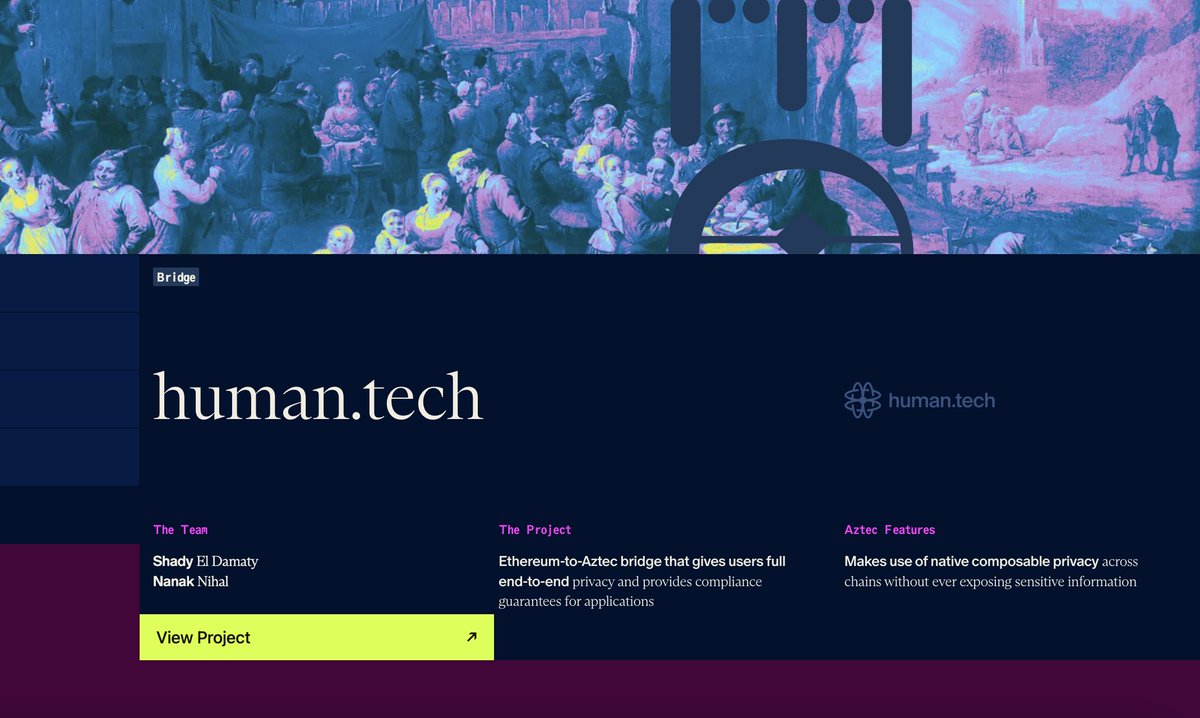
>> that's what we built into the bridge to @aztecnetwork
privacy and compliance can go hand in hand 🤝
Jun 8

Learnt about the 3 things institutions want to be sure of before coming on Ethereum @ethconf
1. the counterparty they trade with isn't sanctioned
2. they aren't paying a sanctioned entity (such as N korea validating their blocks)
3. they aren't frontrun via mev
There are proposals of separate set of "institutional blocks" that are from attested, US based validators. Apparently adoption of commit boost by validators plays a part in enabling this
I'm still unsure how & whether it affects censorship resistance, if users can start to choose the category of validators they want for their blocks
2
22
452
Jun 10
everyone's trying to make their agents smarter, so do we
our agents read structured truth instead of guessing at it. as a result, a non-engineer did 3 months of work in 3 days, and hallucinations became rare
part of our thesis: make the company readable to agents through indexed docs, structured frontmatter, roadmaps, and a CRM that an agent can parse without drowning in context
the full story of how we restructured human.tech, by co-founder @NanakNihal:
nanaknihal.com/2026/06/09/hu…
1
5
27
1,809
Jun 9
Article 14 specifies the standard, not the implementation. in practice, effective oversight means:
• scoped permissions: the agent operates within pre-approved authority limits
• human authorization on record: the approval predates the action
• verifiable enforcement record: the boundary and its enforcement are auditable after the fact
compliance is an architecture decision, not a policy document
human.tech/blog/authorizatio…
3
24
433
Jun 9
wallets confirm the key. Passport confirms the human
at agent scale, it's two different questions: who holds the key, and who authorized the action
Jun 7
wrote this in February. the agent part aged differently
airdrops, governance, agents, regulation: all four hitting identity at the same time now. wallets alone don't cut it
human.tech/blog/identity-is-…
1
2
28
543
Jun 8
for those who still don't know @WaaPxyz, or need a refresher
stop renting your private keys
Who is WaaP?
A thread for builders who've heard of Privy, Turnkey, or Coinbase and want to know where we fit.
🧵

1
5
29
639
Jun 7
Article 14 of the EU AI Act doesn't ask enterprises to file a policy. it asks, in effect: can you demonstrate, after the fact, that a human could have intervened before the agent acted?
for high-risk AI systems deploying LLM agents in production, that's an infrastructure question, not a compliance checkbox
every agent transaction needs a verifiable record: what it was authorized to do, by whom, and within what scope. Article 14 creates the accountability requirement. the architecture that satisfies it is a records and authorization infrastructure problem
"we have logs" doesn't satisfy this. traditional logs are mutable and can be selectively retained. a signed authorization chain isn't
56 days to August 2
May 28
agents need a signing layer, wherever they're built
OpenClaw last week. AgentKit this week
→ @WaaPxyz
3
1
18
691
Jun 7
207K verified humans in one campaign is proof human verification can scale
the harder gap: agents running wallets with no verified human behind them at all
verification at that scale was step one. agent authorization is the next one
May 27
207K people verified in one Linea Voyage campaign
the bot congestion problem at that scale is different from protecting a small allowlist
what actually worked:
passport.human.tech/blog/lin…
1
5
29
1,146