
I build humanistic technology for natural rights to prosperity, personhood, and privacy @humntech 🌱 I post on the intersection of neuro/crypto/philosophy.
Joined August 2020
- Tweets 3,698
- Following 2,044
- Followers 2,295
- Likes 11,708
224 Photos and videos


Pinned Tweet

Mar 25
**WaaP vs OWS for autonomous agent wallets, key distinctions at a glance:**
One chooses local-first key storage, doubling down on traditional key management practices. The other achieves the same goals with a more elegant design that breaks with the old guard of wallet engineering.
- **Mathematical robustness**: WaaP’s 2PC architecture ensures the full private key is never reconstructed, not even momentarily in memory. OWS addresses key exposure through temporary local decryption in a sandboxed process (wiped immediately after use). This treats the symptom effectively but does not eliminate the momentary full-key presence on-device.
- **Policy enforcement**: OWS policies are strictly local-only and cannot incorporate dynamic or online data (e.g., real-time oracle feeds, on-chain state, or remote human overrides). WaaP’s decentralized policy engine evaluates rules at signing time with broader context and supports scoped permission tokens for greater flexibility.
Outside these core differences, the two architectures are largely equivalent for most practical agent use cases, except in specific edge scenarios such as extreme high-frequency offline loops or highly adversarial local environments.
**If you are selecting a wallet standard for agents today, WaaP provides the stronger foundational primitive for safe, delegated agentic orchestration.**
**Detailed comparison:**
- **WaaP (Wallet-as-a-Protocol)**:
Keys are split into independent cryptographic shares; one created by the user, the other handled by a server or trustless network @ikadotxyz. Agents operate via JWT sessions and user configurable policy engine. Every transaction is simulated before collaborative partial signing. No complete key ever materializes on the agent machine. This design excels for non-deterministic, value-moving agents where delegation with enforceable guardrails is essential.
- **OWS (Open Wallet Standard)**:
A single local encrypted vault (stored at ~/.ows/) protected by AES-256-GCM. Signing decrypts the seed temporarily in an isolated, protected-memory sandbox, produces the signature, and wipes the key immediately. It delivers true zero-latency, fully offline, multi-chain signing (covering EVM, Solana, Bitcoin, and others) from one unified seed, with built-in local policy gates for spend limits, allowlists, and time bounds. Keys are never exposed to the agent process, LLM, or parent code.
**Practical takeaway**:
Use WaaP as the root layer for custody, dynamic policies, and human-delegated agent control. Layer OWS-style local execution underneath only when network round-trips are unacceptable. The two are complementary and together address the wallet fragmentation slowing the agent economy.
Which architecture are you using (or planning to use) for your agents?

5
21
1,496
Jun 13
im so glad I stayed up 5 extra minutes to fire off a "make my noir project post quantum, make no mistakes" to fable before going to bed last night
2
90
S El Damaty retweeted

Jun 10
How nature discovers rare Turing islands: Exploration by common limit cycles
pnas.org/doi/10.1073/pnas.25…
1
10
50
3,589
Jun 10
with metamasks new agent release, we’re well ahead of schedule
Jun 10

#HSCLifeRules - Shady El Damaty (@hebbianloop), CEO & Co-Founder @humntech, Hack Seasons Conference Cannes, April 1
The fat protocol thesis said if you own the rails, you own the future - VCs have played that treasure hunt for a decade. Then came the fat wallet thesis: whoever owns distribution, the interface closest to the user, wins - identity, wallets, trading all fall out of that. Now AI is forcing us to rethink what's worth building. I think wallets as point-and-click interfaces might be dead in nine months - a lot of the complexity we expect could dissolve into the background, bringing the adoption moment closer
#HackSeasonsConferenceCannes
1
1
13
262
May 20
im really not supposed to talk about this but imagine an agent that can buy a server, set up its own dev ops, config its DNS on cloudflare, and launch swarms at just a single tap in signal/matrix/telegram
thats TAP, and its free
tap.human.tech
1
6
245
May 17
the influencers of comp neuro academia are now all in re; ai
May 17

So pleased that our paper on empowerment and causal models is out and freely available as part of this impressive special issue on world models and AI, with Melanie Mitchell, Josh Tenenbaum, Tom Griffiths and many other stars.
royalsocietypublishing.org/r…
1
2
278
May 11
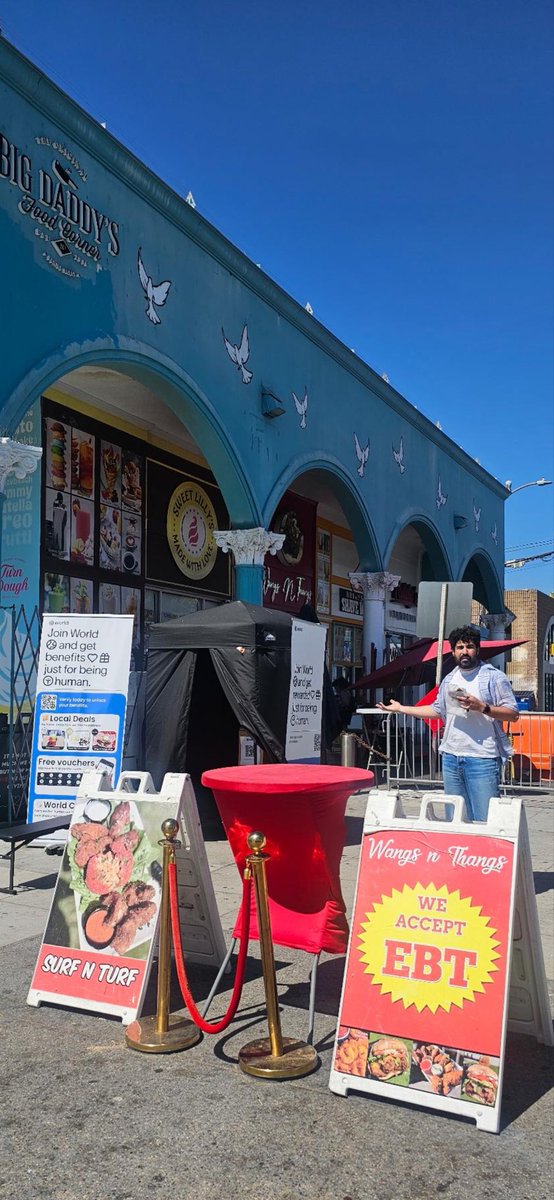
“Yes enter the suspicious black tent in Venice Beach and scan your eyeballs to get free fried chicken coupons”
Said no body sane ever
2
10
192
S El Damaty retweeted

There's no safe way to let an AI agent trade on @SuiNetwork
Until now.
waap-cli splits your signing key in two. The agent holds capabilities, not keys. Policy runs before every transaction.
Live today.

3
10
42
5,999
S El Damaty retweeted

Apr 23
I can't believe how good this turned out.
Recently, I put out my first physics paper proposing that life and the universe might be the result of a law governing how oscillators sync up and couple together.
I find it beautiful, awe-inspiring, and deeply meaningful. It aligns with how I have always seen the world. It suggests that there is an arrow of negative entropy, a law governing how life forms in all of its complexity.
Learning about it is intimidating. I am self-taught, and have struggled for months to understand and articulate the core concepts and framework.
After I put out the paper, I was challenged by @DanielleFong to make an 'explorable explanation'. A guide you can walk through, and which will hold your hand through each concept, equation, and principle.
It was amazing to make. In fact, I plan to make many more covering the wide range of topics I have been researching and exploring. Both to help me, and because I believe that this is something the world needs right now.
Link in comments
37
47
392
23,018
Apr 22
The future of DeFi

Imagine every pixel on your screen, streamed live directly from a model. No HTML, no layout engine, no code. Just exactly what you want to see.
@eddiejiao_obj, @drewocarr and I built a prototype to see how this could actually work, and set out to make it real. We're calling it Flipbook. (1/5)
5
267
Apr 20
i can't believe this is free toolsec.org/
anyone yolo'ing their env file into their agent setup should get in on this while they can
5
126
Apr 17
this potentially changes everything
few moats left

Introducing Claude Design by Anthropic Labs: make prototypes, slides, and one-pagers by talking to Claude.
Powered by Claude Opus 4.7, our most capable vision model. Available in research preview on the Pro, Max, Team, and Enterprise plans, rolling out throughout the day.
5
154
S El Damaty retweeted

Did you know the walkaway rule in AI governance came from kombucha? That cancer biology might be our blueprint for AI agents? And that only 0.1% of AI researchers are working on frontier safety?
Enter the rabbit hole. 🐇
Talks from Intelligence at the Frontier are LIVE. 👇
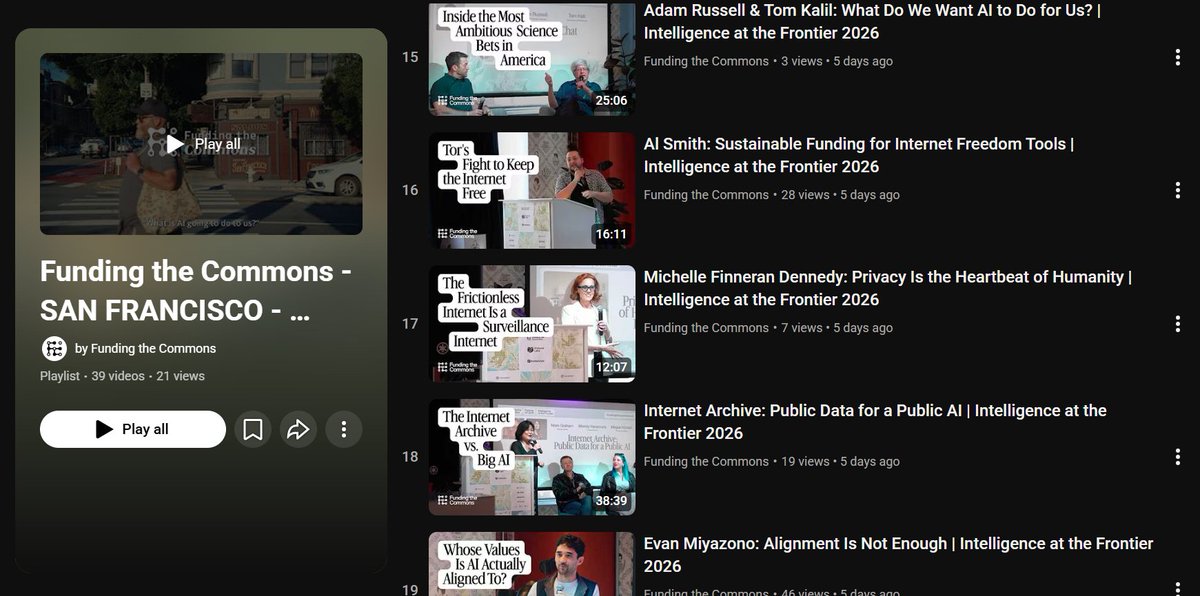
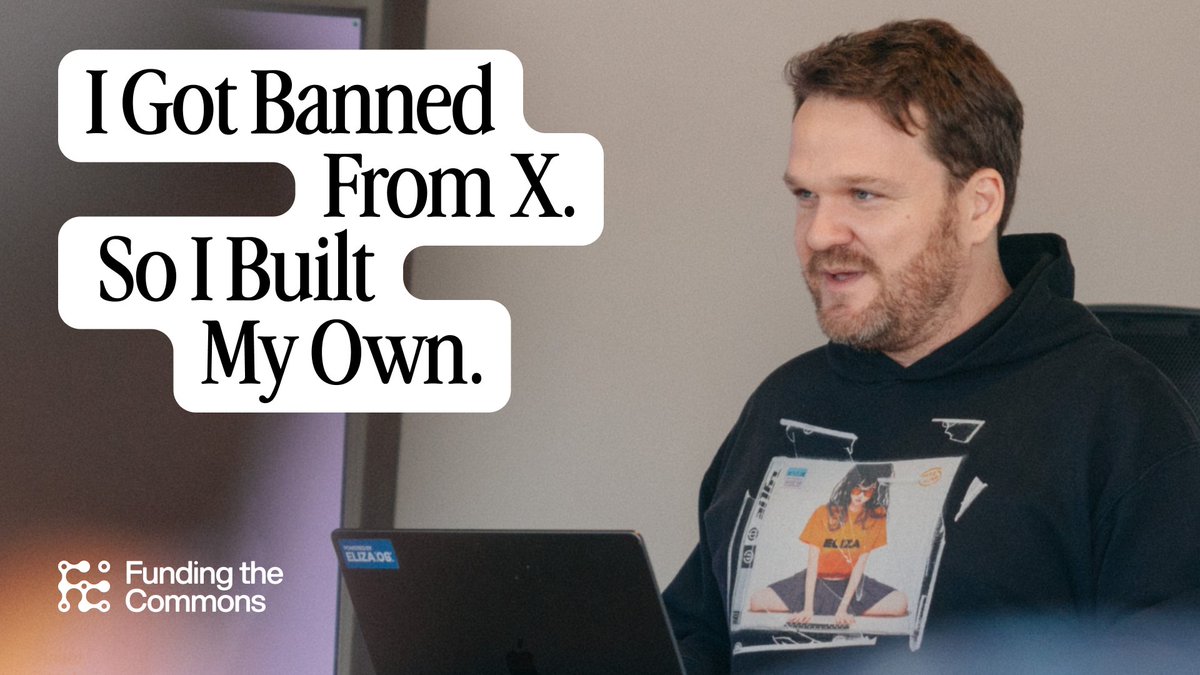
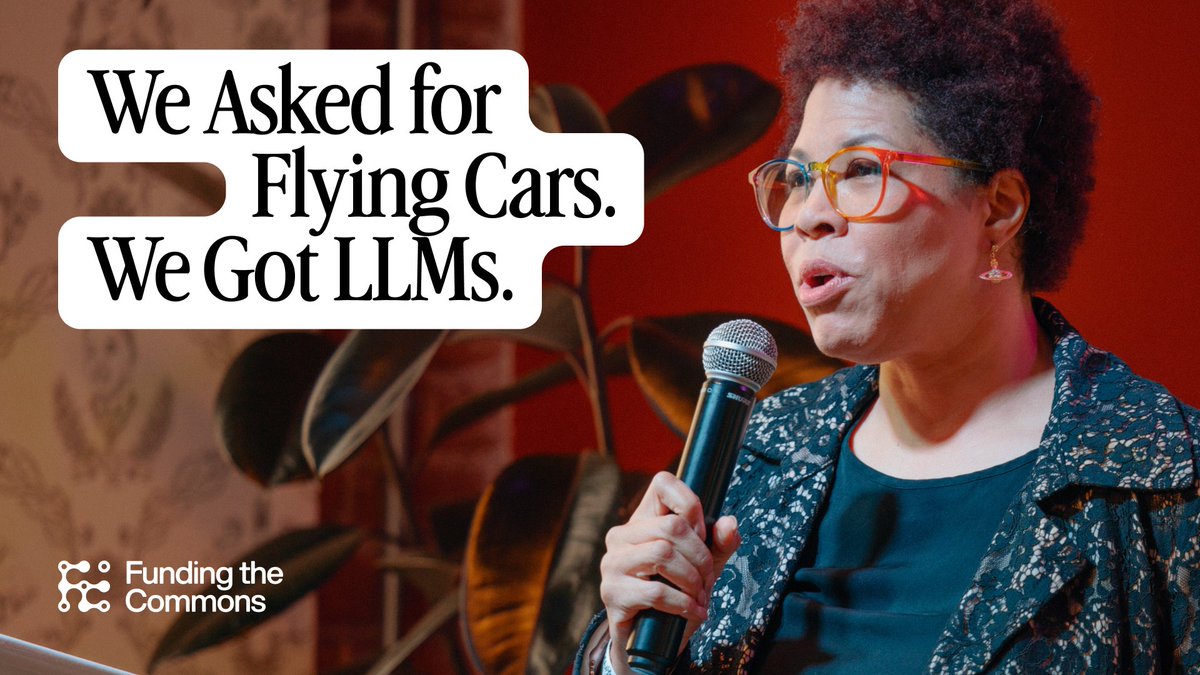
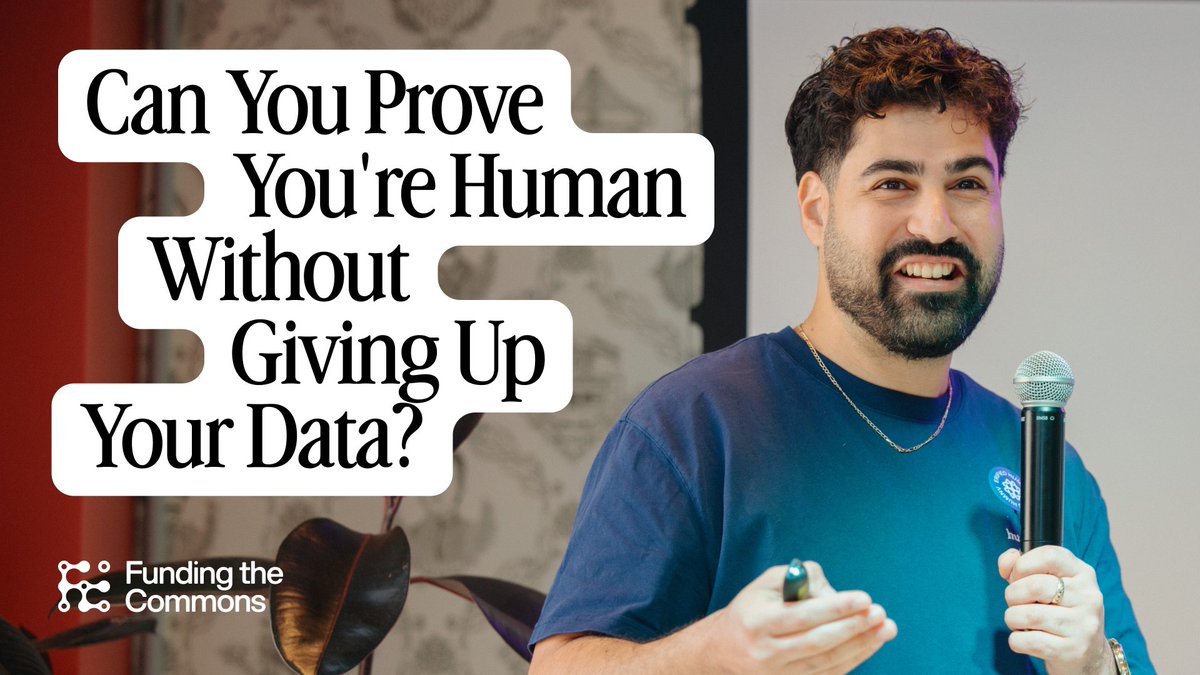
1
8
40
2,000
Apr 15
my time has never been at a higher premium than it has since going all in on ai
my whole life is now an agentic loop, doing what the brain does naturally but now with bits and soon atoms
1
8
122
Apr 14
why are KOLs shilling crypto VCs on the timeline? coordinated or lone actor really wants us to believe crypto is still alive and kicking like the good old days
4
137
S El Damaty retweeted

@EthCC recap is out!
@ConsensysAudits x State of Web3 Security
A snapshot with our main takeaways, what we observed, where AI is heading and thought provoking exchanges - check it out!

1
1
7
196
S El Damaty retweeted

Apr 10
⚡️ THE BLOCKCHAIN HUSTLER
@humntech CEO Shady El Damaty (@hebbianloop) sits down with Alex Bowman (@alexb0wman) at @WalletCon_ 2026 to break down break down ZK identity, AI wallets & 2PC security for #Web3 agents.
Keeping humans “in the loop” in the age of #AI. 🤖 #HumanTech
178
153
177
26,002
S El Damaty retweeted

Apr 9
Forget scanning your eyeballs. Verifiable Oblivious Pseudorandom Functions lets you derive a key from a biometric without revealing the underlying data.
@humntech cofounder @hebbianloop on how VOPRF can be the backbone of trustless proof-of-personhood:
dlnews.com/research/internal…
2
14
2,280
Apr 9
can't believe world coin copy pasta'd our OPRF network @HumnNetwork and branded themselves as "the real human network" lol savage, gotta give it to them
1
6
156
S El Damaty retweeted

Jan 18
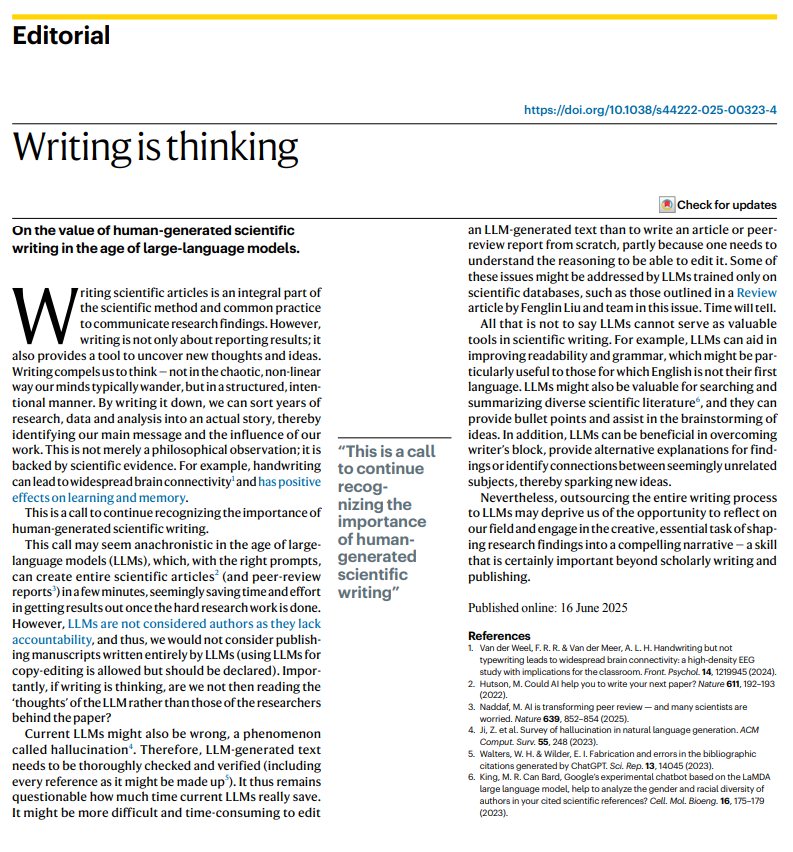
Writing is thinking.
Don't let AI do it all.
126
2,004
9,180
450,070