Improving Long-Term Outcomes Research for Acute Respiratory Failure: Johns Hopkins Outcomes After Critical Illness & Surgery(OACIS) project funded by NIH/NHLBI

Joined June 2017
172 Photos and videos
ImproveLTO retweeted
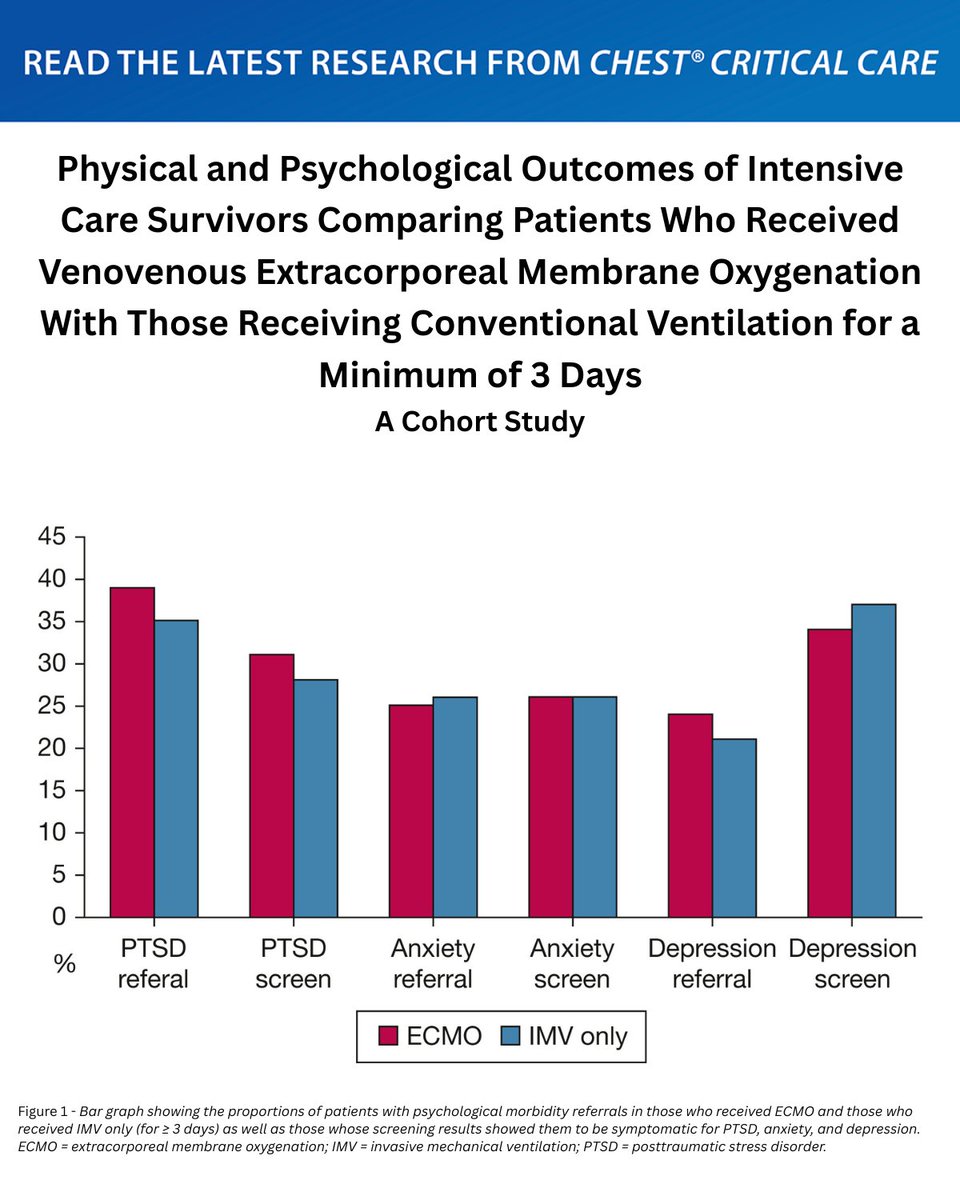
Physical and Psychological Outcomes of Intensive Care Survivors Comparing Patients Who Received Venovenous Extracorporeal Membrane Oxygenation With Those Receiving Conventional Ventilation for a Minimum of 3 Days: A Cohort Study Read more: hubs.la/Q04jMXY-0 #MedEd #JournalCHEST #Journal_CHESTCritCare #CriticalCare #CritCare
6
8
710
ImproveLTO retweeted
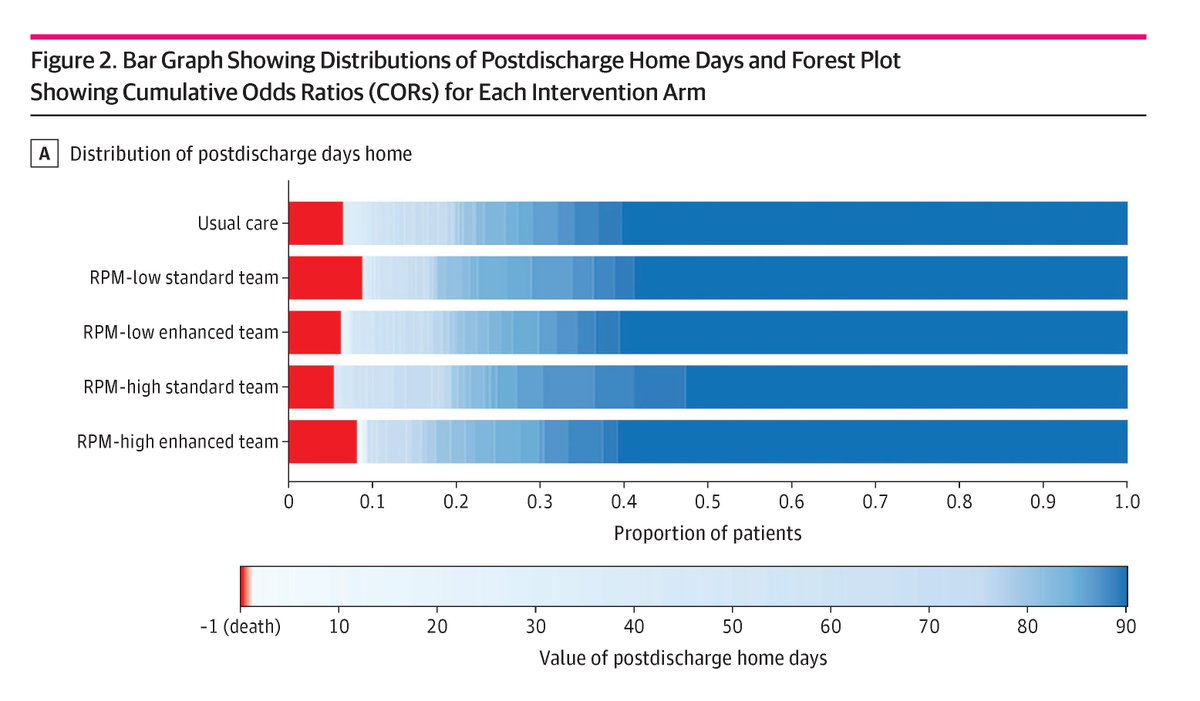
From @JAMANetworkOpen: In a randomized trial, remote monitoring after hospitalization for #sepsis or respiratory infection did not increase home days and reduced home days for adults ≥65 years, compared with usual care. #CCR26 @CritCareReviews ja.ma/3SkzNA0
4
8
2,234
ImproveLTO retweeted
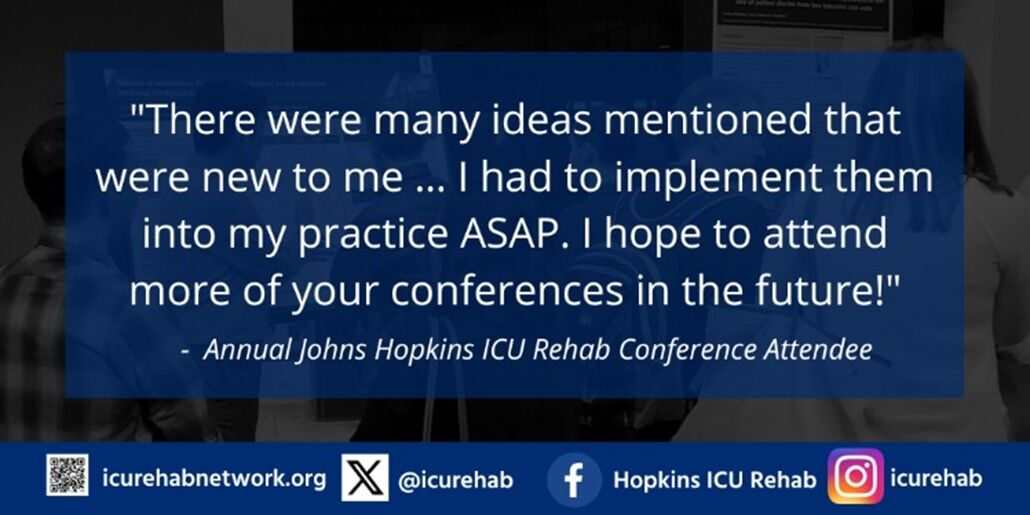
Past attendee comment from @HopkinsMedicine @ICURehab Conference Sponsored by @AcuteCareAPTA All-new content each year! In-Person Conference: Johns Hopkins Hospital Nov 5-6, 2026 Register: ICURehabnetwork.org #ICURehab
3
4
261
ImproveLTO retweeted
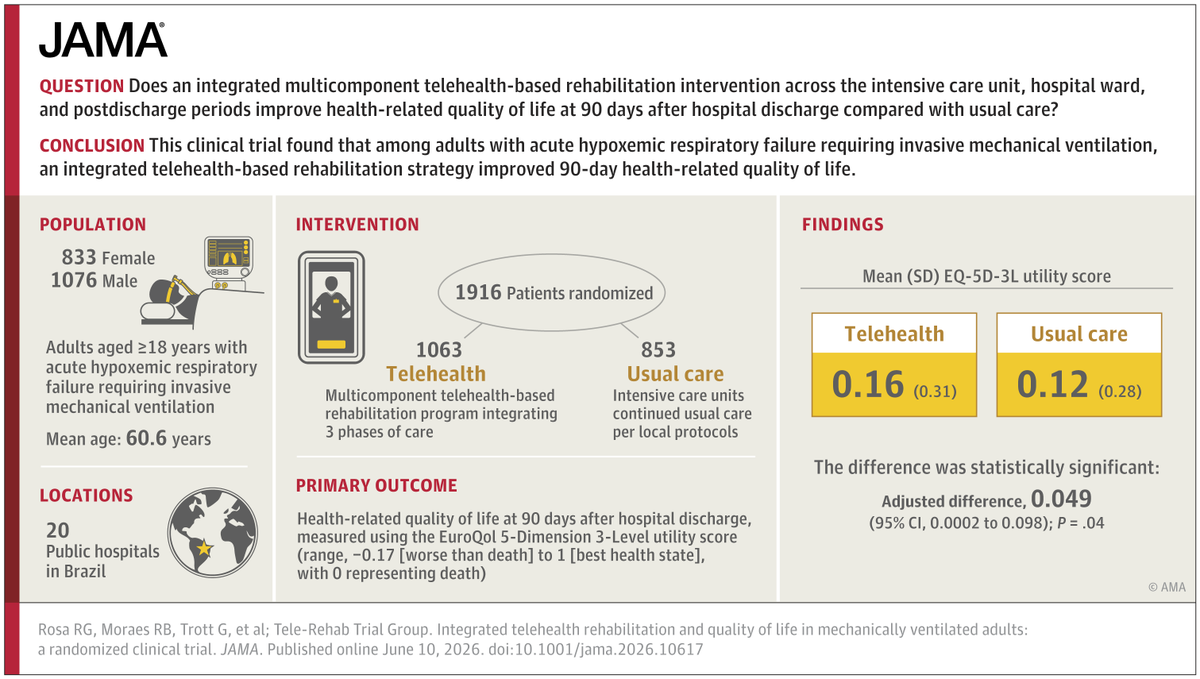
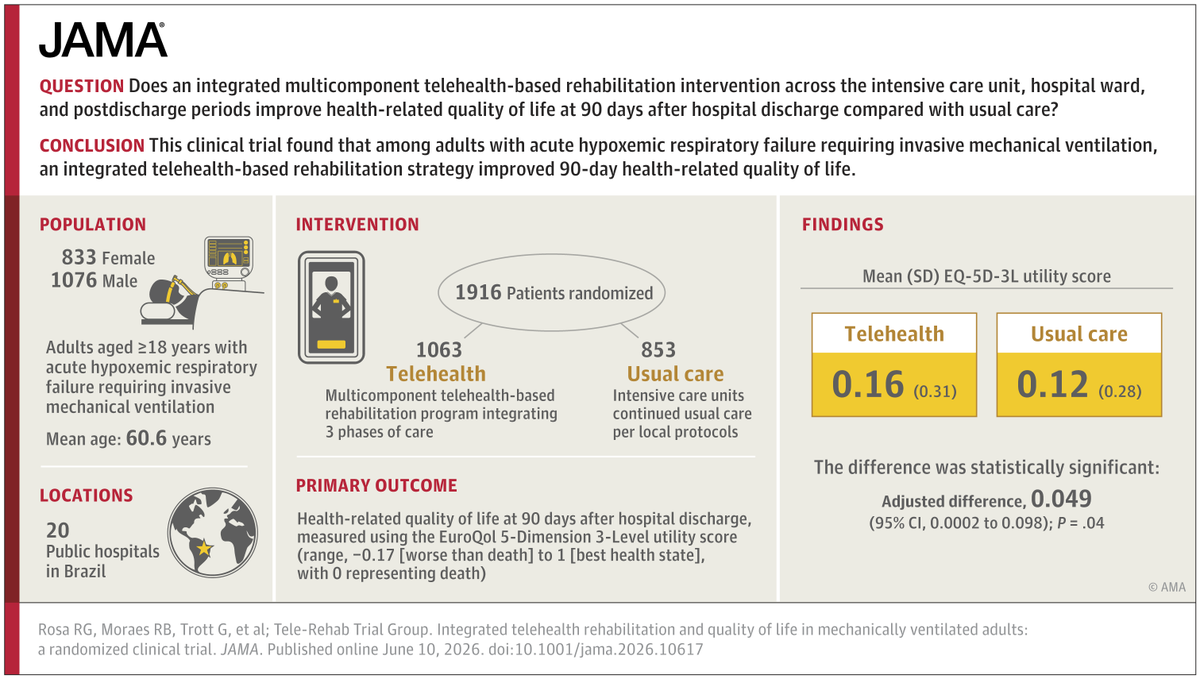
🚨 First positive trial of #CCR26? Just published in @JAMA_current: the #TeleRehabtrial! An integrated telehealth-based rehabilitation strategy for pts with acute hypoxemic respiratory failure improved 90-d health-related quality of life and was associated with lower mortality!
1
16
29
6,604
ImproveLTO retweeted
In adults with acute respiratory failure requiring #MechanicalVentilation, an integrated telehealth-based rehabilitation intervention improved 90-day quality of life and reduced mortality compared with usual care. #CCR26 @CritCareReviews ja.ma/443sVcM
1
5
10
1,913
ImproveLTO retweeted
Surviving the ICU Is Not the Same as Recovering From the ICU A growing body of research on Post-Intensive Care Syndrome, ICU-acquired weakness, delirium, immobility, sleep disruption, and post-discharge function shows that many ICU survivors leave the hospital with physical, cognitive, and emotional problems that follow them home. One overlooked problem is falls. A 2025 prospective observational study in Critical Care Medicine followed adult ICU survivors for 12 months after hospital discharge. Patients were included if they required invasive mechanical ventilation for at least 48 hours and spent at least 4 days in the ICU.1 The findings should make ICU teams, emergency nurses, hospitalists, case managers, physical therapists, pharmacists, and discharge planners rethink how they prepare patients and families for life after critical illness. ResusMed.com/falls-after-icu…
4
9
583
ImproveLTO retweeted
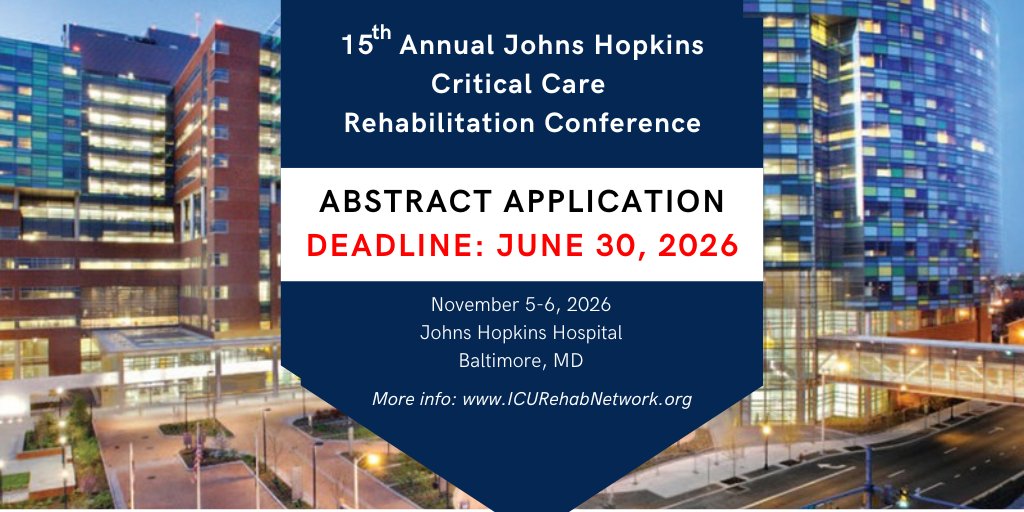
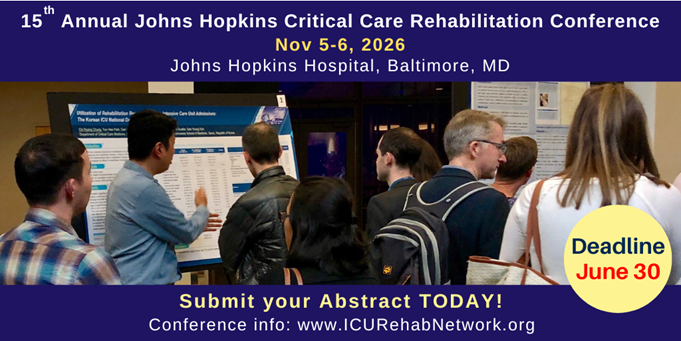
Have you submitted Abstract? 15th Johns Hopkins #ICURehab Conf Nov 5-6, 2026 Johns Hopkins Hospital, Baltimore, MD Deadline: June 30 Info: ICURehabNetwork.org
3
4
224
ImproveLTO retweeted
Jun 10
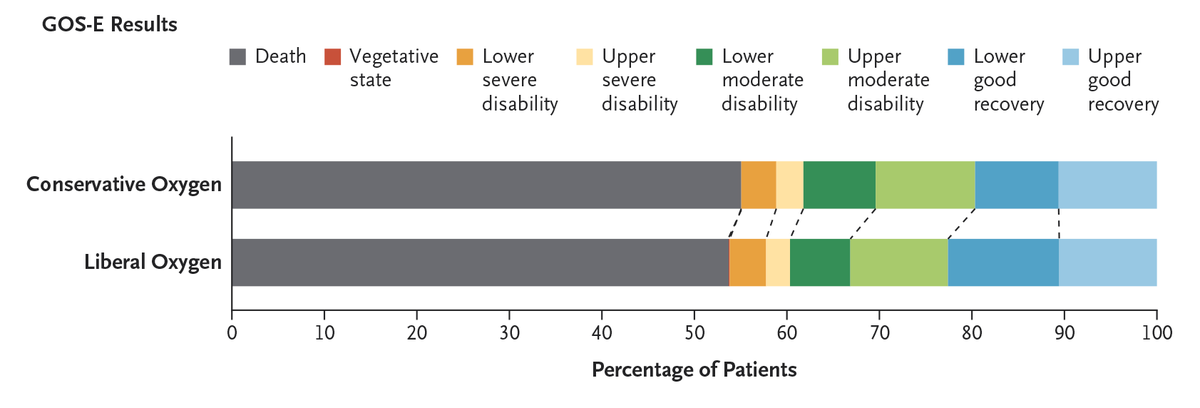
Presented at #CCR26: Among patients who were unresponsive after cardiac arrest, conservative oxygen therapy did not increase 180-day survival with favorable function as compared with liberal oxygen therapy. Full LOGICAL trial results: nej.md/4x7TavY @CritCareReviews
16
49
33,704
ImproveLTO retweeted
We released another ICU DIARY NEWSLETTER summarising latest evidence and providing information about patient- and family-centred care. For free icu-diary.org/News/files/501…
4
10
382
ImproveLTO retweeted
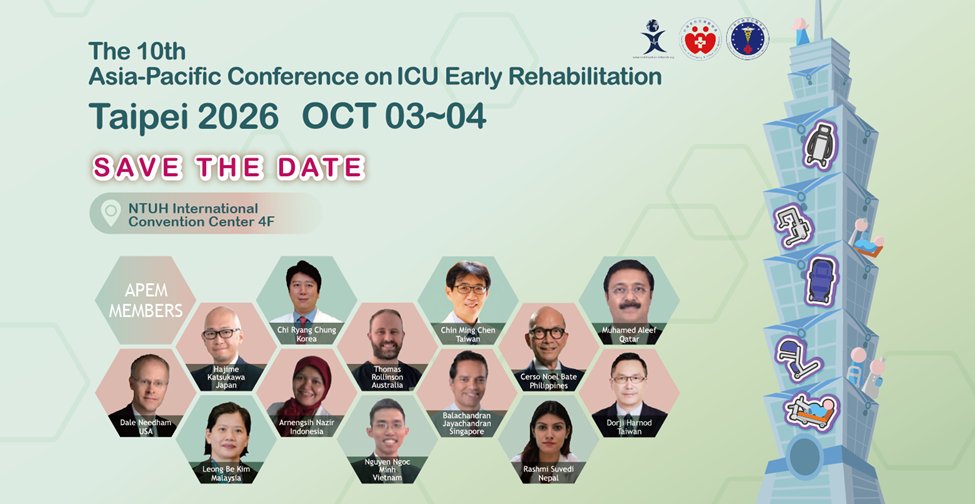
Hear from @DrDaleNeedham, @DrKatzKatsukawa and more… 10th Asia Pacific #ICURehab Conference Oct 3-4, 2026 Taipei, Taiwan Abstract Deadline: June 1 Info: 10th-apem2026.seccm.org.tw/g…
5
7
406
ImproveLTO retweeted
Diagnosis and management of Children with Post-Intensive Care Syndrome in Paediatrics: Clinical Practice Guidelines by the French National Authority for Health (HAS) Thanks to @CritCareReviews sciencedirect.com/science/ar…

4
10
460
ImproveLTO retweeted
Some mornings I wake up afraid to open my eyes, terrified I’m back in Critical Care. That’s the impact it had on me. You leave the unit, but part of it never quite leaves you.
273
263
7,450
53,764
ImproveLTO retweeted
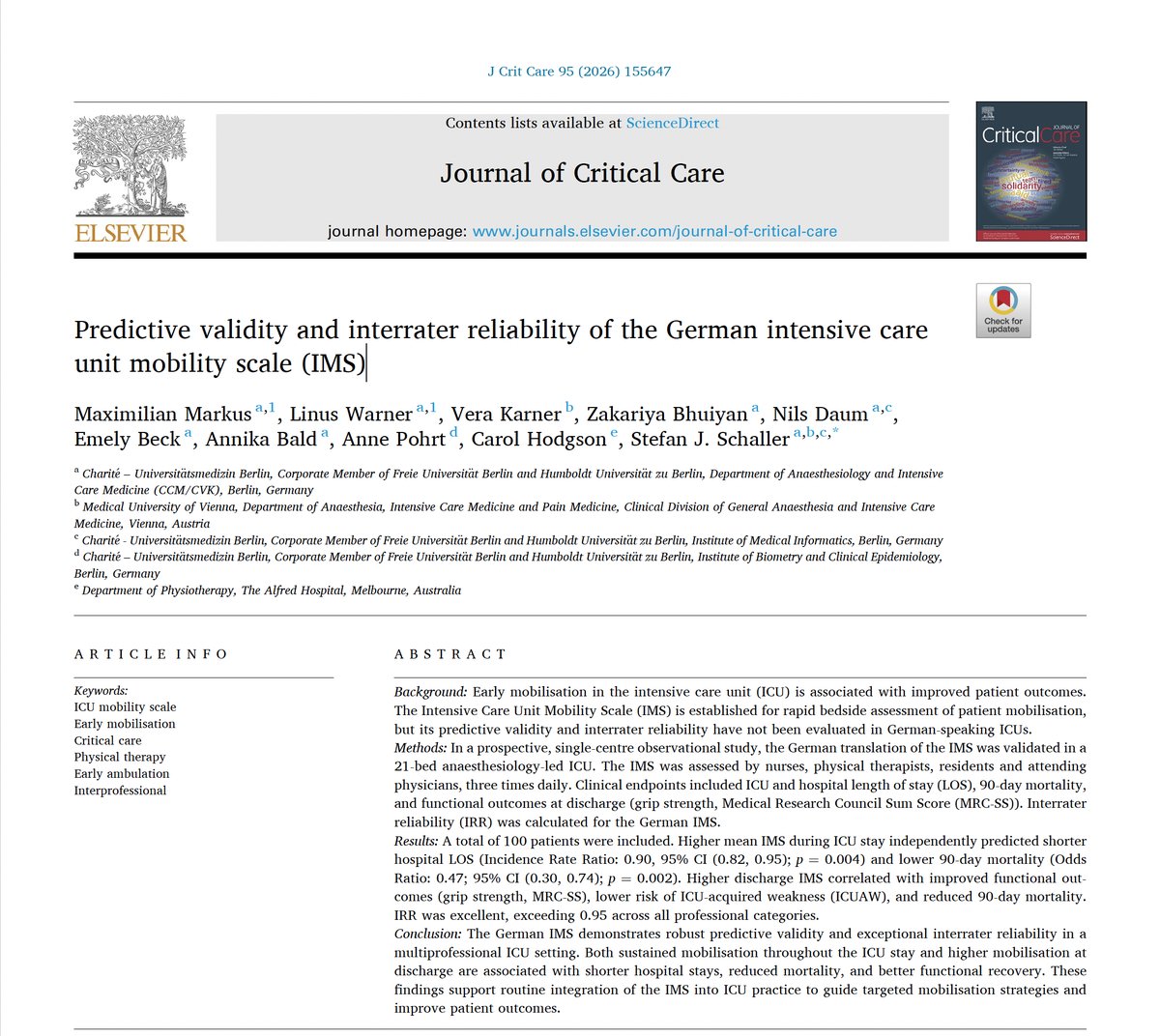
Our paper "Predictive validity and interrater reliability of the German intensive care unit mobility scale (IMS)" is published in the Journal of Critical Care sciencedirect.com/science/ar… @MedUni_Wien @DaumNils @chodgsonANZICRC
6
10
442
ImproveLTO retweeted
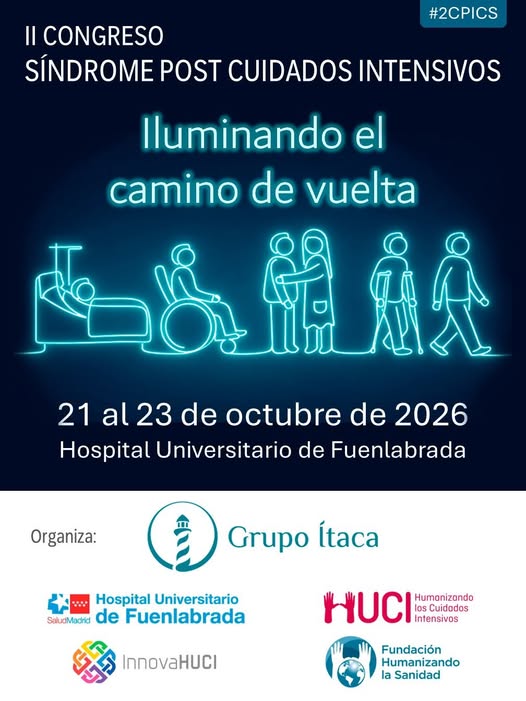
Atención 📢📢📢 Ya disponible la web del 2º Congreso Internacional sobre Síndrome Post UCI #2CPICS "Iluminando el camino de vuelta", que se va a celebrar del 21 al 23 de Octubre en el Hospital Universitario de Fuenlabrada, #Madrid
1
10
12
648
ImproveLTO retweeted
Really important messages below…
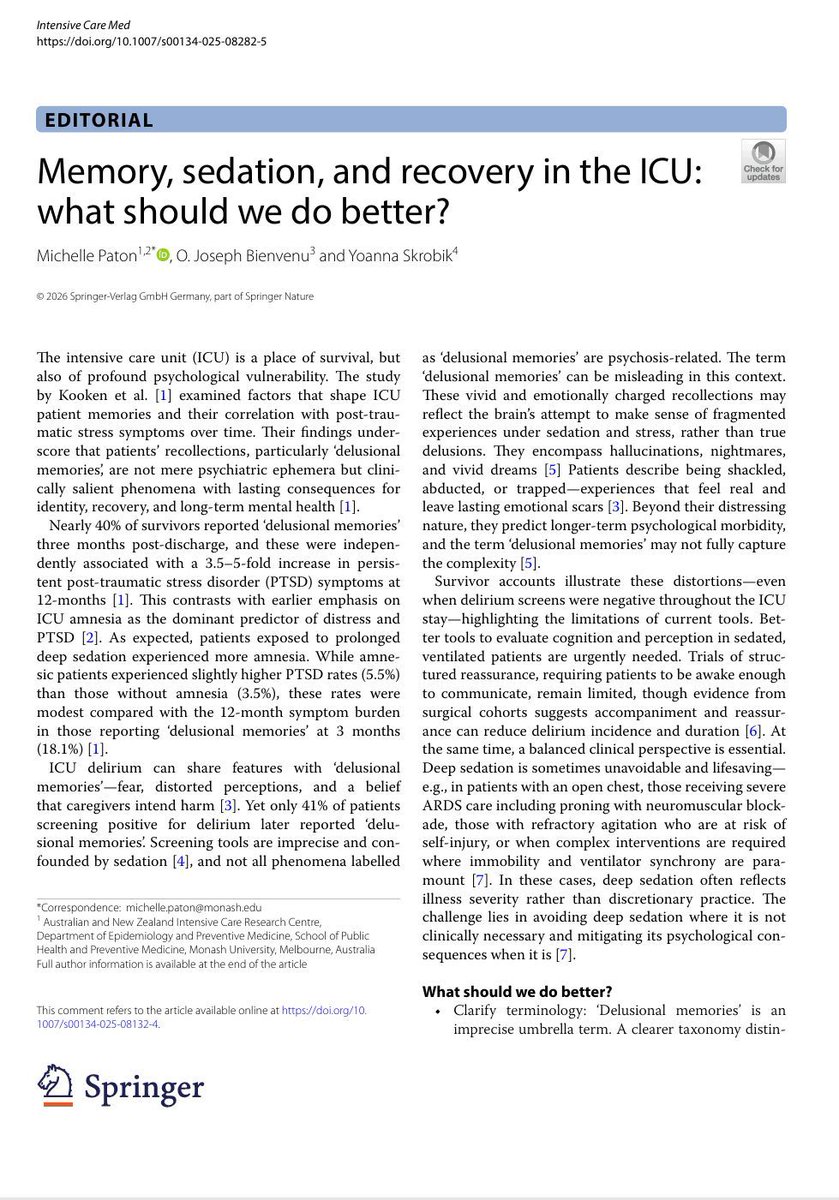
🧠 ICU Survival Is Not Enough: Memory Matters For decades, critical care focused on keeping patients alive. Today, a different question is emerging: What kind of life are we returning survivors to? A thought-provoking 2026 editorial in Intensive Care Medicine reminds us that ICU recovery is not only physica, it is deeply psychological. The article discusses findings showing that nearly 40% of ICU survivors reported "delusional memories" three months after discharge, and these memories were independently associated with a 3.5–5-fold increase in persistent PTSD symptoms at 12 months. Interestingly, ICU amnesia itself was not the strongest predictor of long-term distress. The strongest signal came from vivid, emotionally charged recollections such as: • hallucinations • nightmares • terrifying dreams • feelings of being abducted, trapped, restrained, or harmed Experiences that felt completely real to the patient. The authors challenge the term "delusional memories." Many of these recollections may not represent psychosis at all. Instead, they may reflect the brain's attempt to reconstruct fragmented experiences occurring during: • severe illness • sedation • mechanical ventilation • delirium • extreme physiological stress This editorial also provides an important clinical reminder: Deep sedation is not always a failure of practice. Sometimes it is lifesaving. Patients with: • severe ARDS requiring proning • neuromuscular blockade • refractory agitation • complex life-support interventions may require deep sedation to survive. The challenge is not eliminating deep sedation. The challenge is avoiding it when unnecessary and mitigating its psychological consequences when unavoidable. The authors propose several practical targets for ICU teams: ✅ Analgesia-first strategies ✅ Light sedation whenever feasible ✅ Early communication and reassurance ✅ Early mobilization ✅ ICU diaries documenting the patient's journey ✅ Structured post-ICU follow-up and psychological support One of the strongest messages of this editorial is simple: Memory is a vital sign of recovery. As intensivists, we routinely monitor blood pressure, oxygenation, renal function, and ventilation. Perhaps we should pay equal attention to the memories we leave behind. Because surviving critical illness is only the beginning. Helping patients make sense of what happened may be just as important as helping them survive it. Reference Paton M, Bienvenu OJ, Skrobik Y. Memory, sedation, and recovery in the ICU: what should we do better? Intensive Care Medicine. 2026. #CriticalCare #ICU #Delirium #Sedation #MechanicalVentilation #PICS #PostICUSyndrome #MentalHealth #CriticalCareMedicine #IntensiveCare #ICURecovery #PatientCenteredCare
7
12
868
ImproveLTO retweeted
Reminder: June 30, 2026 is the abstract submission deadline for the 15th @HopkinsMedicine @ICURehab Conference! ICURehabnetwork.org #delirium

📷Important Deadline for @NIDUS_Delirium-supported event! The 15th @HopkinsMedicine @ICURehab Conference Abstract deadline: June 30, 2026 In-Person Conference: Johns Hopkins Hospital, Nov 5-6, 2026 Register & Info: ICURehabnetwork.org #delirium
4
6
704
ImproveLTO retweeted
🧠 ICU Survival Is Not Enough: Memory Matters For decades, critical care focused on keeping patients alive. Today, a different question is emerging: What kind of life are we returning survivors to? A thought-provoking 2026 editorial in Intensive Care Medicine reminds us that ICU recovery is not only physica, it is deeply psychological. The article discusses findings showing that nearly 40% of ICU survivors reported "delusional memories" three months after discharge, and these memories were independently associated with a 3.5–5-fold increase in persistent PTSD symptoms at 12 months. Interestingly, ICU amnesia itself was not the strongest predictor of long-term distress. The strongest signal came from vivid, emotionally charged recollections such as: • hallucinations • nightmares • terrifying dreams • feelings of being abducted, trapped, restrained, or harmed Experiences that felt completely real to the patient. The authors challenge the term "delusional memories." Many of these recollections may not represent psychosis at all. Instead, they may reflect the brain's attempt to reconstruct fragmented experiences occurring during: • severe illness • sedation • mechanical ventilation • delirium • extreme physiological stress This editorial also provides an important clinical reminder: Deep sedation is not always a failure of practice. Sometimes it is lifesaving. Patients with: • severe ARDS requiring proning • neuromuscular blockade • refractory agitation • complex life-support interventions may require deep sedation to survive. The challenge is not eliminating deep sedation. The challenge is avoiding it when unnecessary and mitigating its psychological consequences when unavoidable. The authors propose several practical targets for ICU teams: ✅ Analgesia-first strategies ✅ Light sedation whenever feasible ✅ Early communication and reassurance ✅ Early mobilization ✅ ICU diaries documenting the patient's journey ✅ Structured post-ICU follow-up and psychological support One of the strongest messages of this editorial is simple: Memory is a vital sign of recovery. As intensivists, we routinely monitor blood pressure, oxygenation, renal function, and ventilation. Perhaps we should pay equal attention to the memories we leave behind. Because surviving critical illness is only the beginning. Helping patients make sense of what happened may be just as important as helping them survive it. Reference Paton M, Bienvenu OJ, Skrobik Y. Memory, sedation, and recovery in the ICU: what should we do better? Intensive Care Medicine. 2026. #CriticalCare #ICU #Delirium #Sedation #MechanicalVentilation #PICS #PostICUSyndrome #MentalHealth #CriticalCareMedicine #IntensiveCare #ICURecovery #PatientCenteredCare
23
66
4,631
ImproveLTO retweeted
Submit Abstract NOW! Oral & poster presentations 15th Johns Hopkins #ICURehab Conference Details in graphic Nov 5-6, 2026 Info: ICURehabNetwork.org
4
5
368