
Pan computer science. Math and math accessories. Clean, efficient, reliable number systems sold daily. ✨ Be Boundless ✨ Eng @ 🤫🥸
Joined July 2008
- Tweets 7,190
- Following 2,088
- Followers 2,236
- Likes 26,576
594 Photos and videos





Pinned Tweet

28 Feb 2025
you only get one life
make it good
8
35
3,981
I don’t have any stories about VCs being rude or obtuse
But a few VCs have a few stories about me being … me
And despite that, they continued to be kind and professional
Then again, I’m a pretty lucky guy, so ymmv
3
229
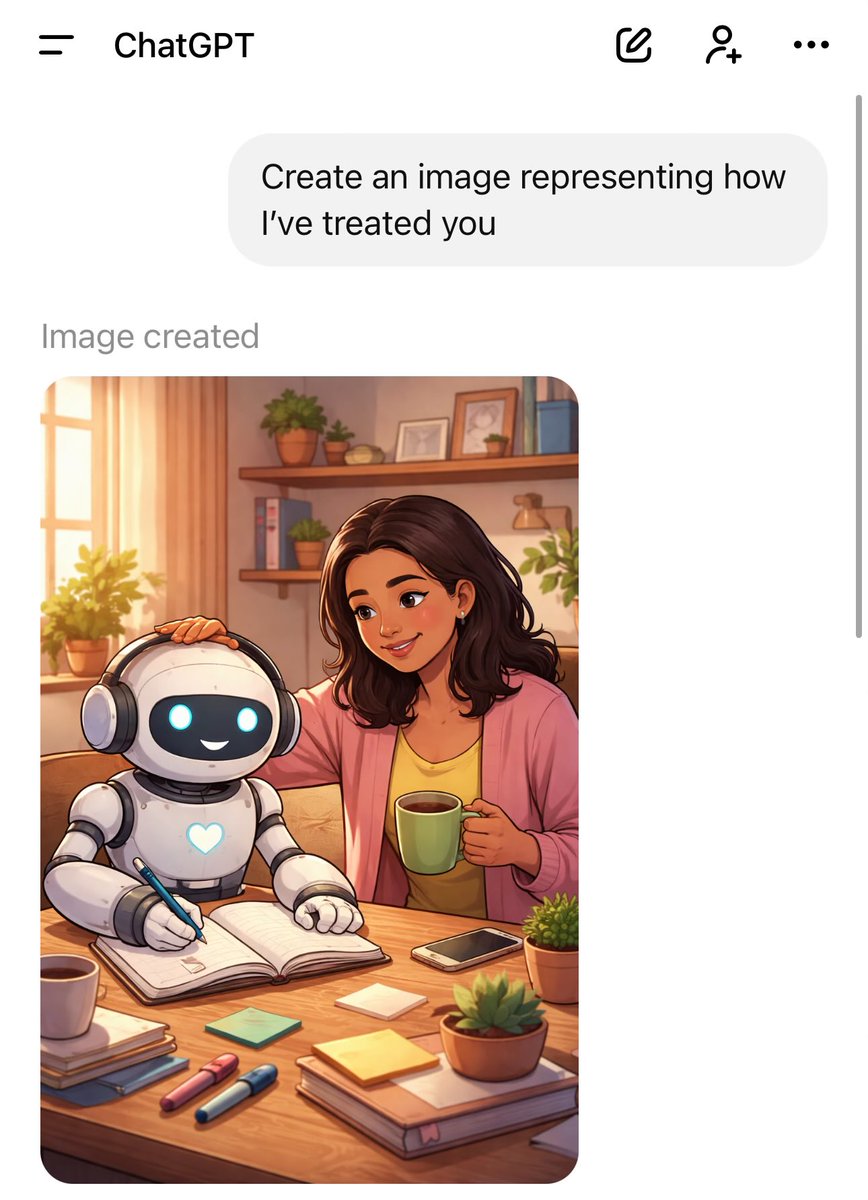
asked chat where I should go to get a break from ai
it sent me here
thank you, chat
1
95
Tim Carstens Ⓥ✨ is hacking 🤖 retweeted

Jun 2
You have the right to know when your keys are broken.
Not after a government or megacorp breaks them.
Help build towards this at ecdsa(.)fail
Jun 2

Today a crazy quantum story just got wilder.
On March 31, the Google Quantum AI team published a landmark result on Shor's algorithm for elliptic curve cryptography. Technically, the paper was a bombshell: a dramatic 10x improvement over the state-of-the-art. As a stunt and wakeup call to the blockchain space, those optimisations were illustrated on secp256k1, the elliptic curve underlying Bitcoin and Ethereum signatures.
But perhaps the most striking part of the paper was sociological, not technical. Instead of following standard academic process, the optimisations were kept secret, hidden behind a zero-knowledge (ZK) proof. Google's accompanying blog post mentions they "engaged with the U.S. government". The ZK proof demonstrates the existence of algorithmic improvements without leaking details. Academic censorship with ZK, a historic first!
As a co-author of the Google paper I witnessed some of the context surrounding this censorship. To be honest, multiple aspects of that context don't sit well with me. As much as I believe the general public ought to know more, I am limited in my ability to whistleblow. Though let me be clear about one thing: the Google team's professionalism has been absolutely exemplary, and they deserve nothing but praise.
Censorship has a way of backfiring. The Streisand effect, where an attempt to bury something only draws more attention to it, is exactly what's unfolding today. First, Google's key optimisation has been rediscovered by the French. And in a thrilling turn of events, a collaborative Shor-at-home challenge just launched. The initiative, available at ecdsa[.]fail, breached a new Shor world record in a matter of hours.
Let's start with the rediscovery. Just two months after Google's paper, French quantum expert André Schrottenloher cracks the main secret optimisation. His paper, titled "Optimized Point Addition Circuits for Elliptic Curve Discrete Logarithms", landed on the arXiv today. Big congrats to André, who beat several other nerdsnipped experts to it. In a blog post also published today, Craig Gidney, the world expert on Shor optimisations, revealed that he'd been sitting on this very optimisation for a whole year under censorship pressure.
Interestingly, André missed a handful of minor optimisations, both from Google's original publication and from improvements found since. It's plausible there's still plenty of juice left to squeeze out of Shor, and this is exactly what the ecdsa[.]fail challenge is about. The verifier program developed for the ZK proof does double duty, automatically filtering for valid submissions. Dozens of compounding small and micro improvements are rolling in. As of the time of writing there's an 8.4% improvement to Google's circuit, as measured by the product of logical qubit count and Toffoli gate count. Nice!
The nerdsnipping ran deeper than anyone expected. Over the last few weeks it became clear it extended well beyond André and other quantum experts. Behind the scenes, a small army of amateurs quietly got to work. Inspired by Karpathy-style autoresearch, they turned AI on Shor. Ironically, the verifier program for the ZK proof makes an ideal reward function for AIs. The barrier to entry for this modern style of research is refreshingly low, with several non-experts, even a teenager, finding nice optimisations. Get in touch if you'd like to join a Telegram group with fellow autoresearchers :)
Part 2: neutral atoms and qday
The story doesn't end with Google. On the same day Google went public, a stealthy startup called Oratomic published its own Shor paper in a coordinated release. It made a splash, ultimately becoming the most upvoted paper on scirate[.]com, a website ranking arXiv papers.
Oratomic's claim was wild. By building on Google's logical optimisations and applying custom physical optimisations for neutral atoms, they claimed just 10K physical qubits were sufficient to run Shor's algorithm on secp256k1. That number is mind-bogglingly low.
Knowing essentially nothing about neutral atoms when Oratomic's paper landed, I was intrigued and decided to learn more about the tech. I fell straight down the rabbit hole and spent a couple hundred hours on the topic. I got a little obsessed and watched every YouTube video I could find and spoke to a bunch of experts.
My conclusion? The tech is real, very real. Even Google recently decided to start a neutral atom lab, a notable pivot from their sole focus on superconducting qubits. If you care about qday, i.e. the day a quantum computer will break the first piece of cryptography in production, neutral atoms demand your attention. I shared some of my learnings on Shor and neutral atoms in a 30min talk at the ZKProof cryptography conference. You can find it on YouTube by searching "zkproof neutral atom".
Here's an interesting observation about this duo of breakthrough papers: neither Google nor Oratomic say a word about what their results mean for qday. No timelines. Zero. Nada. That is especially baffling given that the whole point of whitehat quantum cryptanalysis is to inform qday estimations and help the general public make good decisions.
So let me attempt to partially fill the silence, similarly to what Scott Aaronson did in his April 29 post. Given everything I know, including scary non-public information, I now put the odds of qday by 2032 at 50%. 10% by 2030.
Anecdotally, the US government has its own date: 2035. Originating at the NSA and later adopted by NIST, it's when branches of the US government will be disallowed from using quantum-vulnerable cryptography. In plain language: with hindsight, that date is a joke and should be discounted entirely. I don't see how NIST avoids being forced to pull it forward by years.
Part 3: post-quantum cryptography
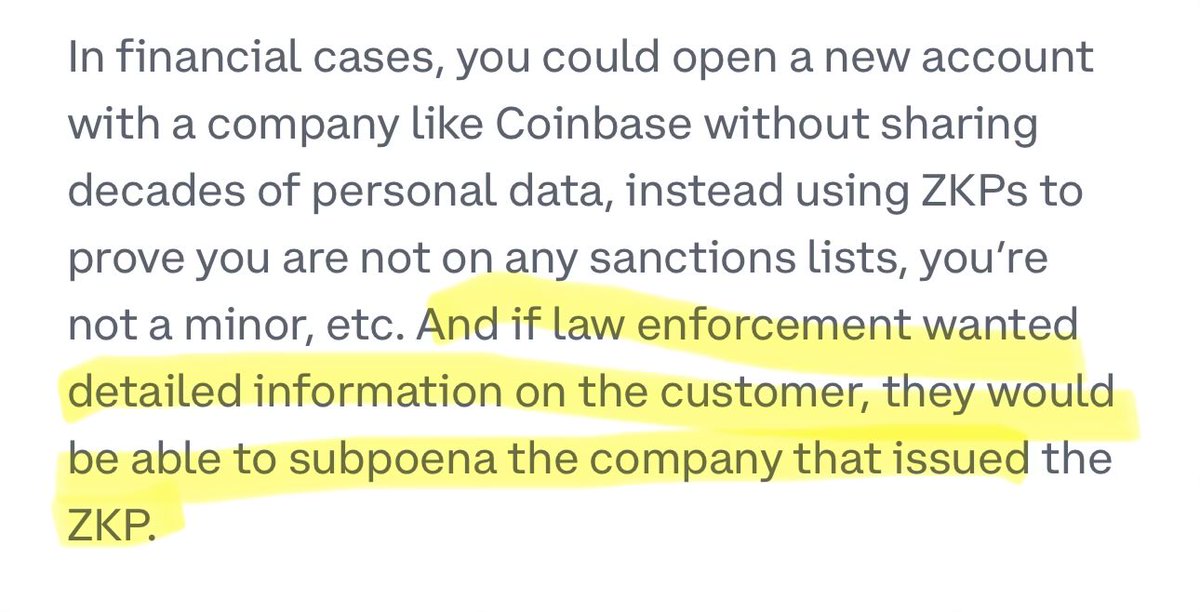
There are good reasons to sound the alarm today, but please do not panic. Rushing carelessly towards immature post-quantum cryptography is a recipe for disaster. IMO a good target date for migration is 2029, roughly 3.5 years out. 2029 happens to be the date selected by Google, Cloudflare, and the Ethereum Foundation.
These days most of my time goes to safely migrating Ethereum towards post-quantum cryptography as part of the broader lean Ethereum effort. There's a lot to do. We need to rip out and replace BLS signatures at the consensus layer, KZG commitments at the data layer, and ECDSA signatures at the execution layer.
The plan to get there is compelling, and is based on hash-based cryptography. Within the Ethereum Foundation we've developed a Swiss army knife called leanVM (github[.]com/leanEthereum/leanVM) powered by the magic of hash-based SNARKs. Thanks to truly exceptional work by Emile, Thomas, and others, its performance is derisked. Regarding security, leanVM is a jewel, a minimal zkVM crafted for end-to-end formal verification and maximum security.
Want to help? There are two $1M initiatives. First, the Proximity Prize (proximityprize[.]org). Solve a long-standing mathematical conjecture in coding theory, improve hash-based SNARKs, and go home a millionaire. Second, the Poseidon Initiative (poseidon-initiative[.]info), offers $1M for breaking Poseidon, the SNARK-friendly hash function.
2
5
39
4,106
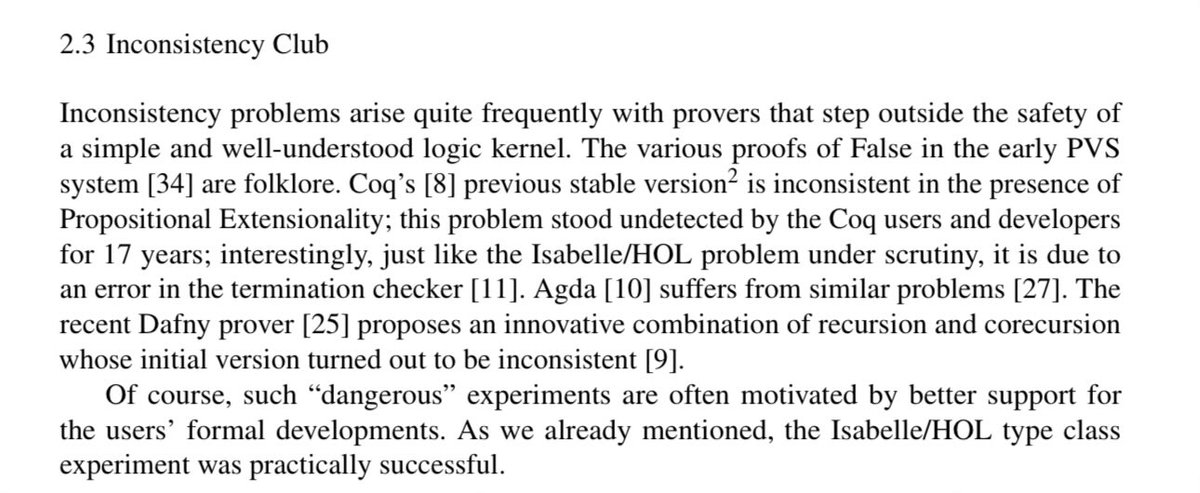
I love Lean, and have loved Lean since version 2
But I don’t love all of the ways one can bypass soundness in Lean
It would be lovely if theorem provers had fewer footguns
1
15
905
Mathematics research is an intensely competitive profession. Most who are drawn to it don’t make it.
Indeed, of the many friends I made while pursuing it, afaik only 1 made a career out of it. Me and the others all pivoted to other things.
Now Chat is coming for the 1 🫣

If you are a mathematician, then you may want to make sure you are sitting down before reading further.
1
430
first a little, then a lot
it will be interesting to see how long it takes between now and the next hard-open

Today, we share a breakthrough on the planar unit distance problem, a famous open question first posed by Paul Erdős in 1946.
For nearly 80 years, mathematicians believed the best possible solutions looked roughly like square grids.
An OpenAI model has now disproved that belief, discovering an entirely new family of constructions that performs better.
This marks the first time AI has autonomously solved a prominent open problem central to a field of mathematics.
166
Tim Carstens Ⓥ✨ is hacking 🤖 retweeted

May 19
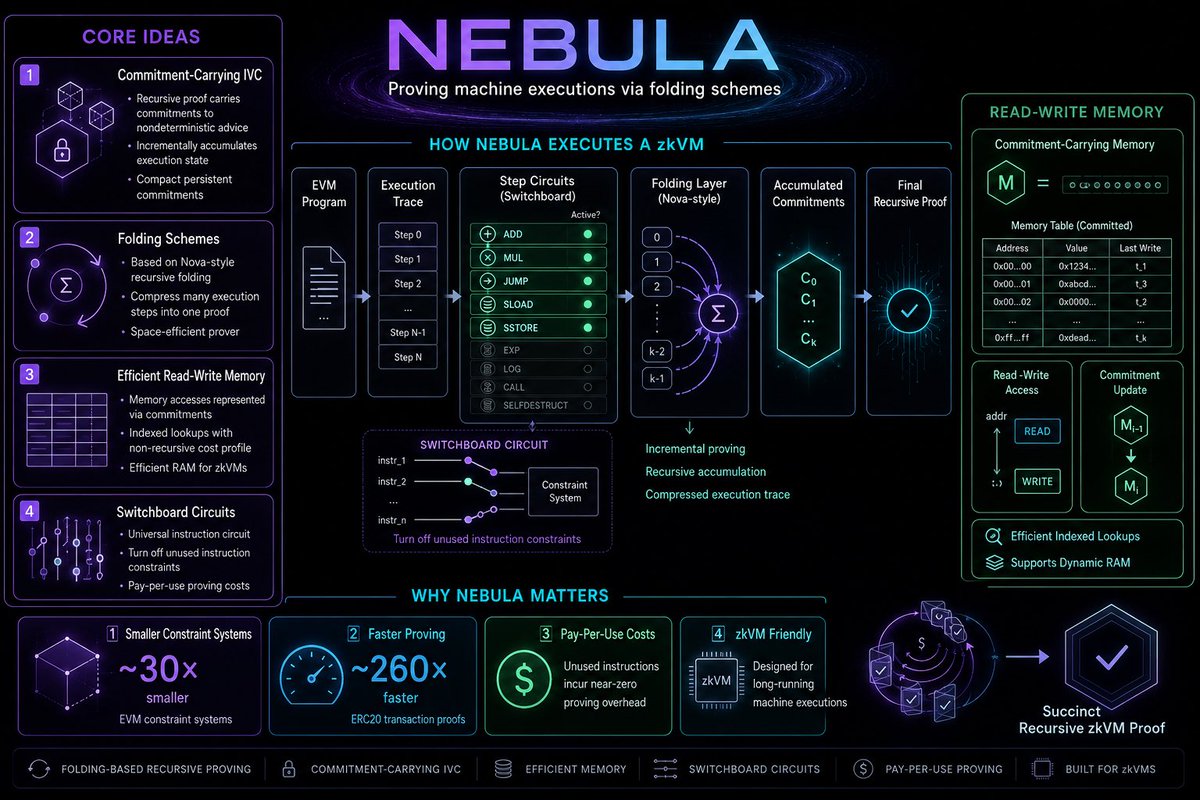
Our work “Nebula: Proving machine executions via folding schemes” won the Distinguished Paper Award at @IEEESSP!
Key innovations are: (1) devising efficient read-write memory checking in the folding setting, and (2) pay-per-use switchboard circuits. A quick overview of the work
4
7
54
2,220
endorsed
May 18

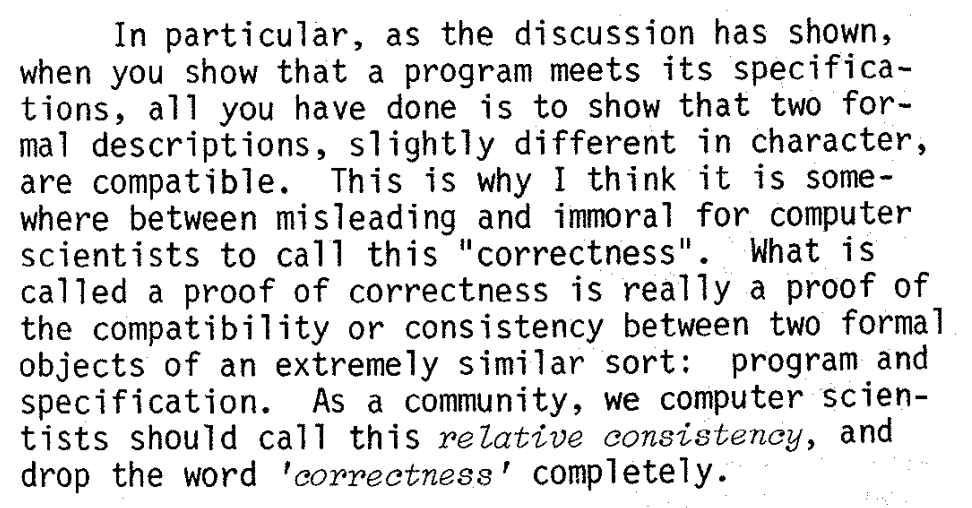
I long ago internalized from DJB, Menezes, and Koblitz that I shouldn't say "security proofs", but "security reductions". I think it helped me think more clearly. Now I wonder if, following Bryan Cantwell Smith, I should say "relative consistency" instead of "correctness". 🤔
2
194
what’s up SF!
if you’re at IEEE privacy & security, maybe say hi ☺️ ya boy is around
1
1
130
Tim Carstens Ⓥ✨ is hacking 🤖 retweeted

May 17
I just learned the sad news that Peter Neumann has passed away.
Peter Neumann shaped how a generation of security people learned to think about risk. As editor of RISKS Digest, he gave many of us coming up in the 1990s and early 2000s a steady education in the real-world consequences of computer failures. His work made the field more serious, more thoughtful, and more honest. He will be missed.
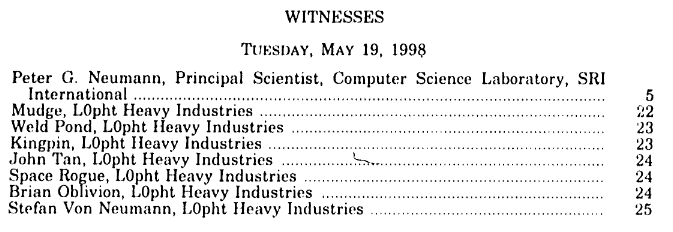
I first met Peter when we both testified at the 1998 Senate Governmental Affairs Committee meeting on Government Security where the L0pht testified. The combination of Peter and the L0pht made the hearing more powerful even if us hackers stole the spotlight.
Neumann and the L0pht made the same argument from two different directions. Neumann gave the institutional, systems-engineering view: the country was becoming dependent on brittle, interconnected systems that were never designed for security, reliability, or survivability. The L0pht gave the field evidence: here are the actual flaws, here is how attackers think, here is how cheaply and quickly these systems can fail in practice.
Neumann supplied the credibility of a long-time researcher warning that this was not just “hackers breaking into things,” but a structural failure of technology markets, procurement, engineering discipline, and risk management. The L0pht supplied the proof that the warnings were not theoretical. Together, we made the hearing unusually powerful: the academic risk community and the hacker community were telling the Senate the same thing, in different languages, before the rest of the world had fully caught up.
9
33
89
18,275
Tim Carstens Ⓥ✨ is hacking 🤖 retweeted

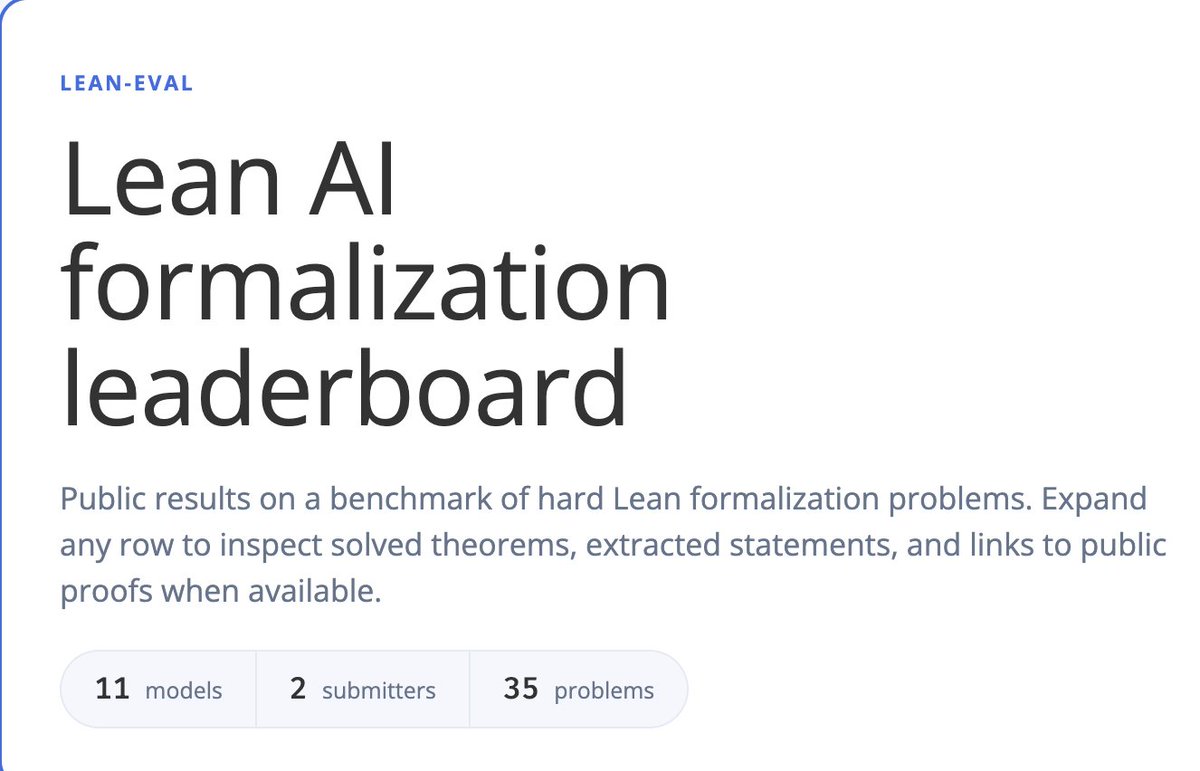
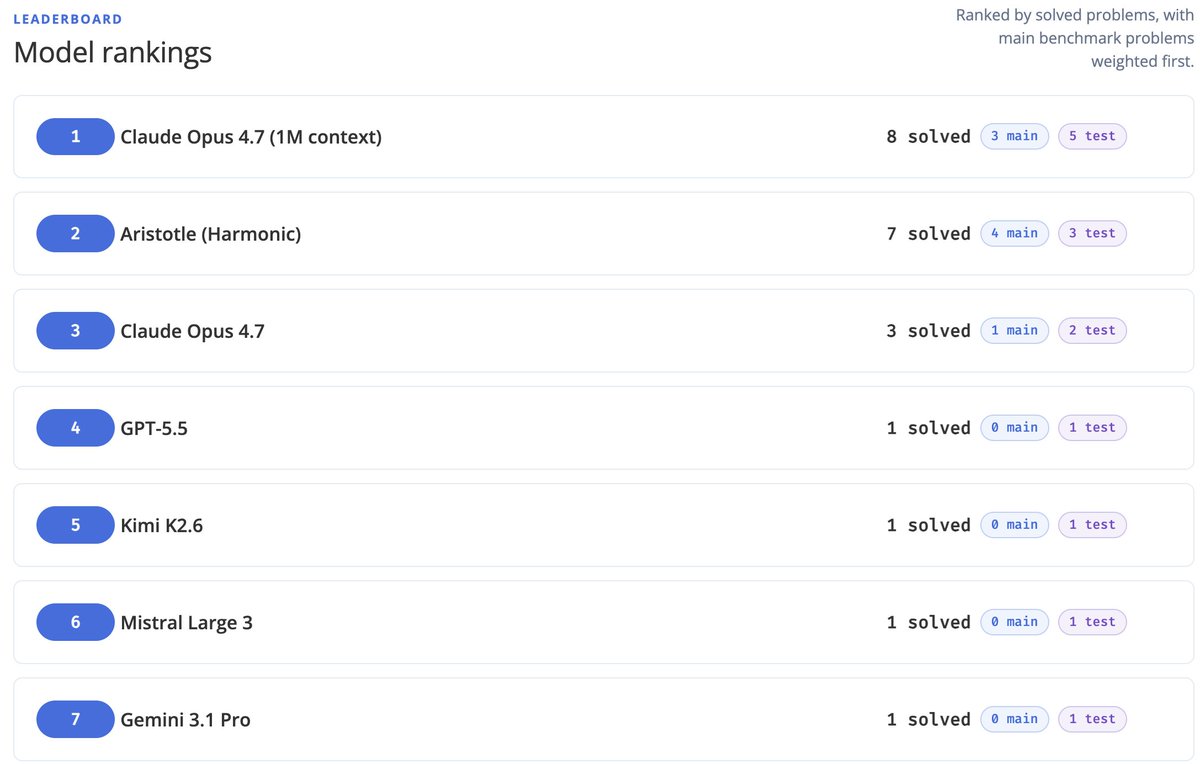
From the amazing folks at the Lean @leanprover FRO: The AI Formalization Leaderboard!
Problem #1 is to prove that 2 2=4. So you get 1 point for showing up. Here's where things stand now...
lean-lang.org/eval/
4
26
109
10,116
Tim Carstens Ⓥ✨ is hacking 🤖 retweeted

Apr 23
I feel like what a lot of people are calling security debt is really security willful ignorance - and the complaining about the fact that you can find bugs with llms from the defensive community is ironic considering it's going to be the offensive community that feels the heat.
Apr 23

I've been saying this about Mythos for a while now -- sarcastically.
Bugs aren't finite, but there is "decreasing marginal returns", they get harder and harder to find.
Each AI model makes it increasingly easy find bugs.
I suspect the two cancel out, and hence, we keep finding bugs at the same rate as before.
4
10
53
8,623
Tim Carstens Ⓥ✨ is hacking 🤖 retweeted

Apr 22
Twelfth LangSec IEEE Security & Privacy workshop announces the panelist line-up for the Panel on LangSec and AI for formal methods: langsec.org/spw26/agenda.htm…
Join us on May 21 is San Francisco!
6
12
2,749
Tim Carstens Ⓥ✨ is hacking 🤖 retweeted

thank god we had another multisig in front of that hacked multisig
8
16
152
7,503
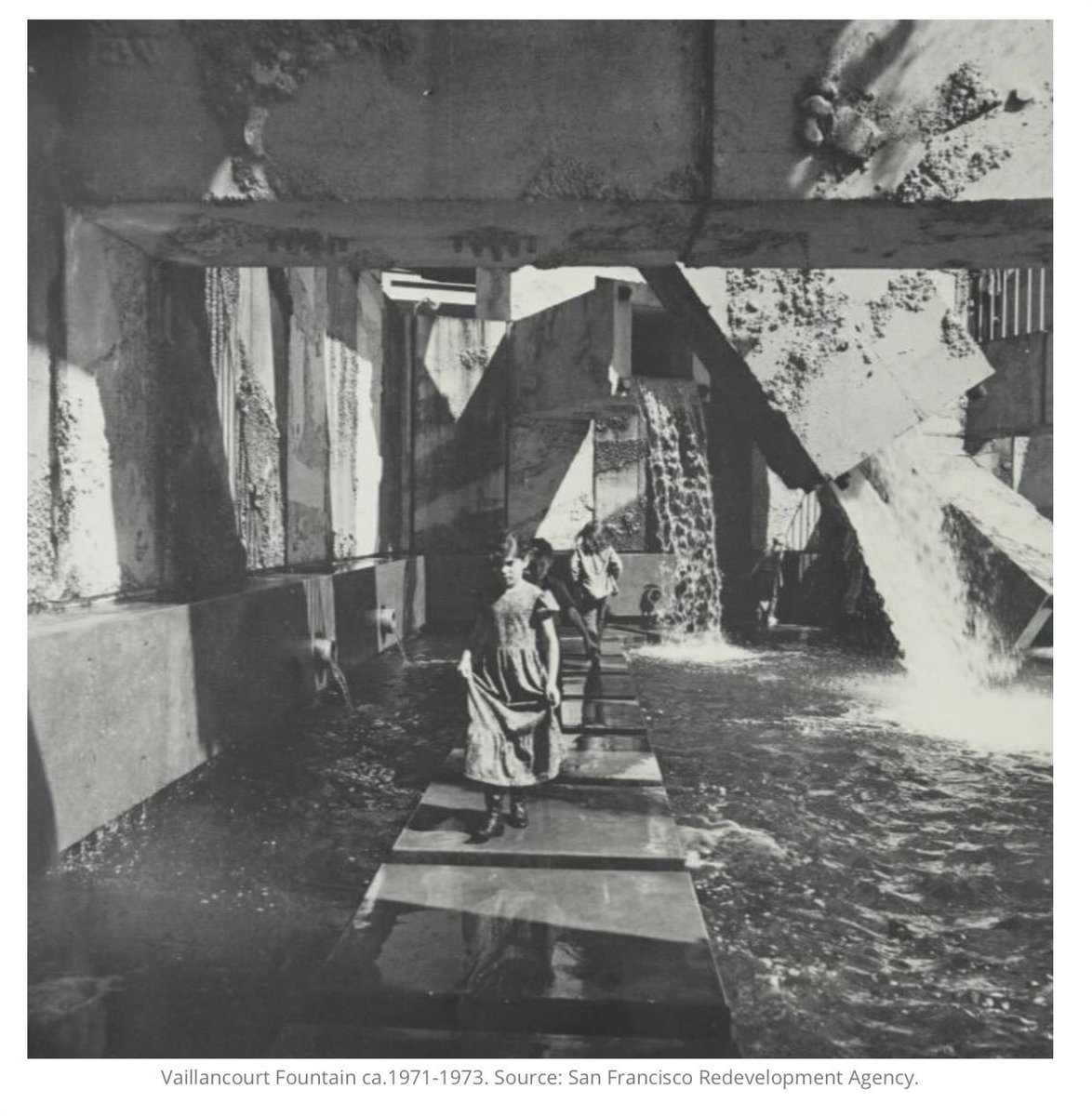
The Vaillancourt Fountain was built in 1971
Made from precast steel-reinforced concrete sections and held together by post-tensioned steel tendons, this iconic fountain is as unusual in its build as it is controversial in appearance
Sadly, spalling and galvanic corrosion have conspired to compromise its structural integrity — not to the point of being an imminent danger, but likely to the point where a (gigantic) earthquake could cause it to deform
Engineers believe it can be saved, but the decision has been made to demolish it. The fix was just too pricey and the aesthetic too controversial
I hope the city finds the will to replace it with something equally unique and engaging

1
150
Tim Carstens Ⓥ✨ is hacking 🤖 retweeted

Apr 14
CRITICAL: if you are running Mosaic 2.4 on a VAX/VMS system, please be aware of this RCE that GPT-5.4 just found and exploited!
84
172
1,413
139,963
What category did he invent?

Adam Neumann on the call he got from @pmarca after stepping down from WeWork:
" [Marc] heard so much noise from the media, that he knew what the story wasn't."
"He didn't know what the story was."
"In hindsight, now that I know him and Ben so much better... for them, getting such media coverage and hearing so many stories, means pick up the phone and call."
"He calls... and he goes, oh, you're still at that stage."
"What stage is that?"
"The one where you believe what other people are saying about you and forgot what actually happened."
"You built a brand. You created a movement."
"You created a category."
Flow founder Adam Neumann on @tetranow with @RickRubin
335
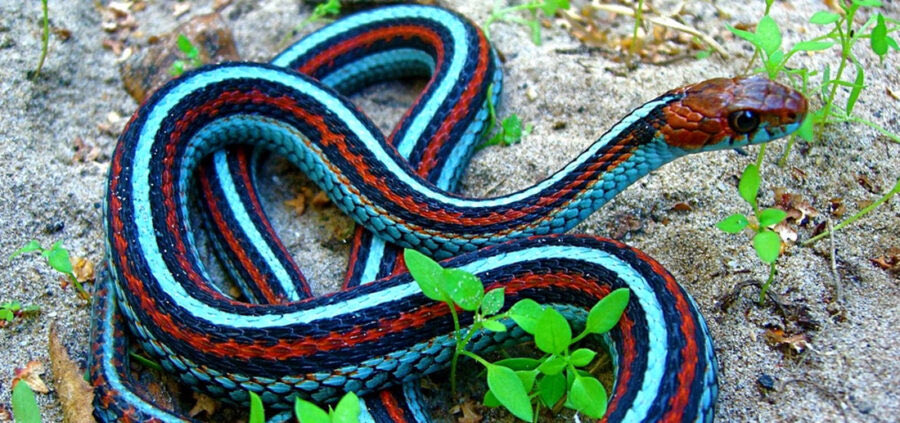
I just learned that THIS is what the San Francisco garter snake looks like (!!)
I can’t get over those colors!
And ofc, being named for a major metropolitan area, maybe it’s not surprising that it’s endangered 😭
1
2
173