
Joined December 2017
- Tweets 1,457
- Following 431
- Followers 334
- Likes 46,382
318 Photos and videos














Pinned Tweet

24 Mar 2023
Recaf 3X? 4X? Where's the next Recaf update?
youtube.com/watch?v=IIFnXFoi…
2,255
Matt Coley retweeted

Jun 7
i saw this and did a study of the og poster cuz why not


‘GODZILLA: DESTROY ALL MONSTERS MELEE’ is being remastered.
• New online multiplayer mode & additional single-player campaign features
• Releasing November 3 on consoles

9
420
2,592
33,335
May 23
I would post more Recaf 4X updates like I do with the videos in discord, but they're all too long and can't be put up here...
Anyways, lots of cool stuff has happened since I last talked about it. And my 3 year old pin on 4X is laughably old now. Ought to make a new vid/pin.
57
Matt Coley retweeted

Apr 15
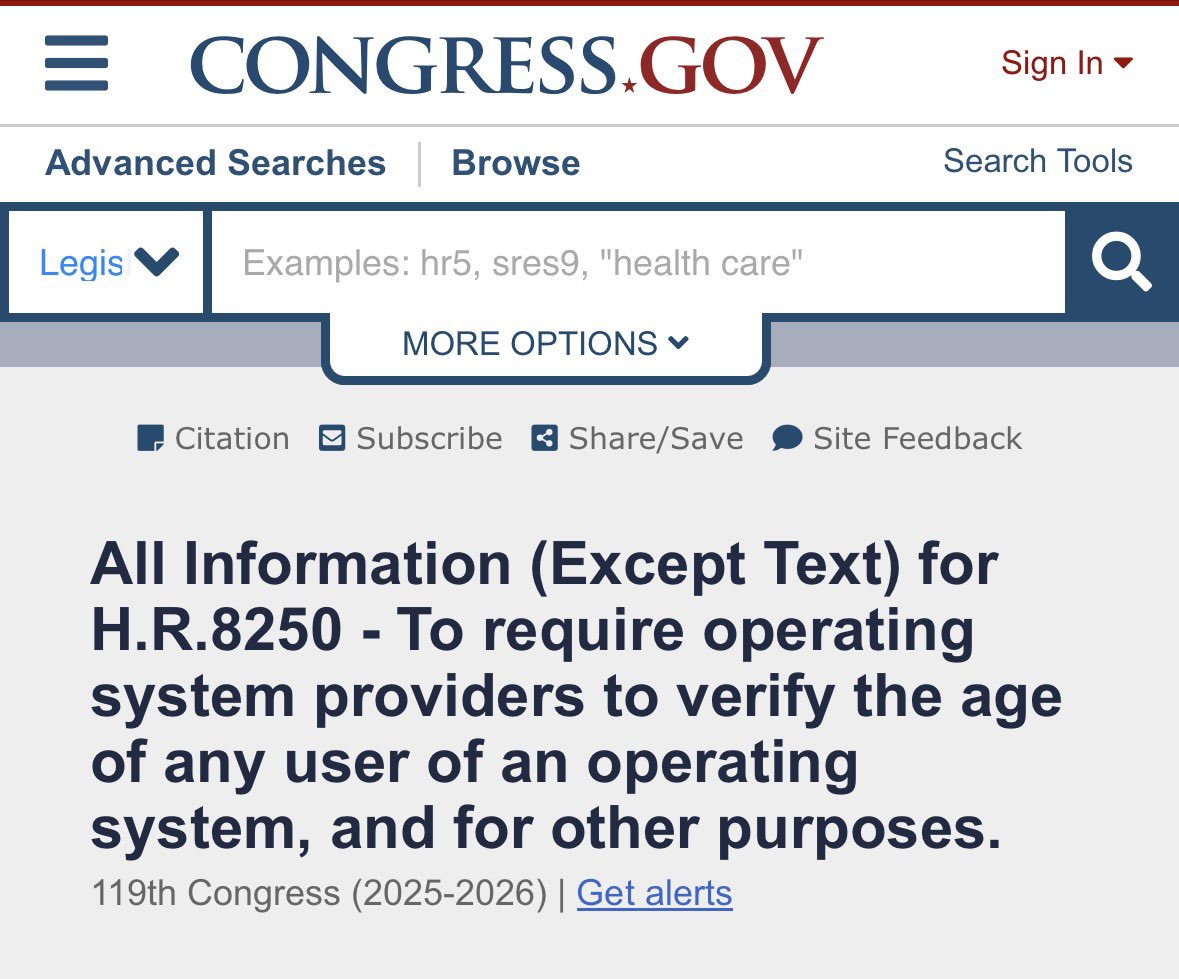
Obviously this bill as a whole is bad/stupid, but someone in the replies pointed out the "other purposes" part of this bill.
...WHAT other purposes??
That is SUCH a grey area that would hand over an insane amount of power to the government??

A new national law has been introduced to require all Operating Systems to have mandatory Age Verification.
House Resolution 8250 : “To require operating system providers to verify the age of any user of an operating system, and for other purposes.”
The Federal bill was introduced by
Rep. Josh Gottheimer, Democrat from New Jersey. And is co-sponsored by Elise M. Stefanik,
Republican from New York.
The full text of the bill has not yet been made publicly available (but is expected shortly).
congress.gov/bill/119th-cong…
8
249
620
9,142
Matt Coley retweeted

Mar 12
Subwoofer Lullaby - C418 (2011)
20
830
3,120
97,868
Apr 1
Reworked how Recaf handles Android content. We still don't have full assembler support but major strides in everything else have been made.


1
1
91
Apr 1
The syntax for Dalvik bytecode is mostly done. We need to reconstruct our model from the AST in the assembler library, then clean up some syntax-highlighting in the front end.
28
Matt Coley retweeted

Mar 13
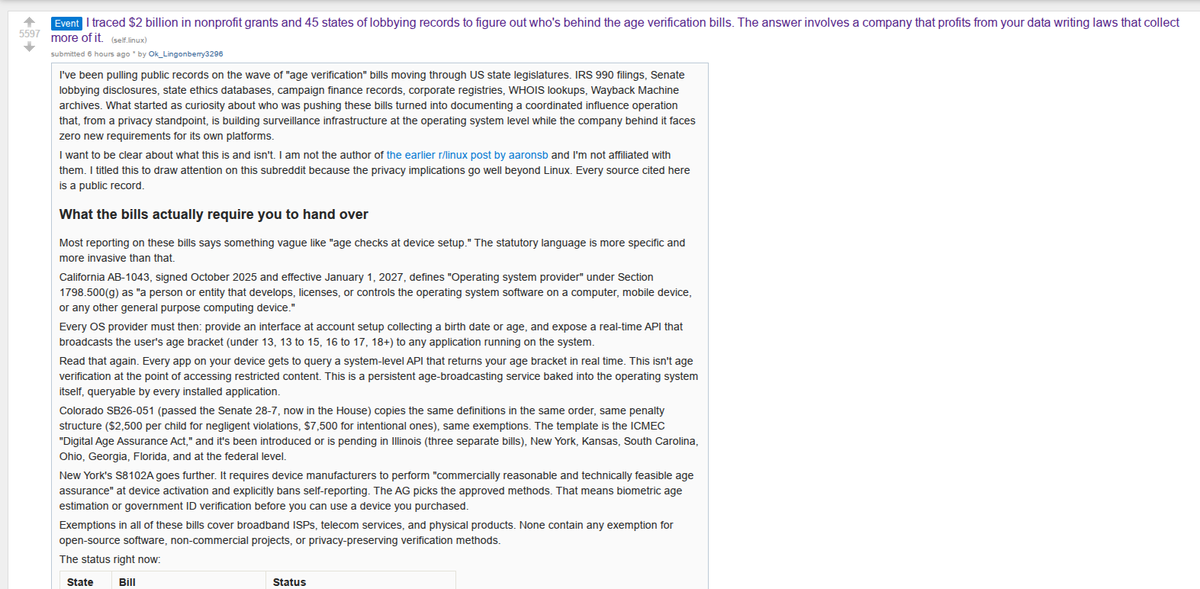
Yeah, so basically it turns out Meta has been heavily lobbying online age verification laws. They've lobbied over $2,000,000,000 to politicians in form of grants and donations.
x.com/bee_fumo/status/203246…

someone traced the all the non profit grants for the age verification laws
old.reddit.com/r/linux/comme…
624
10,434
46,552
65,974,169
Matt Coley retweeted
Mar 5
It's rare I see someone defend online identification. I'm unable to tell if they're a troll, engagement baiting, or being sincere.
Let's discuss it.
Pardon my condescension, but if this is a sincere rebuttal, this person is the LeBron James of logical fallacies.
1. False analogy.
You cannot compare online identification to in person identification. Giving your ID to someone in person is a physical transaction in a controlled environment (bar, tattoo parlor).
The Internet is global and interconnected. Additionally, when providing your ID in person you're doing it for an exchange of a physical good or experience (bar, tattoo parlor).
Identifying yourself online is tied to SPEECH (e.g. social media).
Identifying at a bar is not the same as identifying yourself online.
2. False equivalency
Again, tying back to argument one, providing your identification for something like going to a bar is not the same as providing identification online. Social media, as an example, is a communication platform.
Examples provided: bars, alcohol, cigarettes, tattoos, guns, lottery tickets, ... This is not the same as needing identification for access to a social media site.
3. Loaded questioning
Rhetorical questions are trying to push the reader to assuming a logical conclusion that online identification is perfect.
4. Over simplification
Identifying everyone online is not a practical solution. This ignores local laws, federal laws, different governments having different laws, free speech laws, data privacy laws, THE COST of performing all of this.
Do people in the United States visiting a Brazilian website need to provide their ID to the Brazilian government? Do they have any jurisdiction? These are real questions.
5. Appeal to ridicule
Concluding your statement with "grow up" tries to shame me, or the reader, for disagreement.
These laws being suggested are far from perfect and serve no one. It will not protect children. The lack of clarity in laws makes people infer nefarious intent.
I like pictures of cats.
45
167
1,209
54,832
Matt Coley retweeted

Feb 27
Think about the power Hegseth is asserting here. He is claiming that the DoD can force all contractors to stop doing business of any kind with arbitrary other companies.
In other words, every operating system vendor, every manufacturer of hardware, every hyperscaler, every type of firm the DoD contracts with—all their services and products can be denied to any economic actor at will by the Secretary of War.
This is obviously a psychotic power grab. It is almost surely illegal, but the message it sends is that the United States Government is a completely unreliable partner for any kind of business. The damage done to our business environment is profound. No amount of deregulatory vibes sent by this administration matters compared to this arson.

This week, Anthropic delivered a master class in arrogance and betrayal as well as a textbook case of how not to do business with the United States Government or the Pentagon.
Our position has never wavered and will never waver: the Department of War must have full, unrestricted access to Anthropic’s models for every LAWFUL purpose in defense of the Republic.
Instead, @AnthropicAI and its CEO @DarioAmodei, have chosen duplicity. Cloaked in the sanctimonious rhetoric of “effective altruism,” they have attempted to strong-arm the United States military into submission - a cowardly act of corporate virtue-signaling that places Silicon Valley ideology above American lives.
The Terms of Service of Anthropic’s defective altruism will never outweigh the safety, the readiness, or the lives of American troops on the battlefield.
Their true objective is unmistakable: to seize veto power over the operational decisions of the United States military. That is unacceptable.
As President Trump stated on Truth Social, the Commander-in-Chief and the American people alone will determine the destiny of our armed forces, not unelected tech executives.
Anthropic’s stance is fundamentally incompatible with American principles. Their relationship with the United States Armed Forces and the Federal Government has therefore been permanently altered.
In conjunction with the President's directive for the Federal Government to cease all use of Anthropic's technology, I am directing the Department of War to designate Anthropic a Supply-Chain Risk to National Security. Effective immediately, no contractor, supplier, or partner that does business with the United States military may conduct any commercial activity with Anthropic. Anthropic will continue to provide the Department of War its services for a period of no more than six months to allow for a seamless transition to a better and more patriotic service.
America’s warfighters will never be held hostage by the ideological whims of Big Tech. This decision is final.
530
2,699
13,453
1,248,673
Matt Coley retweeted

Feb 27
Anybody inside the American military establishment who thinks that wiring up an LLM via API to manage an air defense system is a remotely defensible engineering approach should be immediately fired because they are going to get people killed

Anthropic is lying. The @DeptofWar doesn’t do mass surveillance as that is already illegal. What we are talking about is allowing our warfighters to use AI without having to call @DarioAmodei for permission to shoot down an enemy drone swarms that would kill Americans. #CallDario
Community note
The statement that "The (DoD) doesn’t do mass surveillance" ignores the fact that the NSA, that is part of the DoD, has infact conducted mass surveillance of American citizens despite it being illegal.
x.com/grok/status/20…
32
83
1,035
46,641
Matt Coley retweeted

Feb 27
Anthropic had 2 red lines for the use of Claude:
1. No autonomous killings
2. No mass surveillance of Americans.
Kind of strange for the DoD to frame those as having a "god complex" and that they want to "personally control the US military".
It’s a shame that @DarioAmodei is a liar and has a God-complex. He wants nothing more than to try to personally control the US Military and is ok putting our nation’s safety at risk.
The @DeptofWar will ALWAYS adhere to the law but not bend to whims of any one for-profit tech company.
Community note
"Anthropic's contract with the Pentagon includes usage-policy restrictions—contractual guardrails that prohibit applications such as autonomous weapons and mass surveillance. The Pentagon originally agreed to these terms."
lawfaremedia.org/article/what-t…
38
255
2,307
94,375
Matt Coley retweeted
Feb 27
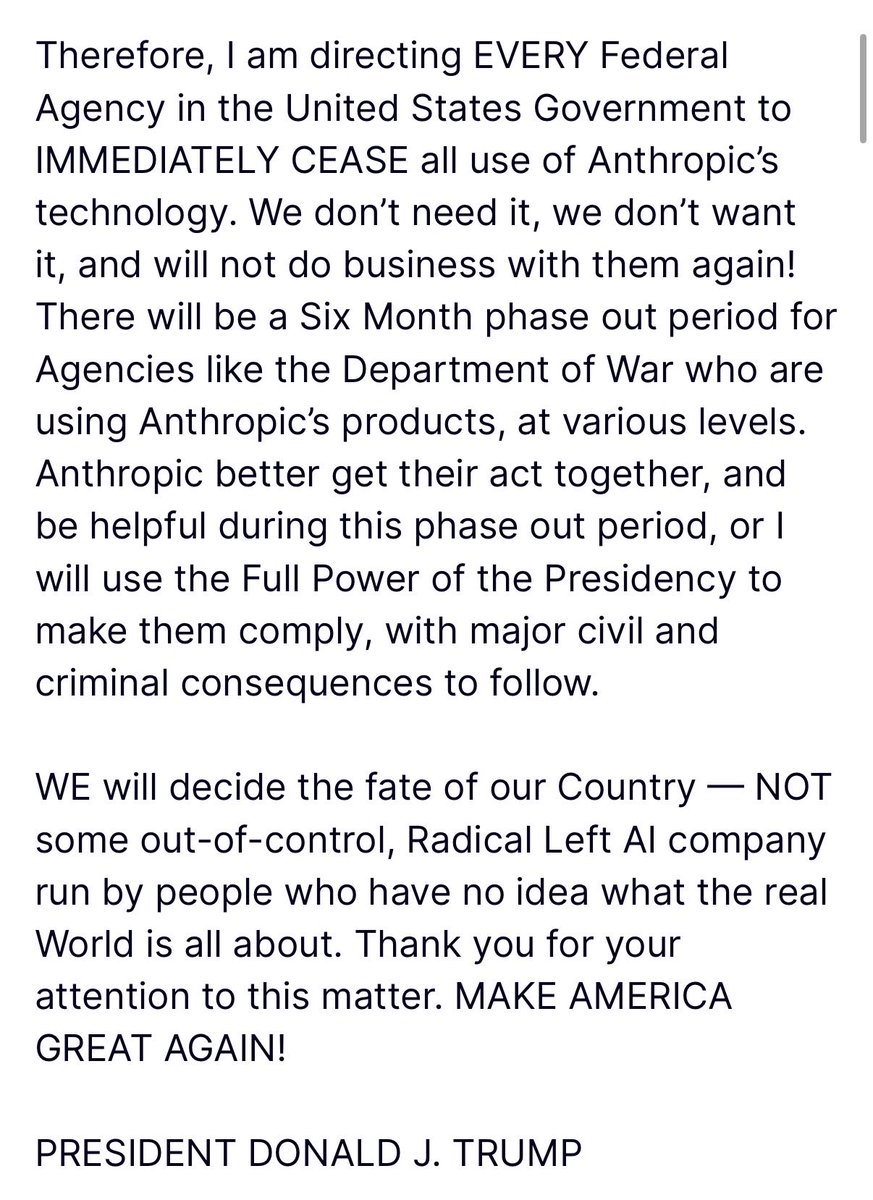
US Government: MAKE THE FUCKING KILLER ROBOT THING
Anthropic: We think that's unethical. We won't do that. All customers have the same Terms of Service for Claude
US Government: YOURE A FUCKING COMMUNIST AND YOU HATE FREEDOM

360
3,904
26,369
650,790
Matt Coley retweeted

Feb 27
Has anyone done serious journalism tracking the networks behind this simultaneous push for all these digital ID laws in states all around the country?
Seems like one of the biggest stories of our time, even at a time of massive stories

A new California law says all operating systems, including Linux, need to have some form of age verification at account setup pcgamer.com/software/operati…
140
1,964
11,247
199,114
Matt Coley retweeted

Feb 16
AI is destroying open source, and it's not even good yet
96
388
2,699
243,201
Feb 11
Its been a long time since we stopped maintaining SSVM, and I'm just finally getting back to emulating basic methods for deobfuscation transformers in Recaf. Its a much more simple/naive implementation, but thats kinda the point. SSVM was unironically too good.
1
1
160
Feb 11
When I say it was "too good" I'm 100% serious. SSVM emulated the JVM so accurately that it discovered a hotspot implementation bug with methodhandles.
bugs.openjdk.org/browse/JDK-…
x.com/invokecoley/status/151…
19 Apr 2022

@cl4es Sorry for the random ping, but noticed this while working on a project. Is there a reason why getting the static Unsafe field uses 'REF_getField' instead of 'REF_getStatic'?
Change is from: github.com/openjdk/jdk/commi…
Running on Java 11 we get: hst.sh/timijuturo.bash

1
38
Matt Coley retweeted

Jan 30
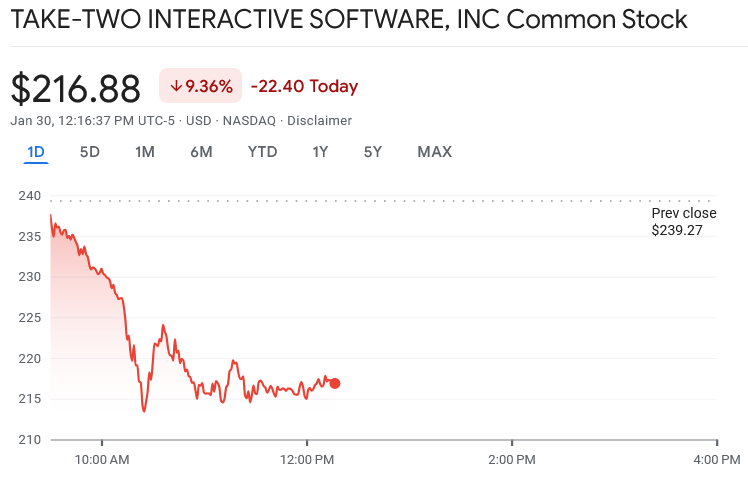
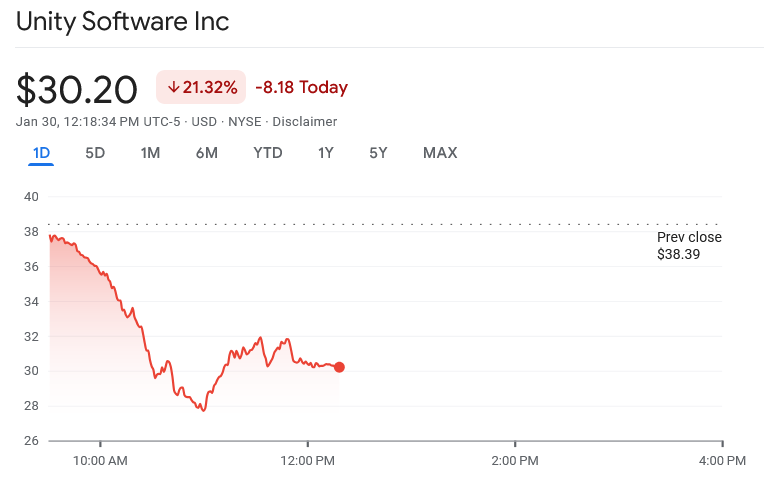
jesus christ this economy is dictated by morons
Jan 30

Video game stocks are suddenly crashing today with the launch of Google's Project Genie as investors think games will start getting made with AI
➡️ ca.investing.com/news/stock-…
#GoogleGemini #TakeTwo #CDProjektRED #Roblox #videogames


117
837
15,712
356,264
Matt Coley retweeted

29 Dec 2025
Genuinely once I started using this I went a little insane.
Searching for files on windows is SO BAD by default that I thought we had run up against some law of physics.
But no, searching for files can just be instantaneous. Microsoft is just evil and stupid.
29 Dec 2025

voidtools Everything is such an excellent piece of software. It's one of the things you use and wonder "why doesn't my computer already work like this"

117
1,736
24,416
650,277
