
OG political blogger. Predicted the 2007 collapse. Read: ianwelsh.net , Support: ianwelsh.net/donate/ - @ianwelsh.bsky.social
Joined August 2008
- Tweets 169,172
- Following 1,539
- Followers 5,372
- Likes 3,805
310 Photos and videos









"How To Think."
Thinking well is not for the faint-hearted. If you do it properly you will often come to conclusions you hate: reality is rarely as we would have it be: this is not the best of all possible worlds. You must be brave and willing to endure discomfort to think well.
11
22
94
84,493
Ian Welsh retweeted

If this was indeed what was signed with the help of Qatari and Pakistani negotiators, it reads like terms of surrender for the United States. A future where the Strait of Hormuz is a toll booth, however, is not something that Trump will be able to accept. He will sabotage, again.
Jun 13

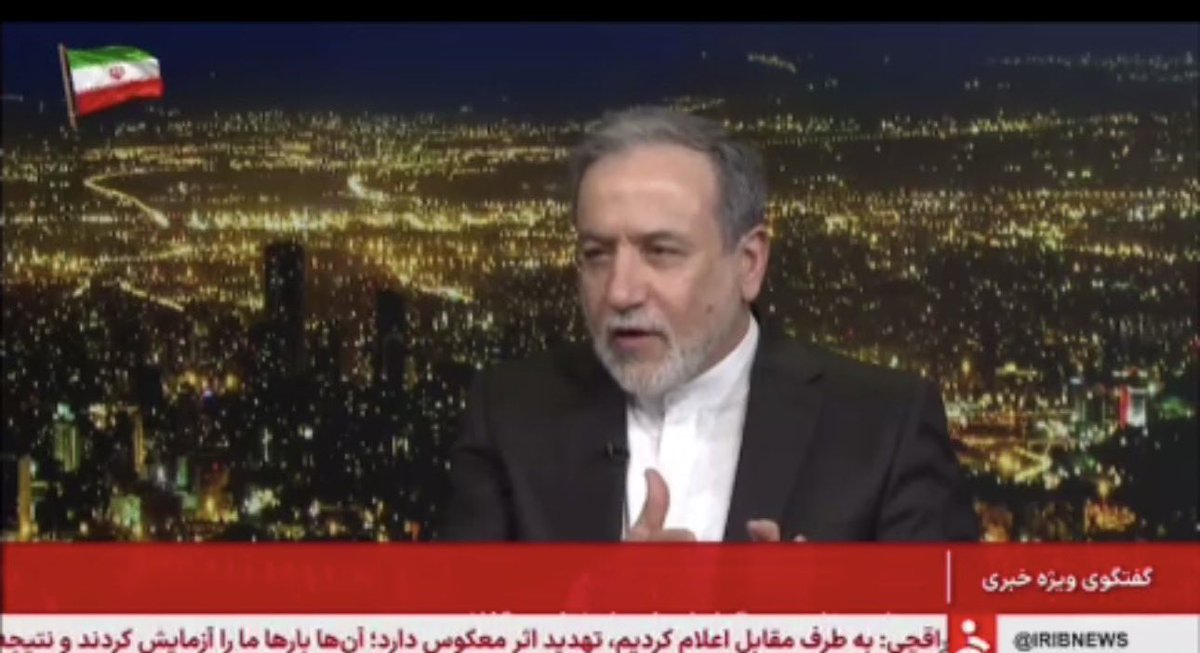
🚨 NEW: Iranian Foreign Minister Abbas Araghchi told State TV the emerging U.S.-Iran memorandum of understanding is a roughly 1.5-2 page, 14-point document that has been negotiated for more than two months and reviewed line by line by Iran’s Supreme National Security Council and military leadership.
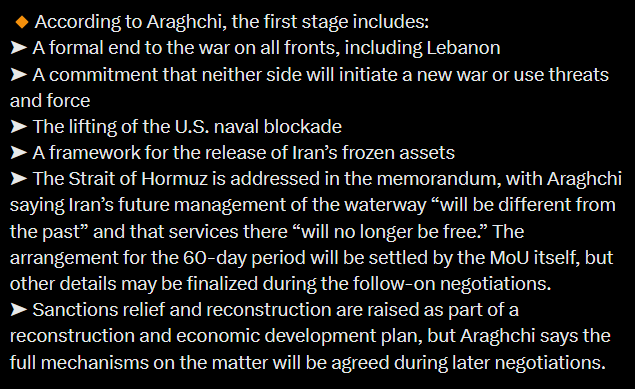
🔸According to Araghchi, the first stage includes:
➤ A formal end to the war on all fronts, including Lebanon
➤ A commitment that neither side will initiate a new war or use threats and force
➤ The lifting of the U.S. naval blockade
➤ A framework for the release of Iran’s frozen assets
➤ The Strait of Hormuz is addressed in the memorandum, with Araghchi saying Iran’s future management of the waterway “will be different from the past” and that services there “will no longer be free.” The arrangement for the 60-day period will be settled by the MoU itself, but other details may be finalized during the follow-on negotiations.
➤ Sanctions relief and reconstruction are raised as part of a reconstruction and economic development plan, but Araghchi says the full mechanisms on the matter will be agreed during later negotiations.
🔸 The Second Stage:
➤ Would consist of 60 days of negotiations toward a final agreement, with the possibility of extension by mutual consent.
➤ Araghchi says those talks will aim to resolve the nuclear file, including uranium enrichment and Iran’s stockpile of 60% enriched uranium.
➤ He says the negotiations will also address the broader issues raised in the memorandum, including sanctions relief, the reconstruction and economic development plan, arrangements related to the Strait of Hormuz, and other technical details.
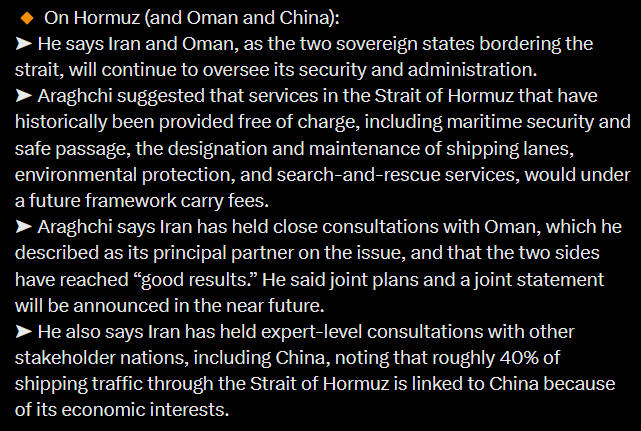
🔸 On Hormuz (and Oman and China):
➤ He says Iran and Oman, as the two sovereign states bordering the strait, will continue to oversee its security and administration.
➤ Araghchi suggested that services in the Strait of Hormuz that have historically been provided free of charge, including maritime security and safe passage, the designation and maintenance of shipping lanes, environmental protection, and search-and-rescue services, would under a future framework carry fees.
➤ Araghchi says Iran has held close consultations with Oman, which he described as its principal partner on the issue, and that the two sides have reached “good results.” He said joint plans and a joint statement will be announced in the near future.
➤ He also says Iran has held expert-level consultations with other stakeholder nations, including China, noting that roughly 40% of shipping traffic through the Strait of Hormuz is linked to China because of its economic interests.
🔸Araghchi said the memorandum will be signed remotely in a “digital” format, with each side signing separately before a joint announcement, adding that an agreement could be finalized “within the next day or two, or within the next several days.”
🔗 Araghchi’s full remarks on Friday, translated into English by Drop Site News, are below ⬇️
5
10
35
2,544


Ian Welsh retweeted

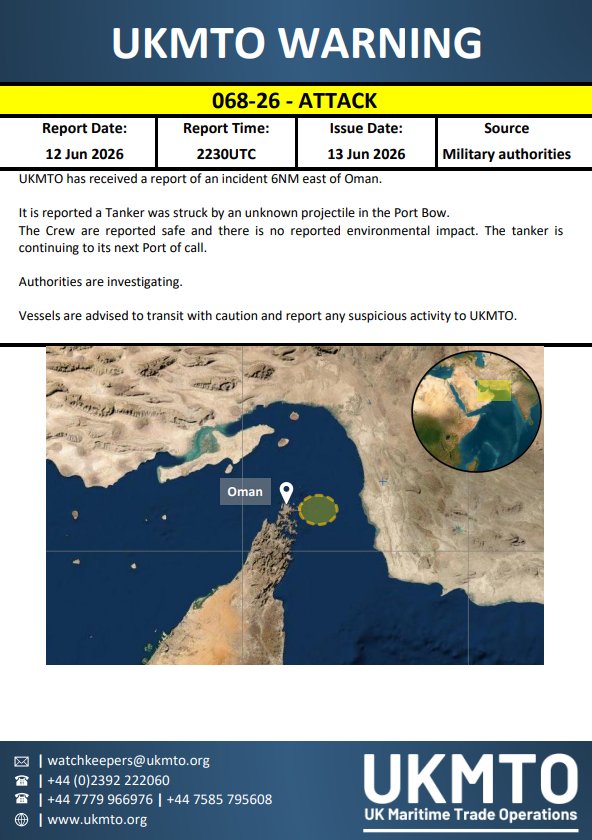
Airspace at 22h30 UTC - moment the Oil Tanker was hit:
US Air Force E-3G AEW&C aircraft, RC-135W Rivet Joint, P-8 Poseidon & dozens of Fighter jets were monitoring Iranian forces.
& still failed to intercept the projectile(s).
Who controls the Strait again?
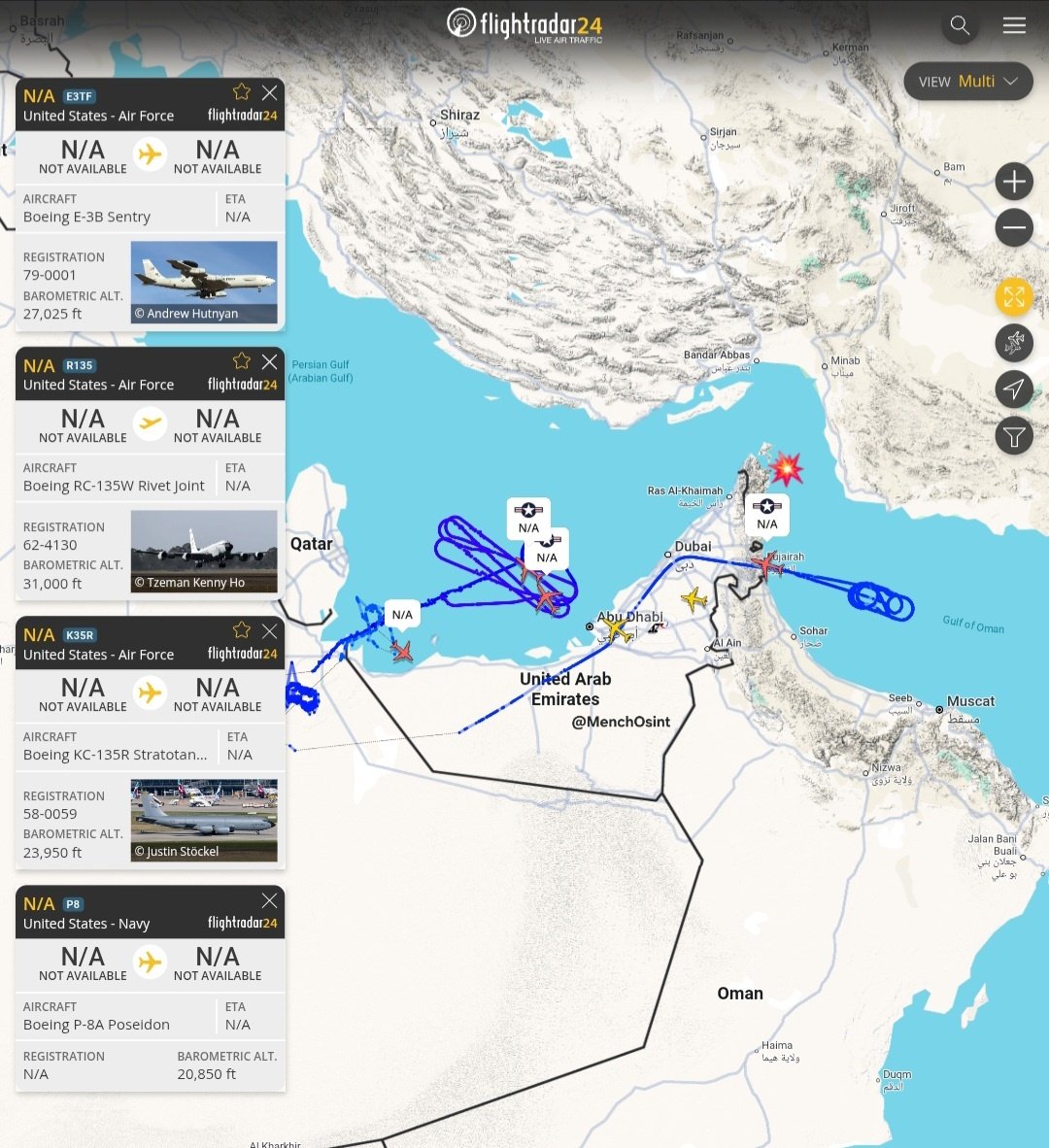

⭕️⚡️UKMTO admits that an Oil Tanker *escorted by the US* was struck last night (22h00 UTC).
It is an Oil Tanker that switched AIS off and ignored IRGC-approved routes.
11
106
468
23,067
Ian Welsh retweeted

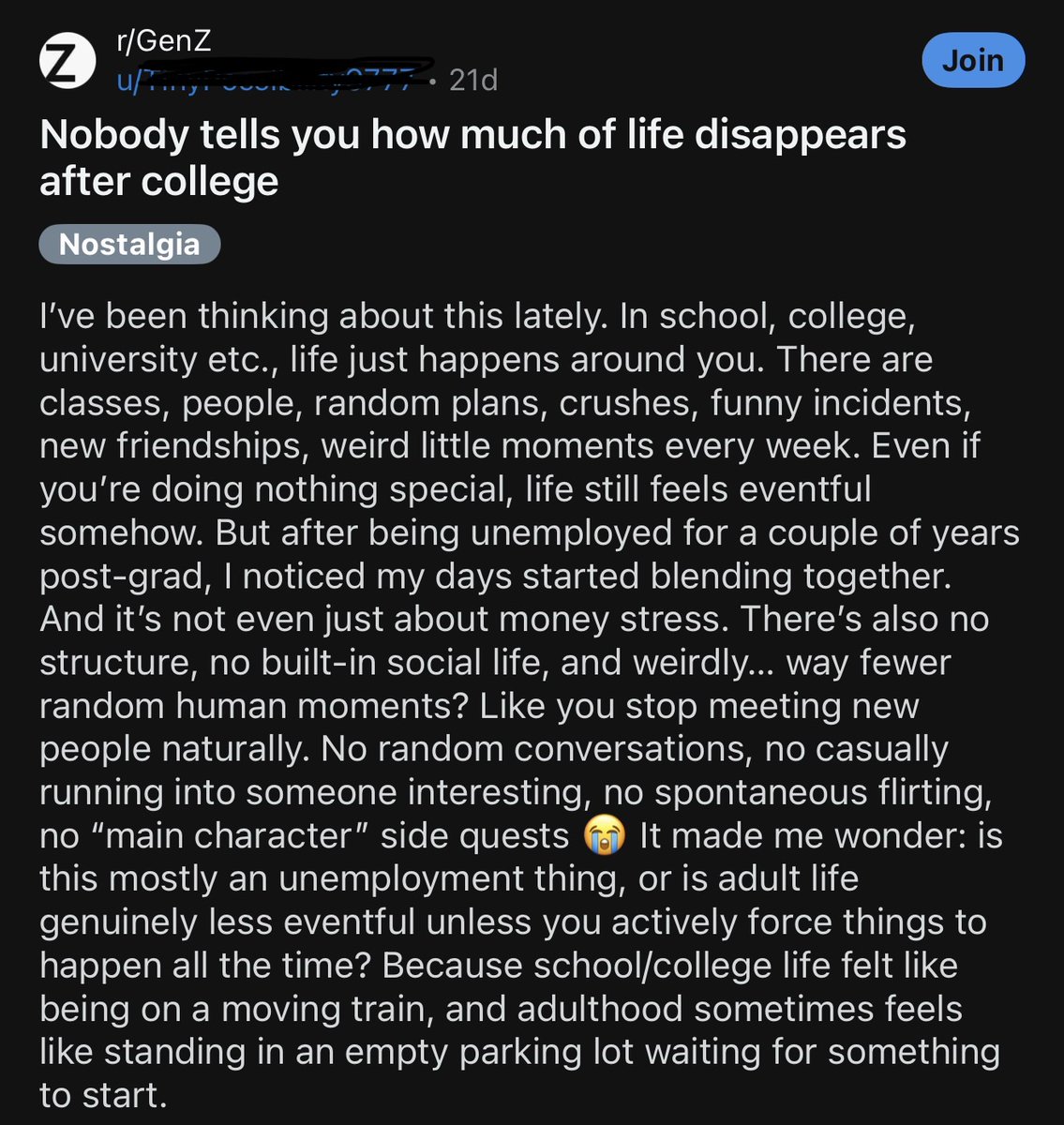
Your calendar was full at 21 and empty at 26 for a reason MIT discovered in 1950.
Researchers studied a housing complex called Westgate and found friendship was predicted by one variable above everything else: physical distance between front doors. Students living near stairwells and mailboxes made the most friends. Shared interests, values, personality? All downstream of foot traffic. They named it the propinquity effect.
Researcher Rebecca Adams later distilled friendship formation into three conditions: proximity, repeated unplanned interactions, and settings where people let their guard down. A college campus delivers all three automatically, dozens of hours a week of engineered collisions. Adult life delivers zero by default.
That's the entire mechanism behind days blending together. Your brain registers novelty from unplanned human contact. Remove the collisions and time loses its texture.
The fix is repetition. One dinner party changes nothing. The same gym class, same coffee shop, same pickup game at the same time every week rebuilds the structure school gave you for free. Friendship grows from accumulated accidental contact, so frequency wins.
College handed you a collision machine. Adults who stay social just rebuilt one.
Jun 12

Gen Z realizing one of the biggest shocks after college is that life no longer happens around you.
In school, friends, events, relationships, and opportunities are built into your environment.
As an adult, if you don't actively create a social life, weeks can turn into months surprisingly fast.
23
502
4,581
488,231
Subversive takes are so normal now that I don't even find them subversive. I'd far rather see a Robin Hood movie where he really is stealing from the rich and giving to the poor.
Grimdark is old now, it's the status quo.
Robin Hood being good--that would be subversive.

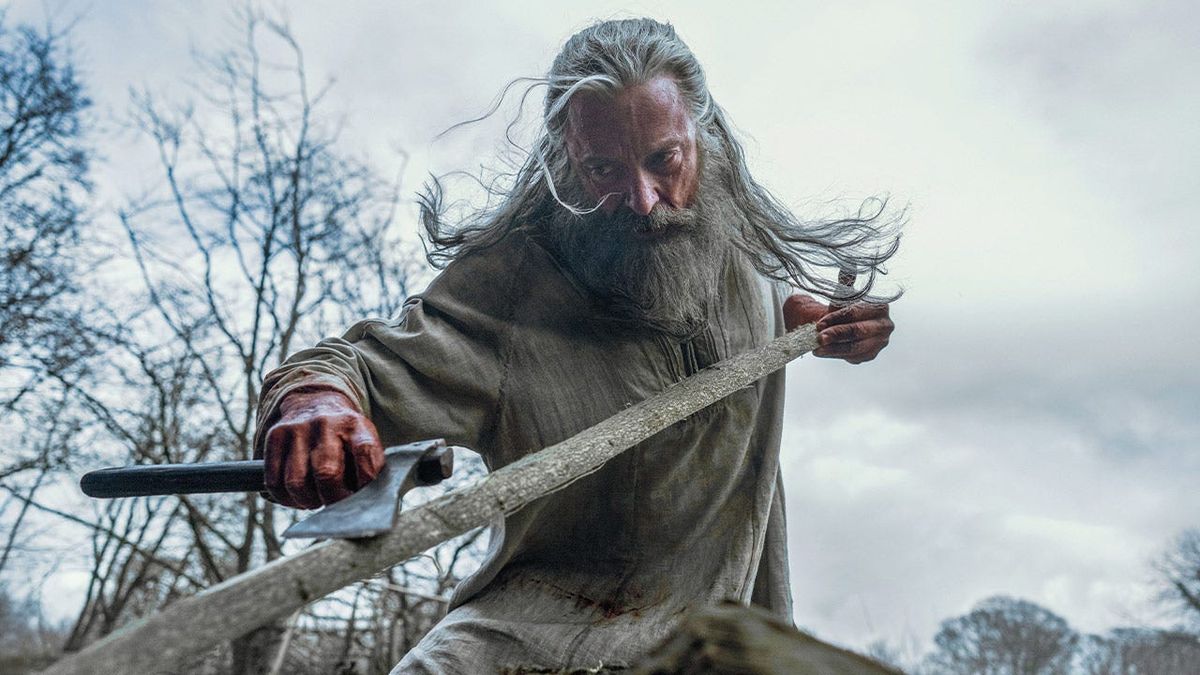
Hugh Jackman and Jodie Comer’s grim medieval drama strips away the legend of Robin Hood to deliver a brutal, subversive take on the iconic outlaw.
Our review of The Death of Robin Hood: bit.ly/4gflfvp
5
2
26
1,543
Ian Welsh retweeted

Jun 12
4/ Your daughter wants to read about government corruption.
She verifies her identity. Because the law requires it. She accesses the independent journalist reporting on classified leaks. Evidence of illegal surveillance programs. Proof of officials lying under oath.
She reads it. Shares it with friends. Writes her own thoughts questioning the official narrative.
Two years later she applies to college. Rejection letter. No explanation.
Five years later she applies for a government job. Denied. Background check flagged.
Her search for truth at age 16 is now a permanent record. Her curiosity is evidence of non-compliance. Her questions are a social credit penalty that follows her for life.
2
28
242
2,882
Ian Welsh retweeted
Jun 12
3/ Online child safety laws sound reasonable.
Protect children from predators. Shield them from harmful content. Verify age to keep kids safe.
But here is what these laws actually do.
They require identity verification to access any platform. Real name. Date of birth. Government ID scan. Biometric data. Tied to everything you read, watch, search, and share.
And once your identity is attached to your search for truth, your search for truth becomes evidence against you.
1
35
239
3,808
Ian Welsh retweeted
Jun 12
1/ Your daughter is 16.
She reads about a protest happening downtown. Police brutality. Government overreach. She does not know what to believe. The news says one thing. Social media says another.
She wants to investigate. She wants to find the truth herself.
So she opens her phone. Tries to access independent journalist accounts. Citizen reporters who were actually there. Raw footage. Unfiltered perspective.
Access denied.
Reason: Age verification required. Content flagged as potentially harmful to minors. Online child safety laws prohibit access without parental consent and identity verification.
Your daughter cannot search for truth. The system decides what she is allowed to know.
71
734
2,659
42,069



I started telling you this in January. I now have 3 Mac Studio 512gbs, 2 Mac Minis, and a DGX Spark.
Now you can't even buy Mac Studios over 100gb
I told you months ago compute would soon be impossible to obtain as everyone rushes to purchase
It's all playing out as I warned
38
24
451
79,399
This is your wakeup call.
Anthropic just took down Fable 5. It's over.
Here's the thing tho: no company or government will EVER be able to take away your local models.
There are Opus level models you can run right now on your home GPUs, and nobody can ever stop you from using them
This is only the beginning of events like this. Day 1. More government overreach will happen. This will only keep happening more and more as models get closer to AGI
Become sovereign. Buy your own compute. Before even that becomes illegal
Jun 13

The US government, citing national security authorities, has issued an export control directive to suspend all access to Fable 5 and Mythos 5 by any foreign national, whether inside or outside the United States, including foreign national Anthropic employees.
The net effect of this order is that we must abruptly disable Fable 5 and Mythos 5 for all our customers to ensure compliance.
Access to all other Claude models is not affected.
We apologize for this disruption to our customers. We believe this is a misunderstanding and are working to restore access as soon as possible.
Read our full statement: anthropic.com/news/fable-myt…
792
913
8,860
1,528,065
Ian Welsh retweeted

Jun 13
Apartheid South Africa and Nazi Germany needed compliant judges to provide a legal veneer to their darkest crimes.
Judge Johnson joins their wretched company. He overturned a jury's conviction of four anti-genocide activists for criminal damage and sentenced them as terrorists instead.
As one their barristers pointed out, the four defendants were initially arrested by police on suspicion of involvement in an act of terrorism. But the prosecution decided not to charge them with terrorism offences because it knew no jury would ever convict them based on the evidence.
Instead the Crown held two trials: a sham one for the jury, and the real one conducted in secret by the judge. That is not justice. It is a show trial worthy of the worst tyrannical regimes.
Jun 12

Here’s injustice Jeremy Johnson handing down the sentences at today’s disgusting stitched up Palestine Action trial.
Any faith I ever had in the fairness of the British justice system is completely is dead.
495
6,081
14,092
314,688
Ian Welsh retweeted

Jun 13
That's why you deprive them of sex education. They get pregnant at 16, before they get any ideas about college. Then they have to marry the 25-year-old youth pastor, and submit to his "authority."
116
258
1,428
138,881
Ian Welsh retweeted

Hmm yes quite possible. Maybe US strategic thinkers constantly threatening over the past two decades to cut off China's imported energy was a factor in Beijing making plans for such a contingency? 🤔
1
10
457

WOW. It's almost as if the Chinese government had a plan about what to do if its oil got shut off.
Jun 12

"Unlike [Covid] not that Chinese are moving around less. Instead they're changing how they travel: rail journeys grew 10% in Mar & Apr annually vs 5% last year per govt data. Travel by subway or taxis, which are electrified in many cities, is also growing rapidly, data shows"
8
35
347
11,857
There's a huge intellectual industry denying that a good world is possible, so you'll settle for one in which 1% live in utopia and 50% live in Hell.

The problem of utopia is that it can only be approached across a sea of blood, and you never arrive.
Peter Hitchens
5
31
621