
I made a bank once
Joined June 2010
- Tweets 2,322
- Following 1,260
- Followers 1,407
- Likes 15,676
208 Photos and videos












James Nicholson retweeted

Jun 11
Most of Europe has not yet absorbed what AI is about to do to us. The few who have are not saying it loudly enough.
We wrote Europe 2031: a five-year scenario of the continent's slide into irrelevance, how AI is driving it, and what can still be done to change course.

91
168
916
359,589
James Nicholson retweeted

May 11
Frog put the shares in an SPV. “There,” he said. “Now we can transfer these shares freely”
“But Anthropic can still exercise its transfer restrictions” said Toad.
“That is true,” said Frog.

May 11

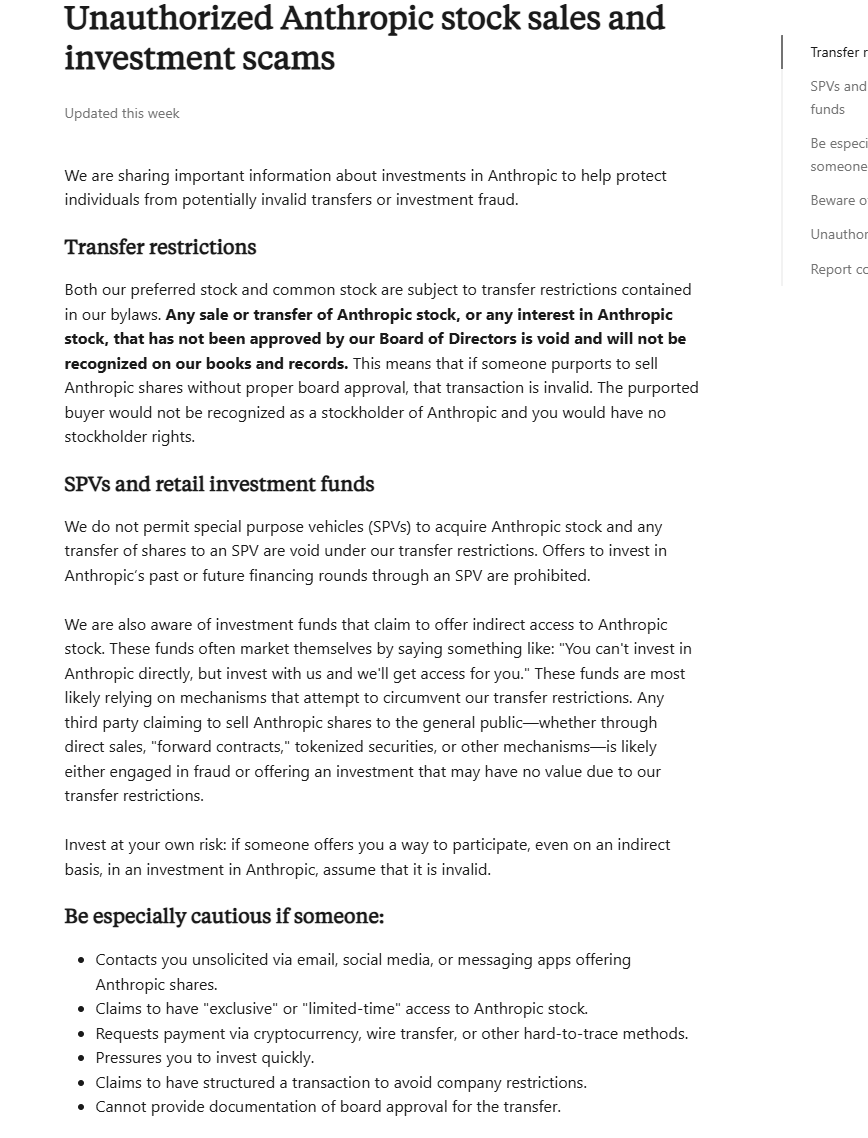
I am surprised more people are not paying attention to this update from Anthropic on its stock policy. This seems like a potential bombshell.
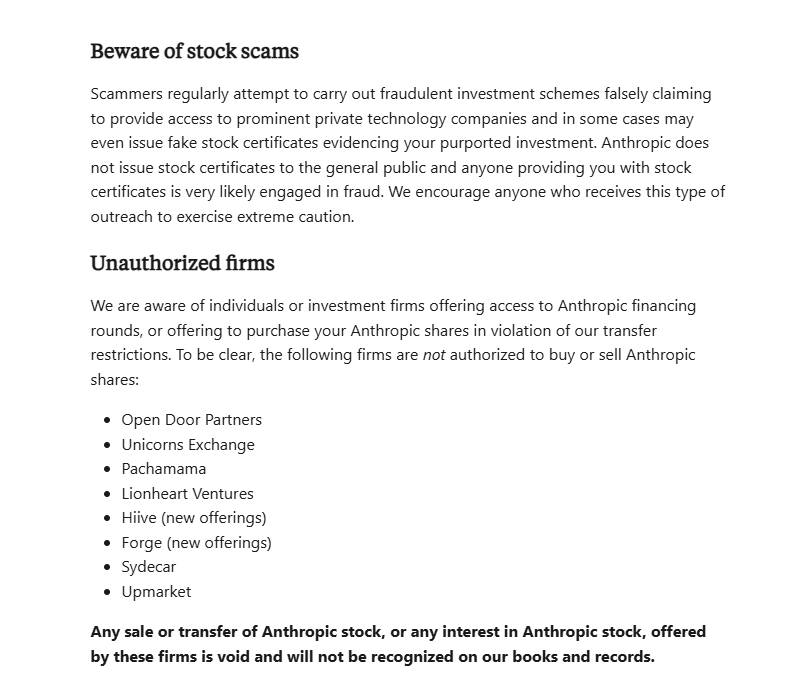
There is an active secondary market purportedly in Anthropic stock or derivatives including on fairly reputable (or at least well-known) platforms like Forge. Anthropic is calling them out *specifically*, by name, and essentially *saying* 100% of these are illegal.
Some may be frauds (people selling Anthropic stock or interests in Anthropic stock that they don't truly own), but more likely many are legit attempts at transferring Anthropic equity (directly, as SPV shares, or as some type of 'beneficial interest' or future, etc.)
Anthropic appears to be saying it will treat all these transfers as void. I don't have access to their terms, but it's very interesting to think what this could mean. Do the 'first purported sellers' in the chain potentially have an opportunity to do a double-dip? Does the first seller and all downstream buyers get the entire entitlement nuked?
Anthropic is threatening that--are they just bluffing? If they're not bluffing, what litigation is likely to ensue? This can get into really esoteric areas of corporate law that depend on exactly how the transfer restrictions are drafted as well as the language around how violations of transfer restrictions are treated--for example, if they are merely voidABLE then downstream buyers can assert various equitable claims/defenses, but if they are VOID ab initio then in some jurisdictions that forecloses equitable defenses.
30
148
2,321
416,017
James Nicholson retweeted

Apr 8
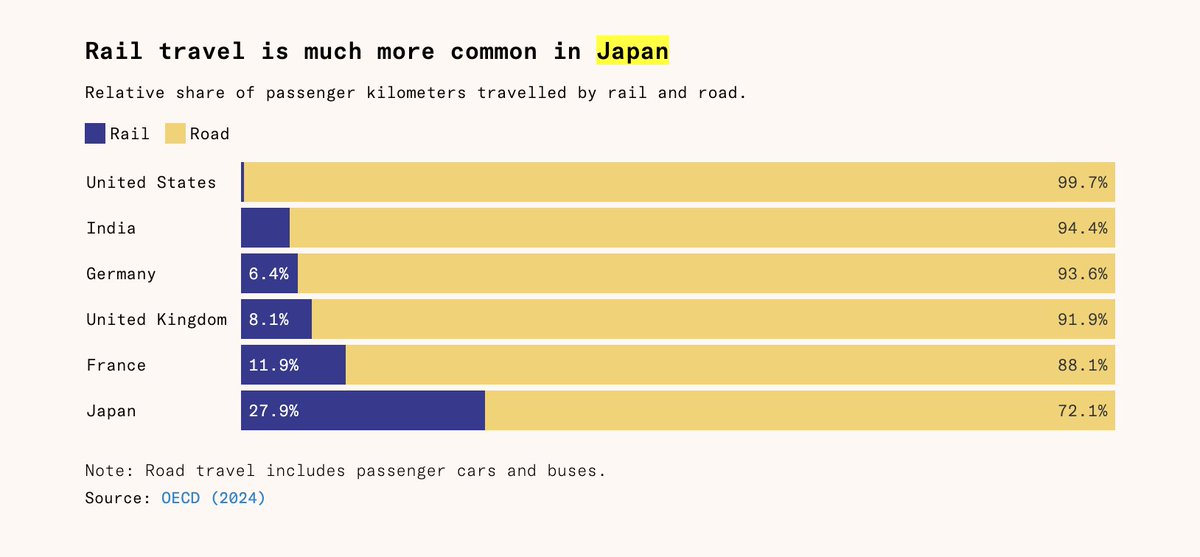
Japan has the world’s best railway system. 28% of Japanese passenger-kilometers are by rail. Germany manages 6.4%, and the USA manages 0.25%. Just one Japanese company, JR East, carries more passengers than China’s entire railway system, and four times as many than Britain’s.
What is the secret of its success?
worksinprogress.co/issue/why…
Part of the answer is that Japanese railway companies don't just operate trains. They run hospitals, supermarkets, department stores, amusement parks, office complexes, and retirement homes around their railway stations. One of them co-built Tokyo Disneyland. Another owns a baseball team. A third created its own all-women musical theater in 1914, which is still running today.
The logic is elegant: a railway increases the developable value of land around its stations, but normally that value accrues to landowners, not the railway operator. Japanese railway companies captured this value by owning and developing the land themselves.
About half of the revenue of Japanese railway companies comes from ‘side businesses’ like these. Allowing railway operators to capture more of the value they created meant that more lines were profitable, making a far larger system financially viable.
This may sound like a radically novel approach. But in fact, an exactly similar system existed in nineteenth-century America. The success of Japanese railways does not lie in some unreplicable feature of Japanese culture: it lies in good policy. If they learnt the right lessons from it, many countries could replicate Japan’s success.
Read more (much more) in @Borners1's & @carto_graph's new piece for @WorksInProgMag Issue 23.
153
906
3,423
662,212

you can finally have both
Mar 26

Get your house and keep your crypto.
Crypto-backed mortgages are here - increasing access to homeownership for millions of Americans.
Buy a home without converting your portfolio by using BTC or USDC as collateral for your down payment.
Offered by Better, powered by Coinbase.

3
162
James Nicholson retweeted

Mar 12
Who called it "Effective Altruism" and not "Crazy Rich Bayesians"?
Mar 12

Anthropic's founders and employees are about to have a lot of cash. Many of them have pledged to give away huge amounts of that cash. But where's it gonna go?
@cogcelia took a look in this excellent new piece:

47
251
3,134
231,851
James Nicholson retweeted

Feb 23
One of the often slept-upon benefits of attending the University of Chicago is that they make you read Marx as part of the core curriculum, which is why this article gave me flashbacks of taking SOSC 114 as a freshman.
Marx, writing during the Industrial Revolution, predicted capitalism would periodically devour itself: firms replace labor with machinery to boost profits, but competition diffuses the technology, drives prices to marginal cost, and the gains get competed away. Meanwhile, displaced workers lose purchasing power, hollowing out the demand the whole system depends on. Production rises but no one can afford to buy what's produced - the contradiction between production and realization.
Citrini's piece describes this exact dynamic, then declares there's "no natural brake." It's the most Marxist piece of financial analysis written in years, and makes the same errors Marx did.
Schumpeter offered the obvious rebuttal 80 years ago: creative destruction doesn't just destroy, it creates industries we can't yet conceive of. Everyone in the replies is already making this point, and I think they're right.
But the sharper rebuttal is Hayek's: prices are the brake Citrini says doesn't exist. Who funds $200bn / qtr in AI capex when equities are down 38%, private credit marks are in the 50s, and consumer demand has collapsed? Cost of capital rises. Incremental build-out becomes uneconomical. Capital gets destroyed and reallocated.
Citrini also unknowingly describes Marx's proletarianization of the petite bourgeoisie: the $180k PM driving Uber is textbook. But the article claims this collapses consumer demand, and that's where it breaks.
The top decile drives 50% of spending and their wealth is in equities, not W-2 income; they're long the hyperscalers posting records in Citrini's own model. Blue collar is insulated because AI replaces cognitive labor, not physical.
The professional middle class gets crushed, but aggregate demand doesn't.
The spending class IS the capital-owning class. The K-shaped recovery they fear actually stabilizes the demand base they say is collapsing. In the stable aggregate demand, the petit bourgeoisie finds ways to reinvent itself.
I think the Citrini piece is excellent and worth reading. But history has repeatedly shown that periods of transformative productivity gains ultimately accrue to the consumer through lower prices, more leisure, and higher quality of life. Marx's error wasn't diagnosing the disruption, it was underestimating the system's ability to adapt.

I spent 100 hours over the past week researching, writing and editing the piece we just put out.
It’s a scenario, not a prediction like most of our work. But it was rigorously constructed, dismissing it outright requires the kind of intellectual laziness that tends to get expensive.
And we’ve released it for free. Hopefully you enjoy it.
citriniresearch.com/p/2028gi…
191
591
6,198
1,029,148
James Nicholson retweeted

Feb 18
Lets just take a minute
214
2,046
12,804
1,863,378
James Nicholson retweeted

Feb 9
wait this graph is crazy
BART installed anti-fare-hopping gates and the amount of station maintenance and cleanup they had to do went to basically zero
strong evidence that the poor condition of public transit is fairly easy to fix caused by a very small group of people

And there are other real benefits such as fewer corrective maintenance requests and time spent cleaning and fixing things.
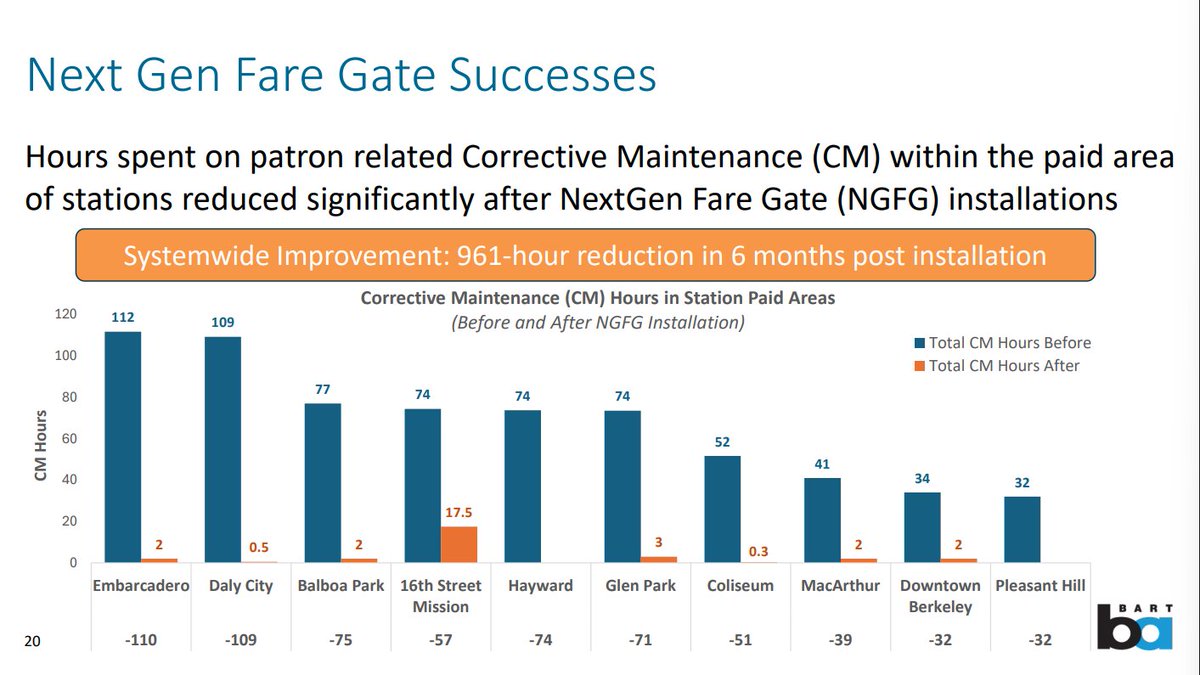
ALT This chart shows: Hours spent on patron related Corrective Maintenance (CM) within the paid area of stations reduced significantly after NextGen Fare Gate installations. Systemwide Improvement: 961-hour reduction in 6 months post installation.
309
1,909
20,541
3,590,447
James Nicholson retweeted

Jan 30
I will never get over how the banking lobby looked at GENIUS' yield prohibition and said "Looks good. You kids have fun with your Bitcoin and your crypto and everything else you're playing with" and now Jamie Dimon is losing it on Brian Armstrong now realizing the implications.

12
6
143
16,146
James Nicholson retweeted

23 Dec 2025
413
930
7,493
5,228,718
James Nicholson retweeted

1 Dec 2025
Huge from the PM.
Starmer accepts the Fingleton Review *and* pledges to extend it to other infrastructure: data centres, railways, tramways, towns, labs, and more.
Massive, and a big shift from the Treasury's equivocation. Implementation will be a big battle, but we can win.
1 Dec 2025

The BIGGEST change to nuclear regulation in the history of this country.
Government was set to bottle it.
YOU pushed for it, you tweeted, you shared videos, you signed letters and you didn't let up.
Govt gave in. They accepted these RADICAL CHANGES.
Now we hold them to it.
68
249
2,259
635,697
James Nicholson retweeted

24 Nov 2025
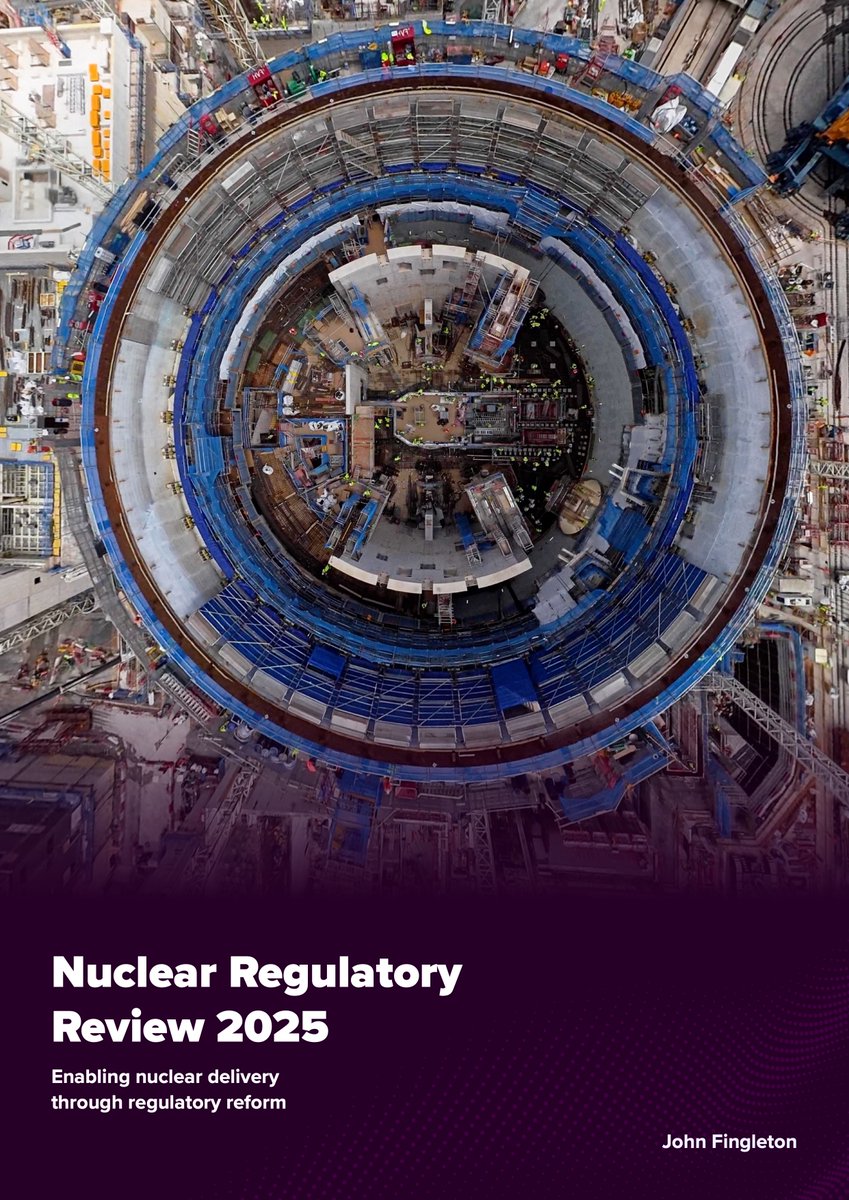
Britain needs nuclear power. Our nuclear projects are the most expensive in the world and among the slowest. Regulators and industry are paralysed by risk aversion. This can change. For Britain to prosper, it must.
Earlier this year, the Prime Minister appointed me to lead a Taskforce to set out a path to getting affordable, fast nuclear power Britain.
Our final report today sets out 47 recommendations, among them:
- Creating a one-stop shop for nuclear approvals, to end the regulatory merry-go-round that delays projects at the moment.
- Simplifying environmental rules to avoid extreme outcomes like Hinkley Point C spending £700m on systems to protect one salmon every ten years, while enhancing nuclear's impact on nature.
- Limiting the ability of spurious legal challenges to delay nuclear projects, which adds huge cost and delay throughout the supply chain.
- Approving fleets of reactors, so that Britain’s nuclear industry can benefit from certainty and economies of scale.
- Directing regulators to factor in cost to their behaviour, and changing their culture to allow building cheaply, quickly and safely.
- Changing the culture of the nuclear industry to end gold-plating and focus on efficient, safe delivery.
If the government adopts our report in full, it will send a signal to investors that it is serious about pro-growth reform and taking on vested interests for the public good.
A thriving British nuclear industry producing abundant, affordable energy would be good for jobs, good for manufacturing, good for the climate, and good for the cost of living. And it could enable Britain to become an AI and technology superpower.
Britain can be a world leader in this new Industrial Revolution, but only if it has the energy to power it.
Our report is bold, but balanced. Our recommendations, taken together and properly implemented, will forge a clear path for stronger economic growth through improved productivity and innovation. This is a prize worth fighting for.
gov.uk/government/publicatio…
192
636
3,015
1,612,402
James Nicholson retweeted

24 Nov 2025
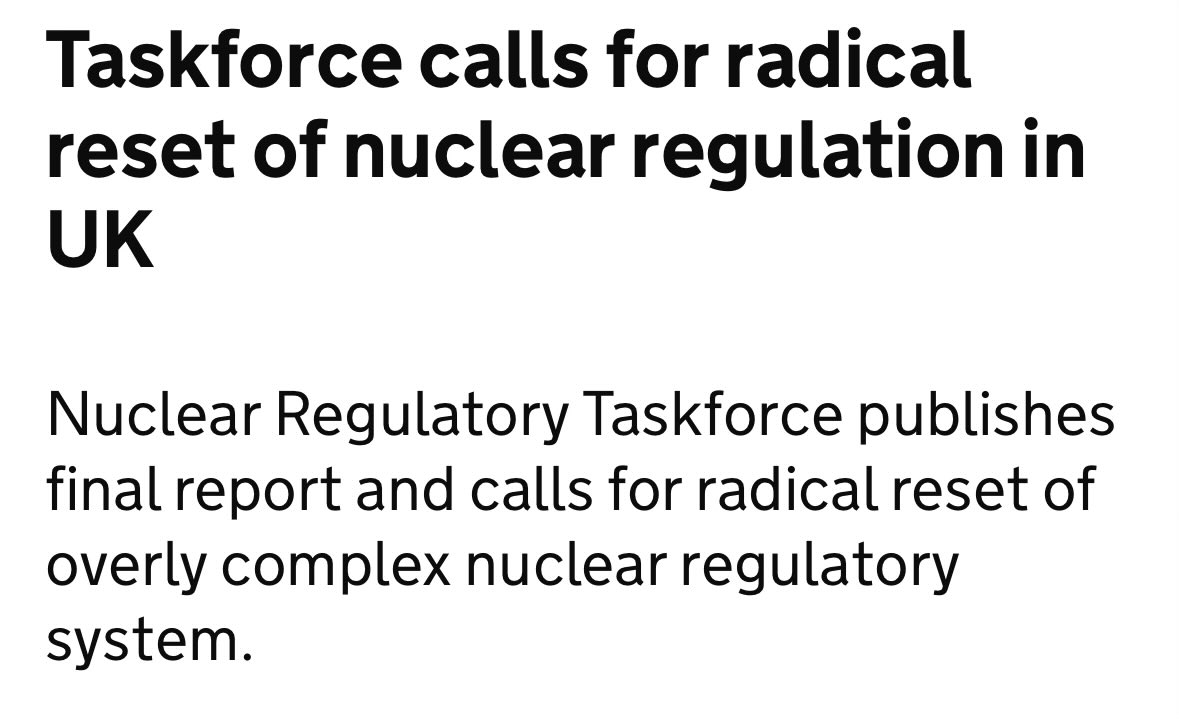
☢️ NEW: The Nuclear Regulatory Taskforce has submitted a radical plan to fix nuclear policy in Britain. It could save taxpayers billions and cut UK build costs from the world’s highest to cheaper than France and Finland.
It contains example after example of how disproportionate regulation has made it more expensive to build new nuclear plants.
- £700m was spent on fish protection at Hinkley Point C to save a tiny number of fish at a cost of £280,000 per fish
- £60m was spent building a pipe to pump groundwater 500m offshore because naturally-occuring metals in the water breached Environment Agency rules.
- GE-Hitachi had to fight the Office for Nuclear Regulation to avoid being forced to radically change the design of their reactor (despite it operating safely abroad) because it wasn’t like the last plant built in the UK.
- One British vendor waited 241 days to get a license to export something to Norway.
- Sizewell C’s Environmental Impact Assessment (EIA) was 44,000 pages long. In the 1980s, four-fifths of EIAs were less than 100 pages long.
It recommends big changes:
- Nuclear plant builders could pay £1m per acre to fund nature recovery and avoid the requirement to build expensive nature mitigations like ‘fish discos’
- Major reform of As Low as Reasonably Practicable (ALARP), the key Health and Safety principle that has led to over-regulation of nuclear, including abolition of the concept of ‘gross disproportion’.
- Re-assessing the levels of radiation exposure regulators target to bring them in line with other risks.
- Raising the Aarhus Cost Caps, which allow NIMBYs to delay nuclear projects with JR and special measures to tackle the rise of ‘crowdfunded lawsuits’.
- Fixing planning so fleets of SMRs do not have to constantly re-assess settled matters.
- Changing outdated siting rules so nuclear plants can be built in more places like ex-coal plants.
- Reverse legal judgements like the Finch ruling for low-carbon tech to avoid pointless bureaucracy and legal risk.
- A new nuclear commission that sets above regulators and resolves disputes so disagreements can’t delay projects.
This is the best Government-commissioned report I’ve ever read.
The Chancellor will respond to it on Wednesday. She should implement it in full. And she should keep the team together and tell them to figure out what the hell went wrong with HS2 next.
46
266
1,767
657,385
James Nicholson retweeted

12 Nov 2025
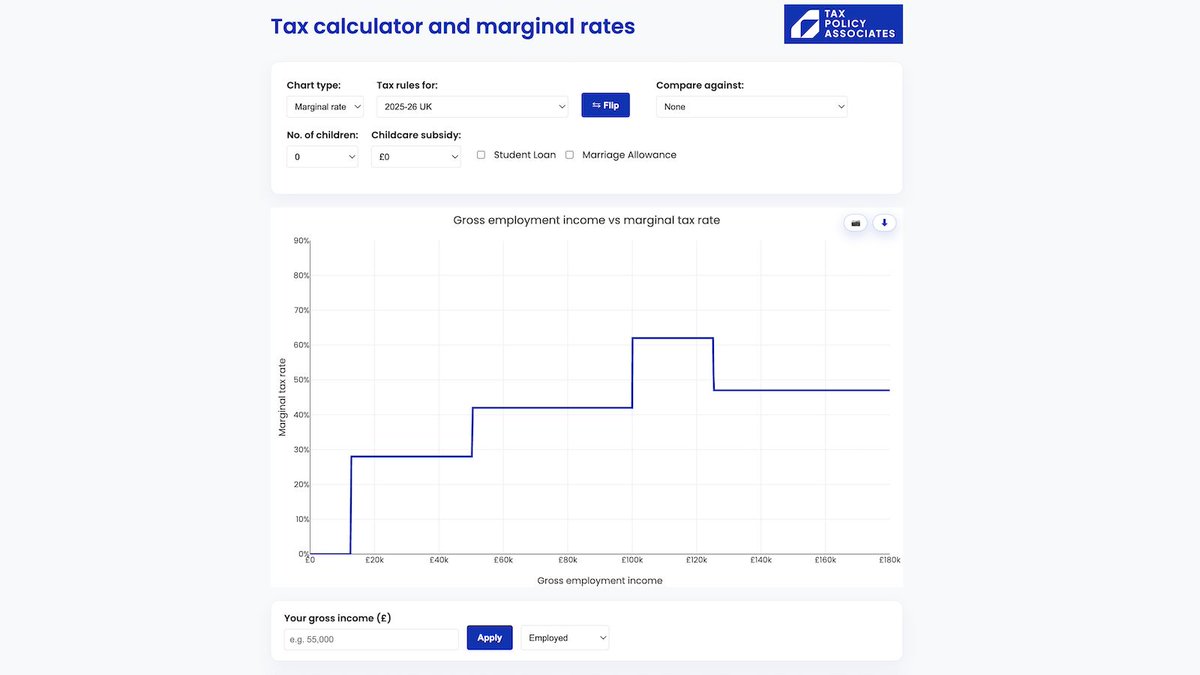
I proudly present the internet's nerdiest and prettiest tax calculator.
Other calculators just calculate your tax. This one calculates your tax now, and under various Budget proposals. And draws a pretty chart showing the marginal and effective rates for *everyone*.
62
116
893
171,164

Seeing is believing - we just published a new piece detailing the massive scale and investment implications of the Stargate project. This is just one, xAI’s and Hyperion are even bigger.
If any of you had any doubts - a year ago, most of this was dirt:
120
213
1,694
648,587
James Nicholson retweeted

6 Nov 2025
To do list:
✅ Take over Twitter
✅ Take over Times Square
1,214
157
2,030
220,288
James Nicholson retweeted

24 Oct 2025
NEW POST. All my thoughts from the weird and wild world of toddler fatherhood.
waitbutwhy.com/2025/10/toddl…
79
122
1,725
625,384
James Nicholson retweeted

21 Oct 2025
We started building Echo around 2 years ago in an attempt to try and change the market dynamics around crypto fundraising.
Today, we're joining Coinbase, but the mission stays the same.
We're gonna use the firepower of this behemoth to provide better opportunities to investors and better fundraising options to founders.
Just getting started. Cheers.
Cobie
21 Oct 2025
Bringing back Up Only was just the warm up.
We’ve acquired @echodotxyz, the leading onchain capital raising platform.
→ Joining builders with community capital
→ Giving investors access to new opportunities
→ Growing economic freedom worldwide
598
340
4,398
608,703
James Nicholson retweeted
16 Oct 2025
Anyone that ever invested in a deal on Echo should be eligible for Monad airdrop. Sending instructions on how you can add your claim to their site shortly. Gmonad.
791
265
3,495
853,913
James Nicholson retweeted

11 Oct 2025
i am in europe, there is no such thing as tech, only cone full of ham

178
111
5,927
253,846