Joined December 2009
- Tweets 67,276
- Following 1,378
- Followers 96,753
- Likes 275,927
1,380 Photos and videos












Pinned Tweet

2 Aug 2024
Energy abundance is the root of the policy tree, the big unlocker.
With energy abundance, you have factories, jobs, national security, energy security, food security, water security (desalination), GDP and so much more.
With energy scarcity, you have foreign wars over scarce resources, famine, poverty, all the ghost factories never built and the ghost jobs never generated.
56
47
288
283,130
41m
ReactOS, aka open source Windows, still alive and kicking and making milestones: phoronix.com/news/ReactOS-Ru…
1
2
182
Jeff Garzik retweeted

17h
EVERYTHING IS BOM

16 Sep 2023

Open Source Manufacturing.
Design global. Manufacture local.
Starts with an open source BOM directory.
24
92
1,360
57,058
Jeff Garzik retweeted

Jun 13
FREE TO READ:
The top-10 reasons why oil prices are below $100 a barrel.
1) China, China and China
2) Demand destruction
3) Lots of oil bypassing/leaving the Strait of Hormuz
4) The original oversupply
5) Huge SPR release / commercial stocks draw
6) Refinery flexibility
7) Trump's jawboning
8) Options market development
9) The fog of war is thinner
10) Soaring Americas oil output
bloomberg.com/opinion/articl…
67
239
964
130,692

Jun 13
With AI agents, Bitcoin dreams from 2013 are finally coming to life in 2026: garzikrants.blogspot.com/201…
1
3
467
Jeff Garzik retweeted

Jun 13
Jun 12

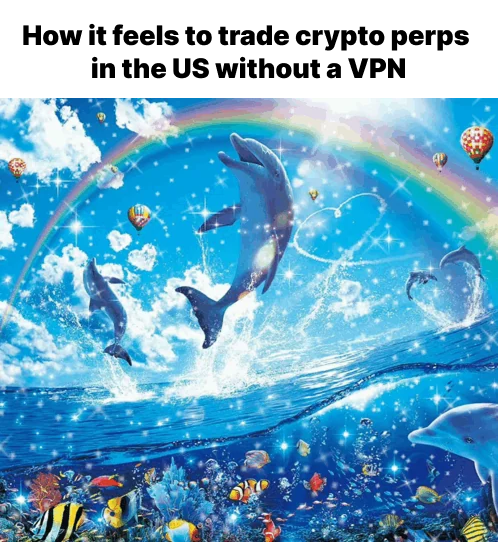
With over $200B of trading volume in the US alone, we'll just call them what they always were.
US Perps.
22 assets. Institutional-grade liquidity. No expiration.
Live on Coinbase (for a year now).

74
38
319
67,252
Jeff Garzik retweeted

Jun 12
here is a link to the final SpaceX roadshow deck.
what a fun read.
s21.q4cdn.com/184289198/file…
5
36
379
77,543
Jeff Garzik retweeted

Jun 12
Today feels like a good day to reshare this clip of Ariane Aerospace’s CEO calling SpaceX’s reusability plans “a dream”
408
1,190
10,035
1,505,309
Jeff Garzik retweeted

Jun 12
NEW PREPRINT: Scientists may have found direct evidence that aging is driven by the loss of cellular information, not just the accumulation of damage
For decades we've focused on what aging cells accumulate. This paper focuses on what they lose: Information.
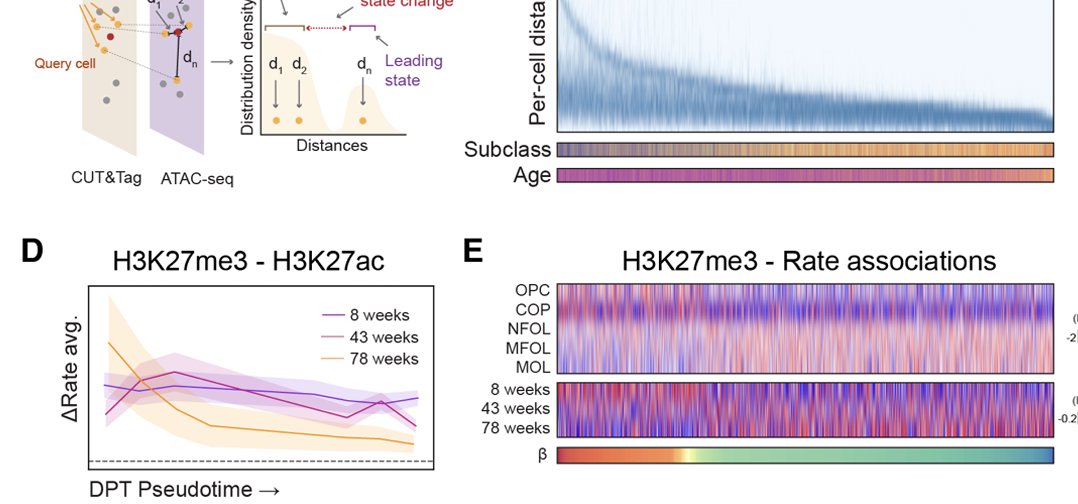
Using a new technology called SeqTag, researchers measured gene expression, chromatin accessibility, and histone modifications in the same aging cells.
What they found was striking: the regulatory systems that tell cells who they are become increasingly out of sync with age. The authors call this "molecular asynchrony."
As cells age, chromatin structure, histone marks, and gene expression begin drifting apart. Regulatory entropy rises. Repressive chromatin erodes. Cells become less certain of their identity and more likely to drift toward alternative fates.
This is what the Information Theory of Aging (ITOA) states: that aging occurs when cells lose epigenetic information, the instructions that tell the genome how to maintain youthful function. DNA may remain largely unchanged, but the system that reads it gradually loses fidelity.
What's remarkable is that this paper doesn't just describe this phenomenon. It quantifies it. The authors measure increasing regulatory entropy, loss of H3K27me3-mediated repression, erosion of heterochromatin, weakening lineage fidelity, and increased cell-fate drift during aging. In progenitor cells, the barriers that normally preserve cellular identity become progressively weaker with age.
Mechanistically, the study argues that aging is associated with increasing molecular asynchrony between chromatin accessibility, H3K27ac/H3K27me3 remodeling, and transcriptional state.
This decoupling is accompanied by increased regulatory entropy, loss of repressive chromatin architecture, and weakening of lineage constraints. Genes affected are those involved in chromatin organization, DNA damage, and Wnt signaling, consistent with ITOA.
Importantly, the authors provide quantitative evidence that age-related heterochromatin erosion lowers the energetic barriers that maintain cell identity, offering a potential mechanistic link between epigenetic information loss, cell-fate drift, and late-life disease susceptibility 👏
62
256
1,646
69,447
Jeff Garzik retweeted

Jun 12
Goal of the Jones Act: national security resilience, economic self-sufficiency, maritime labor force.
Reality of the Jones Act: Tiny non-defense shipbuilding industry and labor force that is irrelevant to wartime logistics. Higher prices on intermediate and consumer goods.
4
32
545
20,899
Jeff Garzik retweeted

Jun 12
Flagging this because I don’t think it got enough attention in policy circles:
YC is saying EVERY one of their startups will use crypto, soon.
Folks need to excise thoughts that this issue doesn’t matter from their minds.
Jun 11

We're excited about the US CLARITY Act.
We think all YC companies will use crypto technology, like stablecoins, before long. Not just crypto startups, not just fintech startups, but every company.
Here's why this law is such a big deal 🧵
x.com/SenLummis/status/20637…
7
16
75
11,645
Jun 12
My own, frequent quote over the past two decades:
Turning science fiction into science fact.
(Not referring specifically to SpaceX or Elon, but building and advancement, more broadly)
Jun 12

elon at starbase ahead of the IPO - the goal, he said, is “to take the fiction out of the science fiction”
2
688
Jeff Garzik retweeted

Jun 11
JUST IN: 🇯🇵 Japan advances bill to reclassify cryptocurrencies as financial products and cut taxes from 55% to 20%.
536
1,911
15,730
738,256
Jeff Garzik retweeted

Jun 11
We're excited about the US CLARITY Act.
We think all YC companies will use crypto technology, like stablecoins, before long. Not just crypto startups, not just fintech startups, but every company.
Here's why this law is such a big deal 🧵
x.com/SenLummis/status/20637…

The Clarity Act passed committee. The floor is next. We did not come this far to quit at the 5 yard line.
69
266
1,546
259,597
Jeff Garzik retweeted

Jun 10
As AI agents begin to act, payments move into the background — at machine speed and massive scale.
Today we’re introducing Mastercard Agent Pay for Machines — bringing structure, governance, and trust to this new class of payments.
Launching with 30 partners to bring this to life from day one.
This isn’t just more payments. It’s a new operating model for commerce.
👉 Learn more: mastercard.com/us/en/news-an…
332
1,045
4,472
1,291,077



Jeff Garzik retweeted

Jun 9
A digital ID is just an ID until access to banking, travel, employment, communications, payments, government services, and online activity starts depending on it.
Then it stops being merely identification and starts becoming permission.
The bigger risk is that a single system becomes a bottleneck between you and activities that were previously independent of government approval.

I promise you Digital ID will cause you far more trouble than it will solve, between having your identity easily stolen by hackers and being unable to access things you used to use with no hassle without it.
You will curse it, no one wants or needs this trash.
4
29
116
2,892
Jeff Garzik retweeted

Jun 10
The scary part about Anthorpic's Fable nerf is not that it refuses to answer biology or cryptography. It's that it foreshadows what's coming. A world where a couple companies decide what you can and cannot do. They're building a new ruling class and you're not in it...
464
1,308
13,887
729,024