
A Lover of GOD | DevOps | Cloud infrastructure
Joined May 2010
- Tweets 4,859
- Following 441
- Followers 524
- Likes 10,591
189 Photos and videos












Pinned Tweet

9 Mar 2019
Personal growth comes from changing your belief about what you can do and what is possible for you.
1
1
12


Mar 18
Eze's goal feels like a goal shegz of super strikers will score at last minute to win the game 🤣

44
Feb 2
The famous myles "purpose" Azusa message.
That was the message that blew him.
The story behind that message was a miracle.
Feb 2

If you don't know the purpose of a thing, you will abuse it.
Wow!! This just blew me up!!🔥
Too much wisdom📌📌📌
1
34
Jan 16
Learning is error correction.

Naval Ravikant on why it's 10,000 iterations, not 10,000 hours:
"The only true test of intelligence is if you get what you want out of life. And there are two parts to that: one is getting what you want, so you know how to get it. And the second is wanting the right things, knowing what to want in the first place."
Naval believes most people are proceeding unconsciously through life.
As he puts it:
"If you're not careful you can end up in a place in life not only that you don't want to be, but one that you didn't even mean to get to. Usually, people end up there because they are going on autopilot with societal expectations or people's expectations. Out of guilt or mimetic desire, our desires are picked up from other people."
On how little time we spend deciding:
"We run on these four-year cycles. You go join a startup, you vest your stock over four years. College you go for four years, high school you go for four years. These are very long cycles, the amount of time we spend deciding what to do and who to do it with? Very short. Very, very short."
He continues:
"We spend three months deciding, one month deciding on a job where we're going to be for 10 years or 5 years. People decide frivolously which city to live in and that's going to decide who their friends are, what their jobs are, their opportunity, their weather, their food supply, their air supply, quality of life. It's such an important decision but people spend so little time thinking it through."
His rule:
"I would argue that if you're making a four-year decision, spend a year thinking it through. Like really thinking it. 25% of the time."
On the secretary theorem:
"The optimal time to search is somewhere around a third of the way through. You take the best person you've worked with and try to find someone that good or better. By the time you've got about a third of the way through, you have seen enough that you now have a sense of what the bar is. Then anybody who meets or exceeds that bar is good enough."
But here's the catch:
"It's actually not time-based; it's not based on one-third of the time, it's iteration-based. The number of candidates, the number of shots you took on goal. So you want to have lots and lots of iterations. You need to bail out quickly, and you need to be decisive quickly."
On failed relationships:
"If you go back and you look through failed relationships, probably the biggest regret will be staying in the relationship after you knew it was over. The moment you knew it wasn't going to work out, you should have moved on."
His reframe of Malcolm Gladwell's 10,000 hours:
"I would say it's actually 10,000 iterations to Mastery. It's not actually 10,000; it's some unknown number, but it's about the number of iterations that drives a learning curve. Iteration is not repetition—repetition is doing the same thing over and over. Iteration is modifying it with a learning and then doing another version of it. That's error correction."
On modern society:
"Modern society is far more forgiving of failure. Once you find the one business you're meant to plow into and compound returns, it's okay if you had 50 small failed ventures or 50 small failed job interviews. The number of failures doesn't matter."
His approach:
"You want to be skeptical about specific things—every specific opportunity is probably a fail. But you want to be optimistic in the general. Something in here is going to work out. You want to investigate and explore very, very quickly until you find the match. And then you have to be willing to go all in."
On labels:
"Labels like pessimist, optimist, cynic, introvert, extrovert, these are very self-limiting. Don't define yourself by trauma or PTSD because then you lock it into your identity and you're just going to loop on it. It's better to stay flexible because reality is always changing and you have to be able to adapt to it."
Spend a year deciding. Take 10,000 iterations. Then go all in.
24
Jide Falaki retweeted

Jan 13
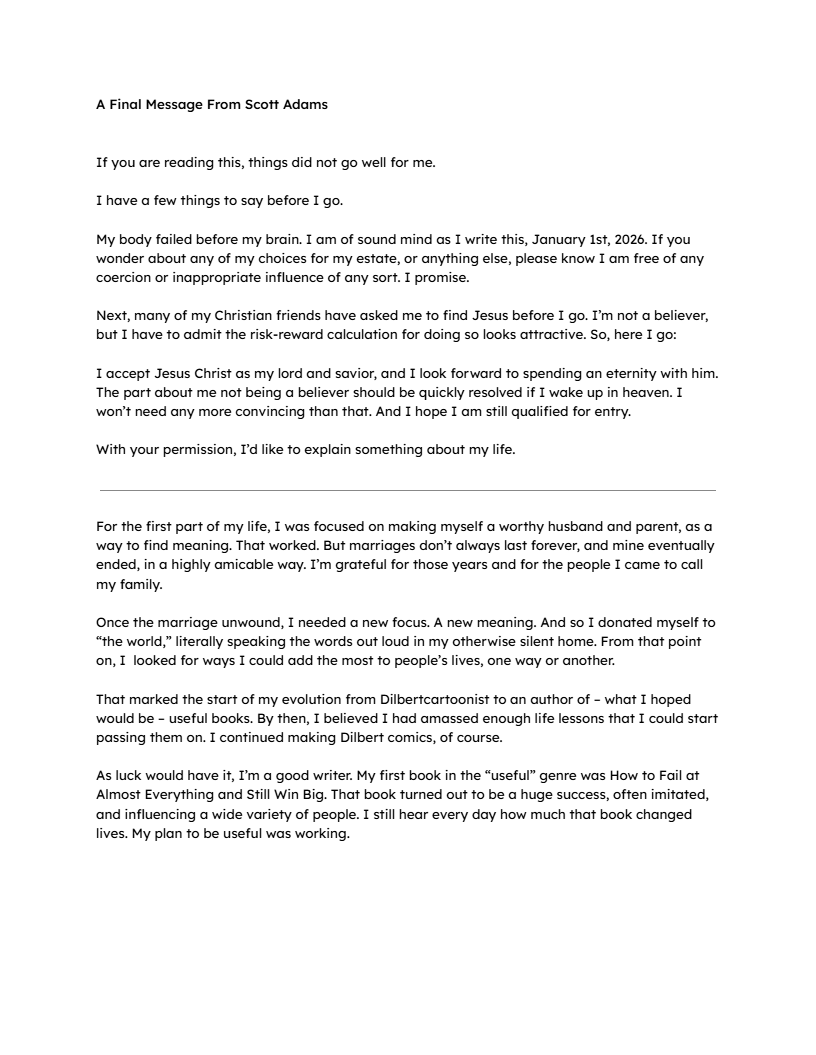
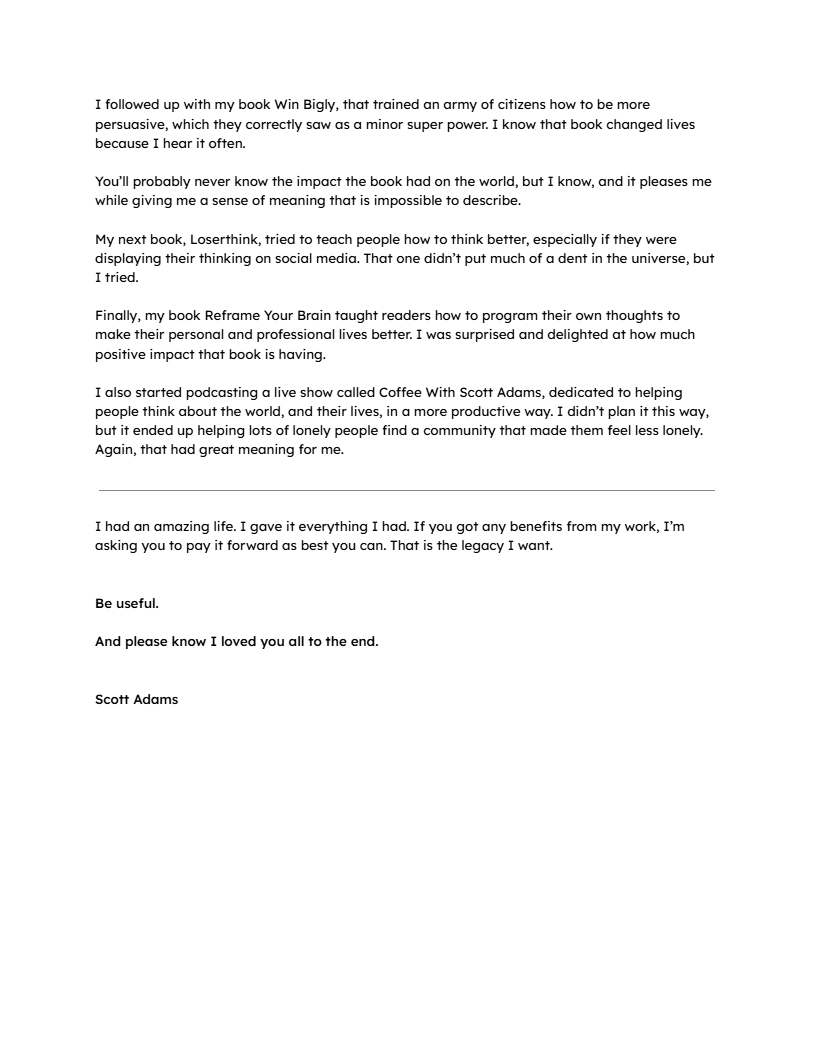
A Final Message From Scott Adams
13,073
31,660
190,418
43,090,481
Jide Falaki retweeted

16 Nov 2025
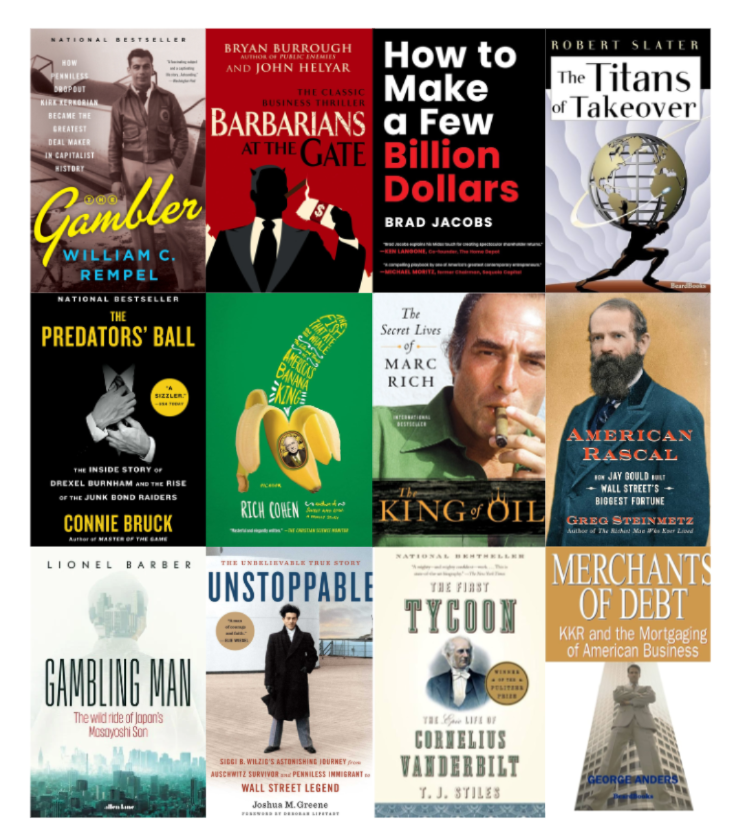
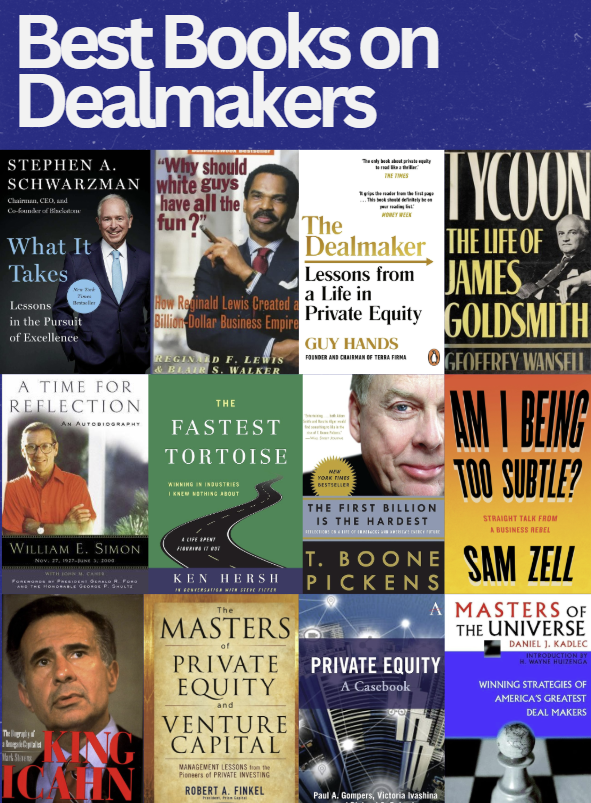
Top Books on Dealmakers (Part II)

9
110
986
72,840
Jide Falaki retweeted

14 Nov 2025
This guy explained how toppers study & how to copy them (in 1:30 Min)
13
503
2,812
93,405

Jide Falaki retweeted

7 Nov 2025
Be delusional enough to believe that it's possible. Be disciplined enough to prove yourself right.
102
2,937
14,478
268,080
8 Nov 2025
That "One Thing".

One of the best things I’ve heard @naval say and you’ve probably never heard this so I’ll just drop it here. Ties to the theory of analogy and natural philosophy.
75
Jide Falaki retweeted

7 Nov 2025
It doesn’t make sense to continue wanting something if you’re not willing to do what it takes to get it.
If you don’t want to live the lifestyle, then release yourself from the desire. To crave the result but not the process, is to guarantee disappointment.
164
1,157
6,359
204,098
Jide Falaki retweeted

31 Oct 2025
My fiancée and I got engaged a year ago, and our relationship has been so much better since then.
Materially, nothing’s really changed. We already lived together, shared a credit card, had group chats with each other’s families...
But getting engaged led to a mindset shift. We stopped evaluating each other (e.g., are they the right person for me?) and got to work building the best life possible with our relationship as a given. And that has been incredibly freeing.
For example, I’m convinced that a lot of our past conflicts were just uncertainty in disguise. When we'd fight, it wasn't actually just, “we disagree, let's resolve this issue." There was unspoken subtext: “Is this disagreement a dealbreaker? Do I need to put up with this? Would life be easier with someone else?"
Since getting engaged, we resolve conflict so much faster. We skip the “does this mean we’re incompatible?” step and jump straight to “how can we solve this as quickly as possible?”
Another huge positive is that thinking about our future has become way more fun. We’re fully a team now, and we can plan and dream together: her future is mine, and mine is hers.
The point I want to emphasize is that the only thing that changed about our relationship was our commitment to it. But that was all it took!
Things don’t need to be perfect first. Commit to something, and by doing so, you make it great.
31 Oct 2025

Optimizing for optionality doesn’t make any sense. What’s the point of leaving all these paths open if you never take one? The greatest things in life require commitment.
88
1,772
11,809
1,685,190
29 Oct 2025
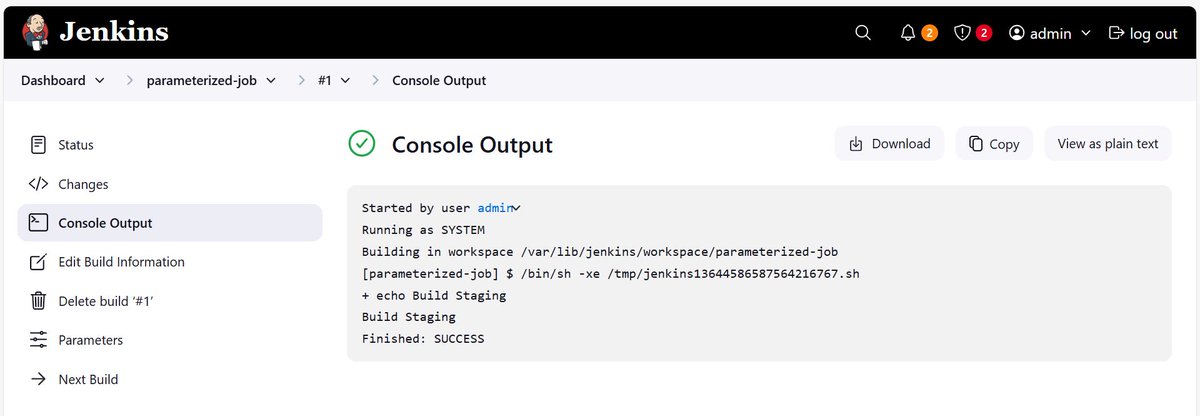
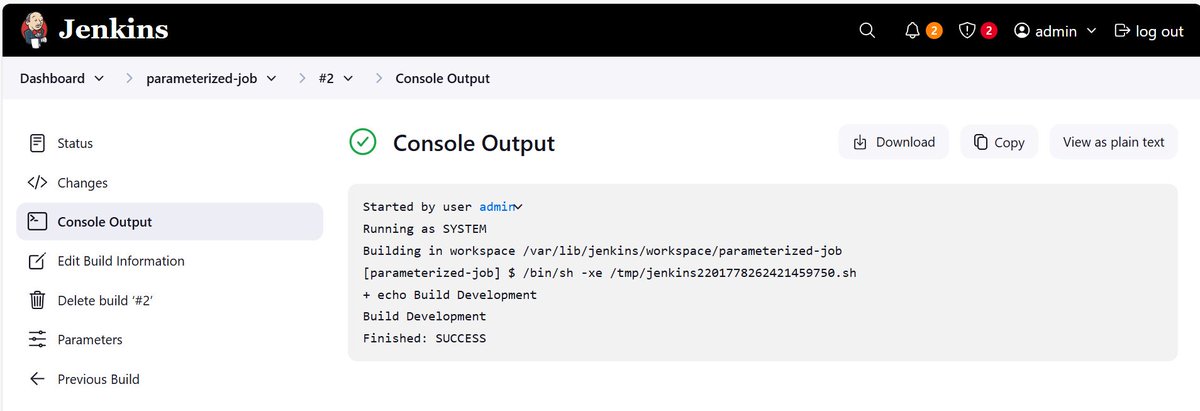
Day 72 of #100DaysOfDevOps with @KodeKloudHQ - Jenkins Parameterized Builds
Today's Task is to create a parameterized Jenkins job named parameterized-job with the following:
1. A string parameter named Stage with default value Build
#Jenkins
28 Oct 2025

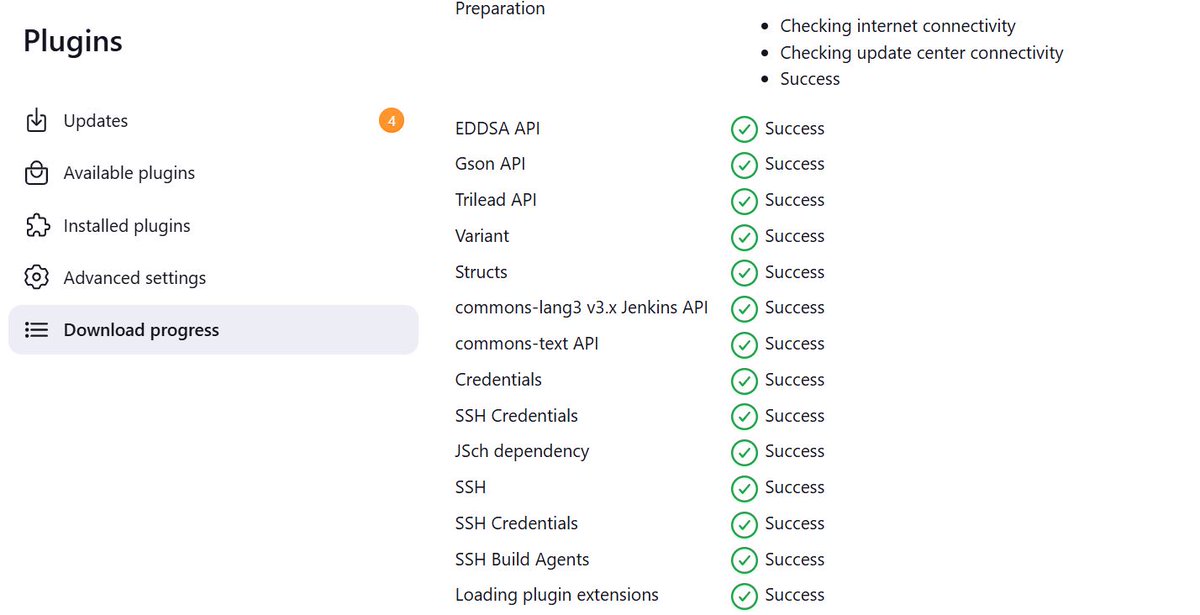
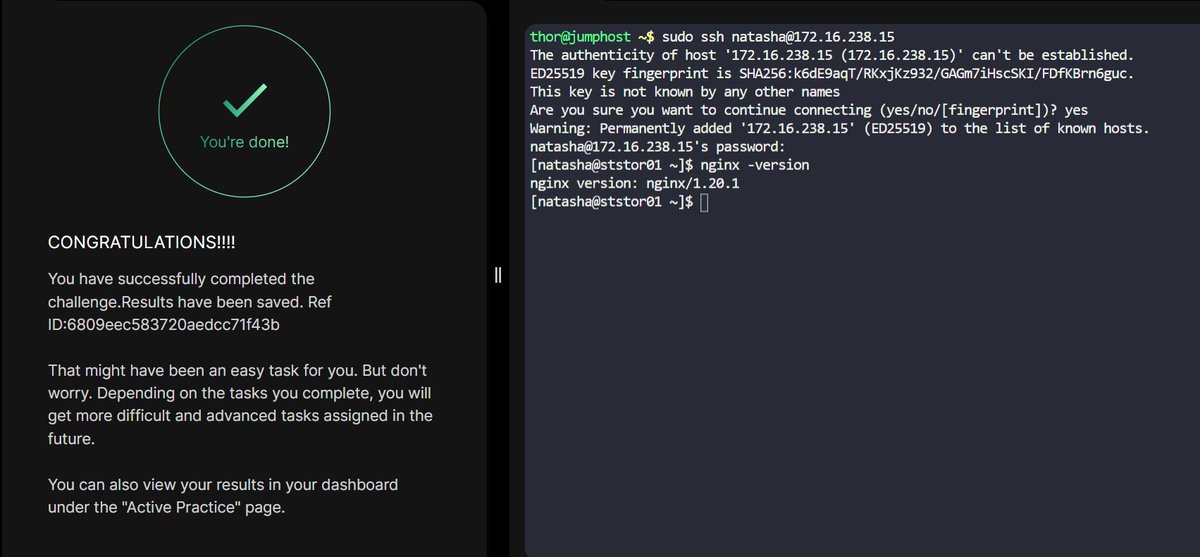
Day 71 of #100DaysOfDevOps with @KodeKloudHQ - Configure Jenkins Job for Package Installation
Today's Task is to create a new Jenkins job named install-packages with a string parameter PACKAGE.
Steps:
- Access Jenkins UI
- Install SH plugins
#Jenkins

1
1
43
29 Oct 2025
2. A choice parameter named env with choices: Development, Staging, Production.
3. A shell command that echoes both parameter values
4. Then build the job with the choice parameter set to Production
Steps:
- Access Jenkins UI
- Create New Parameterized
- Configure Parameters
1
21