
aka Doctor Aunt Jane, physician in private practice, general internal medicine; executive director, Association of American Physicians and Surgeons
Joined March 2009
- Tweets 33,399
- Following 5,416
- Followers 9,741
- Likes 7,561
96 Photos and videos





Jane Orient, MD retweeted

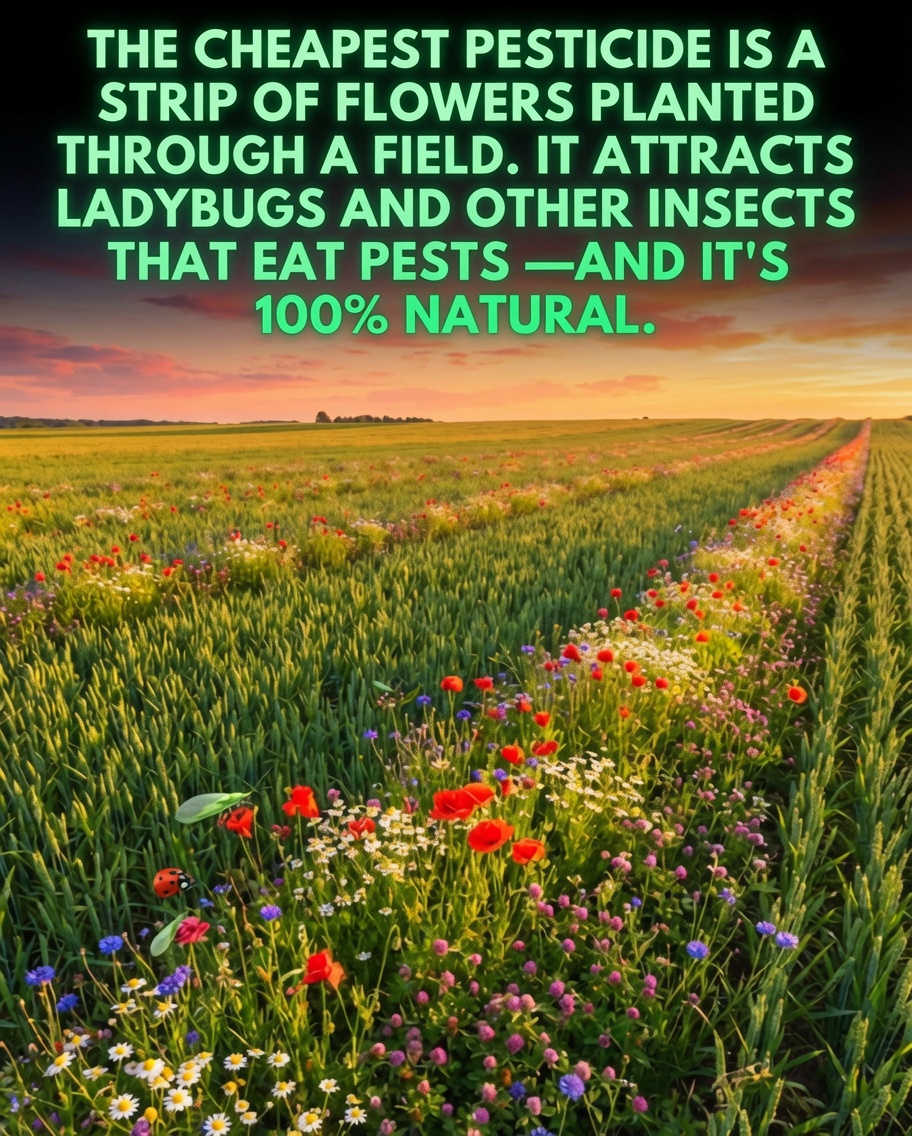
By planting strips of flowers among their crops, farmers are tapping into nature’s own pest control system to dramatically reduce the need for chemical pesticides.
This smart practice, known as farmscaping, involves strategically integrating flower strips into croplands. These floral corridors create ecological havens that supply pollen, nectar, and shelter for beneficial insects such as ladybugs, hoverflies, and parasitic wasps.
When pest numbers are low, the flowers provide essential food that keeps these natural predators in the area. As soon as pests appear, the beneficial insects are already on site and ready to hunt. Notably, ladybug larvae can consume up to ten times more aphids than adults, making them incredibly effective at protecting crops from aphids, mites, and other damaging pests.
For best results, experts recommend sowing a diverse mix of native, nectar-rich plants. Sweet alyssum is a favorite for attracting ladybugs, while herbs like dill, fennel, parsley, and cilantro support short-tongued beneficial insects. Adding daisy-family flowers such as yarrow, calendula, and marigolds helps maintain a balanced ecosystem.
By adopting this habitat-based approach, farmers can significantly cut back on chemical sprays, improve soil health, support greater biodiversity, and create safer working environments, all while maintaining or even boosting crop yields.
32
469
1,127
19,987

Economics Watch: Is Inflation ‘Good’? aapsonline.org/economics-wat… via @aapsonline
17
Jane Orient, MD retweeted

Jun 15
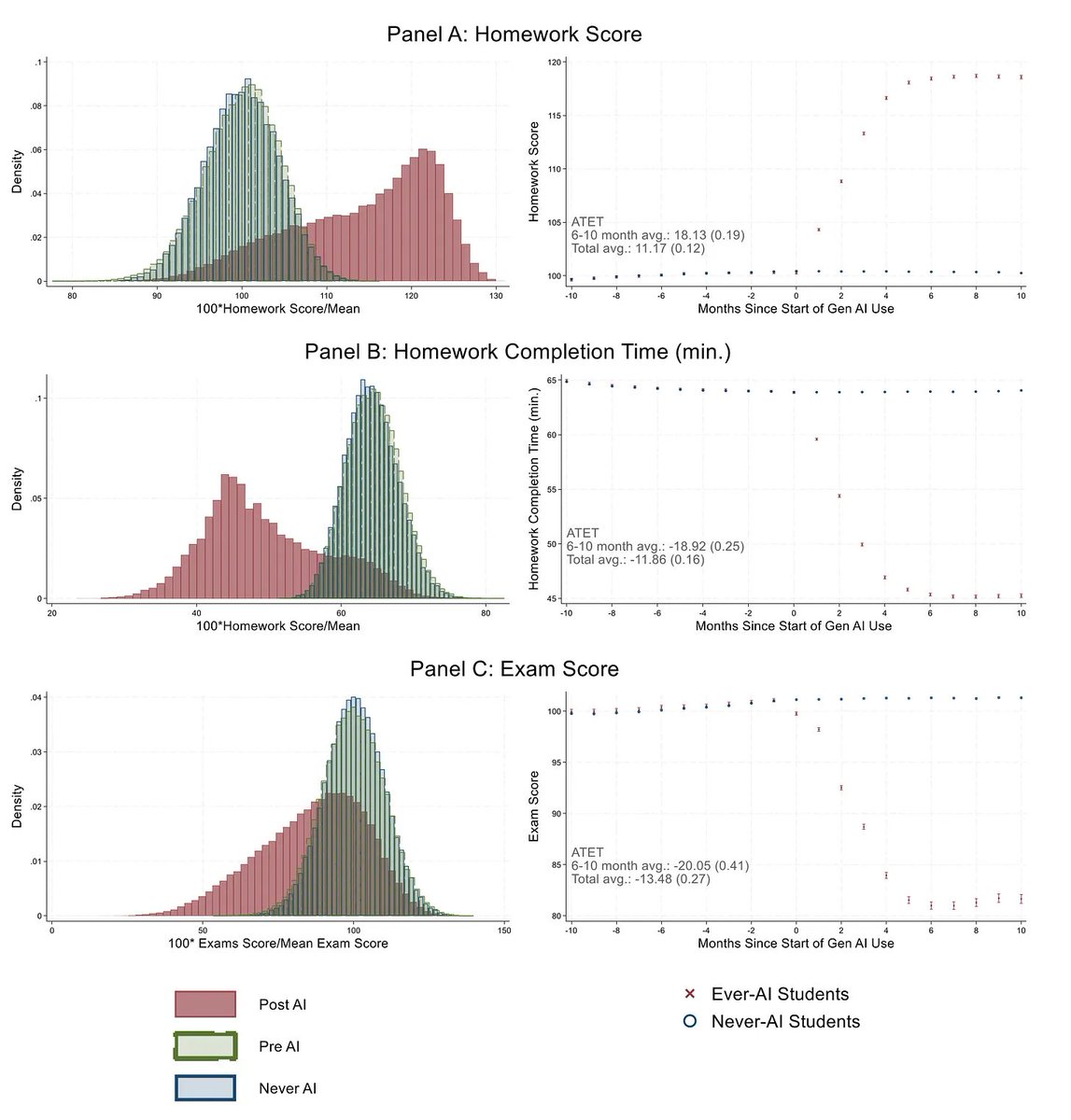
In einer grossen Studie wurde untersucht, wie sich die Leistung von über 26'000 Schülern in China während 30 Monaten veränderte, wenn sie anfingen, KI-Chatbots zu nutzen.
Ihre Hausaufgaben wurden rund 20% besser.
Sie benötigten für die Hausaufgaben rund 20% weniger Zeit.
Das ist super.
Aber: Bei Prüfungen (wo KI verboten ist) wurden sie rund 20% *schlechter*. Das ist eine massive Verschlechterung.
KI kann Denkkompetenz aufbauen, wenn sie als eine Art Tutor eingesetzt wird. Dann spricht man von kognitivem Scaffolding.
Die Realität ist aber, dass die Strategie des kognitiven Offloading der Weg des geringsten Widerstands ist: Denkarbeit an Chatbots auszulagern, ist instrumentell gesehen rational. Ein Fehlanreiz.
Diese Entwicklung ruiniert Bildung. Und sie ist ein systemisches Risiko: Was passiert, wenn eine ganze Generation noch weniger als frühere Generationen lernt, eigenständig zu denken?
79
701
2,089
258,172
Jane Orient, MD retweeted

Jun 14
Thank you, @TulsiGabbard, for vindicating me. In 2021, I published the docs. In 2022, I went to URK Biolabs, filmed it. MSM called me a Conspiracy Theorist, ignoring my evidence. @guardian = Guardian of Govt Treachery against the People. Also, Shame on @nytimes, @BBC , @wapo
298
3,559
13,125
421,782

The moment someone tells you Elon Musk should solve world poverty with his wealth, you're listening to someone who fundamentally misunderstands both wealth and poverty. Musk's billions exist almost entirely as Tesla and SpaceX stock, not cash sitting in a vault waiting to be redistributed.
The real issue runs deeper than liquidity. Poverty is fundamentally a productivity problem, not a resource shortage. If throwing money at poverty solved it, the $4.3 trillion the US government has spent on welfare programs since 1965 would have eliminated American poverty decades ago. Instead, the poverty rate has remained virtually unchanged since the War on Poverty began.
You can't redistribute your way out of poverty because wealth isn't a fixed pie that rich people hoard. Musk created his fortune by building companies that produce electric vehicles, rockets, and satellite internet. His wealth represents the market's valuation of those productive assets. When politicians demand he liquidate those holdings to fund welfare programs, they're demanding he destroy the very capital that generates ongoing prosperity.
The countries with the lowest poverty rates didn't achieve that through foreign aid or wealth transfers. South Korea went from Third World to First World status in two generations through property rights, free markets, and rule of law. Meanwhile, sub-Saharan Africa has received over $1 trillion in foreign aid since 1960 and remains impoverished. Poverty reduction requires institutions that enable production, not redistribution schemes.
Real poverty reduction happens when entrepreneurs like Musk build productive enterprises that create jobs, generate tax revenue, and drive down costs through innovation. But that requires you to understand that capitalism creates wealth rather than just moving it around.

163
554
1,619
57,391
Jane Orient, MD retweeted

Jun 15
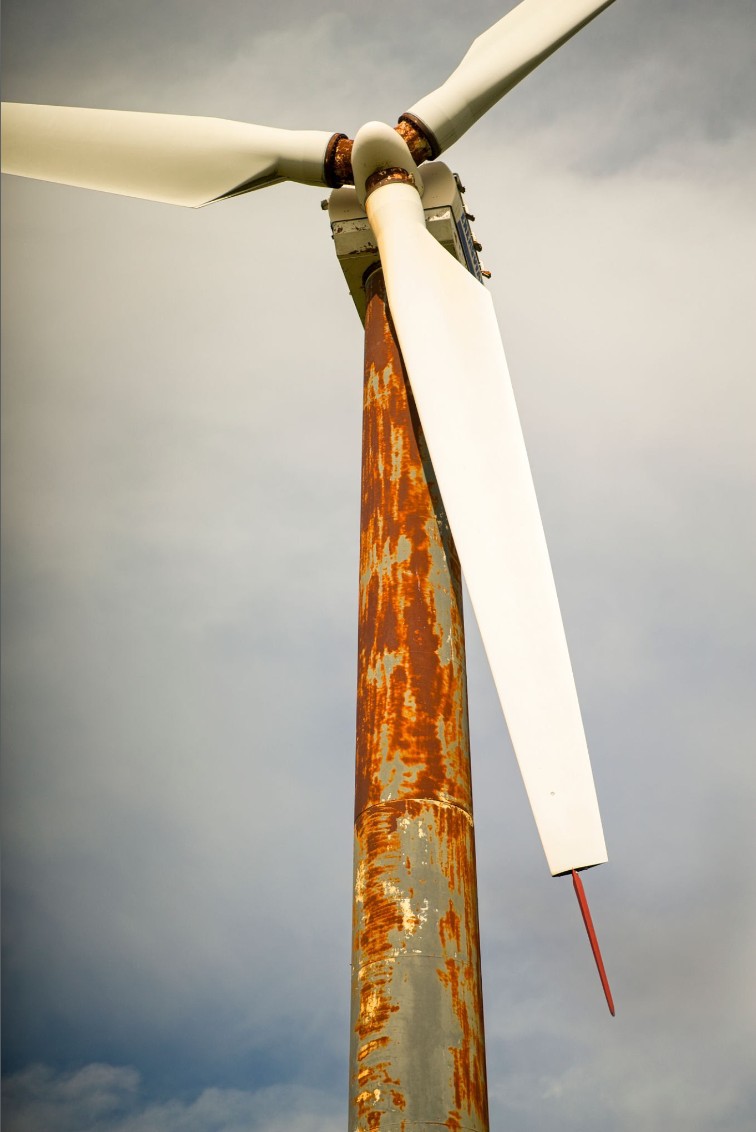
Offshore wind farms along the storm-swept coasts of the UK are the premature graveyards of corroding steel and plastic skeletons—bowing to the inevitable.
These are the volatile, often freezing seascapes of the windy North Sea, the Baltic Sea and Irish Sea, maritime zones that should provide ideal conditions for large-scale turbine farms - but don't. The wind industry and governments have long based their financial models on a projected 20- to 25-year turbine lifespan. But independent economic analysis reveals a more sobering reality.
The soaring power of the elements is starkly shown in a landmark study by energy and environmental economist Professor Gordon Hughes (University of Edinburgh), first published in 2012 by the Renewable Energy Foundation: 'The Performance of Wind Farms in the United Kingdom and Denmark'.
Hughes’ data reveals the performance of offshore turbines dropped sharply after just 10 to 15 years due to harsh marine wear and tear. As a consequence, their load factors - the volume of electricity generated as a percentage of capacity - decline much faster than the official narratives admit.
Many of these massive marine structures - primarily owned by UK and Danish interests - are hitting the wall after just a decade of buffeting from exposure to relentless Atlantic weather. Soaring maintenance costs make them highly unprofitable.
Specifically, the study showed that an offshore wind farm's ability to meet electricity demand plummeted by at least a third after 10 years. This led to the conclusion that many become fully uneconomic by year 12.
Rather than keeping these assets spinning for the promised quarter-century, many operators are now forced to 'repower' - replacing old turbines with entirely new hardware long before the 25-year target.
Turning the hardware over early is presented as an upgrade to maximise output, but it's really an admission that the original infrastructure simply cannot go the distance.
More importantly, it exposes a large PR gap between marketing and engineering reality.
Link to the study: epaw.org/documents.php?lang=…
83
756
1,604
44,323
Jane Orient, MD retweeted

Jun 14
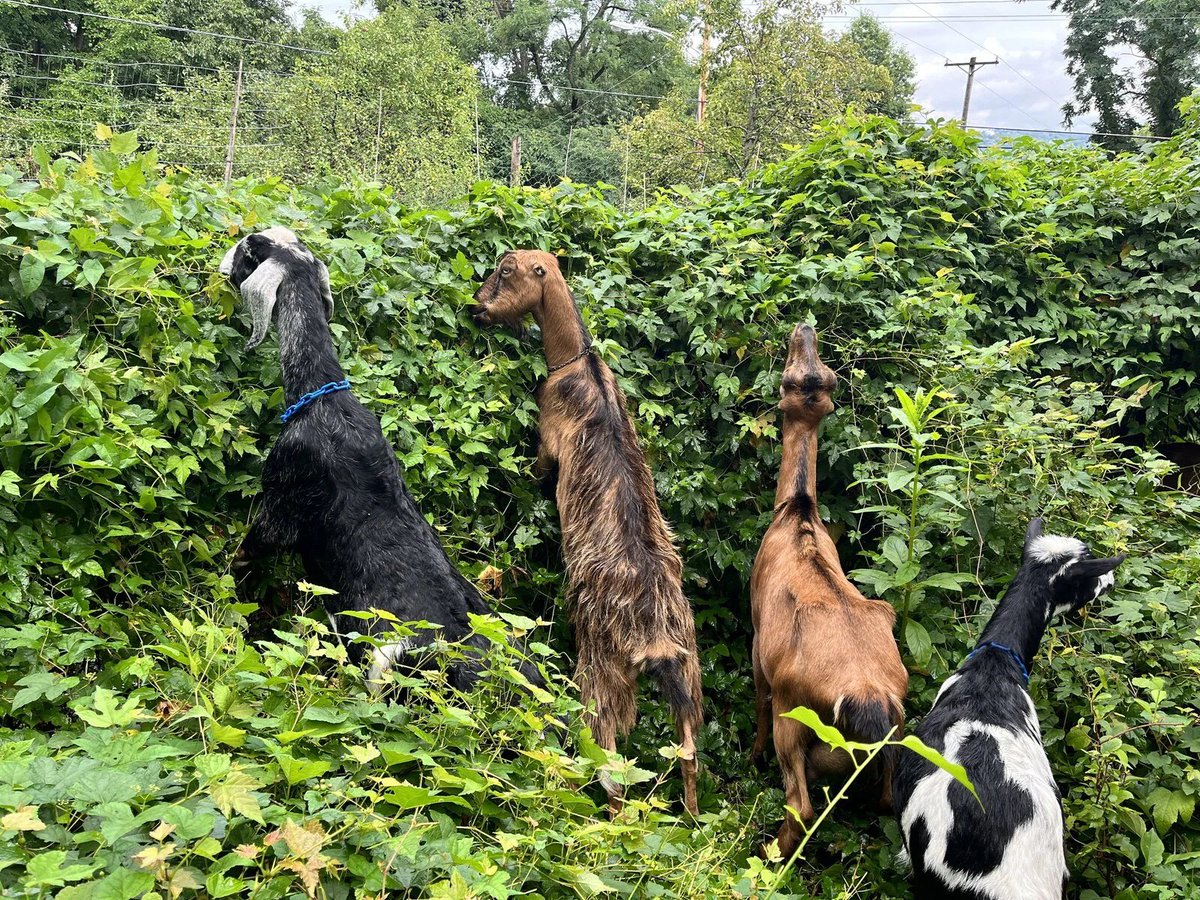
The goat gets left out of every serious conversation about sustainable food, which is a shame, because it does a job no other farm animal will touch.
A cow is a grazer. A sheep is a grazer. Both want grass, on ground that is at least walkable. The goat is a browser, and its tastes run somewhere else entirely:
- It eats scrub, bramble, gorse and thistle, the spiky stuff everything else avoids.
- It strips the woody growth and lower branches that choke a neglected hillside.
- It works terrain too steep, too rough, and too overgrown for cattle or sheep to bother with.
- It thrives on exactly the marginal, reverting, abandoned land that grows nothing anyone wants.
This makes the goat the pioneer of the whole system. Put goats onto a bramble-choked hillside and they browse it back, season by season, until grass can establish again. Once the grass comes, the sheep and cattle can follow. The goat opens ground the others could never use.
And at the end of it you get milk that many people who cannot tolerate cow dairy digest perfectly well, meat that more of the world's population eats than any other, and a cleared hillside that was an impenetrable thicket the year before.
The goat asks for the worst land on the farm and quietly makes it useful. It has been doing humanity's roughest groundwork for ten thousand years, and we still treat it as an afterthought with a comedy reputation.
100
823
3,385
50,092
Jane Orient, MD retweeted

Jun 14
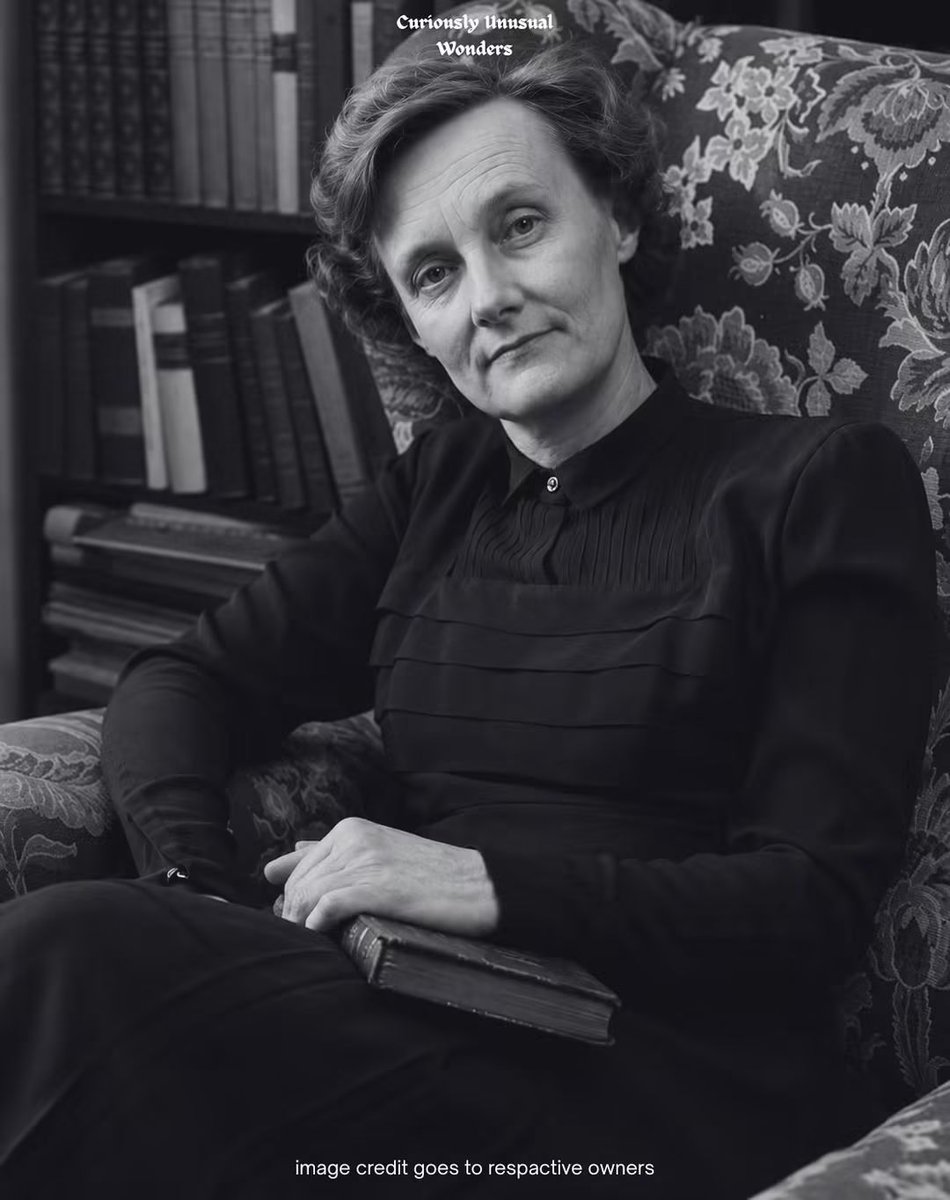
The Swedish government told her she owed 102% of her income in taxes. She was 68 years old, a children's book author, and held no political power. Yet, by writing a simple fairy tale, she helped topple a government that had ruled for 44 years.
Stockholm, 1976.
Astrid Lindgren opened her mail to find a tax assessment that defied logic. As Sweden’s most beloved author and the creator of Pippi Longstocking, her books had taught generations of children about courage, independence, and standing up to bullies. Now, she had to face a broken system of her own.
She read the document carefully, did the math, and realized the truth: due to a quirk in the law that combined regular income tax with self-employment fees, her marginal tax rate had hit 102%.
It was not a typo, nor was it a rounding error. One hundred and two percent.
If she paid what they demanded on her extra earnings, she would owe more than she actually made. She would literally go into debt for the privilege of working.
At 68 years old, she could have hired expensive accountants to quietly find loopholes and protect her wealth. She could have done what many powerful people do when systems overreach—safeguard her own position and leave everyone else to figure it out alone. Instead, she picked up her pen.
In March 1976, she published a satirical fairy tale in Expressen, a major Stockholm newspaper. It was called "Pomperipossa in Monismania" (Pomperipossa in Money-mania). It told the story of a successful author who loved her country and worked hard, only to discover a tax system designed to punish honesty and success.
The story was witty, precise, and impossible to misread. Pomperipossa was Astrid; Monismania was Sweden.
The ruling Social Democratic Party—which had governed Sweden for over forty consecutive years—was furious. Prime Minister Olof Palme went on the defensive, dismissively claiming in public that Lindgren was a wonderful storyteller but a terrible mathematician.
Astrid didn't back down. She stood by her numbers, and soon enough, the Ministry of Finance was forced to admit that her math was completely correct.
She began appearing on television and speaking out publicly, pointing out—with the calm, steady patience of someone used to explaining things to people who aren't listening—that a tax system taking more than 100% of a person's earnings wasn't progressive. It was absurd.
That September, Sweden held its national elections. For the first time in forty-four years, the Social Democratic Party lost power. While political analysts pointed to several contributing factors, like economic stagnation and inflation, everyone acknowledged that Astrid Lindgren’s tax revolt had fundamentally shifted the national conversation. She had made it safe to question a system that once seemed untouchable, giving a voice to frustrations millions of people felt but hadn't known how to articulate.
The new coalition government reformed the tax code, cutting the most extreme rates, and Astrid quietly went back to writing children's books.
But she never stopped paying attention. In the 1980s, when Sweden debated a new animal protection bill, she noticed loopholes that would still allow for cruel factory farming practices. She wrote articles, lobbied politicians, and testified before Parliament well into her eighties. In 1988, Sweden passed some of the strongest animal welfare laws in the world. It was widely nicknamed "Lex Lindgren" (Lindgren's Law) because everyone knew she was the driving force behind it.
Astrid Lindgren passed away in January 2002 at the age of ninety-four. Sweden honored her with a state funeral attended by the Royal Family and the prime minister, while thousands lined the streets of Stockholm.
But her true legacy lives on far outside of official ceremonies. Every child in Sweden still reads her books, every debate about fair taxation still references Pomperipossa, and animal welfare advocates across Europe still look to Lex Lindgren as proof of what is possible.
She never ran for office, nor did she ever build a formal political movement. She had no credentials in economics or public policy—just an extraordinary gift for storytelling. But she had spent decades writing about Pippi Longstocking, a girl who refused to follow rules that didn't make sense, stood up to bullies, and never shrank herself to make others comfortable.
Astrid Lindgren simply chose to live her life exactly like the hero she created. When authorities insisted that nonsense made sense, she refused to pretend along with them. And because she spoke up, the world listened.
30
722
2,419
74,105
Jane Orient, MD retweeted
Jun 14
Wind and solar are not viable as the world's primary energy source, not without endless backup from the dense baseload power of hydrocarbons.
Because renewable components face a strict 20-year operating life, we have inadvertently created an economic monster: a continuous loop of decommissioning, ransacking rare earth mines, and rebuilding the entire global fleet just to maintain the status quo - a material dead end.
Without fossil fuels to power the underlying mining, manufacturing and transport infrastructure, these wind and solar systems wouldn't even exist. Once installed, their intermittent energy cannot be integrated on a national scale without a completely new, parallel global power grid—an infrastructure sinkhole estimated to cost $21 trillion.
This massive building spree was only enabled by generous, ongoing subsidies from compliant governments, drawn into the vortex by a carefully engineered narrative of guilt over human progress. That narrative has struck home. Today, the Western nations that bought into it are in visible economic decline, with heavy industry vanishing and productive jobs being hollowed out.
Wind and solar gained traction as a boutique alternative based on the naive premise that because wind and sunlight are 'free', the infrastructure to capture them must be too. In reality, they are intensely material-heavy, placing unprecedented pressure on mining capabilities for ever-diminishing metals and rare earths.
To put the scale of this replacement loop into perspective, the global fleet represents the equivalent of 1.3 billion wind turbine units and 7 to 8 billion solar panels—all ticking down toward a 20-year shelf life.
According to McKinsey estimates, the total net-zero transition is currently costing an estimated $9.2 trillion every year, projecting to a staggering $275 trillion by 2050—the equivalent of two full years of global GDP. Yet, after 37 years of this non-stop narrative, hydrocarbons still provide roughly 81% of the world's primary energy.
We are chasing butterflies at the expense of industrial sovereignty. Was it only about rising globalism? Already, communities are pushing back, seeking to ban massive turbine blade graveyards and toxic solar panel e-waste from local landfill sites.
Ultimately, an energy strategy detached from physical and economic reality is destined to fail, leaving these imperfect technologies scattered as rusted wreckage across once-pristine landscapes and coastal horizons.
Without reliable energy, a modern world simply wouldn't exist.
Image: We should not take the majesty of these natural landscapes for granted.

55
490
1,017
13,440
Jane Orient, MD retweeted

Jun 13
This is the eruption of the underwater volcano at Titan Ridge, Central Bismarck Sea, which is ongoing since the 8th May 2026. The plume you see consists largely of water vapour, the planet's main greenhouse gas (95%). This is increasing our greenhouse gases daily, not you or me.

60
393
1,126
17,053
Jane Orient, MD retweeted
Jun 13
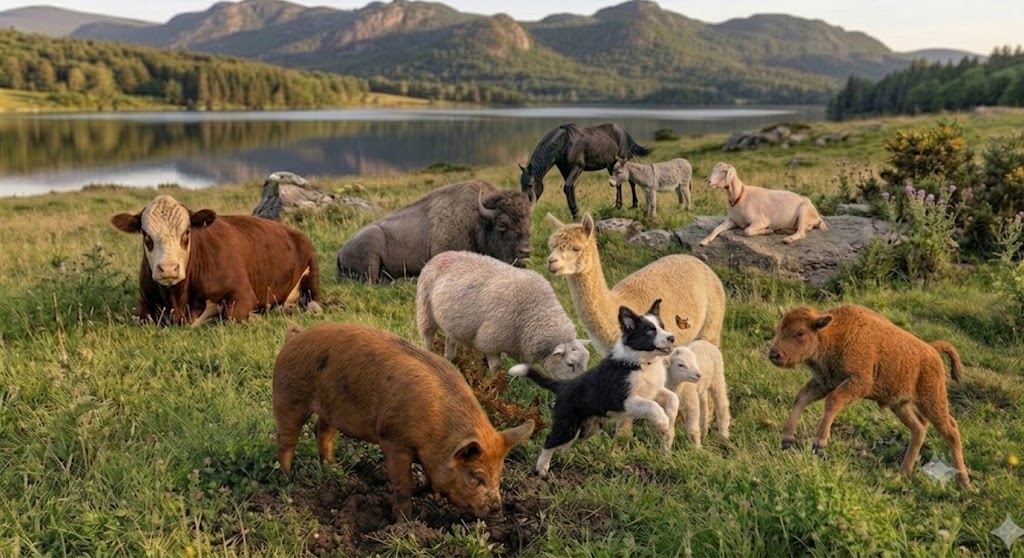
If you have just arrived and are wondering why so much of this account is given over to a bull, a ewe, a goat and a few other animals in fields you will never visit, stay a moment. There is a reason.
These are the Ruminati. Each is a living argument doing an ancient job, and between them they dismantle most of what the modern world believes about food, land, and who is to blame for the planet.
Gerald, a Hereford bull, has spent four years turning one corner of one field into wildflowers, and has never asked anyone to notice.
Doris, a Texel ewe, knows fifty faces and forecasts the weather better than the BBC. She is the answer to anyone who calls the animals we eat stupid.
Keith, an Anglo-Nubian goat, respects no fence in Devon and turns land no plough could touch into food.
Eduardo, an alpaca, grows a fibre finer than cashmere on Welsh rain, and is guarding an orphan lamb that has decided it is a small strange alpaca.
Freya, a European bison, is back on a hill her kind left six thousand years ago, raising a fox-coloured calf, Seren, who already leads the herd out in front of her.
Marged, a Tamworth pig, turns an old orchard over with her nose and hands it back richer than she found it.
Hector, a Cavalry Black, stood seventeen years for the Household Cavalry and has lately decided it is safe to lie down and sleep. And Moss, a collie pup, is learning the oldest job a dog has.
Here is what they stand for. You will have been told animals like these are wrecking the planet. The methane a grazing cow breathes out is carbon the grass pulled from the air last season and sent straight back, nothing like the ancient carbon we drag from the ground and burn. The wildflowers and the curlew are here because of the grazing animals, not despite them. Strip the livestock off a British hill and you do not get Eden. You get bracken, scrub and silence.
So this account exists to defend the British farmer, lectured for a generation by people who have never mended a wall in the rain. The man at the gate at first light and the shepherd on the fell in January are the reason this island still works.
Underneath sits the oldest pattern of all. The people telling everyone what to eat were never short of meat themselves. The poor got the bread and the gruel and were told to be grateful. The modern version swapped the top hat for a lab coat, but the message is the same. Eat less of the food that built you. Trust the chart. I do not accept it, and neither do they. Real food is the birthright of ordinary people, not a luxury rationed out by the fashionable.
So while the country argues over who runs it, the truth sits in the fields, chewing. A bull, a ewe, a goat and the farmers nobody thanks keep this nation fed and its hills alive. The Ruminati run the country. They always have, and never bothered with a press release.
Eat well, train hard, mind the land, and come back tomorrow. Pull up a chair at the gate. Gerald will not mind.
90
765
2,649
23,558
Jane Orient, MD retweeted
Jun 13
The world's clean energy transition represents a colossal expansion of the world's mining industry.
To catch a diffuse energy source like sunlight or wind needs an unprecedented volume of physical machinery. A single solar farm requires roughly 30 times more total metal infrastructure than a conventional gas plant. We aren't moving away from mining; we're swapping enormous oceanic drilling rigs for vast open-cut metal mines.
The demand for heavy mining and rare earths is just as compelling as the downstream e-waste crisis, but the numbers are even more staggering. While solar cells rely heavily on high-purity silicon, silver, and copper, the broader 'green infrastructure' ecosystem demands far more.
The EV motors, wind turbines and massive national grids required to tie intermittent solar together are entirely dependent on an unprecedented surge in heavy mining and rare earth extraction.
This physical mining demand has simply exploded with the shift from conventional fossil fuel energy generation to wind and solar. Because wind and sunshine are so diluted and diffused, harvesting them requires a massive physical footprint, necessitating endless extra acres of complex machinery.
This translates into heavily vandalised landscapes and grotesque coastal settings. According to the IEA, replacing them world's fossil-fuel system with renewables increases the total volume of materials requiring extraction and handling by a factor of 10.
Solar alone is exceptionally copper-intensive, using roughly 850 kg per megawatt for intricate grid connections, inverters and cabling. Renewable energy is projected to drive 45% of total global copper demand by 2030. Yet, developing a new major copper mine takes an average of 16 years from initial discovery to first production.
The world faces a massive demand spike for a metal where the supply chain is notoriously slow, costly, and inflexible.
Solar panels don't use much in the way of rare earths, but wind turbines and the electric vehicle motors that back up the low-carbon shift are hungry for permanent magnets made from neodymium, praseodymium and dysprosium. Processing these elements involves intensive chemical leaching that produces vast amounts of toxic and radioactive wastewater.
Compounding the problem, China controls roughly 60–70% of the extraction and up to 90% of the refining for these specific elements.
This has created a massive geopolitical bottleneck.
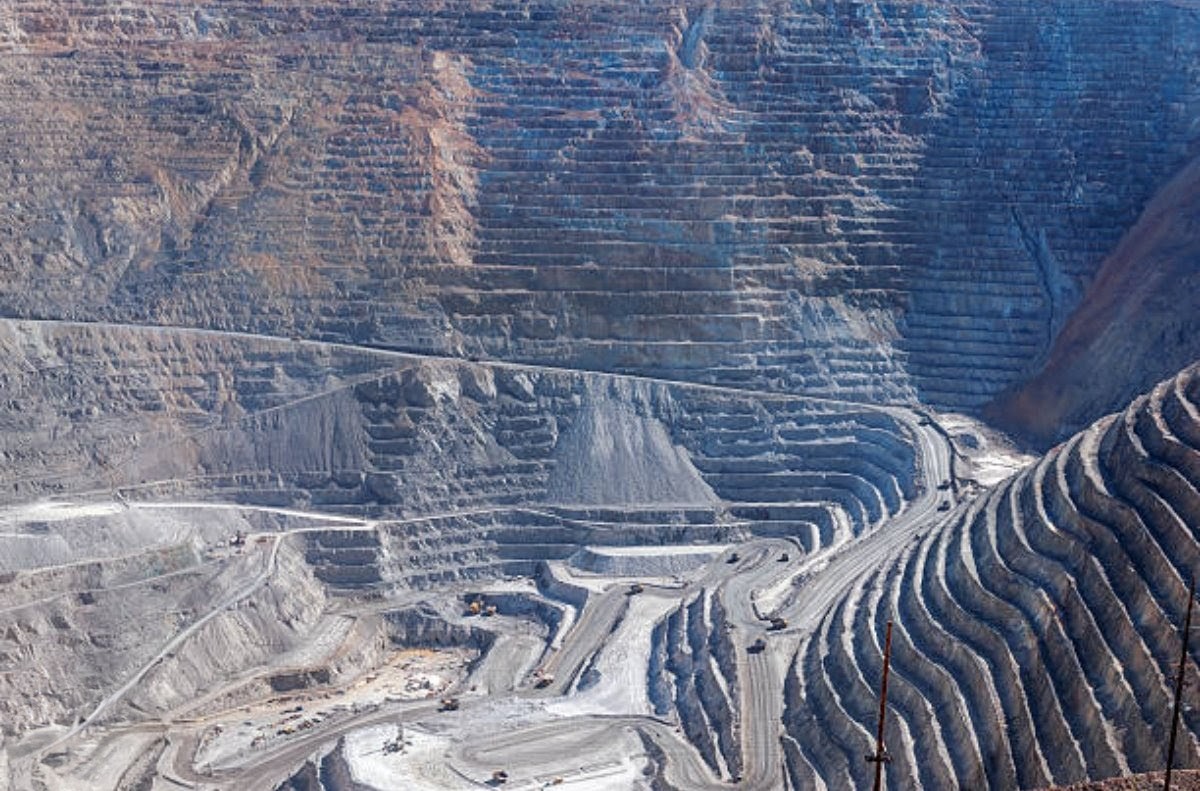
Image: this massive chasm is the Bingham Canyon Mine (also called the Kennecott Copper Mine) just outside Salt Lake City, Utah. It is one of the largest man-made excavations on Earth and the deepest open-pit mine in the world, stretching 4 kilometres wide and more than a kilometre deep.
73
703
1,386
33,107
Jane Orient, MD retweeted

Jun 11
The mythical Sweden has high taxes, generous welfare, a big state, and equality enforced by government.
Swedish social spending in 2026 is 23.7% of GDP. That puts Sweden below France, Finland, Germany, Belgium, Italy, Austria, and Denmark. It sits at roughly American levels.

5
13
193
13,330
Property rights aren't some abstract legal concept. They're the operating system for human cooperation. When you can't secure the fruits of your labor, you stop producing beyond survival. Why build a better mousetrap when the village chief's nephew can just take it?
Look at North Korea versus South Korea. Same people, same culture, different property regimes. The South protects what you create and earn. The North... doesn't. Result: $31,000 per capita GDP versus $1,300. That's not a rounding error.
Every prosperous society in history built itself on this foundation. The Romans codified property law and conquered the Mediterranean (then abandoned it and collapsed). England secured property rights in 1688 and launched the Industrial Revolution. China started protecting private property in 1978 and lifted 800 million people out of poverty. The pattern never breaks because the incentives never change.

33
198
570
8,112
Jane Orient, MD retweeted
Jun 12
We are told that coal, oil, and gas are a dirty, planetary misstep—unique to Earth's dark biological past.
But the physics of the cosmos tells a completely different story. Far from being dirty, rare or accidental, hydrocarbons are basic building blocks of the universe.
Look at our own solar system. Saturn’s moon Titan holds hundreds of times more liquid hydrocarbons in its vast methane-ethane seas than all known reserves on Earth.
NASA’s Curiosity Rover found ancient organic molecules in Martian mudstones, while the atmospheres of Jupiter, Neptune, and Uranus are thick with churning methane.
The restrictive nomenclature of 'fossil fuels' misses the grander scope.
When these energy-dense compounds dragged humanity out of the freezing starvation of Europe’s Little Ice Age, they didn’t derail us. They allowed us to emerge into a modern world of unprecedented sparkling light and power. They aren't a cosmic mistake—they are cosmic abundance.
Why should we treat a fundamental building block of the universe as a dead end.
IMAGE: Liquid oceans of methane and ethane on Saturn's moon, Titan. SOURCE: Mark Garlick/Science Photo Library / Getty Images

31
234
562
5,915
Jane Orient, MD retweeted

Jun 12
On va m'accuser de racisme pour ce qui suit. Lisez jusqu'au bout : c'est le seul texte authentiquement antiraciste que vous lirez cette semaine.
Voici la démonstration, en trois preuves, que grouper les gens n'a aucun sens. Pas moralement. Logiquement.
Preuve numéro un : la variance.
Prenez n'importe quel groupe : les Noirs, les Blancs, les Juifs, les femmes, les Asiatiques, les gays, les hétéros. Mesurez n'importe quoi : intelligence, valeurs, ambition, goûts, opinions politiques. Le résultat est toujours le même, et il est connu des statisticiens depuis cinquante ans : la variance à l'intérieur du groupe écrase la variance entre les groupes.
Traduction : deux femmes prises au hasard diffèrent plus entre elles que la moyenne des femmes ne diffère de la moyenne des hommes. Deux Noirs pris au hasard ont moins en commun entre eux qu'avec des millions de Blancs, et inversement.
Le groupe ne prédit presque rien de l'individu. C'est un fait mathématique. Celui qui vous parle des Noirs ou des femmes comme d'un bloc ne décrit pas la réalité. Il décrit son ignorance de la réalité.
Preuve numéro deux : l'intersection infinie.
Chaque humain appartient simultanément à des milliers de catégories. Une femme est aussi une ingénieure, une Bretonne, une mère, une athée, une passionnée d'échecs, une propriétaire, une fille d'ouvrier. Laquelle de ces appartenances est SON identité ?
Celui qui choisit pour elle, et qui choisit toujours la race ou le sexe plutôt que le reste, ne révèle rien sur elle. Il révèle tout sur lui : il a besoin de cette case-là, parce que c'est celle qui se monnaye politiquement.
Preuve numéro trois : le porte-parole impossible.
Si le groupe homogène n'existe pas, alors personne ne peut parler en son nom. Chaque association qui prétend représenter « les musulmans », « les femmes » ou « les Noirs » représente en réalité une fraction militante qui a capturé le micro. Les millions d'individus rangés de force dans la case n'ont rien demandé. On parle à leur place, puis on leur reproche de ne pas être d'accord avec leur propre porte-parole.
CQFD : le groupe est une fiction statistique, l'assignation est arbitraire, la représentation est une capture. Il n'existe que des individus.
Maintenant, la nuance qui change tout, parce que c'est ici que tout le monde se trompe dans les deux sens.
Les cultures, elles, existent. Une culture n'est pas un groupe assigné, c'est l'inverse exact : une création émergente. Des millions d'individus libres qui, génération après génération, sédimentent une langue, une cuisine, un humour, des paysages, une manière d'être au monde. Personne ne l'a décrétée, personne n'en détient la carte de membre, et c'est précisément pour ça qu'elle est précieuse.
Macron a dit « il n'y a pas de culture française ». C'est la plus grande erreur de sa présidence. La culture française existe, n'importe quel étranger la reconnaît en dix secondes, et des étrangers l'ont assez aimée pour devenir plus français que nous. Une culture se respecte, se transmet, s'enrichit. Elle ne se déconstruit pas de force, ni la nôtre, ni celle des autres.
D'où les deux règles d'une société d'individus, et elles tiennent en deux phrases.
Règle un : aucune minorité, de quelque ordre que ce soit, n'impose sa vision du monde à la majorité. Vivre sa différence est un droit absolu. La faire payer aux autres, réécrire leurs livres, renommer leurs fêtes, policer leur langue, n'en est pas un.
Règle deux : on juge les actes, et on les juge durement. Celui qui vole, qui tue, qui menace physiquement, tombe sous une justice intransigeante, quelle que soit sa case. Pas de circonstance sociologique, pas d'excuse communautaire, pas de lecture racialisée du crime. Un individu a agi, un individu répond.
Et maintenant vous voyez le scam wokiste dans son architecture entière.
Le wokisme a besoin que les groupes existent, parce que sans groupes, pas de lutte des groupes, et sans lutte, pas de pouvoir pour les courtiers de la lutte. Alors il a fusionné toutes les causes en un seul conglomérat : race, sexe, orientation, religion, tout est devenu un seul front, les « dominés » contre les « dominants ».
Regardez ce conglomérat deux secondes et il s'effondre. Ses composantes veulent des choses opposées. Les féministes et les islamistes dans le même cortège. Les gays défilant pour des régimes qui les pendent. Aucune cohérence interne, et pour cause : ce n'est pas une coalition d'intérêts, c'est un cartel de porte-paroles. La grille oppresseur-opprimé est le même logiciel que la lutte des classes, recompilé. On a juste remplacé le prolétariat, qui n'a pas voulu jouer son rôle, par un patchwork de minorités assignées de force.
Le racisme assigne l'individu à sa race. L'antiracisme woke assigne l'individu à sa race. C'est la même opération avec un signe inversé, et c'est pour ça que plus on le pratique, plus le pays se fracture.
La sortie n'est ni dans la revanche d'un groupe ni dans la promotion d'un autre. Elle est dans la dissolution du concept : des individus libres, jugés sur leurs actes, dans des cultures vivantes qu'on respecte au lieu de les déconstruire.
C'est exactement ce que l'Occident avait inventé, et c'est exactement ce qu'on lui a fait oublier. Aux individus de le reconstruire.
169
663
2,094
72,270
Jane Orient, MD retweeted

Jun 11
Sepsis kills more people in American hospitals than heart attacks. 350,000 deaths a year, and the reason is brutally simple: the early warning signs are almost invisible.
A slightly elevated heart rate. A small temperature shift. A lab value drifting in the wrong direction. Each one looks like noise on a busy ward. By the time the pattern is obvious to a human, the patient is hours into a cascade toward organ failure, and every hour of delayed antibiotics raises mortality.
Tampa General built a system on Palantir's Foundry that watches roughly 1,000 inpatients continuously. Vitals, labs, medication records, clinician notes, all scanned in real time for the pattern no single nurse can see across 12 beds at 3am. When risk crosses a threshold, a rapid response team gets paged. Humans still make every treatment decision. The software just compresses detection from hours to minutes.
The results since 2022: overall sepsis mortality cut in half, 48-hour deaths down 68%, length of stay down 30%, roughly 900 lives saved. At one hospital.
Now run the national math. There are about 6,100 hospitals in the US. If even the 500 largest matched these numbers, you'd be looking at tens of thousands of lives a year from a single use case. The treatment for sepsis hasn't changed. Antibiotics and fluids, same as decades ago. The entire gain comes from starting them earlier.
The hardest problem in medicine was never the cure. It was noticing in time.
Jun 10

JUST IN: Florida hospital reveals Palantir software has cut sepsis deaths by more than half since it was installed.
180
1,561
9,949
1,408,145
Jane Orient, MD retweeted
Jun 11
Earth is not facing urgent climate-related damage, despite claims embedded in the United Nations' 40-year grand plan.
The real damage can be measured in global instability and widespread economic and industrial decline. The estimated price tag for this UN agenda is a staggering $275 trillion by 2050 (based on a 2022 McKinsey Global report). This involves constructing a completely new global grid, blanketing landscapes with stadium-sized wind and solar arrays.
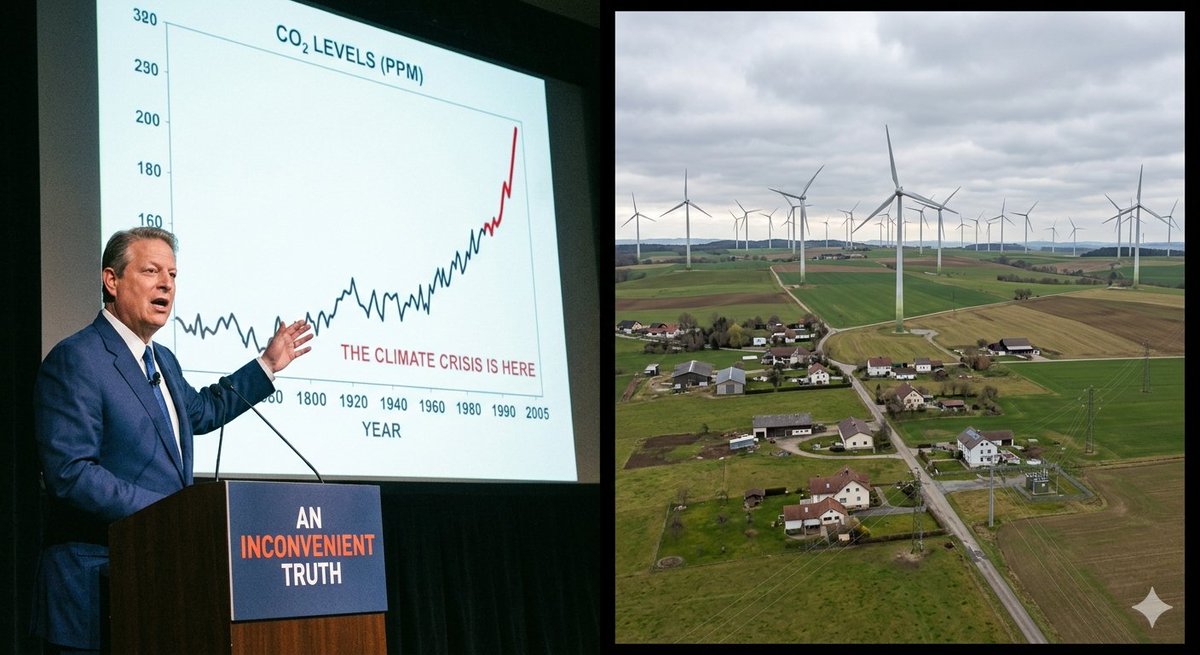
The global warming agenda is an ideology, driven in part by a misleading, fear-laced 2006 documentary by former US vice president, Al Gore. 'An Inconvenient Truth' has not stood the test of time, yet its purpose was achieved: to blame human society for an environmental collapse that hasn't happened. The movie gained widespread exposure, injecting deep cultural guilt into the drive to build today's worsening glut of turbines and solar arrays.
In effect, it replaces dense and dependable hydrocarbon energy with mechanical gadgetry - systems that have proven to be intermittent and unreliable and subject to 20-to-25-year replacement cycles.
The idea that human society is single-handedly overheating the world has its own dedicated core of followers. But no Western country sought the genuine backing of its citizenry via democratic consultation for this shift.
The UN has led a relentless, top-down economic campaign, denouncing any doubts as 'science denial'.
47
340
810
11,273
Jane Orient, MD retweeted

Jun 11
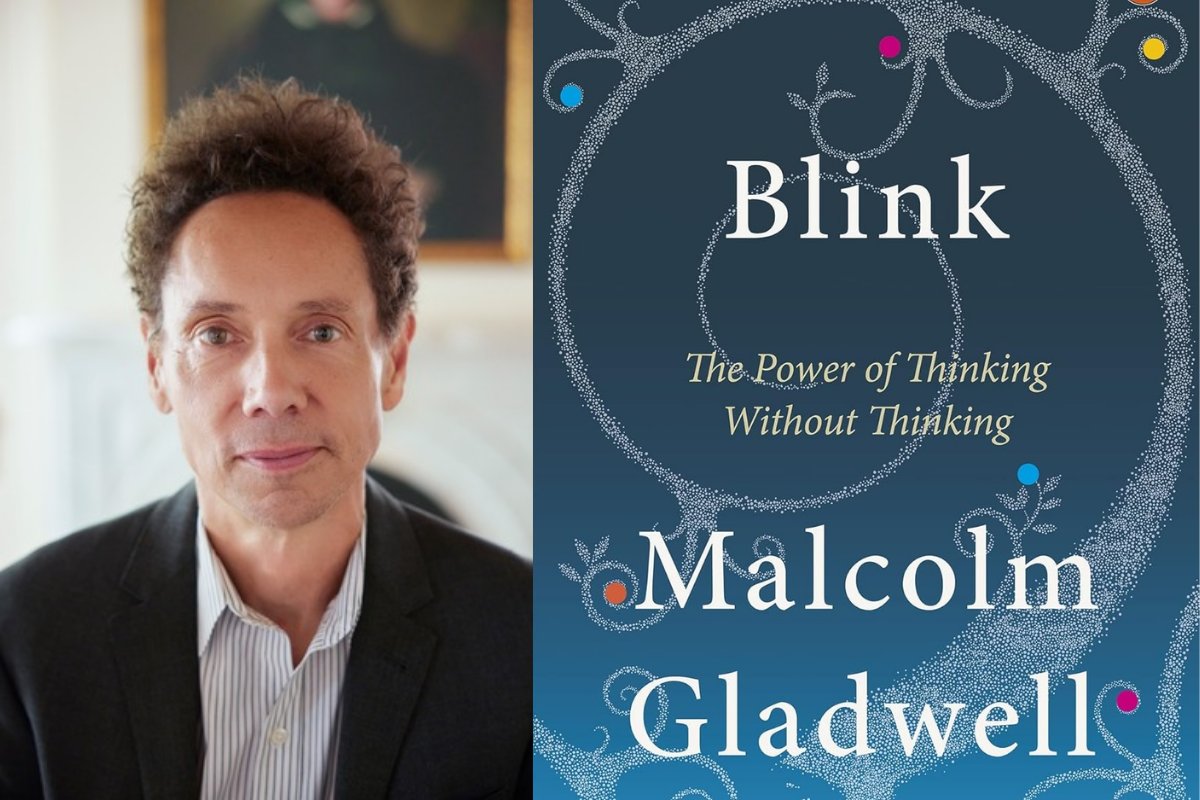
A psychologist who could predict with 90 percent accuracy whether a marriage would survive just by watching a couple talk for fifteen minutes became the centerpiece of a book about why the first two seconds of any judgment often contain more truth than everything that comes after them.
His name is Malcolm Gladwell. The book is called Blink.
I read it a second time recently and the opening story hit differently than it did the first time.
In September 1983, an art dealer named Gianfranco Becchina walked into the J. Paul Getty Museum in California with what he claimed was a sixth-century Greek statue. A kouros. A marble sculpture of a standing nude male. Only about two hundred of them exist on Earth, and most arrive in fragments. This one was almost perfectly intact.
The Getty's lawyers traced its ownership back decades. A geologist examined the marble under a high-resolution stereomicroscope and confirmed it had come from an ancient quarry in Thasos. Fourteen months of investigation. Every test passed. The museum bought it for just under ten million dollars.
Then they showed it to the experts.
Federico Zeri was an Italian art historian who sat on the Getty's own board of trustees. He looked at the statue and felt, immediately, that something was wrong. He could not say what. He fixated on the fingernails. Something about them. He could not name it.
Evelyn Harrison was one of the world's foremost experts on Greek sculpture. The moment she saw it, a single word surfaced in her mind. The word was fresh. Not ancient. Fresh.
Thomas Hoving, former director of the Metropolitan Museum of Art, was shown the statue and said the word that came to him instantly was wrong.
Georgios Dontas, head of the Athens Archaeological Society, felt what Gladwell described as a wave of intuitive repulsion.
None of them could explain it. None of them had run a test. None of them had spent fourteen months on anything. They had spent two seconds.
They were right.
The provenance documents turned out to be forged. The ancient dolomite marble had been aged with potato mold. The statue had been made in a workshop in Rome sometime in the early 1980s. Every scientific instrument had been fooled. Every trained eye had not.
Gladwell called this thin-slicing. The brain's ability to extract accurate patterns from extremely narrow windows of experience. The adaptive unconscious, running in the background, processing signals too fast and too numerous for conscious thought to catch up with.
The mechanism is not mystical. It is a compression problem.
When an expert looks at something in their domain, they are not seeing it fresh. They are running it against an internal database of thousands of prior cases, built up over years of exposure. The database is not stored as a list of rules. It is stored as a feeling. A response. A sense that something fits or does not fit the pattern. The output surfaces before the reasoning does, because the reasoning is happening below the level of language, in a part of the brain that does not file reports.
This is why Zeri could not explain the fingernails. The wrongness was real. The explanation was inaccessible because it was encoded in pattern-matching machinery, not in words.
The same mechanism runs in every senior developer who glances at a pull request and knows, before reading a single line, that something is off. Every designer who opens a Figma file and immediately feels the layout is broken, before identifying which element is wrong. Every engineer who hears a system described and knows it will not scale, before running a single calculation.
That feeling is not a guess. It is a compressed readout of everything they have seen before. The pattern recognition is real. The inability to immediately explain it is also real, because the two processes run on completely different hardware.
John Gottman is a psychologist at the University of Washington who spent decades studying married couples. He built a laboratory called the Love Lab. He would bring couples in, have them discuss an ordinary topic for fifteen minutes, and then predict with 90 percent accuracy whether they would still be married fifteen years later.
Not from years of following them. From fifteen minutes. From thin slices.
He could name the four signals he was reading. Criticism. Contempt. Defensiveness. Stonewalling. He had trained himself to see consciously what most people only feel unconsciously. But most experts never reach that stage. They get the signal without the vocabulary. The answer arrives but the work order stays hidden.
Gladwell's real argument is not that snap judgments are always right. The same Getty employees who bought the fake statue also made a snap judgment. They wanted it to be real, and their unconscious obliged. The bias corrupted the signal. Fast thinking cuts in both directions.
The difference between expertise and noise is whether the pattern you are reading is real or imagined. Real patterns come from years of exposure to genuine signal in a domain. Imagined patterns come from years of exposure to what you wanted to see.
The experts who spotted the fake in two seconds had spent careers looking at real kouroi. Their pattern library was built on the genuine article. The moment a forgery walked in, the mismatch registered instantly, below the surface, before anyone had words for it.
The developers and designers who get called "talented" are usually just people who have built this library faster or wider than everyone else around them.
The intuition is not a gift.
It is a database.
When was the last time you trusted a gut feeling in your work and turned out to be right before you could explain why?
3
14
34
4,254