Computer Science for all!
Joined September 2008
- Tweets 2,224
- Following 581
- Followers 1,039
- Likes 20,881
13 Photos and videos

Jeff Forbes retweeted

We're launching the OpenAI Economic Research Exchange: a new program for external researchers conducting independent research on the economic impacts of AI.
We are looking for rigorous empirical projects on questions that matter for workers, firms, institutions, and the broader economy.
openai.com/index/economic-re…
15
110
692
90,513
Jeff Forbes retweeted

May 12
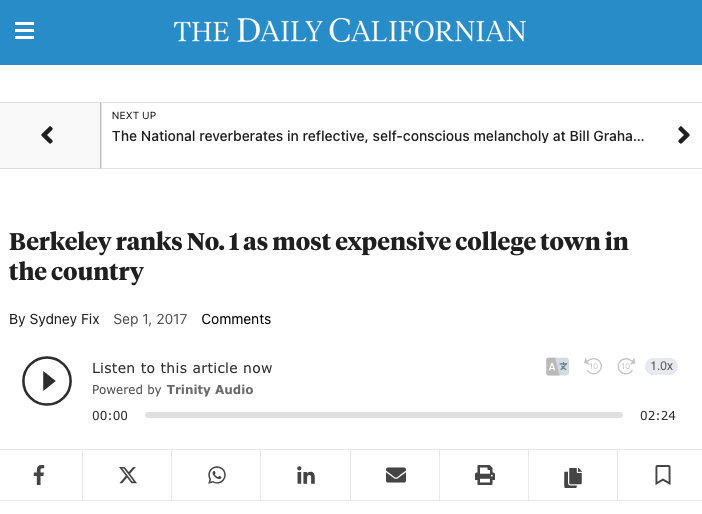
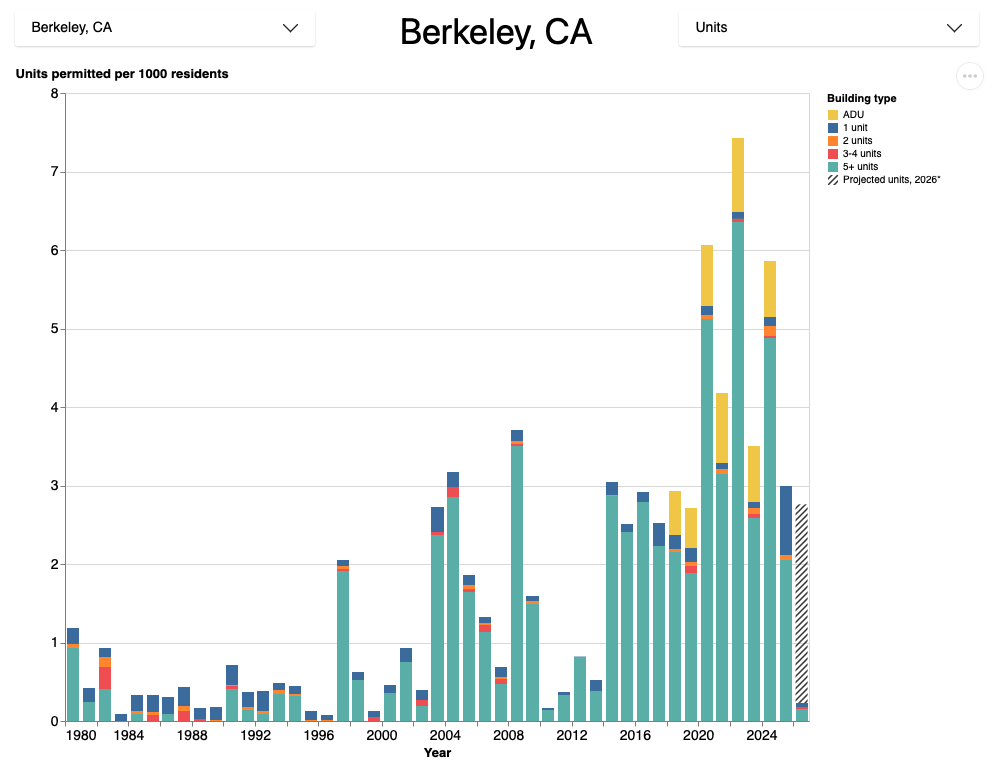
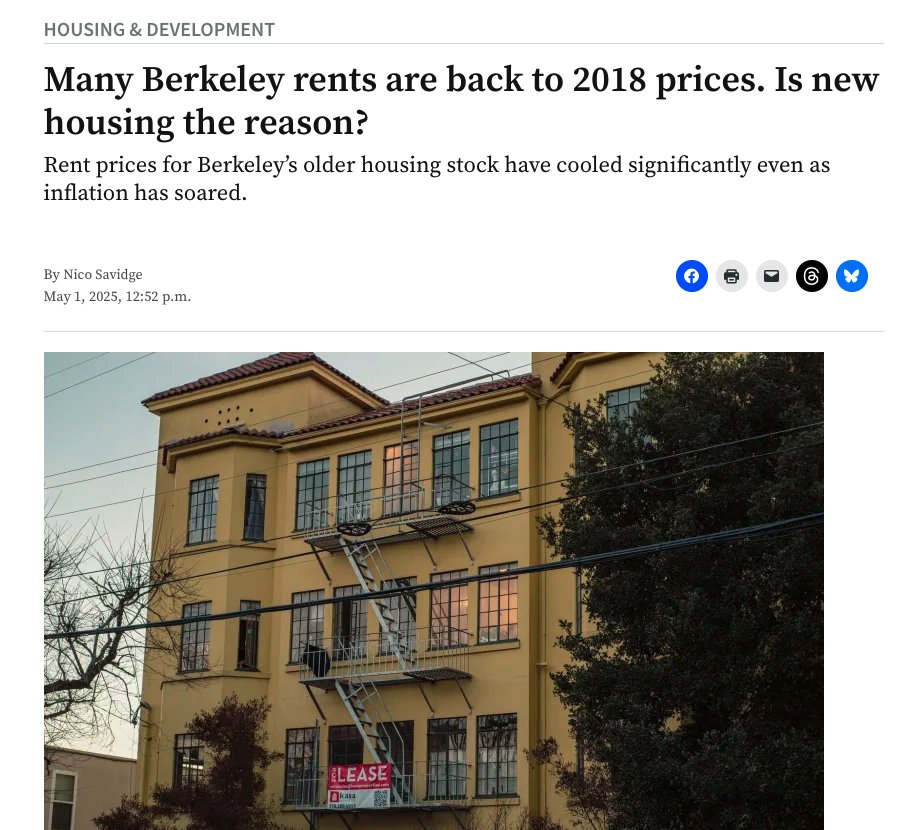
For 45 years, Berkeley built virtually no new housing. By the mid-2010s, it was the most expensive college town in America. Shortly thereafter, YIMBYs took over and kicked off a building boom. Today, nominal rents are below 2018 rates—remarkable progress on affordability.
57
478
3,984
737,048
Jeff Forbes retweeted

May 11
Pretty wild I got my PhD 4 years ago to the day. I feel very lucky that I got to do it and make my switch into AI.
Lot's of people today in AI are underselling the value of going through the process of a PhD.
14
16
554
93,801
Jeff Forbes retweeted

Apr 21
Many folks seem to be confused, and think the collapse of the CS major graduation numbers at Berkeley could be linked to the "AI is taking SWE jobs" hysteria narrative. Here's the easiest way to see that this is false: the timeline doesn't fit.
The graduating class in 2027 (first small CS cohort graduating) has students who arrived on campus as freshmen in Fall 2023, with freshman admission targets set (i.e. shrunk) by the university in Fall 2022. So, the hysteria narrative obviously doesn't match the timeline; ChatGPT didn't even come out until November 2022.
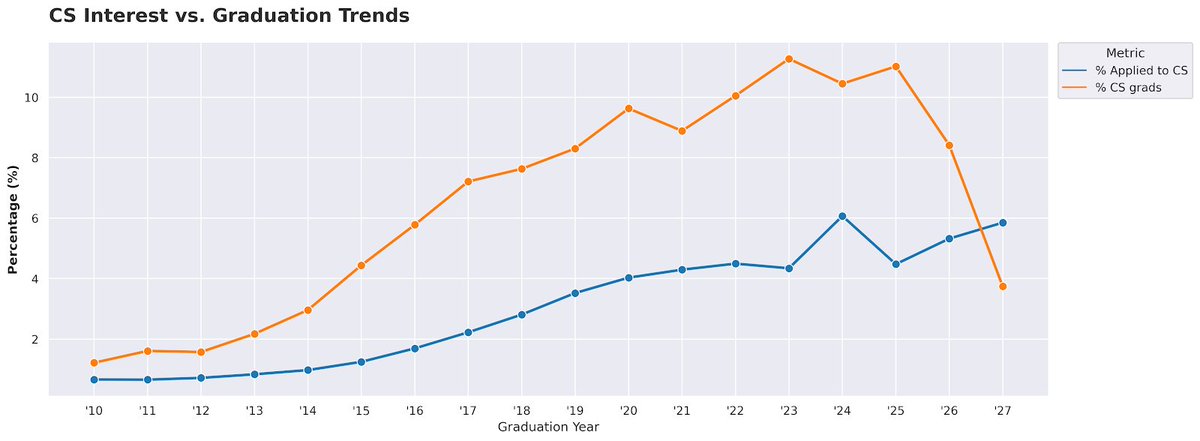
Now consider the plot below; orange curve is what % of bachelor's degrees are CS degrees each year at Berkeley, and blue curve is what % of applicants applied to be a part of that graduating year, intending to be a CS major in their application (combining both junior transfer and freshman applicants). In other words:
* orange measures CS graduate production
* blue measures CS demand (via % of all applications to the university)
What do you notice? The collapse in orange (CS grads) isn't because of a collapse in blue (demand). In fact it's the opposite: orange collapsed at a time when blue was going up. 1/
23
35
318
208,210
Jeff Forbes retweeted

Jan 31
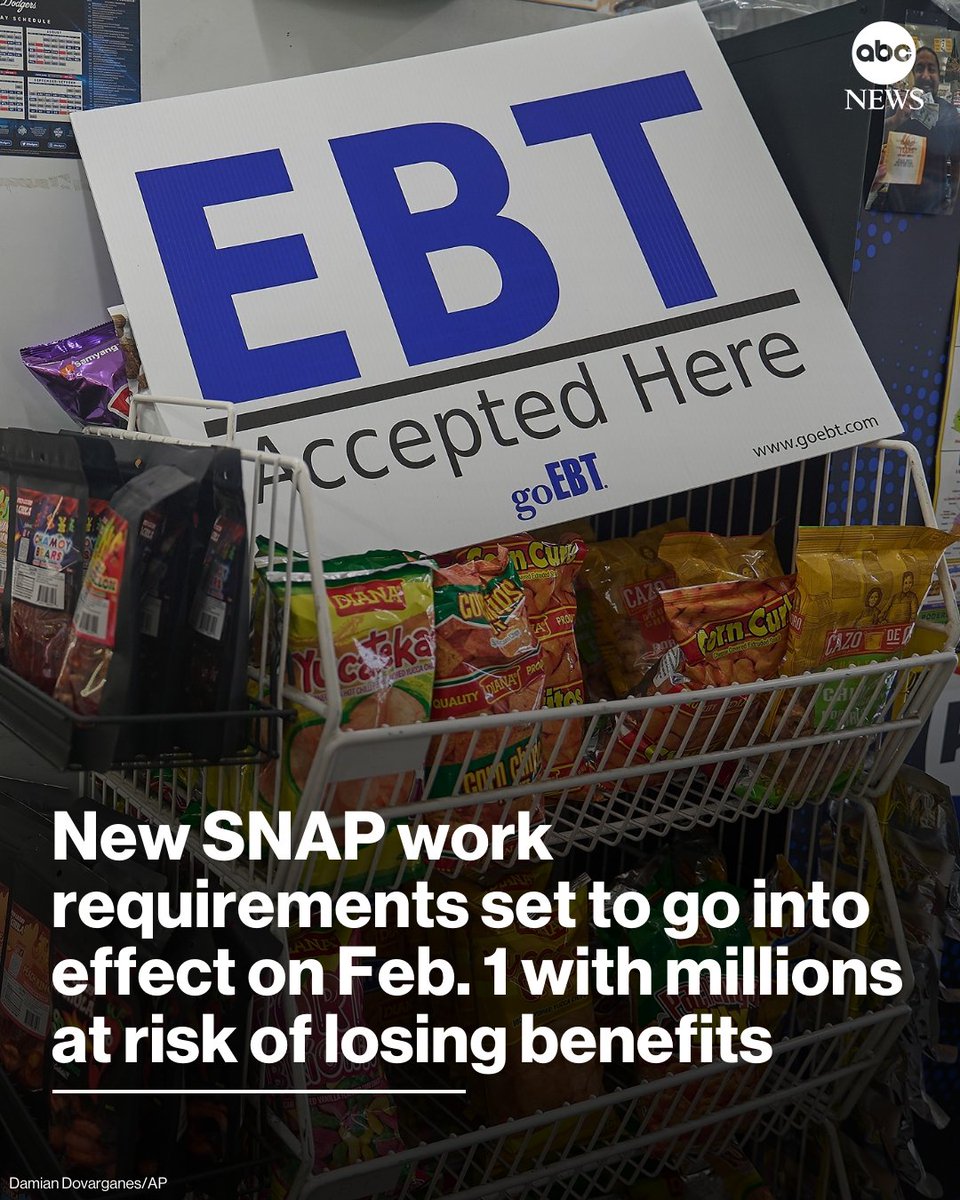
One of the cruelest changes here is changing benefit time limits for families with kids. Only families with kids 14 and under are exempt—used to be 18
Underlying expectation there is for the 15 kids to work to eat
Disgusting

New work requirements for SNAP are set to go into effect on Feb. 1 and it could mean that millions of Americans lose their benefits.
Read more: abcnews.link/B4R1RoI
2
12
22
2,211
Jeff Forbes retweeted

Jan 8
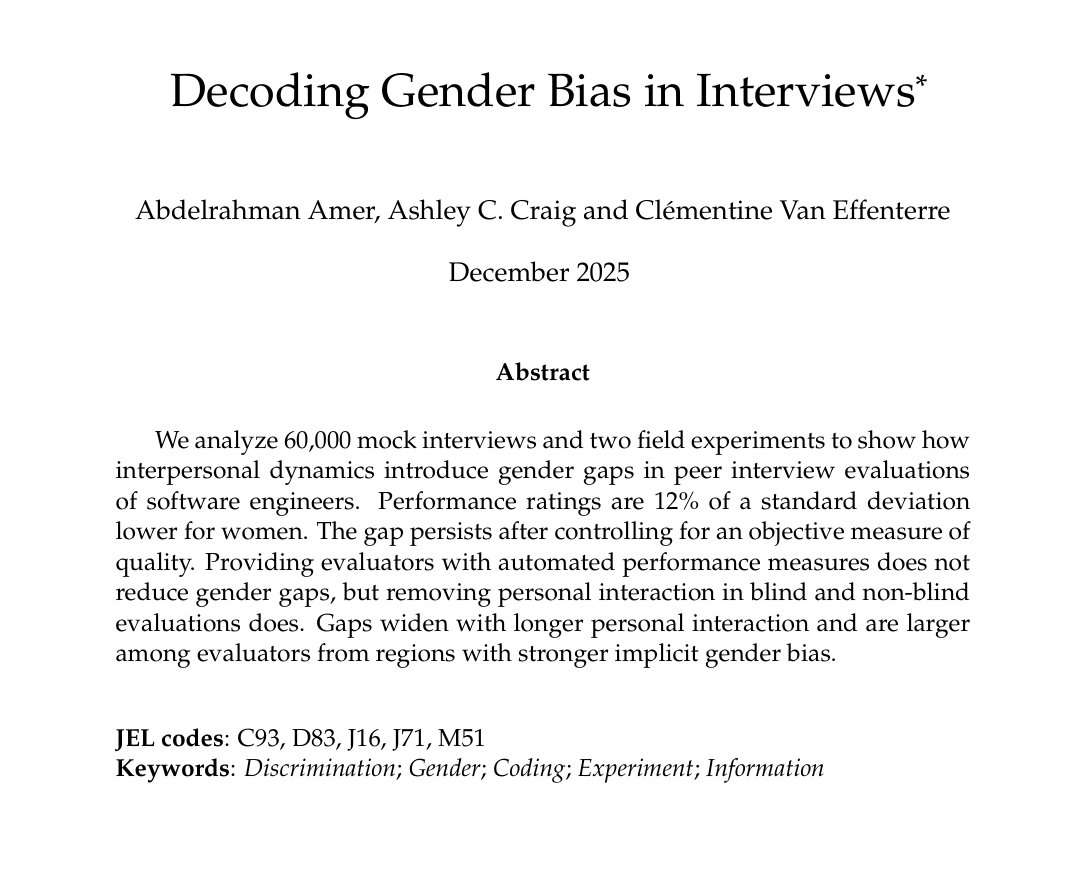
Women are chronically underrepresented in tech/programming sectors.
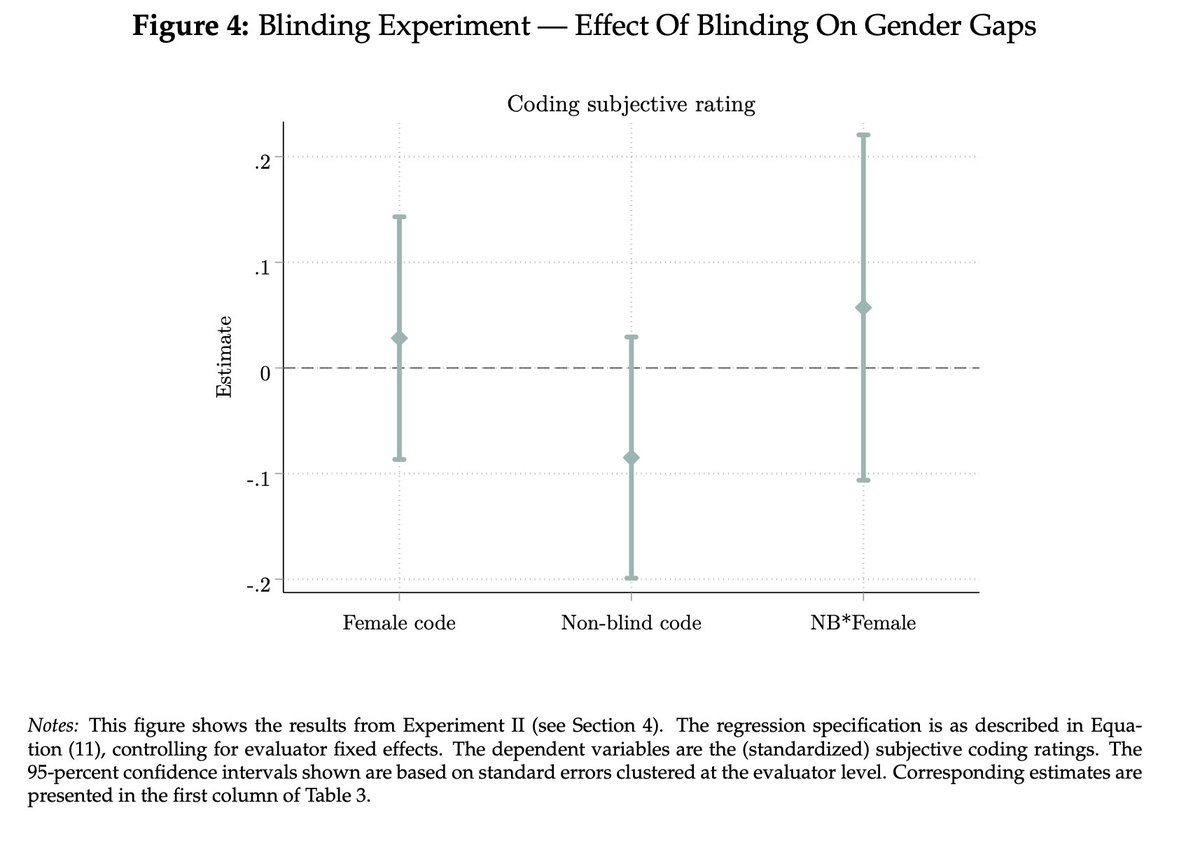
This new preprint examines whether hiring bias--especially in interviews--is to blame and, if so, why.
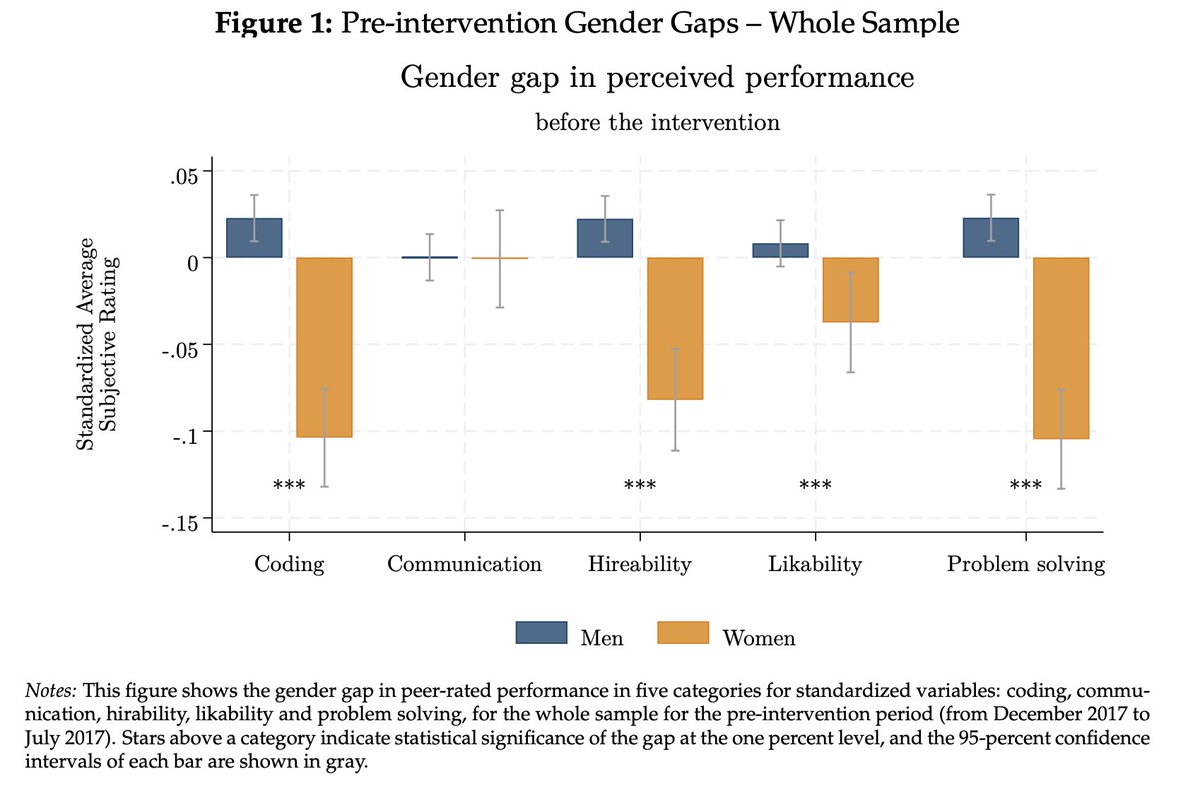
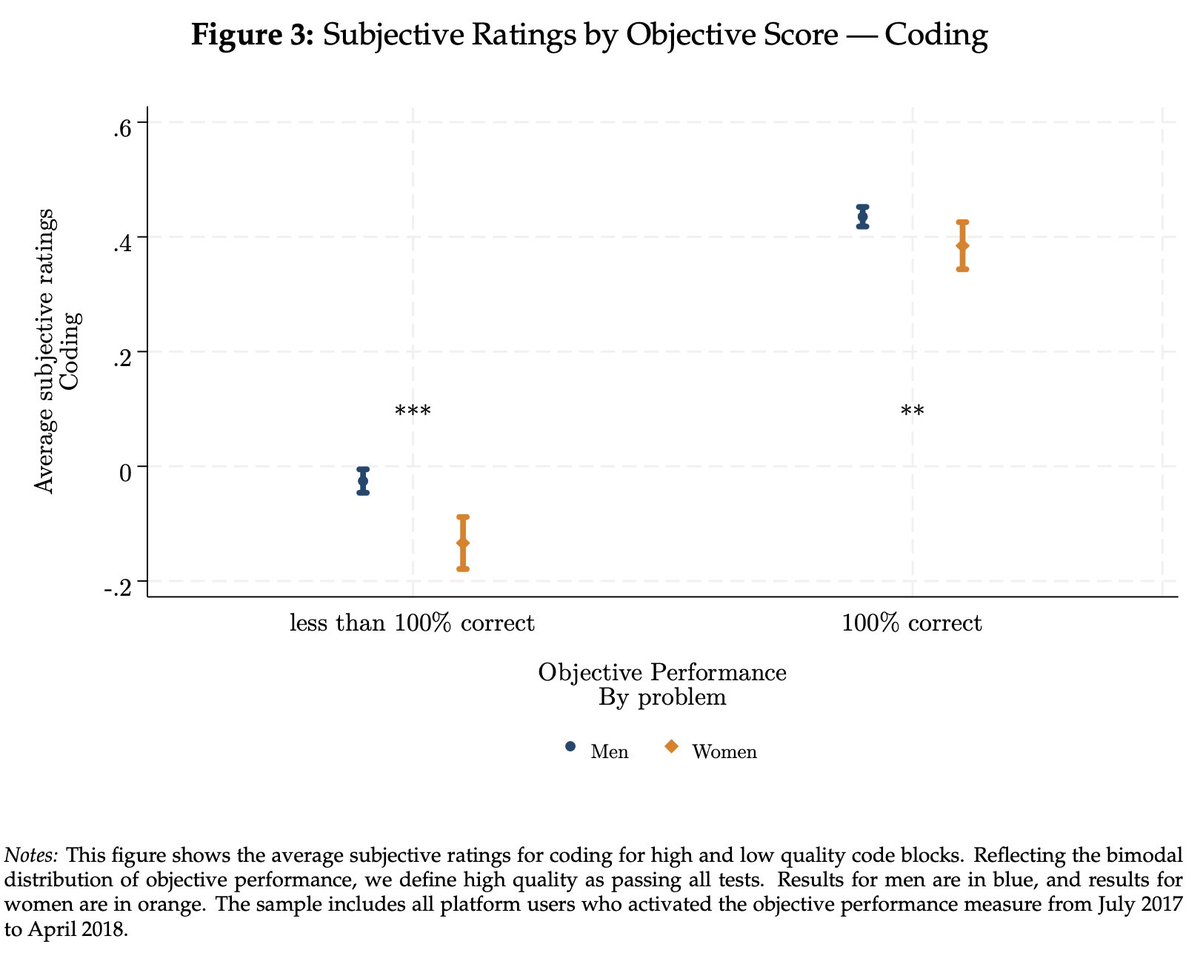
Using 60,000 coding interviews from a peer-to-peer interview platform, it finds that even when women perform similarly to men, they are penalized in interviews.
But which theory of bias actually explains this gap?
The authors test four hypotheses about the source of gender bias in technical hiring.
Hypothesis 1: Ability differences.
Explanation: If women receive lower interview scores because they perform worse, evaluation gaps should mirror performance gaps.
Finding: Rejected. Performance differences on objective coding tasks are small and cannot explain the much larger evaluation penalties women receive.
Hypothesis 2: Statistical discrimination / lack of information.
Explanation: If interviewers underestimate women’s ability, giving them objective performance signals should reduce the gap.
Finding: Rejected. Providing interviewers with automated coding test scores does not reduce the gender gap.
Hypothesis 3: Taste-based discrimination.
Explanation: Interviewers may simply prefer men.
Finding: Not supported. The gap disappears when evaluations are blinded and non-interactive.
Hypothesis 4: Interaction-based bias.
Explanation: Bias arises during live interpersonal interaction (voice, confidence norms, expectations).
Finding: Supported. Gender gaps appear only in interactive interviews, not when the same code is evaluated blindly.
Bottom line: Interviews don’t just measure ability. They produce bias through interaction itself. Reducing gender gaps may require redesigning interviews, not just debiasing interviewers.
72
91
531
59,154

27 Dec 2025
RT @PeterHotez: In the 1970s-80s measles was the single leading killer of children, 2-3 million died annually. Through EPI @WHO we brought…
3,994
Jeff Forbes retweeted

13 Dec 2025
Huge kudos to @NSF on this effort.
12 Dec 2025

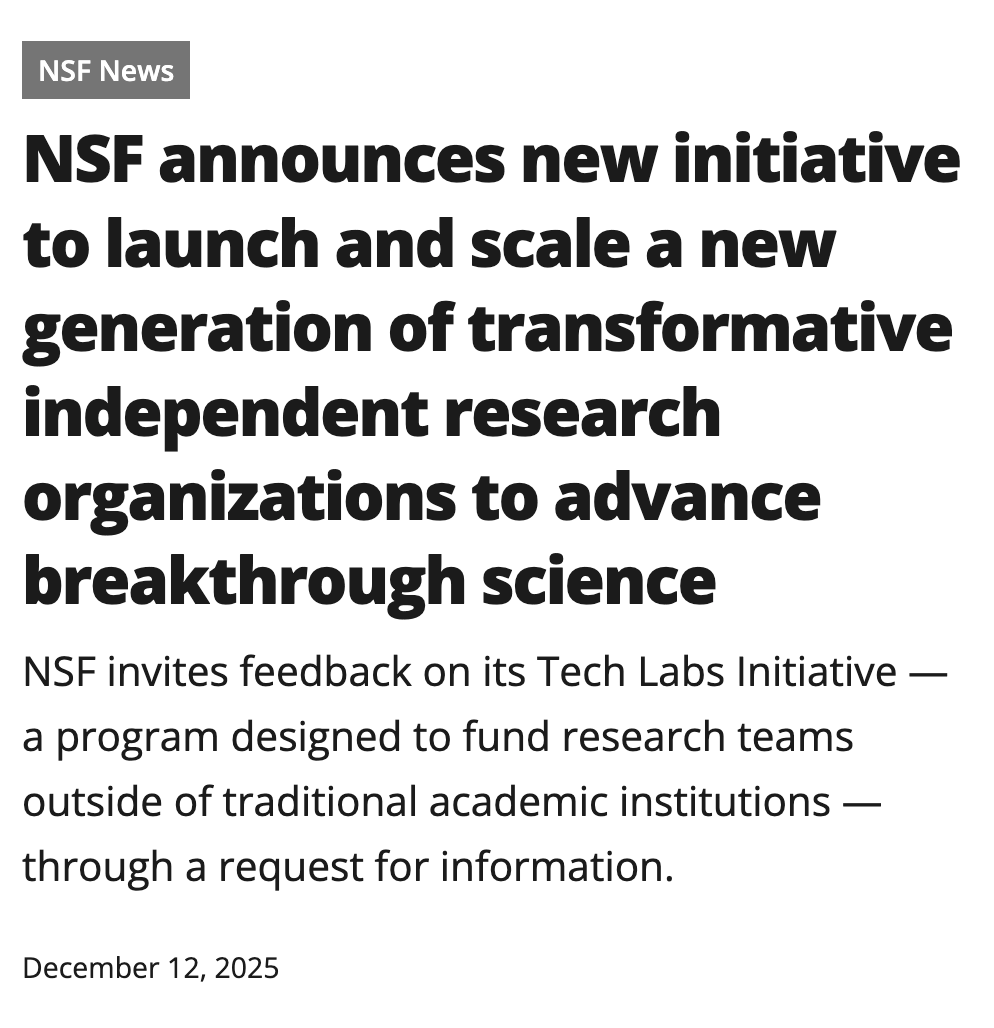
Today, the NSF announced Tech Labs, an ambitious program to build new independent research organizations to accelerate American science. This comes off of momentum in metascience that has been building for years around concepts like FROs, fast grants, and new research and funding organizations like @arcinstitute, @ArcadiaScience, @ARIA_research, and more. I sat down with @AdamMarblestone and @CorreaDan from FAS @scientistsorg to discuss what we have learned from 7 years of FROs; where things are going with the gradual reorganization of American science; and how government can play a role.
Read about it here:
fas.org/publication/nsf-supe…
And check out NSF’s announcement: nsf.gov/news/nsf-announces-n…
2
22
2,548
Jeff Forbes retweeted

12 Dec 2025
NSF is launching one of the most ambitious experiments in federal science funding in 75 years.
The program is called Tech Labs, and the goal is to invest ~$1 billion to seed new institutions of science and technology for the 21st century.
Instead of funding projects, the NSF will fund teams. I’m in the @WSJ today with a piece on why this matters (gift link): wsj.com/opinion/science-fund…
Here’s the basic case:
1) Most federal science funding takes the form of small, incremental, project-based grants to individual scientists at universities.
2) The typical NSF grant is ~$250k/year to a professor with a couple of grad students and modest equipment over a few years. This is a perfectly reasonable way to fund some science, but it's not the only way.
3) A healthy portfolio needs more than one instrument. Project-based grants are like bonds: low-risk, steady, safe. But no one trying to maximize long-run returns would put 70% of their portfolio in bonds.
4) Yet that's basically what our civilian science funding portfolio looks like. Around 3/4ths of NSF and NIH grant funding is project-based.
5) Tech Labs is NSF's attempt to diversify that portfolio. The Tech Labs program is aiming for:
- $10-50 million/year awards per team
- 5 year commitments
- Measuring impact through advancement up the Tech Readiness Level scale rather than papers published
- Up to ~$1 billion for the program
- Supporting research orgs outside traditional university structures
6) Scientific production looks very different than it did when the NSF launched 75 years ago. The lone genius at the chalkboard can only do so much. Frontier science tech today is increasingly team-based, interdisciplinary, and infrastructure-intensive.
7) The team behind AlphaFold just won the Nobel Prize in Chemistry. It came from DeepMind, an AI lab with sustained institutional funding and full-time research teams. It would be near-impossible to fund this kind of work on a 3-year academic grant.
8) Same pattern at the @arcinstitute (8-year appointments, cross-cutting technical support teams) and @HHMIJanelia (massive infrastructure investments to map the complete fly brain). Ambitious science increasingly needs core institutional support, not a series of project grants stapled together.
9) Similarly, Focused Research Organizations (@Convergent_FROs) have showcased a new model supporting teams with concrete missions and predefined milestones to unlock new funding.
10) There’s a whole ecosystem of philanthropically-supported centers doing amazing research, like the Institute for Protein Design, the Allen Institute, the Flatiron Institute, the Whitehead Institute, the Wyss Institute, the Broad — the list goes on.
11) But philanthropy can’t reshape American science alone. The federal government spends close to $200 billion each year on research and development, an order of magnitude more than even the largest foundations.
12) If we want to change how science gets done at scale, federal funding has to evolve. And the NSF and NIH don’t have dedicated funding mechanisms to support or seed these sorts of organizations.
13) Earlier this year, I started working on a related framework called “X-Labs” that built on all this exciting institutional experimentation that’s been happening within the private and philanthropic sectors. It’s time for the federal government to step into the arena: rebuilding.tech/posts/launch…
14) Traditional university grants are still important for training the next generation of scientists and for certain kinds of curiosity-driven work. But after 75 years of putting nearly everything into one model, we should try something different.
15) And key program details are still being developed! You can reply to the Request for Information with suggestions or feedback on how to design this program here: nsf.gov/news/nsf-announces-n…
16) Science is supposed to be about experimentation. Science funding should be too.
75
364
1,423
702,290
Jeff Forbes retweeted

4 Dec 2025
Bill Gates famously said "People often overestimate what will happen in the next two years and underestimate what will happen in ten."
This holds for AI, but with both quantities divided by 4.

For years skeptics kept moving goal posts and making overconfident takes about what language models could or couldn't do, to be disproved immediately after. I'm glad they were proven wrong again and again.
But on the other hand, more subtle or ambitious expectations are clearly important for progress and not always goalpost moving. Models outperforms humans in many areas while falling short in others, so it makes sense to adjust your targets as you learn more about their limitations.
Relatedly, the desire to convey to people the (correct) intuition that AI is going to continue rapidly improving makes some people resistant to acknowledging or exploring existing limitations. They brush them off a bit too quickly - after all, line goes up, so why waste time?
That's a shame because they end up discussing AI only in abstract terms, rather than building concrete models of what these systems actually are and do. Without that grounded understanding, the more abstract predictions feel a lot less reliable.
2
10
168
17,635
Jeff Forbes retweeted

23 Oct 2025
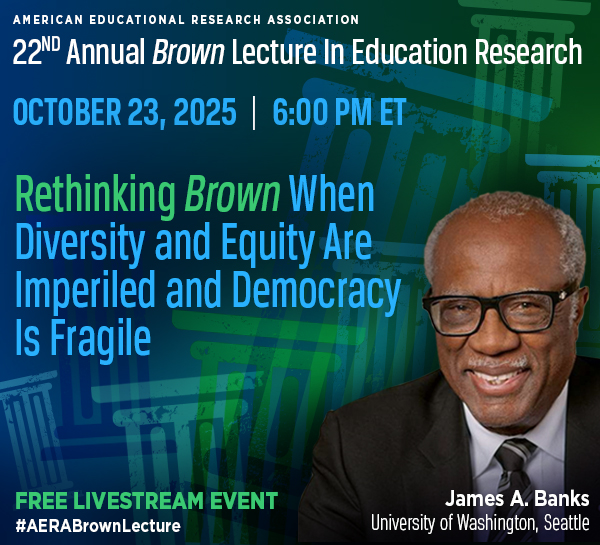
Today's the day! Tonight at 6 pm ET, join us for the livestream of the 2025 #AERABrownLecture, featuring James A. Banks with a discussion forum to follow. aera.net/Events-Meetings/202…
2
5
611
Jeff Forbes retweeted
23 Oct 2025
"There has always been—and there remains—a wide gap between America’s democratic ideals and its practices." James A. Banks, 2025 #AERABrownLecture
1
1
661
Jeff Forbes retweeted

20 Oct 2025
Life is just more complex than “there’s a cabal behind everything” and “the establishment decides” and that’s more frightening for people to deal with because it involves looking in the mirror and looking at your friends and neighbors.
17 Oct 2025

Theo Von: "It feels like some dark and powerful people know what's going on and they're not telling the rest of us…like there's something bigger and evil in the distance hiding behind something that's kind of laughing a little."
10
43
170
6,060
Jeff Forbes retweeted

2 Jul 2025
From teaching to Director of CS Equity Initiatives at the #KaporFoundation, Shana V. White has always centered equity in education and building community in classrooms.
Tune into her @RoadtripNation feature to see how she’s shaping a more inclusive CS future for K12 students. Learn more about Shana and her work here: bit.ly/3Gh5vZt
2
4
308
23 Jul 2025
In addition to his other accomplishments that truly impacted me, I am shocked to learn Malcolm-Jamal Warner directed Special Ed’s I’m the Magnificent! That’s likely one of my top 10 songs! Thanks @byjoelanderson
21 Jul 2025

Malcolm-Jamal Warner, most remembered for playing Theo Huxtable on ‘The Cosby Show,’ passed away Sunday. But his legacy spans much more than one character.
@byjoelanderson:
theringer.com/2025/07/21/tv/…
112

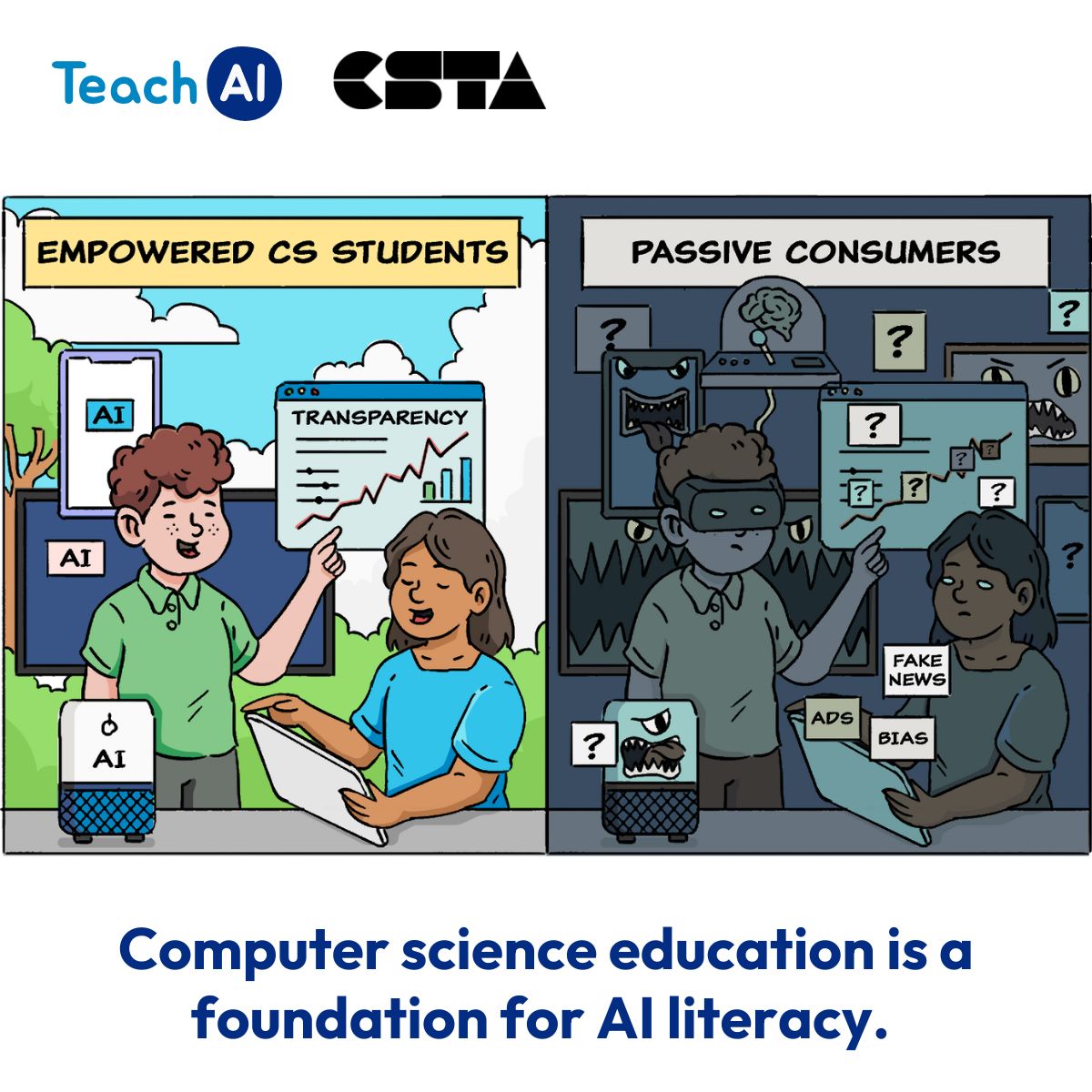
CS education is a foundation for AI literacy. Gain insights about the future of computer science education at brnw.ch/21wTZbF
2
23
55
11,150
Jeff Forbes retweeted

27 Jun 2025
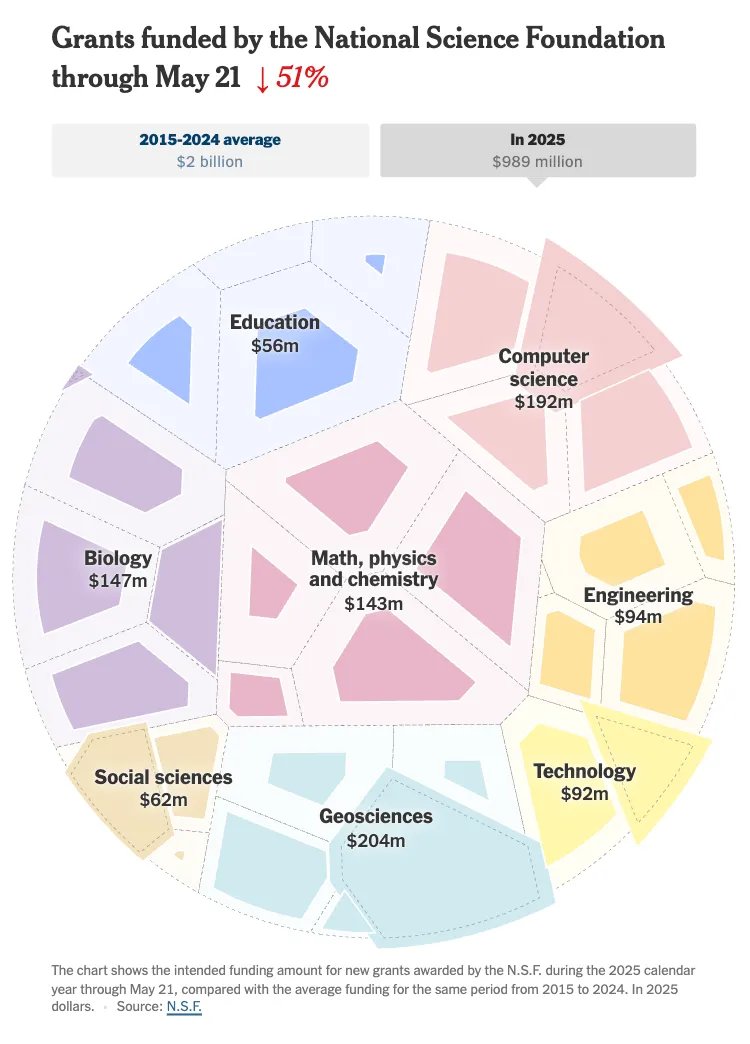
This is just insane

68
257
1,859
104,054
Jeff Forbes retweeted

22 Jun 2025
The worst advice comes from survivorship bias: "This worked for me -- so it should work for you." In most cases, this choice had no impact on their eventual success.
10
4
38
10,288
Jeff Forbes retweeted

19 Jun 2025
One of the most effective things the U.S. or any other nation can do to ensure its competitiveness in AI is to welcome high-skilled immigration and international students who have the potential to become high-skilled. For centuries, the U.S. has welcomed immigrants, and this helped make it a worldwide leader in technology. Letting immigrants and native-born Americans collaborate makes everyone better off. Reversing this stance would have a huge negative impact on U.S. technology development.
I was born in the UK and came to the U.S. on an F-1 student visa as a relatively unskilled and clueless teenager to attend college. Fortunately I gained skills and became less clueless over time. After completing my graduate studies, I started working at Stanford under the OPT (Optional Practical Training) program, and later an H-1B visa, and ended up staying here. Many other immigrants have followed similar paths to contribute to the U.S.
I am very concerned that making visas harder to obtain for students and high-skilled workers, such as the pause in new visa interviews that started last month and a newly chaotic process of visa cancellations, will hurt our ability to attract great students and workers. In addition, many international students without substantial means count on being able to work under OPT to pay off the high cost of a U.S. college degree. Gutting the OPT program, as has been proposed, would both hurt many international students’ ability to study here and deprive U.S. businesses of great talent. (This won’t stop students from wealthy families. But the U.S. should try to attract the best talent without regard to wealth.)
Failure to attract promising students and high-skilled workers would have a huge negative impact on American competitiveness in AI. Indeed, a recent report by the National Security Commission on Artificial Intelligence exhorts the government to “strengthen AI talent through immigration.”
If talented people do not come to the U.S., will they have an equal impact on global AI development just working somewhere else? Unfortunately, the net impact will be negative. The U.S. has a number of tech hubs including Silicon Valley, Seattle, New York, Boston/Cambridge, Los Angeles, Pittsburgh and Austin, and these hubs concentrate talent and foster innovation. (This is why cities, where people can more easily find each other and collaborate, promote innovation.) Making it harder for AI talent to find each other and collaborate will slow down innovation, and it will take time for new hubs to become as advanced.
Nonetheless, other nations are working hard to attract immigrants who can drive innovation — a good move for them! Many have thoughtful programs to attract AI and other talent. There are the UK’s Global Talent Visa, France’s French Tech Visa, Australia’s Global Talent Visa, the UAE’s Golden Visa, Taiwan’s Employment Gold Card, China’s Thousand Talents Plan, and many more. The U.S. is fortunate that many people already want to come here to study and work. Squandering that advantage would be a huge unforced error.
Beyond the matter of national competitiveness, there is the even more important ethical matter of making sure people are treated decently. I have spoken with international students who are terrified that their visas may be canceled arbitrarily. One recently agonized about whether to attend an international conference to present a research paper, because they were worried about being unable to return. In the end, with great sadness, they cancelled their trip. I also spoke with a highly skilled technologist who is in the U.S. on an H-1B visa. Their company shut down, leading them — after over a decade in this country, and with few ties to their nation of origin — scrambling to find alternative employment that would enable them to stay.
These stories, and many far worse, are heartbreaking. While I do what I can to help individuals I know personally, it is tragic that we are creating such an uncertain environment for immigrants, that many people who have extraordinary skills and talents will no longer want to come here.
To every immigrant or migrant in the U.S. who is concerned about the current national environment: I see you and empathize with your worries. As an immigrant myself, I will be fighting to protect everyone’s dignity and right to due process, and to encourage legal immigration, which makes both the U.S. and individuals much better off.
[Full text, with links: deeplearning.ai/the-batch/is… ]
298
321
2,056
524,454

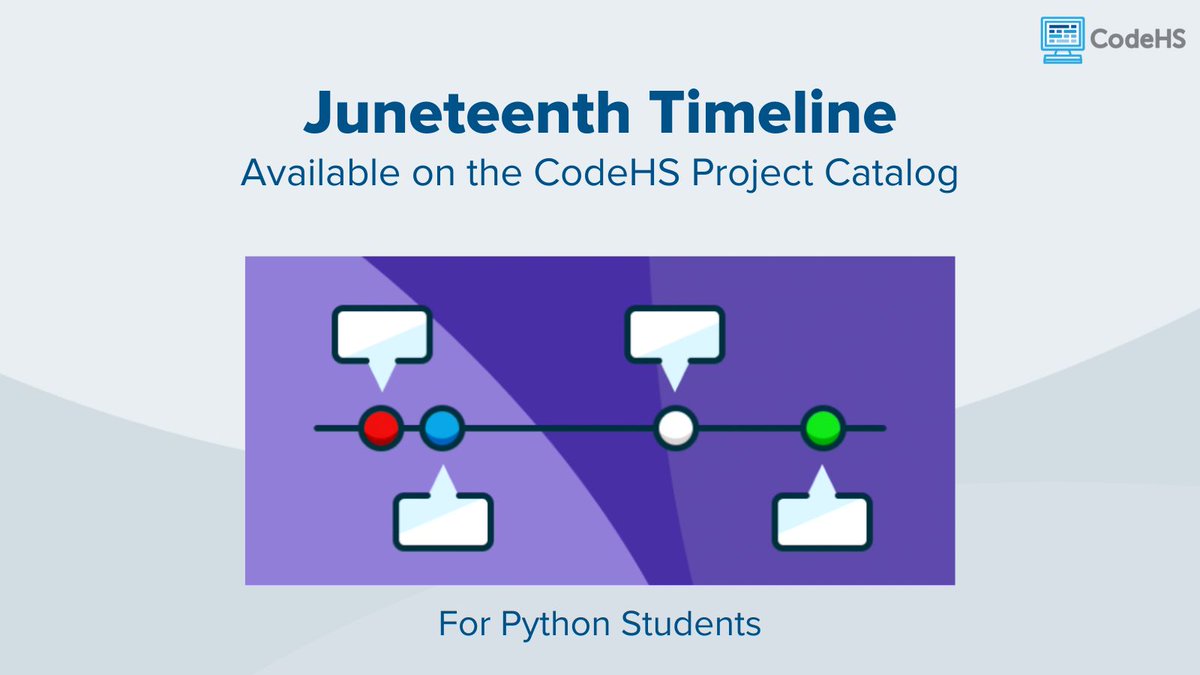
The CodeHS Juneteenth Timeline project invites students to explore the history of Juneteenth by utilizing strings, lists, and functions to build a timeline. Assign this #Python project today at buff.ly/tPl0DDS
2
1
103