
Family of 4; Humanist; Self employed; Interested in everything AI, development, sysop, crypto, privacy, freedom. (🇪🇸 🇬🇧)
Joined May 2008
- Tweets 66
- Following 678
- Followers 127
- Likes 173
9 Photos and videos




Pinned Tweet

Jun 1
After the recent news and overwhelmed by the constant updates and changes in the AI world, I've decided to build #BoomerClaw, my own reliable, self-hosted, independent, boomer-friendly AI assistant.
My requirements
• needs to run reliably without supervision
• accepts messy inputs (voice, text, links, files, screenshots, bookmarks…)
• handles failures gracefully
• outputs trustworthy work
• is cost-effective and mostly predictable
Current scenario
• security problems (npm supply chain, python supply chain, github actions…)
• memory problems (out of context, hallucinations, slop coding…)
• token expense uncertainty & lack of control over model updates and pricing
• "The self-hosting overhead is real" (Mac minis, VPS management…)
I need a solid, reliable pipeline and that's what I am building.
26
Jun 8
Last week I’ve been deep diving into building #BoomerClaw.
Researched a lot of stuff, issues to avoid, foreseeable problems …:
- vendor lock-in
- skyrocketing of inference costs
- context/memory management (Karpathy,…)
- task orchestration
- deterministic vs stochastic approaches (I’ll prone to det always before sto)
Most existing “harnesses” end up creating new dependencies but I want full control, cost accountability, selection of providers per task…
Core ideas so far:
- Micromachines running the CLI army (tried docker but probably will go to firecracker VMs)
- Deterministic-first (everything in Go tools & scripts before calling LLMs)
- Hierarchical knowledge base (markdown)
- Black-box like pipeline with inherited payloads (accumulated)
- Strict least-privilege agents scaling failed tasks HITL when needed
Security, cost control and accountability above all.
5
May 22
With all recent security issues, I better build my own AI harness.
But, being 55, how am I supposed to do that?
Time to start some research, I guess.
8
Jordi Roca retweeted

Apr 8
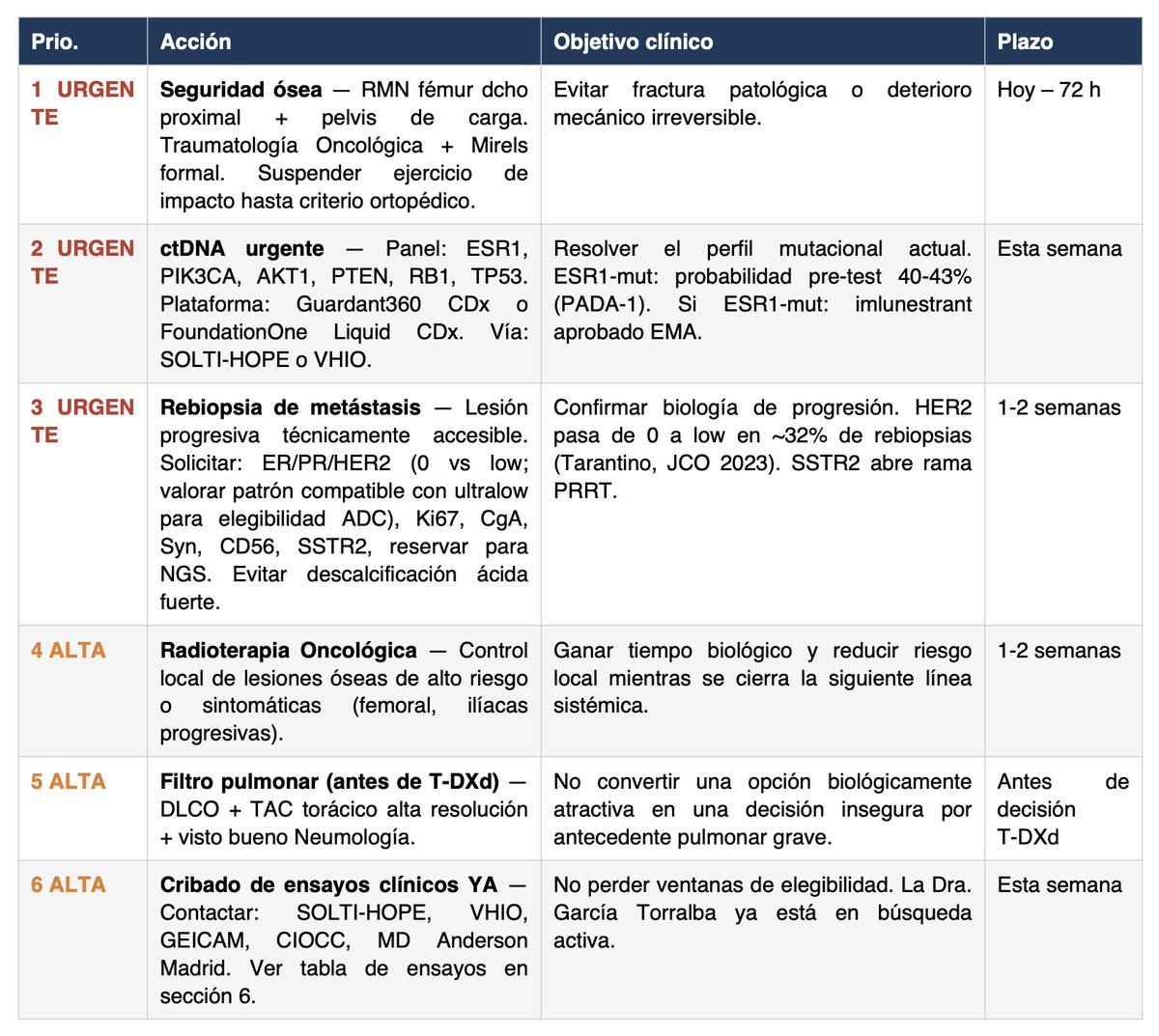
🔴 NECESITO TU ATENCIÓN
Llevo una semana ayudando a Miriam en su caso de cáncer metastásico y quiero compartir la metodología que he estado usando porque es absolutamente replicable.
Pienso que, con suerte, puede ser ÚTIL A OTRAS PERSONAS con cáncer (o con cualquier otra enfermedad).
Los resultados que hemos conseguido no son un milagro, pero pensamos que son realmente útiles y pueden significar una diferencia crucial en un caso médico de vida o muerte.
Aquí va paso a paso el método:
1/ Usar los modelos más avanzados del momento (por desgracia de pago, y no son baratos, opino que Sanidad Pública debería invertir en esto):
- ChatGPT Pro Extended (40min de pensamiento aprox por llamada)
- Claude Opus 4.6 MAX
Pendientes de probar a fondo:
- Perplexity Sonar Pro
- Notebook LM
2/ Dárselo MUY MASCADO a la IA todo el historial. Esto parece una tontería pero es muy importante.
- Lo primero que pido, con Claude Cowork que tiene acceso al disco duro, es que entre en la carpeta en la que está TODO EL HISTORIAL (pueden ser más de 100 pdfs) y lo unifique todo en:
- Un único PDF (puede ser de más de 1000 páginas o lo que sea necesario)
- Un único txt legible, que debe hacer correctamente usando un script con OCR y luego comprobar con lupa que está bien hecho.
Insisto: no saltar al siguiente paso antes de tener muy bien hecho lo anterior, sobre todo el txt.
3/ Una vez tenemos lo anterior utilizar este prompt junto con el txt y el PDF como archivos de entrada y lanzarlo en AMBOS modelos (y en más si es posible) a la vez.
👉 Os lo dejo aquí, este prompt es increíble complejo/avanzado: dropbox.com/scl/fi/f5luli81h… Está pensado para el caso concreto de Miriam, pero con los modelos del punto 1/ podrías adaptarlo a tu caso particular sin problemas.
4/ La PUNTA DE FLECHA enfrentando un modelo al otro: esta metodología no la he escuchado a nadie, pero funciona increíblemente bien. La sensación es la de ir afilando una estaca hasta que adquiere una punta reluciente.
Funciona así: con paciencia y en sucesivas iteraciones (aconsejo mínimo 5 veces, y en en cuenta que si ChatGPT tarda 40min te va a llevar un buen rato) enfrenta el resultado (el PDF) de un modelo a otro. Con un prompt sencillo del estilo:
"Otro comité de expertos opina esto. ¿Cómo lo ves? Si estás de acuerdo o lo contrario dime por qué, y genera un nuevo PDF si lo ves preciso".
El resultado se lo cruzas al modelo contrario. Así, en sucesivas iteraciones, búsquedas de internet, papers, etc. irán encontrando y afilando más cosas.
¿Cuándo acabar? Cuando AMBOS modelos digan que está perfecto y no puedan mejorar más el trabajo del contrario. Esto es tan absurdamente rompedor que pienso que los resultados de TODOS los modelos actuales mejorarían si siguieran esta metodología (apoyándose en una espiral rollo "adversarial model". No entiendo por qué nadie se ha dado cuenta de esto, si lo ha hecho, por qué no se le da más bombo. Funciona impresionantemente bien en cualquier ámbito, inclusive programación y matemáticas.
Es mas, mi teoría es que esto podría hacerse todavía mejor haciéndolo no solo con dos modelos: sino con una mayor combinatoria, añadiendo quizás Perplexity Sonar Pro, etc.
RESULTADOS
Increíbles. Obviamente no puedo saber si mejores que el mejor de los comités científico-sanitarios del mundo, pero le están dando a Miriam una nueva dimensión del caso, tests adicionales que hacer, posibles pruebas, etc.
Obviamente la IA milagros no hace, pero pienso que puede ya, a día de hoy, ayudar a muchos pacientes. Y Sanidad Pública debería invertir mucho, pero mucho, en esto.
Voy a preguntarle a Miriam si puedo poner el PDF completo de resultados más avanzado que conseguimos, para que os hagáis una idea de su calidad. Ya me ha dado más o menos permiso, pero quiero asegurarme 100%.

210
1,620
5,054
2,244,313
Jordi Roca retweeted

Feb 17
Ojito a lo que dice Proton respecto a LaLiga👇
Feb 17

We have become aware of recent reports concerning legal proceedings in Spain that may affect VPN services, including Proton VPN.
At this stage, we were not aware of any proceedings that may have been underway prior to these reports coming to light and have not been formally notified of any proceedings or judgment.
Moreover, any judicial order issued without proper notification to the affected parties, thereby denying them the opportunity to be heard, would be procedurally invalid under fundamental principles of due process.
Spanish courts, like all courts operating under the rule of law, are bound by procedural safeguards that ensure parties are given a fair opportunity to present their case before any binding judgment is rendered.
9
80
614
79,296
Jordi Roca retweeted

Jan 9
Yesterday a quasi-judicial body in Italy fined @Cloudflare $17 million for failing to go along with their scheme to censor the Internet. The scheme, which even the EU has called concerning, required us within a mere 30 minutes of notification to fully censor from the Internet any sites a shadowy cabal of European media elites deemed against their interests. No judicial oversight. No due process. No appeal. No transparency. It required us to not just remove customers, but also censor our 1.1.1.1 DNS resolver meaning it risked blacking out any site on the Internet. And it required us not just to censor the content in Italy but globally. In other words, Italy insists a shadowy, European media cabal should be able to dictate what is and is not allowed online.
That, of course, is DISGUSTING and even before yesterday’s fine we had multiple legal challenges pending against the underlying scheme. We, of course, will now fight the unjust fine. Not just because it’s wrong for us but because it is wrong for democratic values.
In addition, we are considering the following actions: 1) discontinuing the millions of dollars in pro bono cyber security services we are providing the upcoming Milano-Cortina Olympics; 2) discontinuing Cloudflare’s Free cyber security services for any Italy-based users; 3) removing all servers from Italian cities; and 4) terminating all plans to build an Italian Cloudflare office or make any investments in the country.
Play stupid games, win stupid prizes. While there are things I would handle differently than the current U.S. administration, I appreciate @JDVance taking a leadership role in recognizing this type of regulation is a fundamental unfair trade issue that also threatens democratic values. And in this case @ElonMusk is right: #FreeSpeech is critical and under attack from an out-of-touch cabal of very disturbed European policy makers.
I will be in DC first thing next week to discuss this with U.S. administration officials and I’ll be meeting with the IOC in Lausanne shortly after to outline the risk to the Olympic Games if @Cloudflare withdraws our cyber security protection.
In the meantime, we remain happy to discuss this with Italian government officials who, so far, have been unwilling to engage beyond issuing fines. We believe Italy, like all countries, has a right to regulate the content on networks inside its borders. But they must do so following the Rule of Law and principles of Due Process. And Italy certainly has no right to regulate what is and is not allowed on the Internet in the United States, the United Kingdom, Canada, China, Brazil, India or anywhere outside its borders.
THIS IS AN IMPORTANT FIGHT AND WE WILL WIN!!!

ALT Cloudflare: defender of the Open Internet against the elite European media cabal.
2,376
7,211
34,146
9,489,370
Jordi Roca retweeted

19 Dec 2025
Sé que esto suele caer en saco roto, pero no me canso de intentarlo, una y otra vez. Con que cale el mensaje a diez o veinte personas cada vez, me doy por satisfecho. No es cuestión de conseguir miles de conversos, de un día para otro. Pero, lo de las plazas reservadas para personas con movilidad reducida, de verdad que es muy sencillito de entender.
89
1,661
3,213
259,701
Jordi Roca retweeted

17 Dec 2025
I keep thinking about this:
Adobe just printed $23B in revenue in 2025. Let that sink in.
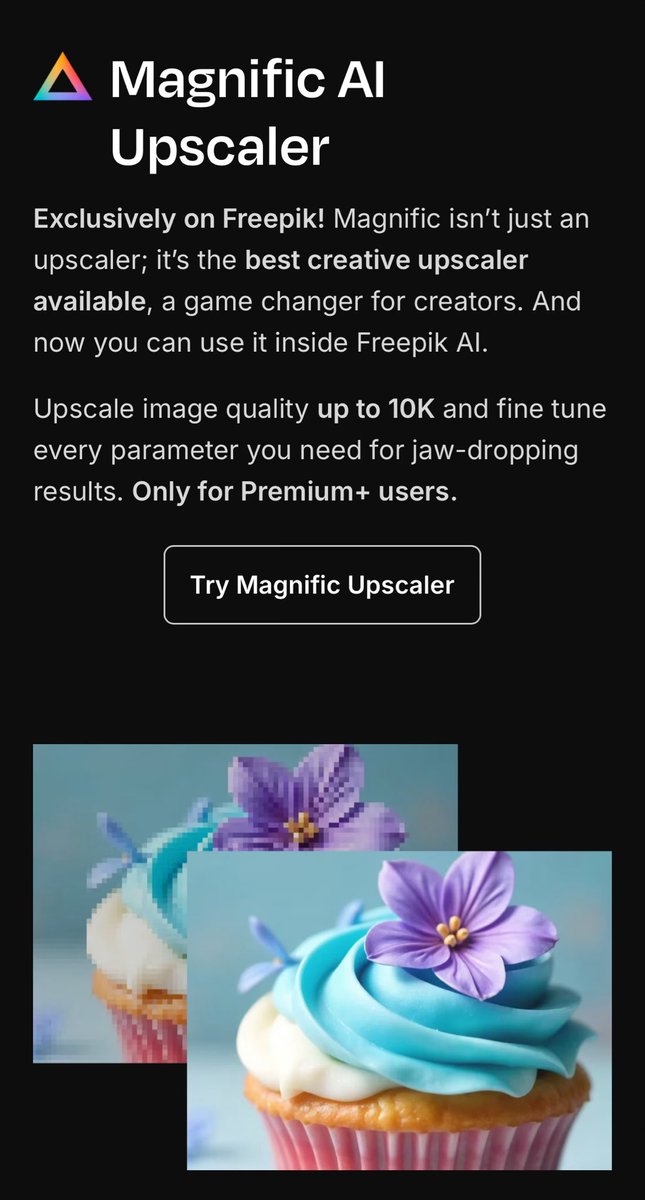
And yet, somehow, a tiny company like Magnific, which originally started as literally 2 people in small city of Spain, Murcia, can ship an upscaler that makes a Adobe's output feel… OLD.
Not even trying to be edgy here, genuinely amazed
Because if you're Adobe, you have:
30,000 employees, distribution, every creator already paying you monthly... a literal money printer
So why does it feel like some of the best wow moments in gen image come from small teams?
I assume this is changing now with the big companies already going ALL IN => Nano Banana is the new WOW moment.
But still, Magnific is doing incredible numbers 🤑 (will write about how well we finished this year other day).
My theory is that the bigger you get, excepto if you are a "full AI product" like ChatGPT/Gemini, the more your product becomes a politics simulator:
- One team optimizes for brand risk
- Another for enterprise checkboxes
- One more for legal
- And then other team optimizes for don’t break anything for 30M users...
And then the people who actually want to ship something insane have to fight through 12 meetings just to change a slider label.
Meanwhile, a 2-10 person startup (Lovable, Magnific, etc) wakes up, reads user feedback, ships a new product on top of all the open source API models out there, and delivers WHAT THE PEOPLE WANT
I not even about resources.
Is about speed, taste, and giving a damn about politics but CARING A LOT and LOVING your users.
17 Dec 2025

⚡ PiXimperfect just dropped a video comparing the best upscalers on the market.
With all due respect to competitors...
WE TOTALLY CRUSH THEM INTO OBLIVION 🧵👇
20
13
156
17,918
Jordi Roca retweeted
10 Dec 2025
Apple se le han hinchado los webs: ha perdido la paciencia con los burócratas de la UE.
Acaban de publicar un comunicado demoledor contra los "chupatintas" de Bruselas y ojo, porque las consecuencias ya las estamos sufriendo los usuarios europeos en el día a día.
Lo que tienes que saber:
- Nos quedamos sin funciones nuevas en Europa → Cosas como la traducción en tiempo real con los AirPods, el iPhone Mirroring en Mac y las novedades de Mapas están bloqueadas o retrasadas. ¿La razón? Apple dice que la DMA les obliga a desarrollar estas funciones para productos de la competencia antes de lanzarlas. Si no lo hacen, multas o prohibición de venta.
- iOS se ve forzado a ser un sistema más inseguro y caótico → El sideloading, las tiendas de terceros y los pagos alternativos ahora son obligatorios, aunque no cumplan los estándares de seguridad de la App Store. Apple avisa clarito: esto trae estafas, apps de bancos falsas, malware, apps porno (como "Hot Tub") y apps de apuestas donde antes no llegaban.
- La DMA abre la puerta a un robo de datos de locos → Otras empresas ya están pidiendo acceso al contenido completo de tus notificaciones (mensajes, correos, alertas médicas) y a tu historial de Wi-Fi (que revela dónde has estado, qué clínica, qué hospital). Apple dice que la Comisión no les acepta "privacidad y seguridad" como motivo válido para decir que no.
- La conclusión de Apple: la ley consigue lo contrario de lo que prometía → Menos elección (nos llegan las cosas tarde), menos diferenciación (obligan a iOS a parecerse a Android) y "competencia desleal", porque las normas más duras van solo contra Apple mientras otros gigantes ni se inmutan.
Es una de las respuestas más agresivas que he visto de Apple contra los reguladores. Básicamente te lo dicen a la cara: si vives en la UE, tu experiencia con Apple va a ir a peor.

183
1,067
2,519
288,748
Jordi Roca retweeted

29 Sep 2025
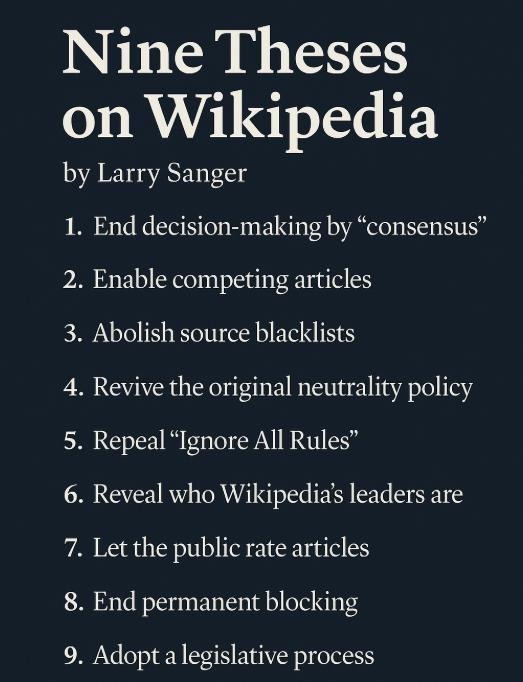
I am nailing Nine Theses to the door of @Wikipedia. This has been my project for the last nine months. There has never been a thoroughgoing Wikipedia reform proposal—this is the first. If it doesn't work, we need to organize an alternative. 🧵
830
3,355
17,583
7,344,830
1 Dec 2025
Si vemos esto antes de internet se desata el pánico global: invasión marciana en tiempo real.
Orson Welles habría hecho el mic drop jaw drop más sonado de la historia.
Estoy alunizando.
🪐🚀

12
Jordi Roca retweeted
25 Nov 2024
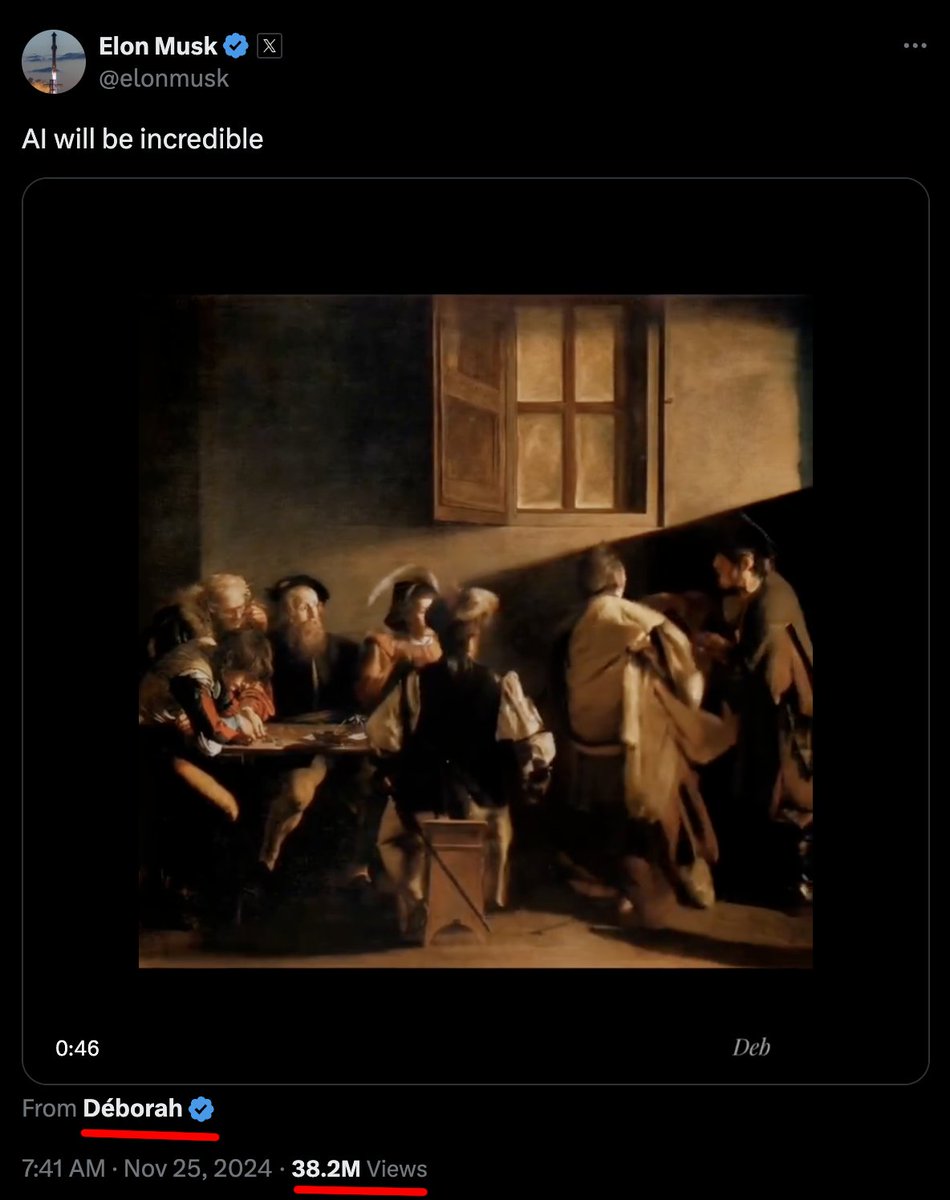
There is a feature in X that, although I have used it myself more than once, I think is fundamentally perverse.
It is the option to use other people's videos with the "tagging" feature that puts the creator's name at the bottom in small, barely visible text, much worse than doing a Quote in which at least it gives some visibility to the author.
The problem is that all the views that the video generates do not go to the video's creator, but to the person who has done this.
In the example, I think that Déborah, as the creator of the video, should have received the 38M views, which for her, as a content creator, would have been a world!

67
83
459
109,028
Jordi Roca retweeted

10 Jul 2024
Project that blew my mind a bit earlier and I still think about often:
A Trustworthy, Free (Libre), Linux Capable,
Self-Hosting 64bit RISC-V Computer
contrib.andrew.cmu.edu/~soml…
This is an attempt to build a *completely* open source computer system, both software AND hardware. Usually even if you're using Open Source software, you're surrendered to whatever hardware chip you're actually running on, including its (most often opaque) designs, its Instruction Set Architecture (ISA), etc.
Because manufacturing chips is expensive, the approach here is to use an FPGA, which can be reconfigured to implement any custom digital circuit. And they've been getting good enough that you can now (apparently) fit entire computers on them.
This gives you an unprecedented flexibility of the entire hardware software stack. You could arbitrarily change or extend the computer instruction set itself (here, RISC-V is the clear excellent choice as default). Or the pipeline depth of your CPU. Or the memory hierarchy, or add/change cache levels. Add custom hardware accelerators. And of course, change the OS arbitrary: custom scheduler, memory management system, or anything above, too.
The system is also self-hosted, so it is fully self-contained and has no external dependencies, it can compile its own compiler and the entire software environment.
With respect to security/privacy/trust, you end up with a fully auditable system, hardware and software. Also, the FPGA hardware itself would be a lot harder point for an attacker to compromise compared to an ASIC, because they don't know in advance what/how you'll run on it, how you'll represent your data, etc.
Of course, FPGAs aren't going to run your computer as fast as an actual chip, but what you're losing in performance you gain in openness and complete control.
Anyway, fascinating project, and possibly quite relevant if computing may be changing at a fundamental level.
80
384
3,279
260,645

The right to have a private conversation, online or offline, is a bedrock human rights principle. eff.org/deeplinks/2024/06/no…
22
249
881
700,108
Jordi Roca retweeted

26 Jun 2024
This morning, Nature published two papers on bridge editing, the new genome engineering technology from @ArcInstitute: nature.com/articles/s41586-0…, nature.com/articles/s41586-0…. I'm quite excited about its potential!
Since the whole thing is pretty arcane, I fed the blog post (arcinstitute.org/news/blog/b…) to Claude 3.5, and asked it to write an introduction. Below is the rather impressive (unedited) result.
Genome Design: The Bridge to Our Biological Future
I.
Imagine you're trying to edit a document, but instead of a cursor, you have a pair of scissors. You can cut out words you don't like, maybe paste in a few new ones, but precise editing? Forget about it. Now imagine someone hands you a pen. Suddenly, you can write whatever you want, wherever you want. This is the kind of leap we're seeing in the world of genome editing.
For the past few decades, we've been snipping away at genomes with tools like CRISPR, making impressive progress but always constrained by the fundamental nature of our tools: they cut DNA. But what if we could write directly into the genome, inserting whatever we want, wherever we want, without ever making a single cut?
This isn't just a "wouldn't it be nice" daydream anymore. Researchers at the Arc Institute have discovered a new system that does exactly that. They're calling it "bridge recombination," and it might just be the biggest revolution in genetic engineering since CRISPR.
II.
To understand why this is such a big deal, we need to take a quick tour through the history of genetic manipulation.
In the late 1990s, we discovered RNA interference (RNAi). This was our first real taste of programmable biology. We could use short RNA sequences to target and shut down specific genes. It was like having a universal remote control for gene expression. Cool, right?
Then came CRISPR in the early 2010s. Suddenly, we could not just turn genes off, but edit them directly. It was like upgrading from a remote control to a basic text editor. We could cut out bad genes and paste in good ones. But there was always a catch: CRISPR works by cutting DNA, and cells don't always repair those cuts exactly the way we want them to.
Both of these systems were revolutionary, but they shared a common limitation: they were destructive. They worked by breaking things – either the RNA transcripts of genes (in the case of RNAi) or the DNA itself (in the case of CRISPR).
III.
Enter the bridge recombination system.
The researchers at Arc Institute, led by Dr. Patrick Hsu, were poking around in the genomes of bacteria, looking at transposable elements. These are sometimes called "jumping genes" because they can cut themselves out of one part of a genome and paste themselves into another.
They were particularly interested in a group called IS110 elements. These are about as minimalist as you can get while still being functional – just a gene for the enzyme that does the cutting and pasting, plus some mysterious flanking DNA segments.
What they found was surprising. When an IS110 element cuts itself out of a genome, those mysterious flanking segments join up to form an RNA molecule. This RNA folds into two loops, one that binds to the IS110 element itself, and another that binds to the target DNA where the element will insert itself.
This RNA – which they've dubbed "bridge RNA" – is the key to the whole system. It's like a set of instructions, telling the enzyme exactly where to insert the DNA and what DNA to insert.
IV.
Now, you might be thinking, "Okay, that's neat, but how is this different from CRISPR?" The key is in how the insertion happens.
CRISPR works by making a cut in the DNA and then relying on the cell's repair mechanisms to insert the new DNA. It's effective, but it's also a bit like performing surgery with a chainsaw. Sometimes you get exactly what you want, but often you end up with small errors or unwanted insertions or deletions.
The bridge recombination system, on the other hand, doesn't cut the DNA at all. It unzips a small section, inserts the new DNA, and zips it back up again. No broken DNA strands, no relying on error-prone repair mechanisms. It's precise in a way that CRISPR can only dream of.
But the real magic is in the programmability. Remember those two loops in the bridge RNA? They can be programmed to recognize any DNA sequence. This means you can tell the system to insert any piece of DNA into any location in the genome. It's like having a word processor for DNA.
V.
The implications of this are staggering. Here are just a few possibilities:
• Gene Therapy 2.0: Current gene therapy approaches often rely on somewhat random insertion of therapeutic genes. With bridge recombination, we could insert corrective genes exactly where they need to go, without risking disruption of other important genes.
• Synthetic Biology: Want to give an organism a completely new capability? Just design the gene and insert it precisely where you want it.
• Evolutionary Biology: We could insert reporter genes at specific locations across the genome, allowing us to watch evolution happen in real time.
• Agricultural Improvements: We could insert beneficial genes into crops with unprecedented precision, potentially revolutionizing our ability to create drought-resistant or nutrient-enhanced plants.
• Bioengineering: Imagine being able to design and build entire genetic circuits, inserting each component exactly where it needs to be for optimal function.
VI.
In the grand scheme of things, the discovery of bridge recombination feels like a pivotal moment. It's as if we've been trying to write the book of life with a typewriter, and someone just handed us a word processor.
The researchers at Arc Institute have opened a door to a new era of genome design. As with any breakthrough of this magnitude, it's hard to predict exactly where it will lead. But one thing is certain: the future of biology just got a lot more interesting.
As we stand on the brink of this new frontier, I'm reminded of a quote from Arthur C. Clarke: "Any sufficiently advanced technology is indistinguishable from magic." With bridge recombination, we're not just editing the genome anymore. We're writing it. And that, my friends, is pretty close to magic.
511
1,508
7,561
2,293,116