
Accelerating cloud uptake in Africa | Cloud, Tech, Startups | Building @pureinfra |
Joined June 2008
- Tweets 17,628
- Following 684
- Followers 6,303
- Likes 13,755
303 Photos and videos








Jun 4
This interview by @SajVayani is a deep dive into the coffee business in Kenya youtube.com/watch?v=_GiC1g1m…
3
5
298
Phares Kariuki retweeted

"I hate tall buildings" Nairobians will need to be as wealthy as the billionaires of San Francisco to have the city afford their fantasies
May 31

Because San Francisco refuses to build housing and so most service workers have to travel up to two hours each night back into exurban exile in e.g. Solano County and Contra Costa County.
1
1
365
Phares Kariuki retweeted

May 25
One of the older kids in the hood asked me the other day what the point was of being honest and doing the right thing (not doing assignments with ChatGPT, not lying, not stealing, not using company/public funds on yourself, not promising nonsense in 6 months' time, etc).
Because, as far as they could tell, there is plenty of evidence that it is precisely the people doing these things who come out on top. If anything, those on the straight and narrow are on a path of pain, inconvenience, and loss.
I thought about it for a minute and then said rather than give a canned, cliche response, let me take a few days to think about it, because, to be honest, I too am struggling to be OK in a world where unashamed scoundrels are the ones running the show, leering at us daily from podiums
9
64
109
6,031

This is crazy. The shai hulud exploit is embedding itself in Claude and VSCode to re-execute itself, even after the original packages have been uninstalled.
I'm never installing anything ever again.

‼️🚨 UPDATE: The TanStack npm attack is now a full campaign.
'Mini' Shai-Hulud has hit:
- OpenSearch
- Mistral AI
- Guardrails AI
-UiPath
- Squawk packages across npm and PyPI
The malware specifically targets AI developer tooling. It hooks into Claude Code (.claude/settings.json) and VS Code (.vscode/tasks.json) to re-execute on every tool event, long after the infected package is gone. npm uninstall does not fix this.
43
112
1,992
379,995
Phares Kariuki retweeted
Apr 19
Is there anyone who sells galangal in Nairobi?
2
308
Phares Kariuki retweeted

Apr 15
how did Allbirds pivot to AI compute hardware before the shoe company literally called ASICS
68
483
7,251
351,496
Phares Kariuki retweeted

Apr 15
Shoe company Allbirds just announced that it's planning to
- Sell all of its brands and footwear assets
- Rebrand the company to Newbird AI
- Use a $50M convertible financing facility to "acquire high-performance GPU assets"
337
134
3,214
1,975,167
Apr 15
This is a symptom. Kenya generally doesn’t prioritize social spaces.
Apr 15

The "Park and Chill" culture in Kiambu has evolved from a pandemic-era necessity into a major social trend where revellers gather in open green spaces to relax by their cars.
This movement is particularly popular along Kiambu Road and the Limuru tea zones, driven by a desire for affordable, scenic alternatives to traditional nightclubs.
1
2
155
Phares Kariuki retweeted

Apr 12
Iko Nini Studio ROBBED! Help Us Identify Robbery Suspects!Iko Nini Podcast is offering a Ksh 100,000 cash reward for information leading to the arrest and conviction of the three men who robbed our studio and stole 2 cameras.
429
2,426
6,162
1,135,779
Apr 10
It's not the size of the dog in the fight, it's the size of the fight in the dog.
Mark Twain
@bashirhalaiki @manukisiangani
2
3
147
Apr 1
This is not accurate. Most content is now consumed locally. This is why datacenter infrastructure is important. Meta, Netflix, Amazon, Google etc all have caches locally. So the international links are not being hit as frequently as before.
Mar 31

Kenyans are about to learn a VERY expensive lesson about “cheap internet.”
Savanna ISP is offering:
100 Mbps - KSh 2,000
1 Gbps - KSh 10,000
And everyone is excited.
But let’s slow down and think.
Right now in Kenya, 100 Mbps of stable fibre is around KSh 4,500 - 10,000.
So when someone comes at 2,000, you shouldn’t celebrate first...
You should ask questions.
Because the internet is not printed out of thin air . Also, the internet business is math.
They don’t own submarine cables or most of the backbone.
So they’re buying bandwidth.
Wholesale bandwidth is roughly $1-$5 per Mbps.
Do the math:
1 Gbps = 1000 Mbps
Even at $1, that's ~$1000 (~KSh 130,000)
Now explain how that becomes KSh 10,000 to you.
Exactly.
So what’s really being sold here?
Oversubscription.
You’re being sold “speed” that assumes you won’t actually use it when others are. And they know it.
And this is how it usually plays out:
Months 1 and 2:
Everything is likely to be fast.
People will be tweeting “game changer 🔥”. You will see hashtags here to get more people to join
Month 2 going forward:
More users join.
Evenings will start dragging. Your YouTube will start buffering a lot.
Month 3 going forward:
Now the reality hits:
- Peak hours, e.g., in the evening, feel slow
- Speeds jump up and down
- Some sites are fast, others struggle
- Random downtimes start appearing
Not because they’re evil.
Because math always wins.
This model works beautifully… until too many people sign up. The model is advertised as a success, nice, etc., to bring in more people to join, and eventually, everything hits the end.
Then performance becomes the hidden cost.
And suddenly that “cheap internet” doesn’t feel cheap anymore. Suddenly, you are stressed, you have to buy more data, and spend even more.
If they pull it off, I’ll admit I was wrong.
But if you’ve seen this industry before, you already know where this is heading.
Go ahead and subscribe, but also retain a backup.
Just don’t act surprised later.
Bookmark this.

3
3
10
1,810
Apr 1
A lot of this content is now available at the various exchanges. A lot of work over the last two decades has gone into increasing the quality of local hosting infrastructure and local traffic exchange by the likes of @kixp_support
1
145
Apr 1
So if Netflix, YouTube, Instagram etc don’t hit the international links and many other websites are using the CDNs (Amazon, Cloudflare etc) that are all in Kenya, we can actually justify significantly lower prices for higher bandwidth
1
160
Phares Kariuki retweeted

Mar 30
The reason software eats RAM is the same reason factories used to dump chemicals in rivers. The cost is externalized.
Every mass of inference compute shows up on an engineering manager's AWS bill, broken down to the cent, reviewed quarterly. Every mass of RAM consumed on YOUR machine shows up nowhere in anyone's budget. Chrome could cut memory usage by 60% tomorrow and Google's revenue wouldn't move a single basis point.
Docker's 2GB idle footprint costs Docker Inc. exactly $0. Electron's 500MB todo list costs the Electron team exactly $0. The user paid for the RAM. The user pays the electricity. The user deals with the fan noise. The company ships faster because they chose the laziest possible runtime.
The token-optimization obsession makes this even clearer. Companies optimize inference cost because inference cost hits their margins. They'll spend six months shaving 200ms off a model response. They won't spend six days reducing a desktop client's memory footprint because that memory belongs to someone else's hardware.
This is why the 16GB vs 32GB debate is a trap. You're asking consumers to buy more expensive hardware to subsidize the software industry's refusal to optimize for a resource they never have to pay for.
The market will never fix this on its own. The people writing the checks and the people running out of RAM are on opposite sides of the transaction.
Mar 30

unpopular opinion: 16GB is plenty if software engineers actually cared about memory efficiency. chrome eating 4GB for 12 tabs is not a hardware problem its a software disgrace. docker consuming 2GB idle is not a feature its laziness. we live in an era where people optimize every single token to save $0.001 on API costs but happily ship electron apps that eat 500MB to display a todo list. if the industry treated RAM the way we treat inference compute - obsessively measuring every byte - 16GB would feel luxurious. the hardware isnt the problem, the software is @adxtyahq
93
1,069
6,694
279,183
Phares Kariuki retweeted

Mar 19
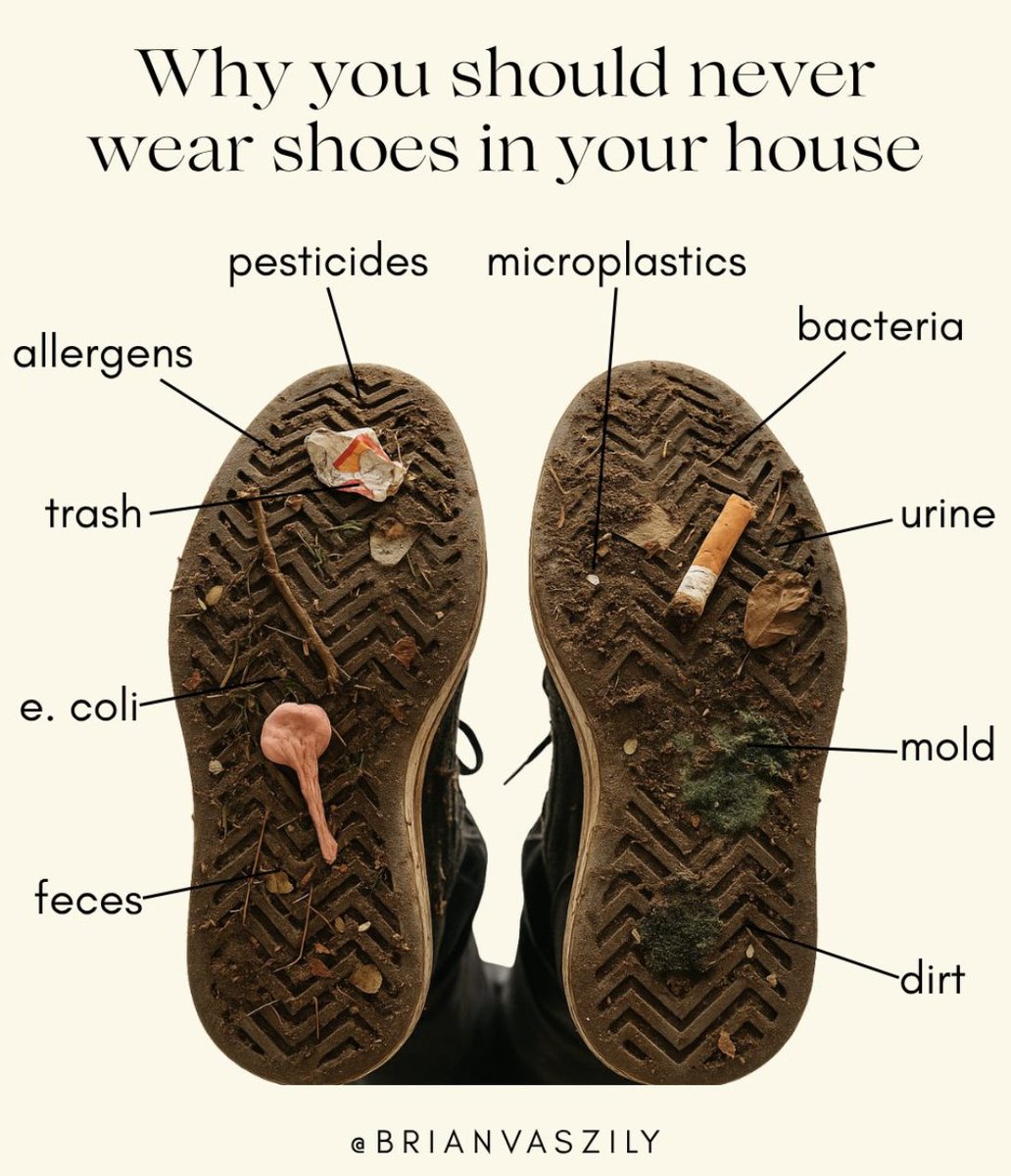
Wearing outside shoes inside the house. According to Dr.Gerba, Microbiologist, there's a 96% chance there's fecal matter on your sole and 400k units of bacteria.
Mar 19

What is extremely unhygienic but everyone seems to do it anyway???
912
6,335
24,154
8,363,662
Phares Kariuki retweeted
Mar 20
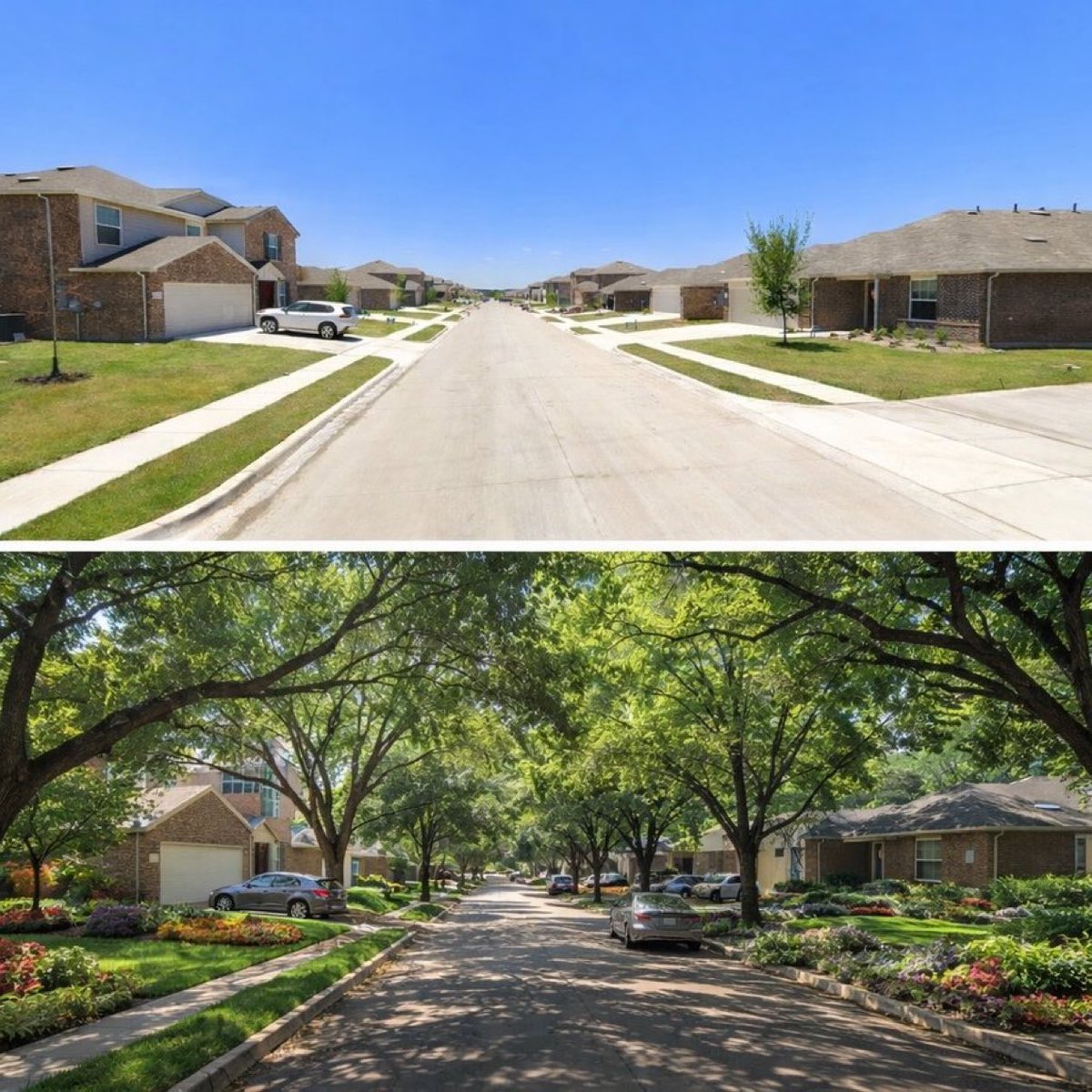
Let me explain exactly why every new subdivision in America looks like the top photo, because the math is wild.
A mature tree increases a home's value by 7 to 19 percent. On a $400,000 house, that's $28,000 to $76,000. A single shade tree produces the cooling equivalent of ten room-size air conditioners running 20 hours a day. One tree on the west side of a house cuts energy bills by 12 percent within 15 years. The bottom photo is worth more, costs less to live in, and sells faster. This has been documented by the University of Washington, Clemson, Michigan State, and the USDA. The data is not in dispute.
Removing those trees saves the builder roughly $5,000 per lot. Concrete trucks need twice the dripline radius of every standing tree. Utility trenches need flat ground. A bulldozer flattens 200 lots in an afternoon. Preserving trees adds weeks and thousands per home.
So the developer pockets $5,000 in savings and the buyer eats $50,000 in lost value for the next two decades. The person making the decision and the person paying for it have never been in the same room.
The Woodlands, Texas is the proof of what happens when they are. George Mitchell bought 28,000 acres of Houston timberland in 1974 and preserved 28% as permanent green space. He forced McDonald's to build behind the tree canopy. That McDonald's became one of the highest-volume locations in Texas. The first office building, designed to reflect the surrounding forest so you couldn't see it from the street, leased completely.
The Woodlands median home price today: $615,000. Katy, a comparable Houston suburb that clear-cut: $375,000. Named #1 community to live in America two years running.
Fifty years of data. The trees are worth more than removing them saves. Developers clear-cut anyway because they sell the house once and leave. You live in it for 30 years.

1,301
10,894
73,790
8,576,082
Mar 19
Tracking Kenya's Growing Debt | Drunken Lectures youtu.be/U_4RP-pmMpM?si=fBaO… a must watch, lecture given by @IEAKwame
1
3
154
Phares Kariuki retweeted

JUST LAUNCHED! Industrial policy has never been more consequential for the world's developing economies.
Our new report reviews 183 national plans & evidence from 60 countries, showing why targeted inputs outperform blunt tools: wrld.bg/CcCc50YvjeV

5
218
518
71,329