
Joined January 2015
- Tweets 39,471
- Following 365
- Followers 356
- Likes 5,665
1 Photos and videos

Pinned Tweet

26 Jun 2025
With labor emancipated
every human becomes a working human, and productive labor ceases to be a class attribute
14
1,007
May 30
Amazing
We want to slow
Aggregate
Labor time productivity
Instead of going to
shorter hours
per week per year per career
8
May 27
Like lenin
Like ?
Dia mat has likes ?
May 27

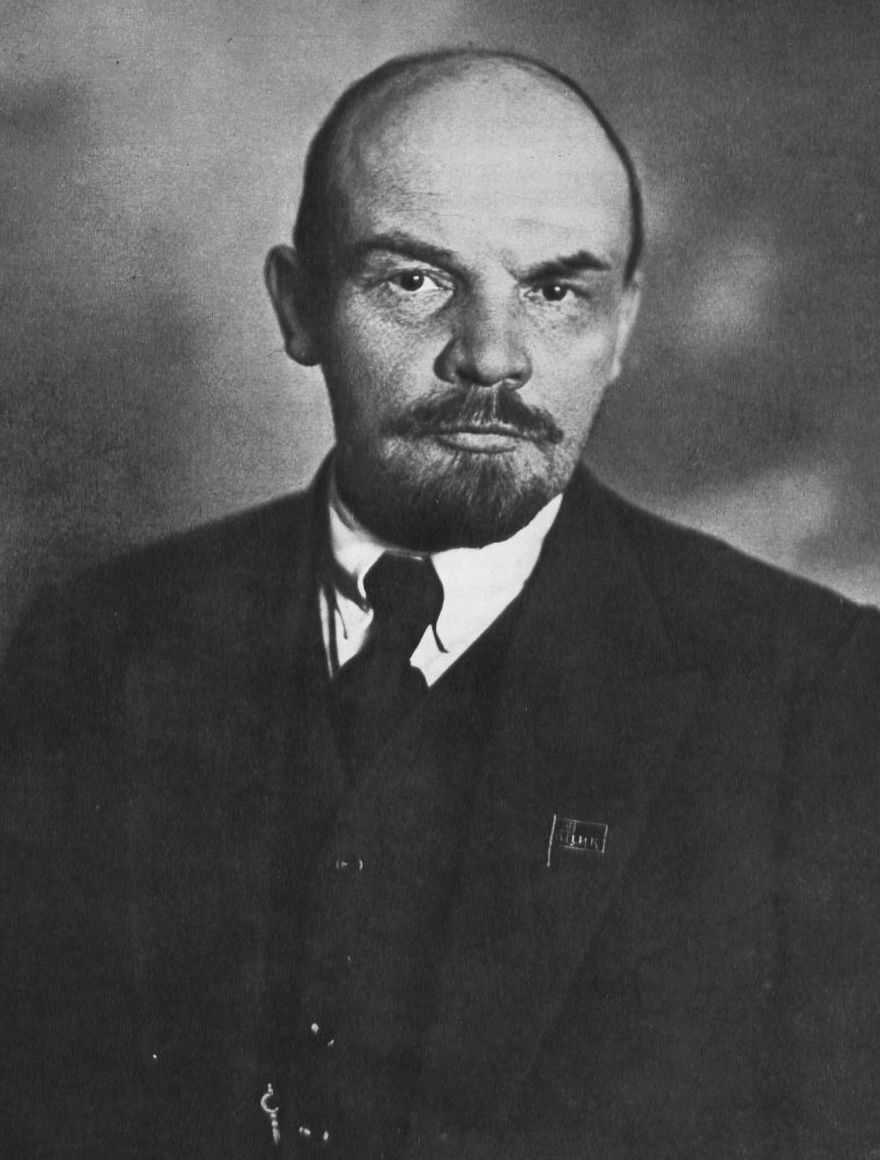
If you don't like Lenin, then congratulations, you know nothing about history.
23
May 23
Delightful
"They launch investment projects that appear profitable but consume resources that don't actually exist"
Consuming phantom output ?
Markets don't fail
market agents fail.
Why ? the market giv8ng off deceptive signals
Why ?Outside monetary gushing In then out

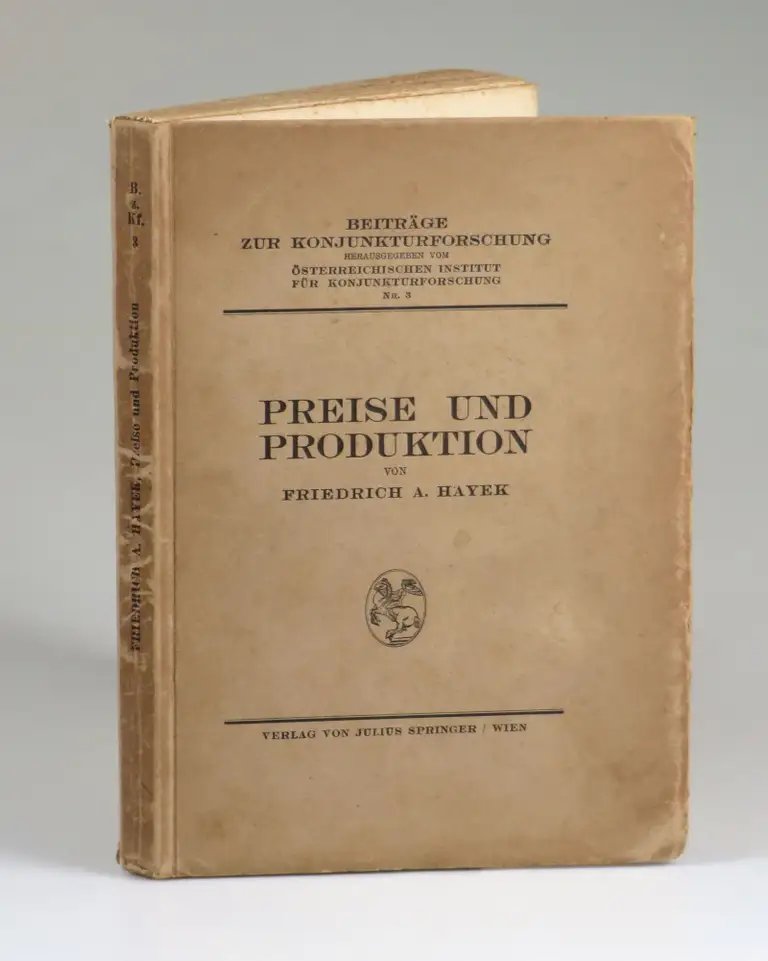
While Keynes blamed the Great Depression on market failures and demanded government intervention, Friedrich Hayek delivered the real explanation in his brilliant 1931 lectures "Prices and Production." The Austrian economist laid out precisely how central bank credit expansion creates unsustainable booms that must end in devastating busts.
Hayek explained that when central banks artificially lower interest rates below their natural market level, they distort the price signals that coordinate economic activity. Entrepreneurs receive false information about consumer preferences and available savings. They launch investment projects that appear profitable but consume resources that don't actually exist. The Fed had done exactly this throughout the 1920s, pumping credit into the economy and fueling the speculative mania that Keynes and his followers mistook for genuine prosperity.
The inevitable crash came in 1929 when reality reasserted itself. Malinvestments had to be liquidated. Workers had to move from unsustainable industries back to productive ones. Prices had to adjust to reflect actual supply and demand conditions. This painful but necessary correction process would have restored the economy to health relatively quickly.
Policymakers followed Keynesian logic instead. They propped up failing businesses, prevented wage adjustments, and launched massive government spending programs. President Hoover increased federal spending by 50% between 1929 and 1932. Roosevelt doubled down with the New Deal's alphabet soup of interventions. Each program delayed the natural healing process and prolonged the depression for over a decade.
Hayek's analysis stands vindicated by history while Keynesian demand management continues wreaking havoc through boom-bust cycles worldwide. The next time politicians promise to spend their way out of recession, remember who actually explained what went wrong in the 1930s.
35
May 22
Can't imagine property as a
Social evolved instrumentality of time limited eu-functionality
A sublation
like slavery/ bondage
A sublation
of slaughter of the other

What if the state isn’t a necessary evil… but simply unnecessary?
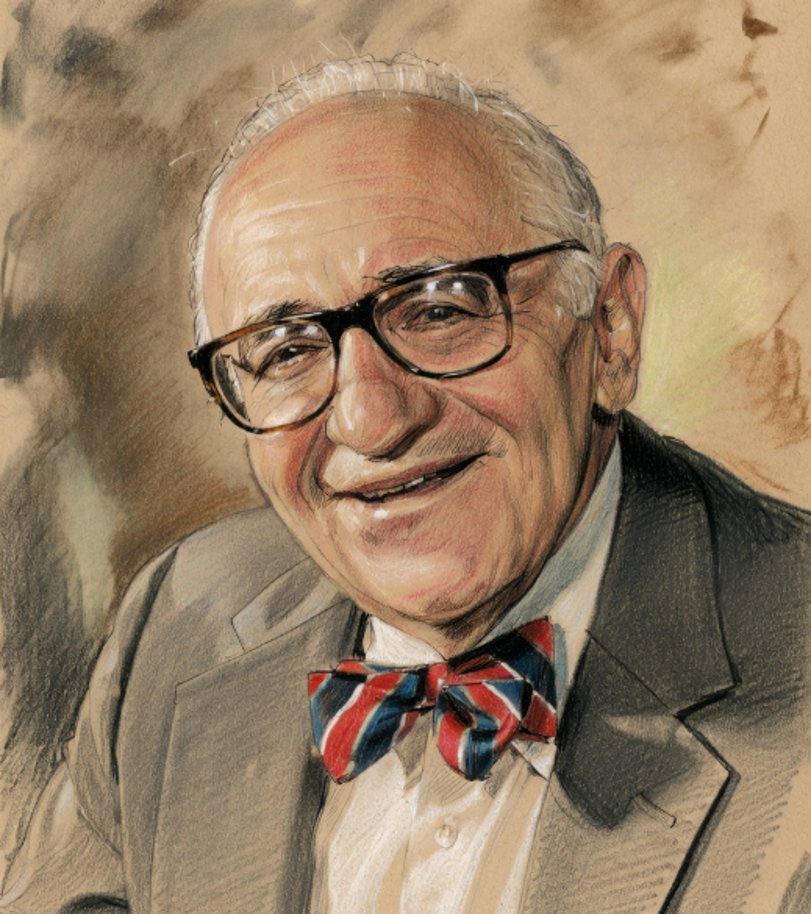
In the early 1970s Murray Rothbard gave the clearest answer yet. He fused Austrian economics (Mises’ praxeology and Hayek’s spontaneous order), Lockean natural rights and the radical American individualist anarchism of Lysander Spooner and Benjamin Tucker into the first fully articulated theory of a stateless society: anarcho-capitalism.
In his landmark books For a New Liberty (1973) and The Ethics of Liberty (1982), Rothbard proved that every legitimate function of government - protection of person and property, dispute resolution, and even national defence - can be supplied more efficiently and ethically by competing private firms in a free market.
All interactions would rest on one simple rule: the non-aggression principle - no one may initiate force against another person or their justly acquired property. Courts, police and defence agencies would operate on voluntary contracts and reputation, just like every other industry.
Rothbard showed the state is not a necessary evil but a monopoly of coercion that necessarily violates rights and distorts the market. A truly free society is not chaos - it is the highest expression of civilisation, where individuals retain full self-ownership and interact solely through consent.
Anarcho-capitalism is the most consistent and uncompromising conclusion of the classical liberal tradition: if individual liberty and private property are truly inviolable, the state has no moral or economic justification for existing.
37
Owen Paine retweeted

What if the state isn’t a necessary evil… but simply unnecessary?
In the early 1970s Murray Rothbard gave the clearest answer yet. He fused Austrian economics (Mises’ praxeology and Hayek’s spontaneous order), Lockean natural rights and the radical American individualist anarchism of Lysander Spooner and Benjamin Tucker into the first fully articulated theory of a stateless society: anarcho-capitalism.
In his landmark books For a New Liberty (1973) and The Ethics of Liberty (1982), Rothbard proved that every legitimate function of government - protection of person and property, dispute resolution, and even national defence - can be supplied more efficiently and ethically by competing private firms in a free market.
All interactions would rest on one simple rule: the non-aggression principle - no one may initiate force against another person or their justly acquired property. Courts, police and defence agencies would operate on voluntary contracts and reputation, just like every other industry.
Rothbard showed the state is not a necessary evil but a monopoly of coercion that necessarily violates rights and distorts the market. A truly free society is not chaos - it is the highest expression of civilisation, where individuals retain full self-ownership and interact solely through consent.
Anarcho-capitalism is the most consistent and uncompromising conclusion of the classical liberal tradition: if individual liberty and private property are truly inviolable, the state has no moral or economic justification for existing.
9
23
56
2,845
May 14
a common
Theme
An elite predator class
Using state power to sustain the elites predation
Essentially the rational conclusion
Man exploiting man is the theme of human social history
Since the city state emerged
Which it did independent
In Eurasia and the americas

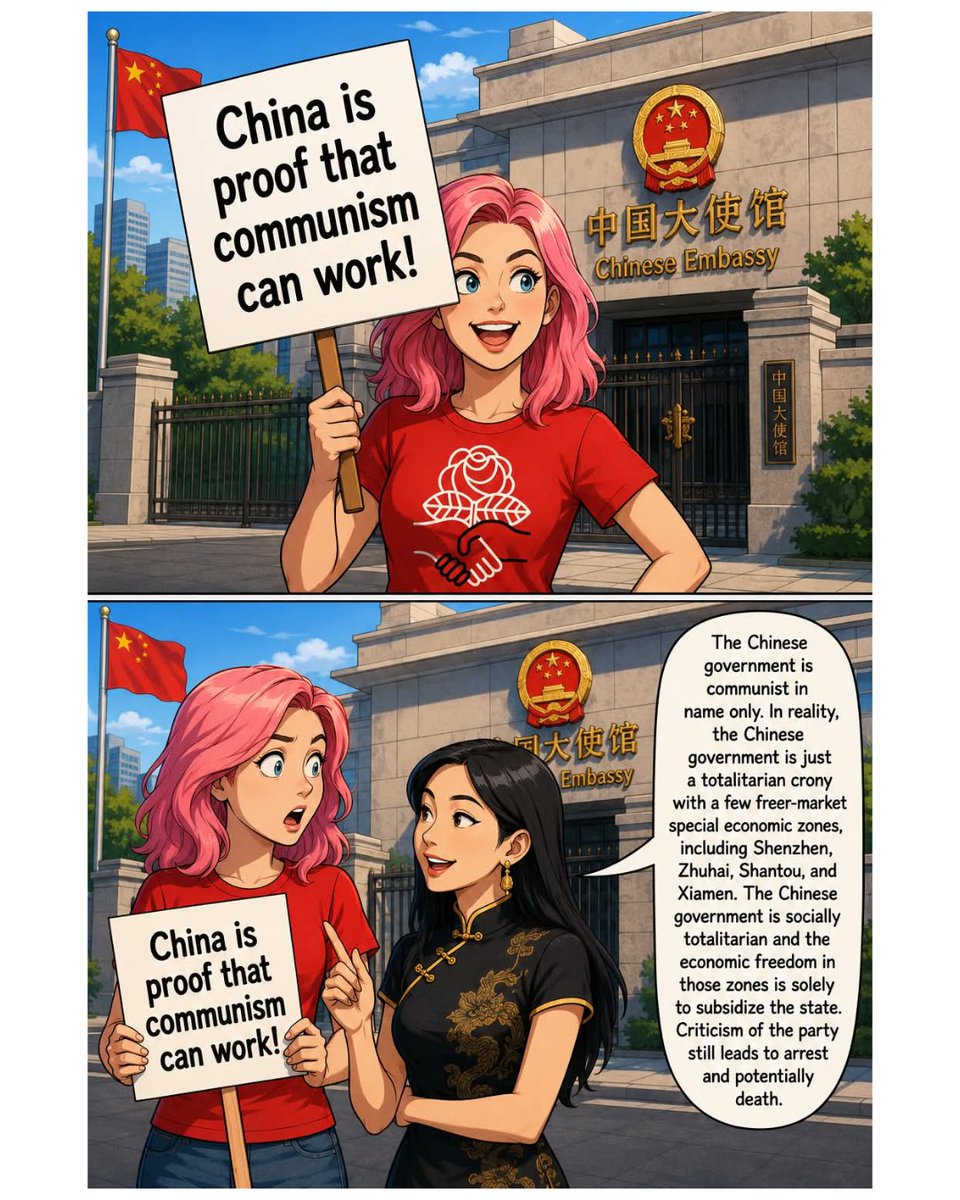
The CCP knows that they cannot go full communist without causing a total collapse. This is why they liberalized trade in the late 1990s and early 2000s and kept several special economic zones. They wanted to profit off the economic productivity from those zones while still maintaining social control. You still cannot criticize the CCP there without serious consequences.
47
May 12
Krugman just compared US
In French EU
To EU
In French UE
NOT BY VALUE ADDED PER LABOR HOUR BUT PER CAPITA
foolish
1
21
May 11
This is patently ridiculous
Modern private corporate combines or monopolies
"buy the state "not visa versa
The east India company and IBM
Ain't alike on this demension
May 10

Ayn Rand: "Under a free system, no one could acquire a monopoly on anything. If you look at economics, and economic history, you will discover that all monopolies have been established with government help."
38
May 9
Socialism in one country remains possible
but perhaps not
liberal.democratic socialism
in one country
5
May 4
Without mark up controls
Corporate capitalism can up end any functional finance inspired macronautics
Look into the arsenal of democracy period
1940 to 46
That is a template
for a green revolutionn

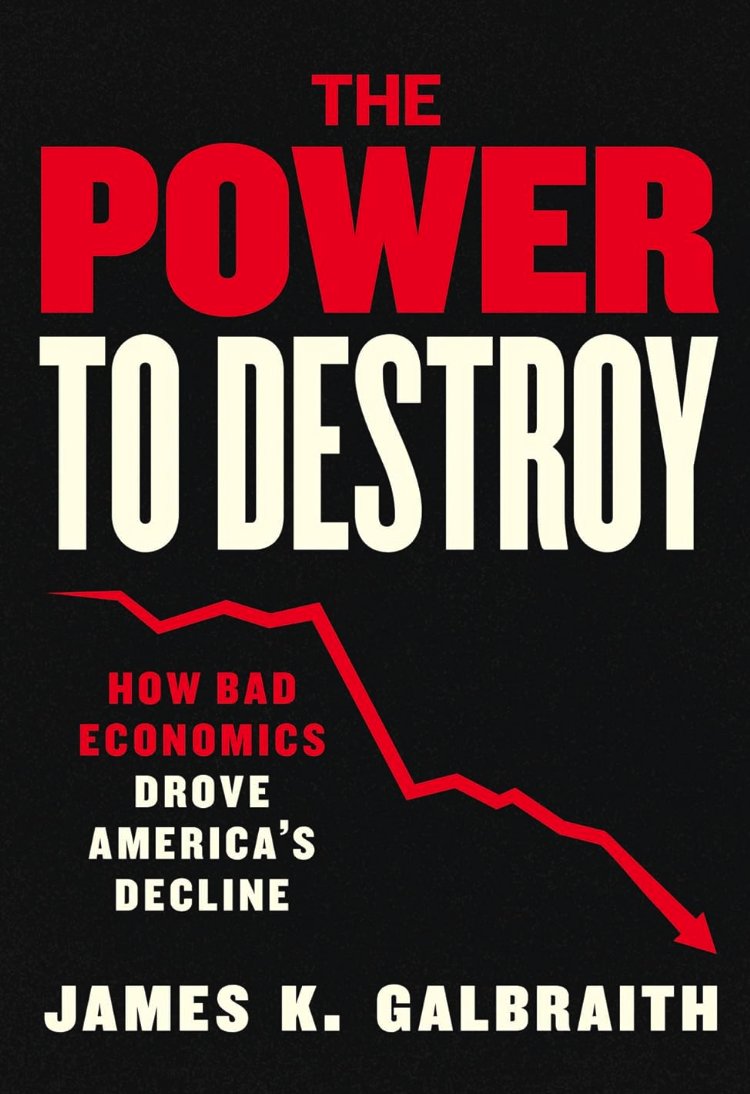
"Unless we can break the habit of thinking like most economists do, we will sooner or later destroy our country, irreversibly damage our world, and perhaps, in the final analysis, doom the human species to a slow extinction. At a minimum, we stand no chance to improve matters, unless we can first understand, recognize, reject, and change the mental habits cultivated by conventional economics—and conventional economists." Coming 9/7/26
56
May 4
Idiocy here means
isolation not stupidity
Btw
Polemics
are not the best source
To rely on
Apr 28

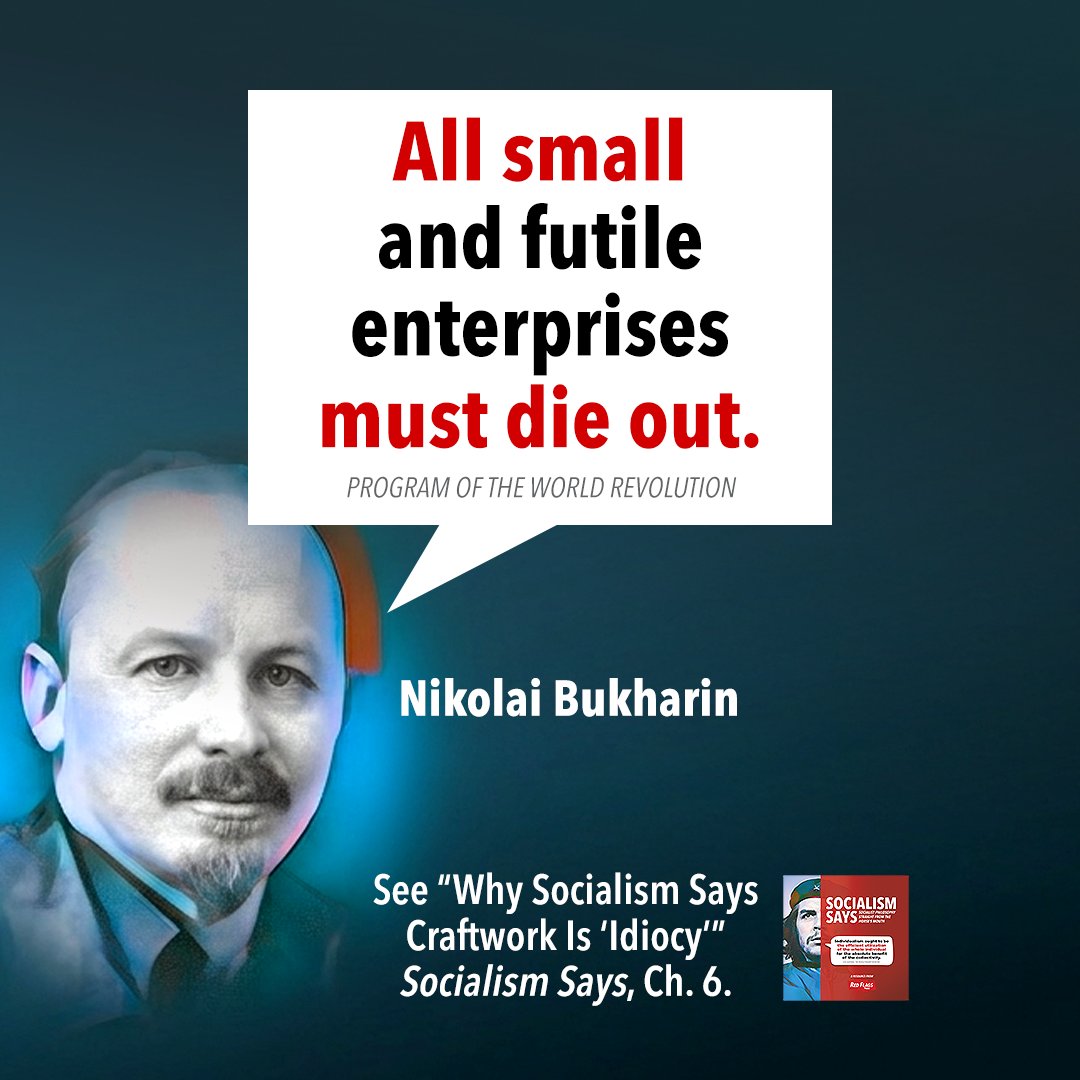
Few are aware of socialism's strong bias against craftwork (which Marx labeled "craft-idiocy") and small-scale production generally.
The celebrated socialist thinker Nikolai Bukharin highlights the socialist perspective by stating that all small-scale production "must die out."
We explore socialism's vendetta against craftwork in Socialism Say Ch. 6, "Why Socialism Says Craftwork Is 'Idiocy.'"
21
May 4
This exchange :
2 stones clapping
around a raw hand

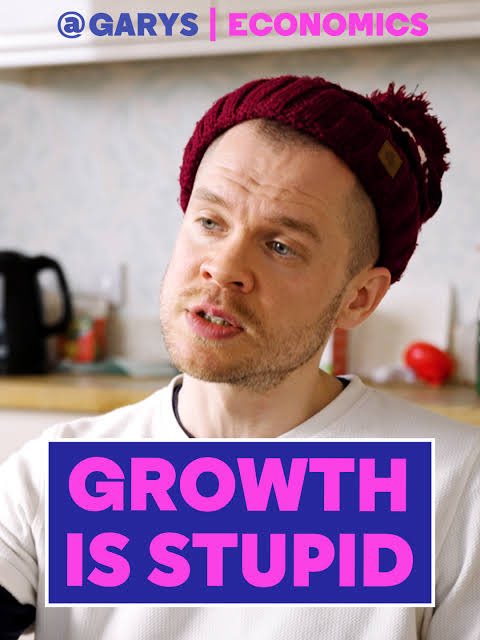
He’s not an economist he’s an activist.
An economist does not use emotion.
There is only one valid school of economic theory - Austrian. Every other form of economics is designed to allow others to steal from you.
16
May 4
The existence of
Lockean property rights
Impose
freedoms and restrictions
In simultaneous operation
May 4

Niemand hat den "Kapitalismus" erfunden. Kapitalismus ist das, was freie Menschen von Natur aus tun - Waren und Dienstleistungen zu ihrem eigenen Vorteil tauschen.
10
May 4
Peoples republic of China
1980 to 2010

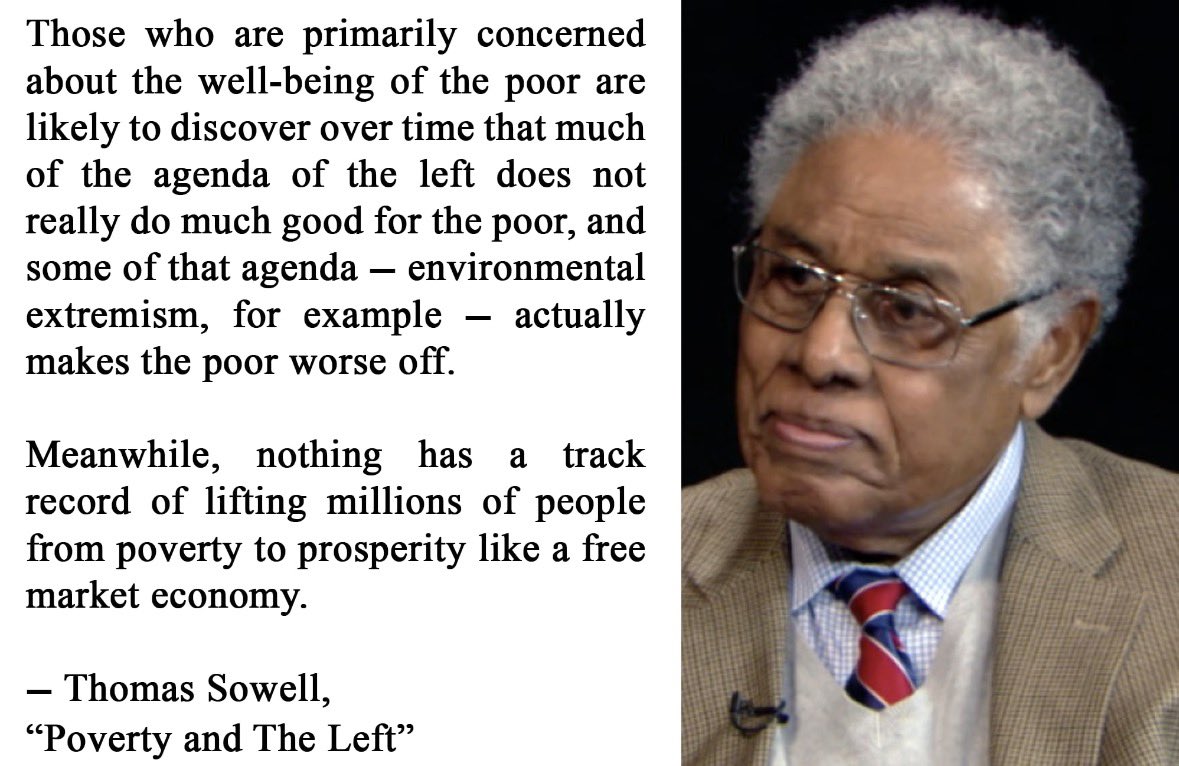
Concern for the poor is not what drives the left.
If it were, they would embrace capitalism, the greatest anti-poverty engine ever devised.
Their real passion is hatred of the rich.
The poor merely provide a convenient pretext.
1
11
Mar 23
Paul krugman has reach the stage of Bigfoot flat foot
What a mind Belcher
These days
Paul let chat bot write your stuff
And build a model of
Authorial mind mcshitification proportional to broadcast frequency and range
1
45
Mar 17
Occupy kharg island
Uncle donald
The place will incinerate
The grounded boots
2
38
Owen Paine retweeted

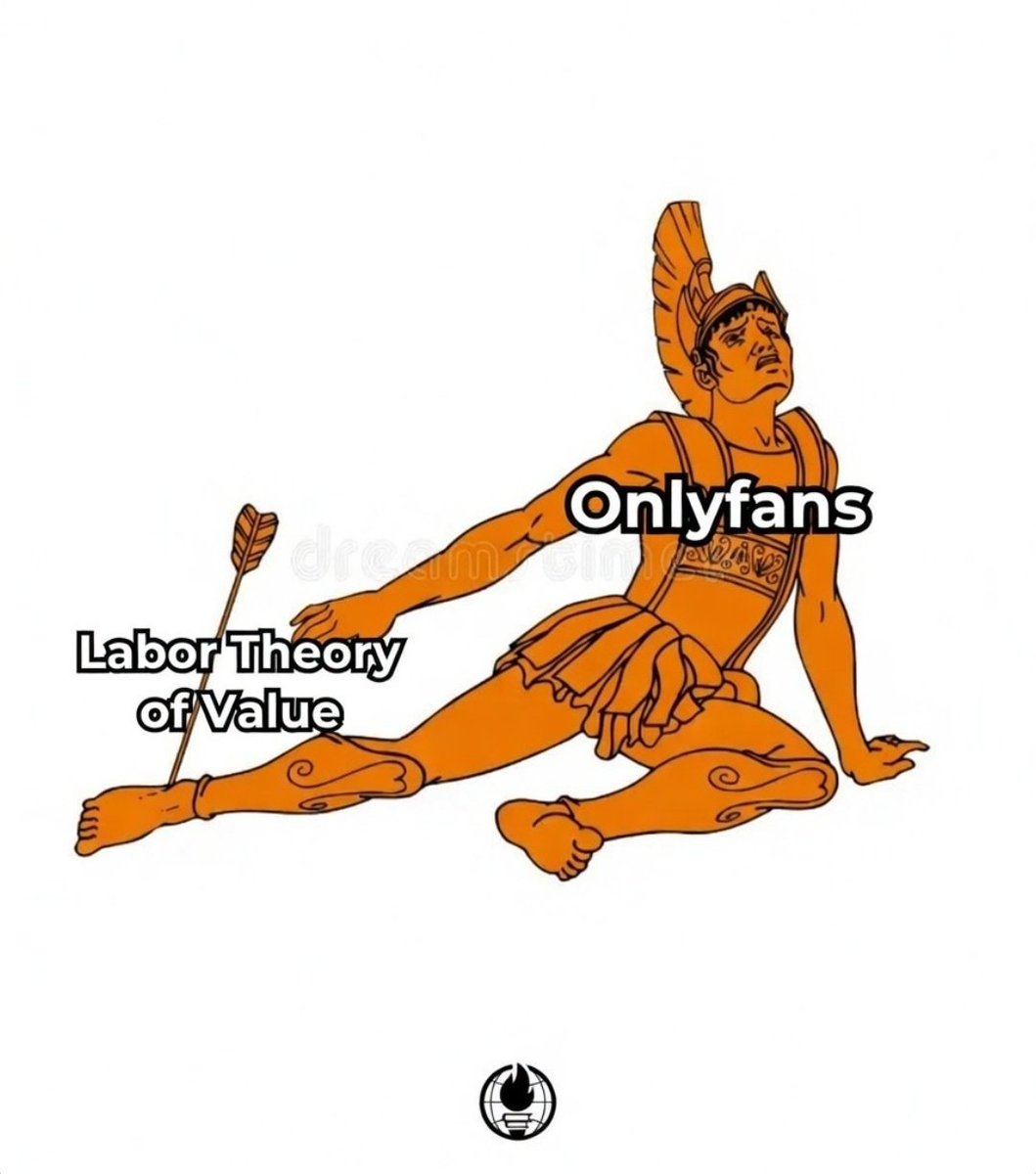
Far from refuting Marx, OnlyFans confirms his theory in the digital age: whoever controls the means of production (even if they are algorithms) can appropriate the value generated by someone else's labor.
2
3
123
4,047
Mar 7
How do politburos
Stay D of P
When surrounded by
Private corporate capitalists
Autocratic Terror
of 16th century proportions
15