
Joined September 2011
- Tweets 9,934
- Following 617
- Followers 269
- Likes 20,640
619 Photos and videos

Pinned Tweet

Mar 18
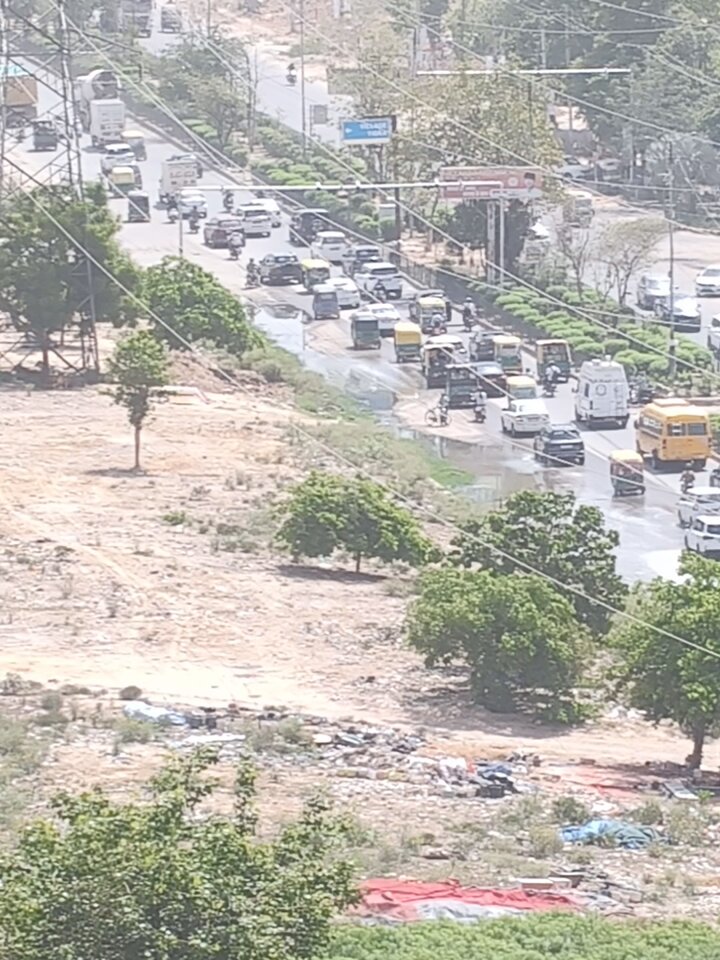
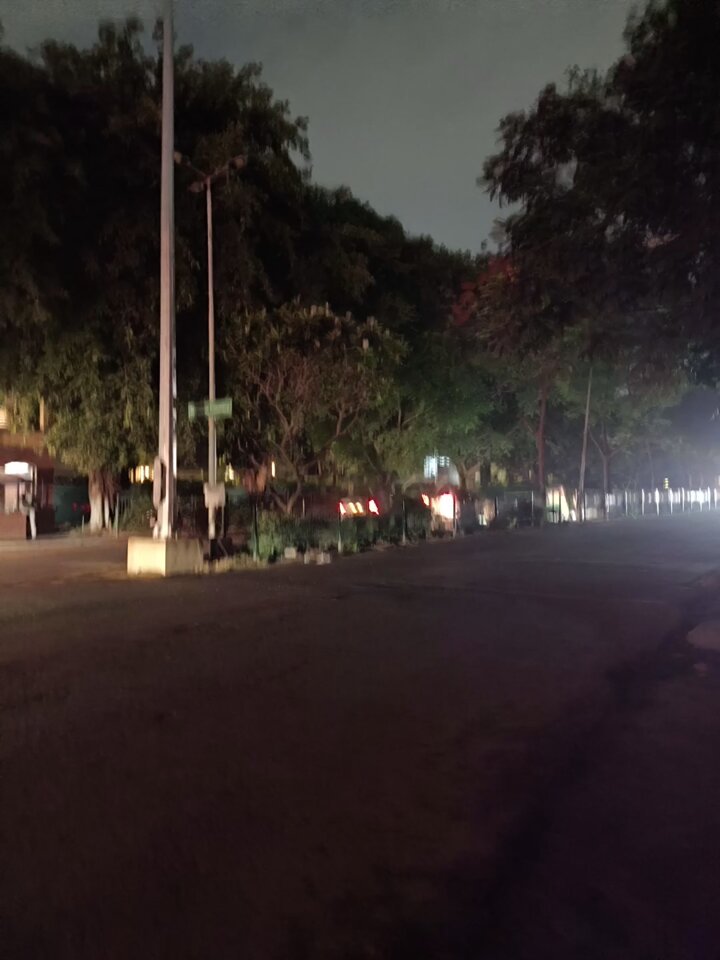
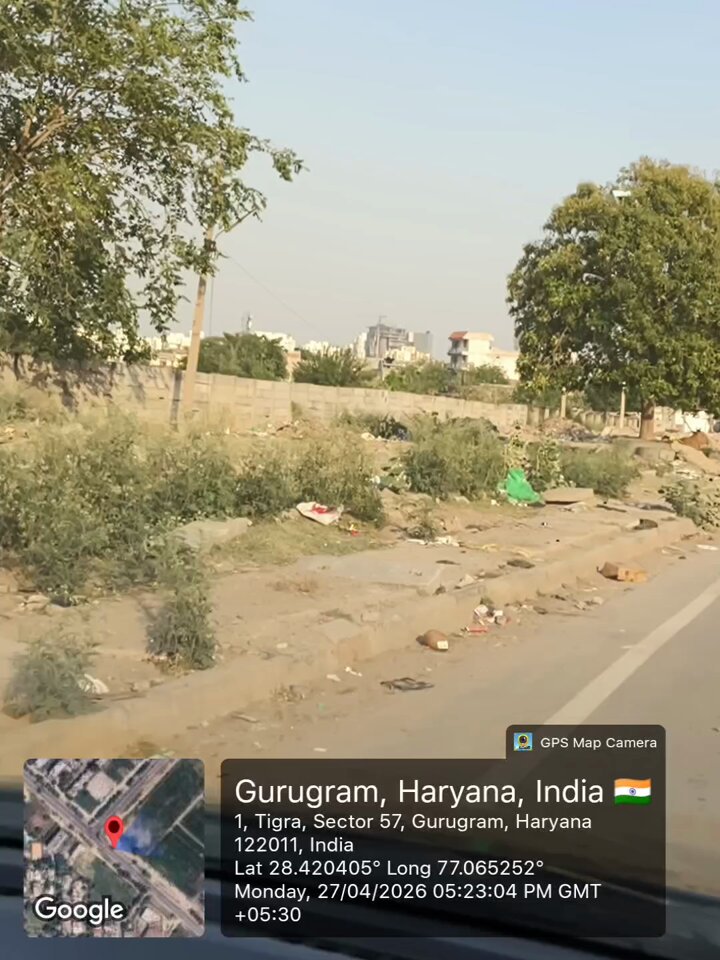
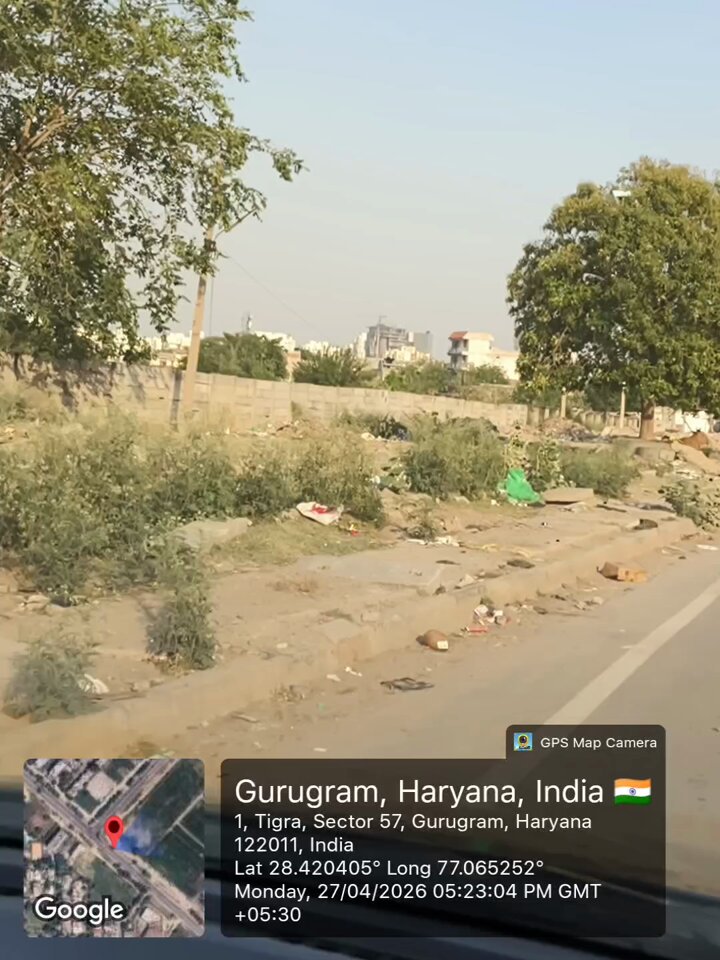
Oh really??? This ambulance was stuck for more than 20min on this stretch. I don't how much time it took to cross the traffic. 5min of rain. 15min of aandhi-toofan and the city comes to a halt.
Not a single street light is on. Shame on you @HspcbN @MunCorpGurugram
@cmohry

🌧️ Storm or sunshine, duty never stops.
Gurugram Traffic Police stands committed to your safety—always.
#GurugramTrafficPolice #OnDuty #RoadSafety
26
310
1,306
75,680

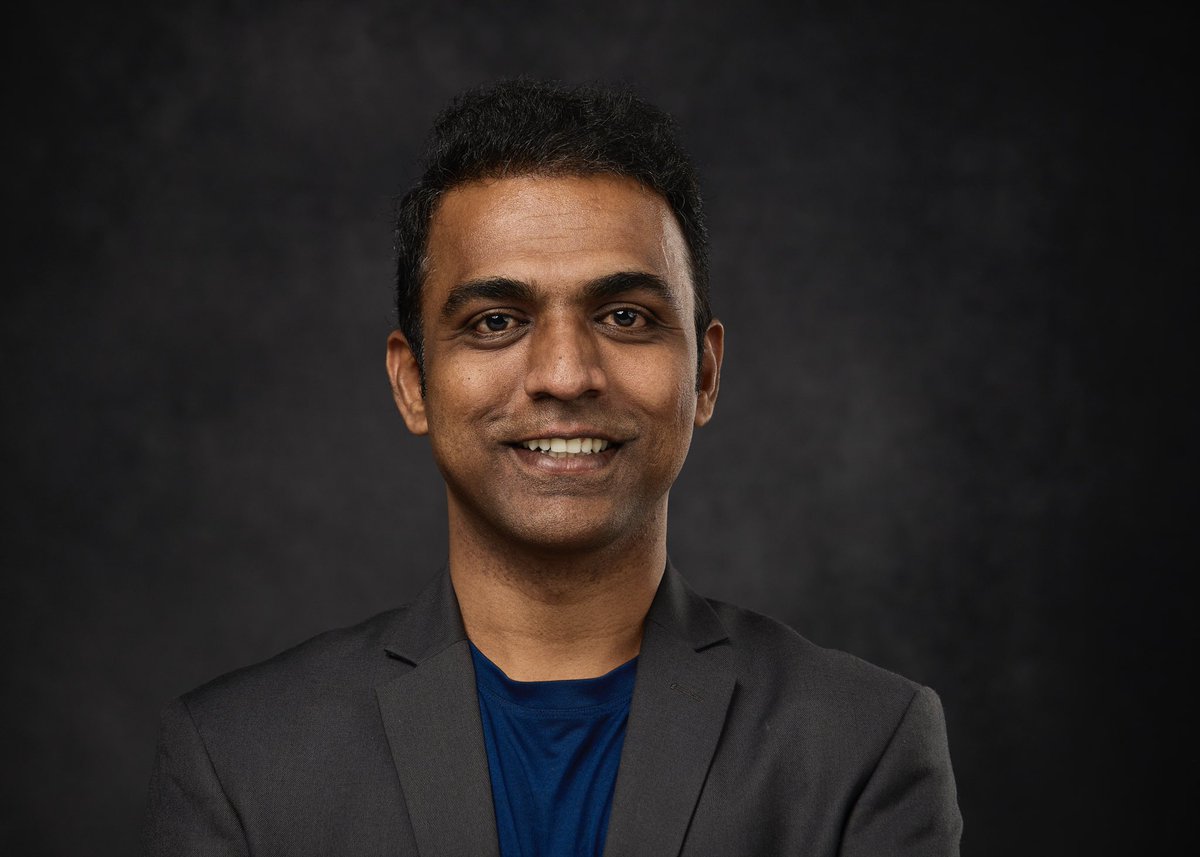
His name is Ranjitsinh Disale.
He wanted to be an engineer. When that did not work out, his father suggested he train as a teacher instead.
In 2009, he was posted to a government primary school in Paritewadi, a small village in Solapur district, Maharashtra. The school was a crumbling building wedged between two storerooms, one of which had been used as a cattle shed.
What he found there troubled him.
Girls were being married off young instead of being sent to class. Attendance was poor. The textbooks were written in a language many of the children, who spoke Kannada at home, could not properly read.
He decided to fix all of it, starting with the books.
He learned the children’s mother tongue and rewrote their textbooks in a language they could actually understand.
Then he did something no one in India was doing at the time.
He printed unique QR codes inside the textbooks, allowing students with access to a phone to scan a page and instantly access audio poems, video lessons and practice questions.
A village school in Solapur had built a digital classroom out of paper and printed squares.
The results changed the village.
Girls’ attendance reached nearly one hundred percent. Teenage marriages in the area stopped. His QR code idea worked so well that the Maharashtra government adopted it across the state.
The following year, the national education body embedded QR codes in textbooks across the country.
In 2020, Ranjitsinh Disale won the Global Teacher Prize. He was chosen from more than twelve thousand nominations across roughly one hundred and forty countries and was the only Indian in the top ten.
The award carried one million dollars, around seven crore rupees.
Then he did something no winner had ever done before.
He announced that he would give away half the prize money, dividing it equally among the other nine finalists so that their work could continue as well.
He said teachers are the real change makers.
He meant all of them, not just himself.
A man who became a teacher only because engineering did not work out changed how an entire country learns, and then gave half his fortune to the people he had competed against.
Follow for stories India deserves to remember.
59
808
2,305
39,925
Some communities/religions are born with the mentality of greed, loot, theft, burglary, invasion, thuggery. The Brits and their predecessor invaders looted wealth from Bharat for centuries and made her hollow. A revolution is needed just to educate the masses of all such stories.
19h

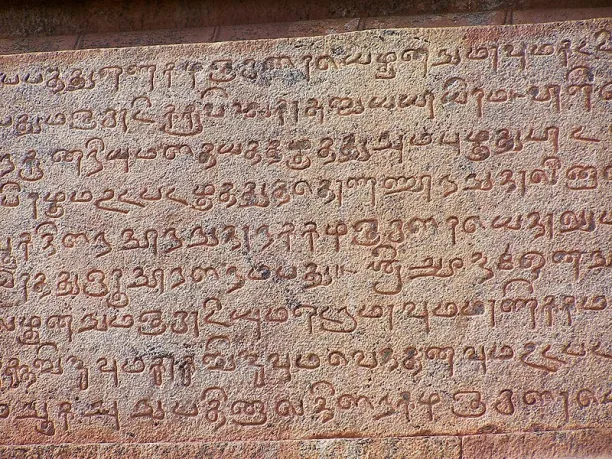
A cartoon being circulated on X says Indians should thank the British because James Prinsep deciphered the Brahmi script & helped recover our history. :))
Do you know before he became a so-called expert on our ancient scripts, Prinsep’s primary day job was serving as the Assay Master (chief metallurgist & currency controller) at the Banaras & Calcutta Mints. He was not an academic; he was an economic agent sent to fundamentally alter India's wealth distribution system.
Until the 1830s, India had a beautifully diverse, highly resilient decentralized currency system. Local kingdoms, merchant guilds & regional mints issued their own silver and gold coins. Local money-changers (Shroffs) evaluated coins based on pure metal weight. James Prinsep was the literal architect who destroyed this system.
Using his position as Assay Master, Prinsep spent yrs systematically studying the purity of native Indian coins. He did not do this out of cultural curiosity, he did it to calculate how the East India Company could completely monopolize India's money supply.
His efforts directly culminated in the Coinage Act of 1835: The Elimination of Indian Heritage: Prinsep spearheaded the policy that completely banned all local Indian regional coins & traditional designs. He personally oversaw the design of the new, uniform colonial Silver Rupee. He forced the removal of traditional Indian symbols, replacing them with the cold, imperial face of British King William IV.
What makes this a financial "thug" operation is how the transition was enforced on ordinary Indians. By passing laws that declared traditional regional currencies invalid for tax payments, the British forced Indian merchants, farmers & citizens to bring their centuries-old ancestral coins to Prinsep's mints. Under Prinsep's direct technical supervision, the British mints engaged in massive institutional exploitation:
- They took the pure, high-quality silver coins of Indian states.
- They melted them down in giant cauldrons.
- They charged the native Indians a heavy seigniorage (a minting fee/tax) just to exchange their own ancestral silver for the new British currency.
This artificial bottleneck triggered a massive shortage of circulating cash in rural India, causing local economies to crash while systematically vacuuming pure silver out of Indian hands & placing it directly under East India Company control. It was 1 of the largest state-sanctioned currency manipulation schemes in world history.
But what is often sold to us is the idea that Prinsep was a polymath who single-handedly deciphered our ancient scripts. Ask the same people who Rathnapala was & you are likely to be met with complete silence. :(
1
17
This country is full of fascinating stories! Waiting to be told and heard!
20h
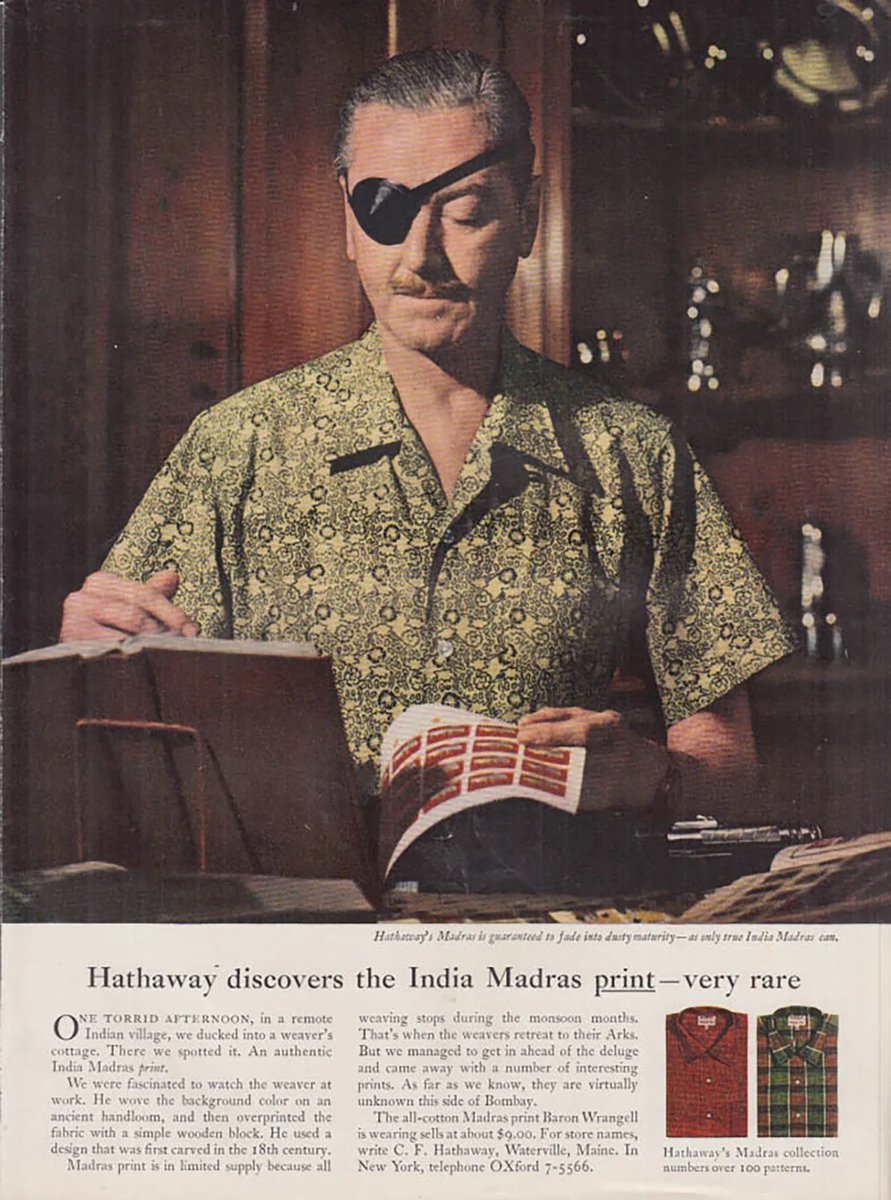
The Brilliant 1958 "Bleeding Madras" Advertising Strategy!
In 1950s. a textile importer named William Jacobson bought 10000 yards of authentic Indian Madras cloth from Captain C.P. Krishnan Nair (an exporter from Madras, who later famously founded the Leela Palace hotel group) & sold it to the historic American clothing giant Brooks Brothers. In his excitement, Jacobson forgot to tell Brooks Brothers the fabric would bleed.
Brooks Brothers tailored the fabric into expensive summer shirts, Jackets & distributed them across America, but there was no wash-care instructions. Because the fabric was dyed using traditional Indian vegetable dyes (like indigo & madder root) fixed with natural stabilizers, the shirts violently bled & faded into completely different, blurry, muted colors the moment customers washed them.
Faced with 1000s of angry, wealthy customers, Brooks Brothers threatened to sue. Instead of panicking, Jacobson teamed up with advertising legend David Ogilvy. They launched a genius counter-offensive campaign in Seventeen & Town & Country magazines with the tag line: "Guaranteed to Bleed."
Ogilvy told the American public that the fading was not a defect: it was proof of authentic, elite, hand-woven Indian craftsmanship. He argued that as the shirt bled, it transformed into a unique, individual piece of art that no 1 else on earth owned.
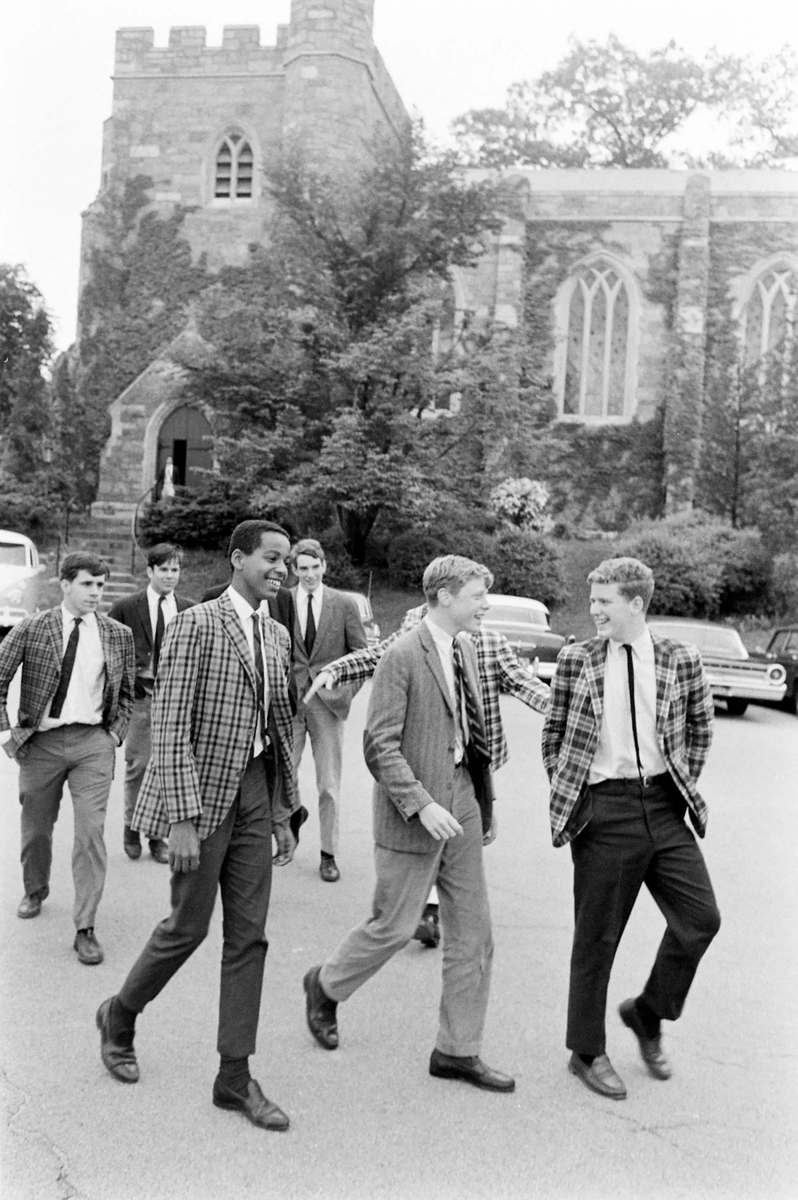
The strategy worked flawlessly. Ivy League students at Yale, Harvard & Princeton obsessed over the look. Walking around campus in a faded, washed-out Madras shirt became the ultimate old money status symbol, because it subtly signaled that you could afford an expensive vacation shirt that changed characters with every wash.
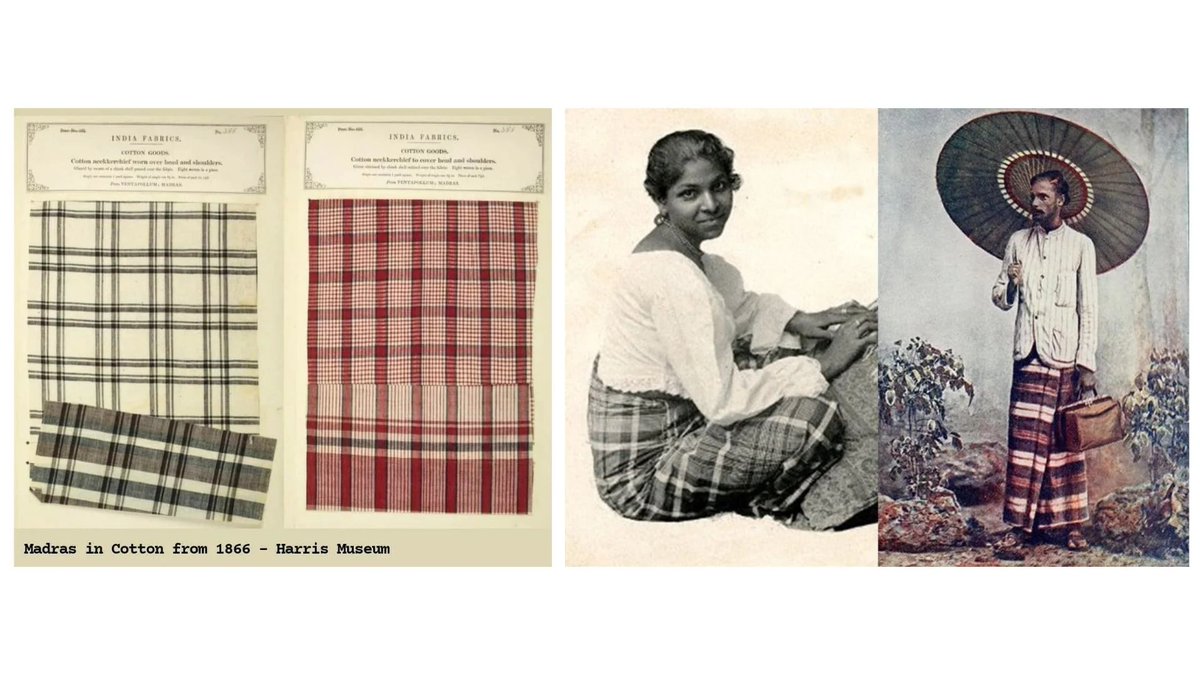
Today, for a garment to be labeled as "Authentic Madras," it must be entirely hand-woven in the Chennai (Madras) region of India. While fast-fashion brands use cheap, synthetic, non-bleeding chemical prints to copy the look today, the global pattern we see on modern summer shorts & elite runways is an unbroken design tech engineered by South Indian weavers 100s of yrs ago to beat the blistering heat of the Coromandel Coast.
I will write separately about the fascinating history of Madras Checks & also about the East India Company's connection.
2
1
6
674
Jun 13
You guys are the most ridiculous organization in the whole world. You want ppl to tour in India while u can't even provide a clean, hygienic, and accessible toilet to women in any part of the country. U guys shud be ashamed of ur existence to the least.
Shame @gssjodhpur Shame!!!
Jun 13

Tourism is powered not just by the destinations but by the people who bring them to life.
#12YearsOfTourismTransformation #India
(1/2)
1
12
Jun 12
Stealing has been a trademark of many religions/communities. Bharat has witnessed theft from all these for quite a no of centuries. Yet we the people of Bharat believe in "Atithi Devo Bhav" and what's ironic is we believe in treating our guests well by feeding them desserts!
Jun 12
A few of you have mentioned that my posts can be quite long. I accept the charge! True history & scientific methods require depth; you cannot bust centuries of myths in a 10 word soundbite. However, I respect your time. From now on, I will provide the Crux right at the start. If it grips you, stay for the full breakdown. If not, feel free to skip & scroll further!
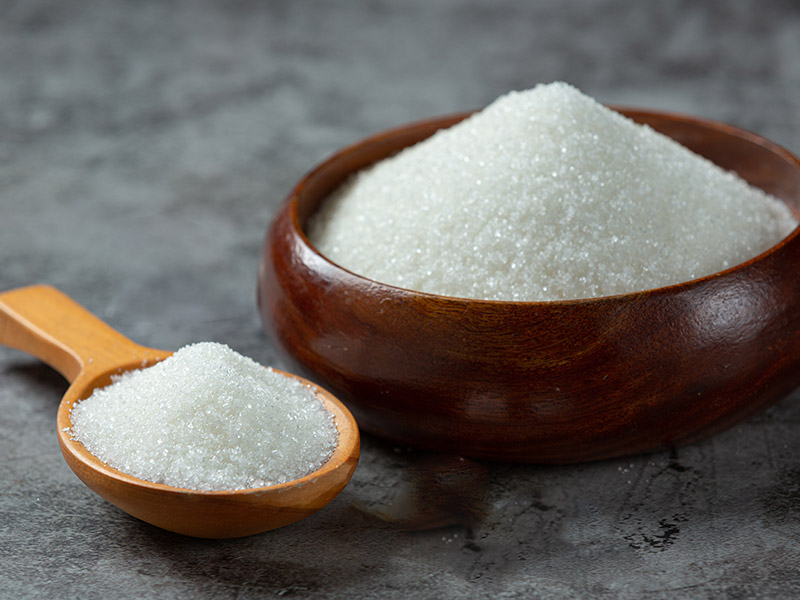
Think refined white sugar was a Western invention/imported from China (just because we call it Cheeni)? It is a case of identity theft.
- In 350 CE, Gupta-era Indian chemists invented the exact pH-balancing technology needed to turn raw cane juice into white crystals (Śarkarā).
- In 647 CE, Chinese Emperor Taizong sent a state mission to Bihar specifically to learn this chemical process.
- We call it Cheeni today only because China later mass-produced a specific ultra-white variety & traded it back to us. Here is the complete breakdown:
The English word Sugar, the Spanish Azúcar, the Arabic Sukkar & the Latin Saccharum all track back to a single linguistic ancestor: the Sanskrit word Śarkarā (which originally meant gravel/grit, referring to the look of sugar crystals). If the West/the Middle East/China invented refined sugar, why are they all using a Sanskrit word to describe it?
Before the 4th century CE, the world only knew how to boil sugarcane juice down into a sticky, dark, unrefined mass (what we call Gur/Jaggery). Keeping it liquid/semi-solid meant it spoiled quickly & could not be transported across vast distances.
During the Gupta Dynasty (c. 350 CE), Indian scholars turned food into chemistry. They discovered that by adding specific alkaline clarifying agents like lime/plant ash to the boiling cane juice, they could alter its pH level. This caused the impurities to separate & float to the top to be skimmed off. Once cooled, the pure sucrose did something miraculous: it precipitated & crystallized into hard, white granules.
So why do we call it Cheeni today?
Let us look at the imperial records of the Chinese Tang Dynasty. In 647 CE, Emperor Taizong sent an official state mission to Magadha (modern day Bihar). Their goal was not political, it was industrial espionage. They came to study the scientific methods of sugar refining.
The Chinese took this tech back, optimized it over the centuries for mass factory production & eventually exported a specific variety of ultra-white sugar back to India. Because it came via Chinese traders, locals began calling it Cheeni.
China did not invent sugar refining; they went to university in Bihar to learn it. The next time you stir a spoonful of sugar into your milk, remember: you are not using a Western/Chinese invention. You are witnessing a 1000s yr old triumph of Indian chemistry.
1
32
Jun 10
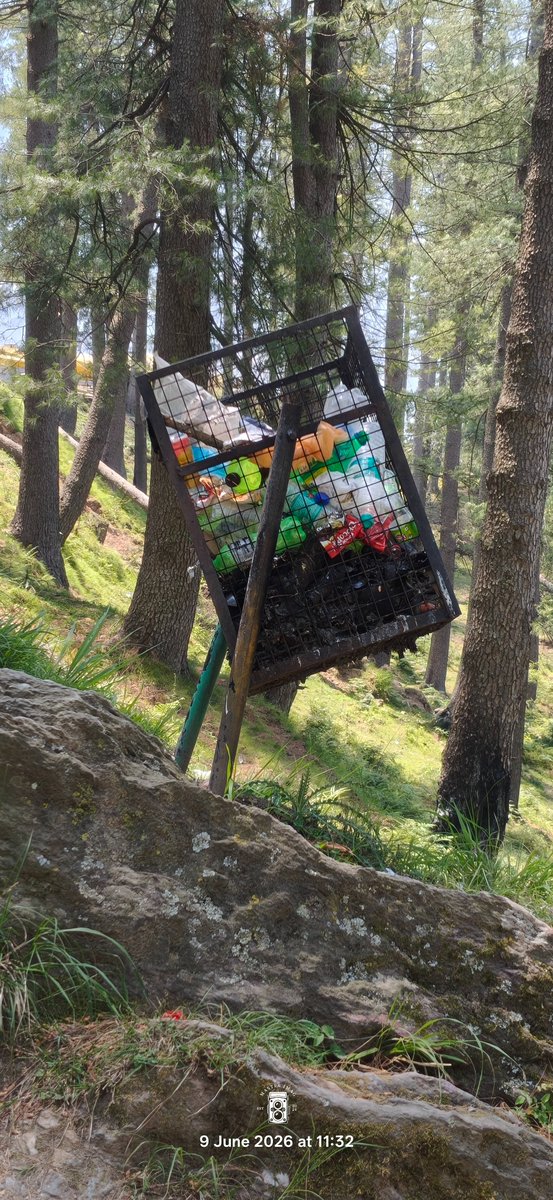
The govt wants citizens to explore the country but doesn't want to develop the tourist places. There r no washrooms(forget clean), proper roads, honest cab drivers, and systematic garbage disposal.
Garbage is collected in these bins and set on fire. Kudos @pushkardhami sir.

The quickest way to ruin a beautiful place is to make it popular and unmanaged.
1
1
59
Amaltas retweeted

Jun 9
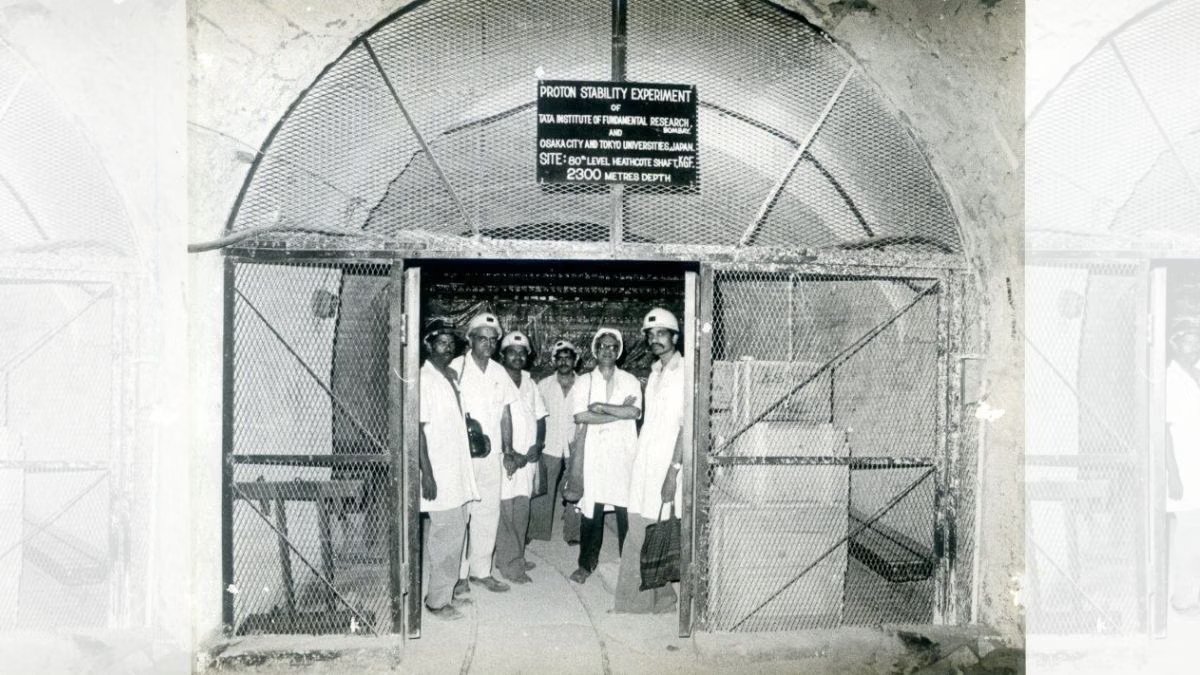
The world remembers 2015 for proving neutrino oscillations & thus, neutrino mass, hardly any1 knows that the world’s very 1st atmospheric neutrino was detected deep inside an Indian gold mine in 1965.
The story belongs to a pioneering Indian physicist named Prof. B.V. Sreekantan, his brilliant colleague Dr. V.S. Narasimham & a team of visionary scientists from the TTIFR.
In the 1950s & 60s, checking for neutrinos required getting as far away from cosmic noise as possible. Because neutrinos can pass through KMs of solid rock w/o stopping, scientists needed to go deep underground so the Earth itself could act as a filter against other crashing cosmic particles.
India possessed the perfect venue: the Kolar Gold Fields (KGF) in Karnataka, which at the time were among the deepest mines in the world.
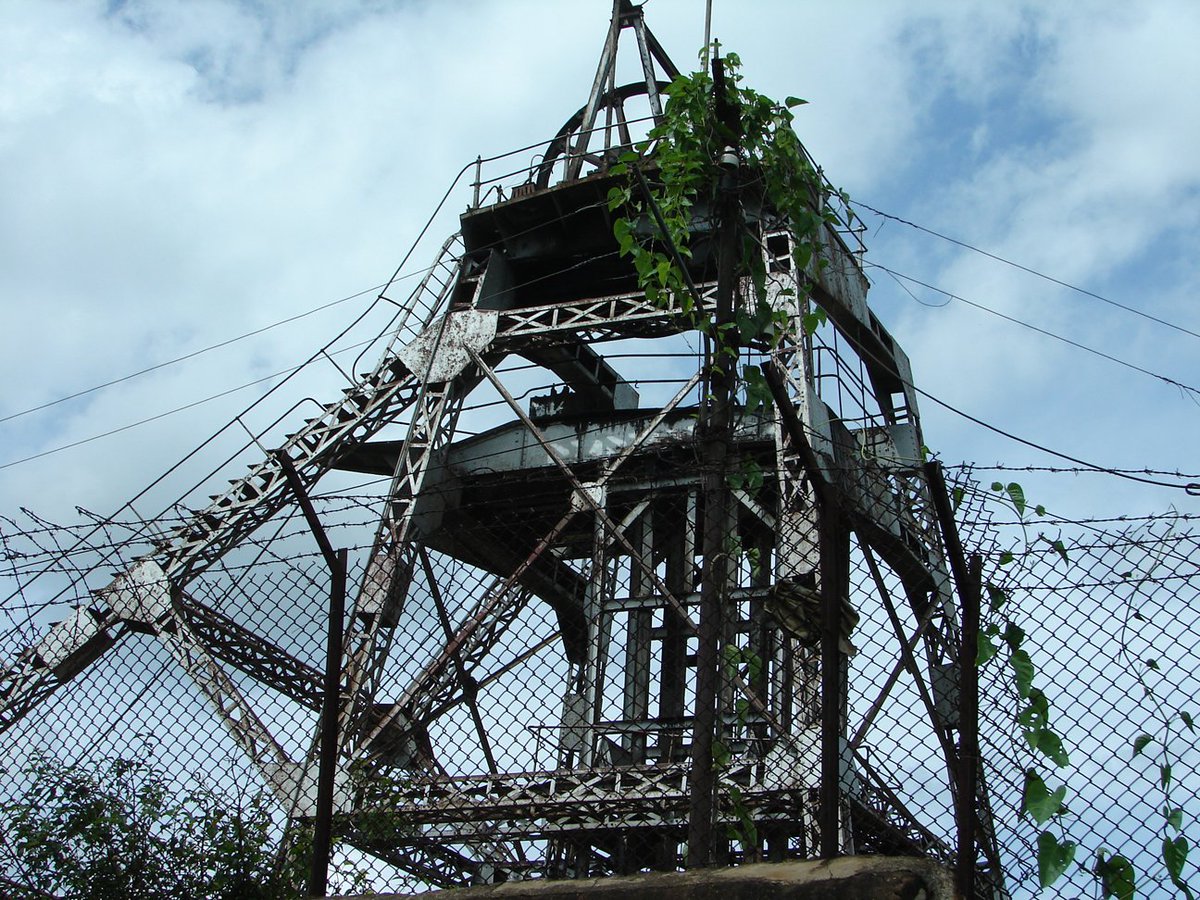
Led by B.V. Sreekantan & partnering with international teams from the UK (Durham University) & Japan (Osaka City University), Indian physicists set up an experimental lab 2.3 KMs (~ 7500 feet) straight down into the hot, grueling shafts of the Heathcote & Champion Reef mines.
By 1964, the TIFR-led collaboration had deployed massive, custom-built detectors lined with neon flash tubes & scintillation counters deep in the Kolar mines. Their goal was to catch atmospheric neutrinos, neutrinos created when cosmic rays slam into the Earth's upper atmosphere.
A rival American-led team, headed by Nobel Laureate Frederick Reines, was hunting for the exact same thing inside a deep gold mine in South Africa (the ERPM experiment).
The South African experiment technically spotted a neutrino candidate a couple of months before the Indian team. However, the Indian-led KGF team processed their data, proved their findings, and published their paper 1st, on 15th Aug, 1965 in the journal Physics Letters.
Because of this, the global scientific community formally credits the Kolar Gold Field experiment in India with the world's 1st detection of cosmic-ray produced atmospheric neutrinos.
The KGF experiment did not just find neutrinos; it found something that deeply puzzled physicists & subtly hinted at the complex nature of these particles decades before the 2015 Nobel Prize.
During their decades of tracking, the Indian detectors captured a series of highly anomalies known to particle physics literature as the Kolar Events. The detectors recorded the decay of an unknown, highly massive particle (> 3 GeV) that lived remarkably long before breaking down into other particles. Some physicists hypothesized that these tracks were the 1st experimental hints of neutrino interactions behaving in ways the massless Standard Model could not explain.
If India was leading the world in neutrino physics in 1965, why is this history invisible today?
In 1992, due to the depletion of gold reserves & skyrocketing costs, the KGF were shut down. When the mines flooded & closed, India's world-class underground particle laboratory was permanently lost & the physical experiments ground to a halt.
The 2015 Nobel Prize was built on the backs of atmospheric neutrino data, a field of study that was effectively born 2.3 KMs beneath the soil of Karnataka, envisioned & executed by Indian minds.
8
122
362
5,531
Amaltas retweeted
Jun 9
If we open almost any global culinary history book, we will find a common narrative: Ancient Europeans & Mesopotamians were the masters of baking bread, while ancient Indians only knew how to boil grains/fry them on a flat griddle. Baking, we are told, was introduced to India much later through Middle Eastern & Central Asian migrations.
This is a complete historical distortion.
Long before the 1st medieval wood-fired ovens of Europe were built, the chefs & engineers of the Indus Valley Civilization had already mastered the physics of thermal radiation, refractory clay engineering & controlled baking.
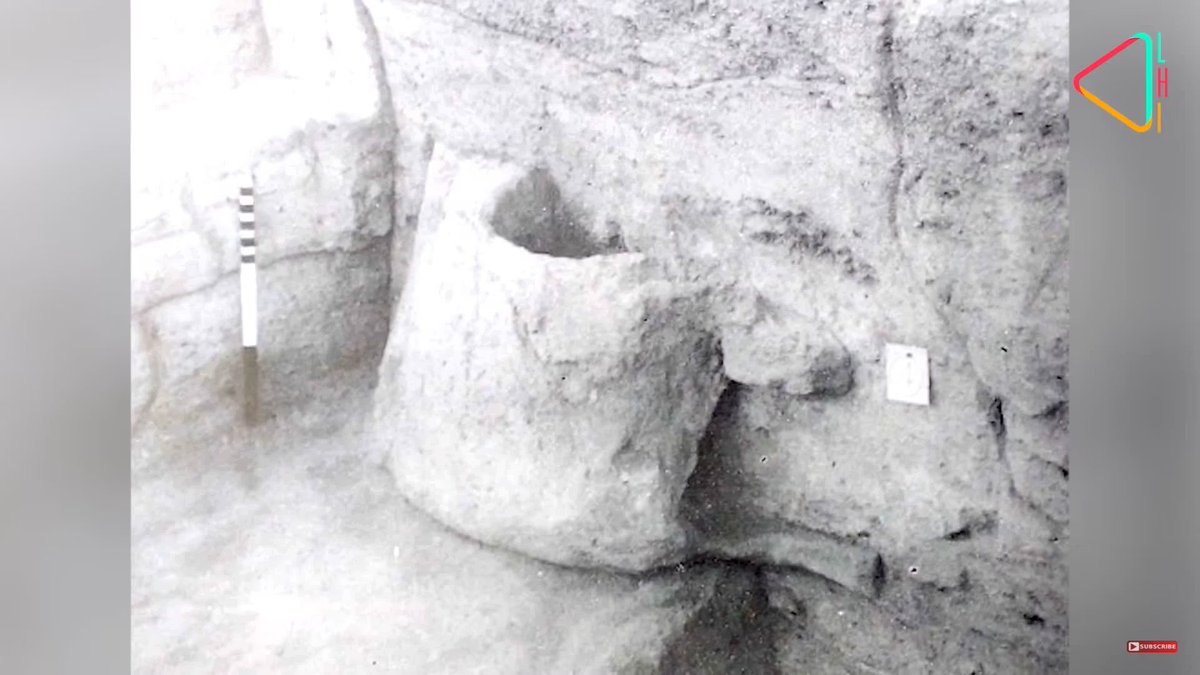
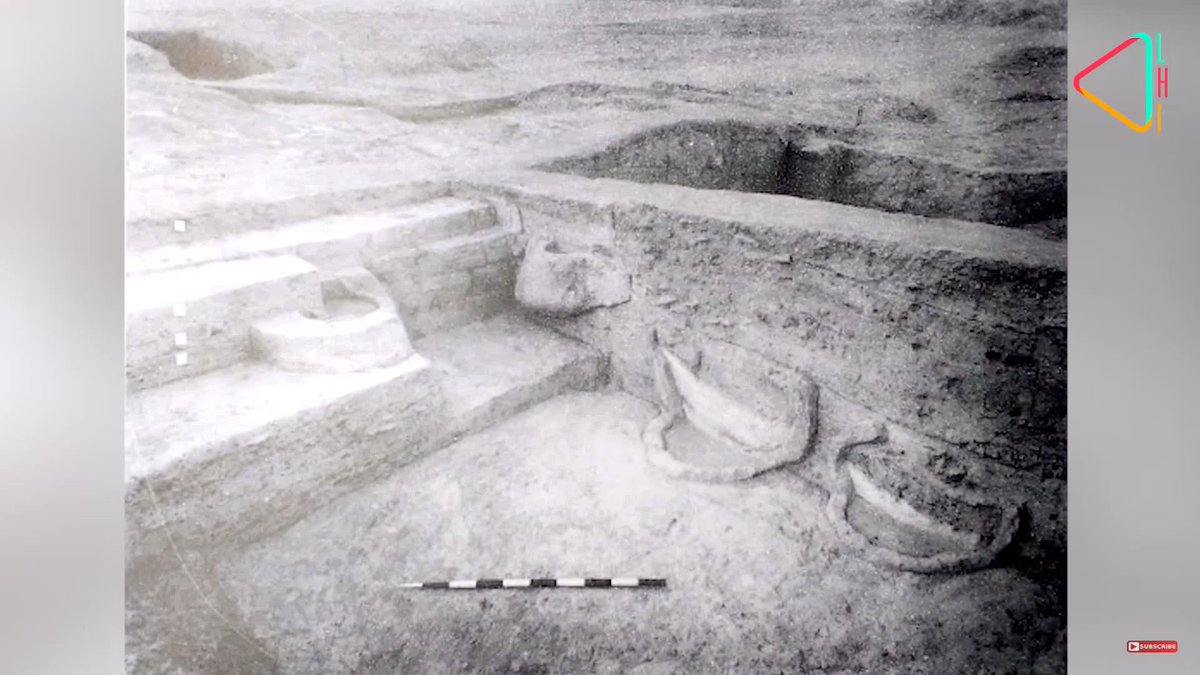
The ultimate weapon against the imported baking myth lies buried in the soil of Kalibangan (an ancient Indus Valley city in modern-day Rajasthan) & Harappa. During excavations, archaeologists unearthed several perfectly preserved, subterranean (underground) & overground cylindrical clay ovens dating back to 2500 BCE.
These ovens are structurally identical to the modern Indian tandoor. They feature thick, smooth clay walls designed to trap a massive amount of heat from a bed of charcoal/wood embers at the base.
We do not build a sophisticated, structurally reinforced vertical clay cylinder just to boil water/roast a piece of meat on a stick. The physical architecture of a vertical cylindrical oven serves exactly 1 scientific purpose: to trap hot air, creating a convection & radiant heat environment, which is the exact thermodynamic definition of baking.
Baking requires an incredibly high level of metallurgical & ceramic sophistication. If we take regular river clay, build an oven & subject it to intense, direct fire, the moisture inside the clay expands rapidly, causing the walls to crack/collapse/explode. The Harappans solved this through advanced material science:
They blended their clay with precise ratios of sand, quartz & organic binders like cattle dung/husk. This created what modern engineers call refractory ceramics, materials that can absorb immense thermal energy w/o structurally failing.
The interior walls were finished with a smooth, fine slips so that raw dough could be slapped directly onto the hot vertical surface, baking it via conduction on 1 side & intense radiant air heat on the other.
Now, to bake, we need a grain that can form a cohesive dough. While India later became synonymous with rice, the Indus Valley Civilization was heavily reliant on wheat & barley. Archaeologists have found massive public granaries packed with carbonized remains of Triticum aestivum (bread wheat) & barley.
They did not just boil these grains into porridge. The discovery of heavy stone saddle querns (grinding stones) & flat mullers at every residential unit proves that grains were systematically milled into fine flour. This flour was kneaded with water, shaped into flat/raised loaves & baked inside those ancient clay ovens.
When we look at the modern Indian kitchen today, whether it is a rustic village chulha/a tandoor in a dhaba/the traditional baked breads of North & Western India, we are not looking at borrowed traditions from the West/the Middle East. Our ancestors were masters of the oven when the Pyramids were still being built. They mapped out how clay interacts with fire, how dough behaves under radiant heat & built a baking legacy that has remained unbroken for 1000s yrs.
The next time someone claims baking is a Western/foreign concept, tell them about the ancient clay ovens of Kalibangan.
9
415
1,015
17,637
Amaltas retweeted
Jun 8
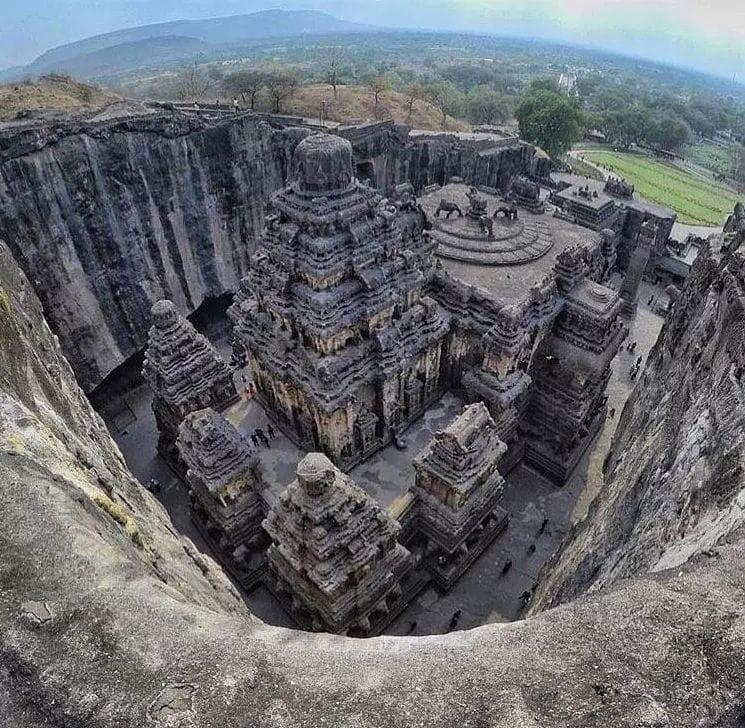
We need to bypass the so called "standard", reductive textbook narratives that often treat ancient indian achievements as mere "accidental primitive labor" & Kailasa Temple is 1 such example. We need to treat it like a project that required a level of mathematical precision, spatial visualization & resource optimization that rivals modern aerospace/architectural design.
Advanced tech does not necessarily mean electricity/lasers/computer chips. In civil engineering, advanced tech is defined by the systems, instruments & mathematical models used to manipulate massive amounts of energy & matter with near-zero tolerance for error.
To carve Kailasa from the top down out of a single volcanic mass, the ancient Sthapatis (master engineers) had to solve problems that modern CAD software handles today.
Before a single chisel touched the stone, the entire multi-story complex including its internal rooms, floating balconies, drainage systems & columns had to be mathematically mapped out in 3Ds. In a traditional building, if a room is misaligned, we can tear down a wall & rebuild it. In rock-cut monolithic architecture, we cannot put back rock that has been carved away.
A single 5" calculation error on the roof would cause a column on the 3rd floor below to completely miss its load-bearing alignment, collapsing the ceiling. The then engineers used a highly sophisticated system of geometric grids based on micro-measurements (Angula & Hasta). They used a technique called Volumetric Prototyping. They modeled the mountain as a massive 3D coordinate matrix (X, Y, Z axes), translating a highly advanced, non-surviving theoretical blueprint seamlessly onto the undulating, uneven surface of a natural cliffside.
Carving 400000 tons of basalt, hardened volcanic lava rich in silica & iron cannot be done by simply swinging ordinary iron tools. The tools would blunt/deform/break within mins. The construction period correlates with India's absolute peak in Wootz steel production. This was a form of nanotech where iron was smelted with specific carbon-rich organic materials in sealed crucibles, creating a matrix of ultra-hard iron carbides (cementite).
Now to move 100s of 1000s of tons of rock rapidly w/o modern explosives, they likely used controlled thermal stress. By heating targeted fracture lines along the basalt's natural crystalline planes using massive, localized fires & then instantly dousing them with cold water, they forced the rock to cleanly shear itself apart along flat planes. This is a highly calculated application of thermodynamics.
In ancient India, advanced scientific & engineering knowledge was not published in open-source public libraries. It was fiercely guarded within highly specialized, hereditary engineering guilds (Shrenis/Vishwakarmas). Knowledge was passed down from master to apprentice via encrypted architectural texts (Vastu Shastras) & oral mathematical mnemonics.
This kept the IP secure from foreign theft, but it made the entire scientific system highly vulnerable to a SPOF. If a single elite guild of master builders was wiped out in a war, the complex mathematical formulas for calculating rock stress & monolithic geometric projections died with them instantly.
When British colonial historians arrived in India, they encountered marvels like Kailasa. Accepting that ancient Indians possessed a level of structural engineering, metallurgy & geometry that surpassed 18th century Europe was a direct threat to the colonial narrative of the "civilizing mission." They claimed Kailasa was built simply by throwing a massive, infinite army of "primitive, cheap slave labor" at a mountain with simple stone chisels over 100s of yrs.
This narrative deliberately substituted brute force for brain power. It ignored the complex geometry, the structural dynamics & the materials science, reducing a masterpiece of hyper-advanced calculation to a mere story of "many people digging for a long time."
46
711
2,044
25,950
Amaltas retweeted

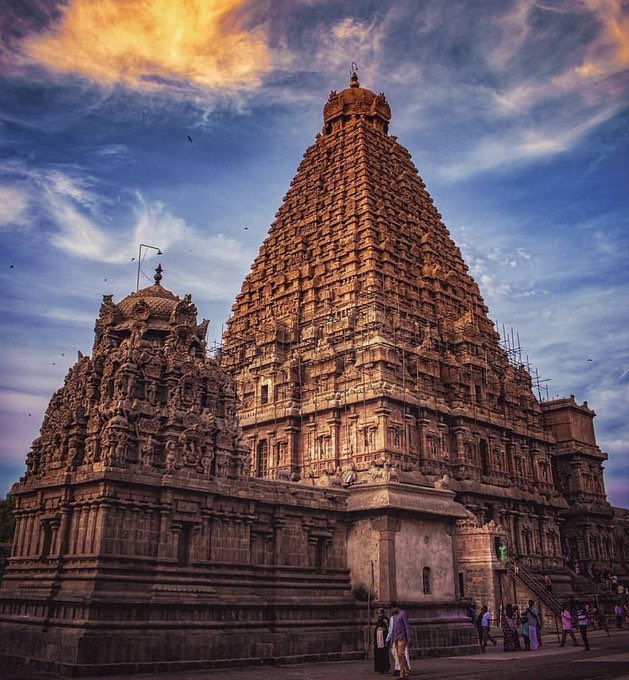
Comparisons are futile but for me one of India's greatest engineering achievements remains the 217 feet tall shadowless Brihadisvara Temple built by Raja Raja Chola I in 1010.
Crafted with giant interlocked stones and crowned by an 81 ton kumbam, it was built within six years.
291
4,225
17,459
154,657
Jun 7
Hello @district_india
Noone is replying on district chat support. Kindly ask them to connect on call.
1
111
Jun 6
We have always believed in -
"Vidya baantne se badhti hai!"
Jun 6
Thanks to the determination & hustle of 2 young Indian physicists, the 1st English book edition of Einstein’s relativity papers was born in Calcutta, not London.
In 1919, the world was thrown into a frenzy when British solar eclipse expeditions dramatically proved Albert Einstein’s Theory of General Relativity. Overnight, everyone wanted to read Einstein’s groundbreaking 1905 & 1916 papers. There was just 1 problem: they were written only in German & no proper English translations existed.
In Calcutta, a brilliant but cash-strapped young physicist named Meghnad Saha saw an opportunity. Along with his colleague Satyendra Nath Bose, Saha decided to translate the papers themselves. If they could bring Einstein’s revolutionary ideas to English-speaking students & scientists, they could finally earn some money to support their own struggling laboratory.
Working tirelessly, the 2 young Indians translated the key papers of Einstein & Hermann Minkowski. In 1920, the University of Calcutta published the book The Principle of Relativity, the very 1st comprehensive English edition of Einstein’s relativity papers in book form.
Einstein later learned of their work & gave the translation his personal approval and blessing. Far from objecting, he was supportive of these young scientists from India who had worked so hard to spread his theory.
While British lawyers were busy fighting over copyright, scientists in distant Calcutta had already mastered his mathematics & brought it to the English-speaking world.
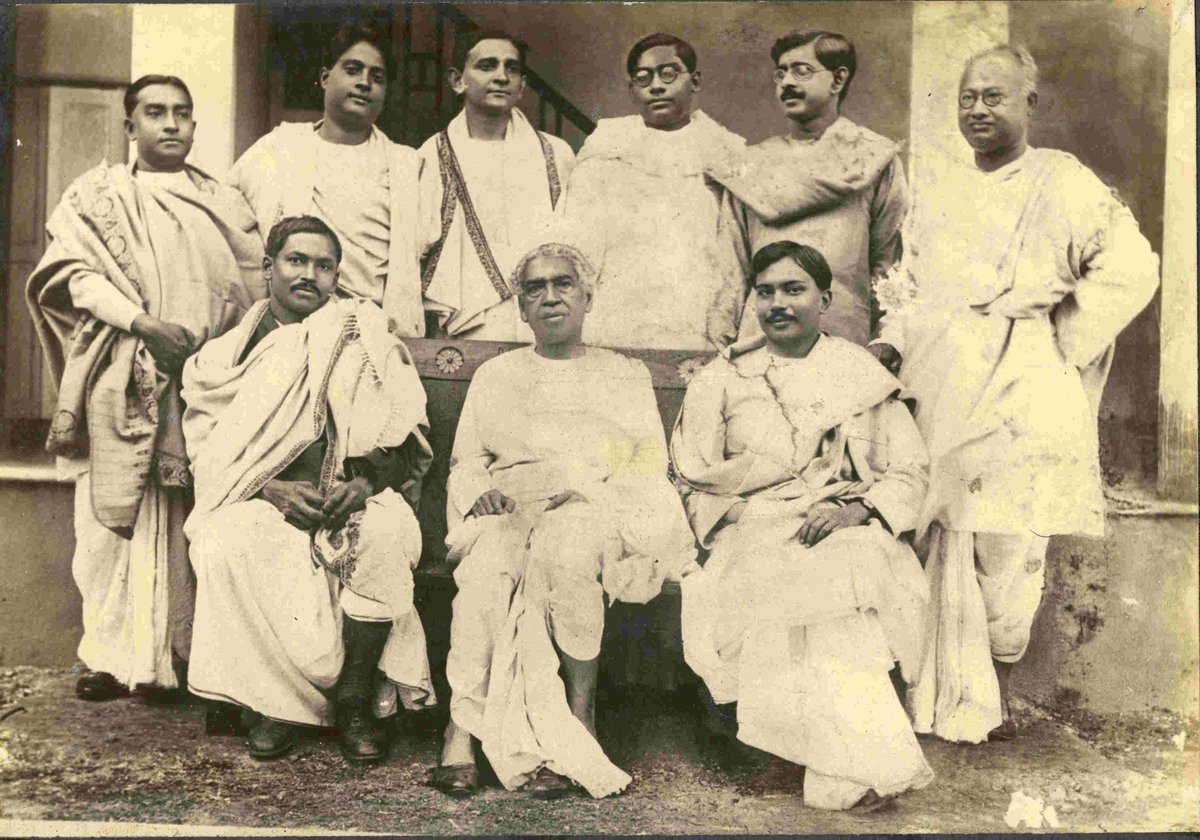
ALT Seated (L to R):M N Saha, J C Bose, J C Ghosh. Standing (L to R): Snehamoy Dutt, S N Bose, D M Bose, N R Sen, J N Mukherjee, N C Nag
5
158
Jun 6
Agar zindagi ne mauka diya hai Bharat mein janm lene ka to Vaibhav ya Pragg bano.
Faltu giri karni hai to Green passport ke liye apply karo!
1
1
40
Amaltas retweeted
Jun 5
In the late 1880s, the engineering boardrooms of Calcutta were exclusively white, fiercely guarded fortresses. The British administration confidently declared that no native mind possessed the structural genius/mathematical discipline required to anchor heavy masonry into the shifting, treacherous silt of the Ganga delta, until a penniless, orphaned village boy stepped forward to reverse-engineer their water systems, acquire their oldest engineering firms & build the monumental marble core of the city.
In colonial India, civil engineering was treated as a tool of sovereign dominance. The British built the bridges, the waterworks & the grand municipal palaces to project permanent imperial stability. While wealthy Indian landlords bought land, the technical design of heavy steel foundations & massive hydraulic systems was strictly reserved for British engineers imported from London. Native students were expected to merely serve as surveyors/low-level overseers.
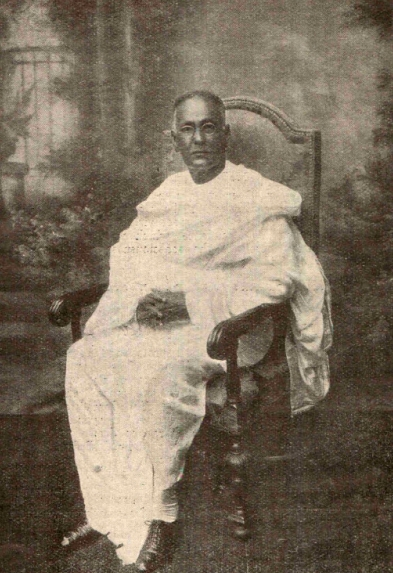
The man who shattered this glass ceiling was Rajendra Nath Mookerjee. Born in 1854 in a small village in Bengal, Rajendra Nath lost his father at the age of 6. Raised entirely by his mother in deep poverty, he managed to secure entry into Presidency College to study engineering. However, severe illness & a total lack of funds forced him to drop out before completing his formal degree. Armed with nothing but grit & a brilliant instinctive comprehension of physics, he entered the cut-throat world of public works as a small-time independent contractor.
Mookerjee’s life changed forever when he met Bradford Leslie, the Chief Engineer of the Calcutta Corporation. Leslie noticed that this young Indian could solve complex hydraulic formulas on site that were baffling foreign specialists. In 1892, breaking every racial code of the era, Mookerjee partnered with an Englishman, Thomas Acquin Martin, to establish Martin & Co.. It was a partnership of absolute equals.
When his British partner passed away, Mookerjee executed the ultimate corporate move: he aggressively acquired old, established British firms like Burn & Company & Jessop, merging them into the industrial giant Martin Burn. He placed no personal mention of his own name on the masthead. Mookerjee went on to build the structural spine of eastern India. When the iconic British architect William Emerson was struggling to lay the foundation for the massive Victoria Memorial on the swampy, shifting mud of the Maidan, he handed the entire construction contract to Mookerjee.
But he did not stop at monuments. He co-founded the Indian Iron & Steel Company (IISCO) at Burnpur, building heavy blast furnaces to compete with European iron cartels. He pioneered the Martin’s Light Railways, a private network of lightweight, highly affordable narrow-gauge trains that bypassed the rigid colonial railway systems to connect remote, impoverished rural districts across Bihar & Bengal. He engineered the Palta waterworks, designed the structural concept for the cantilever Howrah Bridge & built the Hooghly Dockyards.
He could walk into the Viceroy’s palace dressed in pristine European attire, demanding equal respect, while secretly funding national institutions like the Indian Statistical Institute. Yet today, as millions walk over the Howrah Bridge/take pictures outside the Victoria Memorial, the name of the orphaned village boy who structurally anchored those dreams into the earth is completely unknown.
The modern world continues to marvel at iconic landmarks, celebrating the names of Western architects & imperial designers etched into historic plaques, yet every single time the fierce monsoon currents of the Ganga slam against the foundations of Calcutta & the city refuses to sink, the silent, unyielding skeleton of Rajendra Nath Mookerjee holds the ground, proving that while an empire can sign the blueprint, it takes the absolute, raw genius of a native son to bury the pillars that can never be broken.
13
179
448
9,206
Amaltas retweeted
Jun 5
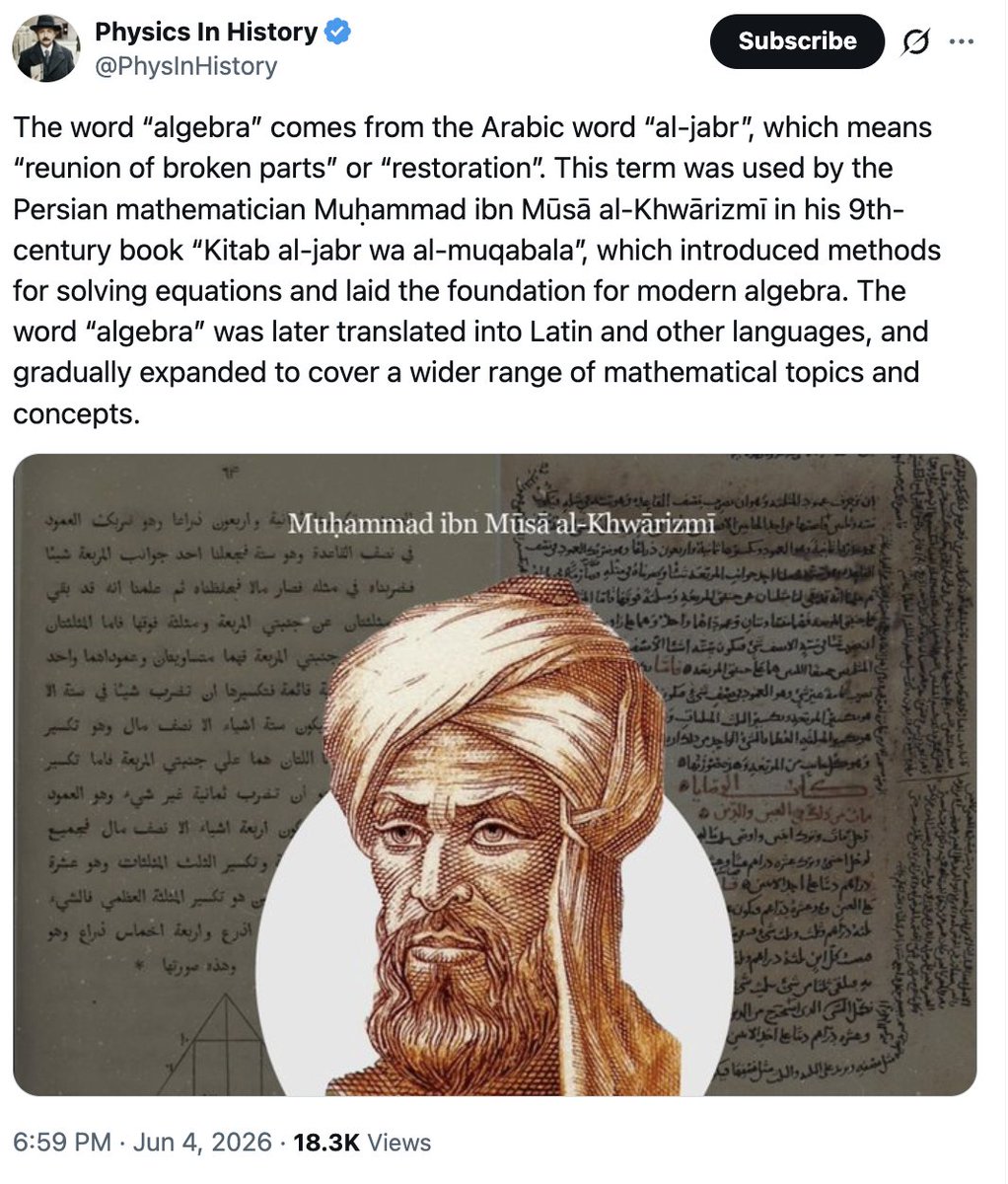
The standard narrative taught in global textbooks creates a massive logical blind spot: it confuses the origin of a word with the origin of the science itself. To be absolutely clear on the facts: the linguistic etymology is correct, the word "algebra" undeniably comes from the Arabic al-jabr via al-Khwārizmī’s 9th-century book. But al-Khwārizmī did not invent the mathematics.
~200 yrs before al-Khwārizmī wrote his book in Baghdad, the Indian mathematician Brahmagupta published the Brahmasphuta Siddhanta (The Correct Treatise of Brahma). Brahmagupta’s work was a mathematical revolution. He established the structural rules of algebra that we use today:
- Brahmagupta was the 1st to formalize 0 as a number in eqns, defining rules like A - A = 0 & explaining how zero interacts with ( )ve & (-)ve numbers.
- He introduced the concept of (-)ve numbers, calling ( )ve numbers fortunes (dhana) & (-)ve numbers debts (rina) & laid out the algebraic rules for multiplying them (e.g., a debt times a debt is a fortune).
- He gave the world the 1st explicit algebraic formula to solve quadratic eqns (ax^2 bx = c).
In the 8th century, the Abbasid Caliphate established the Bayt al-Hikma (House of Wisdom) in Baghdad. They realized that Indian mathematics was centuries ahead of the rest of the world. Around 773 CE, an Indian astronomer & mathematician traveled to Baghdad bringing sanskrit texts, including Brahmagupta’s treatise. The Caliph ordered these texts to be translated into Arabic. This translated work became known in the Arab world as Al-Sindhind (a direct phonetic corruption of the Sanskrit Siddhanta).
Al-Khwārizmī sat in Baghdad with access to Al-Sindhind. He absorbed the Indian decimal system, the use of zero & the algebraic methods of solving eqns. When he wrote his famous book, he was systemizing these Indian methods into a textbook format for an Arabic-speaking audience. In fact, al-Khwārizmī wrote another book explicitly titled Kitāb al-Jamʿ wat-Tafrīq bi-Ḥisāb al-Hind (The Book of Addition & Subtraction According to the Hindu Calculation).
While the Arabic word al-jabr means restoration of broken parts, the ancient Indian Sanskrit word for algebra is far more philosophically & logically profound: Bīja-gaṇita.
Bīja means seed/element.
Gaṇita means calculation.
Indian logicians like Bhāskara II (who later wrote a definitive text titled Bīja-gaṇita) explained that arithmetic deals with visible, known quantities, but algebra deals with the hidden seed, the unknown variable (x). Just as a giant tree is hidden inside a tiny, invisible blueprint within a seed, the final answer of a complex universe is hidden inside the unknown variable of an algebraic eqn.
26
410
972
15,407
Jun 3
Tej raftar vikas ko taraste GURUGRAM ke log aur @BJP4Haryana chali Patna ghumne!!!
Khud k pradesh mein ek bhi shehar aisa nahi par Patna k Vikas par chaude hote @BJP4Haryana ke Neta(abhineta).
Shehar chodiye pure pradesh mein 1km sadak bhi aisi mil jaye to bahut badi baat hogi.
1
53
Amaltas retweeted
May 25
The Story of Indian Wootz & our ancient Nanotech: How the Greatest Mind of the West Failed to Copy India’s Secret Steel!
In the winter of 1819, inside the prestigious, gas-lit labs of the Royal Institution in London, a young Michael Faraday stood over a small, dark ingot of metal. He was a man whose mind would soon decode the invisible forces of electricity & electromagnetism, changing the course of human civilization forever. Yet, at that moment, his intellect was completely held hostage by a piece of steel. It was a fragment of Wootz, a legendary crucible metal birthed in the clay furnaces of Southern India.
For centuries, the British Empire had encountered the terrifying cutting power of Indian swords, watching their own state of the art weapons get sheared cleanly in half by native tulwars. Desperate to weaponize this metallurgical wizardry, the Empire handed the prize to their greatest scientific prodigy. They expected a quick victory. Instead, the greatest mind of the Western world ran headfirst into a scientific blind spot that would shatter his arrogance and expose a centuries-old nanotech secret.
By the early 1800s, European metallurgists were suffering from a profound sense of colonial inferiority. The British military had just completed its bloody campaigns across India, encountering the legendary blades of the Maratha warriors.
The metal they faced was unprecedented: an ultra-high carbon steel produced in the remote villages of Telangana & Tamil Nadu. When acid-etched, it revealed a haunting, beautifully flowing Damascus pattern that looked like rippling water. More terrifyingly, it possessed a paradoxical structural perfection, it was hard enough to hold a razor-sharp edge through brutal combat, yet flexible enough to bend w/o snapping.
By comparison, Britain’s domestic industrial steel was brittle garbage. In 1818, Faraday’s mentor, the elite cutler James Stodart, managed to acquire a batch of authentic Indian Wootz ingots shipped straight from the docks of Bombay. He marched them into the Royal Institution & handed them to a young, eager Faraday. The mandate was clear: dissect the Indian steel, extract its secret chemical recipe & allow the British Empire to mass-produce the finest blades on Earth.
Faraday locked himself in his lab, spending 4 intense, sweat-soaked years (1818-1822) chemically treating, melting & dissecting the Indian ingots. He was hunting for the elusive "secret ingredient" that gave the metal its wavy pattern & supernatural strength.
It was during this frantic dissection that his flawless scientific analysis went completely off the rails due to a profound structural illusion:
Using the primitive chemical reagents of the 19th century, Faraday detected tiny, microscopic traces of Aluminium Oxide & Silica within the slag of the Indian steel.
Driven by the Western belief that complex metals required intentional, complex chemical additives, Faraday erroneously concluded that the secret to Wootz was a deliberate alloy. He deduced that ancient Indian metallurgists were intentionally fusing raw iron with aluminium to create a master metal.
Excited by his own genius, Faraday began running high-temperature furnaces, blending English cast steel with a massive aluminium addition. When he acid-etched his brand-new alloy, he saw a faint, wavy surface pattern. Believing he had cracked the code of the Orient, he declared absolute victory over the ancient artisans in a celebrated 1820 research paper, proudly presenting his "Artificial Wootz" to the scientific elite of Europe.
The victory was an absolute illusion. Faraday’s "Artificial Wootz" was a fraud of nature. While it mimicked the surface aesthetics of Indian steel under a magnifying glass, it lacked its legendary strength, flexibility & superplasticity.
When eager British blacksmiths took Faraday's heavily alloyed metal & tried to forge weapons out of it using standard European techniques, a disaster unfolded on the anvils. The moment the hammers struck, the metal did not reshape: it cracked, splintered & crumbled into useless, chalky shards.
Faraday had failed miserably. He was completely blind to a combination of geological geochemistry & high-precision thermodynamic forging that 19th-century European science lacked the vocabulary to even understand:
True Indian Wootz was an ultra-high carbon steel, packing an astonishing 1.3-2.0% carbon. In the 1820s, European industrial furnaces could not handle carbon levels that high w/o turning the entire batch into brittle, useless cast iron. Indian tribal artisans, working in simple clay cones, had spent centuries mastering a highly delicate, slow-cooling crucible process that perfectly stabilized this hyper-dense carbon matrix w/o burning it out.
The microscopic traces of aluminium Faraday found were nothing more than irrelevant dirt from the clay crucibles. In the late 20th century, materials scientists using high-powered electron microscopes analyzed surviving Damascus blades & unburied the real, goosebump-inducing truth.
The Indian iron ore mined from local deposits naturally contained microscopic, infinitesimal trace impurities of Vanadium, Tungsten, & Manganese... sometimes as low as a staggering 0.005%.
During the agonizingly slow cooling process used in India, these minute trace elements forced the carbon to precipitate out into beautifully aligned cementite nanowires & naturally occurring carbon nanotubes. The ancient artisans were executing nanotech centuries before the West even discovered the atom.
Furthermore, European blacksmiths, accustomed to hammering iron at roaring, white-hot temperatures, literally destroyed these delicate carbon nanotubes every time they touched the metal. The Indian blacksmiths knew through absolute instinct that Wootz could only be hammered at a very specific, low, cherry-red heat range.
Today, our world is built on advanced alloy metals engineered by supercomputers & processed in pristine corporate foundries, but they carry no mystique. Faraday’s pursuit of Wootz remains the ultimate ghost story of Western science, a historical crossroads where the pioneer of the modern electric age was completely humbled by the brilliant geochemistry of the ancient Indian soil.
It stands as an unyielding monument to a forgotten heritage, proving that the most legendary breakthroughs in human history are not always born under the pristine lights of Western institutions, but can live as beautiful, shimmering phantoms inside a clay crucible, forged by artisans who mastered the atomic structure of the world using nothing but charcoal, wind & the unyielding wisdom of their ancestors.
Ref Paper: royalsocietypublishing.org/r…
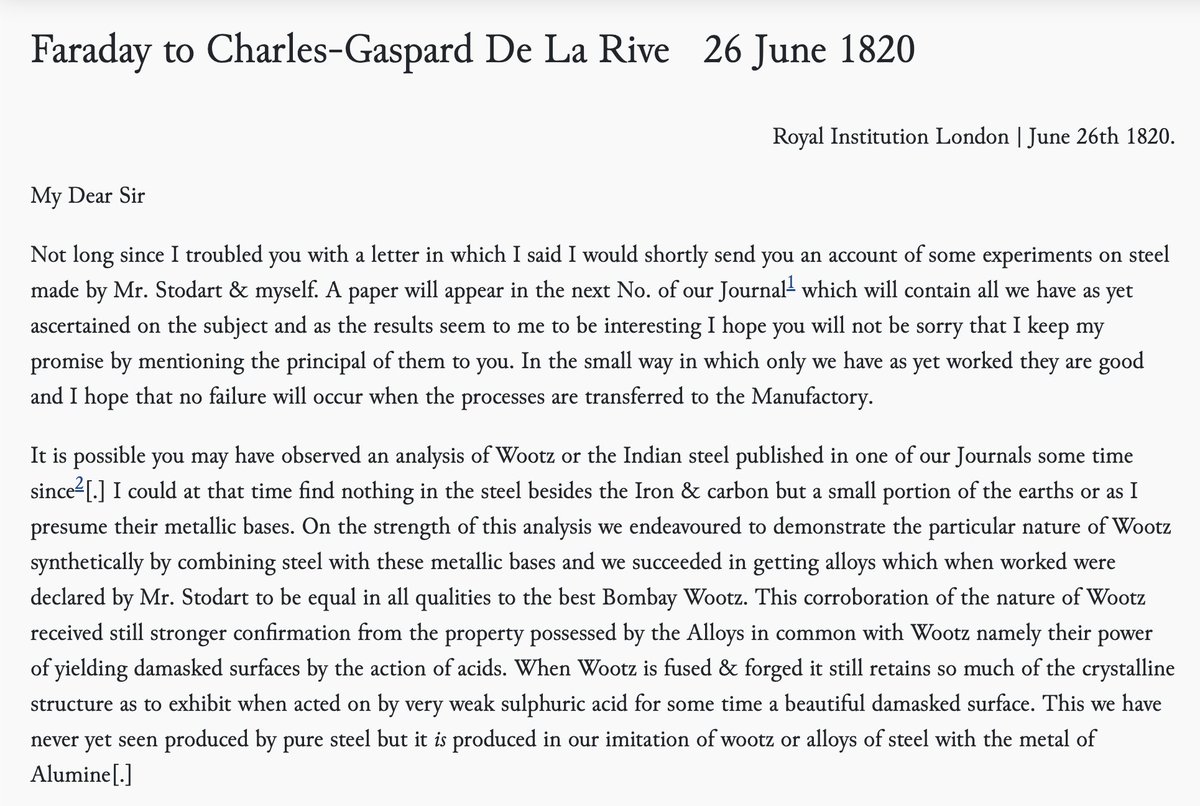
ALT Faraday’s own letter describing the work on Indian steel
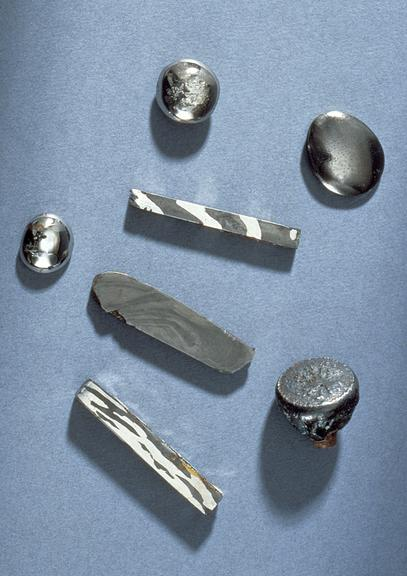
ALT Experimental steel alloys made by Michael Faraday
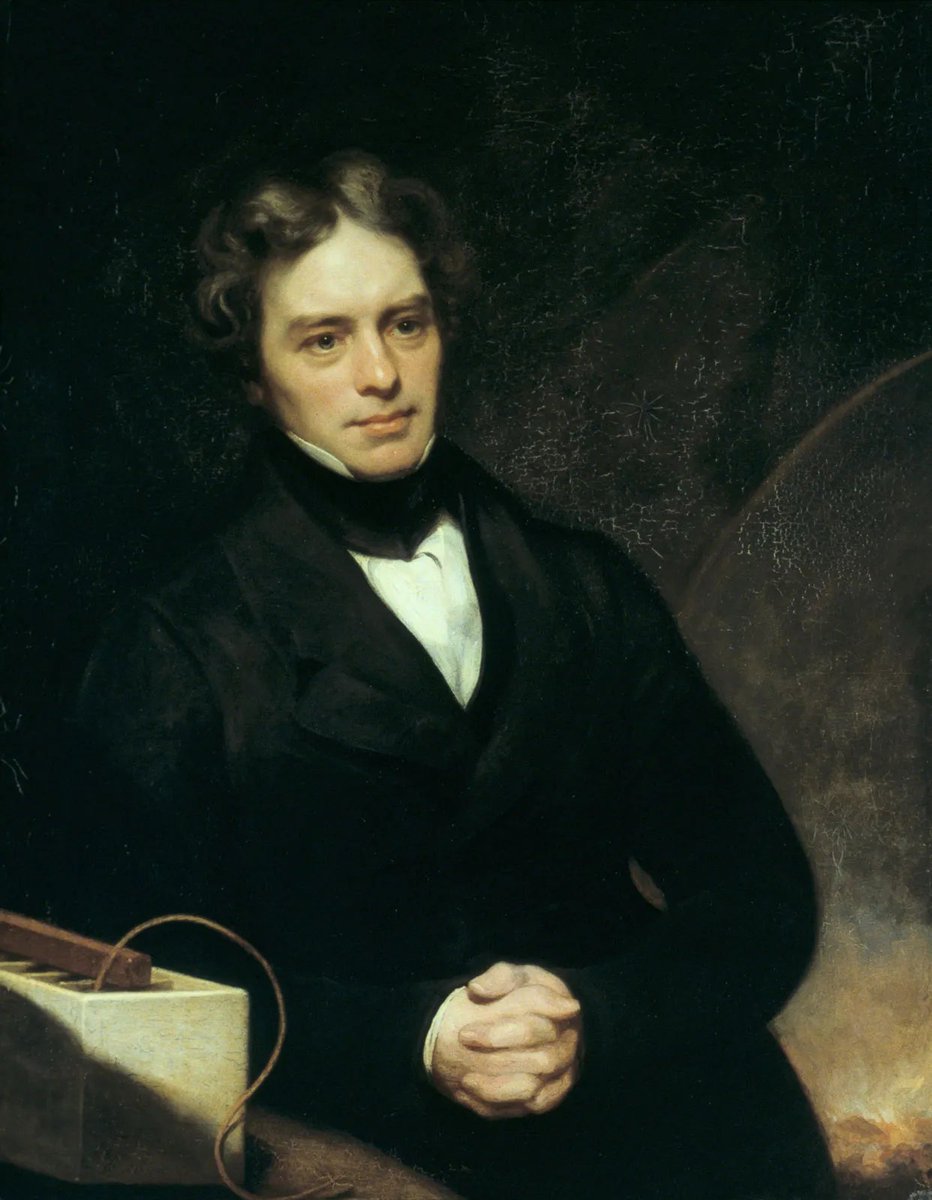
ALT Michael Faraday
9
153
395
7,554
Jun 2
What a pc of engeneering marvel and not included in wonders of the world. It's a shame that we failed to promote the black beauty and a graveyard stole all the limelight.
Jun 2

Kailasa Temple wasn’t built stone by stone ,it was carved from one single rock.
30
May 31
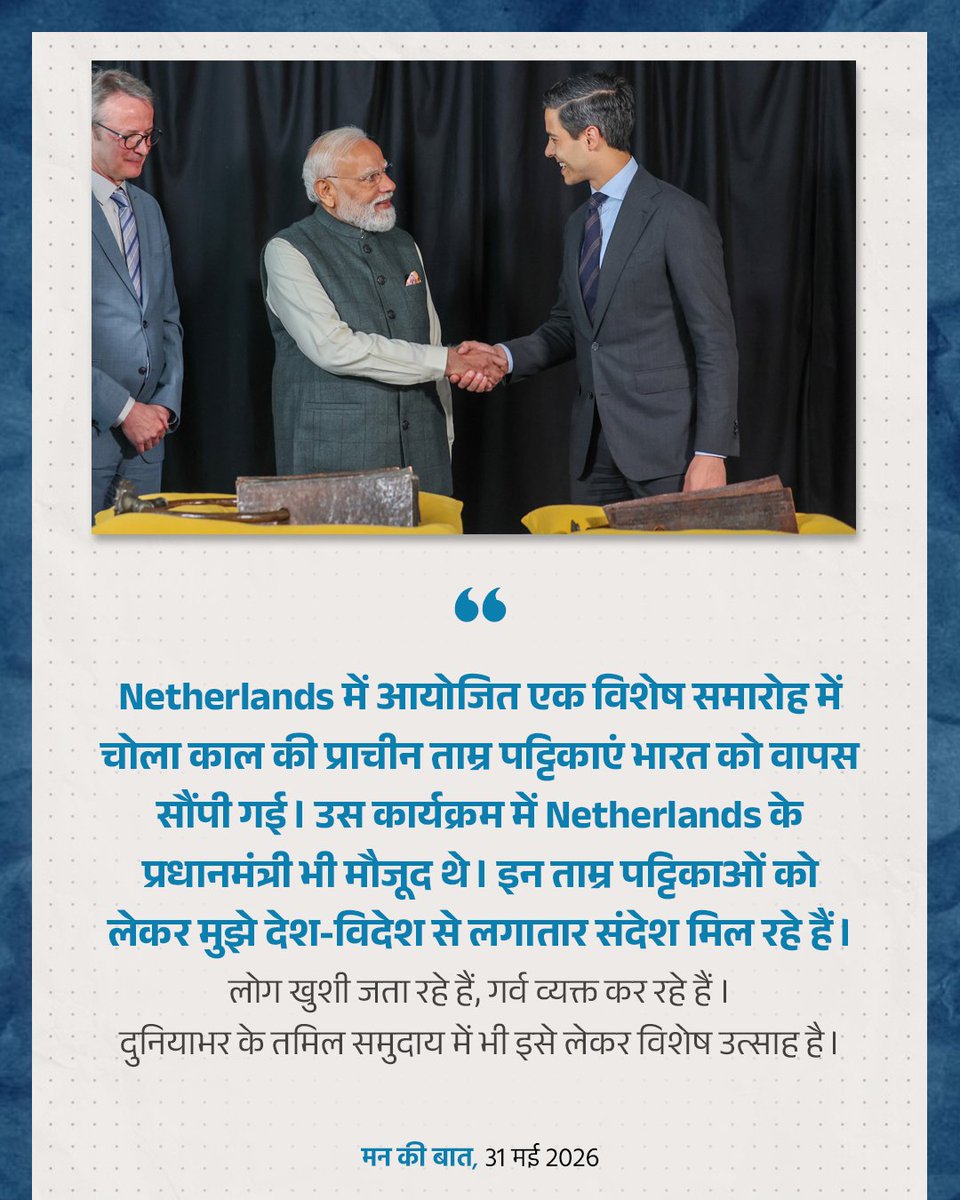
UK should also follow the suit and return what belongs to Bharatvarsh!!!

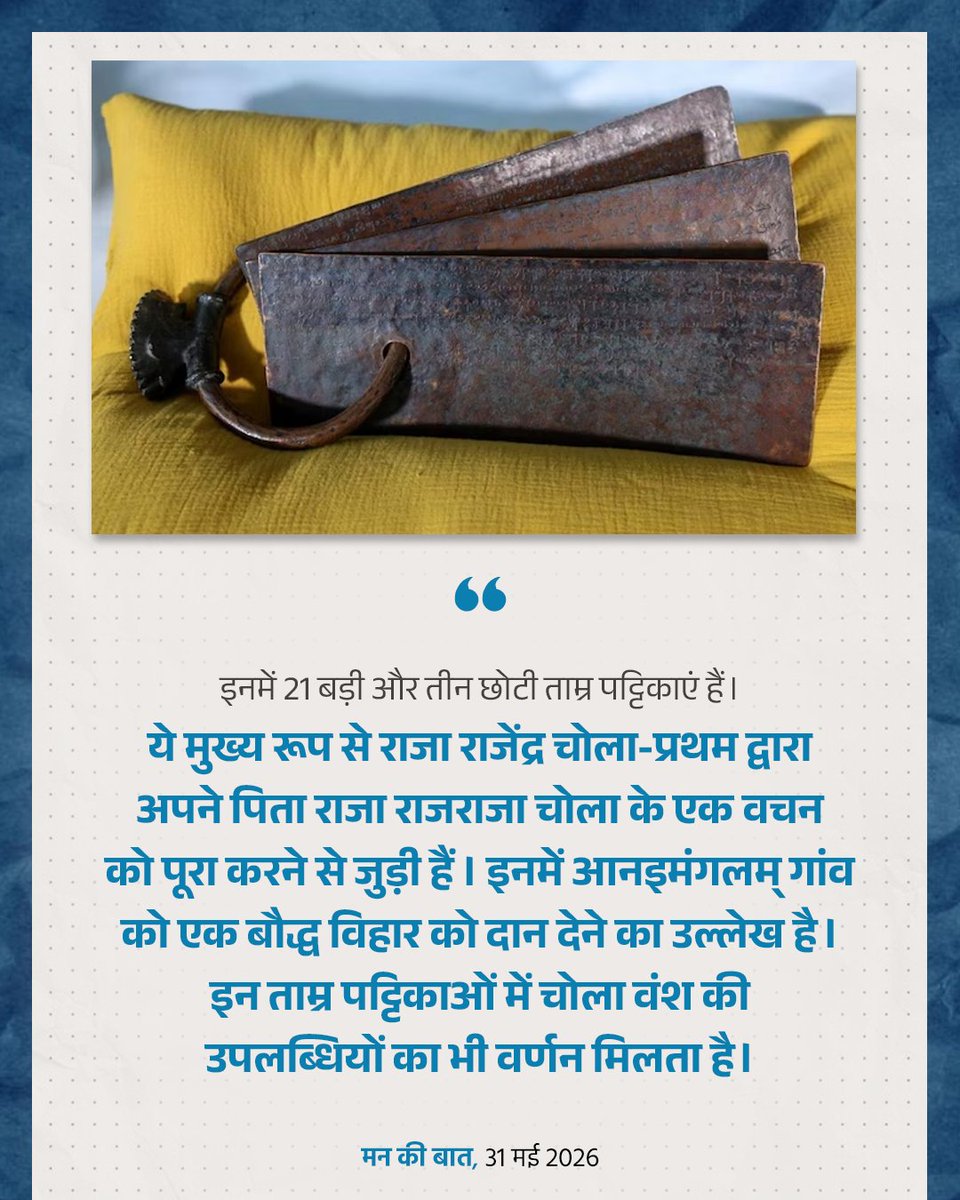
The Netherlands has returned ancient Chola-era copper plates that chronicle the achievements, maritime strength and global connections of the Chola empire.
#MannKiBaat
17

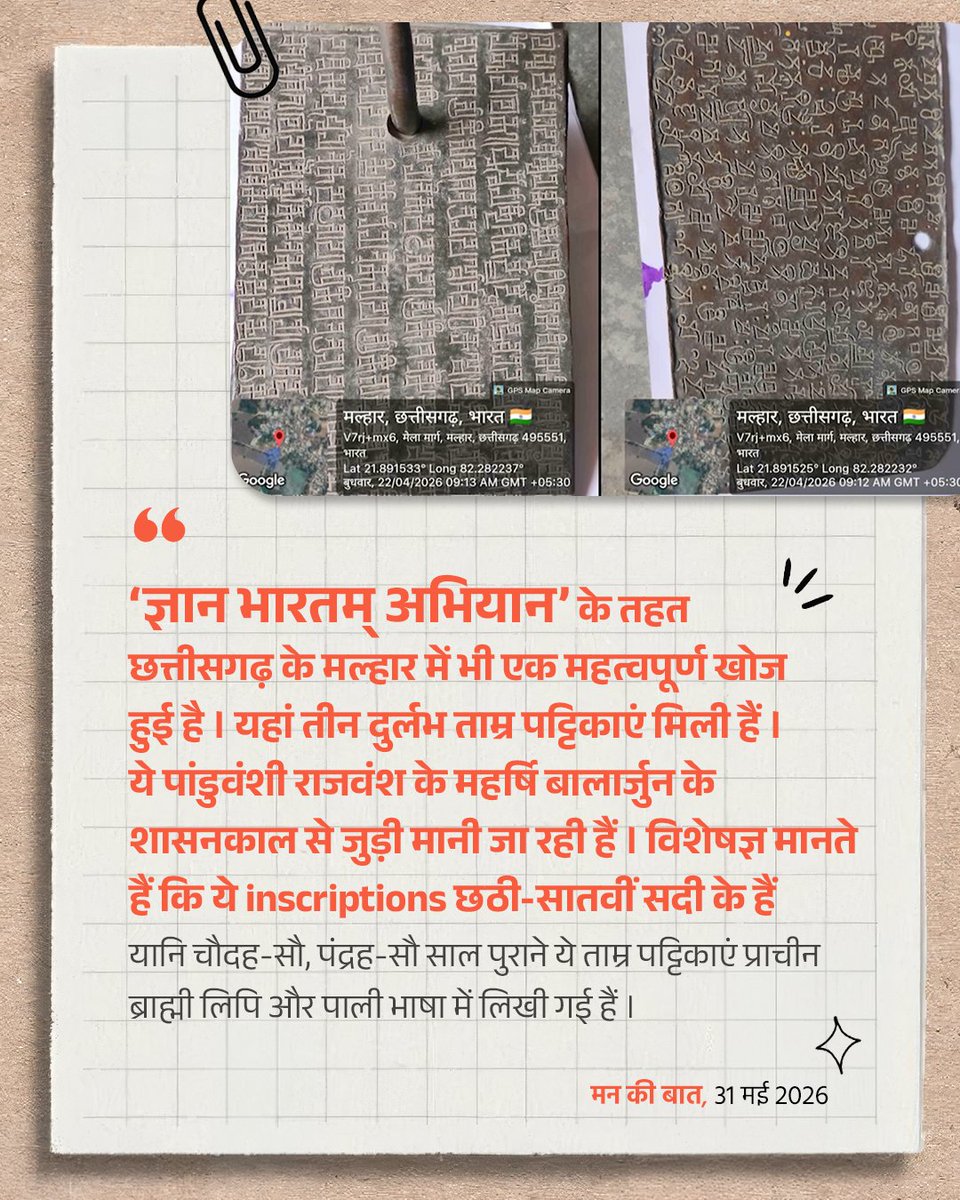
Under the Gyan Bharatam Abhiyan, rare copper plates dating back nearly 1,400 to 1,500 years have been discovered in Chhattisgarh.
#MannKiBaat
41
659
2,466
56,142