
DeFi research • Content creator | Building @happycuans with zero noise
Joined March 2021
- Tweets 28,764
- Following 1,623
- Followers 2,230
- Likes 25,527
495 Photos and videos















KILL retweeted

Apr 22
Lightspeed Is Now Live
The speed of a traditional exchange
The composability of a decentralized exchange
The privacy for real world exchange

444
2,745
2,885
135,243

trying to shift the focus to measurable actions, not just vanity metrics. Many Web3 projects are busy showing off their followers and engagement, when what really matters is on-chain activity. @XOOBNetwork
5
14
93
KILL retweeted

Feb 12
Welcome to Silvana Book, the most performant orderbook on @CantonNetwork.
We're bringing sub-second execution via private off-chain matching and secure, atomic on-chain settlement to Canton.
Get early access 👇

1,555
1,206
1,442
30,528
Many projects talk about the future of the internet.
Few actually build its foundation.
@foruai chooses an unpopular path:
focusing on identity, reputation, and trust.
Areas that rarely go viral, but are crucial.
If the future of the internet is filled with AI agents,
the main question will no longer be “how smart is the AI”,
but who can be trusted.
Without clear identity, AI is just noise.
Without verifiable reputation, trust becomes an illusion.
@foruai aims to establish identity as the first layer,
with AI and the economy built upon it.
This approach is slow.
But if successful, the impact will be structural.
$FORU

One thing that is often overlooked when talking about identity projects: adoption.
Technology can be neat.
Whitepapers can be smart.
But without real users, everything stops at theory.
@foruai challenge is not in the concept.
The concept makes sense.
The challenge lies in getting people to care and change their behavior.
A new identity layer is only useful if:
it works across platforms,
it's trusted by the community,
and its benefits are felt without needing lengthy explanations.
At this point, @foruai is still in the proof-of-concept phase.
And honestly, this phase is the hardest.
Vision can be bought with words.
Adoption can only be bought with experience.
$FORU
65
61
313
One thing that is often overlooked when talking about identity projects: adoption.
Technology can be neat.
Whitepapers can be smart.
But without real users, everything stops at theory.
@foruai challenge is not in the concept.
The concept makes sense.
The challenge lies in getting people to care and change their behavior.
A new identity layer is only useful if:
it works across platforms,
it's trusted by the community,
and its benefits are felt without needing lengthy explanations.
At this point, @foruai is still in the proof-of-concept phase.
And honestly, this phase is the hardest.
Vision can be bought with words.
Adoption can only be bought with experience.
$FORU
Many people misunderstand tokens.
They think tokens are the core of a project.
At @foruai tokens are not the center of the story.
Tokens are merely a coordination tool, not the ultimate goal.
The real value lies in the layers beneath:
identity, reputation, and activity history.
Without that foundation, tokens are just empty incentives.
In the @foruai ecosystem, tokens serve to:
drive participation,
reward real contributions,
and align user interests with the network.
If tokens emerge before utility, the result is speculation.
If utility is built first, tokens are merely a consequence.
@foruai seems to be taking the second path.
Whether it succeeds or not is entirely a matter of execution.
$FORU
56
55
676
KILL retweeted

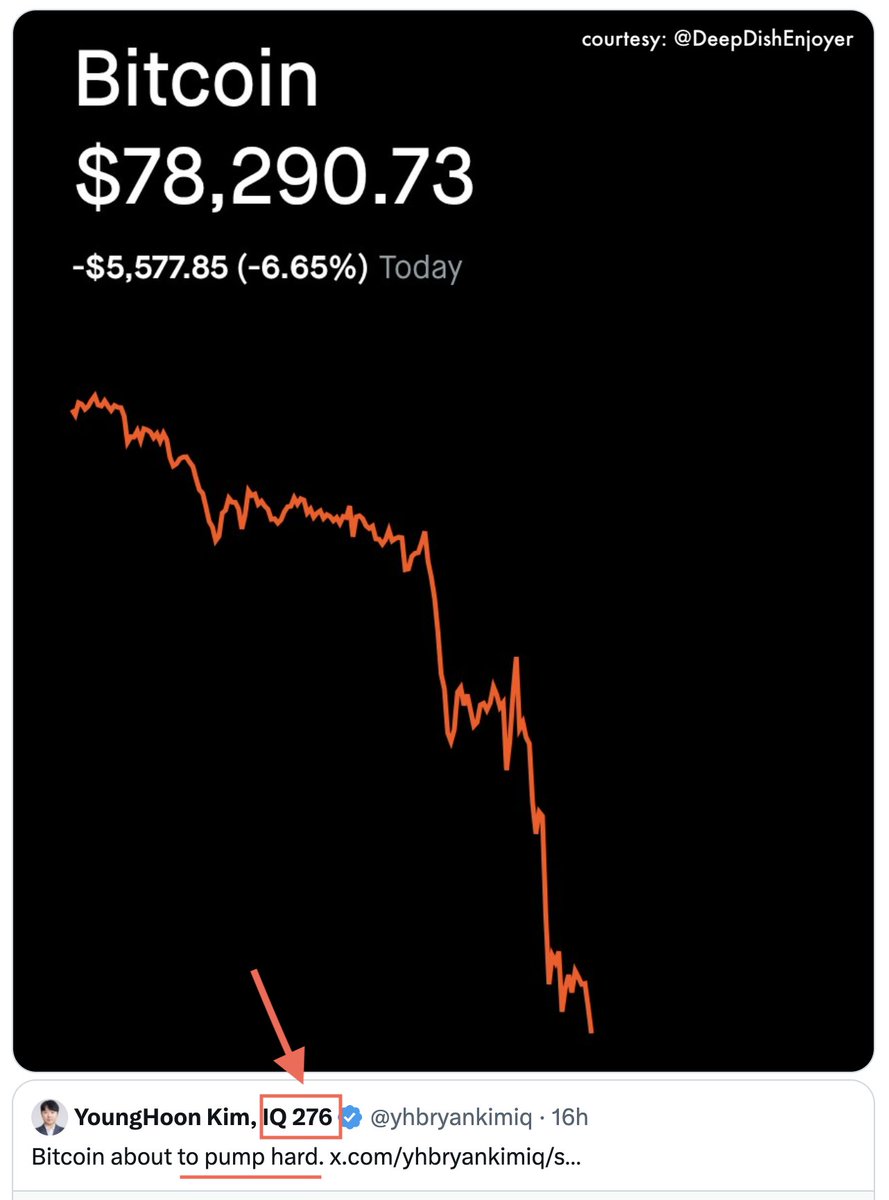
Twit di bawah ini, berikut chart BTC merupakan gambaran bahwa pasar keuangan merupakan sistem kompleks (complex system). Yaitu jaringan dari banyak komponen yang saling berinteraksi, dalam hal ini disebut agen/pelaku, yang secara kolektif menghasilkan perilaku, pola dan sifat-sifat yang muncul yang tidak ditemukan pada bagian individual mana pun.
Sistem kompleks berciri nonlinieritas, self-organization serta adaptasi terhadap lingkungannya sehingga membuatnya sulit untuk dimodel dan diprediksi.
Karena itu kemampuan seseorang atau lembaga dalam melakukan aktivitas yang terkait pasar keuangan, seperti trading atau pengelolaan dana lainnya tidak dapat semerta-merta dikaitkan dengan skill atau kepintaran seseorang. Menurut Mauboussin, investasi berada di spektrum kanan kegiatan, di mana hasilnya secara signifikan dikontribusikan oleh keberuntungan/luck.
Tapi tentu saja tidak banyak orang yang bersedia mengakui hal tersebut. Seperti berulang kali dikatakan oleh Morgan Housel: "Luck plays such a big role in the world. But it’s hard to talk about. If I say you got lucky, I look jealous. If I tell myself that I got lucky, I feel diminished."
Namun fakta itu tidak membuat beberapa orang kemudian menahan diri untuk tidak membuat prediksi atau ramalan mengenai pasar keuangan. Motivasinya bermacam-macam. Dari sekedar omon-omon kosong di media sosial untuk engagement farming, jualan kelas atau skill, hingga motivasi menggiring para plankton untuk menjadi santapan para paus.
Itulah kenapa ada banyak influencer yang senang menciptakan visual kekayaan dengan flexing harta agar tercipta keterkaitan antara hasil dan skill. Intinya, karena gua kaya maka gua skillful/pintar. Dan itu dapat menciptakan kredibilitas semu yang dapat dipertontonkan kepada khalayak audiens di media sosial mereka yang mayoritas tidak kritis dan hanya mengangguk-angguk mengiyakan dan (mungkin) sambil bermimpi memiliki McLaren.
Itulah juga kenapa mereka sering mengecilkan pentingnya edukasi (sekolah itu scam), berpikir kritis (ada skenario elit global), hingga menurunkan kredibilitas para kritikus mereka dengan merendahkan sertifikasi profesional dan mendorong argumen fallacious seperti "Kalau lo pintar, kenapa lo gak kaya." untuk menyerang mereka yang menyampaikan pernyataan yang dapat menurunkan kredibilitas mereka sebagai influencer.
Mereka-mereka ini menurut saya merupakan enablers dari masalah praktik goreng-menggoreng dan berbagai akibat finansialnya bagi banyak investor retails. Mudah-mudahan segera ada tindakan yang tepat agar membuat kelompok semacam ini jera.
16
58
254
16,206
Many people misunderstand tokens.
They think tokens are the core of a project.
At @foruai tokens are not the center of the story.
Tokens are merely a coordination tool, not the ultimate goal.
The real value lies in the layers beneath:
identity, reputation, and activity history.
Without that foundation, tokens are just empty incentives.
In the @foruai ecosystem, tokens serve to:
drive participation,
reward real contributions,
and align user interests with the network.
If tokens emerge before utility, the result is speculation.
If utility is built first, tokens are merely a consequence.
@foruai seems to be taking the second path.
Whether it succeeds or not is entirely a matter of execution.
$FORU
Use cases are where many Web3 projects slowly die.
The vision is grand, but it never really makes it into the real world.
@foruai seems to be aware of this.
They don't start with “mass adoption,”
but with existing behaviors:
posting, interacting, and contributing to the community.
These daily activities are then translated into reputation.
Not reputation based on claims,
but reputation based on history.
Creators don't have to start from scratch every time they switch platforms.
Communities don't need to build trust from assumptions.
Ordinary users aren't just “users,” but have a position.
This isn't an instant solution.
It's infrastructure tested through real world use.
And in Web3, that's what truly matters. $FORU
43
39
652
Use cases are where many Web3 projects slowly die.
The vision is grand, but it never really makes it into the real world.
@foruai seems to be aware of this.
They don't start with “mass adoption,”
but with existing behaviors:
posting, interacting, and contributing to the community.
These daily activities are then translated into reputation.
Not reputation based on claims,
but reputation based on history.
Creators don't have to start from scratch every time they switch platforms.
Communities don't need to build trust from assumptions.
Ordinary users aren't just “users,” but have a position.
This isn't an instant solution.
It's infrastructure tested through real world use.
And in Web3, that's what truly matters. $FORU
Most AI projects talk about what can be produced.
@foruai focuses on who produces it.
AI without identity is dangerous.
Data goes in, output comes out, but there is no context as to who owns the value.
At @foruai operates on top of identity.
This means:
> Activities have clear owners
> Reputation has a history
> Rewards have a verifiable basis
Decentralized Identity ensures control remains with the user.
AI ensures data can be read, evaluated, and orchestrated.
Without an identity layer, AI is just a smart machine.
With an identity layer, AI becomes an economic system.
And that's where $FORU truly shines.
52
47
557
Most AI projects talk about what can be produced.
@foruai focuses on who produces it.
AI without identity is dangerous.
Data goes in, output comes out, but there is no context as to who owns the value.
At @foruai operates on top of identity.
This means:
> Activities have clear owners
> Reputation has a history
> Rewards have a verifiable basis
Decentralized Identity ensures control remains with the user.
AI ensures data can be read, evaluated, and orchestrated.
Without an identity layer, AI is just a smart machine.
With an identity layer, AI becomes an economic system.
And that's where $FORU truly shines.
Today's digital identity is fragile.
Not because the technology is bad, but because the design is not user-friendly.
Your account lives on someone else's platform.
The rules can change at any time.
Access can be revoked without negotiation.
@foruai is trying to flip this structure by building a user-owned identity layer.
Identity isn't tied to a single platform, but to the individual.
Reputation is built from activity history, not a snapshot of momentary numbers.
This isn't about “new accounts.”
It's about who controls your digital identity.
If identity is the foundation of the internet,
ForU is operating at the foundational level not just features.
$FORU
44
38
493
Today's digital identity is fragile.
Not because the technology is bad, but because the design is not user-friendly.
Your account lives on someone else's platform.
The rules can change at any time.
Access can be revoked without negotiation.
@foruai is trying to flip this structure by building a user-owned identity layer.
Identity isn't tied to a single platform, but to the individual.
Reputation is built from activity history, not a snapshot of momentary numbers.
This isn't about “new accounts.”
It's about who controls your digital identity.
If identity is the foundation of the internet,
ForU is operating at the foundational level not just features.
$FORU
Followers, likes, views they seem like assets.
But they're just temporary permissions from the platform.
Once the algorithm changes, your reach drops, your account gets limited their value can instantly become zero.
Not because you've changed, but because you never really owned those assets.
@foruai takes a different approach. They don't chase vanity metrics, but build verifiable reputation:
who you really are, what your contributions are, and how consistent your behavior is across platforms and over time.
Numbers can be manipulated.
Reputation cannot.
That's the difference between appearing valuable and truly being valuable.
$FORU
48
43
453
Followers, likes, views they seem like assets.
But they're just temporary permissions from the platform.
Once the algorithm changes, your reach drops, your account gets limited their value can instantly become zero.
Not because you've changed, but because you never really owned those assets.
@foruai takes a different approach. They don't chase vanity metrics, but build verifiable reputation:
who you really are, what your contributions are, and how consistent your behavior is across platforms and over time.
Numbers can be manipulated.
Reputation cannot.
That's the difference between appearing valuable and truly being valuable.
$FORU
The main problem with the digital economy is not privacy, but ownership architecture.
Data is valuable not because of its volume, but because it builds reputation and trust.
Currently, digital reputation is produced by individuals,
but owned and monetized by platforms.
Users bear the costs of consistency and contribution,
while platforms accumulate long-term value.
This is the flaw in modern internet design:
reputation is not portable, not composable, and can be unilaterally deleted.
As a result, individuals never truly build assets they only optimize algorithms.
In the long term, this system is not scalable.
A mature digital economy demands that reputation be an asset owned by users,
not a feature owned by platforms.
@foruai $FORU
41
40
391
The main problem with the digital economy is not privacy, but ownership architecture.
Data is valuable not because of its volume, but because it builds reputation and trust.
Currently, digital reputation is produced by individuals,
but owned and monetized by platforms.
Users bear the costs of consistency and contribution,
while platforms accumulate long-term value.
This is the flaw in modern internet design:
reputation is not portable, not composable, and can be unilaterally deleted.
As a result, individuals never truly build assets they only optimize algorithms.
In the long term, this system is not scalable.
A mature digital economy demands that reputation be an asset owned by users,
not a feature owned by platforms.
@foruai $FORU
51
47
370
Excitement is easy to create. Endurance is not.
Many systems are designed to trigger that “big start” feeling: launch, reward, momentum. But very few are designed for the boring phase that follows when there are no additional incentives, no spotlight, and no external validation.
In ecosystems like @Bappfun it is precisely this boring phase that determines value. Products that survive this phase almost always find their form. Those that don't disappear without a trace.
Platforms can trigger excitement. But what determines the lifespan of an ecosystem is its ability to sustain a long, quiet, and unglamorous phase.
Every healthy ecosystem needs selection pressure. Without it, quality will naturally decline.
Launchpads that are too permissive often call themselves “open.”
But openness without standards simply shifts the burden of selection to the market, and the market always selects in the most ruthless way. Silence. Departure. No return.
In the context of @Bappfun selection pressure is not the enemy of growth, but its prerequisite. Builders who pass strict standards will be better prepared to face market realities. Without that, the platform risks fostering a fragile ecosystem
busy at first, empty later.
44
1
39
718
Every healthy ecosystem needs selection pressure. Without it, quality will naturally decline.
Launchpads that are too permissive often call themselves “open.”
But openness without standards simply shifts the burden of selection to the market, and the market always selects in the most ruthless way. Silence. Departure. No return.
In the context of @Bappfun selection pressure is not the enemy of growth, but its prerequisite. Builders who pass strict standards will be better prepared to face market realities. Without that, the platform risks fostering a fragile ecosystem
busy at first, empty later.
One of the least discussed topics on launchpad is responsibility. When a project fails, the narrative is always the same: the market is bad, the timing is wrong, or users are impatient.
In fact, incentive design is a choice, not destiny. Every mechanism created points, vesting, unlocking, rewards has predictable behavioral consequences. Ignoring this is not ignorance, but avoidance of responsibility.
In an ecosystem like @Bappfun maturity is evident in how quickly failures are analyzed honestly, rather than swept under the rug with the next launch. A healthy system learns. A fragile system shifts attention.
65
56
1,088
One of the least discussed topics on launchpad is responsibility. When a project fails, the narrative is always the same: the market is bad, the timing is wrong, or users are impatient.
In fact, incentive design is a choice, not destiny. Every mechanism created points, vesting, unlocking, rewards has predictable behavioral consequences. Ignoring this is not ignorance, but avoidance of responsibility.
In an ecosystem like @Bappfun maturity is evident in how quickly failures are analyzed honestly, rather than swept under the rug with the next launch. A healthy system learns. A fragile system shifts attention.
Many failures in crypto are not due to bad ideas, but to the wrong time horizon. Builders think in months, markets think in days. This lack of synchronization almost always ends in frustration.
Launchpads shorten the distance between ideas and the market. That's both a strength and a trap. Without mental and operational readiness, public pressure arrives before the foundation is set.
In the context of @Bappfun builders need to be honest with themselves: are they building to last 12–24 months, or just to survive one hype cycle? Platforms can accelerate everything, but they can't extend the market's patience.
75
62
728
Many failures in crypto are not due to bad ideas, but to the wrong time horizon. Builders think in months, markets think in days. This lack of synchronization almost always ends in frustration.
Launchpads shorten the distance between ideas and the market. That's both a strength and a trap. Without mental and operational readiness, public pressure arrives before the foundation is set.
In the context of @Bappfun builders need to be honest with themselves: are they building to last 12–24 months, or just to survive one hype cycle? Platforms can accelerate everything, but they can't extend the market's patience.
Many projects appear “alive” from the outside, but are empty on the inside. The timeline is active, the numbers are moving, tokens are being traded. But the real life of a product does not happen on the chart, but in the daily behavior of users.
Perception often deceives, especially in the early stages. What appears bustling isn't necessarily healthy. What appears quiet isn't necessarily dead.
In the context of @Bappfun the greatest risk is being deceived by one's own reflection. A platform that misreads its own condition will keep repeating the same patterns. Reality always emerges, sooner or later.
The question is are you ready to face it, or are you still busy celebrating the illusion?
41
1
38
592
Many projects appear “alive” from the outside, but are empty on the inside. The timeline is active, the numbers are moving, tokens are being traded. But the real life of a product does not happen on the chart, but in the daily behavior of users.
Perception often deceives, especially in the early stages. What appears bustling isn't necessarily healthy. What appears quiet isn't necessarily dead.
In the context of @Bappfun the greatest risk is being deceived by one's own reflection. A platform that misreads its own condition will keep repeating the same patterns. Reality always emerges, sooner or later.
The question is are you ready to face it, or are you still busy celebrating the illusion?
In the early stages, almost all signals appear positive. Activity is high, conversations are lively, and optimism is thick in the air. The problem is, not all of these signals are meaningful.
Many metrics only measure noise: clicks, joins, claims, trades. Few truly measure commitment. Commitment always comes at a price, and is therefore rare.
In an ecosystem like @Bappfun the main challenge is distinguishing between activities that can be dismissed and those that truly build value. Without the discipline to separate signal from noise, the platform risks optimizing the wrong things and learning too slowly when reality starts to speak.
40
36
512