
Director, Inst for Regulatory Law & Economics @NorthwesternU, Adjunct Prof @NU_MSES, @sfiscience External Faculty, @AEI Nonres Senior Fellow
Joined April 2009
- Tweets 11,530
- Following 3,277
- Followers 4,838
- Likes 9,958
279 Photos and videos




Pinned Tweet

30 Oct 2020
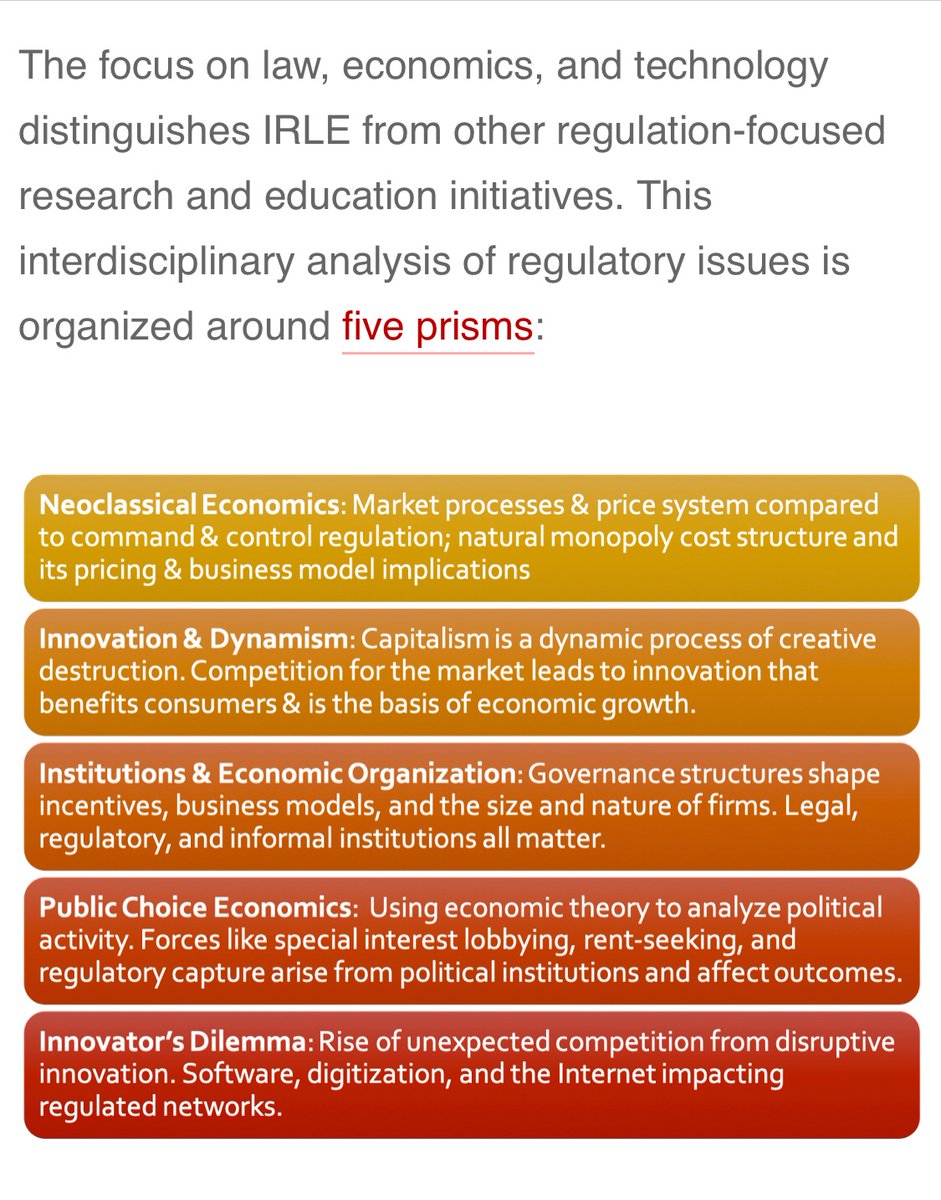
The Institute for Regulatory Law & Economics Five Prisms:
8
41
Lynne Kiesling-Knowledge Problem retweeted
I frequently tell people that markets are strange eco-systems that are hard to predict. Because they are general systems (a change in X induces changes across so many other dimensions as consumers and firms adapt to the new circumstances), we might be able to generate stylized depiction of the changes but the real-world image is not always as easy to see as in the textbook. Its also why -- and you'll see below why I say this -- I argue that all my economic philosophy can be summarized in the sentence "first, do no harm".
Sometimes, its pretty weird. Let me give you a really weird example whereby the vertically integrated firms with strong market power might actually incentivize environmental preservation and restoration.
While this is rarely discussed, corporate forms can be an exceptionally effective way to address environmental problems. Consider the case of a vertically integrated firm. Integration can be environmentally beneficial because it expands the boundary within which costs and benefits are internalized. Activities that would otherwise generate externalities across firms become internal transfers within the same organization, meaning that a greater share of the resulting costs is borne by the owner.
For example, if a food manufacturer discharges waste into waterways that damage farms it owns downstream, it has a stronger incentive to reduce that pollution than if the manufacturing and farming operations were owned by separate firms. By bringing multiple stages of production under common ownership, vertical integration can transform environmental externalities into ordinary business costs that managers have incentives to minimize.
Historically, vertically integrated firms were subjected to intense regulation and attempts (via antitrust) to break them apart. However, that means that while antitrust might have improved consumer welfare in a narrow sense (the one that people generally assign and which I will not dispute in this note for the sake of exposition) but that there was a hidden ill-effect. Indeed, there might have been the unintended ill-effect of limiting incentives to deal with externalities.
First, do no harm! This requires thinking about market interactions in the deepest most practical way possible.
3
1
11
1,026
Lynne Kiesling-Knowledge Problem retweeted

Jun 9
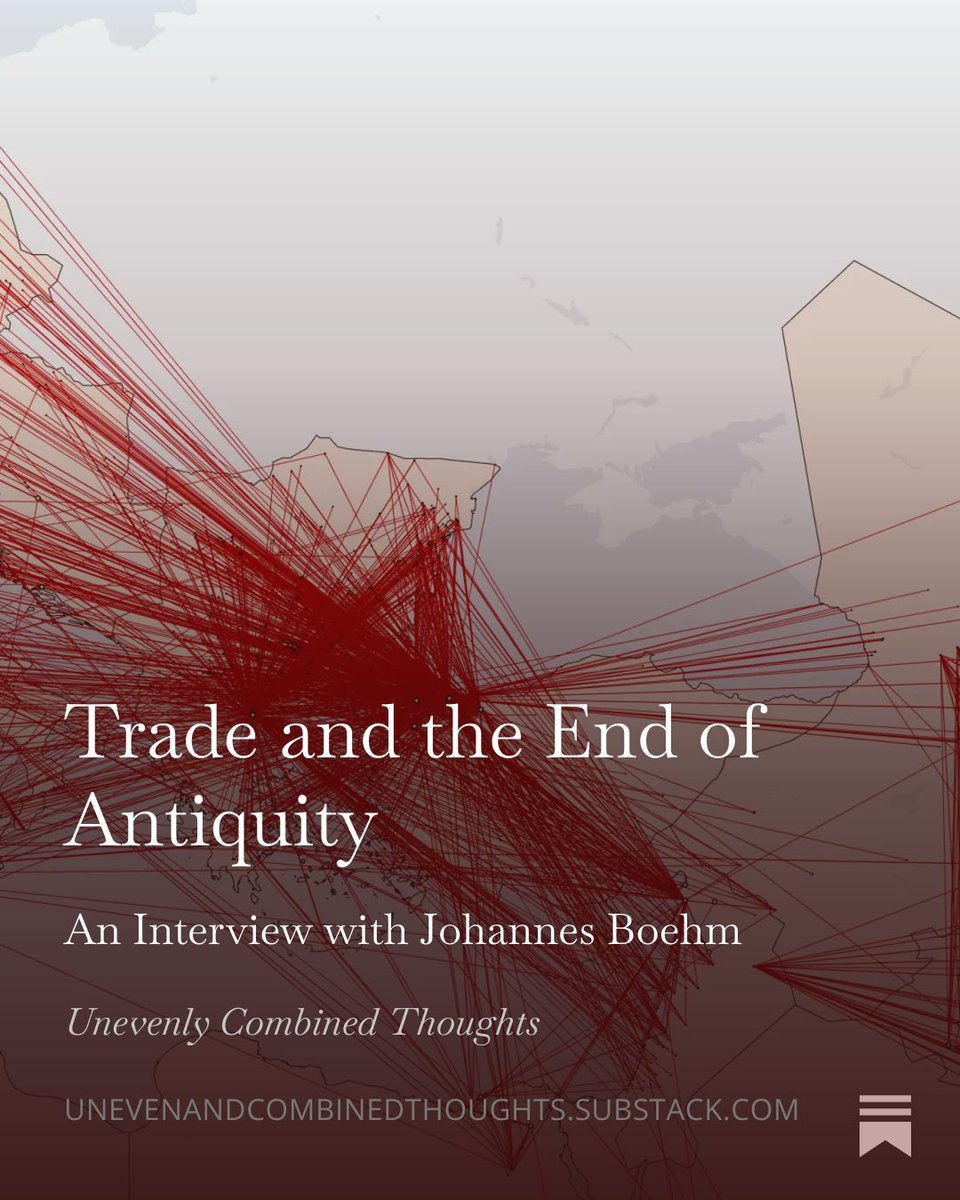
This week’s not-review!—an interview with @johannesmboehm about his spectacular new paper with @thomas_chaney, ‘Trade and the End of Antiquity’. The Pirenne Thesis, trade theory, and coins. Check it out below! 👇
1
17
69
5,842
Lynne Kiesling-Knowledge Problem retweeted

Jun 10
I gave @AnthropicAI's new Fable 5 my hardest challenge: explain the Riemann Hypothesis — math's most famous unsolved problem — to anyone. Two prompts later: a full interactive site this video, scored with music composed from the zeta zeros themselves 🤯🎵 riemann.adilmoujahid.com
63
163
1,577
450,162
Lynne Kiesling-Knowledge Problem retweeted

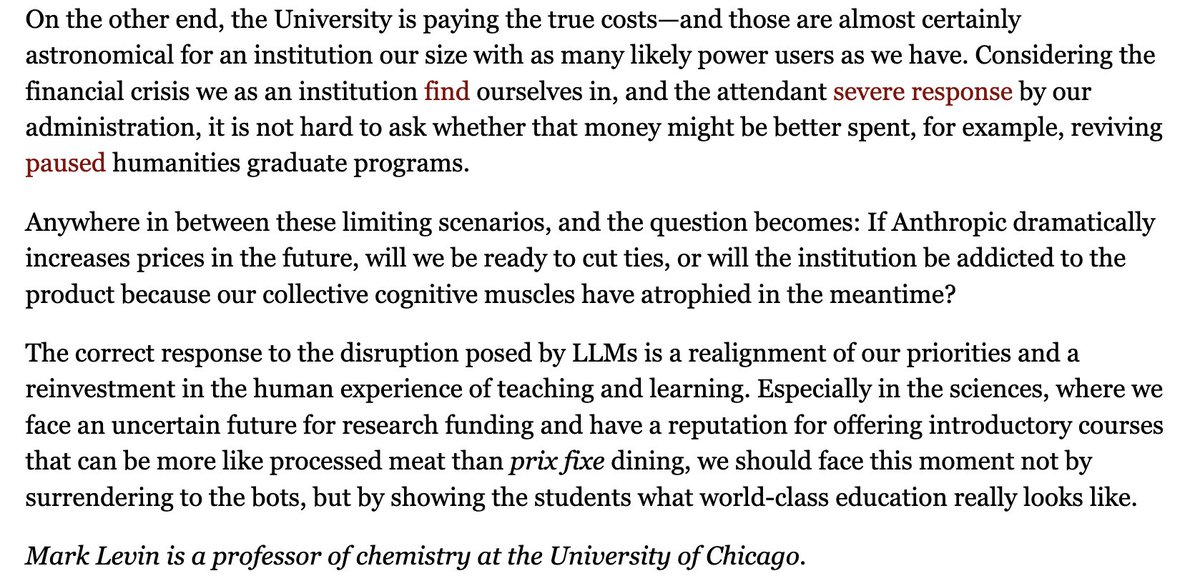
The University of Chicago is not "surrendering to bots." It is providing resources for students, faculty, and staff to adapt in the AI era of higher education. Imagine if the same fear mongering was applied to computers or the Internet.
Jun 10

Excellent op ed from our own Mark Levin on UChicago's deal with Anthropic:
7
8
44
14,111
Lynne Kiesling-Knowledge Problem retweeted

Jun 10
High electricity prices aren’t a glitch to be swept under the rug. They’re the market screaming that today’s technological and regulatory paradigm can’t support decarbonization, data centers, new manufacturing, and electrification all at once
2
11
44
6,468
Lynne Kiesling-Knowledge Problem retweeted

Jun 8
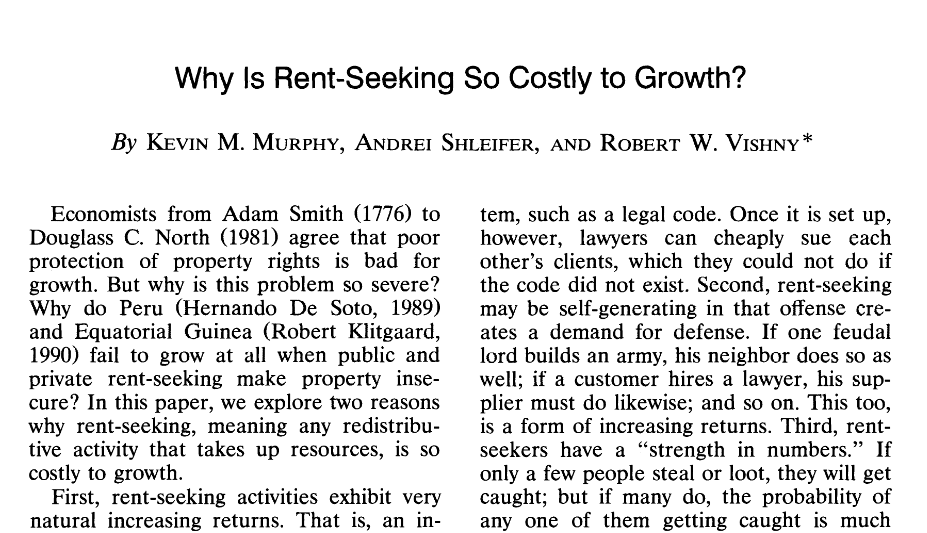
This is one of my favorite papers to teach rent-seeking and the relationship to economic growth. Its well argued and essentially also introduces multiple equilibria logic to students in simple mathematics.
1
71
358
13,130

Very well written piece on AI and copyright, and an important trade-off that we should take very seriously. open.substack.com/pub/srajag…
3
18
97
30,408
Lynne Kiesling-Knowledge Problem retweeted

Jun 5
I strongly endorse this outstanding report, commissioned by Daniel Diermeier, Chancellor of Vanderbilt University, and Andrew Martin, Chancellor of Washington University on the State of Scholarship. It is a cri de couer about the state of the humanities and the interpretive social sciences. The object of scrutinty is
"a deterioration in scholarly standards fueled by the substitution of political criteria for properly scholarly criteria in the assessment of research and a more general repudiation of longstanding ideals of rigor and objectivity."
The report is properly nuanced in identifying subfields in which the scholarly enterprise has been damaged and as opposed to blanket disciplinary condemnations because of problems in particular areas.
vanderbilt.edu/principles/st…
26
153
680
316,094
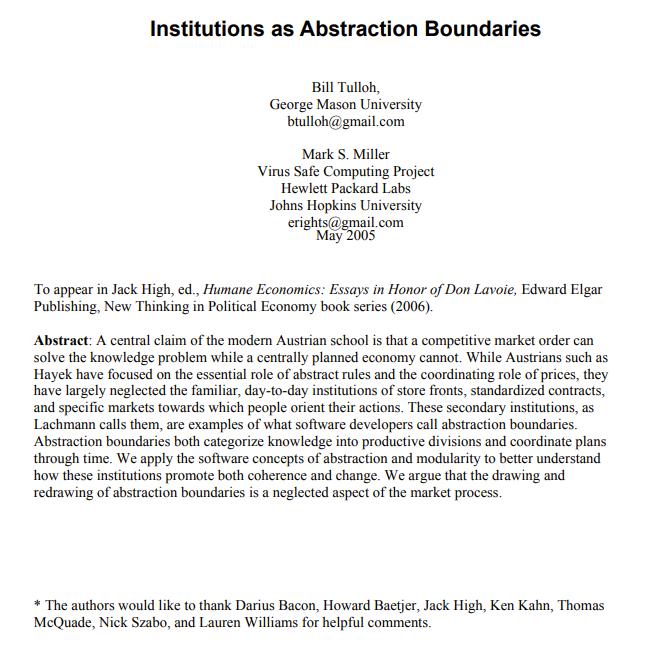
People do not coordinate only through broad legal rules and prices. Hayek emphasized abstract rules that allow people to coordinate like property, contract, trade, and competition. But Lachmann also emphasized the practical secondary institutions people orient their plans around, like banks, standardized contracts, product categories, and so on.
In software, an abstraction boundary is an interface that hides complexity hiding beneath. In this 2005 paper (papers.ssrn.com/sol3/papers.…), Miller and Tulloh explain that you can apply this concept to markets too. Consider a post office: there's an abstract boundary that separates why the customer wants to mail something (which the postman doesn't need to know); what the shared transaction is (all the recognizable steps and commitments involved in sending mail); and how the postal system actually delivers it (complex logistics network hidden from the customer).
The middle part is what lets the user benefit from the postal system’s expertise without having to learn postal logistics. The boundary defines the shared 'what' but also separates the customer’s 'why' from the provider’s 'how'. Not only that, but reusability means the same institution can be used to satisfy many purposes (birthday invites, subpoenas etc) and polymorphism means different providers can satisfy the same need and compete (UPS, FedEx etc).
An important question in institutional theory is how societies achieve both stability and adaptation; the paper authors say that the solution is stable interfaces allow changing internals. I find this very intuitive: when companies don't evolve/change from the inside much, you get ossification and insufficient adaptation. When laws change too much and institutions are unstable, uncertainty affects market confidence.
The people who are good at redrawing abstraction boundaries are entrepreneurs, who notice when existing categories are wrong and will invent new ones to remedy faults or address demand. What has always saddened me is how poorly rewarded and incentivized political entrepreneurship is. Part of the reason why is that this is hard: market abstraction boundaries are often disciplined by exit, entry, profit/loss, customer choice, and provider competition - but these feedback loops are much weaker in the public sector.
I hope we'll see a lot more of this in the coming decade. In fact this is something that AI will hugely facilitate, since it can lower the cost of articulating and prototyping new abstraction boundaries. We've already seen minor examples through e.g. citizens creating websites/services that compete with government ones. Though usually this is to make state services more legible rather than changing the boundaries in the first place.
I think if people want the future to go well, bolstering state capacity and enabling more innovation on the governance/democracy side of things will be critical. People don't really like this because it's a slow process, but I think they're wrong (and cheems), and playing the 'urgency of AGI' card to bypass this through a de facto state of emergency will cause lasting harms, partly by weakening institutional learning, public trust, and future coordination capacity.
11
44
230
38,304
Lynne Kiesling-Knowledge Problem retweeted

Jun 4
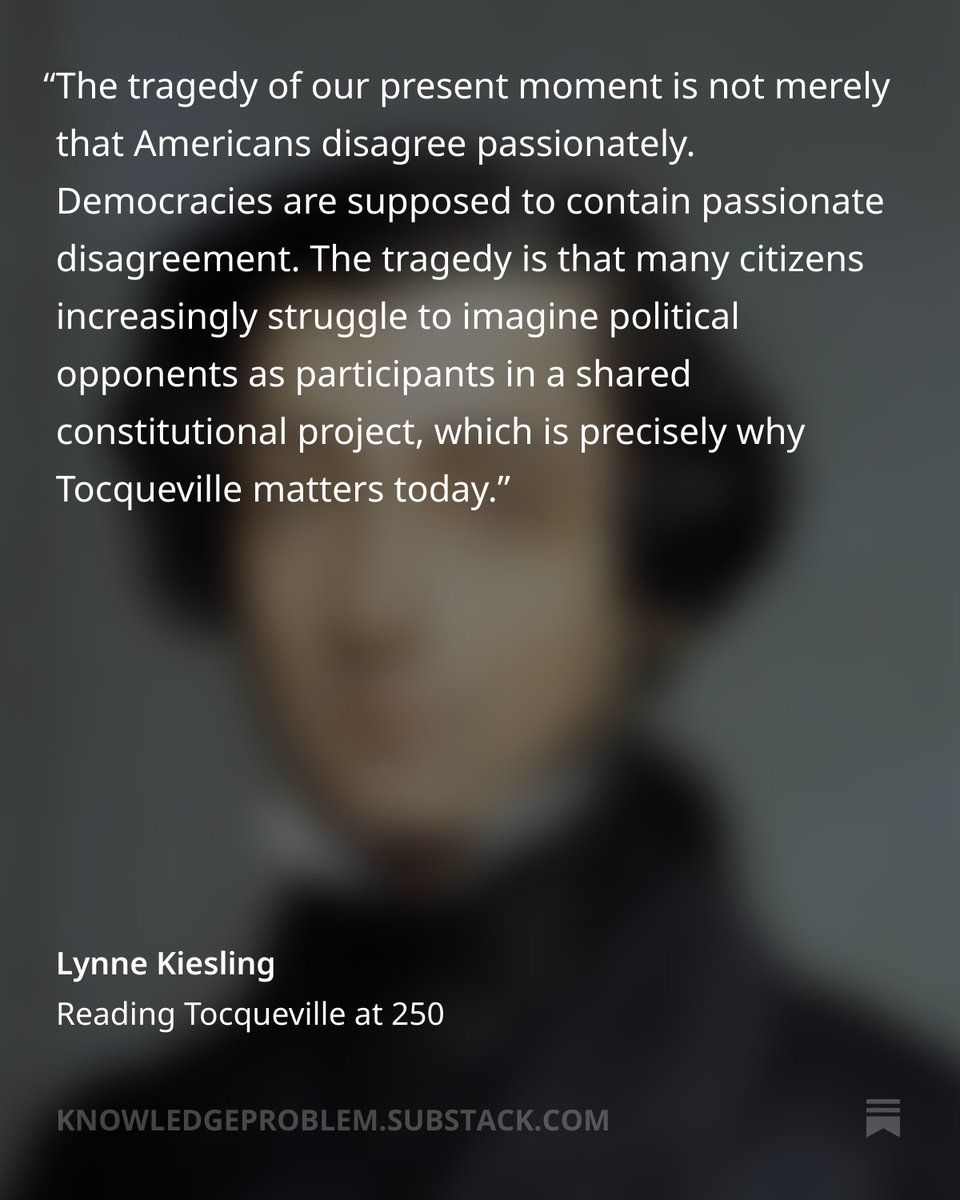
"The tragedy of our present moment is not merely that Americans disagree passionately. Democracies are supposed to contain passionate disagreement. The tragedy is that many citizens increasingly struggle to imagine political opponents as participants in a shared constitutional project, which is precisely why Tocqueville matters today."
@knowledgeprob with a terrific #reading project for #America250... Reading Tocqueville.
open.substack.com/pub/knowle…
1
2
4
184
Lynne Kiesling-Knowledge Problem retweeted

Fun model and very much in line with my priors. Problems arrive stochastically. Some orgs choose new processes to solve them. Costly to know when the problem is no longer active, hence costly to prune. Rule: be firm to not institutionalize solutions to temporary problems.
Jun 2

Between 1985--2023, MIT's faculty grew 9%. Administrative staff grew 189%. 📈 Why? In new @PNASNews paper, we use dynamical system model to show administrative bloat can emerge without empire-building--just from well-intentioned problem-solving gone awry pnas.org/doi/10.1073/pnas.25…
2
16
81
20,434
Lynne Kiesling-Knowledge Problem retweeted

Jun 2
ERCOT low key sitting with the highest reserve margin of the major North American grids this summer according to NERC:
Given an Anticipated Reserve Margin of 67.9% and Reference Reserve Margin of 13.75%, ERCOT expects to have sufficient operating reserves...
nerc.com/globalassets/our-wo…
4
9
53
6,517
I'm celebrating the 250th anniversary of the Declaration of Independence by rereading Tocqueville's Democracy in America. Please join me.
Few thinkers have understood as deeply the relationship between liberty, civil society, local institutions, and democratic self-government.
2
1
15
611
Lynne Kiesling-Knowledge Problem retweeted

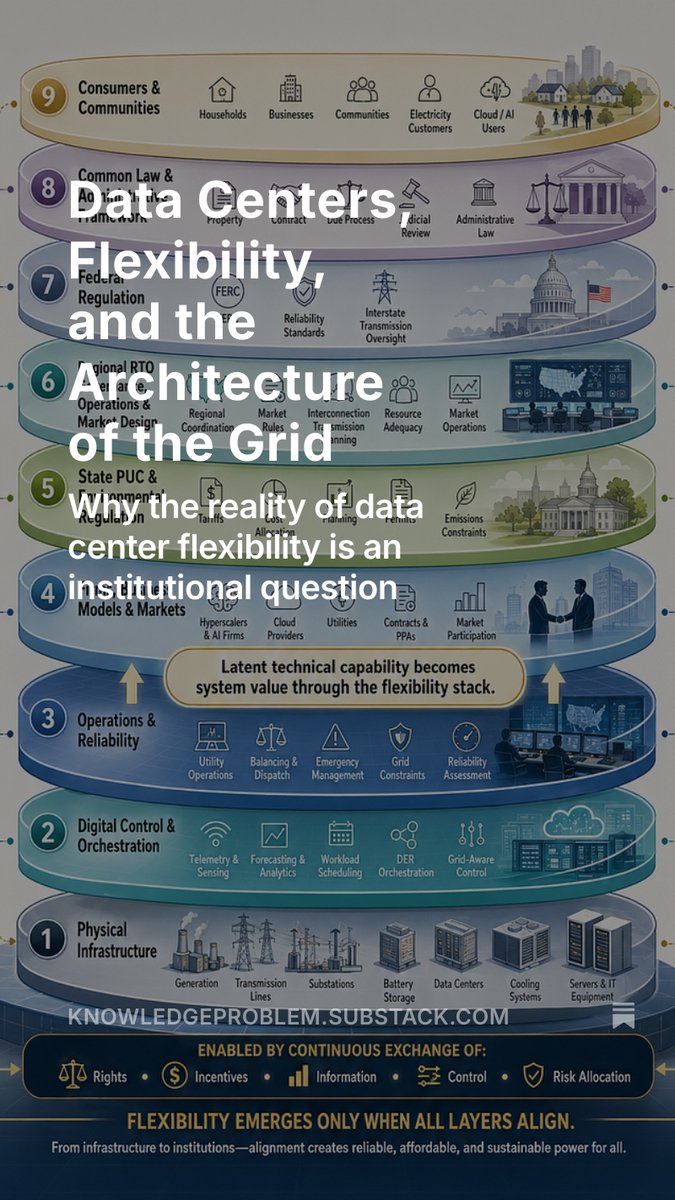
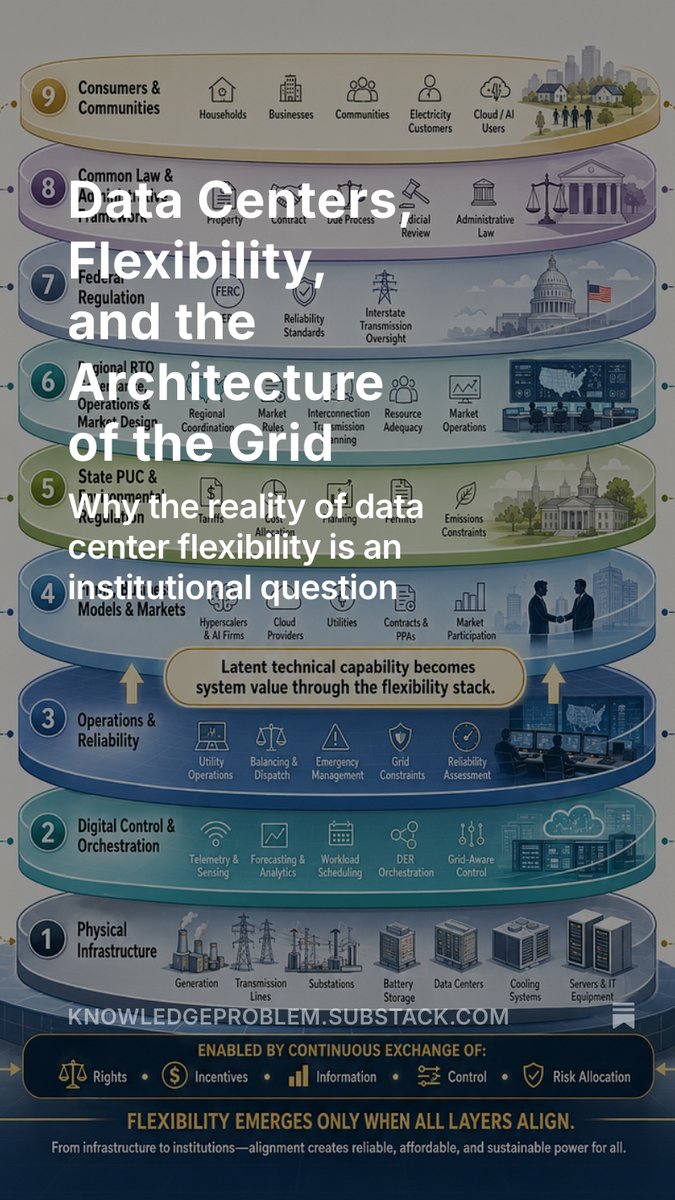
I've read a bunch of dumb commentaries on data centers.
Interesting to read a smart one. From @knowledgeprob
substack.com/home/post/p-197…
1
2
4
846
🧵 Agree 💯 this is a great innovative direction.
Jun 1

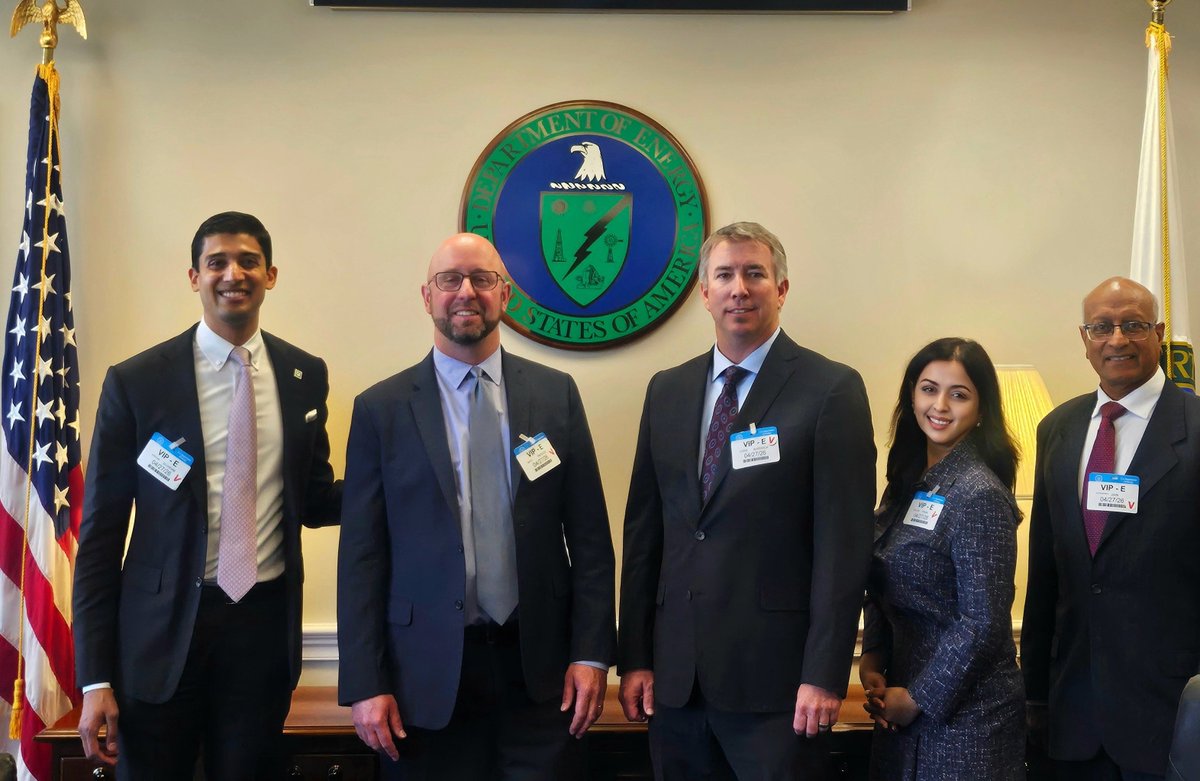
Flex consumption over capped low pwr consumption means:, AI can use ⚡ headroom curtail to a floor in response to locational congestion. Three weeks ago, I introduced @ERCOT_ISO & @SantaClaraPower (Silicon Valley PWR) colleagues to one another. Pushing grid-aware load ops is Priority 1.
@nvidia #DSXFlex architecture will be at this project site. This project will allow commissioned data centers to earn more megawatts faster and fit safely inside the utility system's operating margins.
2
463
Lynne Kiesling-Knowledge Problem retweeted

May 31
Beautifully done. Evolution of women’s fashions.
1,066
4,338
25,694
1,203,689
Lynne Kiesling-Knowledge Problem retweeted

May 29
Good coverage and clear to anyone paying attention to these markets over the last 18 months.
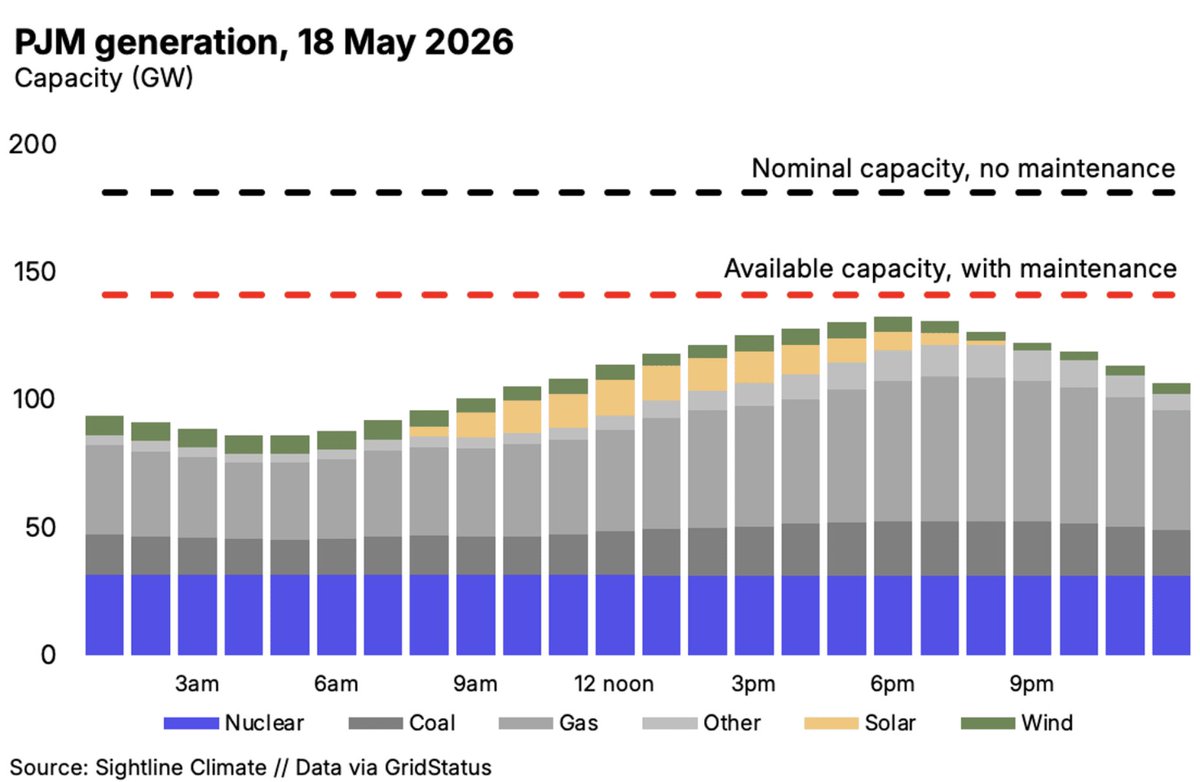
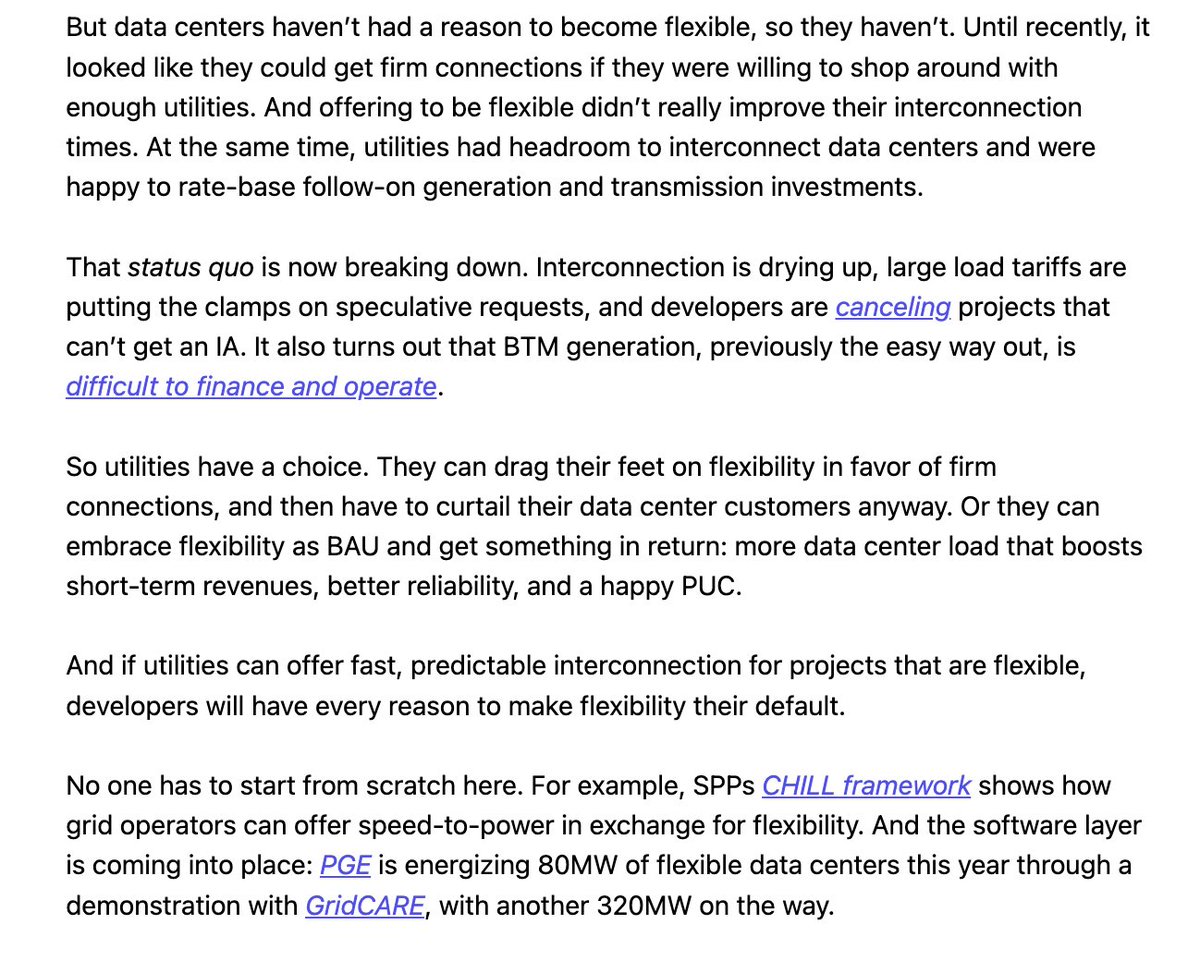
PJM came within 2GW of forcing data centers onto backup power last week. Summer heat drove peak load past 135GW with reserves at 4%, and 40GW of generation sat in maintenance. DOE only cleared a voluntary switchover this time. Writing is on the wall: When the grid hits peak conditions, data centers lose service first. Texas already wrote that into law with SB6. Half the US pipeline sits in PJM and Texas.
Takeaway: Interruptible service is becoming the price of a fast interconnect.
4
20
105
9,990
🧵

At a recent Cato Institute event @Energy Sec Chris Wright spoke warmly of his friendship and respect for Milton Friedman. It’s likely that Professor Friedman would not be a fan of DOE’s use of emergency authority to block the retirement of old power plants across the country.🧵

2
378
🧵, although I would de-emphasize the "perfect" in the competition concept.
May 27

When people say they want “abundance” what they really mean is they want robust and competitive free markets which can readily respond to price signals incentivizing new supply and technological innovation when demand calls for it.
This concept gets simplified into the notion of perpetually available surplus supply but the spirit of the movement is closer to perfect competition rather than “abundance”.
1
4
1,005