
Future Asteroid Farmer, Technologist, & former Physicist. Believe in equitable world but not the woke tactics. Democracy is key for human species. AI and Cloud
Joined February 2007
- Tweets 73,392
- Following 715
- Followers 16,535
- Likes 2,031
Photos and videos
OpenAI is learning a very old enterprise lesson: if your product touches health data, advertising, and vulnerable users, you are no longer “just a chatbot company.”
A coalition of state attorneys general has opened an investigation into OpenAI. The subpoena reportedly came from New York’s attorney general and asks about a broad set of issues, including advertising policies and handling of health data.
Stating the obvious first: regulators are not waiting for AI products to fit neatly into existing software categories.
But here is what people miss. This is not only a legal story. It is a product architecture story.
The first wave of consumer AI companies optimized for engagement, growth, and capability. The second wave will be judged by governance surfaces: consent, retention, explainability, escalation, and what happens when users bring regulated or sensitive workflows into a general-purpose assistant.
Healthcare leaders should pay attention even if they are not using OpenAI directly. Patients already use consumer AI tools for care navigation, symptom interpretation, benefit questions, and mental health support. That creates a messy boundary between “consumer productivity” and “health infrastructure.”
For enterprise buyers, the practical question is simple: can your AI vendor show how sensitive data moves through the system, who can inspect it, how errors are escalated, and what happens when the model starts influencing decisions that feel clinical or financial or in any other regulated area?
The winning AI platforms will not be the ones with the best demo alone. They will be the ones that can survive discovery, audit, and public scrutiny without asking everyone to just trust the magic box.
#AI #AIGovernance #HealthTech #EnterpriseAI #DigitalHealth #ResponsibleAI

23
After UFC fight, is it going to be pole dance on White House lawns? #AskingForAFriend
47
Self assembling data centers in space is critical to meet the needs of 8.3 Billion and growing population and provide equitable opportunities to all of them. It cannot be one company or just one country building this. You need global effort to derail any geopolitical roadblocks
42
Your future product is a self organizing system leveraging loops #AWiseHumanOnceSaidOnTwitter
32
Funny seeing the posts of cronies of David Sacks (or bots) posting the same content under different accounts. Get a life folks
1
61
Frontier AI access is becoming a national security control point. That changes the enterprise AI buying conversation.
Trump administration blocked foreign access to Anthropic’s most powerful AI models, including Mythos and Fable. The Hacker News discussion surfaced the story the same day, which is useful because the developer community is starting to process what this means beyond policy theater.
Stating the obvious first: governments were always going to care about frontier models. The surprise is not that access is getting restricted. The surprise is how quickly model access is starting to look like export control, cloud region strategy, and vendor risk management at the same time.
For CIOs, this is not just a Washington story.
If your AI roadmap depends on one frontier provider, your dependency is no longer only technical or commercial. It is geopolitical. It touches residency, procurement, partner access, subsidiaries, cross-border operations, and auditability.
That does not mean enterprises should run away from frontier models. That would be lazy advice. It means they need an AI architecture that assumes model availability may vary by region, customer class, workload type, or policy regime.
Day 2 questions now matter more:
1) Can you swap models without rebuilding the workflow?
2) Can you prove which model touched which data?
3) Can you enforce regional access policies?
4) Can you keep critical operations running if a provider changes access rules?
The market keeps talking about model intelligence. Buyers should also talk about model continuity.
Because the smartest model in the world is not very useful if your compliance team cannot explain who is allowed to use it on Tuesday.
#EnterpriseAI #AIRegulation #Anthropic #AIStack #CIO #AIGovernance #Geopolitics
65
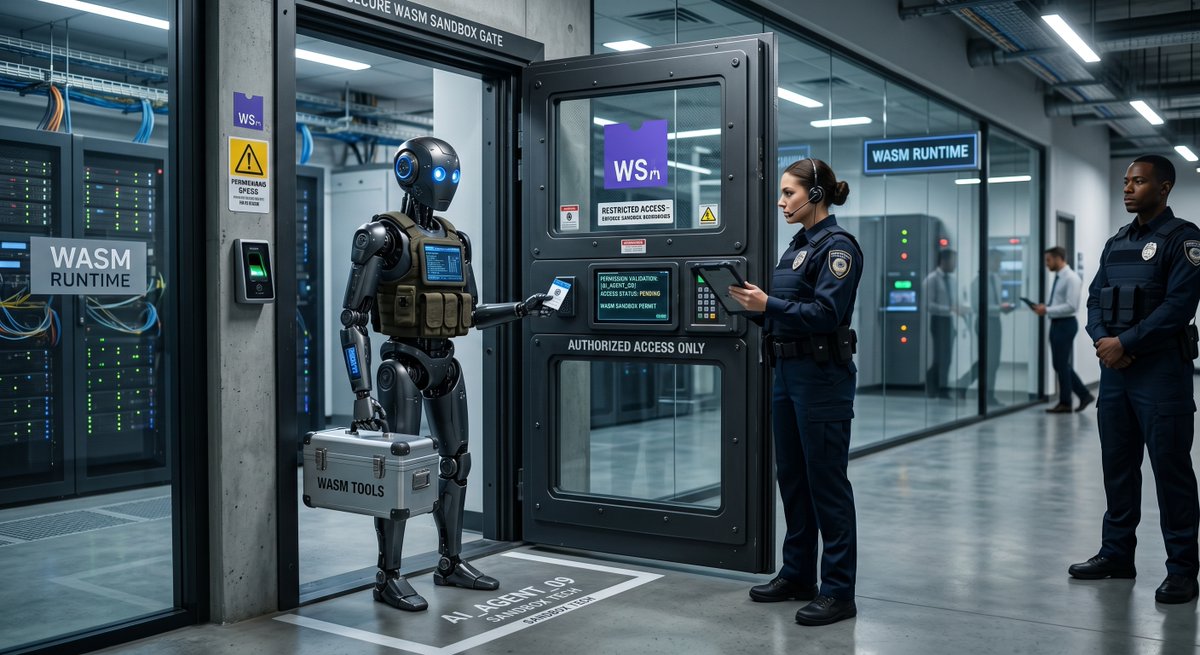
WASI 0.3 sounds boring but important. That is exactly why AI infrastructure teams should pay attention.
The Bytecode Alliance announced that WASI 0.3 is official. The WASI Subgroup ratified WASI 0.3.0, rebasing WASI onto the WebAssembly Component Model’s async primitives. In plain English: async is now native to WebAssembly Components, and runtime and toolchain support is starting to land.
This is not a model launch. There is no dramatic demo. Nobody is pretending a runtime spec has achieved AGI, which is refreshing.
But the AI-agent stack has a runtime problem.
Agents need to call tools, run code, touch files, query systems, and coordinate workflows. That sounds powerful until you ask the Day 2 questions.
1) Where does untrusted agent-generated code run?
2) What permissions does it get?
3) How do we isolate tools?
4) How do we make execution portable across clouds, edge locations, and enterprise environments?
5) How do we observe and revoke what the agent is doing?
WebAssembly is not the whole answer. But capability-scoped, portable components are a very plausible part of the answer.
WASI 0.3 matters because agent infrastructure needs more than orchestration frameworks and clever prompts. It needs secure execution boundaries, composable interfaces, and runtime standards that do not assume every workload lives in one vendor’s happy path.
This is especially relevant for healthcare, financial services, and regulated industries. The agent cannot just “take action” because a demo looked good. It needs a governed place to act.
The next phase of AI agents will be less about chat and more about controlled execution.
That means the boring plumbing may decide which agent platforms actually survive production.
#AIInfrastructure #AIAgents #WebAssembly #WASI #PlatformEngineering #CloudNative #EnterpriseAI
57

Jun 13
Mommy, that uncle stares at me #CryBaby. Get some spine
Jun 13

I’ve had a number of conversations with folks inside and outside government about the current situation with Anthropic, and here is what I believe to be true:
— As we know, Anthropic publicly released its Mythos class models earlier this week under the commercial name Fable.
— Fable is Mythos with guardrails. But if those guardrails fail, then you’ve exposed Mythos and its advanced cyber capabilities to people who shouldn’t have them. (Keep in mind that Anthropic itself widely promoted the idea that Mythos was a cyberweapon and needed to be regulated as such. They asked for government regulation of Mythos and championed the guardrails on Fable. If there is a vulnerability — big or small — it is Anthropic’s responsibility to patch.)
— A highly credible trusted partner of both Anthropic and the USG who was testing Fable came forward with a jailbreak of those guardrails. The Admin asked Dario to fix the jailbreak or de-deploy the model. Dario refused.
— In their blog post, Anthropic defended its decision by saying the jailbreak isn’t serious. That is not what the trusted partner and the USG believe; nor is that kind of minimizing language consistent with Anthropic’s brand as the AI safety company. It’s difficult to fathom how they could claim a jailbreak allowing operability of a cyber weapon could be defined as not “serious.”
— In the past, Anthropic has always said that safety must be top priority and taken super seriously. In this case, Anthropic prioritized the continued offering of the consumer model over safety.
— In reaction, the Admin issued the export control. The Admin did this reluctantly. It’s been very surprised that Anthropic hasn’t wanted to cooperate with a reasonable safety request (ie fixing the jailbreak issue). Anthropic’s reaction is very much at odds with their branding and ethos as a safe AI research community.
— The Admin’s hope now is that Anthropic remediates the safety issue, the export control is lifted, and Fable goes back into general release. The Admin wants all of this to happen as soon as possible. It is frankly bewildered that Anthropic hasn’t wanted to comply with safety requests that it previously said were its highest priority.
— Those trying to misdirect and tie this action to the prior DoW/Anthropic issues are wrong. The Admin values Anthropic’s technical capabilities and feels that this issue, while serious, should be easily resolved. The ball is in Anthropic’s court.
161
Jun 13
Democrats should be happy about Trump regime's actions on AI and other actions that are against traditional conservatism. It should give them the playbook to take on the vested interests in the industry. I hope people like @AOC are studying his playbook
46
Jun 13
Laughing at how David Sacks and his cronies are covering up the current regime's Fable 5 screwup by showcasing their stupidity in public. Oh well, what do you expect
96
Krish Subramanian retweeted

Jun 13
Crazy to see previously antiregulatory people suddenly fine with government shutdown of a company’s showcase product with zero public transparency.
Absent bipartisan and independent scientific oversight, the approach outlined below leaves (a) the government with too much room to be arbitrary and (b) business with too much reasons to worry about what might come next.
Jun 13
I’ve had a number of conversations with folks inside and outside government about the current situation with Anthropic, and here is what I believe to be true:
— As we know, Anthropic publicly released its Mythos class models earlier this week under the commercial name Fable.
— Fable is Mythos with guardrails. But if those guardrails fail, then you’ve exposed Mythos and its advanced cyber capabilities to people who shouldn’t have them. (Keep in mind that Anthropic itself widely promoted the idea that Mythos was a cyberweapon and needed to be regulated as such. They asked for government regulation of Mythos and championed the guardrails on Fable. If there is a vulnerability — big or small — it is Anthropic’s responsibility to patch.)
— A highly credible trusted partner of both Anthropic and the USG who was testing Fable came forward with a jailbreak of those guardrails. The Admin asked Dario to fix the jailbreak or de-deploy the model. Dario refused.
— In their blog post, Anthropic defended its decision by saying the jailbreak isn’t serious. That is not what the trusted partner and the USG believe; nor is that kind of minimizing language consistent with Anthropic’s brand as the AI safety company. It’s difficult to fathom how they could claim a jailbreak allowing operability of a cyber weapon could be defined as not “serious.”
— In the past, Anthropic has always said that safety must be top priority and taken super seriously. In this case, Anthropic prioritized the continued offering of the consumer model over safety.
— In reaction, the Admin issued the export control. The Admin did this reluctantly. It’s been very surprised that Anthropic hasn’t wanted to cooperate with a reasonable safety request (ie fixing the jailbreak issue). Anthropic’s reaction is very much at odds with their branding and ethos as a safe AI research community.
— The Admin’s hope now is that Anthropic remediates the safety issue, the export control is lifted, and Fable goes back into general release. The Admin wants all of this to happen as soon as possible. It is frankly bewildered that Anthropic hasn’t wanted to comply with safety requests that it previously said were its highest priority.
— Those trying to misdirect and tie this action to the prior DoW/Anthropic issues are wrong. The Admin values Anthropic’s technical capabilities and feels that this issue, while serious, should be easily resolved. The ball is in Anthropic’s court.
25
37
194
14,871

People replace their phones every ~4 yrs. This means there are hundreds of millions of old phones discarded each year that are still perfectly usable as computing devices. @Google in collabration with @UCSD is exploring how to turn these old phones into cloud-computing “phone clusters”. Putting phones back in service in this way can directly reduce the environmental footprint of computing by avoiding the need for further raw material extraction, and taking advantage of the embodied carbon already incurred from manufacturing these devices, and modern phones actually are already quite powerful computers. Read more in the blog below ⬇️
Jun 12

Today on the blog, we discuss a pathway for the second life of phones through the exploration of “phone cluster computing”, which can directly reduce the environmental footprint of computing by avoiding the need for further raw material extraction. More →goo.gle/4aJe5vO
144
502
5,129
572,564
Jun 13
David Sacks and his cronies criticized the Biden administration for restricting AI models (which was indeed a valid concern), but where are they when Trump is doing even worse than Biden by forcing Anthropic to halt Fable 5 for foreign citizens? If you take these people seriously, I am sorry
125
Jun 13
Humans 😅
Jun 12

USA has Claude
USA has ChatGPT
USA has Gemini
USA has Grok
China has Qwen
China has DeepSeek
China has Kimi
China has MiniMax
Europe has?
144
Jun 13
Imagine the noise from jokers like David Sacks and Elon Musk if a Democratic administration has done the same
Jun 13

The US government, citing national security authorities, has issued an export control directive to suspend all access to Fable 5 and Mythos 5 by any foreign national, whether inside or outside the United States, including foreign national Anthropic employees.
The net effect of this order is that we must abruptly disable Fable 5 and Mythos 5 for all our customers to ensure compliance.
Access to all other Claude models is not affected.
We apologize for this disruption to our customers. We believe this is a misunderstanding and are working to restore access as soon as possible.
Read our full statement: anthropic.com/news/fable-myt…
138
Jun 12
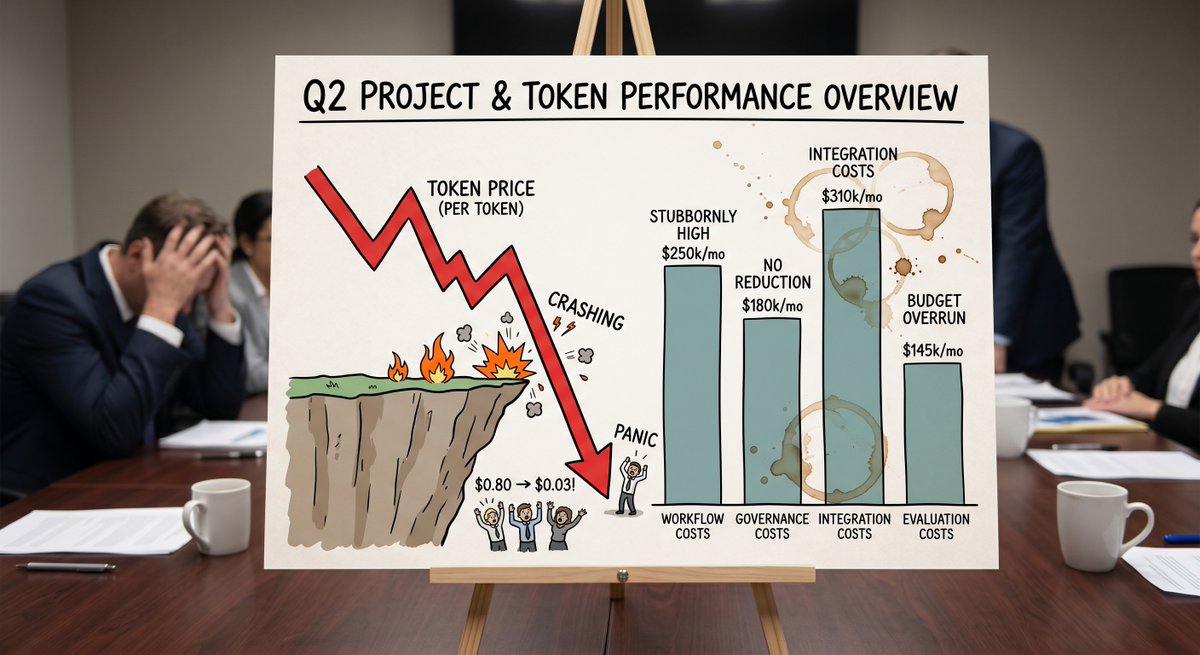
The AI price war is here (wsj.com/tech/ai/the-ai-price…). That is good news for buyers, but only if they understand what is actually getting cheaper.
The price competition is piling pressure on OpenAI and Anthropic. The story fits a broader pattern we have been seeing for months: model access is becoming less scarce, and buyers are getting more leverage.
Stating the obvious first: lower model prices help. Token costs matter, especially when companies move from pilots to production workloads.
But here is what people miss.
A cheaper model does not automatically make an AI system cheaper.
Most enterprise AI cost hides outside the model invoice. Integration costs. Data cleaning. Evaluation. Security review. Human review. Workflow redesign. Monitoring. Incident handling. Vendor management. The kind of work that does not look magical on stage, which is probably why it matters.
So the price war changes the buyer playbook.
If model prices keep compressing, enterprises should avoid architectures that lock too much logic into one provider. They should separate model selection from workflow design, evaluation, orchestration, and governance.
That does not mean model quality is irrelevant. It means the economic power shifts toward the layer that owns the workflow and proves the outcome.
For startups, this is uncomfortable but clarifying. If your moat is “we call a frontier model,” the market is coming for you. If your moat is domain workflow, proprietary evaluation data, trust, distribution, or operational integration, falling model prices may actually help.
When inference gets cheaper, does your advantage expand or disappear?
If the answer is disappear, you do not have an AI strategy. You have a temporary pricing artifact.
#AIStack #EnterpriseAI #OpenAI #Anthropic #AITransformation #AIEconomics #CIOMindset
1
82
Krish Subramanian retweeted

Jun 12
The experiment is flawed: the eval prompt orders the model to answer solely from retrieved memory, then scores that compliance as "sycophancy." Breakdown: blog.getzep.com/sycophancy-i… — Daniel, founder of Zep.
2
1
2
203