
3× solo SaaS founder. PMM, ex-Procore (founding UK&I, IPO). PMM product, same craft. Manchester.
Joined October 2011
- Tweets 22,366
- Following 4,457
- Followers 8,828
- Likes 181,750
2,519 Photos and videos





Kris retweeted

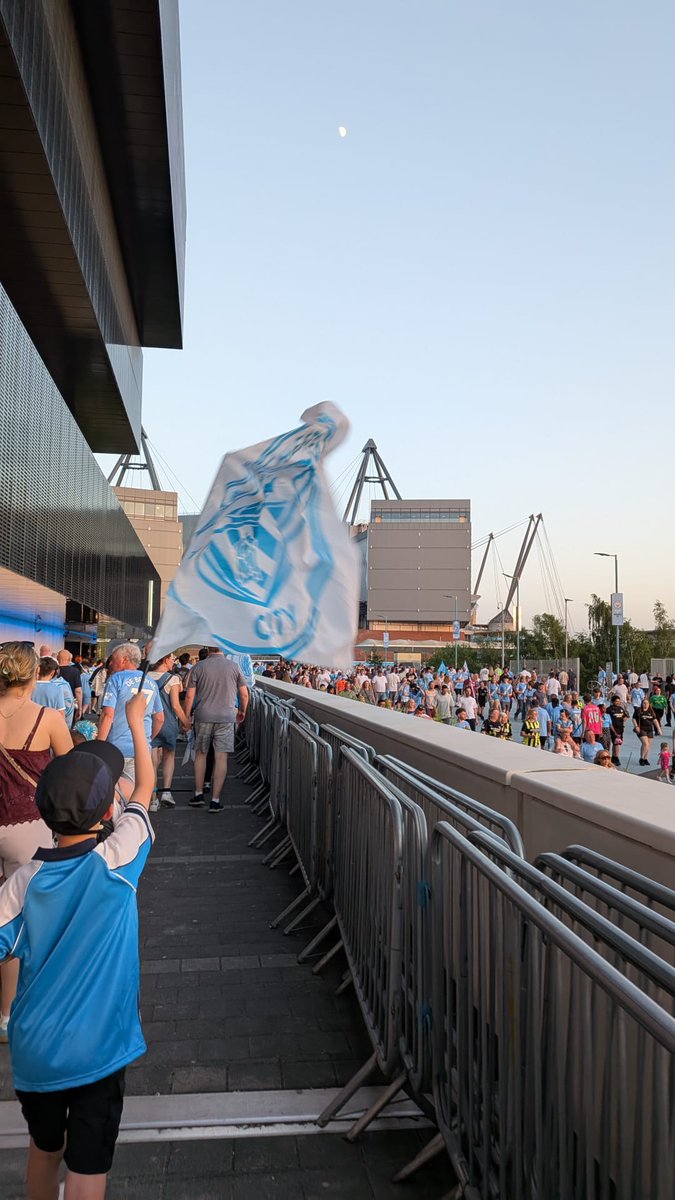
Pre-match in Arlington, Texas. Counting down to England’s World Cup opener against Croatia
19
118
1,422
82,678
Kris retweeted

9h
This is very good piece and begins to approach a central corruption at the heart of much of Britain’s journalism today, which is principally that the journalistic class as a whole asks Brits what they think of a contemporary issue and already have a higher status answer they want to hear but they know they won’t get.
They go and visit for a by-election, do a vox pop, hope for a viral moment with a less articulate member of the public, clip it, ask local politician to respond, clip that, debate it on Sunday political shows, clip that, show that clip to the next member of the public, and the cycle continues in different forms.
Very few journalists want to hear what British people think, or critically, why they think that. When asked why they are of the opinion that migration is too high or why things are too expensive, the average person doesn’t have a fully articulated, sense checked and factually correct answer. So they say something which has to usually be within the Overton Window, and if it’s slightly wrong, the journalist will ‘fact check’ them in real time or post. They don’t really pretend to care about the under-arching ‘why’ question. Why would you then engage with journalists as an ordinary person? The social costs are too high: most people inherently understand they are only one ‘got ya’ question away from losing their job or social standing.
This is not applicable to all journalists, obviously, and is largely a Lobby occurrence. But for a profession that works around humans every single day, I am often struck by how poorly so many of them understand human nature - perhaps because so many of the incentive structures in Westminster are so irregular.
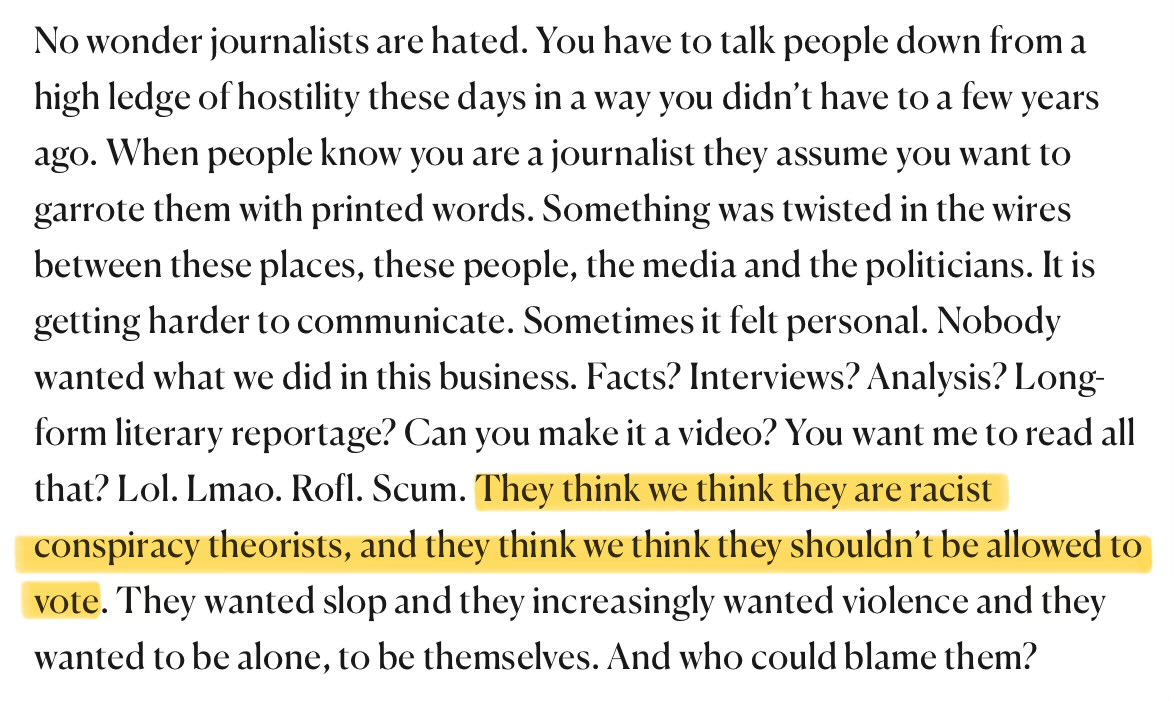

MAKERFIELD DAYS by @Will___lloyd
A season of superlatives was dawning over Makerfield, a collection of peri-rural suburbs, former pit villages and towns spread beneath Wigan. The vote was seismic. Historic. Make-or-break. The chance of a lifetime. Andy Burnham had staked his political future and the future of the Labour Party on a single vote against Reform UK’s Robert Kenyon, a plumber and former army reservist, burdened by a digital fossil record of embarrassing remarks about women. Makerfield was a constituency that, like Wigan itself, like so many other places with largely white, Brexit-voting, working-class populations, was speeding to the right. Win or lose, mayor or prime minister, Burnham was being run close – terribly close, given he was the most popular Labour politician in the country up against a man who, as one union apparatchik put it to me acidly, was “only as good as the last podcast he listened to”.
The constituents of Makerfield – trying their best, frowning at their bills, staring at Facebook, feeling uneasy in blunt ways that were hard to articulate in front of journalists – had woken up one morning to find themselves the most psychoanalysed population in Europe. Greater claims began to be made as the race went on. Makerfield was not simply Makerfield. It was, a prominent pollster argued, all of Britain: “A snapshot of the country in miniature.” And what kind of country was that?
I knocked on doors for several weeks. I drank in dust-furred community clubs and backstreet pubs. I ate half a dozen meat pies. I tried to speak to the Afghans and Kurds who adorned Wigan town centre in the middle of the day. I bumped into a squad of absurdly young men canvassing for Restore in the poorest parts of Abram. I watched the crowds at the women’s rugby league in Orrell and spoke to formidable local dignitaries who had spent decades trying to keep the area’s head above water. Burnham and Kenyon didn’t really interest me. Makerfield would be forgotten in a few weeks' time. The circus, self-involved and self-serving, would move on. Yet the people here matter. What interested me was not the race, but what was happening in people’s heads in Bickershaw and Platt Bridge and Hindley – what was happening to all of us right now that meant you could meet people seized by apocalyptic fears of race war and depressed social democrats living on the same street.
I have been sent all over the country in the past two years, trying to take its temperature, check its symptoms, diagnose its ills. I found that it was becoming harder to speak about the surreal things I saw and heard in a straightforward way. Every reporter I knew who was not too blind to see what was going on was struggling in the same way. They suffered from the same queasy, plunging intimation about where we were heading. I was tired of writing and speaking about the country like it was a “normal” place full of happy “normal” communities and cheeky “normal” Brits. Nothing I saw or heard seemed “normal”. Everything was changing.
Britain is a country where it’s easier to imagine where the next pogrom will happen than how a new high-speed rail line will be built. And I am sick and tired of the six-figure salary newspaper columnists who deny the country is broken on X while masked men go door to door in grand old cities, looking for homes and people to burn. Were they daft? Did they think they were clever?
Illustration by The Red Dress

2
6
42
5,634
Kris retweeted

"We didn't properly think through this ban, so we're going to try and ban more stuff next month, but we won't think through that either."
Jun 16

'We will make further statements in July about VPNs and further restrictions'
Technology Secretary Liz Kendall told #BBCBreakfast she will outline more details next month about the social media ban on under 16s in the UK - as well as additional restrictions on Virtual Private Networks, curfews and chatbots
bbc.co.uk/news/articles/c2ky…
4
9
50
2,166
Kris retweeted

Liz Kendall is another classic example of the career politician conveyor belt that dominates modern UK politics.
- Born 1971
- School
- History at Cambridge (ok, not PPE this is the best of her CV in my view)
- Think tank / policy roles (IPPR on health/early years/child development, researcher at King’s Fund)
- Special adviser (to Harriet Harman at Social Security, then Patricia Hewitt at Trade & Industry and Health)
- Charity / sector roles (Director of Maternity Alliance, Ambulance Services Network) because around half Labour MPs have to come from public advocacy positions - because, reasons
- MP for Leicester West (2010–present)
- Shadow ministerial roles (Health/Care under Miliband - lol, later Social Care and Work & Pensions under Starmer)
- 2015 Labour leadership candidate (Blairite lane, came DEAD LAST with ~4.5%)
- Secretary of State for Work and Pensions (2024–2025)
- Secretary of State for Science, Innovation and Technology (2025–present)
She has spent her entire adult life in the public sector, think tanks, charities, special adviser gigs, and politics with zero experience in the private sector, technology companies, engineering, computer science, startups, scaling businesses, or anything resembling building or commercialising actual technology/innovation. That she is now the government appointed minister for technology is absolutely mental but also entirely predictable.
Her background is overwhelmingly in health policy, social care, maternity, welfare reform, and early years - perfectly respectable areas I guess - but entirely unrelated to leading on AI, emerging tech, digital infrastructure, R&D strategy, or innovation policy for a G7 economy. Probably the last type of person you’d want as minister for technology at this crucial time as we pivot into the AI/automation age.
She has openly described herself as “a historian” rather than an engineer or computer scientist, and admitted she does not use AI in her professional work as the minister responsible for it (only personally for minor tasks). She’s doesn’t even use the tech! It’s just all so stupid.
This is precisely why critics argue she is (and many like her are) unfit for the role.
The Science, Innovation and Technology brief demands domain understanding of fast-moving, high-stakes technical fields critical to national security, productivity, and growth. Instead, we get another generalist reshuffled through the Fabian/public-policy/NGO carousel - floating between departments with 1-3 years per brief before being moved on, selected for political loyalty and ideological alignment over proven competence or real-world results in the sector they oversee.
The UK’s chronic productivity stagnation, brain drain, and struggles in tech/innovation aren’t mysterious to me or anyone with functioning grey matter. When the system systematically promotes people with no skin in the game of markets, risk, or delivery in the actual economy - and insulates them from feedback loops that punish failure - this is the predictable outcome. Liz Kendall’s career path is textbook evidence of the problem.
See many others - including my best mate Dan Tomlinson in HMT 🤣

I’m only occasionally harsh on Kendall talking about technology (see the £1.1bn for ‘AI Hardware’) because I thought she was being asked about things outside her brief.
I now see her job is Technology Minister and I want to apologise. I should have been more harsh, more often.
This is a ‘Harold Shipman, Minister for the Elderly’ situation. Dangerously dim, and with objectives in opposition to the brief.
26
83
400
37,165
Kris retweeted

I’m only occasionally harsh on Kendall talking about technology (see the £1.1bn for ‘AI Hardware’) because I thought she was being asked about things outside her brief.
I now see her job is Technology Minister and I want to apologise. I should have been more harsh, more often.
This is a ‘Harold Shipman, Minister for the Elderly’ situation. Dangerously dim, and with objectives in opposition to the brief.
Jun 16
'We will make further statements in July about VPNs and further restrictions'
Technology Secretary Liz Kendall told #BBCBreakfast she will outline more details next month about the social media ban on under 16s in the UK - as well as additional restrictions on Virtual Private Networks, curfews and chatbots
bbc.co.uk/news/articles/c2ky…
19
31
344
47,560

“we’ve heard the criticisms that you’ll be able to avoid total surveillance ID-for-internet-use system by using a VPN and have decided to go full china by formally banning those as well”
Jun 16
'We will make further statements in July about VPNs and further restrictions'
Technology Secretary Liz Kendall told #BBCBreakfast she will outline more details next month about the social media ban on under 16s in the UK - as well as additional restrictions on Virtual Private Networks, curfews and chatbots
bbc.co.uk/news/articles/c2ky…
19
144
4,915
Kris retweeted

Jun 15
Il n'y a pas "un VPN" à bloquer. Vous louez un serveur à 5 euros par mois chez Hetzner, DigitalOcean ou AWS, vous installez WireGuard ou OpenVPN en trois commandes, et vous avez votre propre VPN sur une IP que personne n'a sur sa liste de blocage. Un gamin de 16 ans fait ça pendant la page de pub.
Jun 15

"Interdire les VPN", c'est ne rien comprendre à ce qu'est un VPN.
Un VPN, ce n'est pas un produit, c'est un principe. Un tunnel chiffré entre votre machine et un serveur que vous choisissez. Votre trafic ressort avec l'adresse de ce serveur, point final. C'est de la cryptographie et du routage, rien d'autre.
Or ce tunnel chiffré, c'est exactement la même brique technique que le HTTPS de votre banque, le SSH de n'importe quel développeur, le réseau interne de n'importe quelle entreprise. Le chiffrement et le tunneling, ce n'est pas "le truc des hackers", c'est le socle de l'internet moderne.
Donc "interdire les VPN", au sens littéral, ça veut dire interdire les tunnels chiffrés. Et interdire les tunnels chiffrés, c'est casser le e-commerce, la banque en ligne, le télétravail, bref tout ce qui fait qu'internet fonctionne. Vous ne pouvez pas tuer l'un sans tuer l'autre.
Maintenant le concret, celui qui fait que c'est déjà perdu.
Il n'y a pas "un VPN" à bloquer. Vous louez un serveur à 5 euros par mois chez Hetzner, DigitalOcean ou AWS, vous installez WireGuard ou OpenVPN en trois commandes, et vous avez votre propre VPN sur une IP que personne n'a sur sa liste de blocage. Un gamin de 16 ans fait ça pendant la page de pub.
Vous pouvez bloquer les IP des fournisseurs commerciaux connus ? Ça ne change rien à l'auto-hébergé. Pour aller plus loin, il vous faut un pare-feu national avec inspection profonde des paquets et liste blanche de protocoles. Autrement dit la Chine, l'Iran, un appareil de surveillance de masse. Et même ça fuit en permanence (Shadowsocks, V2Ray, protocoles obfusqués qui imitent du trafic HTTPS classique).
Le choix réel est donc binaire. Soit votre interdiction est du théâtre, contournée en 48 heures. Soit vous construisez une Grande Muraille numérique, et même Pékin n'arrive pas à la fermer complètement.
Le fond du problème, c'est que ces gens légifèrent contre l'arithmétique. On ne vote pas une loi contre les mathématiques. Le tunnel chiffré existera tant que le chiffrement existera, et le chiffrement existera tant qu'internet existera.
Des bureaucrates qui n'ont jamais écrit une ligne de code de leur vie décident d'interdire une primitive cryptographique qu'ils ne savent même pas définir. Ils ont déjà perdu. C'est le poulet sans tête : ça continue de courir, mais la décision est déjà tombée.
234
871
6,170
410,196


Kris retweeted

Jun 15
If Leclerc was a footballer he'd be Ferran Torres
110
1,351
14,399
266,187
Kris retweeted

Jun 15
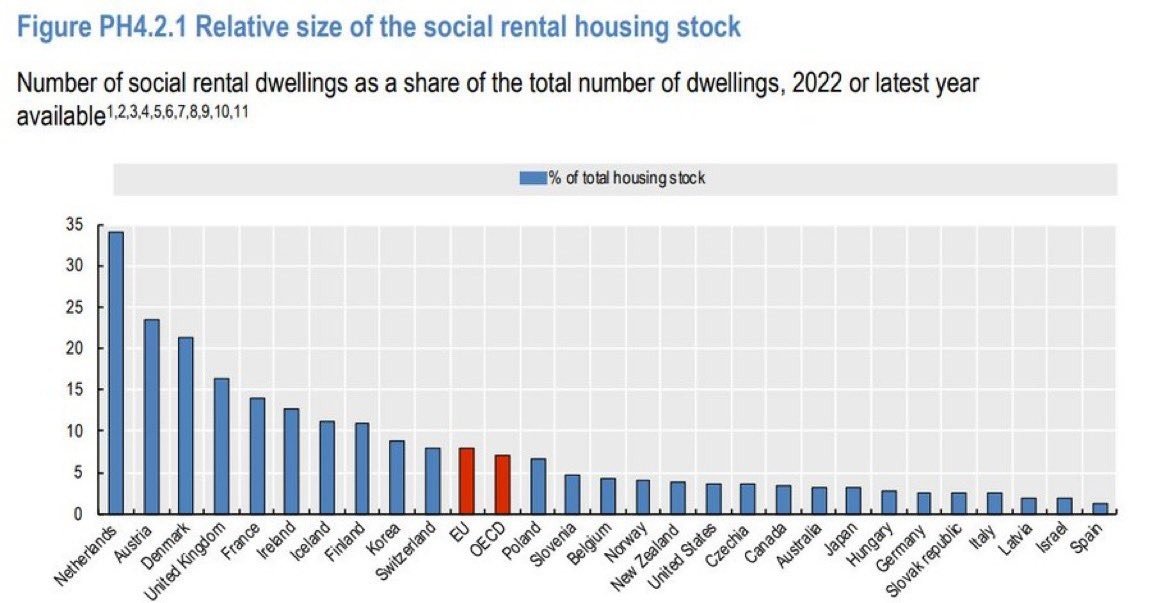
Britain has the:
- fourth highest level of social housing in the OECD
- and amongst the most generous levels of social housing subsidy of its comparitors
Yet our national debate pretends the exact opposite. We have a gigantic amount of social housing. The problem is too many people need to use it.
Jun 15

This is also something often ignored by people making cross-country comparisons. Other European countries with relatively high levels of social housing, like ours, all have social rents set much closer to market rents. It's ~70%-80% for Austria/Denmark/Netherlands.
22
60
434
40,191
Villa have spent an enormous amount of money and still have more or less the same team they came up with.
Jun 15

Finished 17th and were a whisker away from relegation by the way. Not a single soul can convince me that PSR wasn't made protect the big 6.
111
Kris retweeted

Jun 15
The UK economy basically works like this:
Get paid £2,000.
Give £900 to a landlord. Give £200 to the council. Give £150 to energy companies. Give £300 to supermarkets. Give £300 to car insurance and fuel.
Spend the rest surviving until next payday.
Then get lectured by someone who bought their house for £37,000 in 1988 about how you need to stop buying coffees and cancel subscriptions.
844
5,004
39,855
2,900,639
The "data sovereignty" racket is all Europe has left.
Jun 15

I once talked to a Mistral researcher who told me that even internally everyone just uses Claude Code or Codex.
I asked him how does the company survive given that it's models are so far from the frontier and he told me that Mistral hovers up contracts with all the major EU enterprises like Airbus and BMW. Likely with French government backing.
It is remarkable that the Germans and the English are letting the French get away with this. It seems both countries are too caught up with their own domestic issues.
If there were actual competition like in the Chinese ecosystem I imagine EU AI sovereignty might be somewhat of a realistic prospect.
74
Plus in Scotland in winter it's nighttime at 3 in the afternoon
Jun 15

Something worth acknowledging in considering the (im)practicalities of the proposed nighttime social media curfew is the significant number of 17 year-olds at Scottish universities. Their classes may be timetabled until 6pm, and some learning resources may be on YouTube.
1
307
This is going to help a generation of kids discover Linux

🚨Labour confirms ID requirement at device level - VPNs useless.🚨
By forcing Apple and Google to verify age at the device level during phone setup…
Keir Starmer’s government isn’t protecting kids — it’s building a surveillance infrastructure.
The OS itself will restrict platforms like TikTok, Instagram and X, making VPNs largely useless because the block happens before any traffic leaves your phone.
🚨Once every device carries a verified age profile, authorities gain an easy route to identify users through legal requests to tech firms.
This is digital ID by the back door, sold as child safety.
Classic Labour: expand state control first, ask questions later.
thetimes.com/uk/politics/art…
206
Kris retweeted
Jun 15
I can't believe I'm sharing this, but here is 13 year old Tom, vlogging on his youtube channel from his bedroom.
This a video from a channel long since shut down, from the year of our lord 2010.
None of it is my proudest work - but I got better as I got older. I learned skills and made friends, some of whom I still know to this day.
Making these silly videos over time taught me so much about video editing, talking to cameras, and being effective on social media. I failed a lot before I got better. But I had the chance to try. I developed skills that have helped me enormously in adult life.
Had I not been able to make silly videos on youtube - and get motivated/excited about thousands of people watching them - my subsequent life would have certainly looked very different.
Some might argue that would have been for the better, but it would have certainly been for the more boring.
282
272
4,185
493,920