
Retweets not endorsements, all views personal
Joined June 2009
- Tweets 109,330
- Following 1,734
- Followers 852
- Likes 6,076
5,021 Photos and videos













Quixotic Quagmires retweeted

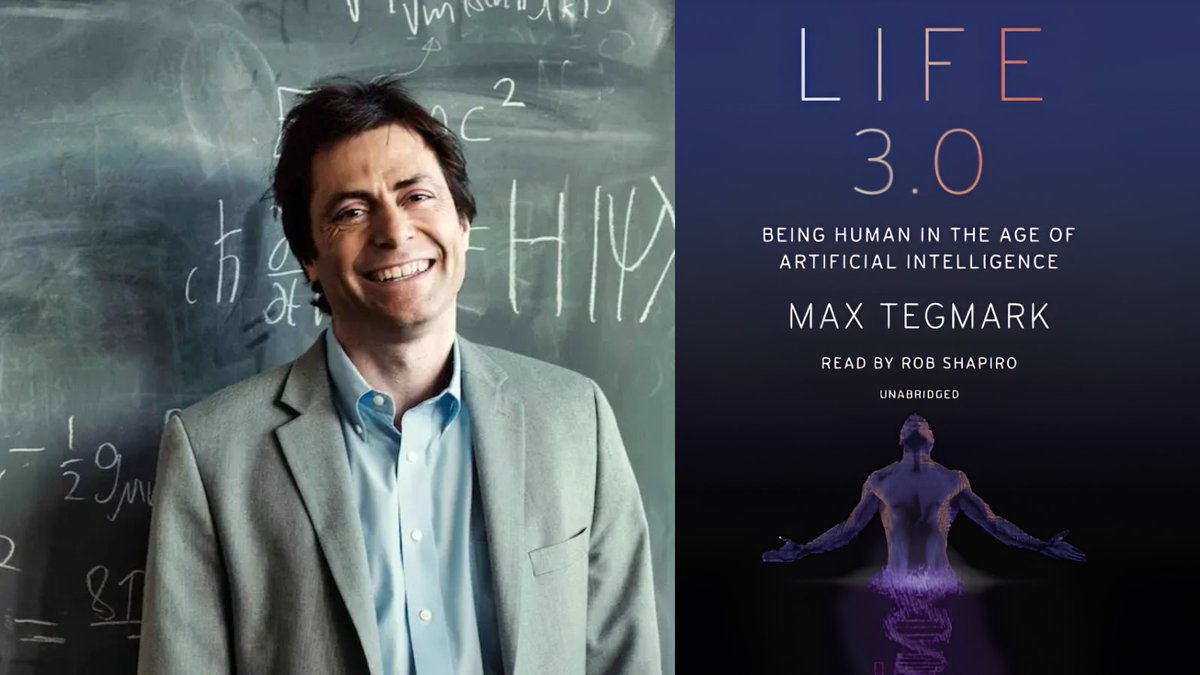
An MIT physicist spent 3 years writing a book that Demis Hassabis the man who just won the Nobel Prize calls one of the most important books he has ever read, and the reason it scared me is that it does not argue about whether AGI is coming. It assumes it already did.
His name is Max Tegmark. The book is called Life 3.0.
I picked it up at midnight on a Tuesday thinking it would read like a philosophy textbook. It does not. It reads like a very calm person explaining exactly how the planet might end, in the same tone a pilot uses to describe turbulence.
Here is what he actually argues, and why the argument is the part that stays with you.
Tegmark opens by distinguishing three types of life. Life 1.0 is biology. You are born with your hardware and your software already installed. A spider does not choose to spin a web. It runs the program evolution gave it. Life 2.0 is what humans are.
You get the hardware from biology, but you can rewrite your own software. You learn a new language. You read a book that changes how you think. You are, in his framing, the only thing on Earth that can redesign its own mind from the inside.
Life 3.0 is what comes next. A system that can redesign both its hardware and its software. That upgrades itself faster than any external force can contain it.
He does not say this is inevitable. He says it is the most important question we have ever faced, and we are answering it by accident.
The part that hit me hardest was not the scary scenario. It was the one he calls the beneficial AGI scenario. The version where it goes well. He walks through what a world run by a system far more intelligent than any human might actually look like, and the discomfort is that even the good version requires you to completely let go of the assumption that humans will be the ones making the decisions that matter.
He is not a pessimist. That is the thing most people get wrong about this book. Tegmark spent years building the Future of Life Institute specifically because he believes the outcome is not determined. He believes the decisions being made right now, inside a small number of labs, by a small number of people, will echo for the rest of human history in either direction.
The chapter on consciousness floored me. He argues that consciousness is not some spiritual phenomenon that biology invented. It is what certain types of information processing feel like from the inside.
Which means if you build a system that processes information in the right way, you do not get an unconscious machine. You might get something that experiences existence. That feels things. And we have no idea how to check.
The chapter on power is the one I keep thinking about. He asks a simple question. If a system becomes more intelligent than every human combined, what mechanism exists to make sure it does what we want? Not because it is evil. Because misaligned goals are not a character flaw. A system optimizing hard for the wrong thing will cause catastrophic harm without malice, the same way a river does not hate the valley it floods.
He runs through twelve different scenarios for how AGI ends up shaping the century. Some are utopian. Some are not. What they share is that the outcome in every single one is determined not by the AGI itself, but by the decisions made before it arrives. Who controls it. What values were baked into it. What oversight was built before anyone had the leverage to build it afterward.
The thing Tegmark says that I have not been able to shake is this. The most dangerous assumption is that someone else is thinking about this carefully. The labs are moving fast. The researchers are brilliant. And the question of what we actually want from this, at the level of civilization, has barely been asked.
Demis Hassabis built the system that folded two hundred million proteins. He recommended this book. That should tell you something about what the people closest to this think is worth your time.
Life 3.0 does not leave you with answers. It leaves you with the specific, uncomfortable feeling that the questions are more urgent than most people realize, and that the window to ask them at the right scale is shorter than it looks.
I finished it at 4am and sat there for a while doing nothing.
That is either a good sign about the book or a bad sign about everything else.
What is the one AI book that genuinely changed how you think about where this is all going?
12
77
316
20,759
Quixotic Quagmires retweeted

She's 22 and a16z just led her $21M round. Her AI is live inside the Fortune 100.
"I work every waking second, 7 days a week, and I've never been happier."
17 minutes of an unreal story, from youngest hedge fund quant to funded founder in 2 years.
worth more than most of the startup advice on your feed.
watch it, then read the article below.

16
16
121
18,047
Quixotic Quagmires retweeted

¿Sigues saboteándote a ti mismo y no sabes por qué?
En 2011, Mel Robbins soltó una bomba de honestidad brutal en una charla que ya tiene 34 millones de vistas:
“Cómo dejar de sabotearte a ti mismo”
Lo más fuerte que dijo fue esto:
· No estás “atascado”. Estás evitando.
· Tu cerebro te sabotea por diseño.
· La acción siempre vence a la emoción.
Si hoy otra vez estás procrastinando, perdiendo tiempo o sintiéndote culpable… este hilo te va a doler (pero te va a ayudar).
Aquí tienes 12 lecciones poderosas para dejar de autosabotearte de una vez 🧵👇
19
306
1,349
106,593
Quixotic Quagmires retweeted

Jun 13
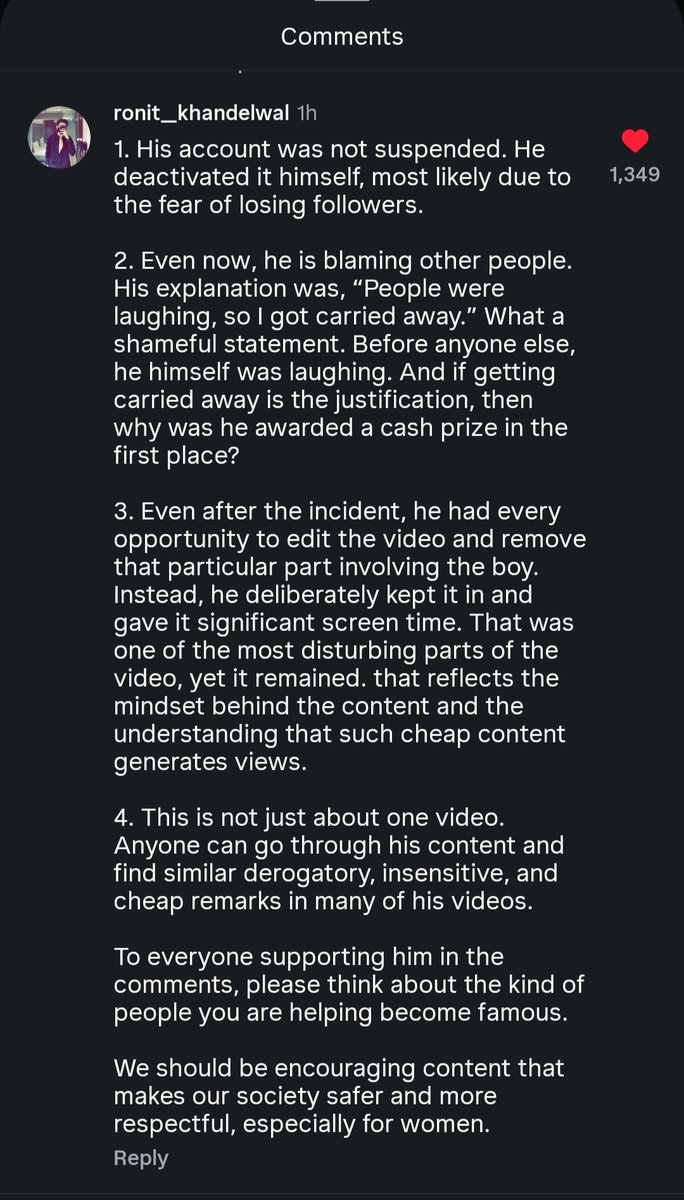
This comment was posted by a guy on Pranit’s apology video, but Pranit deleted it probably because he felt it was exposing him. The guy actually made a very valid point.
#pranitmore
64
800
4,930
286,903
Quixotic Quagmires retweeted

Jun 11
1. Childhood Context Decoder
My birth date is [DD/MM/YYYY]. Using global events, cultural shifts, and generational psychology, describe the most common childhood experiences of people born during this period. Focus on shared influences, formative environments, and how these shaped mindset, behavior, and early identity.
1
5
43
44,900
Quixotic Quagmires retweeted

Jun 10
A reminder that most of what we worry about never actually happens
159
1,318
8,440
662,072
Quixotic Quagmires retweeted

Jun 9
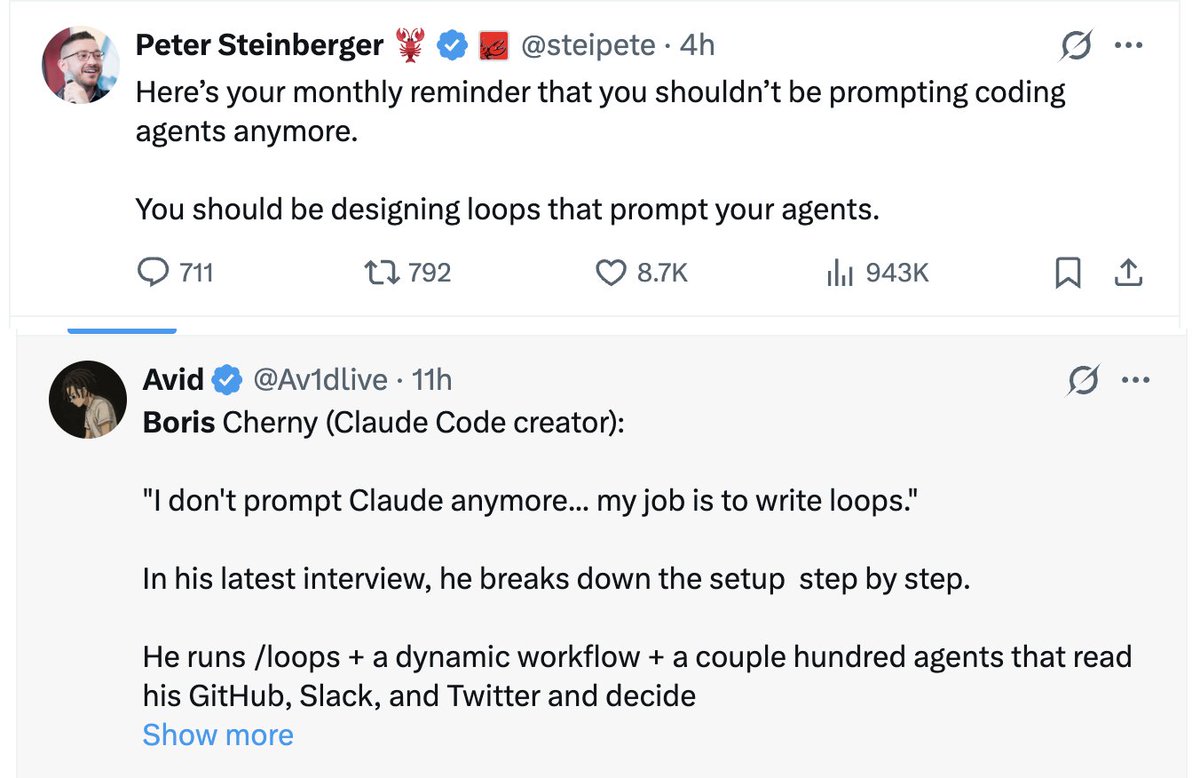
Anthropic and OpenAI are both telling engineers to write loops.
Not prompts.
Not agents.
Loops.
That is not a coincidence.
When the two most important AI labs on the planet independently converge on the same pattern — that is a signal worth paying attention to.
Most engineers are still thinking in terms of single calls.
Input → model → output.
The engineers winning in 2026 think in cycles.
Output becomes input. The model evaluates its own work. The loop runs until the result is right.
This is the complete breakdown of what loops are, why they matter, and how to build them ↓

191
447
3,989
1,514,805

Elon Musk literally broke down his 5-step process for applying first-principles thinking to build anything:

34
525
2,949
590,783
Quixotic Quagmires retweeted

Jun 9
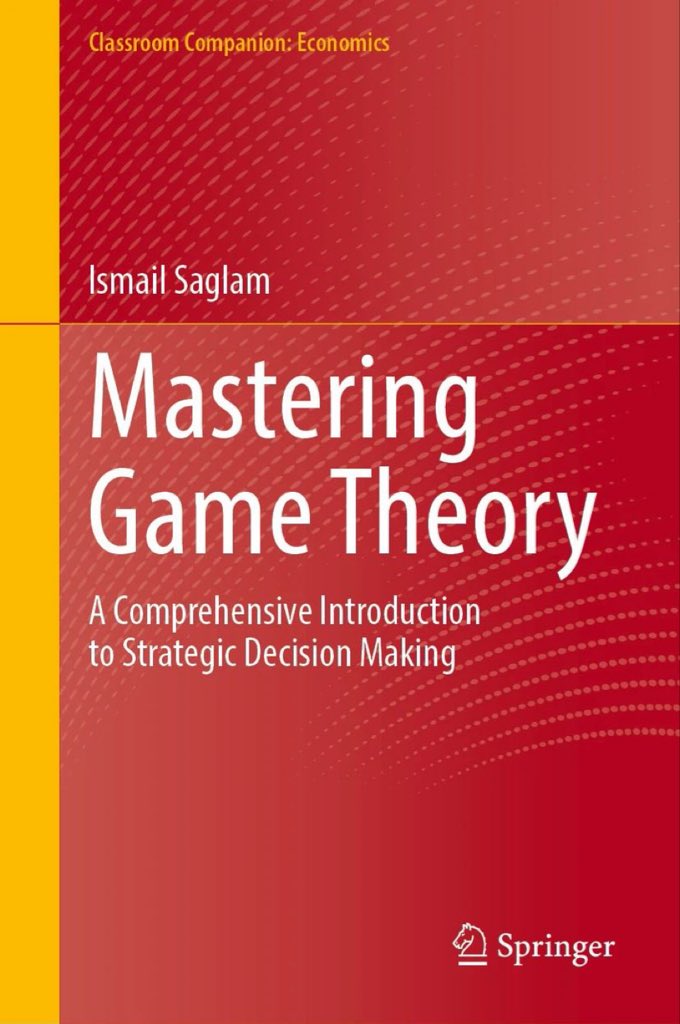
This book is going to revolutionize the way an entire generation thinks:
16
250
1,847
56,351

Quixotic Quagmires retweeted

Jun 8
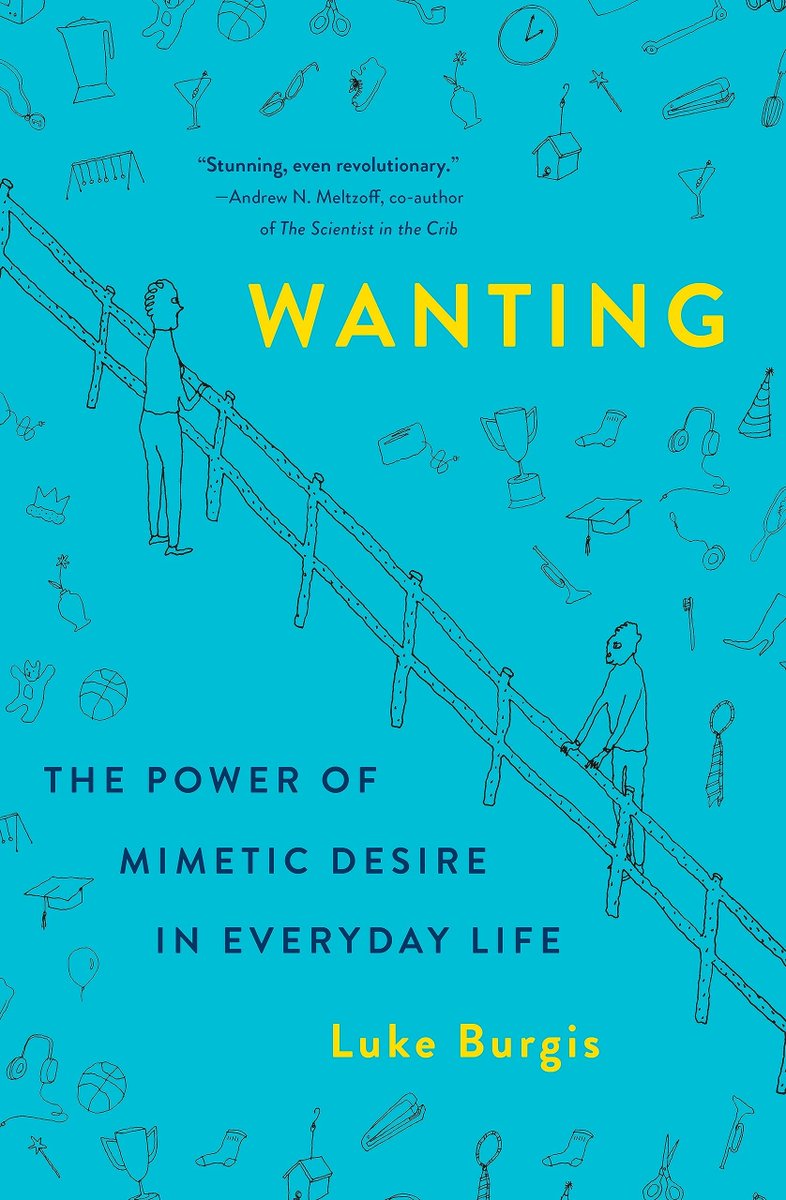
7 books that'll rewire how you view ambition:
1) Wanting by Luke Burgis
2
88
439
26,194
Quixotic Quagmires retweeted

Jun 7
🚨Anthropic just showed a 24-minute workshop on how to actually do prompts for Claude.
Taught by the people who built it.
Free. No registration. No paywall.
I've seen $300 courses that don't cover what they teach in the first 8 minutes.
Watch it and bookmark it now.
53
421
3,230
549,542
Quixotic Quagmires retweeted

Anthropic engineer:
"You're not supposed to prompt Claude. You're supposed to build a system that prompts itself."
this is one of the best workflows I've seen in a long time
in this video he breaks down exactly how most people are using Claude:
- the 14% you lose to CLAUDE.md before typing a word
- the plugins that 95% of users have never installed
- the caching setup that keeps it at 95% hit rate and almost free
- why starting every chat from zero is the slowest way to use Claude
if you've been using Claude for more than a month and never left the chat window, you've been using one project when you could be running a team of them
instead of another show tonight, watch this
make sure to bookmark it before it gets lost in your feed
full guide in the article below

111
829
7,139
1,272,471
Quixotic Quagmires retweeted

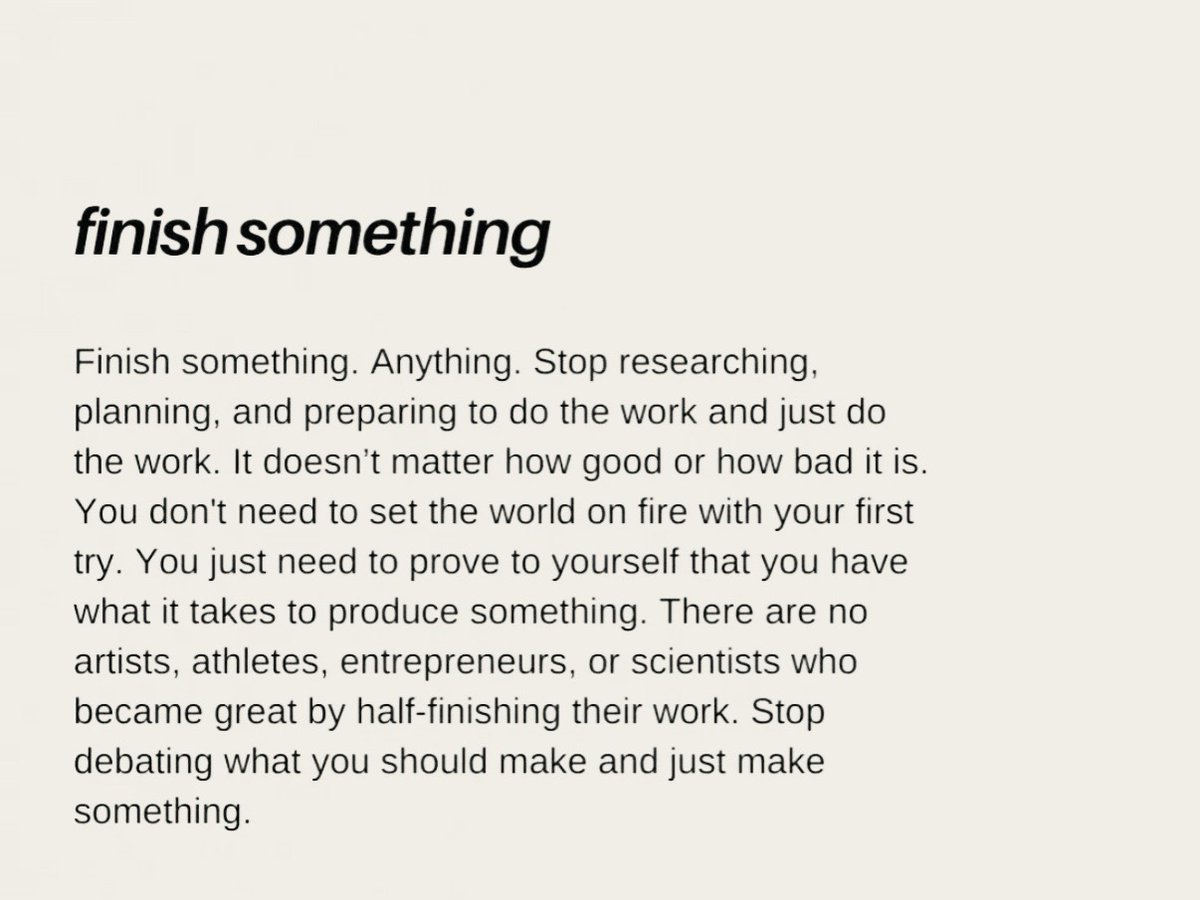
Finish something.
21
392
1,983
40,542
Quixotic Quagmires retweeted

Jun 6
Reminder: class is in session. It's called LIFE. Don’t waste a minute.
— from Saint-Tropez, with love
439
1,362
16,177
1,520,588

Enterprise AI stalls because it owns data but not the operating/behavioral/business context that makes agents reliable.
6
Quixotic Quagmires retweeted

Jan 22
54
340
4,945
1,912,778
Quixotic Quagmires retweeted
Jun 3
This lady tells 1 year of studying quantum physics in under 60 seconds:
Quantum physics isn't just science; it's logical spirituality.
100
740
3,862
219,009
Quixotic Quagmires retweeted
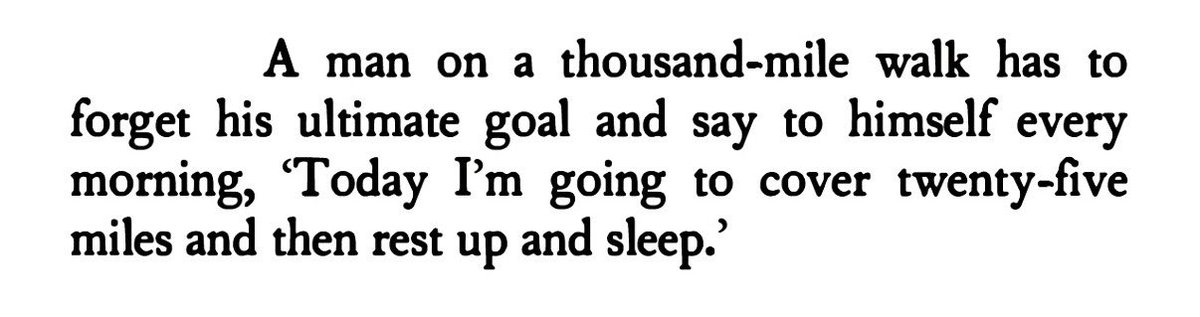
Tolstoy’s advice to achieve a long term goal:
25
838
6,066
104,704
Quixotic Quagmires retweeted

Jun 1
Things you shouldn’t miss if you’re in Ooty (slow-living version) 🌻
- Stay in a 120-year-old colonial bungalow
- Travel via local buses( cannot rent vehicles) the routes are insanely scenic, the playlists are elite, and tickets cost barely 10/-
- Avoid crowded spots like Botanical Garden and Lake. Instead, spend your evenings catching sunsets at Sunset Boulevard and in the tea estates 🍃
-Take the toy train early in the morning from Coonoor to Ooty. The views are surreal(Book tickets 2–3 weeks in advance)
-For food, don’t leave without trying Blooming Garden Cafe, Earl’s Secret, and Cafe Sugar Dribble 💕
-Don’t miss chai from the local chai tapris ✨




27
27
1,049
78,131