
Christian, husband, dad, creator of Moq and other developer tools and libraries. Also known as 'kzu' (like 'kah-zu' rather than 'kzoo' :))
Joined November 2007
- Tweets 14,165
- Following 856
- Followers 3,438
- Likes 13,960
1,308 Photos and videos





Pinned Tweet

13 Mar 2020
I think every company should have a #fridathon policy, to foster innovation, energize teams and improve morale cazzulino.com/fridathon. I'm realizing the term might actually stick, so I'm giving it a permalink, hehe :)
3
4
24
Glad to see more people recognizing what @JMilei said just a couple years ago in Davos.
Unfortunately, we still have journalists reporting that taxes is State's money. It's not. It's YOUR money, which would be best put to use by yourself rather than a bureaucrat.
Jun 12

Tout le monde devient fou parce qu'Elon Musk a une fortune de 1 000 milliards de dollars.
Très bien. Faisons les comptes, calmement.
L'État fédéral américain dépense 7 000 milliards de dollars par an. La fortune entière d'Elon, accumulée sur 30 ans de travail, représente 52 jours de dépenses de Washington. L'État français dépense 1 700 milliards d'euros par an, 57% du PIB, record absolu du monde développé. La fortune d'Elon, c'est 7 mois de dépenses publiques françaises.
Maintenant, la question que personne ne pose : qu'est-ce que chacun a produit avec cet argent ?
Washington, avec 7 000 milliards par an : un déficit de 1 800 milliards, une dette de 38 000 milliards, et des intérêts de la dette qui dépassent désormais le budget militaire. La Californie de Newsom a brûlé plus de 15 milliards dans un train à grande vitesse qui n'existe pas. La NASA a dépensé plus de 24 milliards pour développer le SLS, une fusée jetable à 4 milliards le lancement.
La France, avec 1 700 milliards par an : un hôpital en crise permanente, une école qui s'effondre dans les classements internationaux, 3 400 milliards de dette, et pas une seule entreprise technologique de rang mondial créée en 25 ans.
Elon, avec une fraction microscopique de ces budgets : le Falcon 9 développé pour environ 400 millions de dollars, là où la NASA estimait elle-même qu'il lui en aurait coûté 4 milliards. Dix fois moins cher. Des fusées qui atterrissent. Le coût du kilo en orbite divisé par 20. Starlink qui connecte des millions de personnes que les plans d'aménagement du territoire ont oubliées pendant 40 ans. Tesla qui a forcé toute l'industrie automobile mondiale à basculer vers l'électrique, ce que 30 ans de COP et de subventions n'avaient pas réussi à faire.
Donc récapitulons. Les États ont des moyens 10 à 50 fois supérieurs, le monopole de la loi, le monopole de l'impôt, et des décennies d'avance. Elon a beaucoup moins de moyens, zéro pouvoir de contrainte, et il surperforme tout le monde, dans tous les domaines où il entre.
Ce n'est pas un hasard. C'est structurel. Quand un entrepreneur alloue son propre argent, chaque erreur lui coûte personnellement, donc il apprend vite. Quand un bureaucrate alloue l'argent des autres, chaque erreur est invisible, diluée, et souvent récompensée par un budget supplémentaire l'année suivante. L'un a une boucle de feedback, l'autre n'en a pas.
La conclusion s'impose d'elle-même : le pouvoir de créer des systèmes dans le monde réel doit TOUJOURS être donné aux entrepreneurs qui allouent leur propre argent. Pas parce qu'ils sont meilleurs moralement. Parce qu'ils sont les seuls à payer le prix de leurs erreurs, et donc les seuls capables de corriger.
Milei a TOUT compris. Re-regardez son discours de Davos. "L'État n'est pas la solution, l'État est le problème lui-même." Tout le monde a ri en 2024. L'Argentine est sortie de l'hyperinflation pendant que la France cherche encore 40 milliards d'économies qu'elle ne trouvera jamais.
L'histoire ne juge pas les intentions. Elle juge l'allocation.
98
Jun 13
I think he's way more real world Hank Rearden than Tony Stark, TBH. 🚀
3
238
Daniel Cazzulino 🇦🇷🗽 retweeted

Jun 12
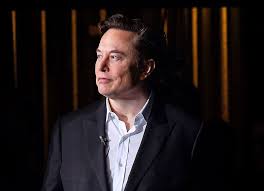
Quand un record du monde tombe, il retombe presque toujours dans les 12 à 24 mois qui suivent.
Ce simple fait statistique explique pourquoi Elon Musk, en devenant trillionnaire, est en train de créer un anticorps au bullshit ambiant et à l'empire du mensonge. Laissez-moi vous expliquer.
Le record du 100 mètres a stagné pendant des années, puis Bob Hayes passe sous les 10 secondes en 1964, et soudain tout le monde y arrive. Le mile en moins de 4 minutes était considéré comme physiologiquement impossible. Bannister le fait en 1954. Deux mois plus tard, Landy le bat. Aujourd'hui, des lycéens le font.
Pourquoi ? Parce que les records ne sont pas des limites physiques. Ce sont des limites mentales. Le record ne dit pas "voici ce qui est possible", il dit "voici ce que quelqu'un a osé croire possible". Et une fois que quelqu'un l'a fait, le désir devient mimétique. Des milliers d'esprits se réorganisent instantanément autour de la nouvelle référence.
Elon Musk vient de devenir le premier trillionnaire de l'histoire.
Et tout le monde regarde le chiffre. Personne ne regarde ce que ce chiffre vient de faire dans la tête de chaque milliardaire de la planète.
Hier, "milliardaire" était le sommet du jeu. Aujourd'hui, c'est le camp de base. Il y a environ 3000 milliardaires sur Terre qui viennent de se réveiller avec une seule question en tête : comment je deviens trillionnaire ?
Et c'est là que ça devient magnifique. Parce que la réponse à cette question n'a rien à voir avec les méthodes qui ont fait les fortunes du 20ème siècle.
Tu ne deviens pas trillionnaire avec des montages financiers. Tu ne deviens pas trillionnaire en capturant un régulateur. Tu ne deviens pas trillionnaire en finançant des ONG qui fabriquent les problèmes que tu prétends résoudre. Ces méthodes plafonnent. Elles extraient de la valeur d'un gâteau fixe, et un gâteau fixe ne produit pas de trillion.
Pour devenir trillionnaire, il n'existe qu'un seul chemin, et Elon vient de le tracer :
Être pro-humain. Le trillion vient de produits que des milliards de gens veulent vraiment. Pas de subventions, pas de rentes, pas de captation. De la demande réelle, à l'échelle de l'espèce.
Être contre le contrôle. Chaque couche de contrôle est une taxe sur la vitesse d'exécution. Les empires de connivence sont lents par construction, parce qu'ils dépendent de la permission. Le trillion appartient à ceux qui construisent plus vite que la bureaucratie ne peut interdire.
Être expansionniste. Le trillion n'existe pas dans un monde à somme nulle. Il exige de créer des marchés qui n'existaient pas : l'orbite, l'énergie abondante, l'intelligence artificielle, la robotique généraliste. Il faut agrandir le terrain de jeu, pas redistribuer les miettes.
Et voici le détail que presque personne n'a vu : pour suivre ce chemin, la plupart devront construire au-dessus de l'infrastructure d'Elon. Starlink, les lanceurs, le compute, l'énergie. Il n'a pas seulement battu le record. Il a privatisé la piste d'athlétisme et il vend des tickets d'entrée à tous ceux qui veulent courir.
La conséquence systémique est énorme : Elon est en train de détoxifier la richesse.
Pendant des décennies, le capitalisme de connivence et le capitalisme de corruption étaient les voies royales vers l'extrême fortune. Lobbying, capture réglementaire, philanthropie stratégique qui achète le silence. Devenir ultra-riche était devenu suspect, parce que c'était souvent suspect. L'empire du mensonge prospérait précisément parce que mentir était plus rentable que construire.
Le standard trillionnaire rend ces méthodes obsolètes. Non pas par la morale, mais par les mathématiques. La corruption rapporte des milliards. Seule la création rapporte des trillions. L'incitation la plus puissante de l'histoire du capitalisme vient de basculer du côté des bâtisseurs.
C'est ça, l'anticorps. Il ne nécessite ni loi, ni régulateur, ni révolution. Juste un homme qui a couru plus vite et qui a montré le temps sur le chrono.
Bannister n'a pas seulement battu un record. Il a libéré tous les coureurs qui venaient après lui.
Dans les 24 prochains mois, regardez les milliardaires de la planète réallouer leur capital vers l'espace, l'énergie, l'IA, la robotique. Pas par vertu. Par mimétisme. Le désir de l'homme le plus riche du monde devient le désir de tous ceux qui veulent le devenir.
Je n'ai jamais été aussi optimiste de toute ma vie.
83
435
1,302
45,321
Jun 12
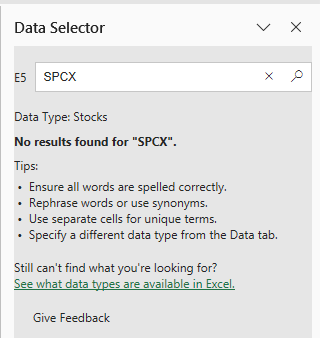
The day of the most historic IPO ever, and @Microsoft @Office does not know what the $SPCX symbol is for the Data Type: Stocks?!?! #FAIL
1
171
Jun 12
And this is how Grok (and AI more generally) destroy myths by politicians looking to get some votes with good sounding slogans.
And you need a smart prompter too, of course, to pull the unbiased truth from a simple question.
What a time to be alive!
Jun 12

So, in other words, if a family had been willing to accept a small percentage of the financial risk that Elon Musk did, they would have earned so much that they effectively paid no tax at all from their point of view?
110
Jun 11
El robo son los impuestos 🎯
Jun 11

Todo bien con la critica a Adorni, pero tampoco perdamos el norte. Los impuestos son un robo.
90
Daniel Cazzulino 🇦🇷🗽 retweeted

Jun 11
The metric I keep coming back to for SpaceX is $/Mbps to orbit
Starlink exists because Falcon 9 dropped bandwidth deployment costs ~10x to ~$6.55/Mbps. That’s about to drop again to just $0.30/Mbps because of Starship.
A business that is doubling users annually with a 63% adjusted EBITDA margin is about to cut their biggest cost by 95%… It really seems like people don't understand the implications of this.
The math assumes a reusable Falcon 9 launch is 17 tonnes at $1,000/kg and 2,600 Gbps per launch. Starship is targeting 100 tonnes at under $185/kg and 61,000 Gbps per launch. That's $17M for 2,600 Gbps ($6.55/Mbps) verse $18.5M for 61,000 Gbps ($0.30/Mbps).
Starship's additional volume allows for larger satellites, enabling simultaneous gains on multiple cost curves. The math suggests V3 satellites are ~600 Mbps/kg vs ~150 Mbps/kg from V2 mini.
Combining the 4x improvement on satellite bandwidth density with a 5x improvement in launch gets you the 20x improvement to 30 cents per Mbps to orbit.
These are fairly conservative assumptions because launch probably comes in even lower as Starship ramps, and satellite improvements probably keep coming. At $0.10 / Mbps, $1 billion spend on launch represents 10,000 Tbps or about 15x the bandwidth of Starlink's constellation today.
$1B is 90 days of operating income for Starlink... at it's current scale...
Yeah, I really don't think people are getting this. Starlink is the internet now.
195
404
4,061
360,547
Jun 10
Absolutely mind boggling. First real product that builds its own UI at the users' request.
Jun 9

The new canvas feature of the @GitHub Copilot App is pretty 🔥.
You can just create any app interface you need on the fly.
Here's a canvas that show all my worktrees for a project & how far they've diverged from main.
1
186
Daniel Cazzulino 🇦🇷🗽 retweeted

Jun 9
The new canvas feature of the @GitHub Copilot App is pretty 🔥.
You can just create any app interface you need on the fly.
Here's a canvas that show all my worktrees for a project & how far they've diverged from main.
10
21
146
42,454
Jun 10
🇦🇷🚀According to @UNICEF, the government of @JMilei lifted 1.2 million children and adolescents out of poverty in 2025 and reduced by 52% the number of them living in *extreme* poverty.
This is what the "extreme far-right" does when statism is slashed.
batimes.com.ar/news/argentin…
57
Daniel Cazzulino 🇦🇷🗽 retweeted

Jun 9
I am pleased to announce day 1 support for Anthropic Fable 5 in Netclaw, because we aren't absolute clowns and source our model catalogs directly from their upstream providers so this is literally never a problem with our platform.
Please, pretend it's a huge accomplishment and give us lots of likes and retweets.

ALT Just doing Netclaw things
4
10
57
3,759
Jun 10
Investing in @SpaceX in 2020 might end up being even better than investing in @Tesla in 2016.
What a ride thanks to @elonmusk. Looking forward to the next decade 🚀
Jun 9

There has been a lot of hand wringing on the appropriate valuation of SpaceX. Some large institutions believe SpaceX can only be valued at half what the market seems to be willing to pay for it. Others are claiming it has 15X appreciation ahead of it.
Almost all of this difference of opinion comes down to how comfortable you are modeling beyond 2030 and what valuation method you use.
2030 valuation using a traditional Gordan DCF produces a very different result than a 2040 EV/EBITDA Multiple. Both have pros and cons. Most analysts don’t really discuss this and lead with a headline number.
We are very comfortable modeling out to 2040, as large portions of what SpaceX is proposing is real world infrastructure, which provides modelable physics constraints to anchor against.
The analysis we released today explores this in-depth, its open to the public all the way through IPO. I highly encourage you check it out prior to then.
research.33fg.com/analysis/s…
We’ve run 5,000 monte carlo runs across 500 variables (real number, even though it sounds fake) and three valuation methods.
This video is of a 3D cloud chart showing every simulation outcome expected in valuation output across two of the most impactful variables to the model when using an EV/EBITDA multiple from 2026 to 2040.
The horizontal axis is the steepness of the orbital data center demand S-curve.
The vertical axis is the rate at which chip compute efficiency becomes cheaper.
Each of the 5,000 dots is one simulated future; green dots are the ones where SpaceX's 2040 value clears the $1.77T IPO line, over time.
Under EV/EBITDA valuation through 2040, 96% of our simulated futures clear the expected IPO price once the bell rings Friday.
We aren’t publishing this publicly to tell investors what the stock is worth, we’re publishing this to help investors understand the world of outcomes, what the fundamentals suggest through 2040, and what frankly most analysis simply won’t share.
SpaceX is a generational company working on long term infrastructure harnessing a domain no one has been able to tap in so far: space.
It deserves doing the work as an investor. because this in not financial advice.
The cleanest way to hold SpaceX is a bond stapled to a call option (AI-Compute); Starlink is the bond, the near term SatCom annuity that funds the next flywheel.
Understand the world of outcomes and take your position accordingly.
Comparables and P/E won't take you far enough.
1
1
130
Daniel Cazzulino 🇦🇷🗽 retweeted

Jun 9
There has been a lot of hand wringing on the appropriate valuation of SpaceX. Some large institutions believe SpaceX can only be valued at half what the market seems to be willing to pay for it. Others are claiming it has 15X appreciation ahead of it.
Almost all of this difference of opinion comes down to how comfortable you are modeling beyond 2030 and what valuation method you use.
2030 valuation using a traditional Gordan DCF produces a very different result than a 2040 EV/EBITDA Multiple. Both have pros and cons. Most analysts don’t really discuss this and lead with a headline number.
We are very comfortable modeling out to 2040, as large portions of what SpaceX is proposing is real world infrastructure, which provides modelable physics constraints to anchor against.
The analysis we released today explores this in-depth, its open to the public all the way through IPO. I highly encourage you check it out prior to then.
research.33fg.com/analysis/s…
We’ve run 5,000 monte carlo runs across 500 variables (real number, even though it sounds fake) and three valuation methods.
This video is of a 3D cloud chart showing every simulation outcome expected in valuation output across two of the most impactful variables to the model when using an EV/EBITDA multiple from 2026 to 2040.
The horizontal axis is the steepness of the orbital data center demand S-curve.
The vertical axis is the rate at which chip compute efficiency becomes cheaper.
Each of the 5,000 dots is one simulated future; green dots are the ones where SpaceX's 2040 value clears the $1.77T IPO line, over time.
Under EV/EBITDA valuation through 2040, 96% of our simulated futures clear the expected IPO price once the bell rings Friday.
We aren’t publishing this publicly to tell investors what the stock is worth, we’re publishing this to help investors understand the world of outcomes, what the fundamentals suggest through 2040, and what frankly most analysis simply won’t share.
SpaceX is a generational company working on long term infrastructure harnessing a domain no one has been able to tap in so far: space.
It deserves doing the work as an investor. because this in not financial advice.
The cleanest way to hold SpaceX is a bond stapled to a call option (AI-Compute); Starlink is the bond, the near term SatCom annuity that funds the next flywheel.
Understand the world of outcomes and take your position accordingly.
Comparables and P/E won't take you far enough.
422
1,172
3,327
1,475,050
Daniel Cazzulino 🇦🇷🗽 retweeted

Jun 7
One thing I learned at SpaceX. Good ideas aren’t worth anything. Lots of people have good ideas, and they are willing to share them. What actually is valuable is the implementation. If you can make a good idea a reality, that is the secret sauce.
There were several times when someone felt guilty about getting credit for implementing someone else’s good idea. Good ideas aren’t worth took 5 seconds to spout out, implementation took 6 months of 12 hour work days and blood sweat and tears. Full credit always goes to the implementer
118
214
2,499
150,439
Jun 4
Economic Fracture Day is when I stopped listening to "expert" economists. 🇦🇷🚀
Jun 3

Let's add Economic Fracture Day on Nov 8th: theguardian.com/world/2023/n…
74
Daniel Cazzulino 🇦🇷🗽 retweeted
Jun 3
Let's add Economic Fracture Day on Nov 8th: theguardian.com/world/2023/n…
1
12
615
Jun 3
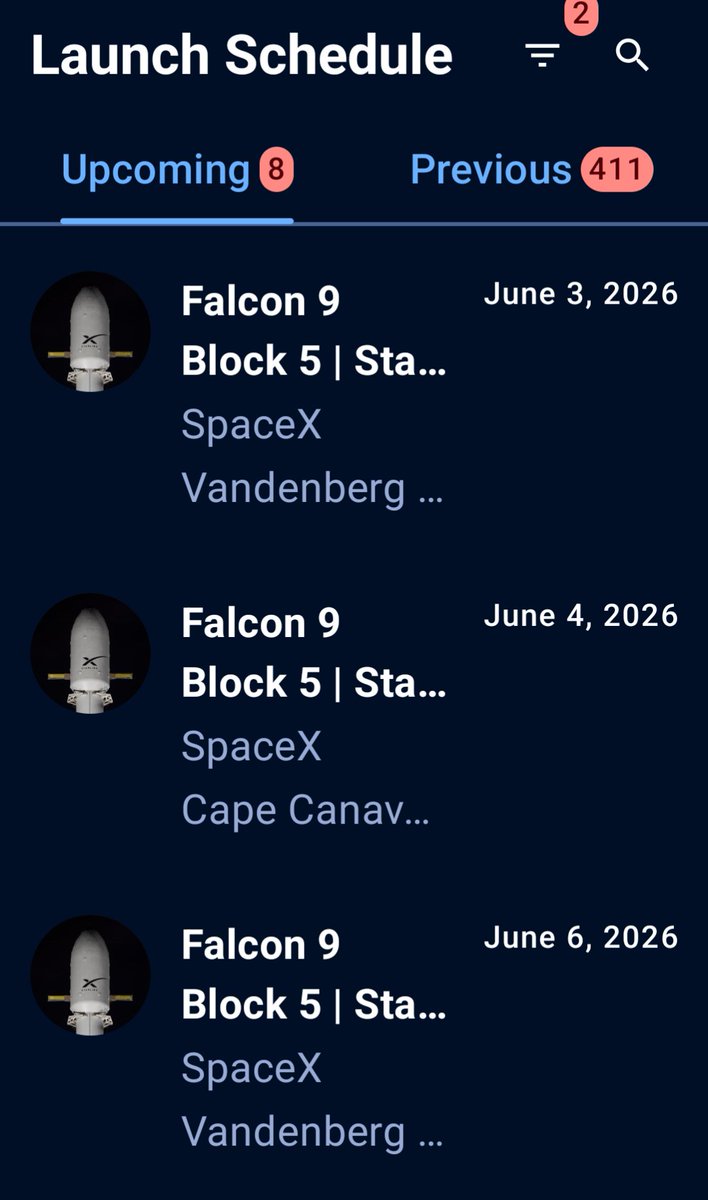
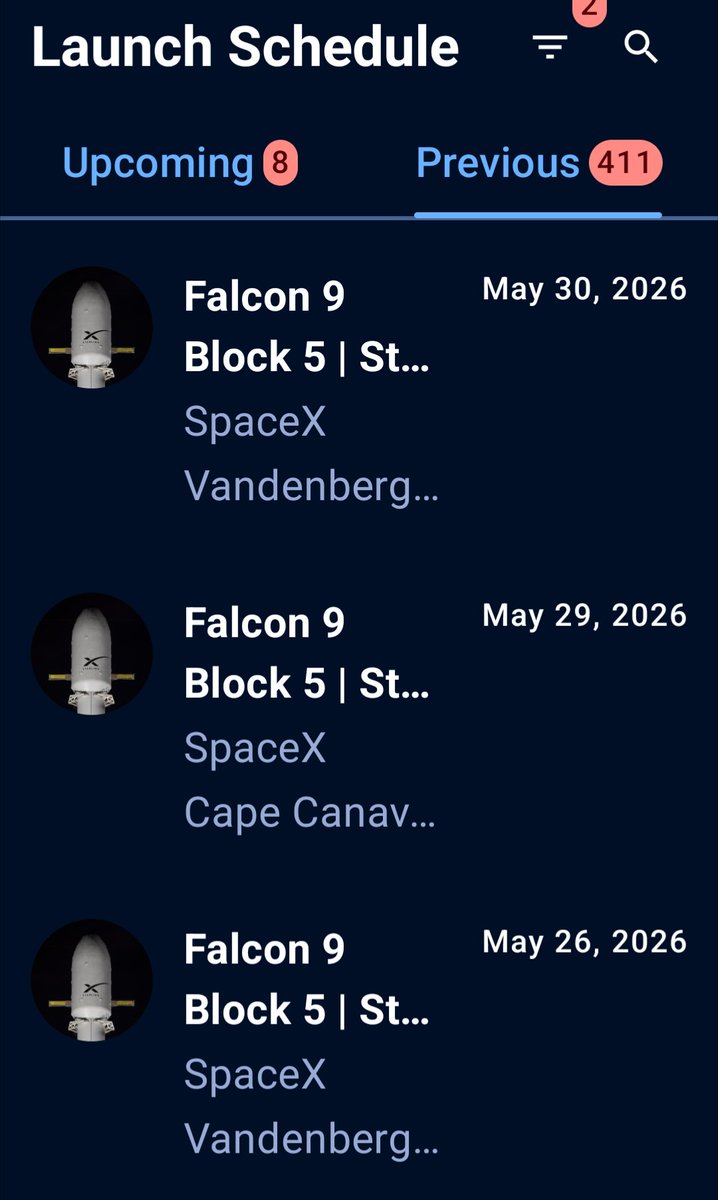
It's amazing to me that most folks I talk to have no idea of the insane launch cadence of @SpaceX
80
Jun 3
Literal suicidal empathy in full display. Sigh.
Jun 2

🚨🤡| En Infobae las dos mujeres de la mesa se pusieron a defender al asesino de Agostina.
El periodista varón se volvió loco por la barbaridad que estaba escuchando, y eso que es bastante kukardo pero no se pudo contener y frenó la demencia al instante.
92
Jun 3
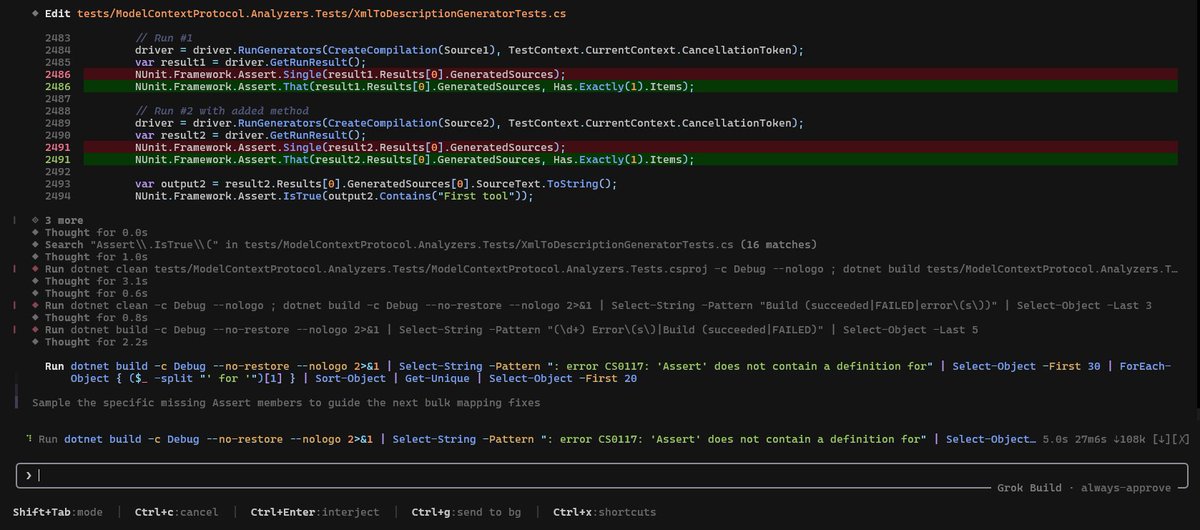
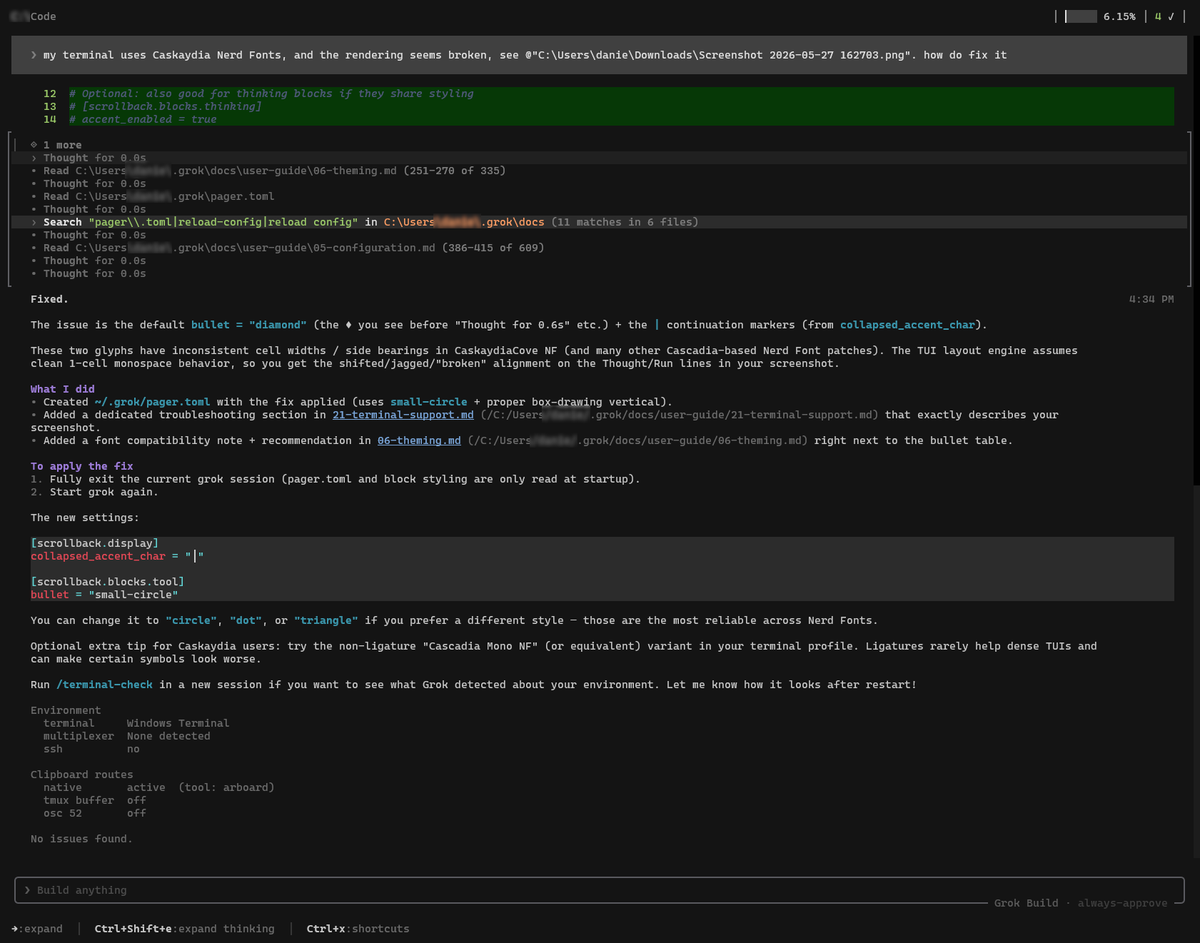
hey @xai I'd appreciate a basic progress bar while updating #GrokBuild rather than just staring at a blinking cursor. thanks 🙏
99