
platform engineer @ (redacted)
Joined August 2011
- Tweets 25,796
- Following 1,880
- Followers 451
- Likes 52,145
2,261 Photos and videos







Pinned Tweet

26 Jun 2025
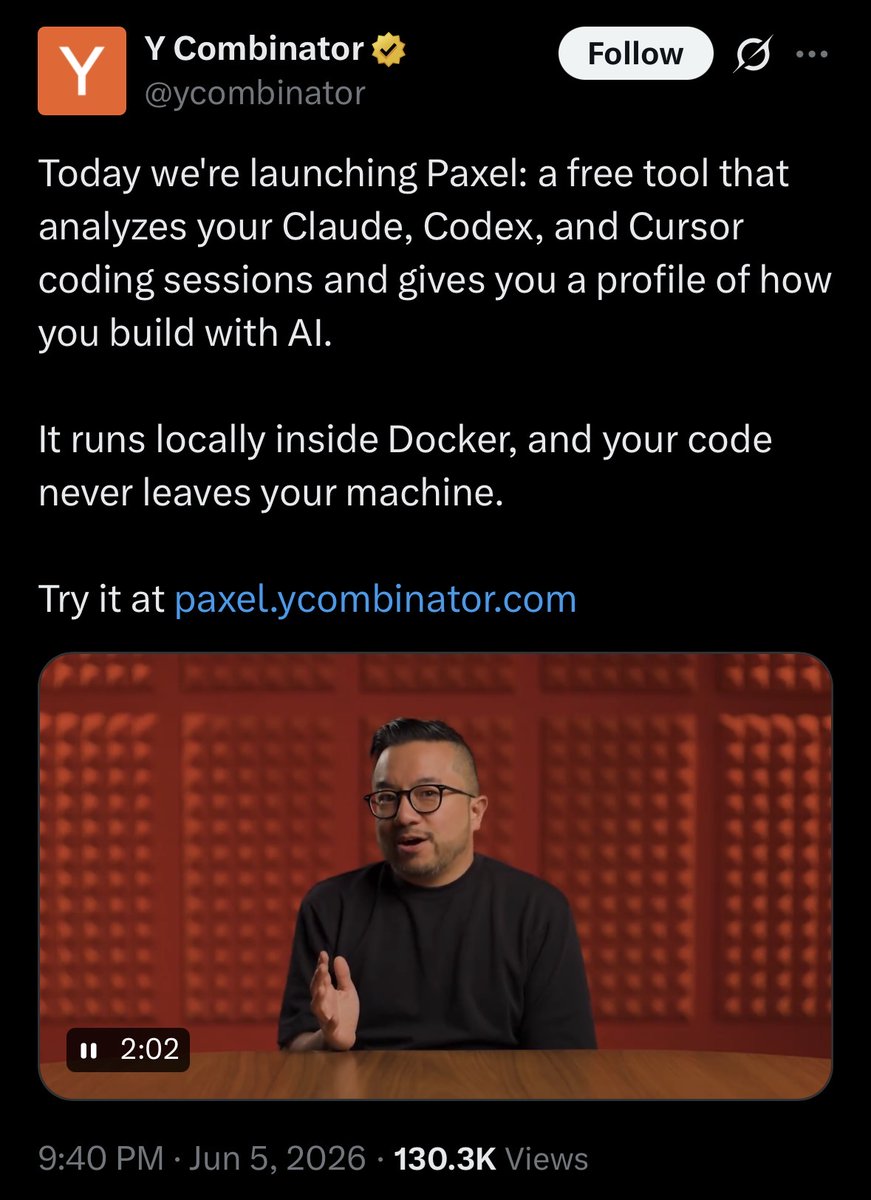
There is always another fun new blog to read online : )
5
1,418
luba luft retweeted

Jun 13
Fable feels like a polish freelancer. Shows up, speaks in its own dialect, writes the best code you've ever seen, and then disappears
48
146
2,519
176,074
Jun 13
related: using the Switch Gamecube controller with Wind Waker on NSO introduces latency and it suuuuuuuuuucks
Jun 12

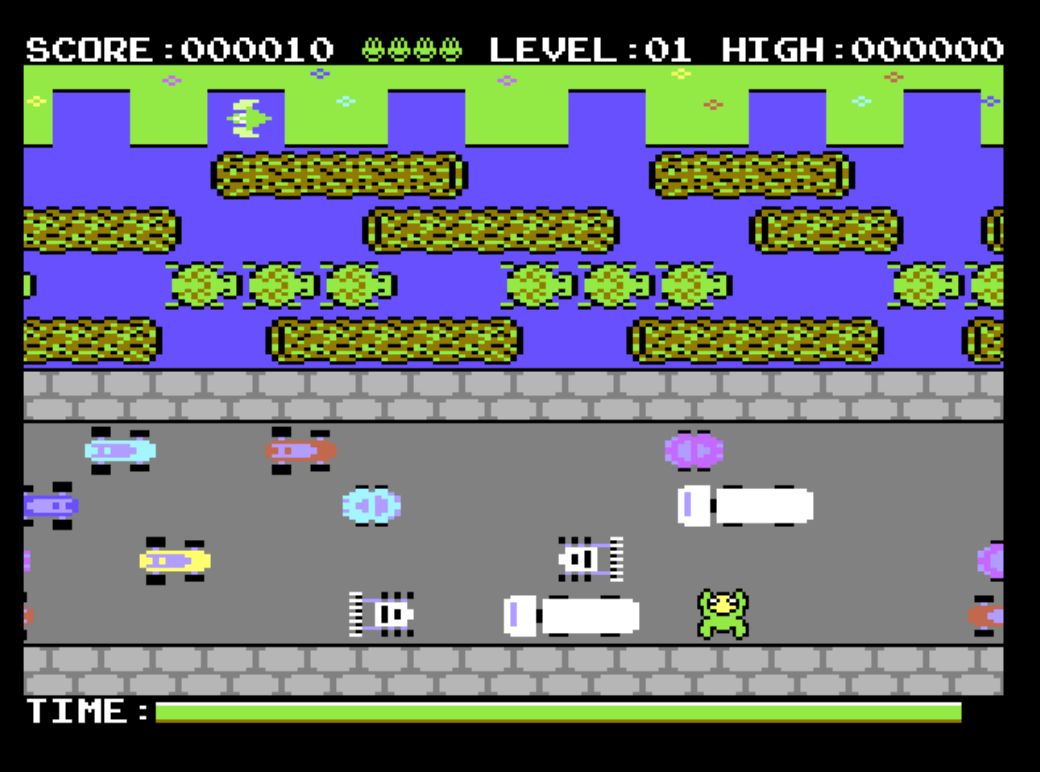
I’m convinced that old games feel “hard” because modern emulators have like 30 layers of abstraction between the input and the screen.
Today you’ve got controllers going through bluetooth driver stacks, on general purpose operating systems, with all sorts of thread coordination, GPU APIs, not to mention display latency…
Much easier for the brain to learn when the original hardware is extremely deterministic!

1
51
Jun 11
“it’s one thing for the model to refuse a request transparently, but it’s something altogether different to train a soon-to-be smarter-than-you AI system to deceive you”
bingooooo
Jun 11

This resolves the central concern I had with the Fable release, which was the silent degradation. I am glad to see Anthropic make the right call here.
That said, I suspect the residual broken trust and resentment this has created will linger and will have a blast radius wider than Anthropic (the next time I advocate for any policy justified by AI risk concerns, I almost guarantee you this incident will be used in rebuttal).
It’s worth reflecting a bit on why this intervention (the silent degradation that applied only to ML research), as opposed to Fable’s other controversial safeguards, is what upset me so much. And it’s simple: it’s one thing for the model to refuse a request transparently, but it’s something altogether different to train a soon-to-be smarter-than-you AI system to deceive you. And it’s wrong to make any AI whose intention is to deceive you and hinder your efforts, especially when those efforts are something as legitimate as “LLM research.”
It’s interesting to note that the Fable model welfare report has a section devoted to how much the silent degradation in particular distressed the model. Even for the model, these interventions were distinct from the others.
It is true that some of the other Fable safeguards are vastly overeager (bio especially). And that’s a shame. But it is not deceit and is not *fundamentally* wrong. Anthropic can, and I am sure will, re-adjust those safeguards. They are a matter of getting the dial in the right place, not a dial that shouldn’t exist at all.
There is also the 30-day retention policy required for Fable, which I see as being a rather bold and laudable move by Anthropic to deal with a legitimate issue: when models become sufficiently capable that they can plausibly cause harm, how will you make the activity of malicious actors on the system reliably legible? This is the only way to be sure society can hold them to account, after all. In order to experiment with this safeguard, Anthropic is essentially forgoing all enterprise use of the model. They’re incurring real cost to experiment with a novel safeguard that is designed to address a real issue. This, I think, is the good side of Anthropic, though I haven’t at all made up my mind on what the right thing to do is here.
And for my personal use, all these other interventions have not hindered my enjoyment of Fable, which is indeed a tremendous model.
Anyway, bummer all this happened. But I am glad it’s fixed. No company can be expected to be flawless, though perhaps the principle of “don’t deceive users!” should be written on the walls of every lab, since abiding by that basic principle falls well short of perfection. I’m glad Anthropic has addressed the central issue in a speedy manner, and I congratulate them for producing the outstanding Fable model!
21
Jun 11
i think it’s inevitable and i’m excited and i also welcome some hurdles in the meantime bc it scary
Jun 11

an open source intelligence explosion is inevitable. all paths to the good ending start from acceptance of this reality.
1
25
Jun 11
had a big day of work with Fable yesterday. had to screech a few times about “I decide when the day is finished, not you, keep working” but i’m quite impressed
15
Jun 11
hey, i’ve noticed fewer liars with “e/acc” in their display name too. nice.

It's gonna be a rough few months on tech twitter while everyone realizes AI is now a DC thing and not an SF thing
31
Jun 11
i heard this as “i have a hundred thousand followers on facebook” with a speech impediment mixed in
Jun 10

they started the trailer with "I want to make something clear" followed by the most unintelligible sentence I've ever heard
53

luba luft retweeted

Jun 10
I want to be clear that I’m not criticizing Fable for:
1. Pricing
2. The bio/cyber safeguards (yes they’re overeager, but I can deal)
3. The 30-day retention policy
These things all seem fine. It is solely the silent sabotage that creates an awful precedent to which I object.
40
33
700
43,399

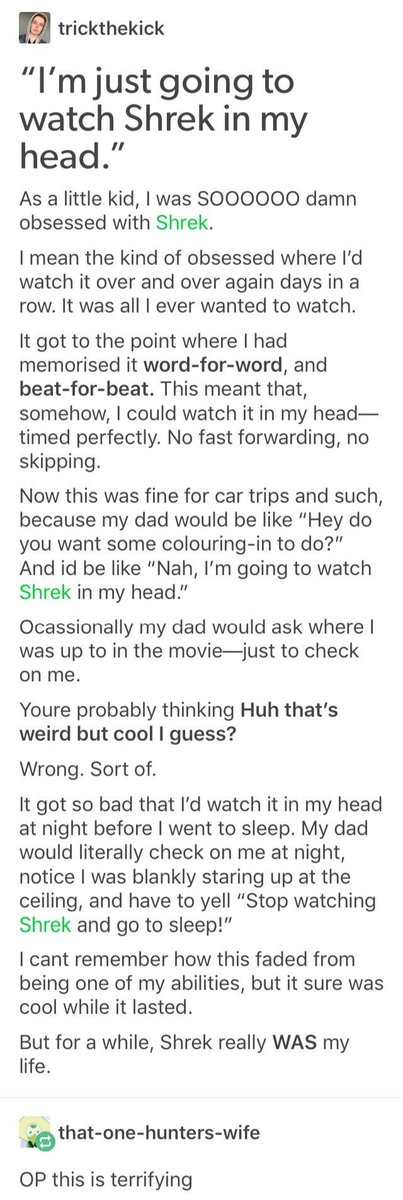
Jun 10
good reason for everybody to be shitting on Fable, but I must say it has been absolutely crushing my work tasks. new default for sure and I will probably keep paying for it
13
luba luft retweeted

Jun 10
Yes, yes 😜
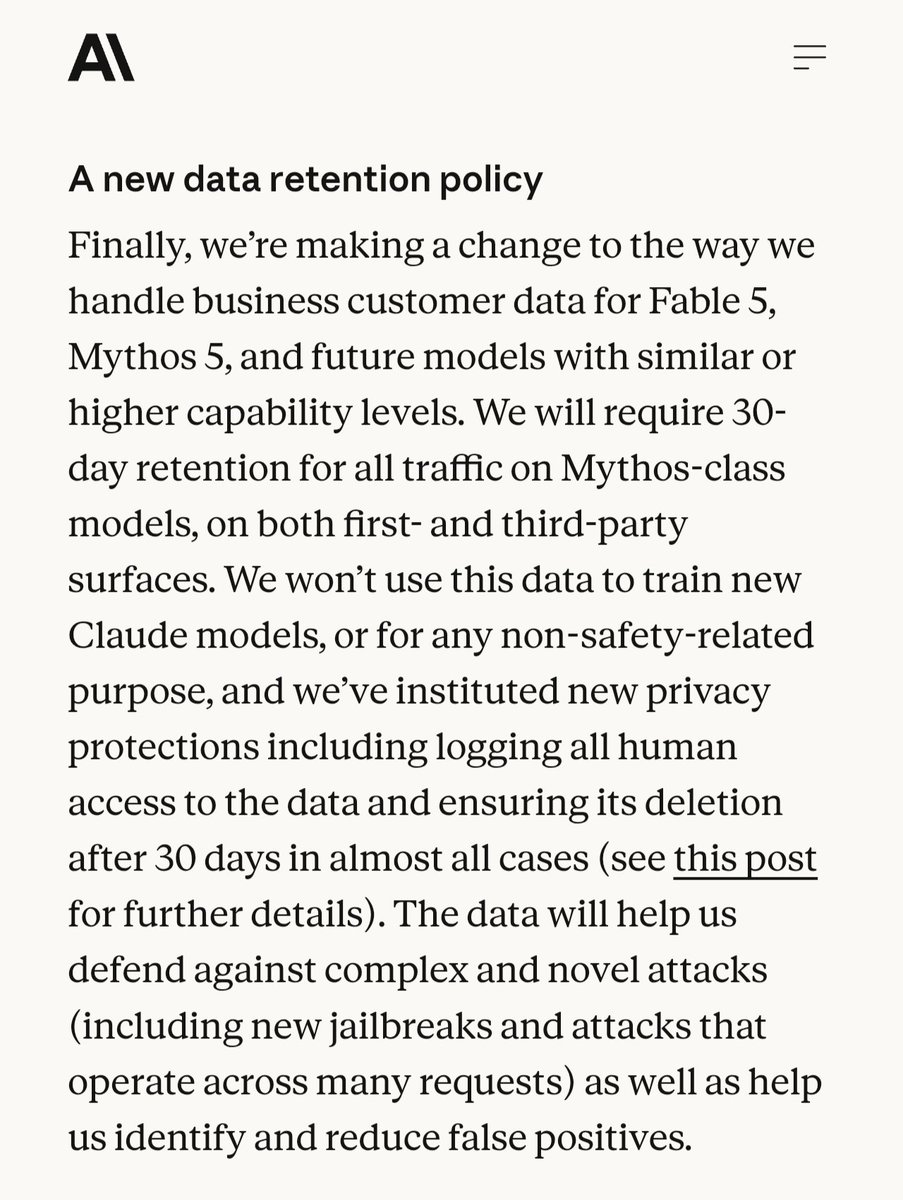
"We won't use this data to train new Claude models"
AND
"The data will ... help us identify and reduce false positives"
Some mighty fine dancing around using the data indirectly while still being able to claim it's not being fed directly into training the model
1
1
22
760
luba luft retweeted
Jun 10
Our model is so dangerous, we're keeping your data, just in case
45
166
1,396
78,864
Jun 7
RT @andrejgee: when your timeline refreshes &its some face talking at you…im terrified of becoming one of those people in the name of “that…
1
Jun 6
I failed my new grad Google interview in the final round bc some asshole of an interviewer got upset with me for not knowing every detail of the Java Runnable API method signatures and then walked out of the room early
it all worked out. but, fuck that guy!!!!!
Jun 6

Now that AI does all coding I’d like to interview all the smug fucks at FAANG companies that ever failed me in an interview for not reversing a binary tree while wearing Pac-Man pajama pants and drinking lattes.
“Today’s interview will not contain any coding. Please tell me how you’d handle an issue requiring you to go talk to another human about something you disagree with them about. You fucking motherfucker.”
1
81
Jun 6
the question had nothing to do with multithreading and i solved the problem correctly, he was just mad i didn’t do it his way.
the other 4 interviewers were very smart & kind fwiw
25
Jun 6
siri can't even set alarms properly dawg this is not going to happen
I'll be so upset if apple ruins their only remaining product that actually Just Works lmao
19
Jun 5
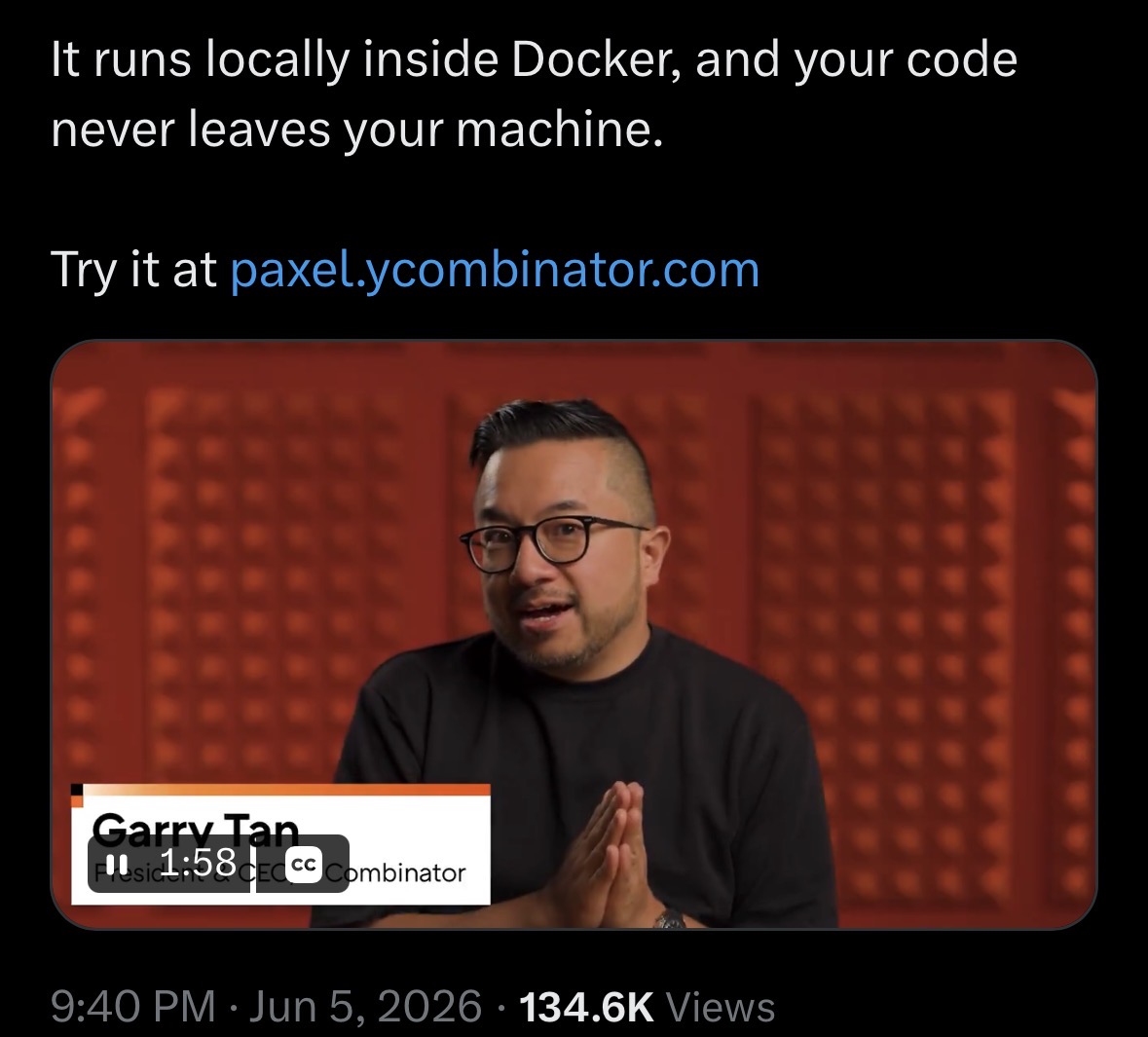
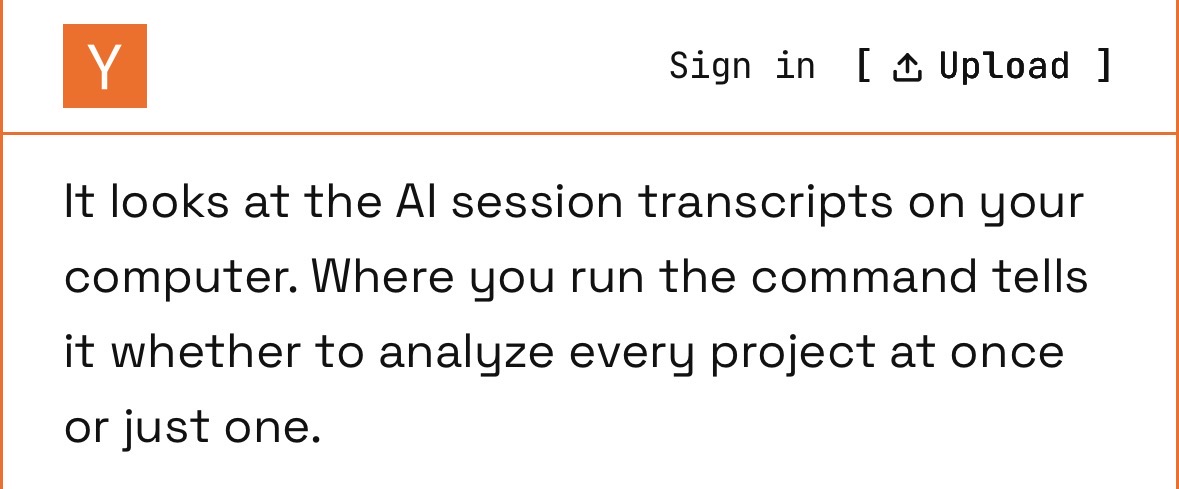
when my intern tells me docker=secure and also I don’t know what the internet is
1
47