
👋🏼
Joined November 2007
- Tweets 7,497
- Following 347
- Followers 9,610
- Likes 6,914
441 Photos and videos









Jennifer Lum retweeted

Jun 10
Today I'm publishing a new essay, Policy on the AI Exponential. AI is progressing extremely fast—much faster than the policy process was built to handle. The essay lays out where I think the technology is now, and the action needed to close the gap: darioamodei.com/post/policy-…
1,316
2,415
13,471
6,407,766
Jennifer Lum retweeted

Jun 11
580
10,823
171,507
7,855,095

Jun 7
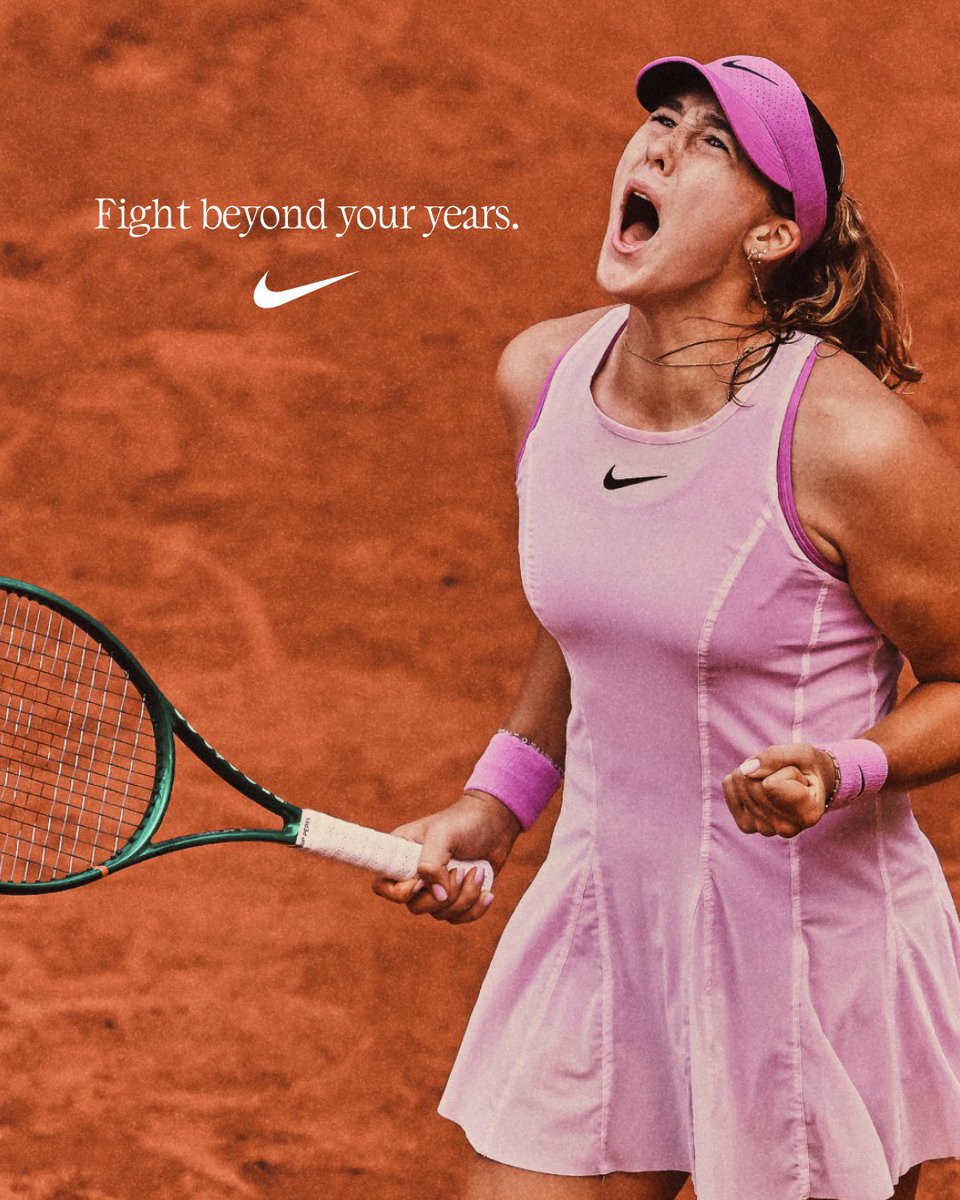
“I want to thank myself” 😊

At 19 years old Mirra Andreeva is a major champion and it’s all thanks to Mirra. Mirra who put in the work, Mirra who battled for every point, Mirra who believed in Mirra.
Many thanks, Mirra.
158
Jennifer Lum retweeted

May 20
The Demis Hassabis HUGE* Conversation (in full)
00:00 What is the hardest problem AI has already solved?
12:30 What is the cutting edge of drug discovery with AI?
21:53 Why did Demis say he “would have left AI in the lab longer”?
43:09 How should militaries use AI?
50:13 What can humans do that AI won't?
58:17 What does Demis Hassabis want his legacy to be?
(And 1:04:40 Can I beat Demis at Jenga?)
Recorded March 5, 2026 in London.
34
305
2,034
507,470
May 18
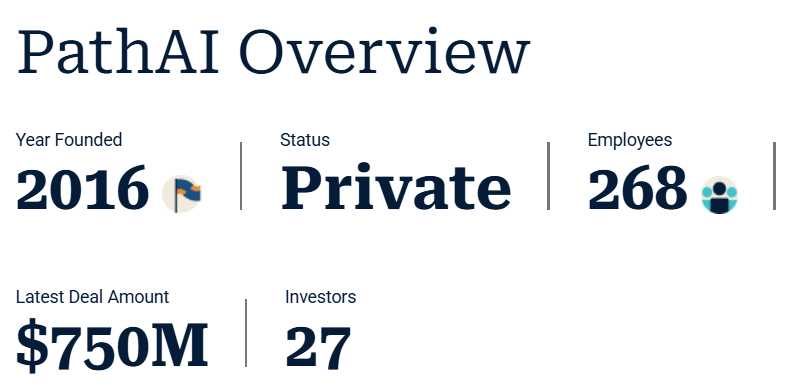
Congrats to the PathAI team!
May 15

$750M upfront. $300M in milestones. $1.05B ceiling.
That's what Roche just paid for PathAI.
It is a 271-person Boston startup that was founded in 2016.
Here's why that number makes complete sense to me.
PathAI raised $255M across 6 rounds over 9 years.
Investors put in $255M, and Roche's check starts at $750M.
That's a 3x return on total capital raised before the $300M milestones even kick in.
But the real story isn't the exit multiple. It's how Roche got here.
2016 ..PathAI was founded. It builds an AI that reads cancer tissue slides.
Models trained on 15 million annotations, which is a huge number, btw.
2021.. Roche doesn't acquire them. Roche partners with them and runs PathAI's models inside actual drug trials, where they watch how it works in their own pipeline.
2024.. Partnership expands and builds FDA-grade companion diagnostic algorithms together.
PathAI is now embedded inside Roche's clinical infrastructure.
2026.. Roche buys them for $750M.
5 years of proof before the check is cleared.
Now, what does Roche actually own in my view?
An AI that tells oncologists which patients qualify for which cancer drugs, running in 160 countries. Across 600M diagnostic tests every year.
Interestingly, PathAI's models don't go to market. They go everywhere Roche already is.
Most acquirers write a check first and figure out the integration later.
Whereas Roche ran a 5-year pilot, proved every assumption, then bought certainty.
That's not M&A. That's the smartest structured acquisition I've seen in a long time.
If you're building in vertical AI, this is a great exit playbook.
Partner with your buyer first. Make yourself impossible to unplug.
Then negotiate from proof, not pitch decks.
Are you building something that becomes infrastructure, or something that stays a product?
3
475


Beautiful essay on adult friendship

May 17

The quiet grief of adult friendship: One of the most beautiful articles I've read in a while. Hits hard
timesofindia.indiatimes.com/…
52
8,471
43,433
2,913,649
Jennifer Lum retweeted

Feb 28
Worth watching in full: @DarioAmodei on why @AnthropicAI is holding firm on their values.
youtube.com/watch?v=MPTNHrq_…
1
1
406
Jennifer Lum retweeted

Feb 22
112
231
1,816
1,215,692

JUNE 2028.
The S&P is down 38% from its highs. Unemployment just printed 10.2%. Private credit is unraveling. Prime mortgages are cracking. AI didn’t disappoint. It exceeded every expectation.
What happened?
citriniresearch.com/p/2028gi…
1,846
4,189
27,648
28,709,742
Feb 2
🙂
Feb 2

Lauryn Hill and Wyclef Jean perform “Killing Me Softly” in tribute to Roberta Flack at the 2026 #GRAMMY awards
1
250
With a career Grand Slam at just 22 years old, @carlosalcaraz has everyone looking forward to what he does next. Except his opponents.
109
3,073
15,788
377,547
Jennifer Lum retweeted

Jan 30
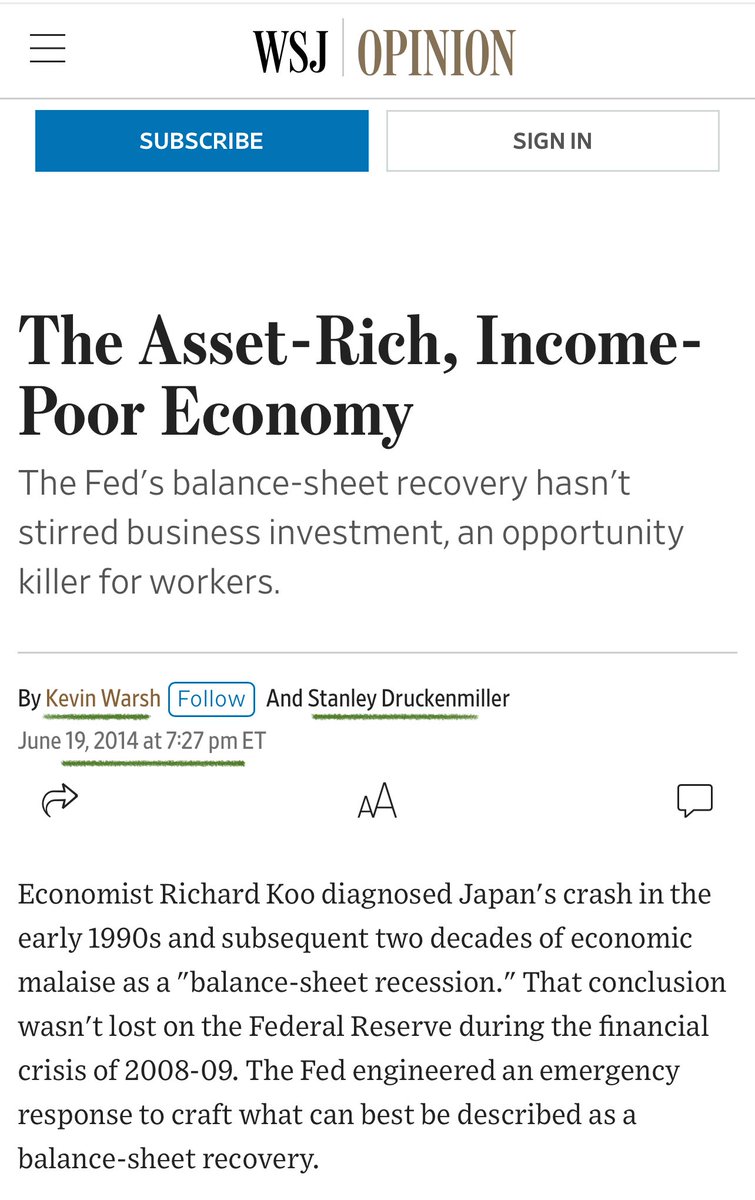
My views on Warsh and the New Axis of Power .. from last year 👇
14 Dec 2025

A New Axis of Power: Warsh, Druckenmiller, Bessent and the Next Fed Chair
The centre of gravity in US economic policy is shifting from isolated personalities to a tightly connected network: Kevin Warsh, Stanley Druckenmiller and Scott Bessent, now aligned under Donald Trump. They are attempting to end a 15‑year experiment in Keynesian demand management and replace it with a supply‑side regime built on productive capital rather than financial engineering. With the next Fed chair decision front and centre, that network suddenly matters a great deal. Read the room.
For years, the playbook was simple: fiscal stimulus plus ultra‑easy money to prop up demand, producing an “asset‑rich, income‑poor” economy of soaring markets but weak productivity and uneven wages. Warsh and Druckenmiller were early insiders to declare this model exhausted, arguing that QE and financial repression distorted markets and discouraged real investment. Their critique was not anti‑market; it was a warning that valuations cannot permanently substitute for capital formation.
Bessent now provides the fiscal and industrial counterpart. Drawing on a Hamiltonian tradition, his strategy emphasises deregulation, investment‑friendly tax rules and targeted tariffs to pull production and capex back onshore, allowing private capital to profit from building in energy, manufacturing and technology instead of riding policy‑driven multiple expansion. Government sets the rules; the private sector carries the baton.
The personal links make the Fed race especially intriguing. Warsh and Druckenmiller have worked closely together, blending the vantage point of a former Fed governor with one of the most successful macro investors of the era. Bessent comes from the same global‑macro lineage, so Warsh’s and Bessent’s views are joined not just by ideology but by shared mentors, methods and market experience, with Druckenmiller as the junction between them.
In this context, Warsh’s potential role as Fed chair is pivotal. He is one of the few candidates whose record already fits Bessent’s project: sceptical of balance‑sheet activism and mandate creep, but realistic about managing a high‑debt, dollar‑centric system without shock therapy. A Warsh Fed could narrow the mandate, normalise the balance sheet over time and still cut rates in a way that supports a supply‑side agenda rather than another round of financial engineering. Trump provides the political cover; Bessent runs fiscal and industrial levers; Warsh anchors a more focused, market‑attuned Fed; and Druckenmiller bridges central bank and markets. Now can you see why Warsh would make a good Fed chairman, why he would read and work well with Bessent, and why the Druckenmiller link makes the structure so compelling? Read the room.
19
61
438
139,249
Jennifer Lum retweeted
Jan 26
The Adolescence of Technology: an essay on the risks posed by powerful AI to national security, economies and democracy—and how we can defend against them: darioamodei.com/essay/the-ad…
879
2,663
15,379
6,273,167
Jennifer Lum retweeted

Jan 23
120
188
1,432
818,169

Jennifer Lum retweeted

27 Dec 2025
A Call for New Aesthetics: newaesthetics.art.
358
529
5,937
3,983,044
10 Dec 2025
We are delighted to welcome @MercedesBenz as the Premier Partner of the WTA Tour!

Driving the future of tennis 🤩
We're thrilled to announce that Mercedes-Benz is the new Premier Partner and Exclusive Automotive Partner of the WTA Tour, starting in 2026 🤝
2
5
560