
Genomics technologist, Psychiatrist, Associate Professor, Massachusetts General Hospital @broadinstitute. Founder, Curio Bioscience
Joined May 2012
- Tweets 79
- Following 330
- Followers 2,918
- Likes 204
5 Photos and videos
Evan Macosko retweeted

Mar 2
1/8 We learned what kinds of neurons are in the brain with Drop-seq, and where they are located with Slide-seq/tags. But what about their synaptic anatomy?

Protein-guided RNA barcoding links transcriptomes to synaptic architecture biorxiv.org/content/10.64898… #biorxiv_neursci
1
20
60
13,734
Evan Macosko retweeted

8 Aug 2024
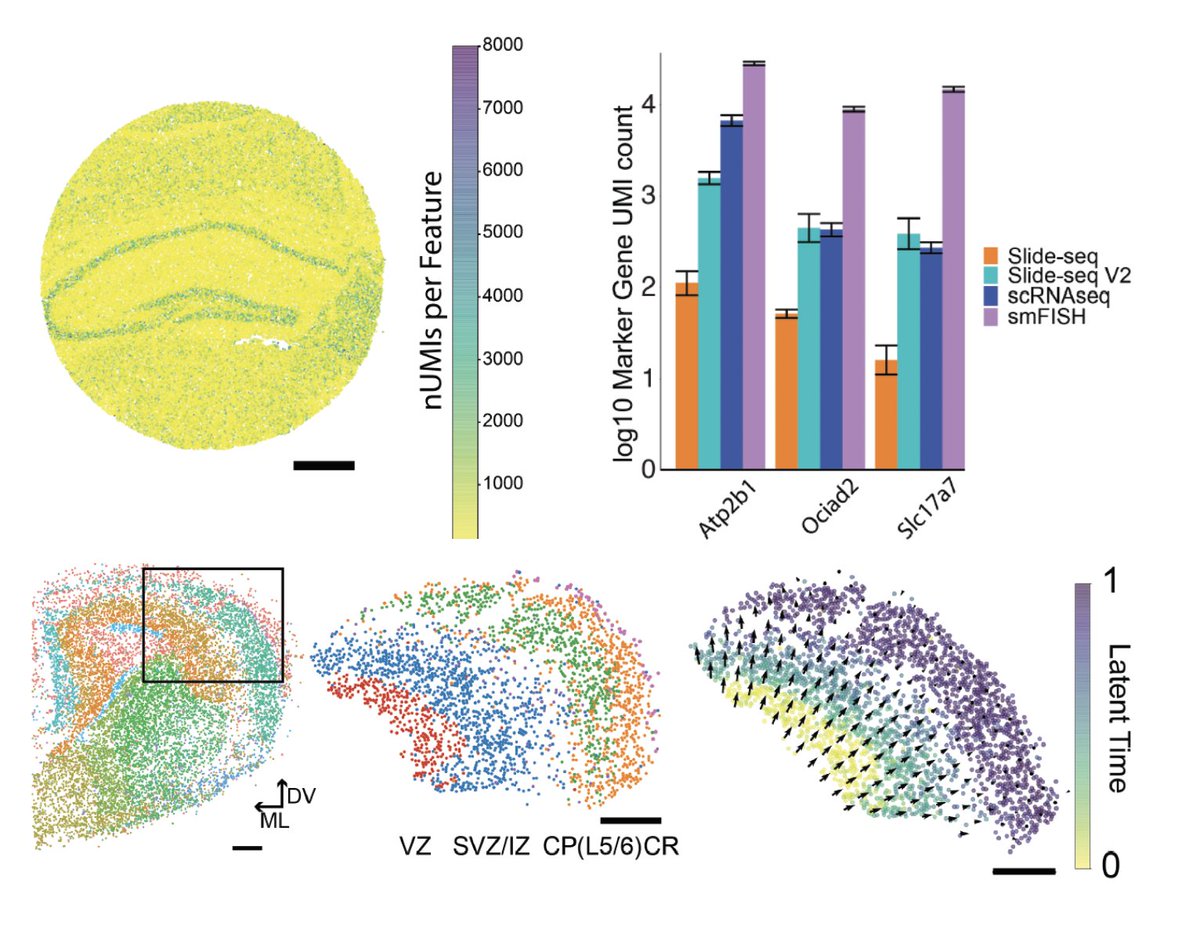
We developed an imaging-free spatial genomics technology where DNA barcodes diffuse to connect locally. Using UMAP, we reconstructed the physical locations of these barcodes, transforming spatial transcriptomics into purely molecular biology.
biorxiv.org/content/10.1101/…
6
64
258
56,500
Evan Macosko retweeted

8 Jul 2024
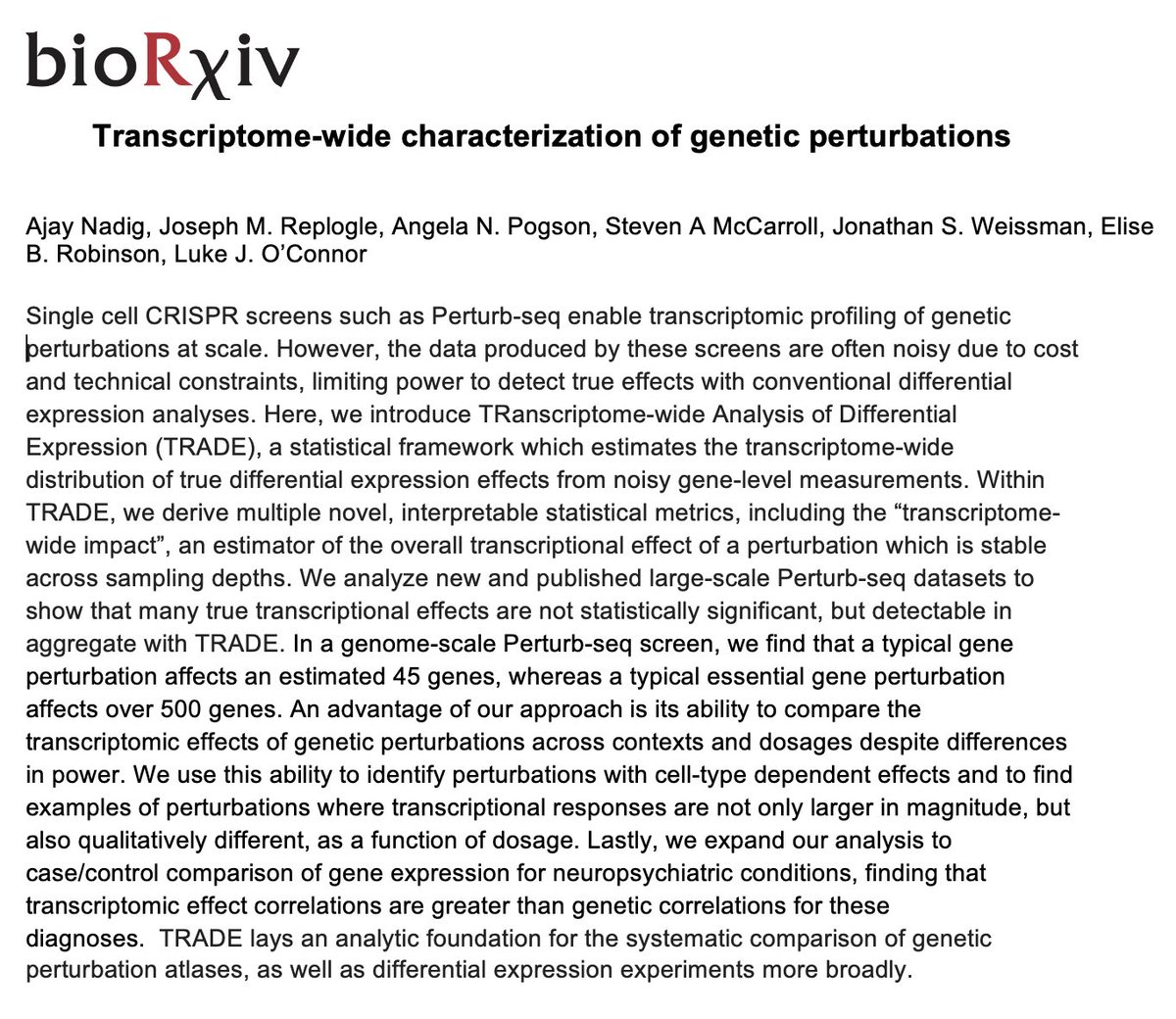
How do genetic perturbations change cells? How are these effects shaped by cell type and dosage? How do we best extract insight from modern massive perturbation atlases? Im pleased to share a new preprint where we develop a suite of statistical approaches to these Qs (link below)
9
77
294
101,682
Evan Macosko retweeted

28 Feb 2024
Hear us talk about Slide-tags!
28 Feb 2024

Slide-tags: Combining single-nucleus genomics with spatial measurements 🧬🔬
Hear from @AndyRusss, @jacksonweir4, Naeem Nadaf, and @insitubiology as they describe the development and application of this impressive technology
youtu.be/4TJkLI4LINU
4
23
4,126
Evan Macosko retweeted

21 Jan 2024
I am thrilled to announce that I will be joining the Department of Genetics at Trinity College Dublin (@tcdgenmicro) in summer 2024! My lab will build and apply new tools to understand the formation and function of microglia states in brain health and disease.

16
19
246
28,654
Evan Macosko retweeted

12 Jan 2024
Findings "strongly imply that there is no specific link between maternal mental illness or maternal infection during pregnancy" & neurodevelopmental disabilities (including autism) in offspring cambridge.org/core/journals/… free
3
19
37
22,268

13 Dec 2023
We now know the locations of cell types in a full mammalian brain.
Our work reveals the brainstem’s absolutely stunning cellular complexity. How and why does it arise?
Visit braincelldata.org to plot genes, localize types, and get markers.
nature.com/articles/s41586-0…
2
86
312
38,249
13 Dec 2023
A huge congratulations to Jonah Langlieb, Nina Sachdev, @Naeemnadaff, @KarolBalderrama, Mukund Raj, and Chuck Vanderburg. And grateful for the continued collaboration with @insitubiology
We hope (and expect!) our atlas helps accelerate many areas of neuroscience research.
11
1,583
13 Dec 2023
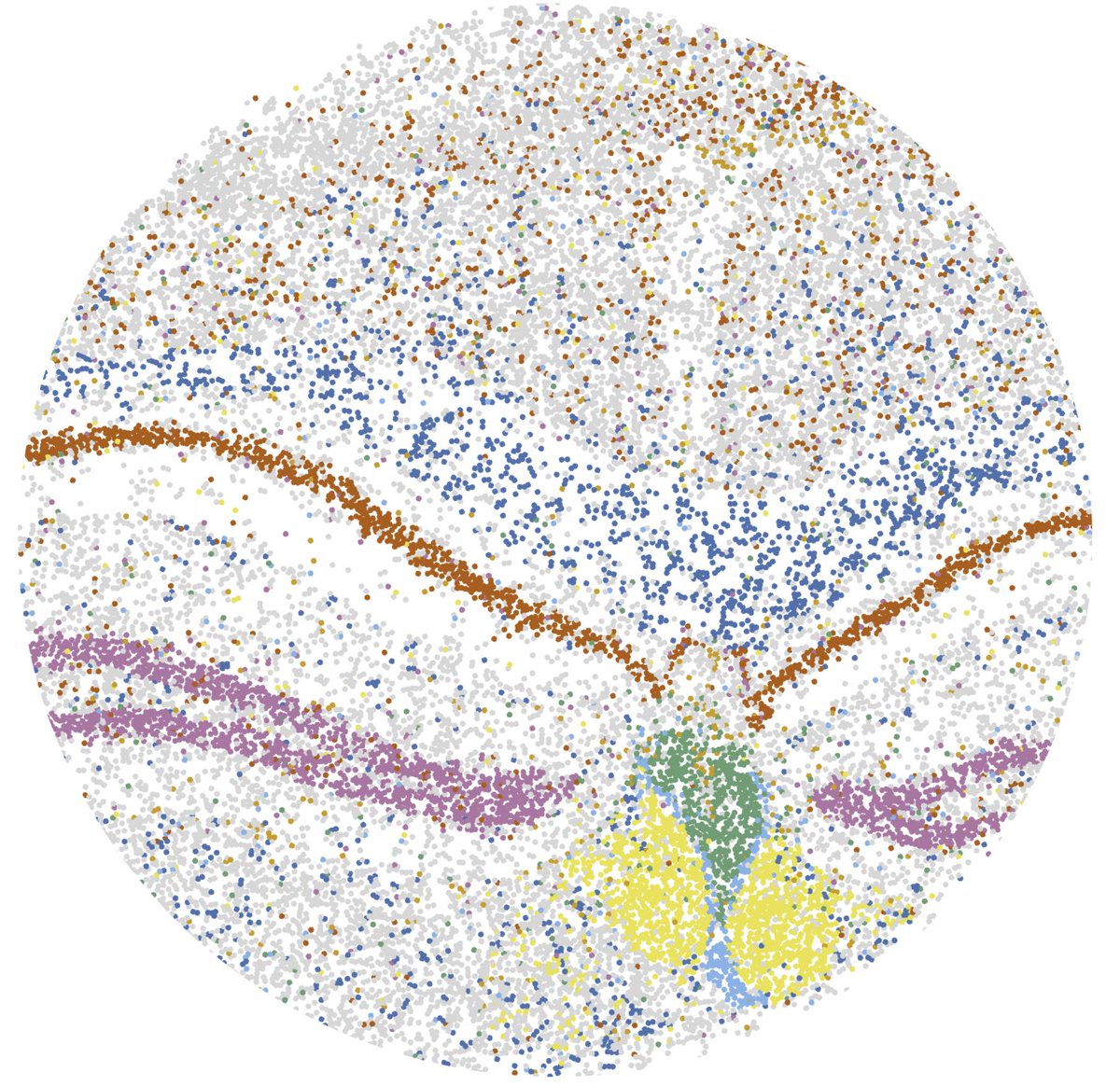
Slide-tags unifies the single cell spatial genomics worlds. It solves three key problems with existing spatial methods:
1) Cell segmentation (the biggest problem)
2) robustness and scalability (well-powered case-control studies now possible)
3) Multiomics (ATAC, RNA, etc)
13 Dec 2023

A new method called Slide-tags lets scientists capture both genetic and location information of individual cells using standard single-cell workflows in the lab. The technology builds upon Slide-seq, both developed by the labs of @insitubiology & @macosko. broad.io/slide-tags
3
42
275
53,017
28 Sep 2023
Utilizing rare human brain biopsies we address:
1) Which cell types likely make amyloid?
2) How do microglia respond to amyloid and how does this compare to states in mouse models?
3) What neuronal states precede cell death in AD?
Paper out today!
cell.com/cell/fulltext/S0092…
7
49
222
30,984
28 Sep 2023
The sharing of data is the only way we will make collective progress on hard problems like AD. Our entire dataset and analysis are available at braincelldata.org
Vahid Gazestani’s integration of 27 datasets can be easily imported to answer your own scientific questions.
3
3
24
4,542
Evan Macosko retweeted
28 Jul 2023
Delighted to announce our work developing an approach to understand the function of human microglial states. @MartineTherrie4 and I will guide you through our work, a collaboration with @sasajereb from @macosko and @stevens1lab ! nature.com/articles/s41590-0…
11
46
157
39,834
6 Jun 2023
How does brain tissue change when amyloid first appears in the brain? In rare surgical biopsies, we find a hyperactive neuronal state preceding loss, and evidence of oligodendrocytes, as well as neurons, producing amyloid.
biorxiv.org/content/10.1101/…
2
31
143
34,332
6 Jun 2023
Congrats @tkam80, Vahid Gazestani and dear collaborators Ville Leinonen and @LabMalm.
Amazingly, Vahid integrated our data with most postmortem datasets:
braincelldata.org/resource
We hope his work provides a common language for discussing cell types and states in human cortex.
3
13
5,677
Evan Macosko retweeted

4 Apr 2023
Single-cell or spatial?
Our new technology - Slide-tags - allows both in the same experiment, enabling true single-cell multi-modal spatial genomics
➡️ doi.org/10.1101/2023.04.01.5…
12
169
579
115,186
4 Apr 2023
All single cell assays can now be spatial. Slide tags is simple, reliable single cell with hi-res spatial positioning. A truly outstanding scientific team: @insitubiology, @andyrusss, @jacksonweir4, Naeem Nadaf.
biorxiv.org/content/10.1101/…
1
59
229
26,260
Evan Macosko retweeted
4 Apr 2023
Introducing Slide-tags: our new technology for truly single-cell, multi-modal spatial genomics!
Had a blast working alongside @AndyRusss, @Naeemnadaff, @macosko, @insitubiology, and the rest of our team on this project!
biorxiv.org/content/10.1101/…
1/9
6
24
129
20,902
9 Mar 2023
Example uses of braincelldata.org:
1) label transfer your sc data to ours. Get cell type assignments and spatial positions. 2) Find genes or cell types enriched in a region. 3) Retrieve the minimal set of genes needed to define a cell type uniquely (ie for FISH).
12
2,519
8 Mar 2023
Excited to release our cell type atlas of the adult mouse brain! Here’s our portal:
braincelldata.org
And preprint:
biorxiv.org/content/10.1101/…
We find minimal marker sets for all cell types, explore activity-regulated genes, and perform analyses of heritability enrichment.
2
51
213
33,439
8 Mar 2023
Two of my broad conclusions from these data:
1) The midbrain medulla deserve far more attention in neuroscience than they currently receive;
2) Functionally annotating all of these cell types will require new tools, perhaps building on the RADARS/RADAR/CellREADR technologies.
2
11
1,847
8 Mar 2023
An amazing team led by Jonah Langlieb and Nina Sachdev. Kudos to Karol Balderrama, who did Slide-seq on an entire brain in just three (!) days, and Naeem Nadaf, who collected 6 million (!) snRNA-seq profiles. Always grateful for our ongoing collaboration w/ @insitubiology.
5
1,321