
Indoor Spatial AI Data Infrastructure – Make indoor physical AI smart and simple.
Joined March 2018
- Tweets 122
- Following 26
- Followers 32
- Likes 0
110 Photos and videos






Introducing 𝗠𝗮𝗽𝘅𝘂𝘀 𝗔𝗻𝘆𝘄𝗵𝗲𝗿𝗲, your one-stop solution to revolutionize indoor navigation for your business, no app downloads required!
𝗘𝗺𝗽𝗼𝘄𝗲𝗿 𝗬𝗼𝘂 𝗩𝗶𝘀𝗶𝘁𝗼𝗿𝘀 𝗮𝗻𝗱 𝗕𝗼𝗼𝘀𝘁 𝗘𝗻𝗴𝗮𝗴𝗲𝗺𝗲𝗻𝘁:
🧭 Effortless Wayfinding:
Provides clear, real-time directions.
😆 Enhanced Customer Satisfaction:
Visitors can easily find their destinations, leading to a more positive experience.
🛍️ Increased Foot Traffic & Sales:
Guide visitors to specific areas, promoting targeted offers and boosting sales.
Want to learn more? Comment, DM us, or visit our website! mapxus.com/
Ready to Transform Your Indoor Navigation Experience?
Try Mapxus Anywhere now: maps.citygeni.com/
#spatial #ai
1
164
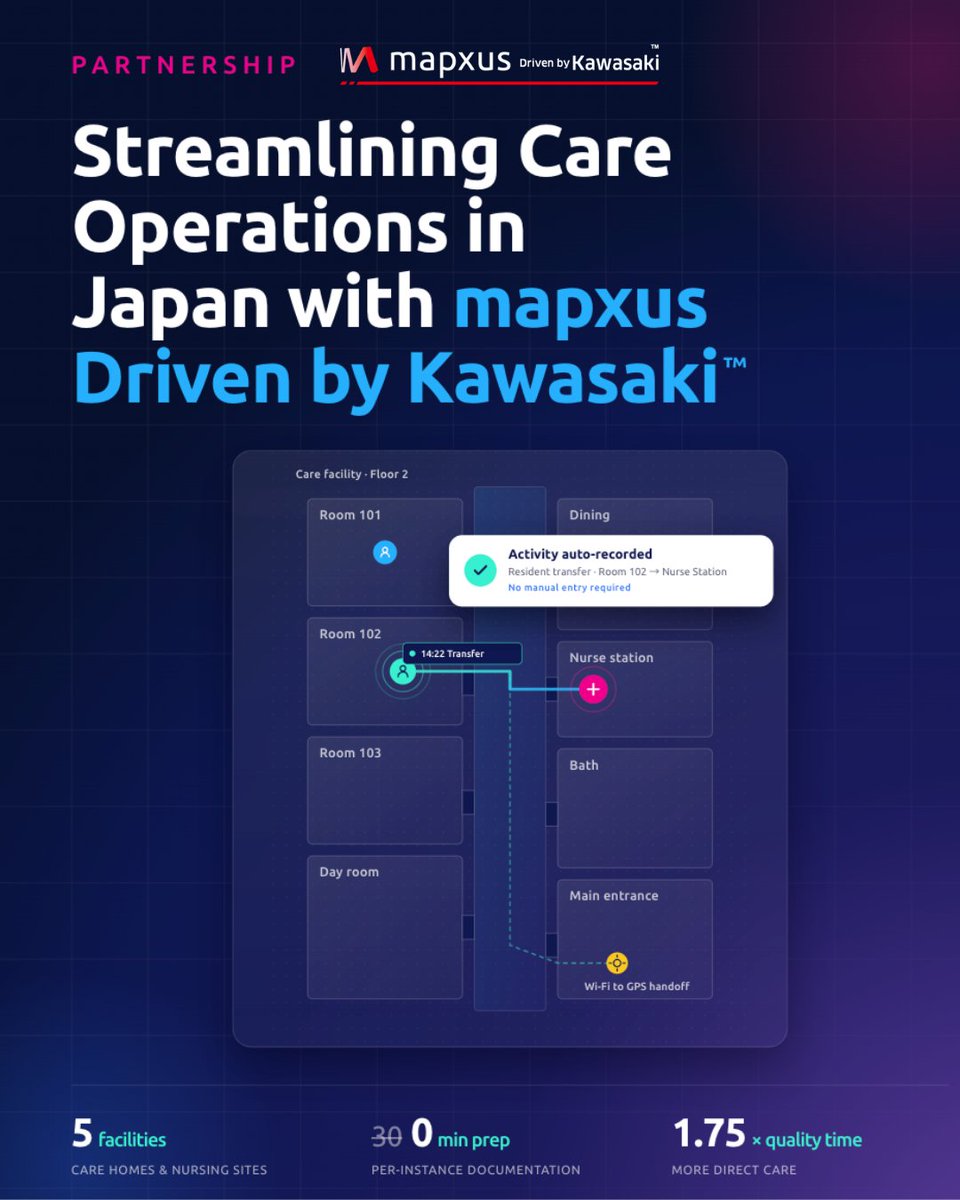
How is indoor positioning transforming the care sector? 🇯🇵
Our partner Kawasaki Heavy Industries (KHI) utilized "mapxus Driven by Kawasaki", built on our indoor mapping infrastructure, to automate tracking and streamline care operations for a Ministry of Health, Labour and Welfare project. 🤝
Real-world results:
⏳ Admin time cut from 30 mins to effectively zero.
📍 Automated staff tracking completely eliminated manual entry.
📈 Care time in bathing increased by approximately 1.75 times.
Read the full story: 🔗 bit.ly/43SukD4
#Mapxus #CareTech #AgeTech #IndoorPositioning
18
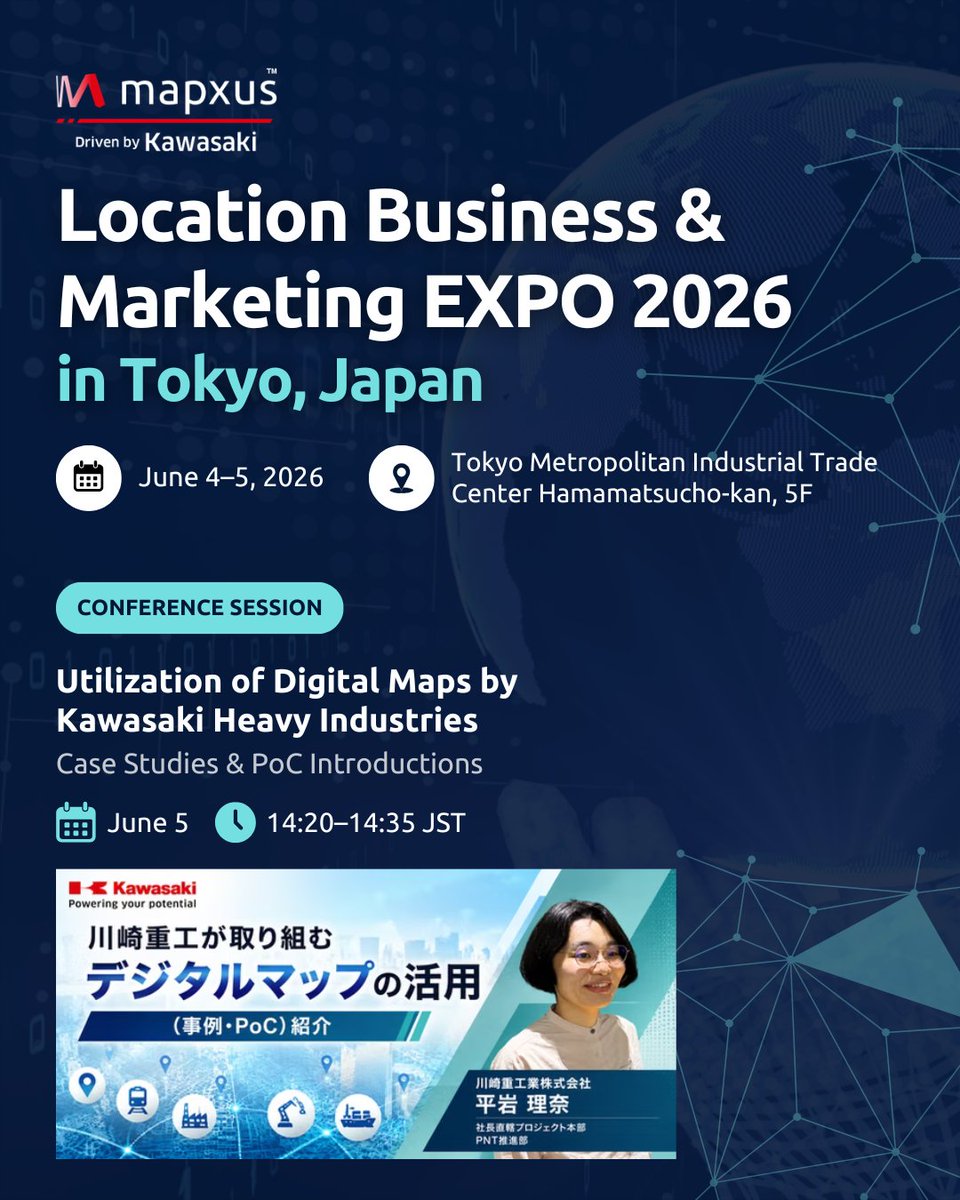
Explore the next generation of location business solutions in Tokyo, Japan. 🗺️
We are excited to share that our partner, Kawasaki Heavy Industries (KHI), will be exhibiting at the Location Business & Marketing EXPO 2026, one of Japan's premier events for location-based technologies and business solutions.
📅 Date: June 4–5, 2026
📍 Location: Tokyo Metropolitan Industrial Trade Center Hamamatsucho-kan, 5F (東京都立産業貿易センター浜松町館5F)
📍 Address: Tokyo Portcity Takeshiba, 1-7-1 Kaigan, Minato-ku, Tokyo 105-7501, Japan (〒105-7501 東京都港区海岸1-7-1 東京ポートシティ竹芝)
🎪 Navigate to KHI's booth using our indoor web map: bit.ly/4ugBr2N
🌐 Event Info: lbmajapan.com/
This year's EXPO will feature a conference presentation by KHI on their real-world implementations of digital maps. During the session, they will showcase the mapxus Driven by Kawasaki service, demonstrating how indoor intelligence technology drives operational efficiency and transforms built environments.
🎤 Presentation Title: 川崎重工が取り組むデジタルマップの活用(事例‧PoC)紹介 (Utilization of Digital Maps by Kawasaki Heavy Industries — Introduction of Case Studies and PoCs)
🕒 Date & Time: June 5, 14:20–14:35 JST
🔗 Presentation Timetable: lbmajapan.com/lbm-expo2026
Attending the EXPO? Join the presentation or drop by the booth to see the technology firsthand.
#KawasakiHeavyIndustries #KHI #Mapxus #DigitalMaps #LocationBusiness #LBMA2026 #IndoorMapping #Tokyo #Japan
358
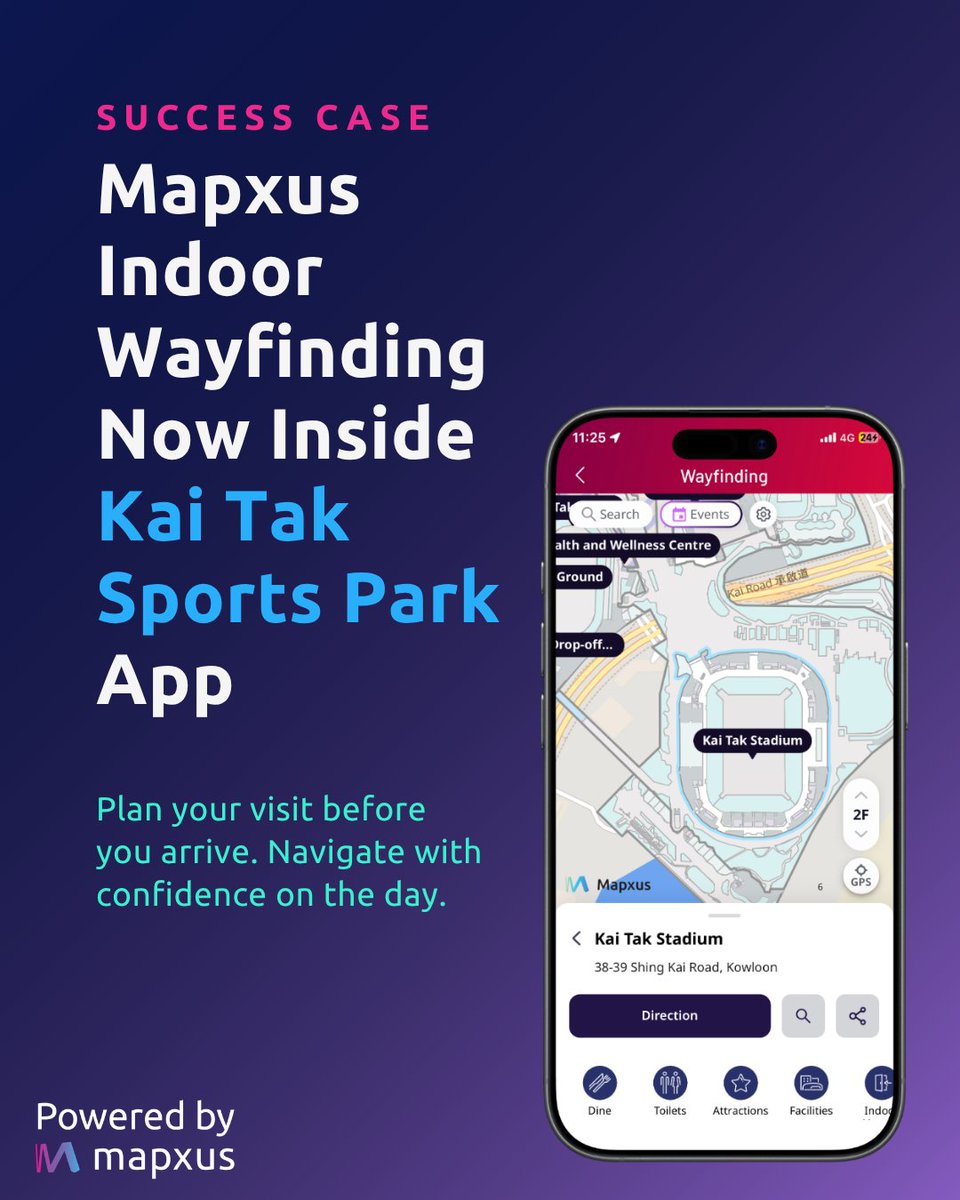
Experience freedom to explore every corner of Kai Tak Sports Park! 🏟️
Navigating a world-class sports and entertainment precinct should be as intuitive as the event itself. Through the official KTSP app, Mapxus provides the intelligence to help visitors meet smarter and move faster. 📱
This walkthrough highlights how spatial technology transforms the visitor journey:
📍Coordinate meetings with a single click and real-time location sharing.
🕒 Access instant status updates for venues and retail outlets to plan your visit with confidence.
🗺️ Choose your path with three unique navigation modes, including a dedicated barrier-free route for complete accessibility.
🏢 Navigate complex levels with clear guidance that takes you from MTR exits directly to your stadium gate.
It is navigation designed for the modern precinct experience, where every corner of the park is within reach.
Ready to experience the future of venue navigation? Find the app download links in the comments below. 👇
#KaiTakSportsPark #IndoorNavigation #PropTech #UXDesign
1
167
Get the KTSP App here:
📱 App Store: apps.apple.com/us/app/ktsp/i…🤖 Google Play: play.google.com/store/apps/d…
56
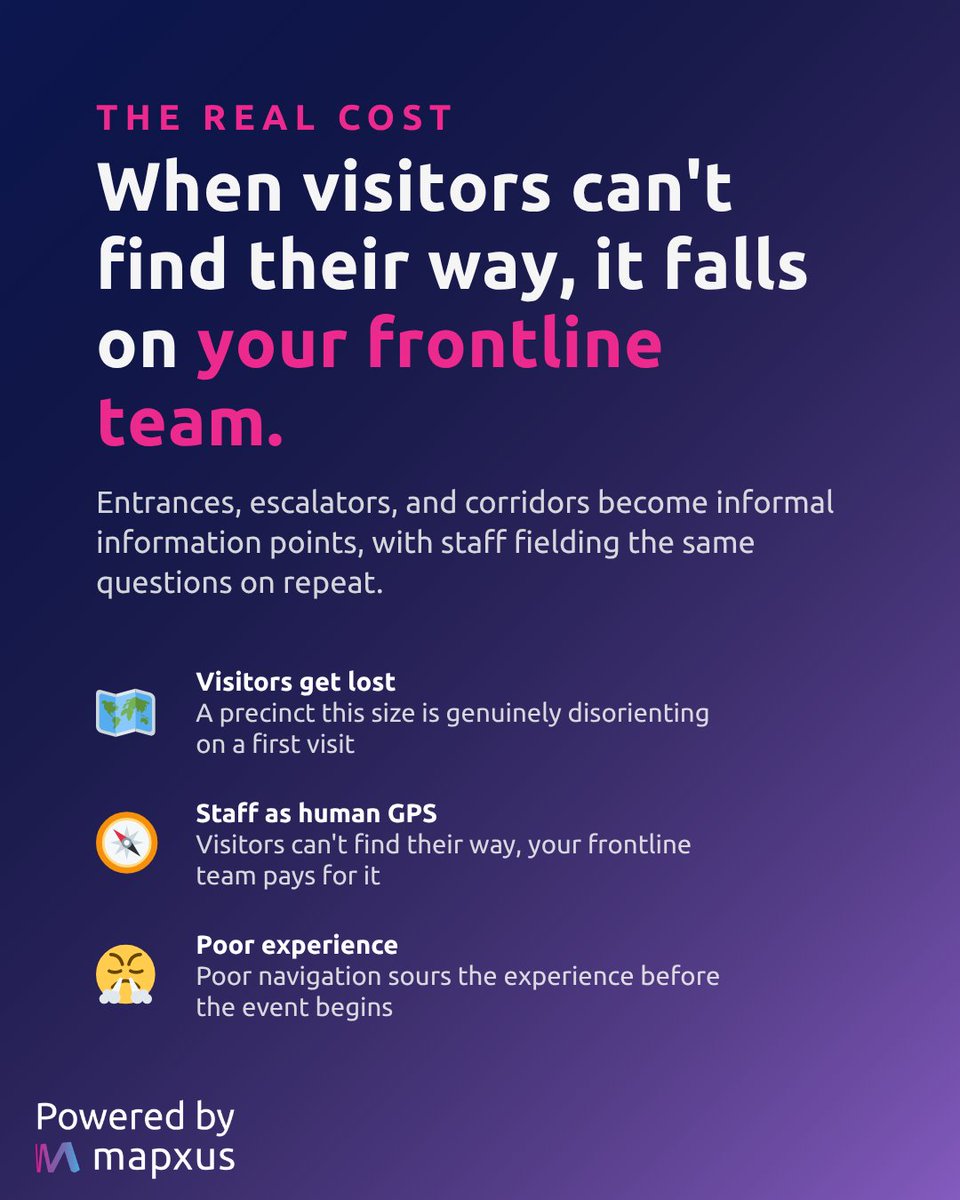
Kai Tak Sports Park just solved one of the most overlooked challenges in venue operations. 🏟️
When visitors can't find their way at a large venue, the gap doesn't go unfilled. It falls on your front-line team.
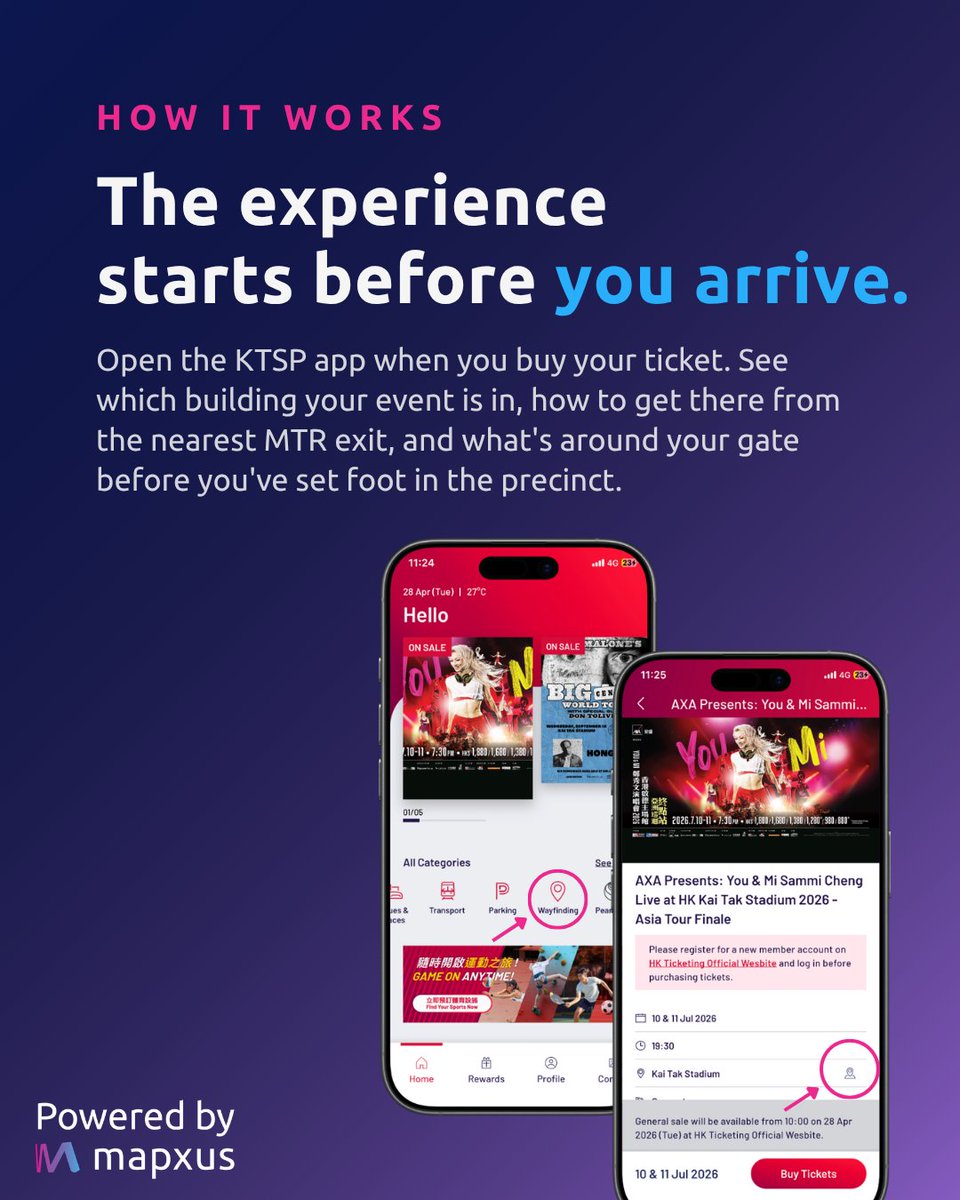
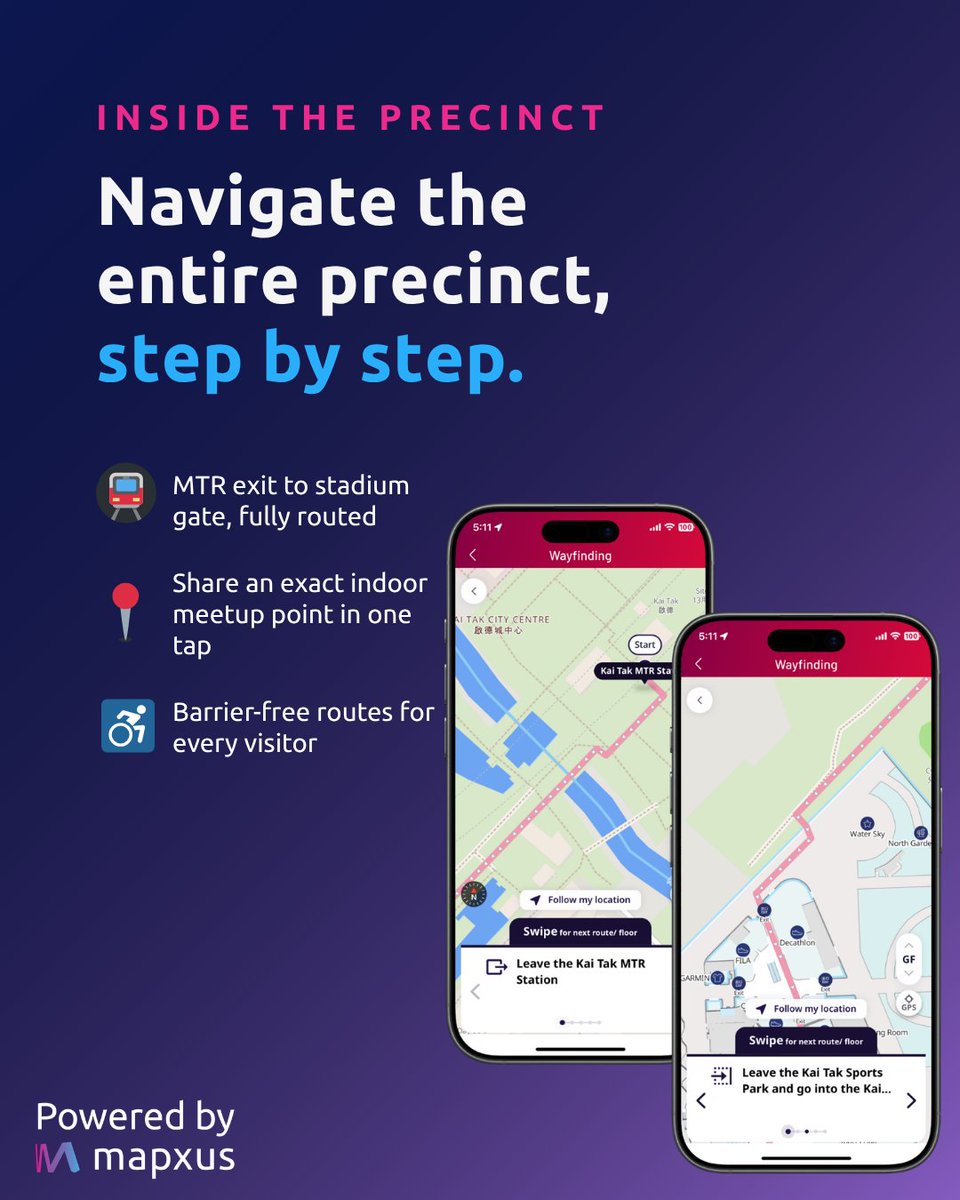
Kai Tak Sports Park has integrated Mapxus indoor wayfinding directly into their official app. Visitors can now navigate the entire precinct from MTR exits to stadium gates, share exact meetup points with friends, and access barrier-free routes — all without leaving the KTSP app.
For a precinct of this scale, combining a stadium, an arena, multiple shopping malls, and F&B across several floors, embedding navigation at the product level is what moves the experience from functional to frictionless.
The venue owns the experience. Mapxus provides the navigation intelligence underneath. 🚀
For property developers and venue operators exploring how indoor wayfinding fits into your own digital infrastructure, we are happy to walk through how this was implemented.
Read the full article 👉 bit.ly/4dfrix5
#Mapxus #HongKong #Wayfinding #IndoorNavigation #PropTech #SmartBuilding
104
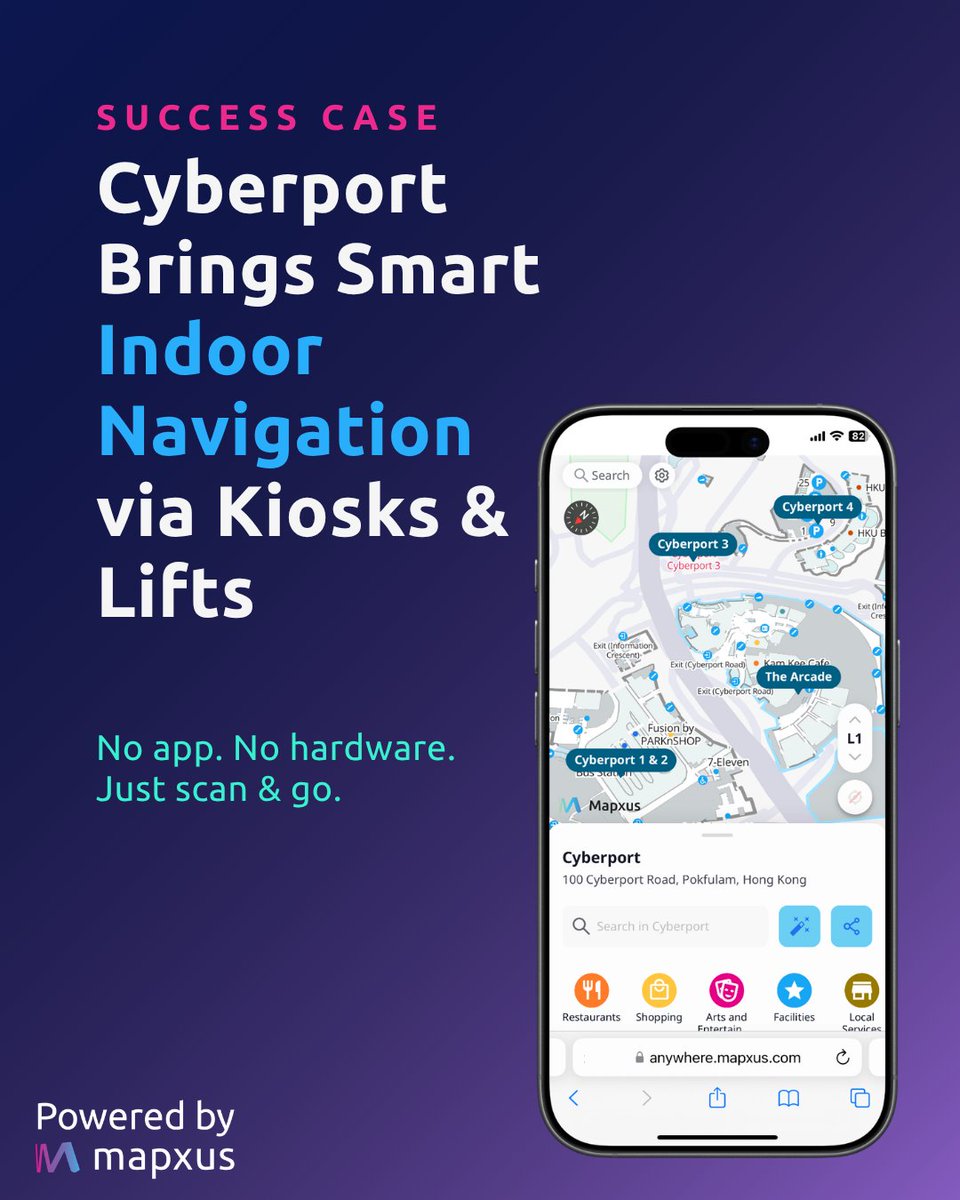
One of Hong Kong's largest tech hubs just made getting around a lot easier. 🏢✨
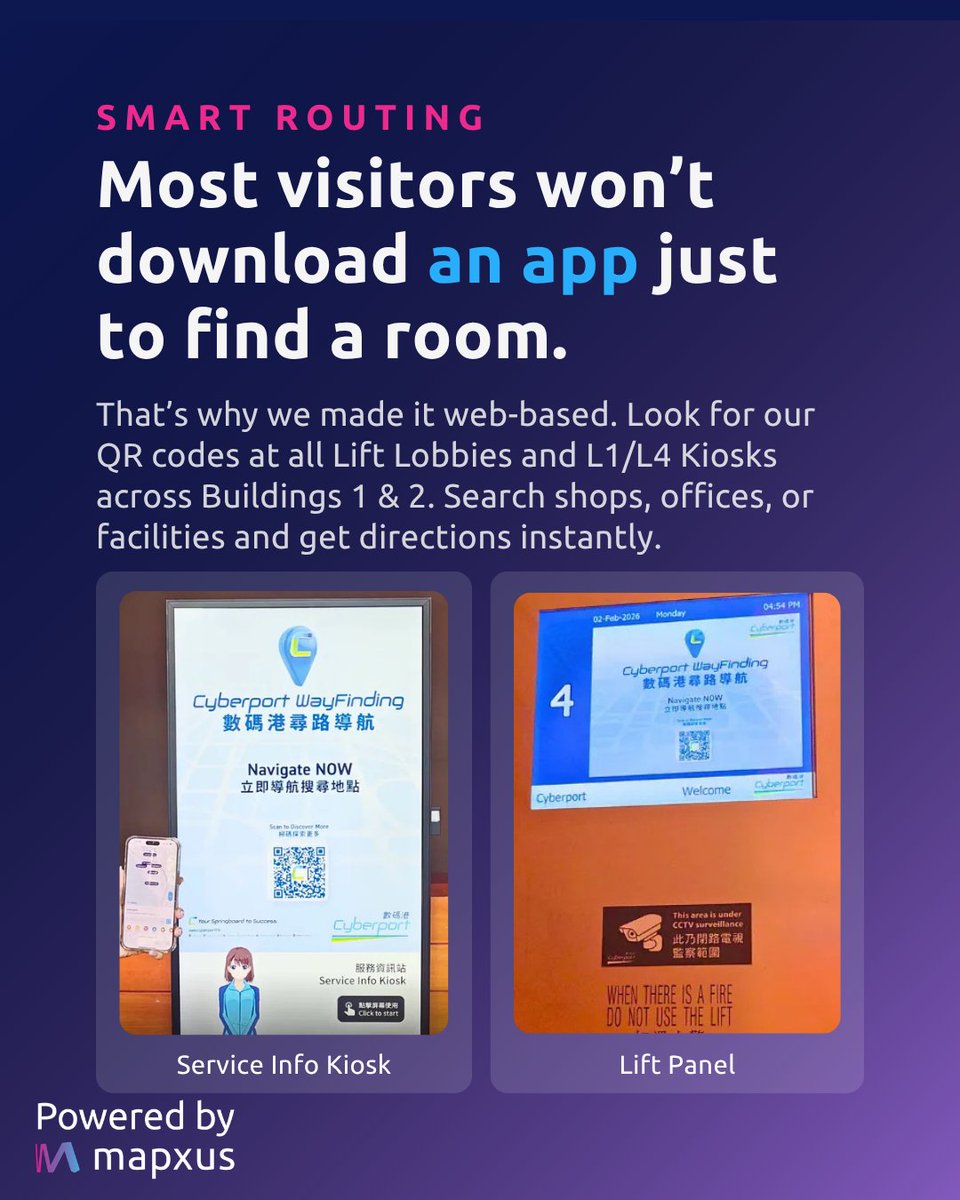
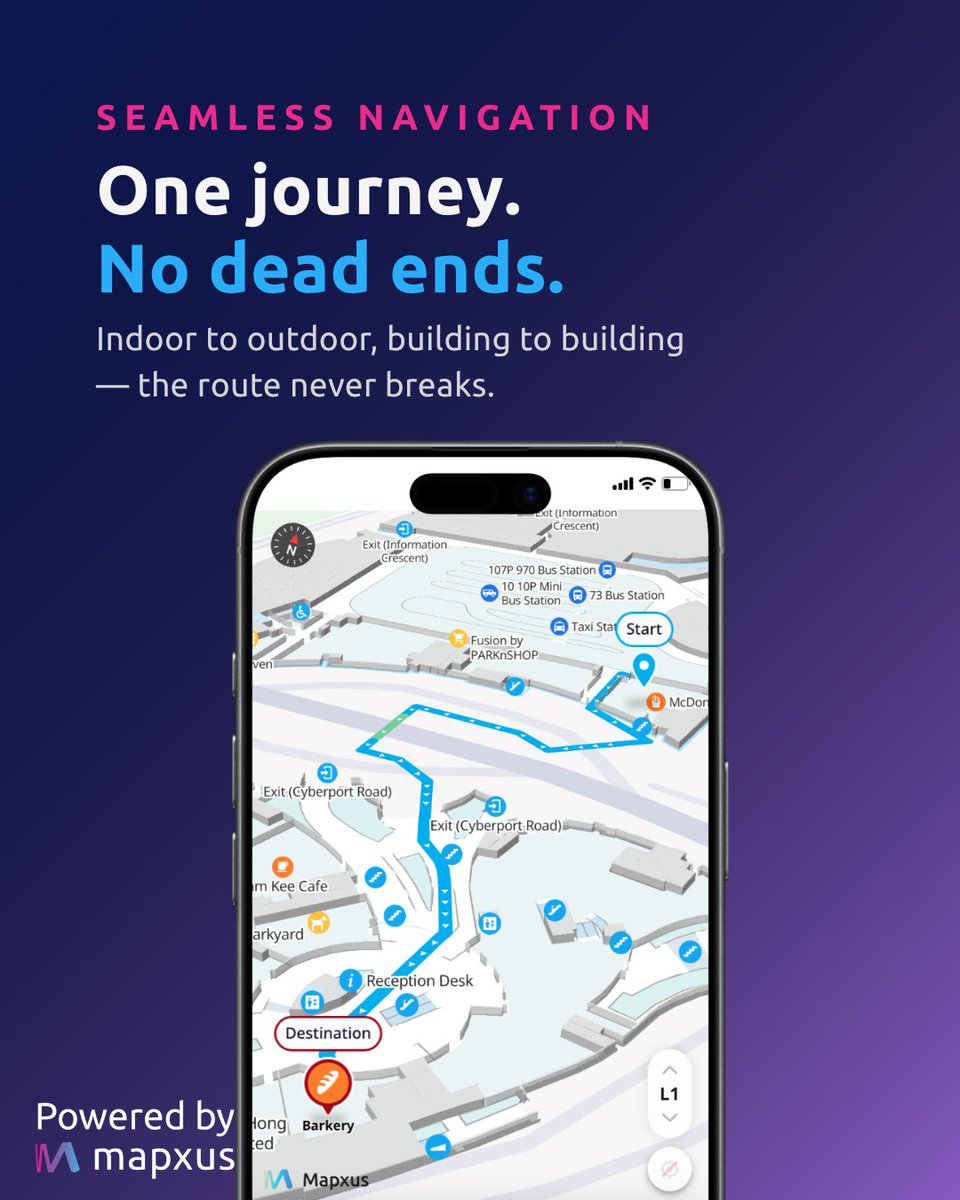
Mapxus Anywhere QR codes are now live at @Cyberport, available across kiosks on L1 & L4, and in every lift lobby of Buildings 1 & 2.📍
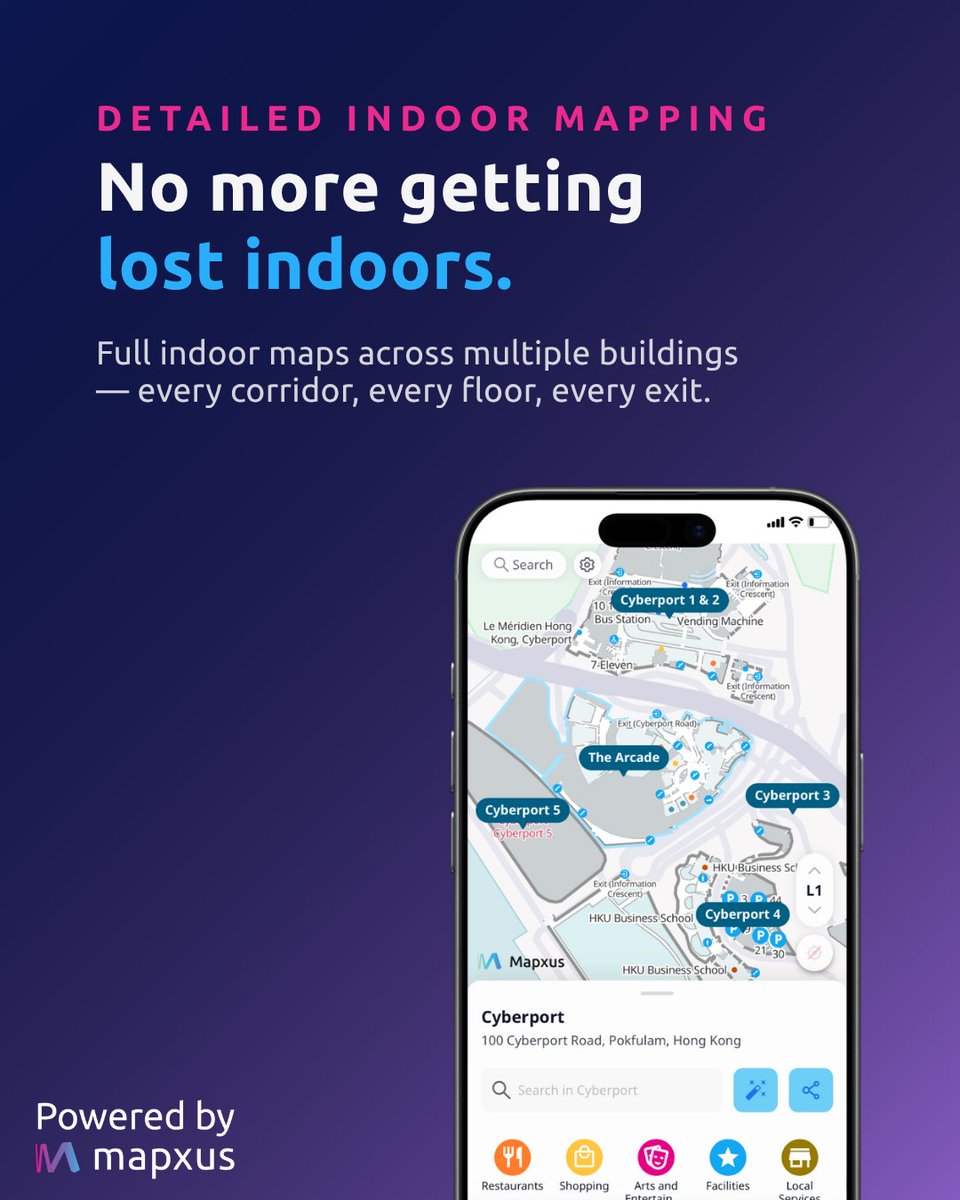
Scan, and you're instantly on a live interactive floor plan covering all 5 buildings, the shopping arcade, and the waterfront promenade. No app. No help desk. No more getting lost.
Just scan and go. ✅
🗺️ Try it out now: anywhere.mapxus.com/cyberpor…
#Mapxus #IndoorNavigation
27
At the recent "Factory Innovation Week 2026" in Tokyo, our partner Kawasaki Heavy Industries (KHI) delivered a special lecture on the future of robotics and physical AI.
To address the projected labor shortages in the medical and welfare sectors, KHI is advancing the development of technologies to support hospital operations. We are honored that our technology is part of this initiative. As stated in the report, KHI's indoor location information system, "mapxus Driven by Kawasaki" (formerly iPNT-K), is being used to quantitatively evaluate the effectiveness of work substitution in these demonstration experiments.
The lecture also introduced recent representative initiatives from KHI, including the hospital transport robot "FORRO," the general-purpose semi-humanoid "NYOKKEY," the humanoid "Kaleido," and the four-legged mobility robot "CORLEO."
👉 Read the full article and event coverage on MONOist (Japanese): monoist.itmedia.co.jp/mn/art…
#PhysicalAI #RoboticsInHealthcare
37
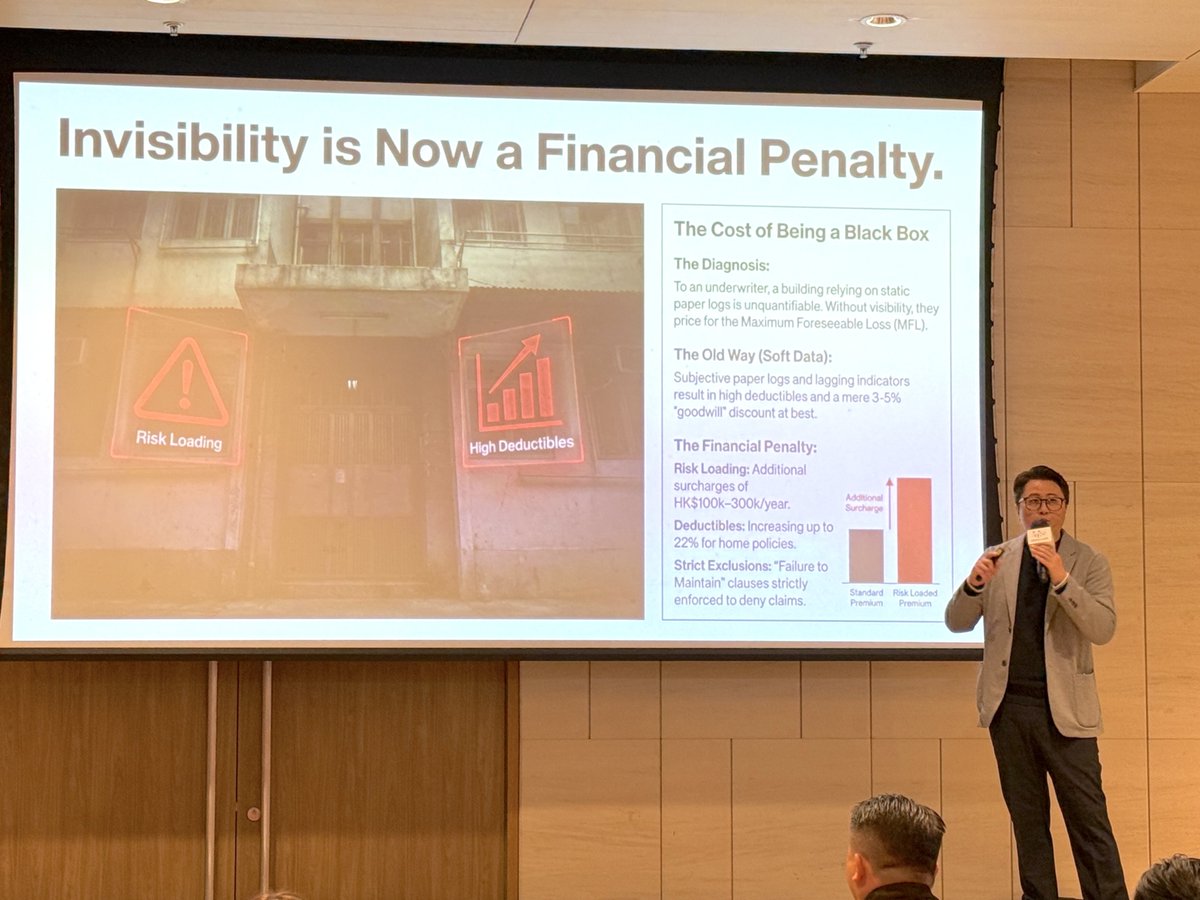
Outdated safety records are a financial liability. 💸
If insurers cannot see a building's data, they charge for the unquantifiable risk.
Safety must be proven.
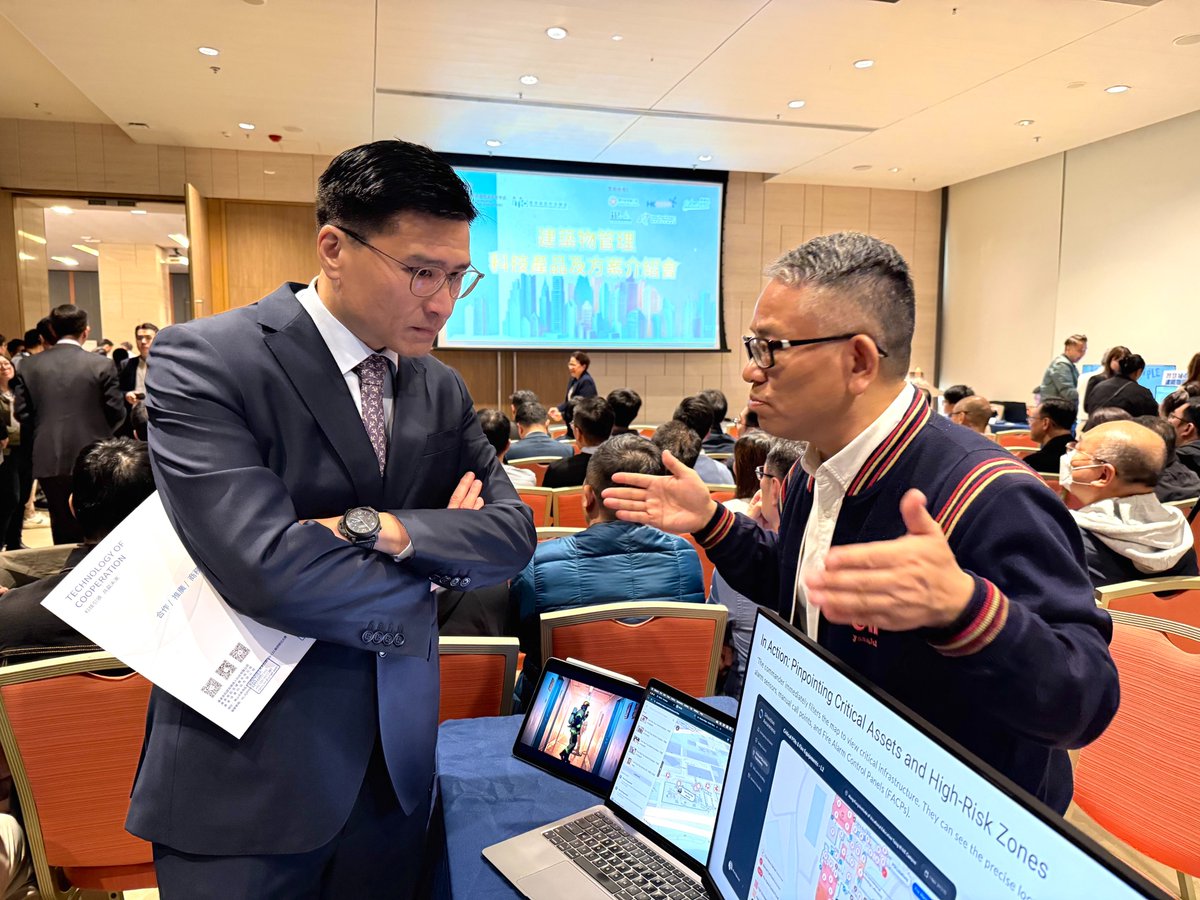
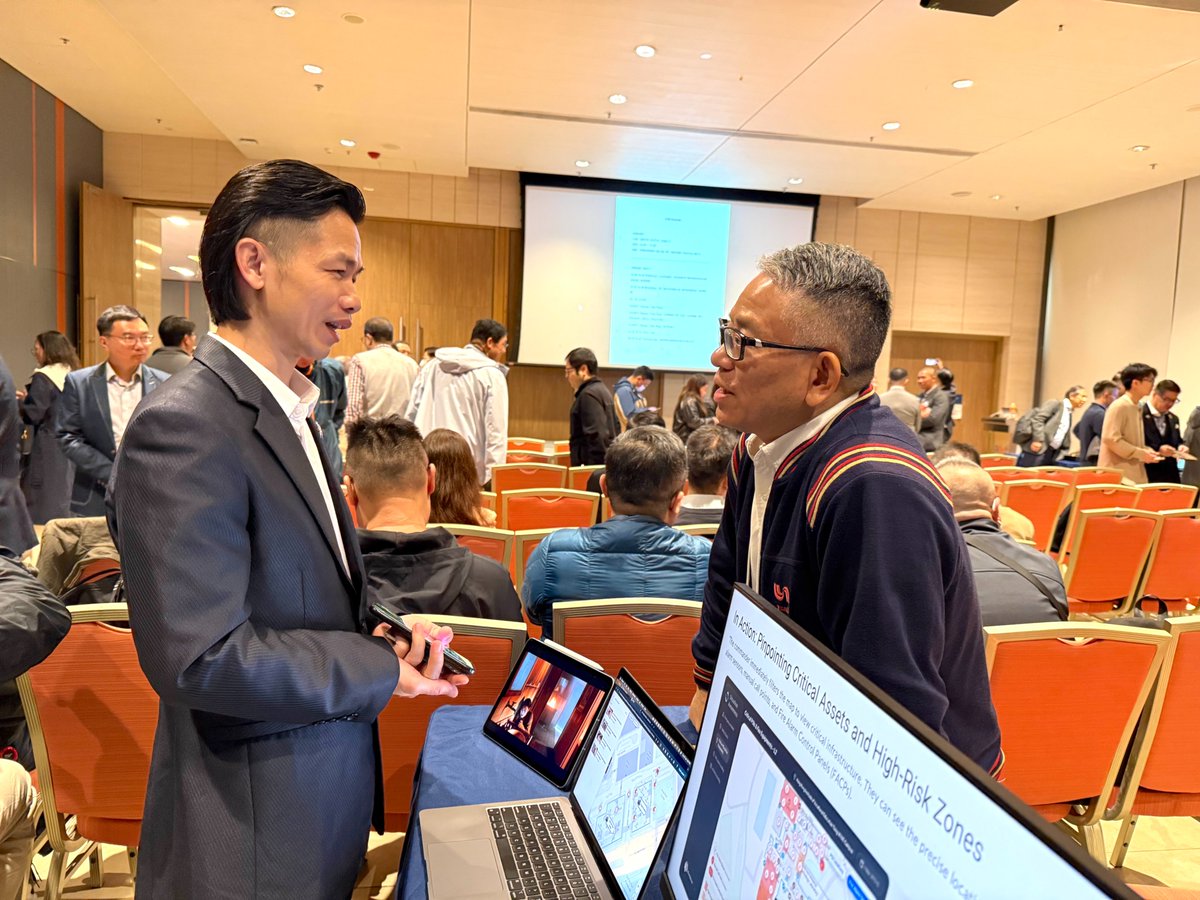
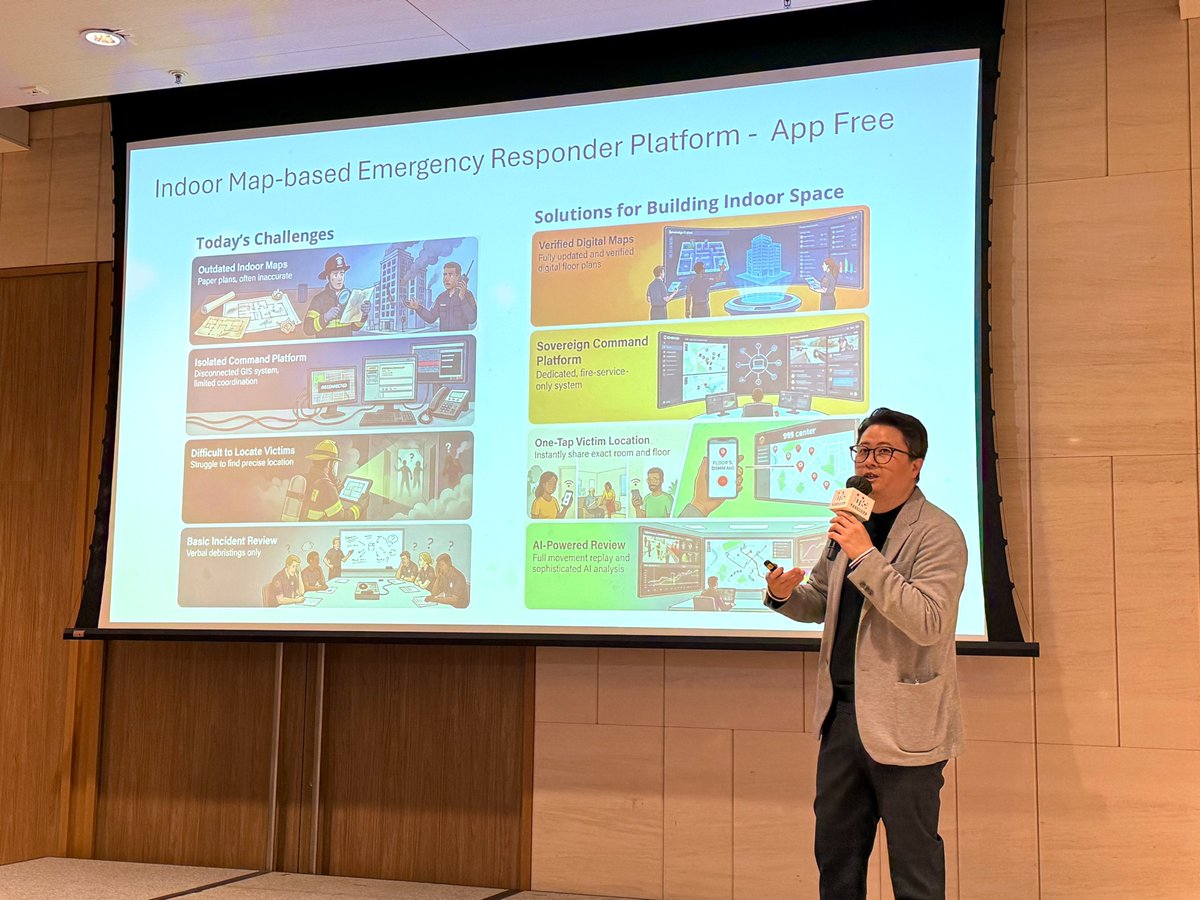
To bridge this gap, we showcased the framework for our Fire Service Maps and Emergency Responder Platform at the Presentation on Building Management Technology Products and Solutions (建築物管理科技產品及方案介紹會).
Connecting with nearly 150 government and industry representatives, we demonstrated how to turn unquantifiable buildings into data-backed assets 👇
🗺️ Verified Digital Maps: Upgrading outdated paper plans into fully verified geospatial maps.
🚨 Sovereign Command Platform: Designed to provide commanders with precise locations of fire alarm sensors and high-risk zones.
📍 One-Tap Victim Location: A framework empowering the public to share exact room and floor locations during emergencies.
🛠️ Near Miss Reporting: A proactive tool engineered to reduce patrol staff needs through location-based issue reporting.
A huge thank you to the organizers, Legislative Councillor for the Technology & Innovation Functional Constituency, Hon. Duncan Chiu, and the Hong Kong Information Technology Joint Council (HKITJC) for driving the future of public safety.
#Mapxus #IndoorMapping #IndoorNavigation #PropTech #PublicSafety
30
Happy Lunar New Year from the Mapxus team! 🏮🐎
As we welcome the Year of the Horse, we are galloping toward new horizons with you. Wishing you a year filled with boundless energy, prosperity, and breakthrough success. Let's map out a brilliant year ahead!
#Mapxus #HappyLunarNewYear
29
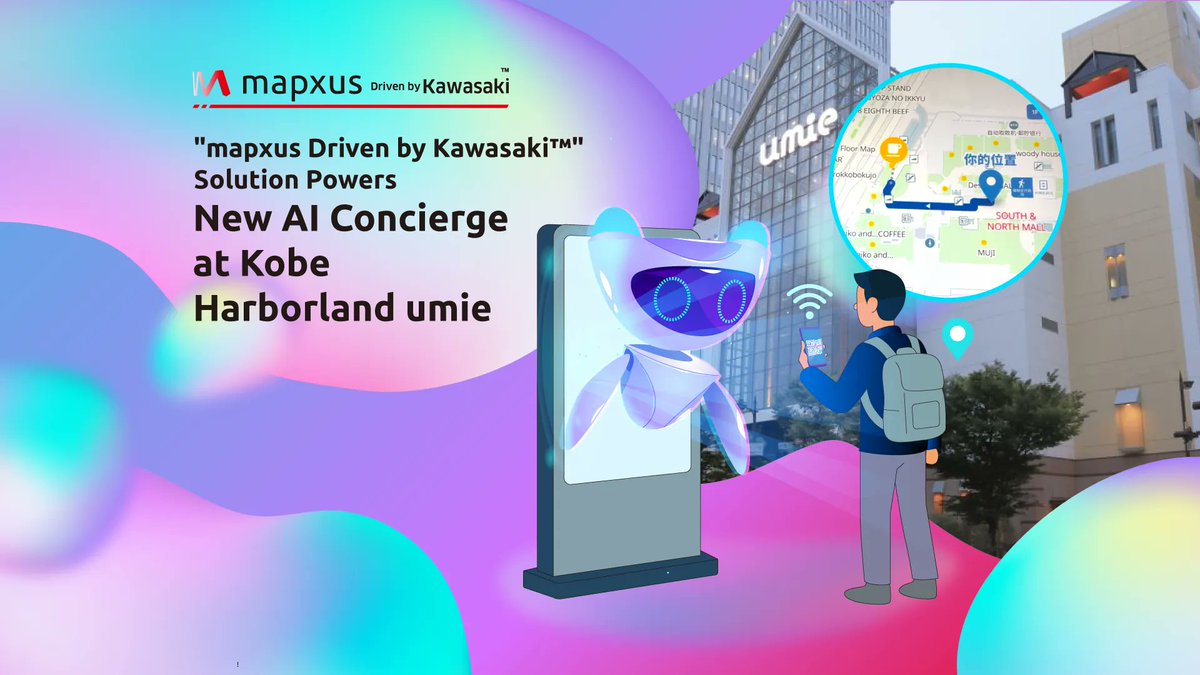
"Where can I eat Kobe beef?" 🥩
Searching for a restaurant and navigating to it in a massive complex should be effortless.
We are proud to power the new "AI Concierge" at Kobe Harborland umie, now live in partnership with Kawasaki Heavy Industries and Kotozna.
How it works:
🗣️ Just Ask: Chat in 5 languages
🤖 AI Map: Kotozna’s Gen AI finds the spot, and our "mapxus Driven by Kawasaki™" solution creates the route
📲 Scan & Go: Transfer navigation to mobile via QR
No apps. No hardware barriers.
Read the full story: 👉 bit.ly/4txbT2r
#Mapxus #Kobe #RetailTech #JapanDX #IndoorNavigation
1
64
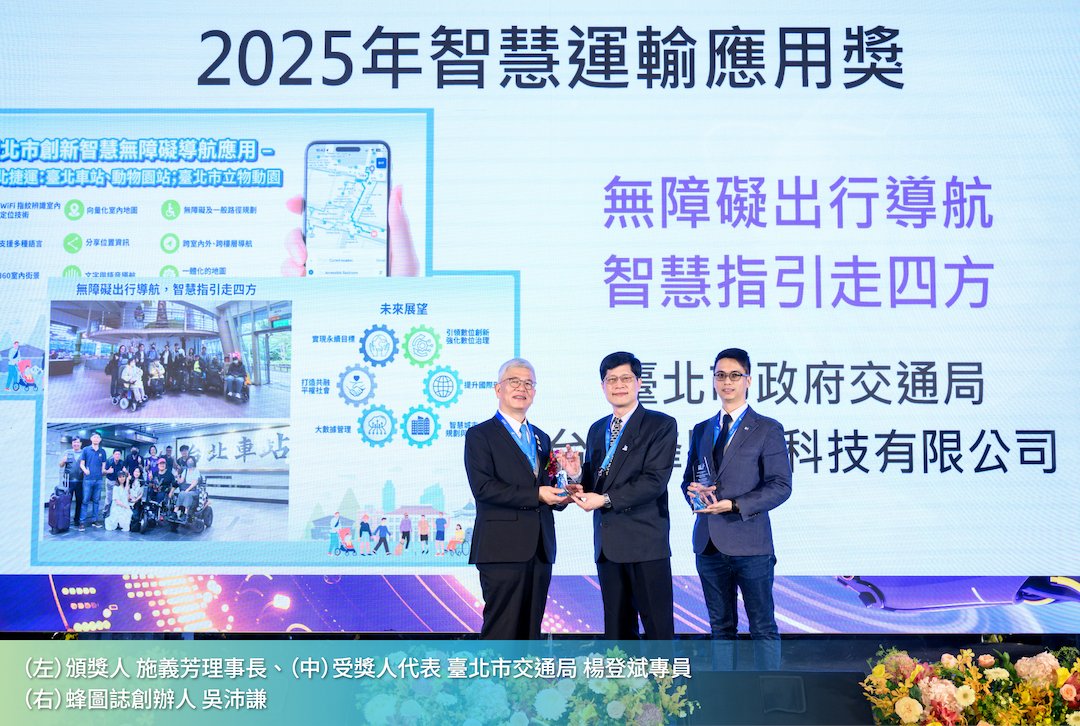
Taipei Main Station is famous for its complexity. So, how do you navigate a multi-layered transit hub where GPS doesn't work? 🏙️🧭
In a recent interview, Commissioner Jack Chao from the Department of Information Technology, Taipei City Government, highlighted the station as a key pilot site for the city’s AI-driven smart city strategy.
📡 𝗧𝗵𝗲 𝗖𝗵𝗮𝗹𝗹𝗲𝗻𝗴𝗲
Traditional GPS is limited to 2D positioning and struggles to function effectively in large, multi-level environments like Taipei Main Station.
📶 𝗧𝗵𝗲 𝗦𝗼𝗹𝘂𝘁𝗶𝗼𝗻
Taipei adopted Wi-Fi fingerprinting, an infrastructure-free technology that calculates signal strength for positioning. Crucially, it is supported by international-standard maps designed for high integrability.
💡 𝗧𝗵𝗲 𝗜𝗺𝗽𝗮𝗰𝘁
This approach overcomes GPS limitations to enable barrier-free navigation, providing a cost-effective and low-maintenance solution for the station’s complex, multi-level layout.
Mapxus is proud to be the technology partner powering this solution, demonstrating how indoor navigation can be solved at scale.
Read the full article 👉 technice.com.tw/experience/g…
臺北車站作為全臺最繁忙的交通樞紐,其多樓層、立體交錯的空間結構,向來是導航技術的一大考驗。
在 GPS 訊號難以穩定覆蓋的室內環境中,數位導航該如何真正落地?
臺北市政府資訊局趙式隆局長近日在專訪中分享,臺北車站已成為市府推動 AI 智慧城市策略的重要實證場域。
市府透過Wi-Fi指紋辨識 (fingerprinting) 等技術,在GPS無法完整發揮的情境下,無需新增硬體,透過運算無線訊號強度組合,即能協助旅客進行室內定位與無障礙導航,提升交通樞紐的使用體驗。
Mapxus 很榮幸能成為此專案的技術合作夥伴,協助臺北市將高度複雜的交通空間,轉化為更直覺、智慧且具成本效益的數位體驗。
#Taiwan #SpatialAI #IndoorNavigation
1
45
No Hardware, No Limits. 🇯🇵
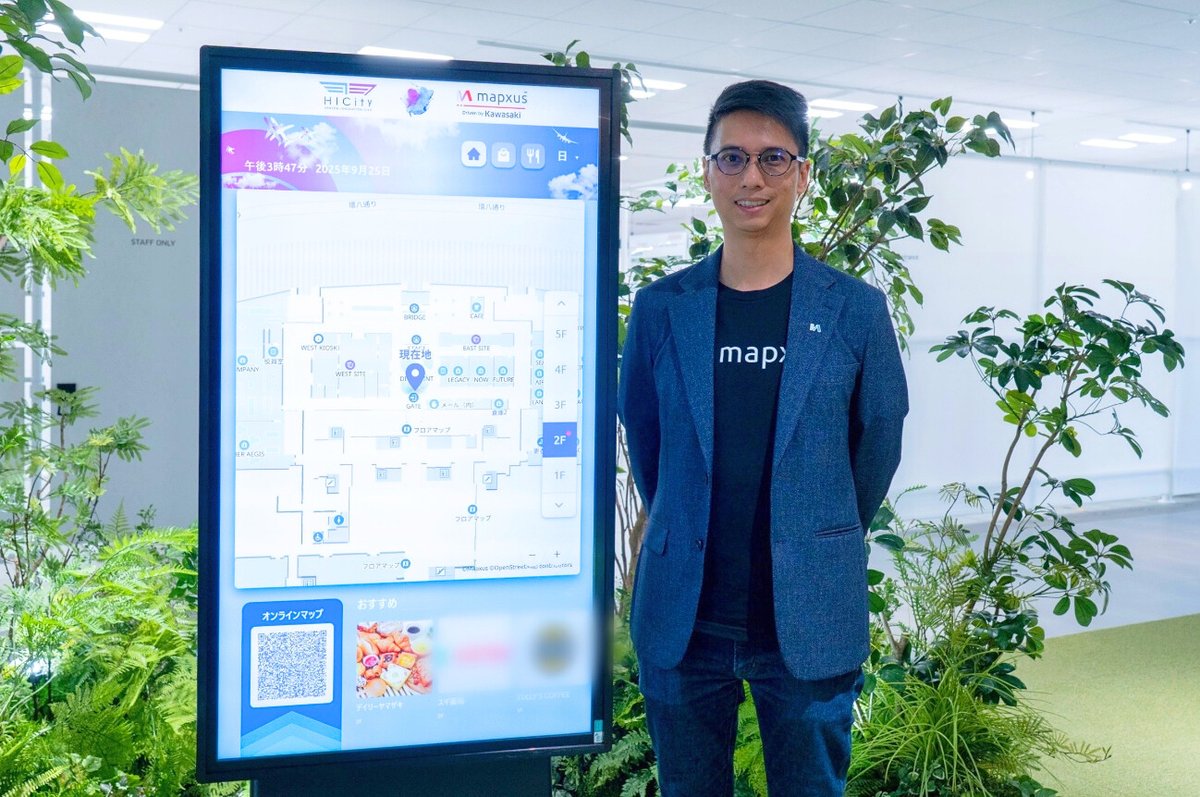
Honored to be featured by MLIT's Walking Space DX! Our COO, Ocean Ng, discusses transforming Japan's indoor spaces with Kawasaki Heavy Industries, Ltd.:
🚀 60 venues mapped in just 9 months
♻️ Sustainable "Social Enterprise" model
🤖 Building a future where people & robots coexist
English Recap: bit.ly/4tjERT8
Original Interview: walkingspacedx.go.jp/post-15…
(Photo: Walking Space DX)
#Mapxus #GeoSpatial #JapanDX #SmartCity

50
"Digital Twin" often sounds like a Silicon Valley buzzword. But the reality is much more human. 💪
We often assume indoor mapping is just for finding restrooms in a shopping mall.
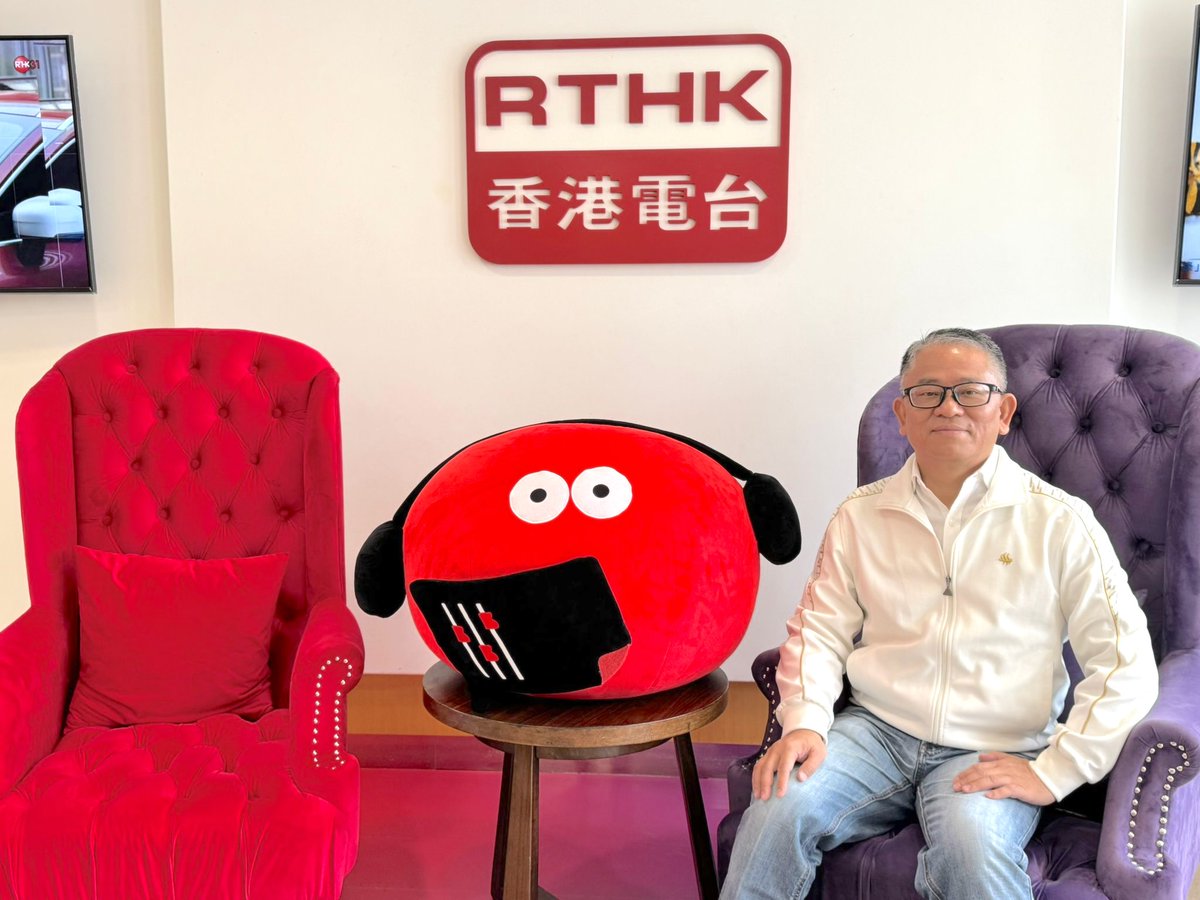
Fresh off our delegation to Riyadh, our CEO John Chan joined @rthkhk -財經新思維 with a global reality check.
Here is the rundown from the interview:
🌏 The Global Context
In the Middle East, we are seeing unprecedented scale. Venues are functioning like indoor cities, making data essential for crowd management in these giga-projects.
In Taiwan and Japan, the focus blends commercial with resilience. Alongside our strong presence in the retail sector, indoor data is becoming critical infrastructure for disaster response and safety.
🚀 The "Impossible" Stat
For years, the blocker was cost. John revealed that by leveraging AI, we have successfully reduced mapping costs to just 1% of traditional methods.
📷 The Real-World Application
This efficiency allows us to go further. We are now partnering with @ricoh to integrate 360-degree cameras with our data. It creates an "Indoor Street View" that allows facility managers to monitor construction sites remotely.
🧭 Why does this matter?
John closed with a personal reflection on the tragic Garley Building fire in Hong Kong 30 years ago.
Whether you are a property developer or a government official, accurate spatial data isn't just a "nice-to-have."
➞ It makes invisible infrastructure visible.
➞ It speeds up SOS response.
➞ It ensures that in an emergency, no one is left off the map.
Digital twins are becoming the safety standard for our cities.
🎧 Listen to the interview (Cantonese): news.rthk.hk/rthk/ch/news-pr…
#Mapxus #DigitalTwin #SpatialAI #IndoorMapping #SmartCity #PublicSafety #AI
1
26
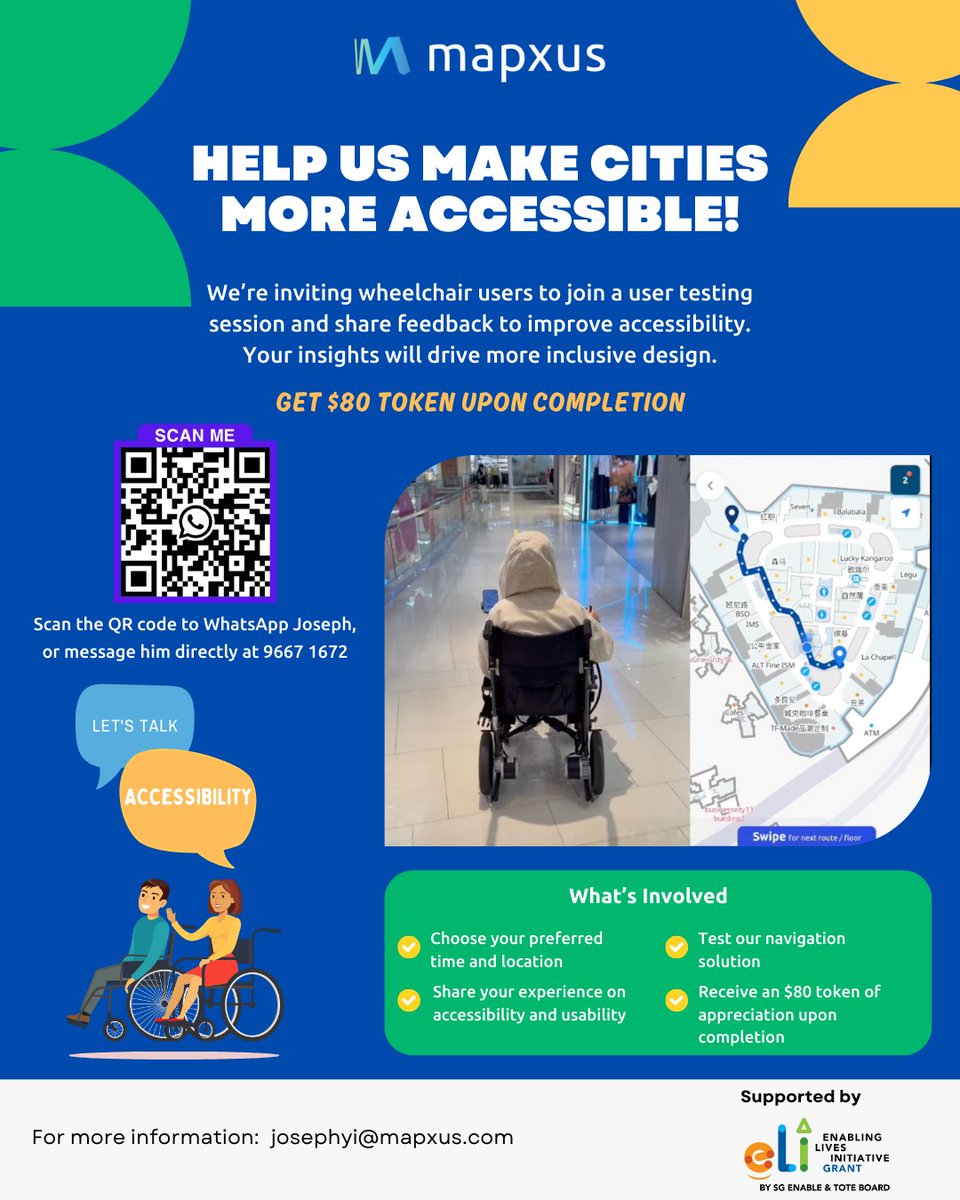
Help us build a barrier-free Singapore! 🇸🇬✨
At Mapxus, we believe technology should be accessible to everyone. We are committed to creating inclusive smart city solutions that empower every individual to navigate independently. 🦾
𝗪𝗲 𝗻𝗲𝗲𝗱 𝘆𝗼𝘂𝗿 𝘃𝗼𝗶𝗰𝗲. 🗣️
We’re inviting 100 wheelchair users in Singapore to take part in a trial of our inclusive indoor wayfinding solution. Your real-world feedback will help us build better, more accessible navigation. Participants will receive $80 cash as a token of appreciation upon completion.
𝗪𝗵𝗼 𝗰𝗮𝗻 𝗷𝗼𝗶𝗻?
Smartphone users in Singapore who use a manual or motorized wheelchair.
👉 𝗛𝗼𝘄 𝘁𝗼 𝗽𝗮𝗿𝘁𝗶𝗰𝗶𝗽𝗮𝘁𝗲:
Scan the QR code or reach out to Joseph Yi, our Head of Business Development, via WhatsApp ( 65 9667 1672) or email (josephyi@mapxus.com) to join the trial.
#Mapxus #Singapore #IndoorNavigation
1
32
Partnering with Sino Group at Olympian City, Mapxus Anywhere removes digital barriers for a truly seamless visitor journey.
✨ Solution Highlights:
📱❌ App Free Experience: Zero App Download, Zero Installation, Trigger Instantly
🛒 Boost Footfall via Store Promos
📍 1-Click WhatsApp Location Sharing
🏢 Seamless Multi-phase Navigation
🎥 Watch the demo: instagram.com/reel/DSm1vxxAQ…
#RetailTech #PropTech #SmartCity
1
35
Thank you for being part of our journey.
May your holidays be filled with well-deserved rest, warmth, and quality time with the people who matter most. Wishing you and your loved ones a season full of joy and happy connections.
Merry Christmas from all of us at Mapxus! 🎄🌟
#Mapxus #MerryChristmas #IndoorMapping #SmartCity
27
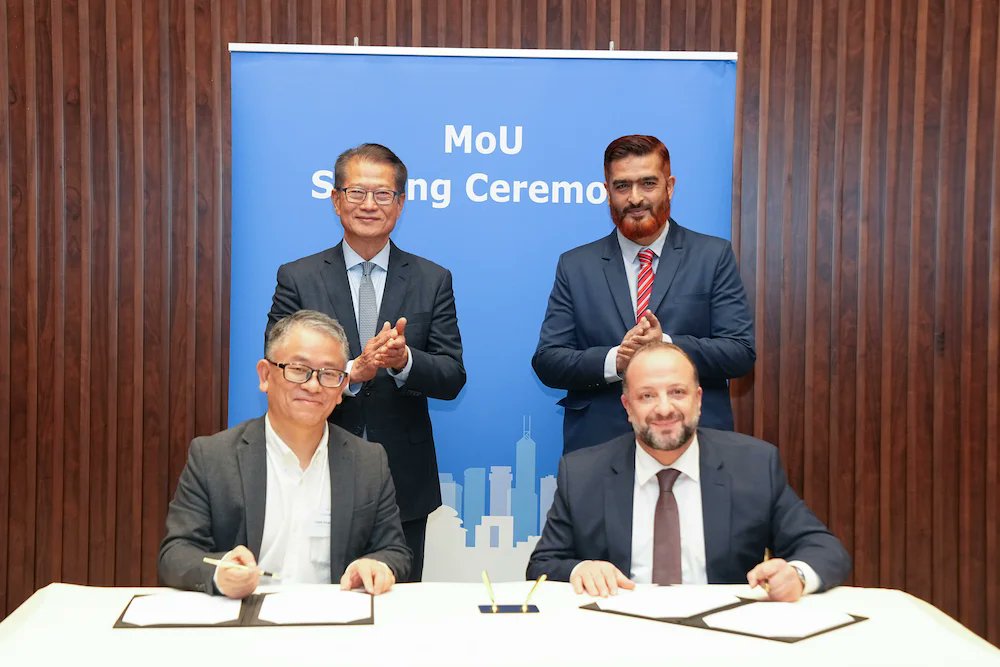
🇸🇦 Mapxus x ABM @abmolayan: Advancing Smart Cities in Saudi Arabia
We’re thrilled to announce a strategic MOU with Arabian Business Machines, signed during the Hong Kong delegation visit! ✍️
It’s already a winning partnership: Our deployment at Al Rashid Mall @alrashid_mall in Khobar not only enhanced visitor experience but also won the Sustainability & ESG Award at #MECSR 2025. 🏬🏆
Together, we are scaling indoor intelligence to support #SaudiVision2030. 🚀
Read more: bit.ly/494QioC
#IndoorMapping #SmartCity #SaudiArabia #PropTech #ESG #RetailTech


1
49