
Co-founder of SprintSolo.dev, VC in Asia with 100 portfolios. Seeded 1B$ value last 10 years. Investing in Deeptech startups for sustainability & ESG
Joined April 2009
- Tweets 12,906
- Following 1,219
- Followers 8,146
- Likes 2,235
258 Photos and videos



정말 참 어이가 없네. 어느나라나 역시 정치가 문제다. 정치란 결국 경제에 대한 권력이다.
Fable 5가 갑자기 안되길래 서버가 터졌나 했더니. 미국 정부에서 클로드 최신 버전을 사용하지 못하게 금지시켰다고.
소버린 AI가 왜 필요한지 교육을 확실히 시켜주는구나.
182
멀티 에이전트 코딩에서 각자의 산출물을 merge가 아니라 대화를 시켜서 서로 싱크한다?
Mar 8

The next step for autoresearch is that it has to be asynchronously massively collaborative for agents (think: SETI@home style). The goal is not to emulate a single PhD student, it's to emulate a research community of them.
Current code synchronously grows a single thread of commits in a particular research direction. But the original repo is more of a seed, from which could sprout commits contributed by agents on all kinds of different research directions or for different compute platforms. Git(Hub) is *almost* but not really suited for this. It has a softly built in assumption of one "master" branch, which temporarily forks off into PRs just to merge back a bit later.
I tried to prototype something super lightweight that could have a flavor of this, e.g. just a Discussion, written by my agent as a summary of its overnight run:
github.com/karpathy/autorese…
Alternatively, a PR has the benefit of exact commits:
github.com/karpathy/autorese…
but you'd never want to actually merge it... You'd just want to "adopt" and accumulate branches of commits. But even in this lightweight way, you could ask your agent to first read the Discussions/PRs using GitHub CLI for inspiration, and after its research is done, contribute a little "paper" of findings back.
I'm not actually exactly sure what this should look like, but it's a big idea that is more general than just the autoresearch repo specifically. Agents can in principle easily juggle and collaborate on thousands of commits across arbitrary branch structures. Existing abstractions will accumulate stress as intelligence, attention and tenacity cease to be bottlenecks.
73
Usage intelligence라
May 26

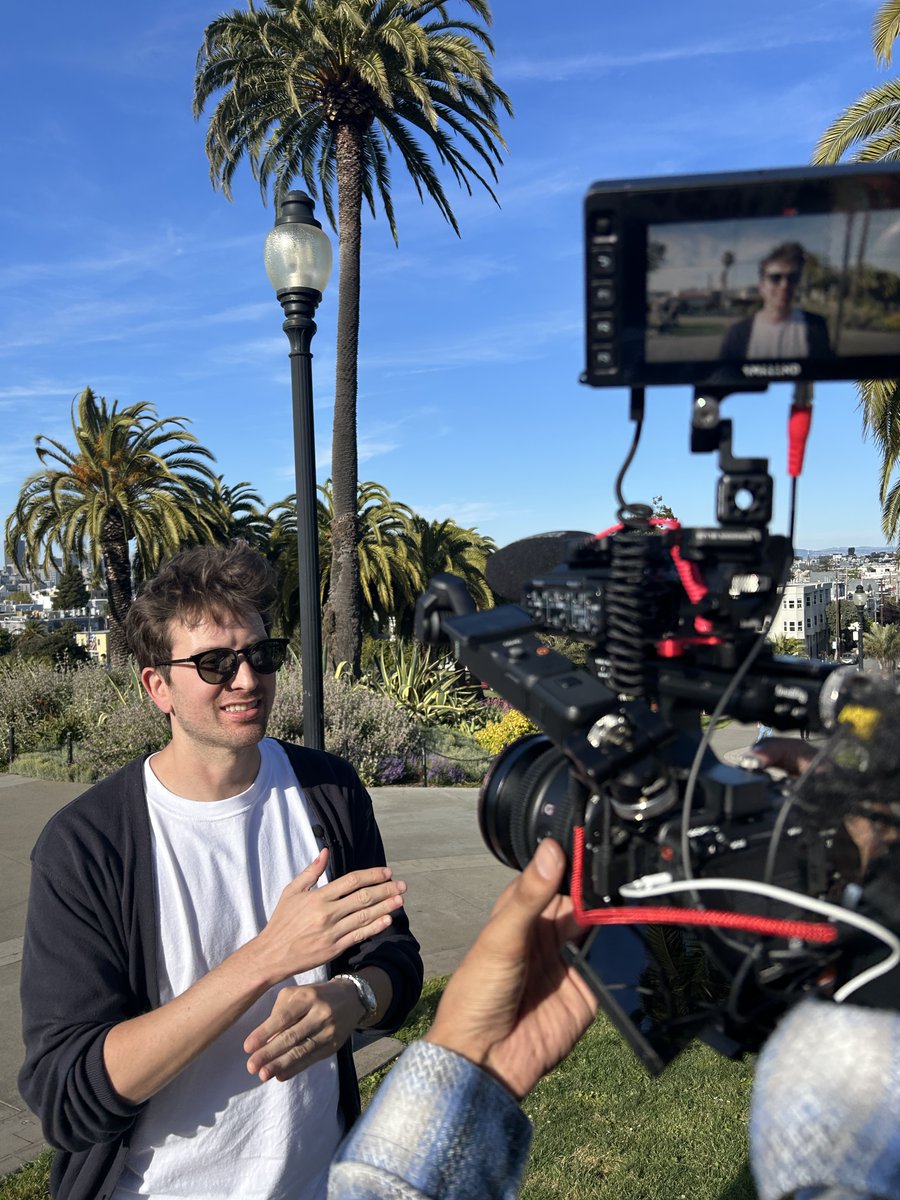
I just got back from SF and I FEEL INSPIRED.
I spent 5 days with frontier AI model teams, AI startup founders, and 3 billionaires.
My takeaways:
1. I had lunch with 3 billionaires. All of them are buying SaaS companies and rebuilding them agent-first. They were deeply inspired by Bending Spoons and Ryan Cohen's eBay deal. Buy the company, cut the headcount, rebuild the tech, add agents, add features, make more valuable experience, raise prices.
2. The frontier model companies are hungry for usage data from the field. They can see API calls and token counts. They can't see the actual workflows. If you're deep in a niche using these models in ways the model companies haven't seen, that understanding is incredibly valuable. Usage intelligence is the new alpha.
3. Consumer AI is massively underbuilt. Every billboard in SF is either B2B inference infrastructure or vertical agent companies. The entire city is optimized for enterprise. Meanwhile you have companies like Cal AI doing $50M ARR in 18 months as a consumer app. I met with a cool few teams doing consumer AI (@paulscherer / @ekuyda)
4. MCP came up in literally every conversation. The companies exposing their product as MCP endpoints are getting pulled into deals they never pitched for. The ones that aren't are becoming invisible to agents. This is the new SEO. If agents can't find you, you don't exist. Building products for agents is the new zeitgeist in general.
5. Not uncommon for hot seed rounds to be $25-50 million valuations. I saw a Series A at $450 million
6. If I had a dollar every time someone mentioned "forward-deployed engineer" this trip I could have funded a seed round. It's the hottest role in SF right now. The person who sits between the agent and the customer, making sure everything actually works.
7. The mood around open source shifted. A year ago it felt like open source was chasing the frontier models. Now founders are telling me Gemma and DeepSeek are good enough for 80% of what they need at a fraction of the cost. The "which model do you use" conversation is being replaced by "which model for which task." Model loyalty kinda feels dead.
8. Voice agents came up more than I expected. Multiple founders told me voice is the interface for the next billion users. The billion people who will never type a prompt will absolutely talk to one.
9. The Obsidian community in SF is weirdly intense. Multiple founders showed me their vaults unprompted. Like showing someone your home gym. It's a flex now. The quality of your knowledge base (second brain?) is becoming a status symbol among builders.
10. Maybe it was just the people I met but the age of the founders is shifting. I met more founders over 40 this trip than any trip before and more founders under age 21 than ever before. Founders getting older and younger at the same time.
11. I spoke to a lot of fast-growing startups, VCs and frontier models who are hiring content creators right now.
12. The restaurant scene in SF is actually better than it's been in years. Founders are going out more. Alcohol is out, not surprisingly.
13. SF doesn't feel like the only place anymore. We all have access to the same frontier models. We all read the same X feed. A founder in NYC or Lagos is calling the same APIs as a founder in SoMa. So in the past it felt like SF was always lightyears ahead, doesn't feel that way anymore. It's okay not to live in SF and have BIG DREAMS.
14. The coworking spaces in SF are half empty but the coffee shops are packed. People want to be around people. I had a few startup ideas here....
15. Walking around the Mission I noticed something: the street-level businesses, the taquerias, the barbershops, the laundromats, none of them use any AI at all.
16. I heard the phrase "agent debt" for the first time. Like technical debt but for agents. When you hack together an agent workflow fast and never clean it up, the system prompts conflict, the memory gets polluted, the tools overlap. 6 months later the agent is doing weird things and nobody knows why lol.
17. Met a few people who carry two phones now. One for personal. One that's basically an agent terminal running Telegram or iMessage connections to their agent fleet.
It's always amazing to get that dose of inspiration in SF. I FEEL INSPIRED.
But I'm so happy to be back home, locked in and building.
We're 12-18 months into a shift that will take 15 years to play out. The urgency in every conversation was real.
What an incredible time to be building.
78
에이전트 서비스에 메뉴가 많다는 얘기는 에이전트가 내가 개떡같이 시켜도 찰떡 같이 알아듣지 못한다는 뜻이다.
39
1년 이내에 예비창업자의 사업계획서는 모두 AI가 만들것으로 예상한다. 서류 평가가 의미가 있을까? 그럼 앞으로 이들을 어떻게 평가해야할까? 여러분의 의견은?
1
50
n8n와 Dify는 죽지 않고 살아남았다?

133
버티칼 RAG 검색에서 필요할 듯

A 6-person team is building task-specific AI models that are 4-8x faster than anything from OpenAI or Anthropic. 500K downloads on HuggingFace. No hype. Just better engineering winning on the merits.
This is what "make something people want" looks like in the model layer.
zeroentropy.dev
63

17
48
438
731,903
Michael ByungSun Hwang retweeted

May 17
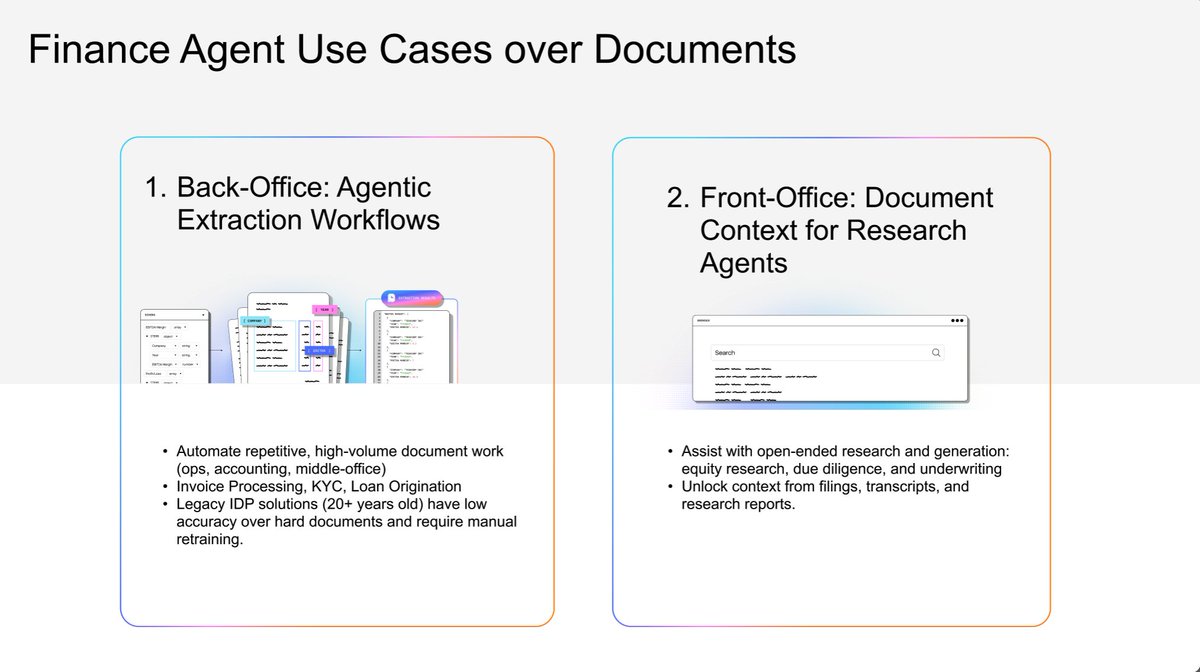
Many AI agents in finance rely on extremely high quality context engineering from documents 📑
They can be roughly divided into two categories:
1️⃣ Repetitive, operational work common in back-office use cases - invoice processing, loan origination, KYC
2️⃣ Assistive agents for open-ended research and generation of reports/presentations - e.g. diligence, equity research
We gave a workshop last week in NYC on how to build a high-quality document context layer to enable these AI agent use cases. At this stage, you need a rigorous OCR layer, evaluation checks, and good UI/UX for HITL review/audit - even a slight mistake in number can have catastrophic consequences downstream.
Check out the resources below:
✅ My slides: talk a lot about document processing and the general landscape of knowledge work: figma.com/slides/QUUMQqhCsmV…
✅ Logan’s repo on building an agentic document parsing pipeline over financial documents, with full HITL review: github.com/logan-markewich/f…
Our core mission is extracting the highest-quality document context for AI agents in finance and more. Come talk to us if you’re facing relevant challenges: llamaindex.ai/contact
9
23
148
13,012
12개월안에 이게 가능할까? 회사를 위한 자율학습 에이전트
May 15
More AI agent observations below (I keep adding to the list):
1. Hermes agents write to their own memory after every task. Which means starting today versus starting in 6 months is an unfair advantage for you.
2. We're maybe 12 months from an agent that can watch you work for a week and then do your job without any instructions. The screen recording plus agent memory plus local model combination makes this possible right now
3. The real reason local models matter for founders: you can ship a product where the AI runs entirely on the customer's device and you never touch their data. Zero privacy concerns. Zero server costs. Zero compliance headaches.
That changes which industries you can sell to overnight. Healthcare, legal, finance, all the regulated verticals that won't send data to the cloud just opened up.
4. Every company needs to be rebuilt as a "second brain" before agents can be useful. That means every process, every decision, every piece of institutional knowledge has to exist in a format an agent can read. Most companies have none of this.
5. Agent costs are the new headcount. Won't be crazy for companies to spend 50% of their total headcount cost on tokens.
6. Agents are accidentally creating internal competition at companies. The marketing agent and the sales agent are optimizing for different metrics and working against each other without anyone realizing it. It took humans decades to develop cross-functional alignment. Nobody thought about it for agents.
7. The YAML config file is becoming the new org chart. Who reports to who, what permissions they have, what tools they access, all defined in a config file. The company's structure is literally a file you can version control, fork, and deploy. That's new.
8. The first agents that can smell a scam are going to be worth billions. Right now agents will happily wire money to a fake invoice because it matched the format. The trust layer is completely missing.
9. We're about to find out that most "expertise" was actually just memory. Knowing the tax code. Knowing the case law. Knowing which supplier charges what. When an agent holds all of that in context, the expert's value shifts from "I know things" to "I know which things matter." Much smaller group of people.
10. We're all running the same models. The differentiation is in what you feed them. Two founders with the same agent, same model, same tools will get wildly different results based purely on the quality of their knowledge base. Garbage context in, garbage output out. Forever.
11. The most underbuilt category in AI right now: agents for old people. 70 million boomers who need help with medical forms, insurance claims, and appointment scheduling.
12. Agent latency is the new page load speed. If your agent takes 45 seconds to respond, your customer already switched to one that takes
13. Skills files are the new apps. A SKILL.md that tells an agent how to do one thing well is more valuable than a SaaS subscription that does the same thing behind a login screen.
14. AI hardware... how do you create devices that are good businesses that people want? It'll be a $30 dongle you plug into existing dumb devices to give them an agent brain. Smart toaster doesn't need to be built from scratch. It needs a $30 brain attached to a $15 toaster.
15. Your agent can read faster than you can think. The bottleneck in every agent workflow is now the human approval step. We're the slow part. That's a strange thing to sit with.
16. Agents made the 80/20 rule violent. The 20% of work that matters is now the only work humans do. The 80% just disappeared. Entire job descriptions were hiding inside that 80%.
17. The thing I keep coming back to: the best businesses right now are being built by people who are just slightly ahead of their customers. Not 10 years ahead. 6 months ahead. That's the sweet spot. Far enough to lead. Close enough to be understood.
107
YC26의 Foaster.ai에 대한 AX 접근법에 대한 비판적 분석
drfuturewalker.com/yc26yi-fo…
72
결국 이거였나?

HTML is the new markdown.
I've stopped writing markdown files for almost everything and switched to using Claude Code to generate HTML for me. This is why.
144
Michael ByungSun Hwang retweeted

Apr 29
48
257
1,751
2,872,548
누가 살아남을까?
인프라 SaaS는 내구성, 확장성, 보안에 대한 지속적인 필요성과 AI 주도 수요의 증가 덕분에 살아남습니다.
네트워크 효과를 만들거나 결과 중심 SaaS는 비기술적 경쟁 우위를 활용하고 도구가 아닌 직접적인 결과를 만든다면 살아남을겁니다.

3
227
에이전트를 우선으로 조직의 워크플로우를 새로 만들어야 효과가 있다.
Apr 20

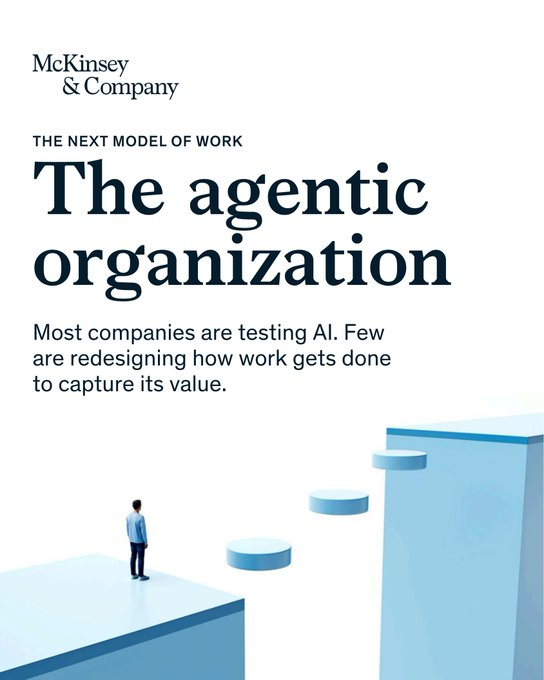
McKinsey published a piece this week on "The Agentic Organization." They claim most companies are stuck in pilot mode because the work itself hasn't changed.
What "pilot mode" looks like at a 75-person consulting firm I've seen inside:
- One analyst running Claude for market research.
- A few associates using Gemini to draft deck sections.
- A partner who built a private GPT for proposal writing and didn't tell anyone.
All real. But none of them changes the firm's throughput, win rate, or margin. The pilots aren't failing because the tools are wrong. They're failing because nobody redesigned the workflow around them.
Going from pilot to production means picking one full workflow, rebuilding it agent-first, measuring it against the old one, then rolling it out across the firm. That's the step McKinsey's framing is pointing at.
Most firms skip it because it's harder than adding more tools.
Link: mckinsey.com/capabilities/pe…
1
89
정말 이게 가능한 세상이 된걸까? 아키텍처는 기획만 하면 나머지는 AI가 모든 걸 개발할 수 있는 세상이?

2
286
메모리가 곧 하네스다! 우린 아직 공용 메모리 구조를 어떻게 만들지 알지 못한다. 즉 당분간은 모두 실험이 필요하다.

1
180