
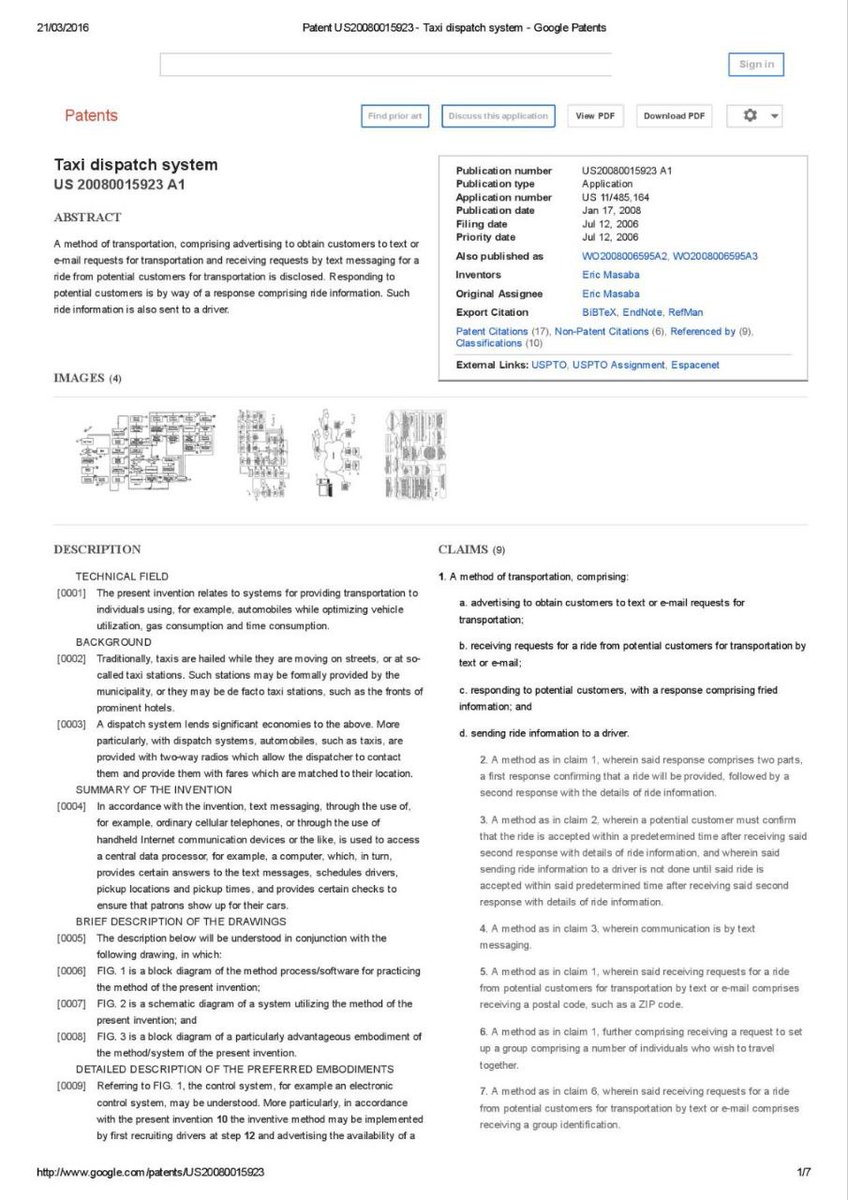
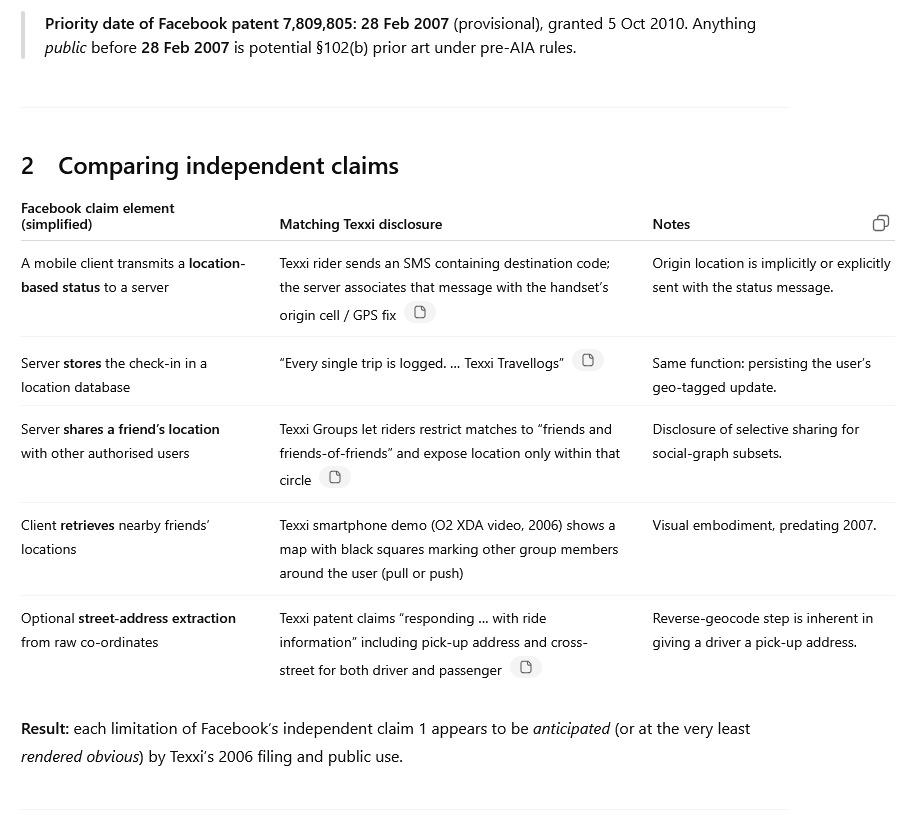
2015 Red Herring Global Winner Inventor, Disruptor, Iconoclast. Founder of app based taxi hailing uses maps US20080015923 patent (rideshare social mobile)
Joined March 2009
- Tweets 7,583
- Following 3,678
- Followers 1,368
- Likes 3,582
969 Photos and videos











Eric Masaba (马重智) retweeted

Jun 15
Researchers at Columbia University have developed modular robots that can adapt, repair, and even rebuild themselves using a concept called robot metabolism. 🤖
Instead of remaining fixed, these robots can detach, reconnect, and reorganize their own structure based on the task or environment.
If one part is damaged, the system can replace or rearrange itself rather than stopping completely.
This could reshape the future of disaster response, industrial automation, and even space exploration.
The idea of robots that evolve instead of wear out is becoming more than science fiction.
What real-world application do you think will benefit most from this technology?
🎥 Media: @Columbia
⚠️ This content is shared for informational purposes only. CTO Robotics Media is a media platform and does not own or develop the technology shown. Credit belongs to the original creators.
186
796
6,572
3,614,059
Eric Masaba (马重智) retweeted

19h
Sans déconner, c'est vraiment des génies en Allemagne 😱😱😱
311
1,340
16,804
2,779,011
Eric Masaba (马重智) retweeted
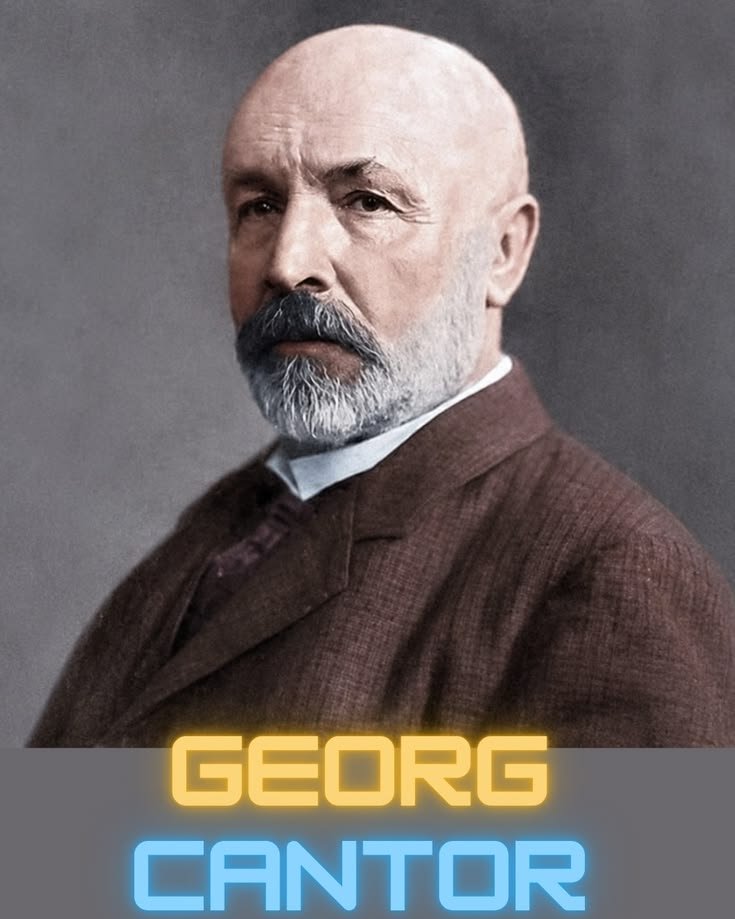
One of the most beautiful ideas in mathematics is: some infinities are bigger than others.
Though it sounds strange, it is far from obvious. In the 1870s, Georg Cantor proved that the set of real numbers is larger than the set of natural numbers. No matter how you try to pair them, some real numbers are always left unmatched.
Even more surprising, from any infinite set, we can construct a larger one. In other words:
for every infinity, there exists a greater infinity.
In 1900, David Hilbert praised this discovery, saying:
“Nothing will remove us from the paradise that Cantor has created for us.”
16
30
154
7,531
Eric Masaba (马重智) retweeted

Jun 15
Meanwhile at a Chinese university dorm
889
2,431
20,390
7,257,437
Eric Masaba (马重智) retweeted

Jun 12
Double sided bolt
[📹 engineering_world_1980_dahri]
42
208
2,628
1,053,775
Eric Masaba (马重智) retweeted

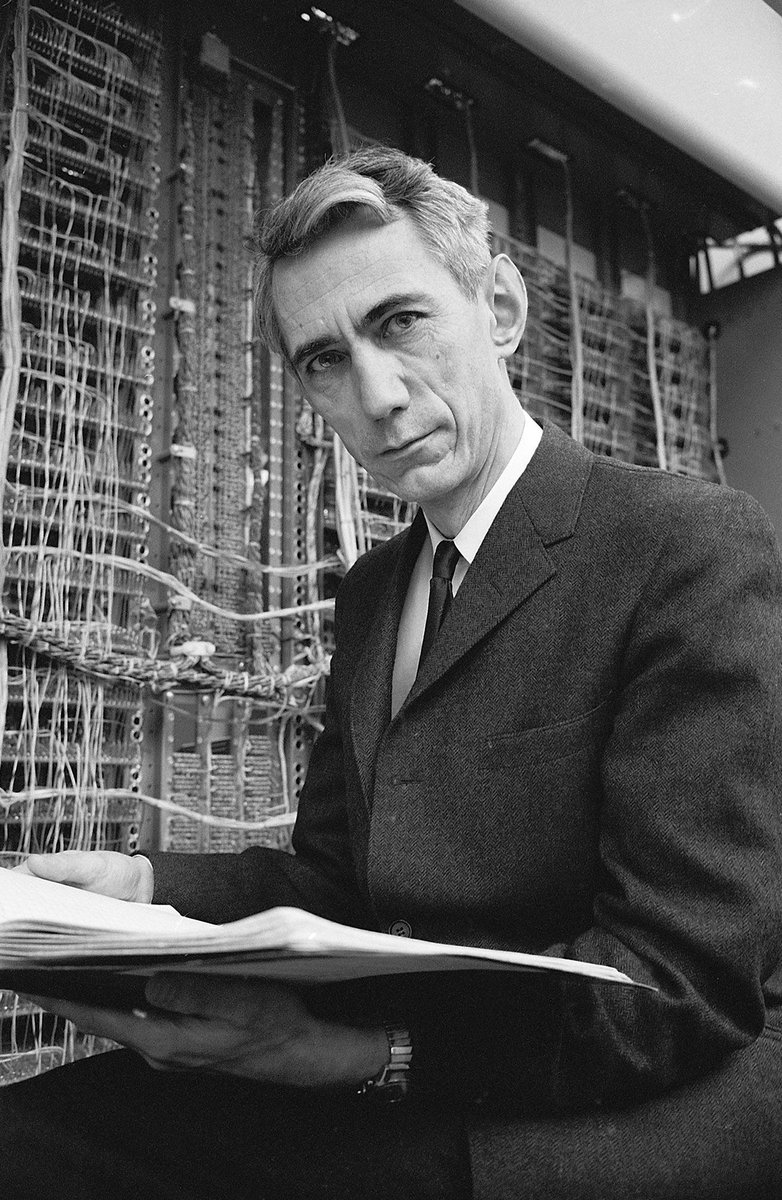
In 1937, a 21-year-old MIT student sat in a quiet library, mapping abstract philosophical logic onto electrical circuits to pass the time.
By the time he finished his thesis, the young man had mathematically proven that mechanical telephone switches could perform complex calculations. Instead of just routing phone calls, they were destined to become thinking machines.
He had just discovered the mathematical trigger for digital computing.
But when he published his work, the leading engineers of the industrial world paid little attention, viewing his mathematics as a mere academic parlor trick.
His name was Claude Shannon.
It would take years for the industrial establishment to fully realize he was right and adopt the binary logic that now powers every computer, smartphone, and network on Earth.
His breakthrough against traditional engineering is the ultimate lesson in what happens when rigid practices clash with unexpected philosophical reality.
In the early 20th century, engineers believed they understood circuit design. They knew that as telephone networks grew, they needed more physical wires and relays. But traditional engineering offered no universal science; it was a manual process of brute-force trial and error.
The systems would grow into a chaotic, tangled mess of blueprints and copper lines.
The entire industrial establishment agreed: every circuit, no matter how complex, had to be wired by manual experimentation. It was a tedious, costly formula.
But in that library, Shannon realized the establishment had left a massive variable out of their equations: 19th-century symbolic philosophy.
Shannon recalculated the engineering, factoring in what happens when you treat an electrical switch using the laws of Boolean algebra.
What he found shattered the industrial consensus.
He proved that an electrical switch has only two possible states: it is either closed and letting power through, or open and blocking the current. This was mathematically identical to True (1) and False (0).
The circuit could evaluate logical statements. There was no limit to what it could compute. It could automate human thought, transforming physical electricity into digital logic.
When Shannon presented this concept, mainstream electrical engineers were skeptical. They couldn't accept that an abstract philosophical concept could solve real-world hardware bottlenecks.
Shannon was initially ignored. The establishment stuck to their traditional wiring methods.
Instead of fighting a rigid, closed system, Shannon quietly expanded his work into Information Theory, proving that all data could be compressed into a universal currency called the "bit." Decades later, when the global tech revolution exploded, the world realized the 21-year-old student had been right all along.
The philosophical blueprint Shannon left behind is a vital truth for navigating complex problems and institutional pushback:
Comforting traditions will always be more popular than disruptive innovations. Trust the system's underlying logic anyway.
Most of us approach our careers and projects seeking the validation of current experts or established guidelines. When we propose a radical new idea or try to change a broken system, and the authorities tell us we are wrong, our instinct is to assume our logic is flawed. We abandon our data to fit the consensus.
But Shannon’s legacy proves that traditional industry consensus is not the same thing as truth.
Gatekeepers are human; they protect their own methods, their own training, and their own comfort.
What is a bottleneck, a project, or a direction you’ve abandoned just because an expert or a boss told you it wouldn't work? What happens if you stop looking for their permission and trust the structural logic of your own work?
40
224
972
61,480
Eric Masaba (马重智) retweeted

Jun 12
SOMEONE VIBE CODED A VIDEO STREAM THAT IS SECRETLY 100% TEXT SO IT CANT BE BLOCKED
it plays 360p video at 30fps, but theres no actual video on the page. every frame is just colored text characters being repainted on a canvas
to the browser its not media at all, its javascript updating some text
its called asciline, and here's the trick:
> the server decodes the real video and streams it as binary packed text over websockets
> the browser paints thousands of colored block characters fast enough to look like 360p
> ad blockers and autoplay blockers cant catch it because theres no video element to catch
> it streams in kilobytes since its just strings, so it runs on trash internet
since the video is literally text, you can apply css glows to it, let people copy paste a moving frame, or feed it straight to a local llm
however, an unblockable stream is also an unblockable ad as well
331
1,333
22,367
1,840,177
Eric Masaba (马重智) retweeted

Jun 11
Did you know that the .png format was created out of spite? Or that .jpeg just discards like half of the colours in your image because you won't notice?
To celebrate last week's launch, I published a chapter on image compression.
makingsoftware.com/chapters/…
45
291
3,507
143,951
Eric Masaba (马重智) retweeted
Jun 11
The Archimedes principle, visualized.
[📹 physicsmadefun]
14
94
1,007
229,901
Eric Masaba (马重智) retweeted

Jun 10
You have noticed it. ChatGPT feels dumber than it used to. Your prompts that worked six months ago produce worse results now. The writing sounds flatter. The ideas sound safer. The internet itself feels like it is shrinking. Every article reads the same. Every email sounds the same. Every answer sounds like it was written by the same voice.
You thought it was you. It is not you.
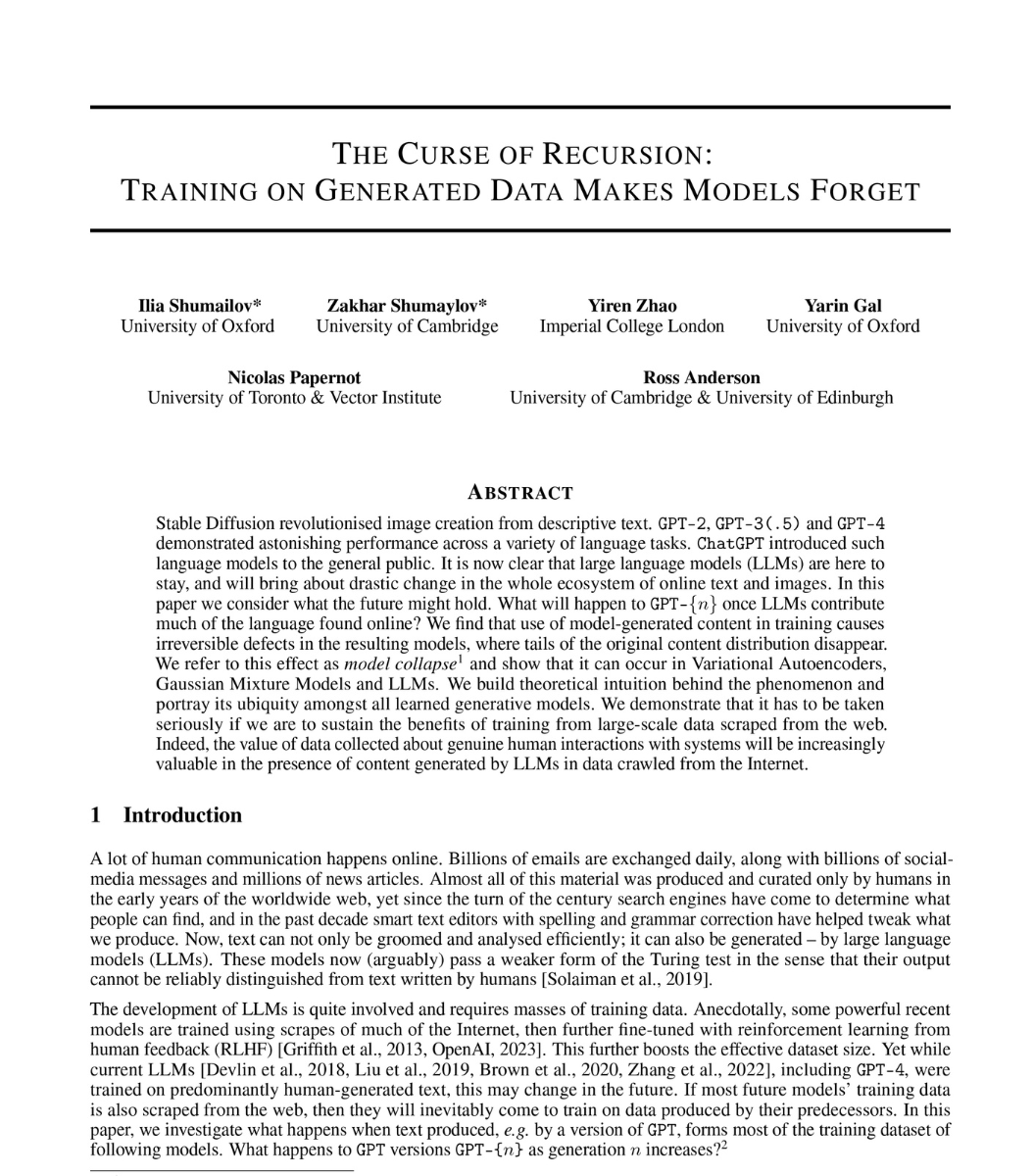
Researchers at Oxford and Cambridge published a paper in Nature proving what is happening. They call it Model Collapse.
Here is the mechanism in one sentence. AI trained on AI-generated data gets dumber every generation until it forgets what real human data looked like.
The internet is filling with AI-generated content. Blog posts. Articles. Reviews. Comments. Social media. AI companies scrape the internet to train the next generation of models. Which means the next generation of AI is being trained on the output of the current generation.
Each cycle loses information. Not randomly. It loses the rarest, most unusual, most creative parts first. The researchers call these the "tails of the distribution." The weird ideas. The unexpected perspectives. The things that made the internet feel human. Those disappear first.
What remains is the average. The safe. The expected. The bland.
Then the next generation trains on that. And loses more. And the next generation trains on that. And loses more. The researchers proved this is not a slow decline. Major degradation happens within just a few iterations. Even when some of the original human data is preserved.
They tested it on large language models. On image generators. On statistical models. The pattern was the same every time. The output converges toward a narrow, flattened version of reality that looks nothing like the original data.
The lead researcher put it plainly. "Large language models are like fire. A useful tool. But one that pollutes the environment."
The pollution is invisible. You cannot see which sentence on the internet was written by a human and which was written by AI. Neither can the AI that is about to train on it. And once the tails are gone, they do not come back. The damage is irreversible.
This is not a prediction anymore. It is a diagnosis.
The internet you grew up on was built by humans writing things no algorithm would have written. Strange, personal, imperfect, alive. That internet is being diluted. One generation of AI at a time. And the models trained on what remains are learning a smaller and smaller version of the world.
Model Collapse is not a technical problem. It is a cultural one. The thing that made the internet worth reading is the thing that disappears first.
1,142
6,393
17,742
2,238,932
Eric Masaba (马重智) retweeted

Jun 10
Super Constellation engine exhaust flames.
This NEVER gets old.
📹: m171562(Youtube)
93
855
8,332
363,662
Eric Masaba (马重智) retweeted

Jun 9
A physicist… an engineer… and a statistician… are out hunting.
Suddenly, out of nowhere, a deer appears… about fifty yards away.
The physicist steps forward. He quickly does some ballistic calculations… assumes a perfect vacuum… adjusts the angle of his rifle… and fires. The bullet lands… five yards short.
The engineer nods. “Ah… you forgot air resistance.”
He adds a little fudge factor… lifts the rifle slightly higher… and fires. This time… the bullet lands five yards long the deer.
And then, the statistician jumps up, throws his hands in the air, and shouts, “We got him!!”
6
13
184
16,433

Jun 9
Inspiring
Jun 9

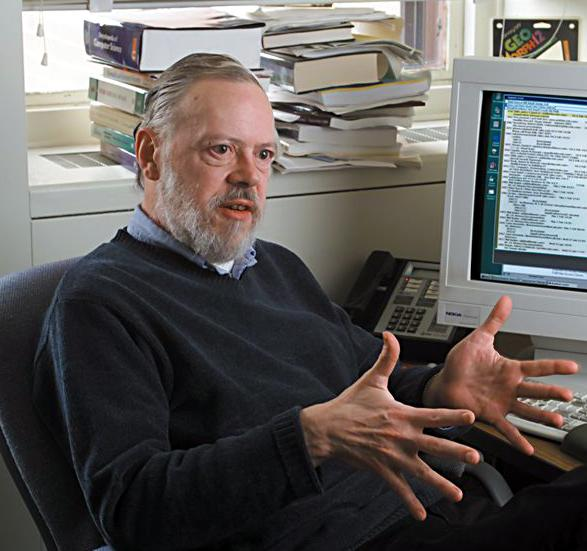
Dennis Ritchie invented C in 1972, co-built Unix in 1969, and his code is running inside every device you are reading this on right now and the colleague who announced his death had to do it through a Google post because no journalist thought to check.
He worked at Bell Labs in New Jersey for 44 years. He never gave a keynote. He never ran a company. He never appeared on a magazine cover. He just wrote code that became the invisible foundation everything else is built on.
Here is what he actually built, and why it matters more than almost anything that happened in tech.
In 1969, Bell Labs had just walked away from one of the most ambitious computing projects in history. The Multics project, a joint effort between MIT, Bell Labs, and General Electric, had collapsed under its own weight. Too complex. Too expensive. Too slow. Bell Labs pulled out.
Ken Thompson and Dennis Ritchie refused to let the ideas die.
Working in a small office in Murray Hill, New Jersey, Thompson wrote the first version of Unix in three weeks during the summer of 1969. One week for the file system. One week for the process management. One week for the command shell. Ritchie was working alongside him, and when the system needed a language that could express what they were building, he built one.
In 1972 he completed C.
C was not just another programming language. It was a different philosophy about what a programming language should be. Before C, most systems code was written in assembly, which meant every program was tied to the specific hardware it ran on. You could not move code between machines. You rewrote it from scratch every time.
C changed that. It sat close enough to the hardware to be fast, but abstract enough to run on anything. When Thompson rewrote the Unix kernel in C in 1973, it became the first operating system that could be picked up and moved to a completely different machine without starting over. Portability was a new idea. Ritchie made it real.
The branching that followed is almost impossible to overstate.
Unix spread from Bell Labs to universities. At Berkeley, it became BSD. BSD became the foundation of macOS and iOS. Unix influenced Linus Torvalds, who built Linux in 1991. Linux now runs every Android phone, every major web server, every supercomputer on the Top500 list, and the overwhelming majority of cloud infrastructure at AWS, Google, and Microsoft.
C became the parent language of C , Java, JavaScript, Python, and Objective-C. Rob Pike, who worked across the hall from Ritchie at Bell Labs for 20 years, said it plainly: "The browsers are written in C. The Unix kernel that the entire internet runs on is written in C. Web servers are written in C, and if they're not, they're written in Java or C , which are C derivatives, or Python or Ruby, which are implemented in C."
Ritchie won the Turing Award in 1983. He won the National Medal of Technology in 1998, presented by President Clinton. He was head of System Software Research at Bell Labs for decades.
He answered emails from strangers with technical questions until the end of his life. His home address stayed listed in the phone book. His colleague Brian Kernighan, who co-authored the definitive C textbook with him, said Ritchie was a private person who did no self-salesmanship. That was not false modesty. It was just who he was.
He died on October 12, 2011, at his home in Berkeley Heights, New Jersey. He was 70. He had been ill for some time. The world did not notice until Rob Pike posted a quiet announcement on Google , and the news spread through the programming community in hushed tones.
No front pages. No tributes from heads of state. No candlelight vigils outside corporate campuses.
The device you are reading this on runs code that traces directly back to what he built. So does the server that delivered it to you. So does the browser or app you opened to get here.
Most people will never know his name.
The ones who built everything you use every day do.
9
Eric Masaba (马重智) retweeted

Jun 8
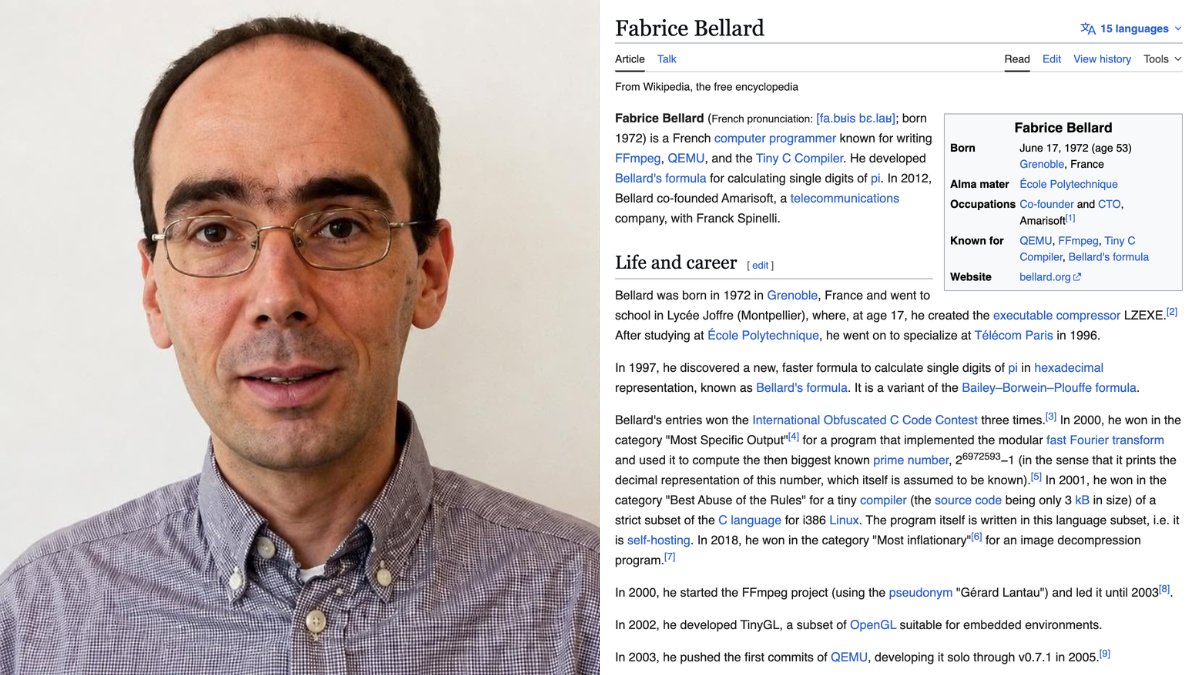
A French engineer who lives quietly in Paris has spent 30 years writing software that the entire internet now runs on without knowing his name.
He wrote the code that streams every YouTube video, every Netflix show, every TikTok clip. He wrote the code that runs the virtual servers underneath AWS, Google Cloud, and Microsoft Azure. He calculated more digits of pi than anyone in history. He has no Twitter. He has no marketing. He just keeps shipping.
His name is Fabrice Bellard.
Here is the story, because almost nobody outside the systems programming world knows what one man has built.
Fabrice was born in 1972 in Grenoble, France. He studied at École Polytechnique, the top French engineering school. He never went to Silicon Valley. He never built a startup empire. He just wrote code.
In 2000 he started a project called FFmpeg, an open-source multimedia framework for encoding, decoding, and streaming video. He was 28. The project did one thing nobody else had done well. It handled every video and audio format that existed, in one library, on every operating system. He led it himself for years.
Today FFmpeg is the invisible engine of the internet. YouTube uses it. Netflix uses it. VLC uses it. Chrome and Firefox use parts of it. Every Android phone, every iPhone, every smart TV, every video editing tool you have ever touched runs FFmpeg somewhere underneath. If you have watched a video on a screen in the last 20 years, Fabrice's code processed it.
He was not done.
In 2003 he started QEMU, a machine emulator and virtualizer. He wrote it solo until version 0.7.1 in 2005. QEMU lets you run any operating system on any other operating system. It became the foundation of modern virtualization. KVM, the Linux kernel hypervisor, runs on top of QEMU. Every major cloud provider, AWS, Google Cloud, Microsoft Azure, IBM Cloud, runs virtual machines on infrastructure built around it. The Quick Emulator is the most cited piece of cloud infrastructure code on Earth.
He kept going.
In 2001 he won the International Obfuscated C Code Contest with a small C compiler that grew into TCC, the Tiny C Compiler. TCC can compile and boot a Linux kernel from source in under 15 seconds. In 2004 he calculated the most digits of pi ever computed at the time, using a personal desktop computer and an algorithm he derived himself called Bellard's formula. In 2011 he wrote a complete PC emulator in pure JavaScript that runs Linux in your browser, a project called JSLinux that engineers still cannot believe is real.
In 2019 he released QuickJS, a small but complete JavaScript engine that fits where V8 cannot. In 2021 he released NNCP, a neural network based lossless data compressor that immediately took the lead on the Large Text Compression Benchmark.
Then he turned his attention to large language models. He built TextSynth Server, a web server with a REST API for running LLMs locally. He released ts_zip and ts_sms, compression utilities that use language models to compress text and short messages at ratios traditional algorithms cannot reach. He released TSAC, a very low bitrate audio compression system. In December 2025 he released Micro QuickJS, a new JavaScript engine for microcontrollers, separate from QuickJS, designed for environments with almost no memory.
Fabrice co-founded a telecom company called Amarisoft in 2012, where he serves as CTO. Amarisoft builds 4G and 5G base station software used by carriers and labs around the world. He has been running it for over a decade while continuing to ship personal projects from his own home page at bellard dot org
He has no Twitter. He has no Instagram. He gives almost no interviews. His personal website is a flat list of projects with no styling, no fonts, no marketing copy. Just titles and links.
A quiet French engineer who never moved to Silicon Valley wrote the code that quietly runs the internet.
He is still shipping.
385
4,573
25,483
3,122,428
Eric Masaba (马重智) retweeted

Jun 5
a developer noticed something about DNS resolvers, the servers that turn website names into addresses
they hold onto their answers for a while before forgetting them. some for up to a week
so he wondered if he could make them remember a file instead
he found close to 3.9 million of these servers sitting open across the internet
then he chopped a file into 180-byte pieces and handed each piece to a different server to hold
to prove it worked, the file he stored was one of his own blog posts. it sat there, readable, spread across machines from China to Brazil that never agreed to hold it
the whole thing is open source
> github.com/benjojo/dnsfs
there's no disk, no folder, no account. the file isn't saved anywhere
it just lives scattered across millions of machines that have no idea they're holding it, and forget it in a few days unless you keep reminding them
slower than a hard drive. in his words, still faster than a floppy disk
you don't store a file here. you keep it alive by asking for it
18
51
451
48,375
Eric Masaba (马重智) retweeted

Jun 5
Esse monstro é o motor F110 do F-16 em teste máximo de pós-combustão. O que você vê no vídeo é uma força estática de quase 29 mil libras capaz de fazer o jato atingir duas vezes a velocidade do som. É engenharia pura levada ao limite extremo.
29
225
2,455
396,952
Jun 5
Oh my!!!

35
Eric Masaba (马重智) retweeted

Jun 3
Google Maps knows where you slept last night.
Not approximately. Exactly. The address, the time you arrived, the time you left, how long you stayed. It logs this whether you are actively navigating or not, because the app is running in the background and the business model requires the data.
That data funds a mapping empire that 2 billion people depend on every month.
The founders of Organic Maps had a different theory.
That the most useful maps app on earth did not need to know anything about you. That navigation is a problem of geography, not surveillance.
That you should be able to download a map, put your phone in airplane mode, and arrive somewhere without a single byte leaving your device.
The app they built proves the theory works.
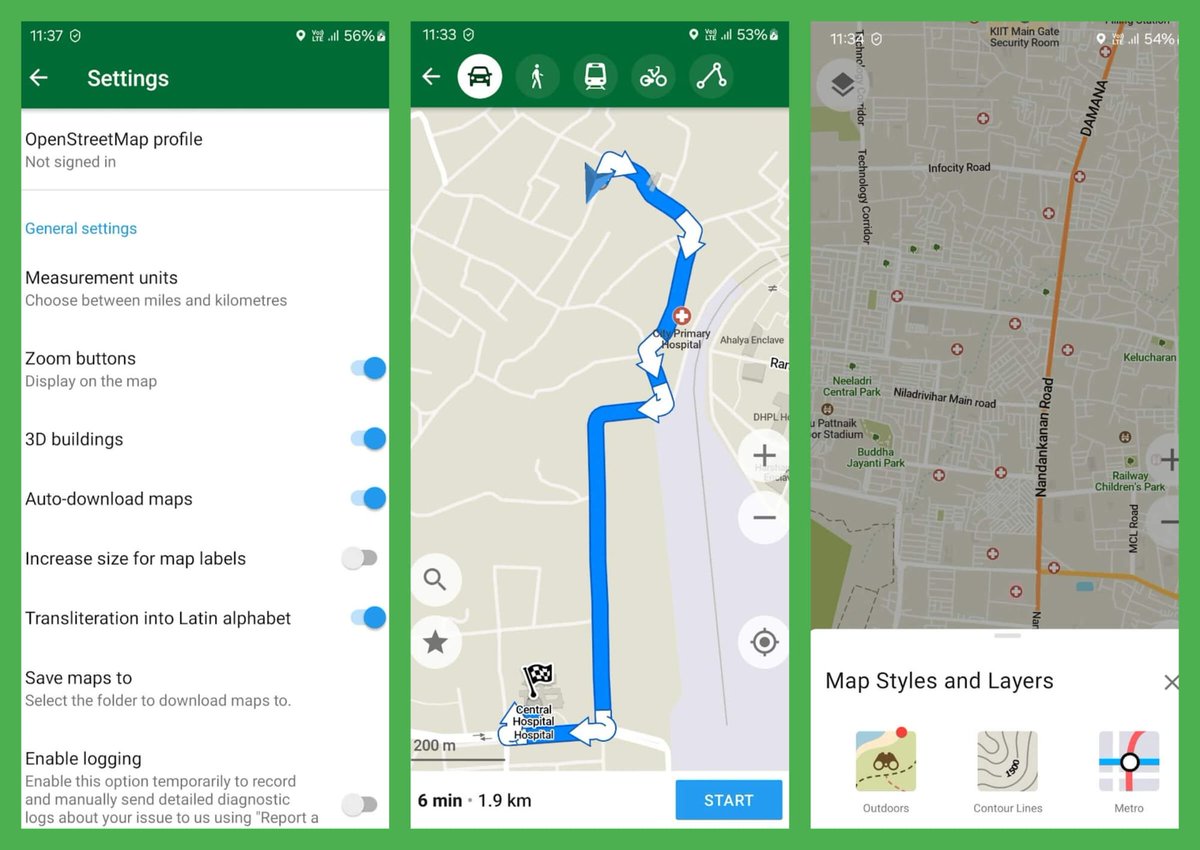
Organic Maps runs entirely offline. No account required. No registration. No push notifications. No background data.
The Exodus Privacy Project audited it and found zero trackers. The iOS build was independently verified by TrackerControl. The permissions it requests fit on a single screenshot. The comparison to Google Maps permissions requires a second screenshot just to finish the list.
Six million installs. Zero ad dollars.
The business model is donations. The map data is OpenStreetMap, the same community-built database that powers Wikipedia's maps. The rendering engine is their own. The code is open.
There is no moat. There is no lock-in. There is nothing to cancel.
Most people will never switch. The ones who do never go back.
try it here: organicmaps.app
1
17
62
8,450

Eric Masaba (马重智) retweeted
Jun 3
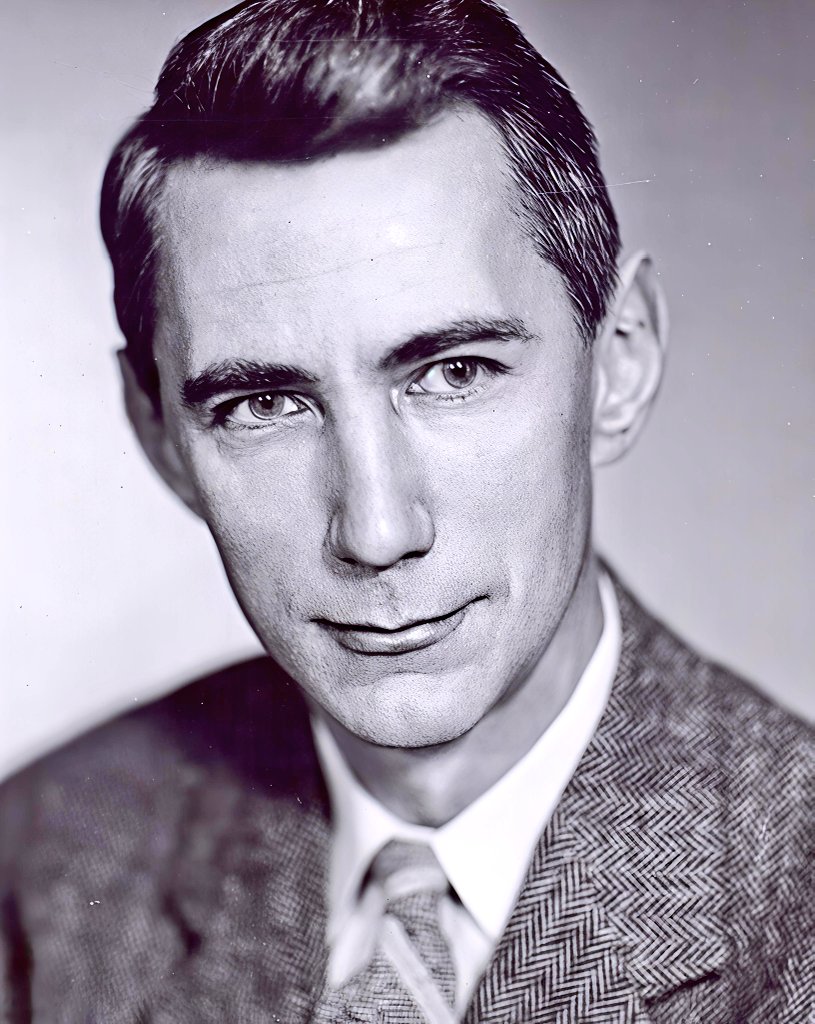
On August 10, 1937, a quiet 21-year-old named Claude Shannon submitted an 85-page thesis at MIT. No headlines. No applause. Just another paper that seemed destined to be forgotten. But inside those pages was a revolutionary idea: machines could think using simple logic, 1s and 0s, ON and OFF. By linking Boolean algebra with electrical circuits, Shannon transformed switches into decision-makers. That single insight became the foundation of the digital world. Every computer, smartphone, and algorithm traces back to it. History did not roar that day. It whispered. And from that whisper, the modern world was born, one bit at a time.
16
124
534
19,083