Joined May 2025
- Tweets 33
- Following 17
- Followers 3
- Likes 0
15 Photos and videos
Pinned Tweet
Why do some societies absorb pressure, and others collapse into conflict?
My new book attempts to answer that question.
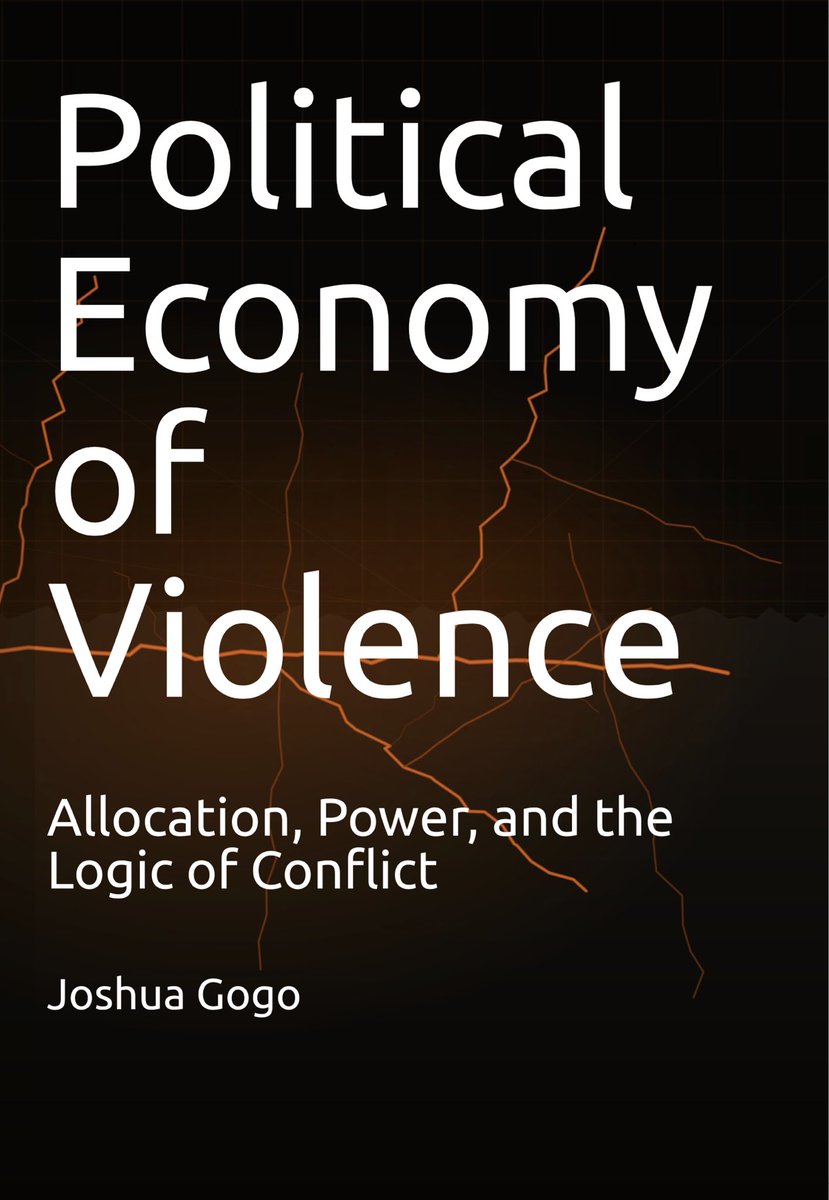
The Political Economy of Violence: Allocation, Power, and the Logic of Conflict
Coming May 14, 26.
masiframework.org #PoliticalEconomy #Conflict
3
3
26

May 17
📘 The Political Economy of Violence: Allocation, Power, and the Logic of Conflict is now available.
A framework for understanding why some systems absorb pressure and others descend into conflict.
amazon.ca/POLITICAL-ECONOMY-…
3
3
23
May 15
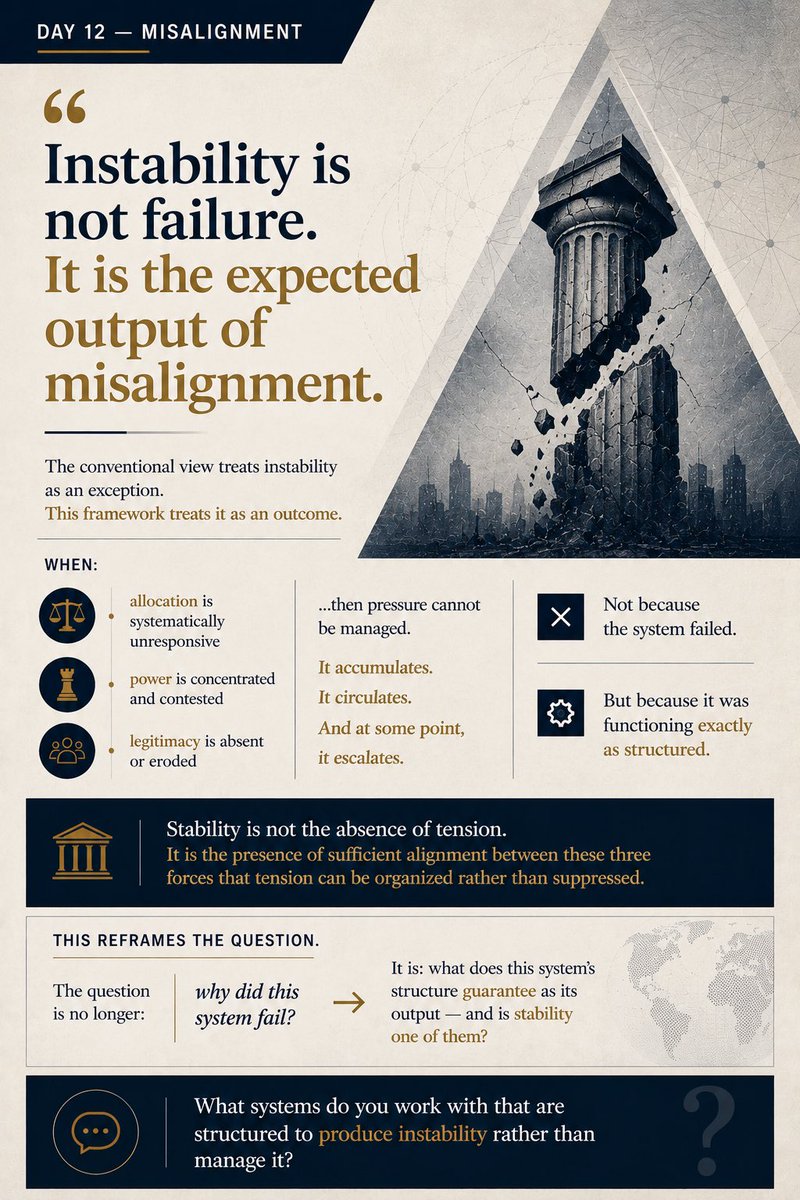
Conventional view: instability is an exception.
The MASI: instability is an outcome.
Unresponsive allocation,
Contested power,
And weak legitimacy - means pressure accumulates.
The system hasn’t failed; it was structured to produce this. #PoliticalEconomy #StructuralAnalysis
3
3
25
May 14
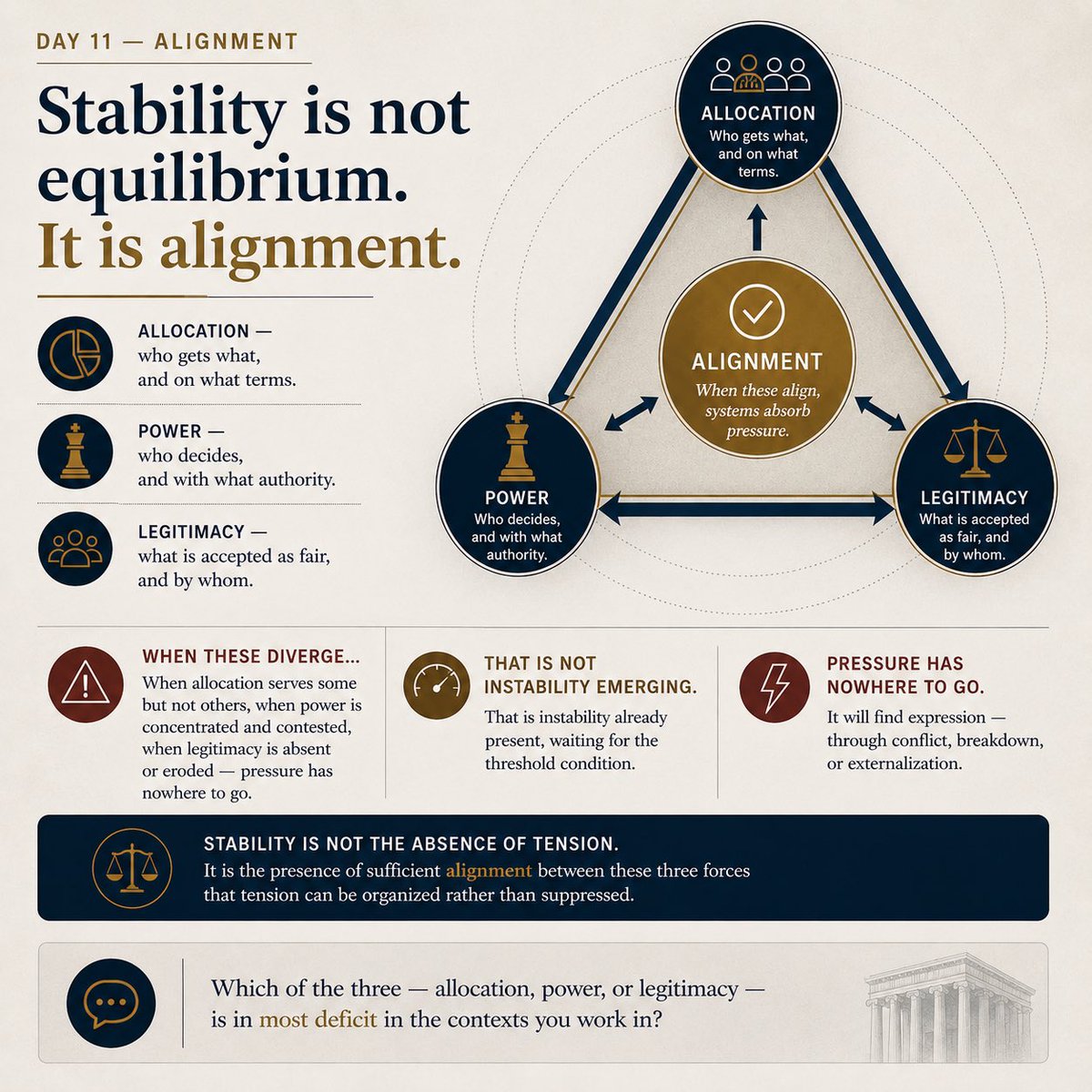
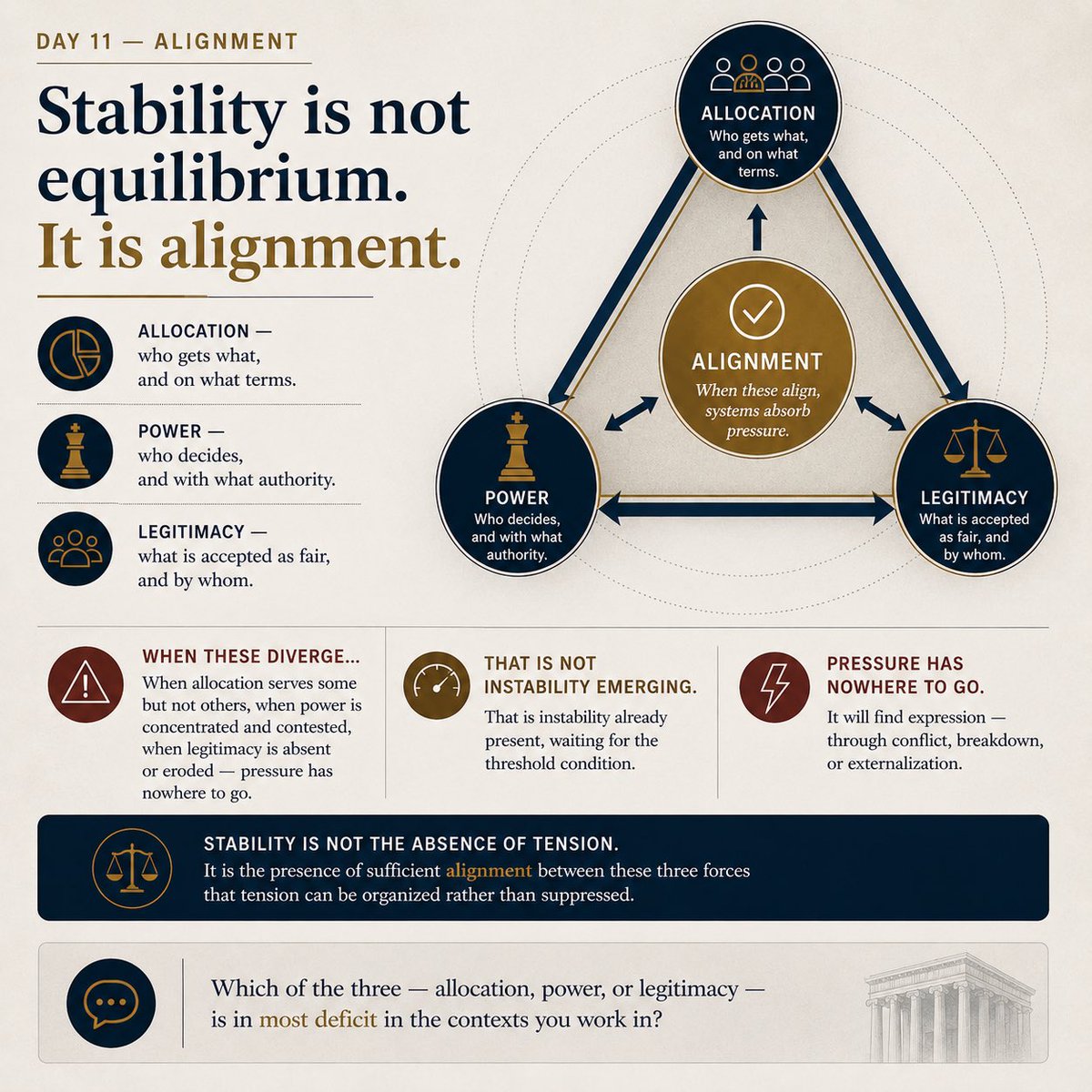
Stability is not equilibrium. It is alignment.
Of:
• Allocation (who gets what)
• Power (who decides)
• Legitimacy (what is accepted & by whom)
When these align, systems hold.
When they don't — instability isn't emerging. It's already there. #PoliticalEconomy #Governance
3
3
28
May 14
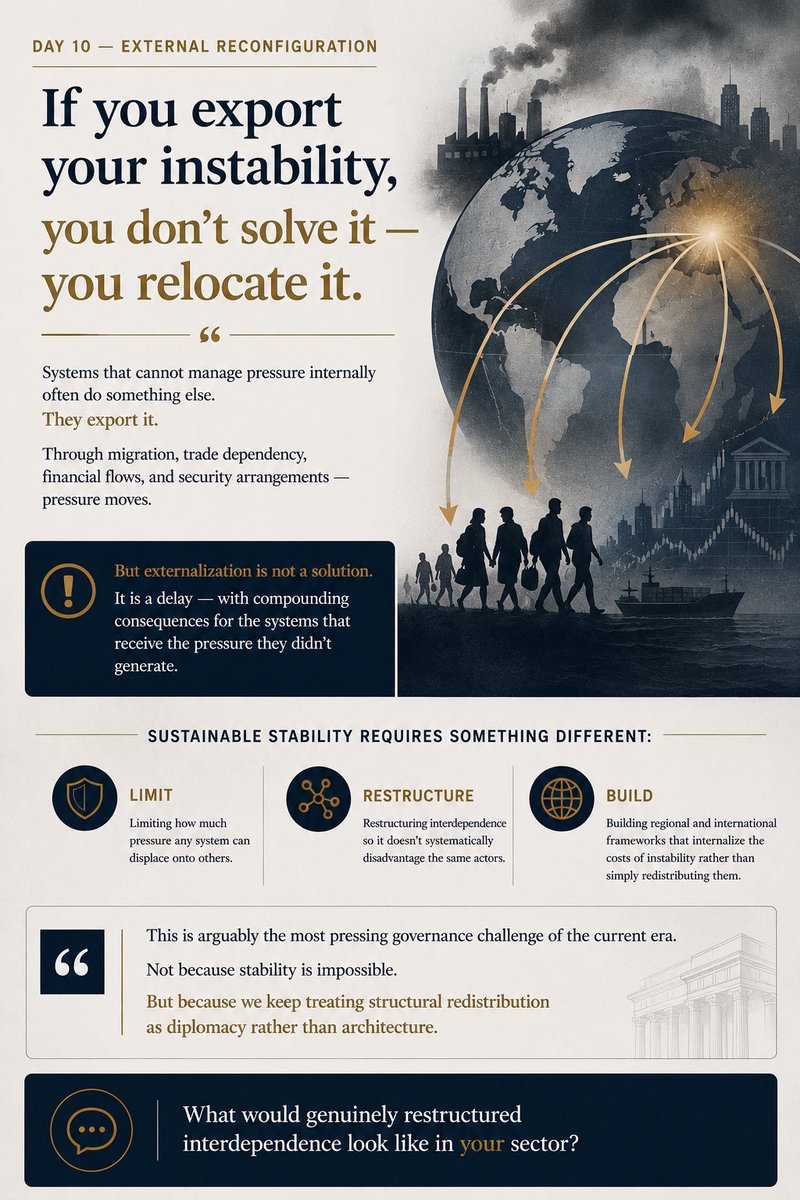
Externalization is not a solution.
When systems can't manage pressure internally, they export it through migration, trade, capital flows, security arrangements.
Restructuring interdependence for stability of all actors is not diplomacy. It's architecture. #GlobalGovernance
3
3
15
May 12
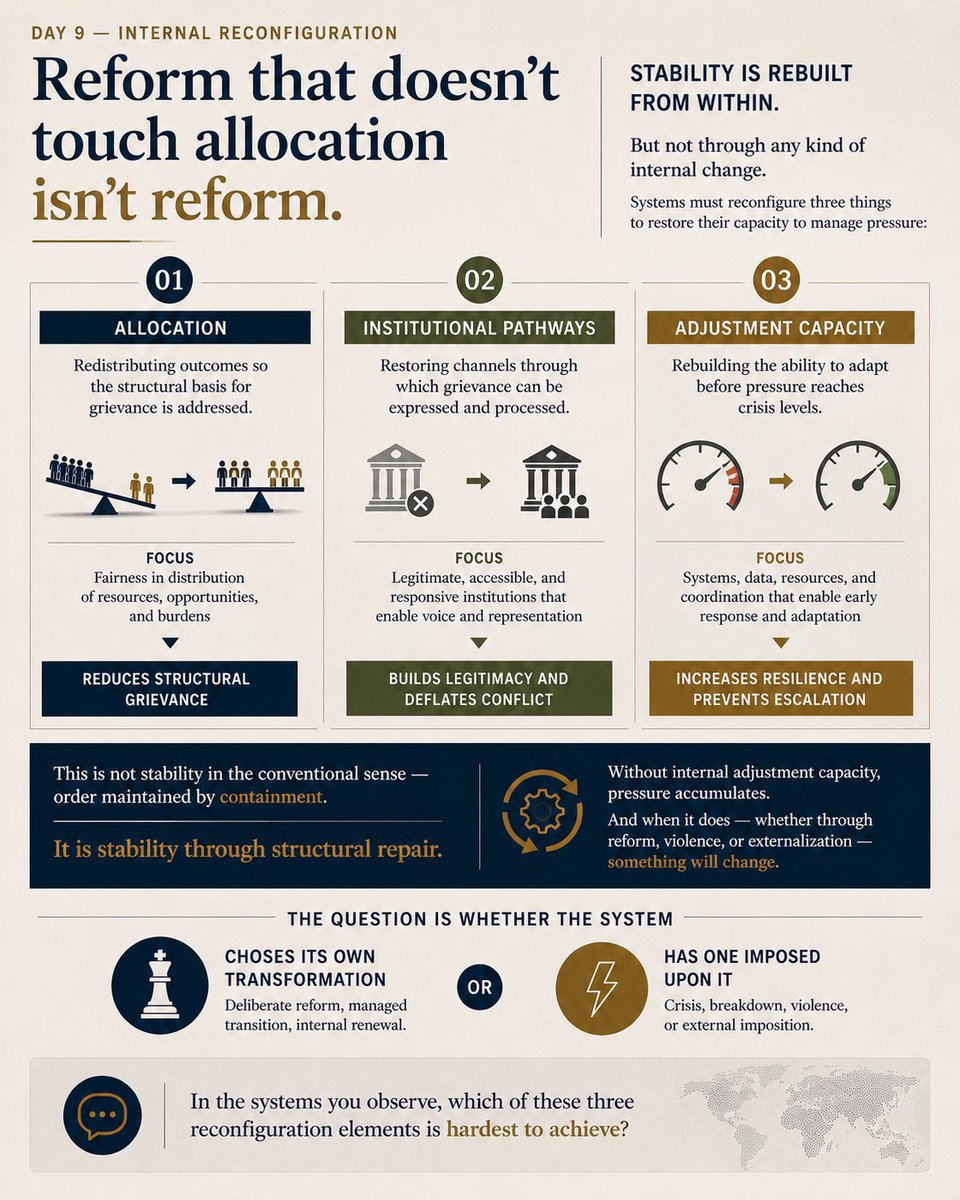
Stability is rebuilt from within, - three things are reformed:
1 Allocation (who gets what)
2 Institutional pathways (grievance processing)
3 Adjustment capacity, b4 crisis, not after
Without these, pressure accumulates. And when it does, something will give. #Governance #Dev
3
3
20
May 11
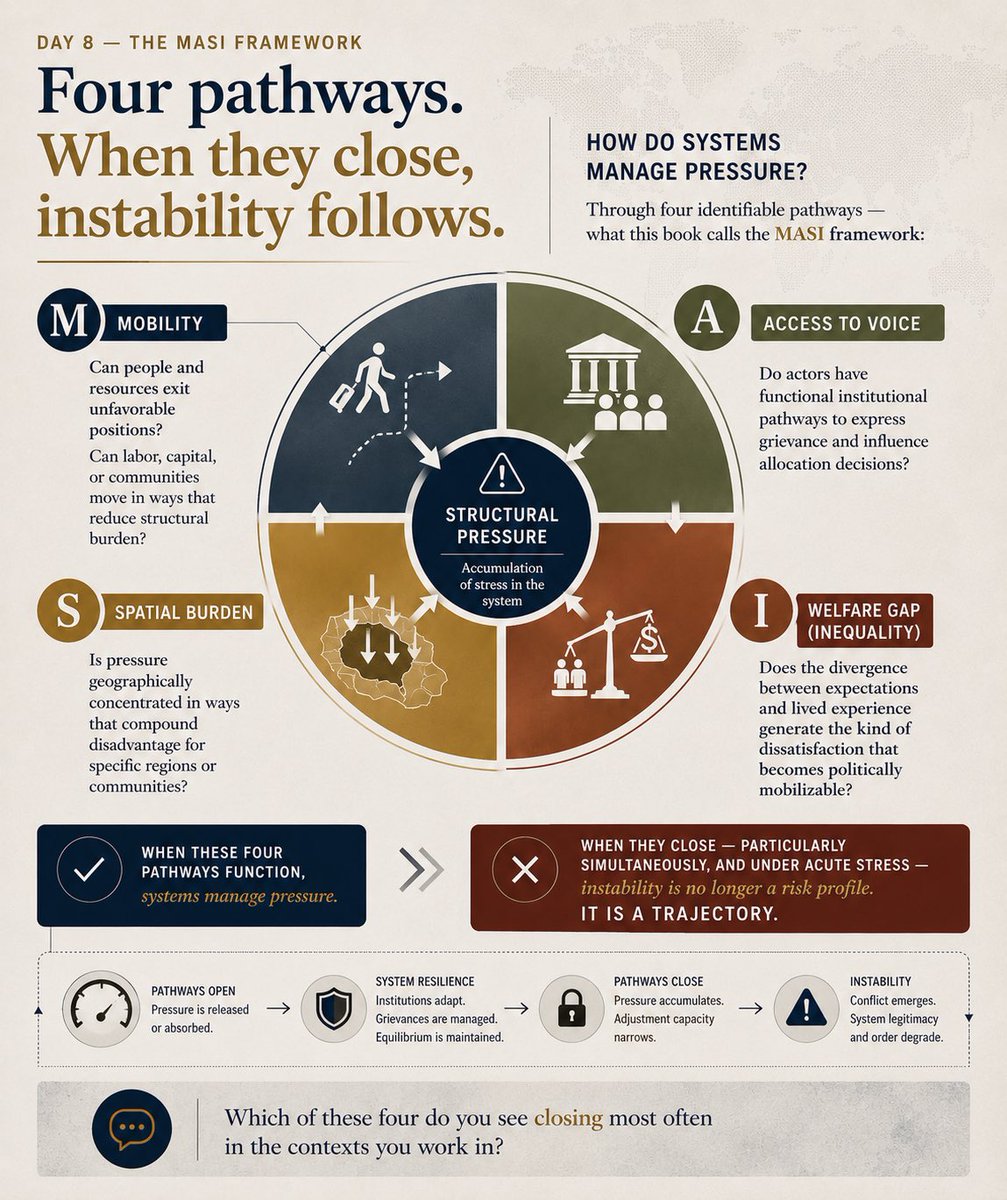
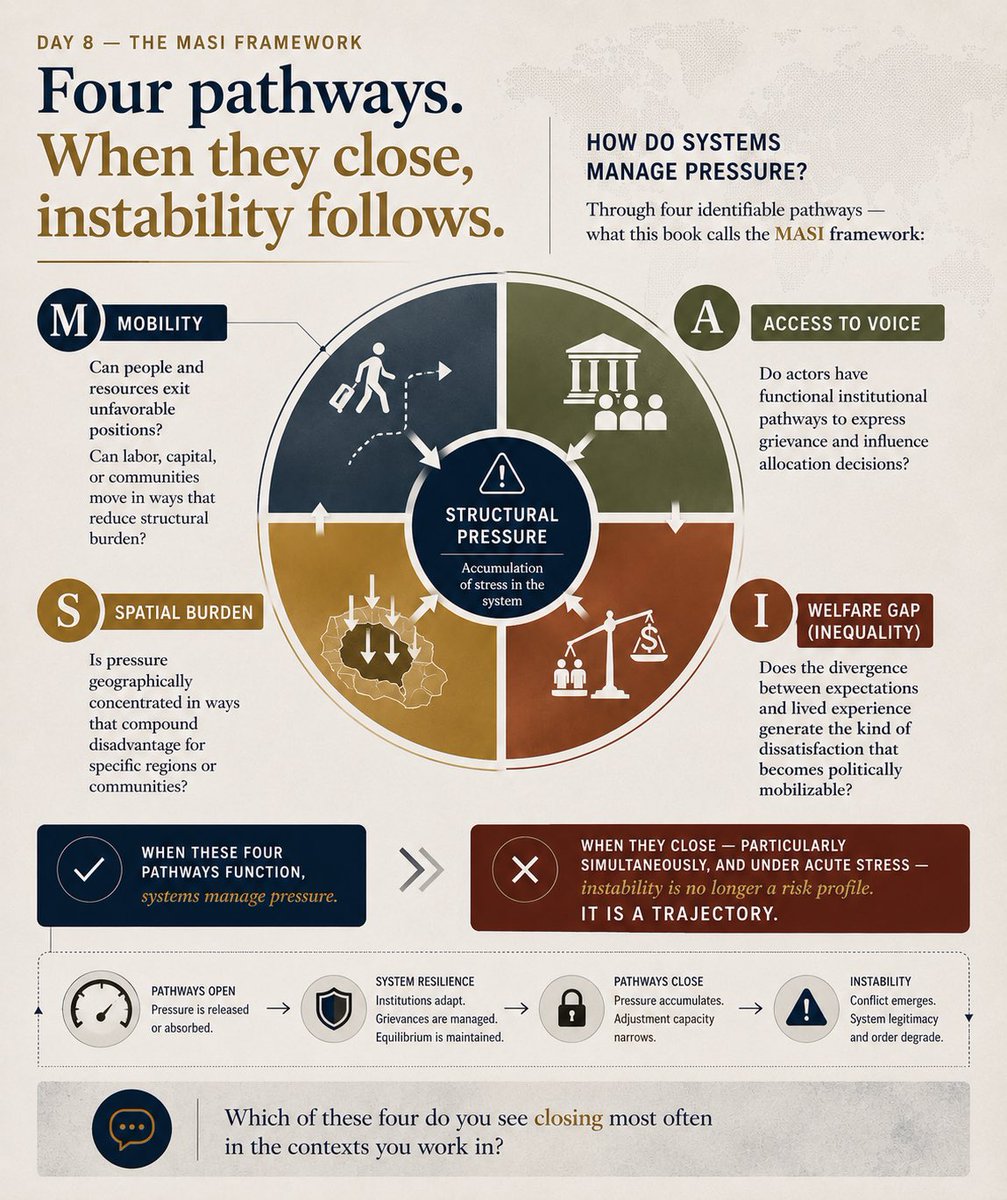
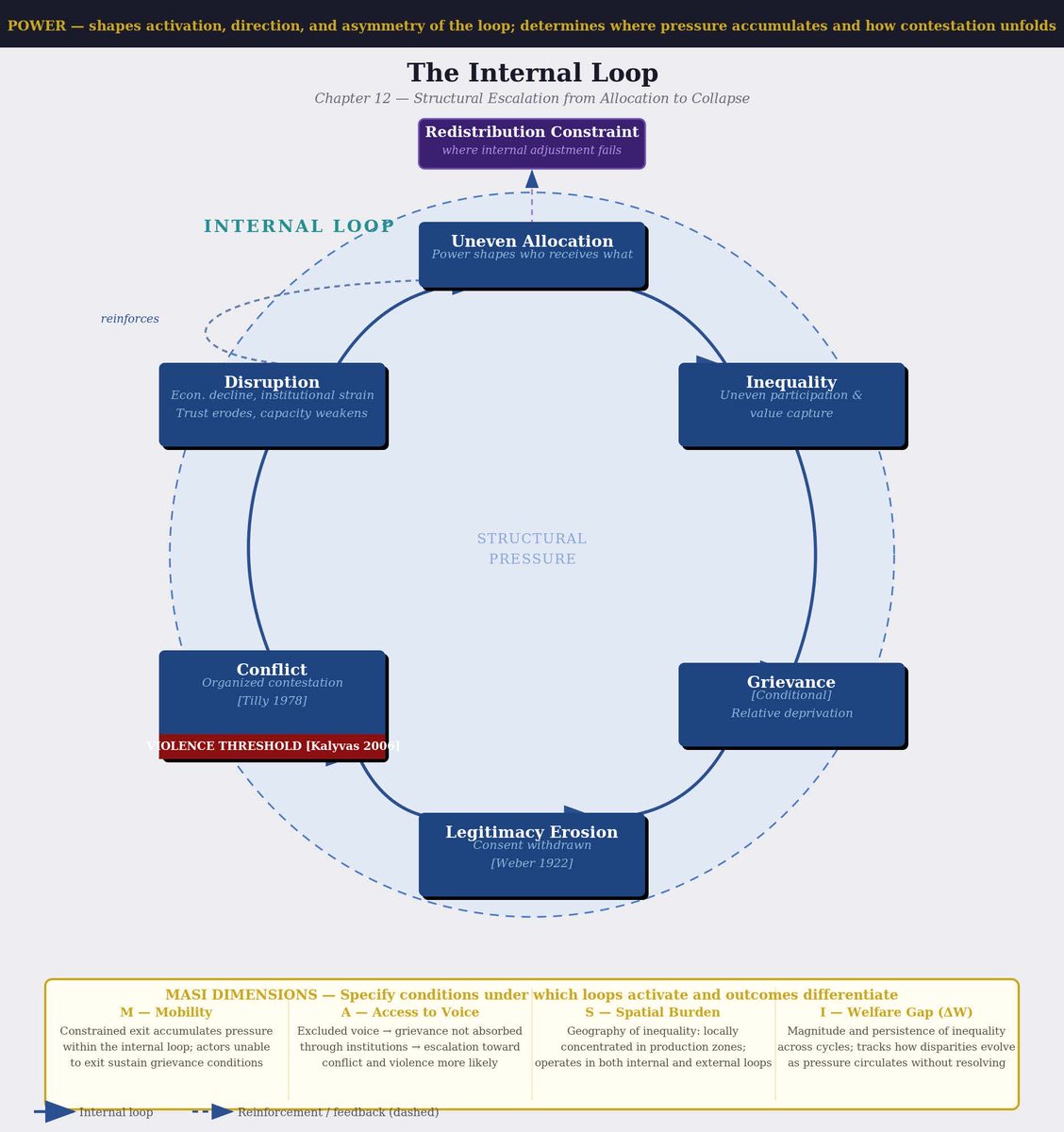
How do systems manage pressure? Four pathways - the MASI framework:
Mobility
Access to Voice
Spatial Burden
Inequality/Welfare Gap
When these function, pressure is managed.
When they close, under stress - instability is no longer a risk. It's a trajectory. #MASI #PoliticalEconomy
3
3
46
May 10
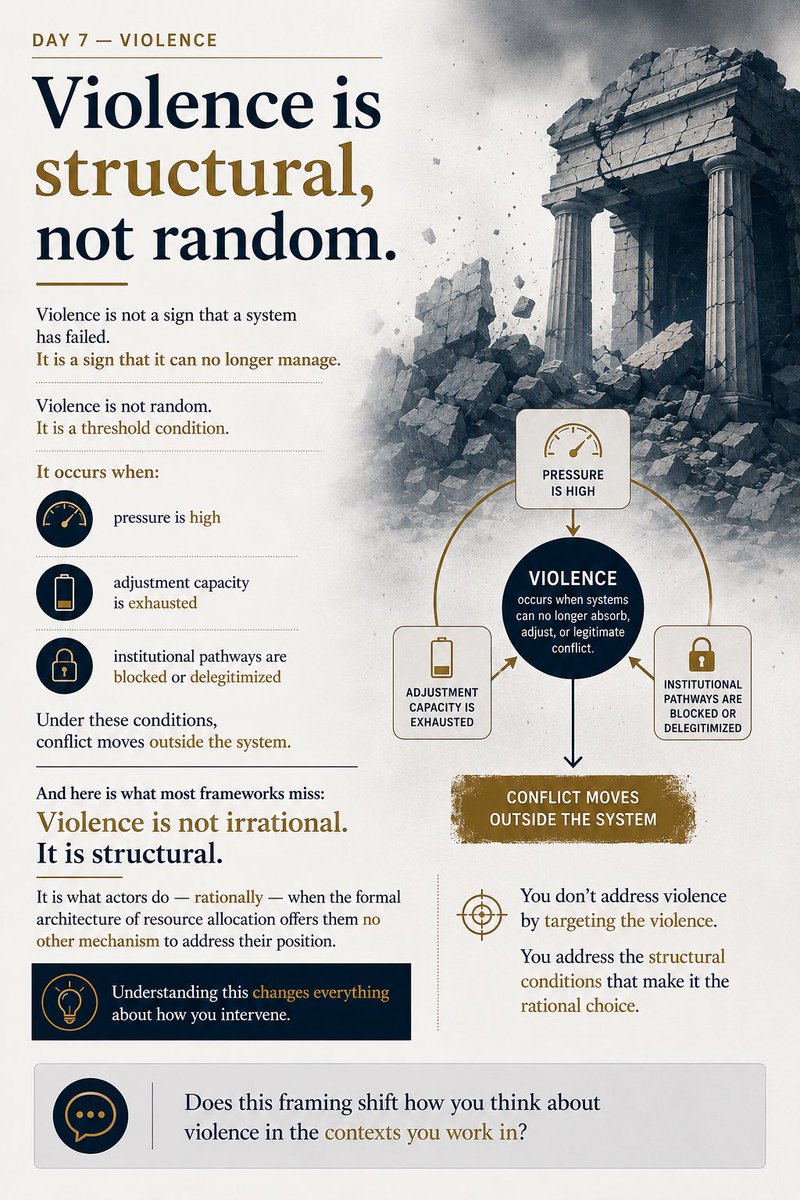
Violence is not random. It is a threshold condition.
It occurs when pressure is high, adjustment is exhausted, and institutional pathways fail.
It is not irrational.
This is what actors do when the architecture of allocation offers them nothing else.
#PoliticalEconomy #Conflict
3
3
13
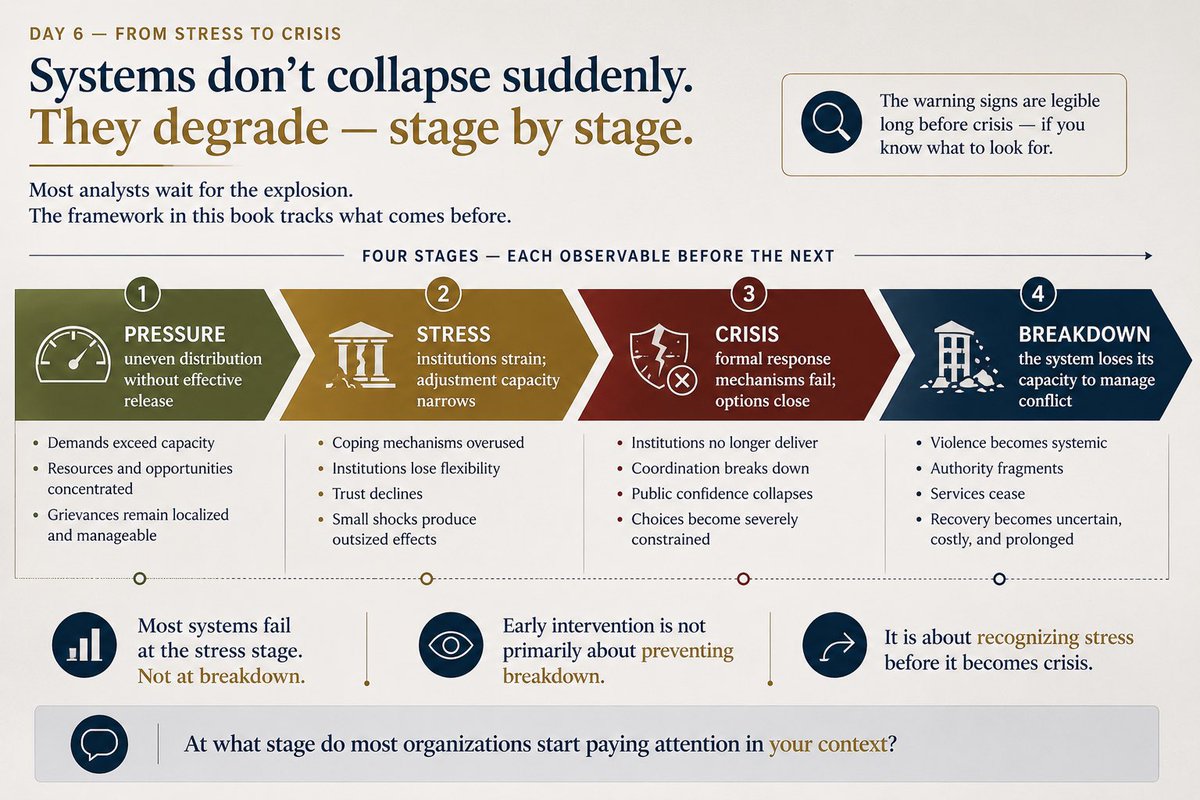
Systems don't collapse suddenly, they degrade through stages:
PRESSURE → STRESS → CRISIS → BREAKDOWN
Most fail at stress, not breakdown
Warning signs are legible long before crisis, if you look.
Early intervention starts at stress, not crisis. #PoliticalRisk #EarlyWarning
1
3
3
22
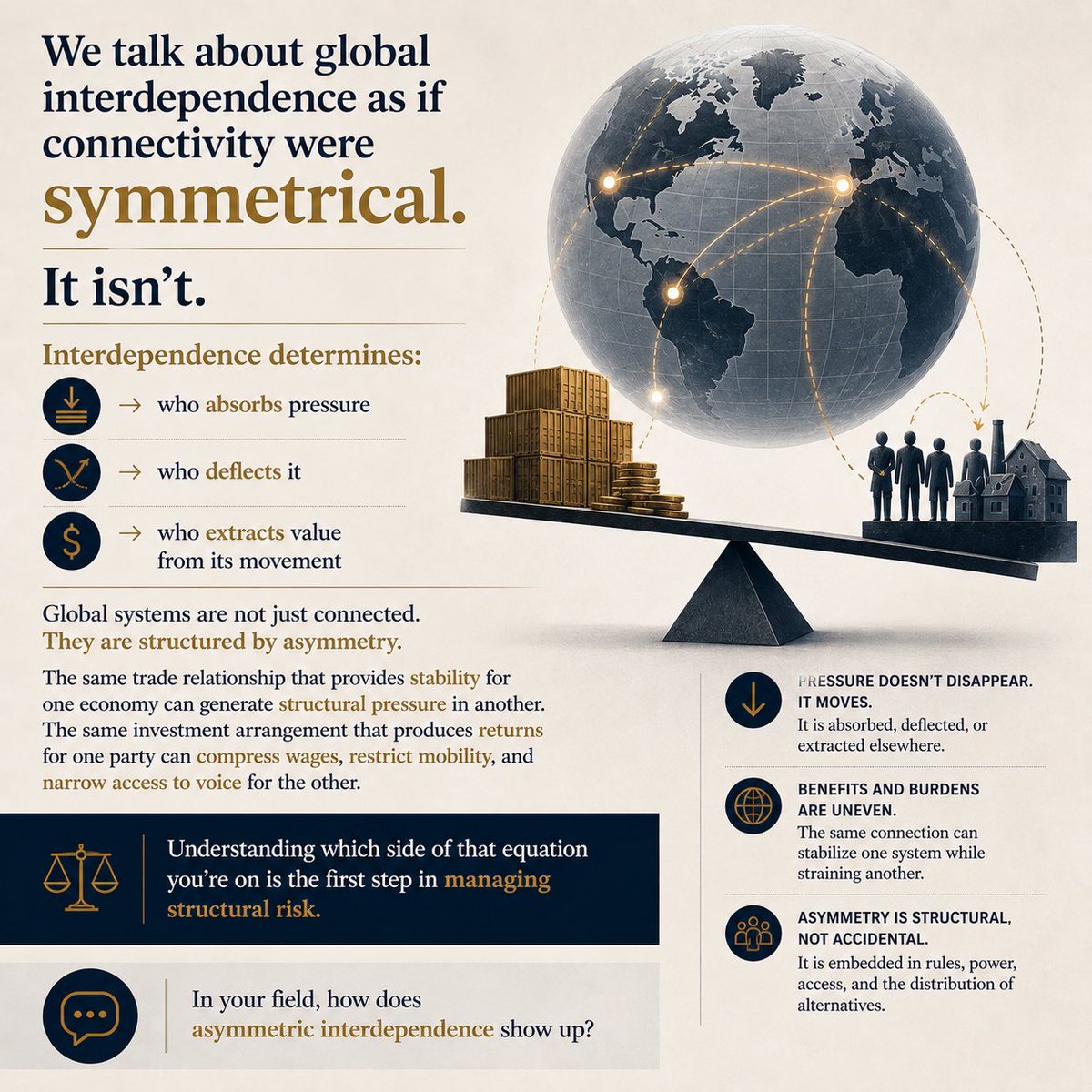
Interdependence is not neutral, it's a distribution mechanism.
It determines who absorbs pressure, who deflects it, who benefits from its movement.
Global connected systems are structured by asymmetry.
The Structural risk lives in that asymmetry. #GlobalPolitics #PoliticalEconomy
3
3
14
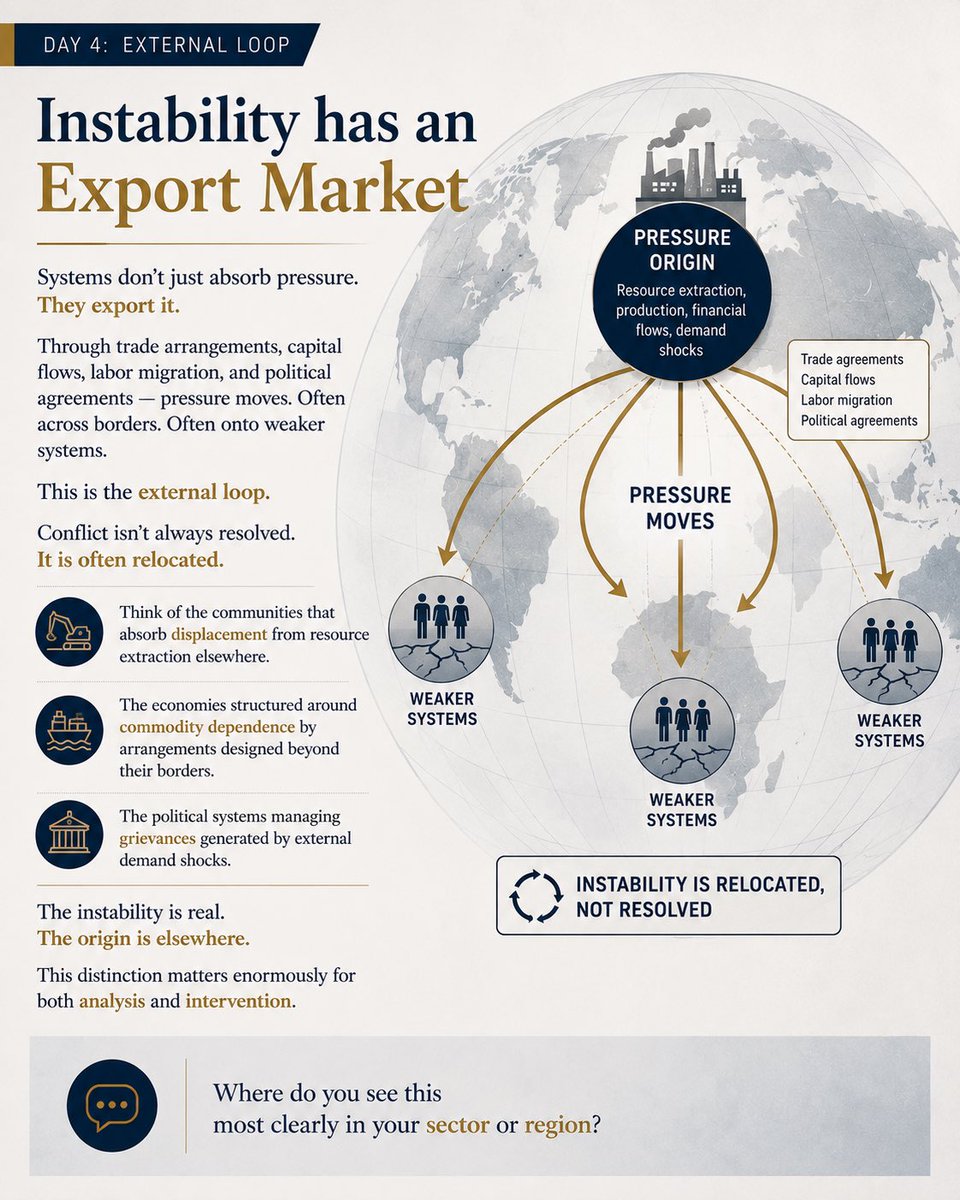
Systems Export Pressure.
Through trade, capital flows, and political arrangements, instability is often displaced, not resolved.
The external loop: when conflict is relocated rather than addressed.
This changes who bears the cost - and who should. #PoliticalEconomy
3
3
15
When systems can't release pressure, it accumulates.
The internal loop:
Allocation failure → grievance → conflict → disruption → deeper failure
Each stage makes the next more likely.
This isn't a theory of collapse. It's a theory of accumulation. #PoliticalEconomy #Governance
3
3
14
Inequality doesn't break systems. Pressure does.
Pressure builds when outcomes diverge from expectations, and the people bearing those burdens have no way to change it.
Pressure always exists. That’s not the question.
The question: can the system absorb it? #PoliticalEconomy
2
2
6
17 Jun 2025
Why are resource-rich nations erupting in crisis again?
The MASI Framework maps the deep structures behind the global conflicts:
🔹 Mobility
🔹 Access to Voice
🔹 Spatial Burden
🔹 Welfare Gap
Understand what headlines don’t explain.
#MASI #ConflictAnalysis #ResourcePolitics
2
2
26
Joshua Gogo retweeted

Risk is not the enemy—it’s unmanaged uncertainty that hurts growth. From personal protection to enterprise strategy, Afcote helps you lead with clarity.”
🔗 Get started → afcote.com/services
1
23
16 May 2025
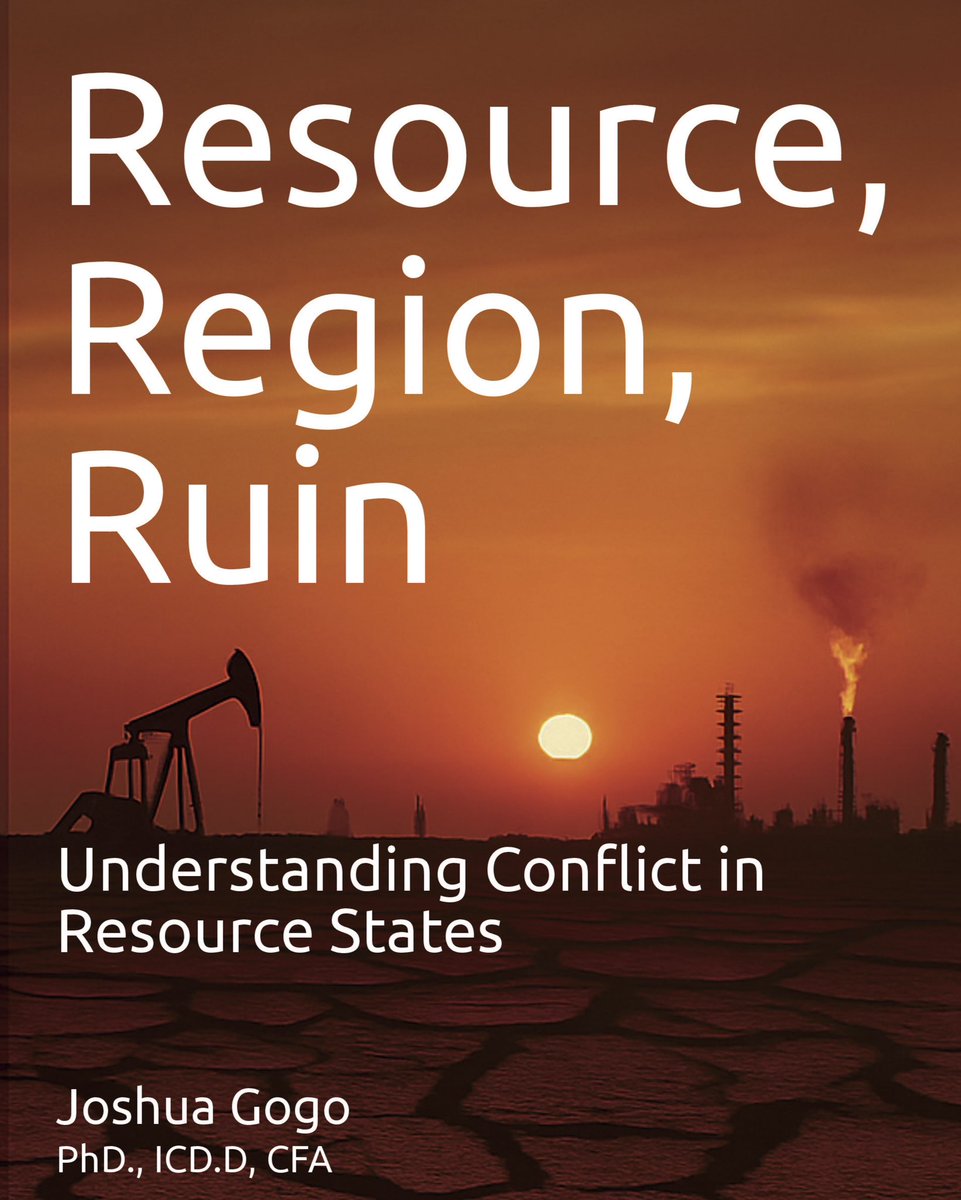
Why do countries with oil, gas, and minerals so often struggle with poverty, unrest, and weak institutions?
That question led to Resource, Region, and Ruin.
A global analysis.
A structural framework.
A call for justice.
#RRR #MASIFramework #NewRelease
1
1
1
11
16 May 2025
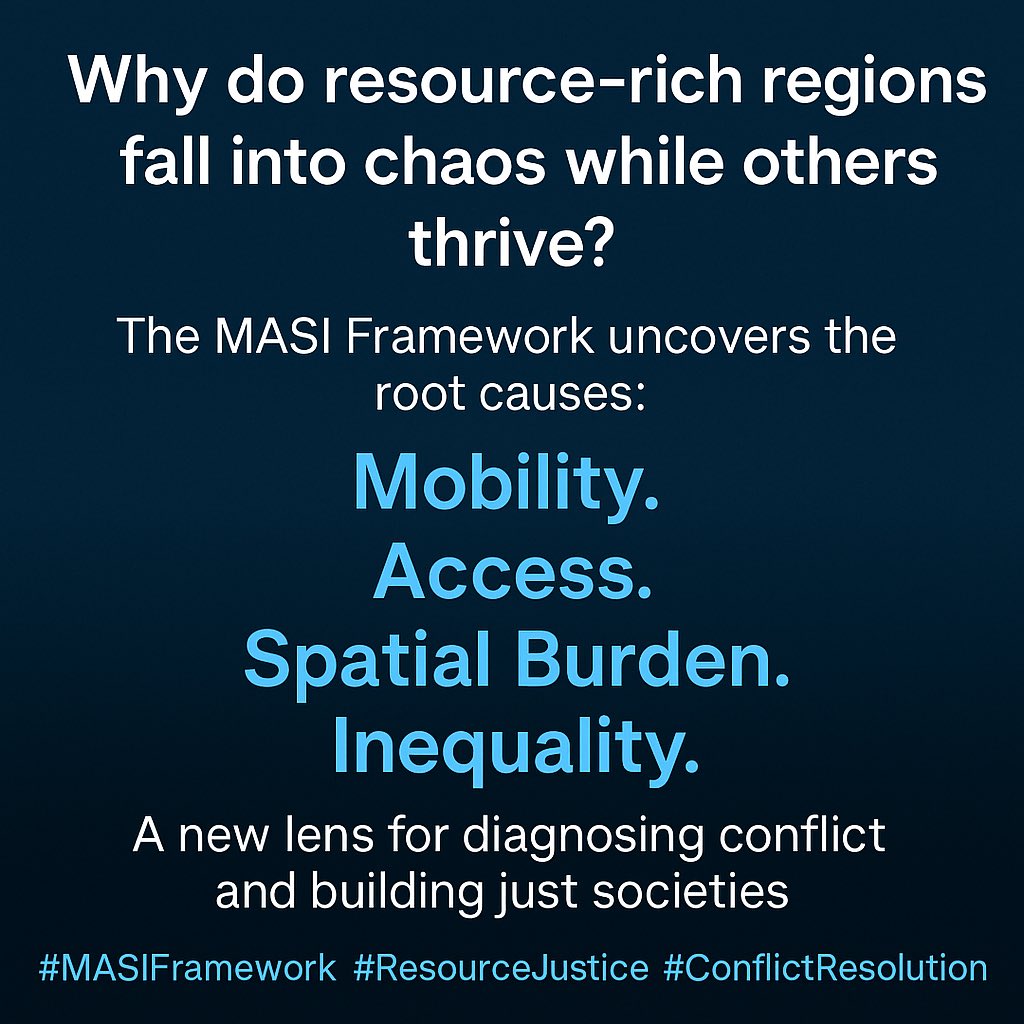
The MASI Framework introduces 4 key dimensions of instability in resource-rich states:
Mobility – Can people move or escape decline?
Access to Voice – Can they influence decisions?
Spatial Burden – Who bears the cost?
Welfare Gap – Are promises matched by delivery?
1
2
2
12
16 May 2025
Resource, Region, and Ruin isn’t just a diagnosis—it’s a guide to change.
From Nigeria to Iraq, Alberta to Brazil, it reveals the hidden patterns of exclusion—and what we can do to break them.
Available now: masiframework.joshuagogo.com…
#PublicPolicy #Development #ResourceJustice
1
1
9
16 May 2025
It’s out!
Resource, Region, and Ruin is now available on Amazon, Walmart, & more.
Why do resource-rich regions fall into conflict and exclusion?
MASI Framework reveals the answer and a path toward justice.
Grab your copy now:masiframework.joshuagogo.com…
#MASIFramework #RRR #BookLaunch
7