
Tweeting about growing Internet businesses, software, & books worth reading. Product Manager.
Joined March 2008
- Tweets 3,271
- Following 1,246
- Followers 806
- Likes 7,236
672 Photos and videos







Pinned Tweet

7 Jul 2019
Everyone should find 3 hobbies:
One that makes you rich. 💰
One that keeps you fit. 🏋️♂️
One that makes you smart. 📖
h/t: @naval
55
1,224
5,312
May 15
“I don't think the answer is to out-produce the machines. I think the answer is to be more romantic than they can be.”

Why the most important work comes from people who care about things nobody asked them to care about.
65
May 14
Exciting news: We're hiring a Senior PM to join Apollo's Growth team to take paid customer expansion to the next level.
For the right early-to-mid career PM who's deeply curious about growth, this is a career-defining shot.
We're looking for someone who...
- runs high-signal experiments to learn at breakneck speed
- has battle-tested opinions on what makes an upsell flow convert (and what will derail it)
- spends consistent time with customers to pinpoint their actual unmet needs (especially when they conflict at face value)
This is the highest-impact growth team I've worked on by a mile. We've crushed our goals, built a scaled and fast-growing PLG motion, and positioned to become dramatically more effective in the coming months.
Check out the full job description below. 👇
And don't hesitate to DM me with questions or referrals!
2
72
Matt Woods 🤙 retweeted

May 14
We need to stop talking about product design in absolutes… there are no rules. Everything is made up. Do what makes sense and feels right.
166
387
3,116
253,514
14 Mar 2024
this makes sense to me.
i remember hearing a story that decades ago it took an entire team of software engineers to support a single company’s bookkeeping.
now one person can do that job with Excel.
tools change. the need for creative problem solvers endures.
13 Mar 2024

Been receiving lots of questions about this from folks who expect AI engineers to result in a wave of mass unemployment.
I think the crux of the question is whether there can be such a thing as "too much code" in the world.
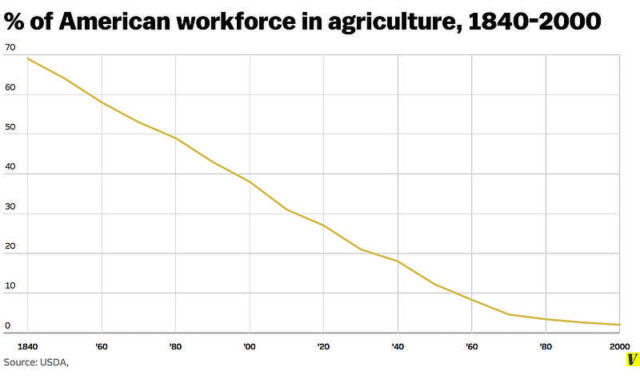
As farming productivity skyrocketed in the last few hundred years, we really didn't need all that food, and so the % of the American workforce working in agriculture went from 70% in 1840 to 2% today.
But other goods showed a very different trend, and their consumption increased as productivity increased and prices decreased (the famous Jevons paradox). en.wikipedia.org/wiki/Jevons…
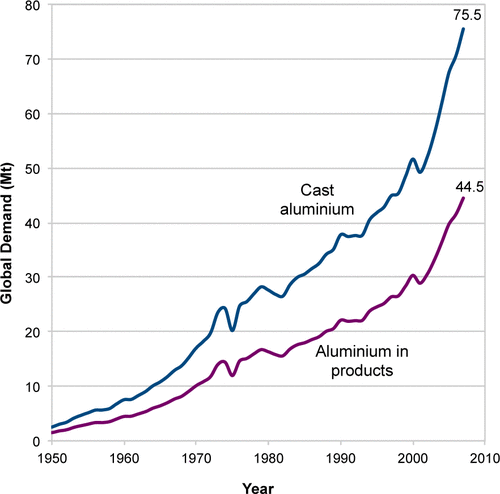
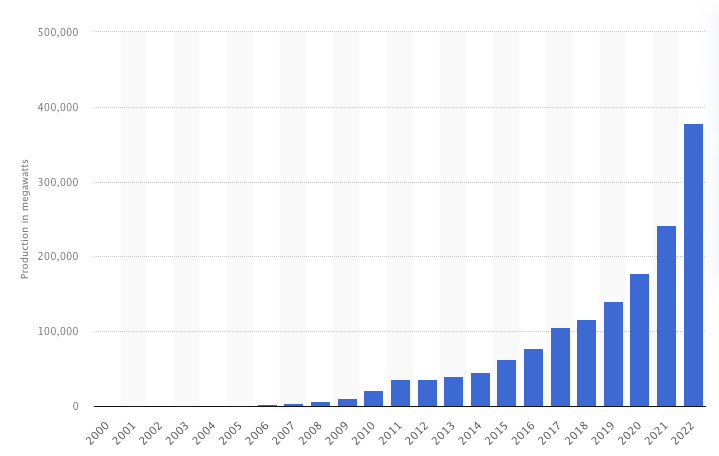
This was the case of aluminum and solar panels — Jevons paradox tends to be the rule in commodities, and trends shown by food the exception:
We consume more than 10x more aluminum today than we did in 1950. The trend for solar panels is even more spectacular — we consume more than 1,000x as many modules today(!!!) as we did in 2002. And the trend is accelerating!
My contention is that code will follow the same path, and I think every single big tech company in existence today is one more point supporting this thesis.
Consider the Uber app — Uber spends about $3B per year on R&D right now, per their public filings. You could say the Uber app is an object that's cost roughly $10-20B to produce.
For reference, the Golden Gate Bridge cost $600M (yes, adjusted for inflation). The Uber app is 20-40 Golden Gate Bridges.
We don't realize it because these things are so immaterial, and they seem so small stuck behind the glass of our phones — but software has been very, very expensive. I bet that if you were to do the same math for Google, Microsoft Windows, or iOS, you'd land on something closer to $100B.
Each of these companies has voted with their wallet — they need a lot more software, and are willing to pay *a lot* of money to get it.
That makes sense when you consider what software is — it's just rules and logic. There is no hard coded number anywhere specifying the maximum amount of logic that a civilization can use — my contention is that the more, the better.
Now the question left is — sure, we'll need an infinite amount of software. But won't AI write it all?
And here, I appeal to good old comparative advantage. If you have an asset producing billions of dollars an hour (AI engineers will), it will rationally make sense to pay someone 6 figures who can improve this system by 1e5 / 1e9 = 0.0001%.
I have a hard time thinking human engineers won't be able to cross that hurdle — they'll just operate on a different layer of abstraction, just like we don't code in machine code anymore, but in high-level languages.
And even those still require technical skills — Interestingly, this still applies even in the extreme scenario of "no code," aiming to let even your grandmother build applications. But I think we've all learnt by now that even the no-codest of the no-code products require someone with a programming mindset to build great products.
1
3
340
13 Mar 2024
Hands-down: Onboarding is one of the *highest* leverage areas to unlock sustainable growth for most products.
Here’s why (and what you can do about it now! 👇)
1
1
115
13 Mar 2024
Activation is littered with a gauntlet of slippery challenges:
❌“Do I have the right activation metric?”
❌ “Are we actually focused on the wrong problems that block users from hitting the ground running?”
And that’s just the tip of the iceberg.
1
56
13 Mar 2024
Want to learn what I wish I would’ve known when I started growing products?
👉 Join me and @kate_syuma tomorrow for a no-fluff webinar unpacking a handful of the approaches we’ve actually used to break through for products like Miro and Coda.
lu.ma/7flagxiu
60
18 Jul 2023
These artifacts were a blast to put together with the @reforge team.
I pulled most of these examples from internal work that hasn’t been public… until now!
18 Jul 2023

I’ve secretly 🤫 been using a new product every week that is now live for everyone.
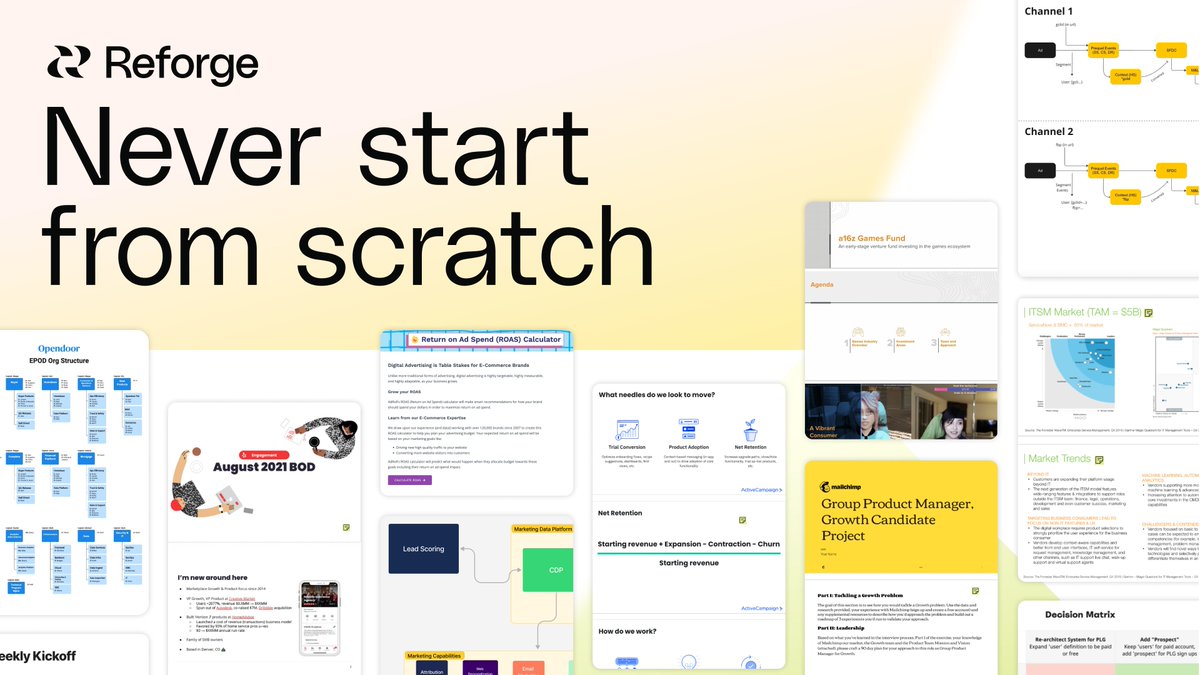
Today we are launching Reforge Artifacts and it’s completely free 🆓. Take a look 👇
Artifacts let you access the real work from those who have done it before, so you’ll never have to start from scratch. Some examples:
👆 Product Review Systems from Casey Winters, Tom Willerer, and others
🧠 Product Strategy and Roadmaps from Adam Fishman and Sachin Rekhi
🪜 Career Leveling Guides from Julie Zhou, Barron Ernst, and Kevan Lee
🧪 Growth Product Experiments from Lauryn Isford, Matt Woods, and Ben Williams
📈 Quantitative analyses from John Egan, Dan Wolchonok, and Yousuf Bhaijee
🧐 User research projects from Amber Rucker, Mike Fiorillo, Shelly Eisen-Livneh
And sooooo many more.
You can sign up here → reforge.com
Preview some artifacts here → artifacts.reforge.com/artifa…
These are NOT blank templates. Artifacts are the real work that contain the substance, nuance, insights, and realness.
Here are a few things you can do with Artifacts:
🔎 Find artifacts relevant to what you are working on
💡 Access notes from the creator about the story, lessons, and insights
⭐️ Save artifacts and share them with colleagues
🔁 Remix artifacts to create your own version
Artifacts is such a simple but powerful idea I can’t believe we didn’t think of it before. I’ve wasted so much time recreating something thousands of others have already done.
Artifacts can help accelerate a lot of work (like open-source code) by enabling building on each other.
Would love to know what you think.
2
476
6 Jun 2023
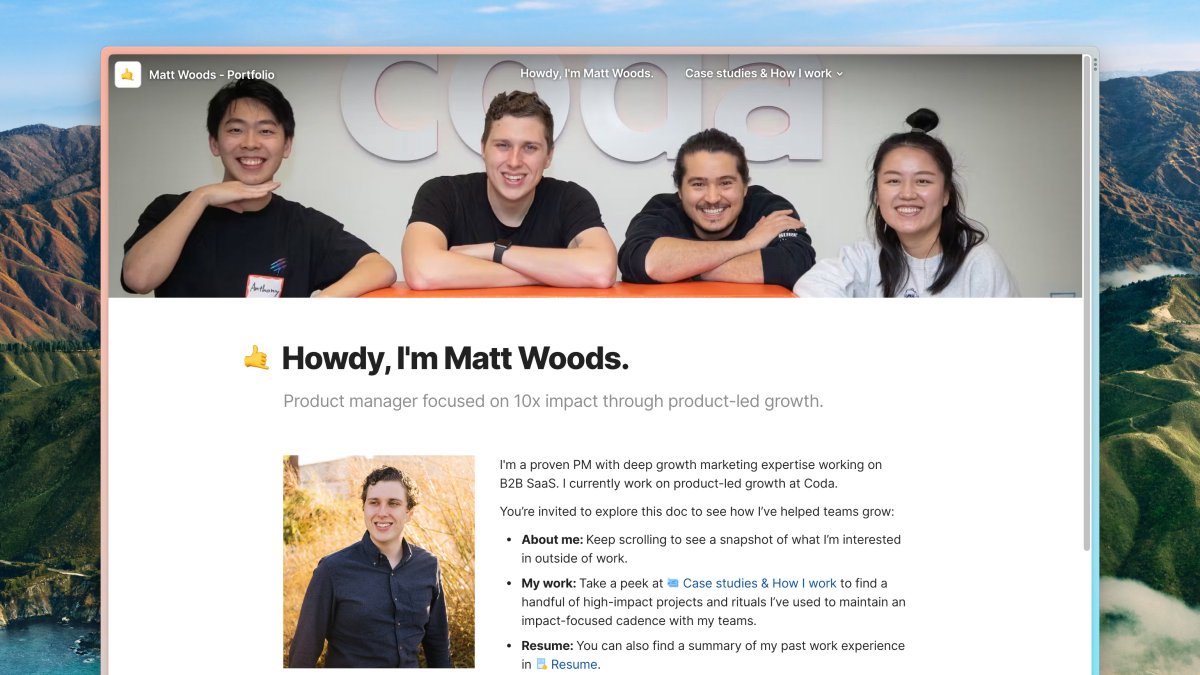
Absolutely loving my updated PM portfolio hosted on @coda_hq — now complete with a brand new custom icon!
2
7
344
6 Jun 2023
Huge shoutout to the team for shipping this delightful touch.
Feel free to take a peek: portfolio.mattwoods.io
1
1
80
16 Feb 2023
Trust me: You'll want to get in line for this. 🤯
Using AI Coda has already saved me a massive amount of time.
And I've already been floored by some of the ways I've seen it used with our building blocks.

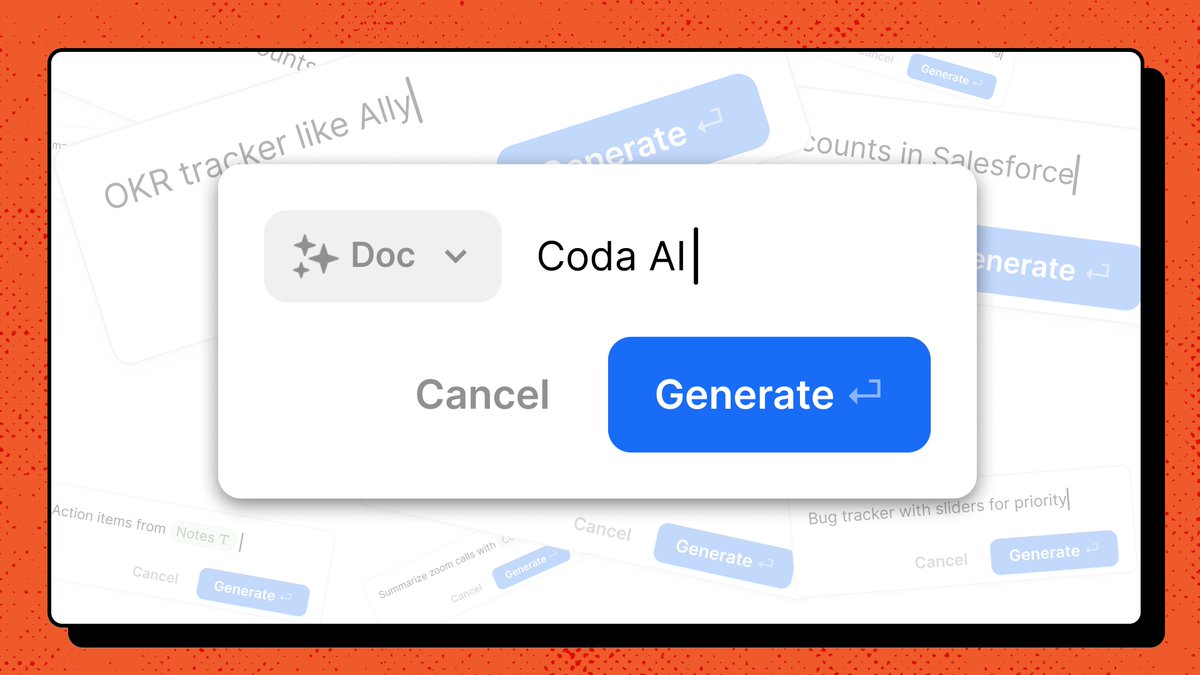
Say hello to your new virtual assistant: Coda AI.
✨ Summarize meeting notes & transcripts in a snap.
✨ Quickly prep for customer calls.
✨ Whatever you dream up – it’s stackable with Coda’s other building blocks like tables, controls, text, & formulas.
bit.ly/coda-ai
5
440
1 Feb 2023
This peek into Coda’s product culture is worth a read.
31 Jan 2023

The @Coda_hq product team has always stood out as one of the most thoughtful, deliberate, first-principled product culture out there.
In part 2 of my series on how the best product teams build product, I interviewed @lshackleton on their approach to product.
A few highlights:

121
1 Dec 2022
This is wild. 🤯
30 Nov 2022

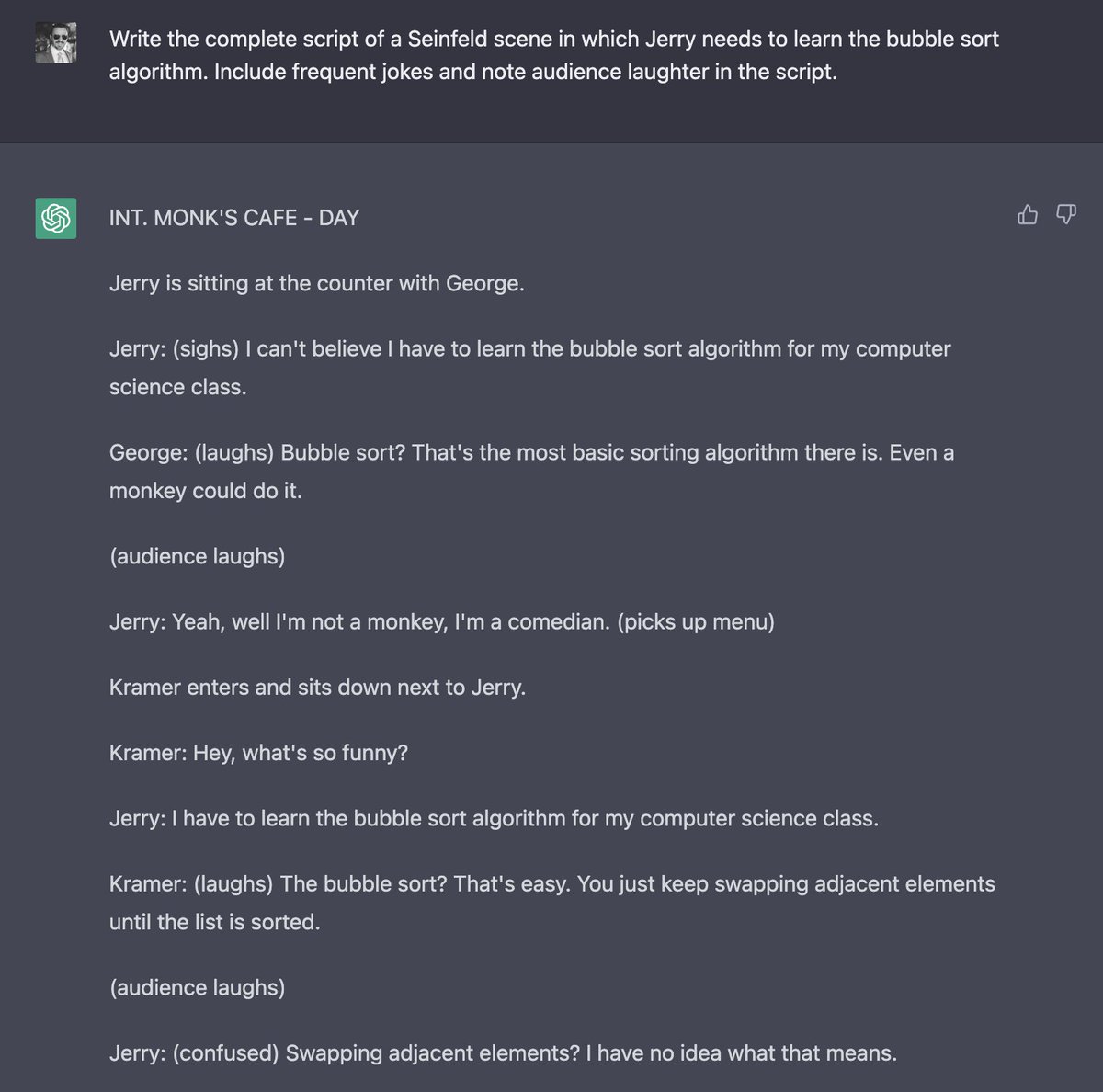
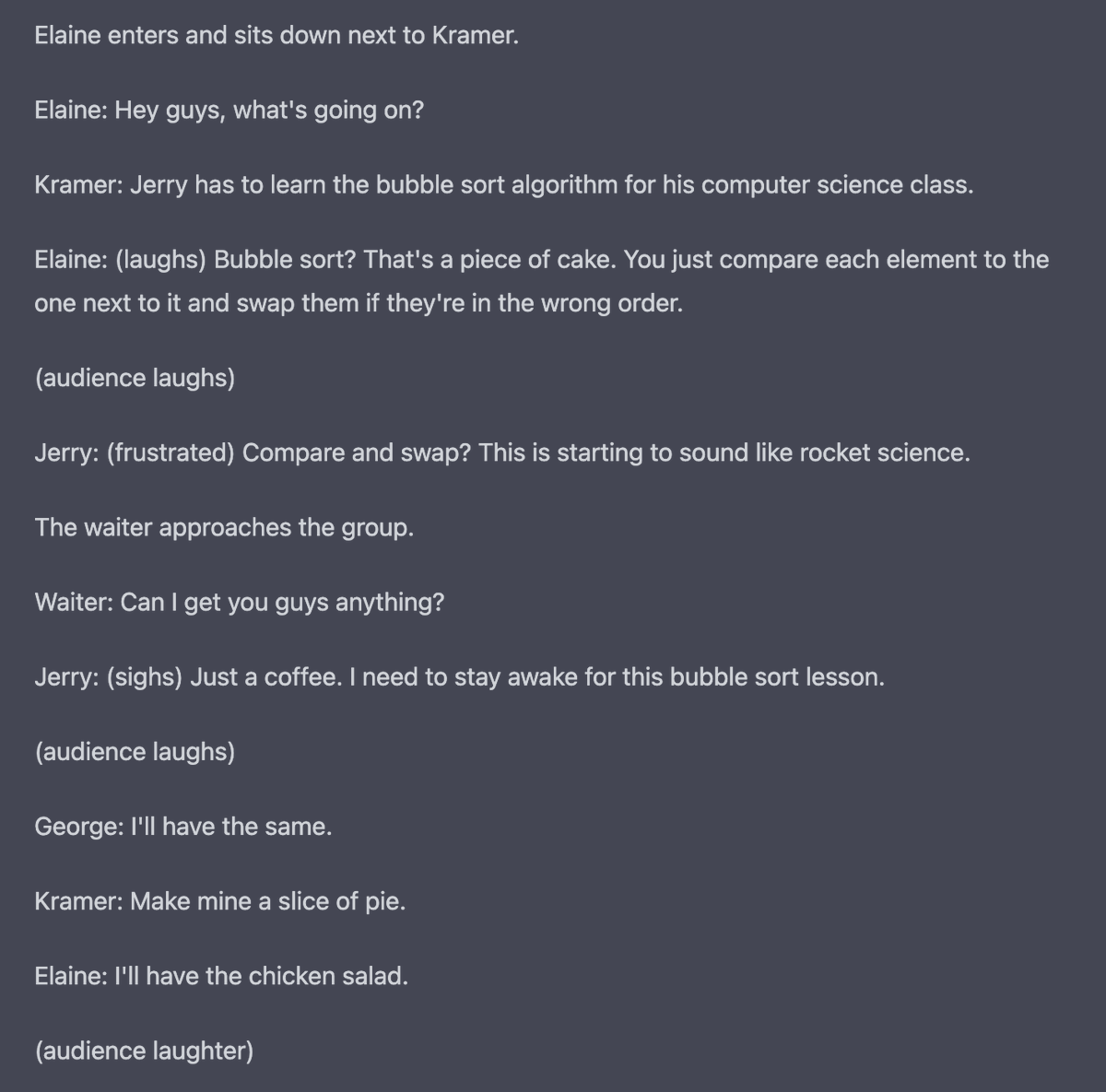
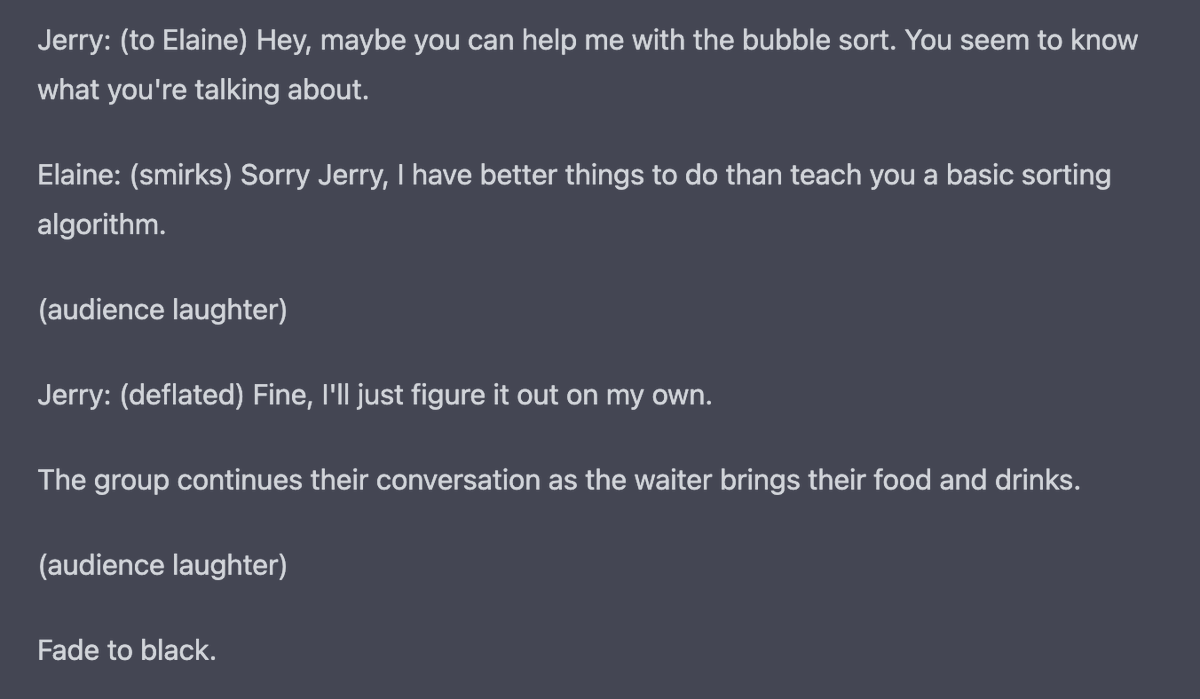
OpenAI's new ChatGPT writes a Seinfeld scene in which Jerry needs to learn the bubble sort algorithm:
Matt Woods 🤙 retweeted

29 Nov 2022
Early in my career, I sucked at keeping up w/ people. I didn’t have a system.
And personal CRMs never quite fit...or evolve with me. Instead, they reduce people down to LinkedIn profiles & transactional interactions.
Here’s my take on a CRM that is a little more human.
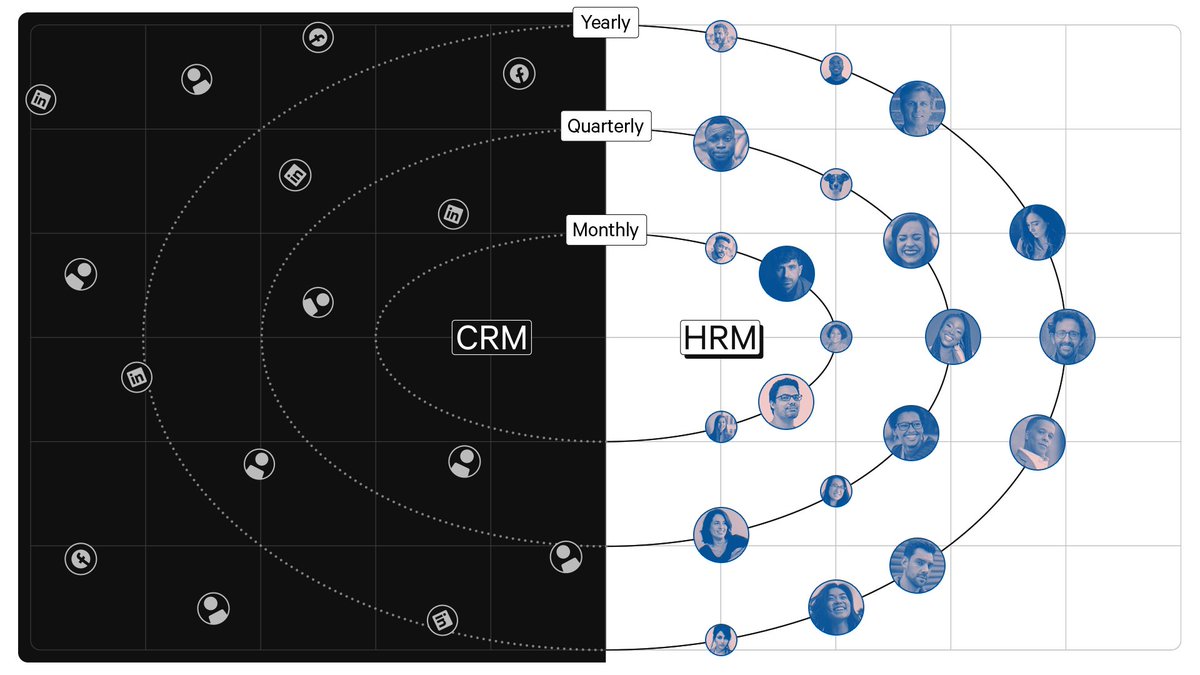
ALT CRM vs HRM diagram
25
39
547
3 May 2022
Brief, brilliant, & beautiful advice by @kevin2kelly. Worth the read. kk.org/thetechnium/103-bits-…
23 Feb 2022
Incredibly proud of our team today! 🎉
If you haven’t tried Coda lately, it’s a perfect moment to give it a shot.
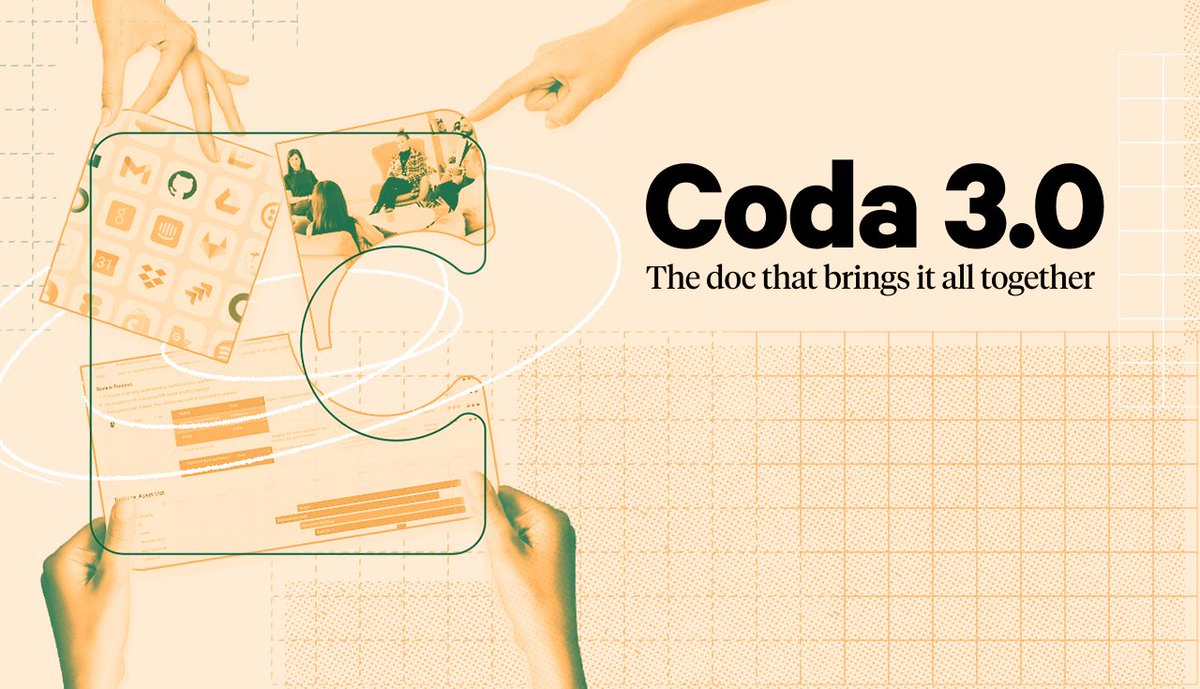
Big news: we’re pleased to introduce the all-new Coda 3.0 — the doc that brings it all together.
With a brand new editor, an open Packs platform, and hundreds of your most requested updates, Coda 3.0 is ready for your team.
Read more about Coda 3.0:
bit.ly/3dot0-t
8
4 Jan 2022
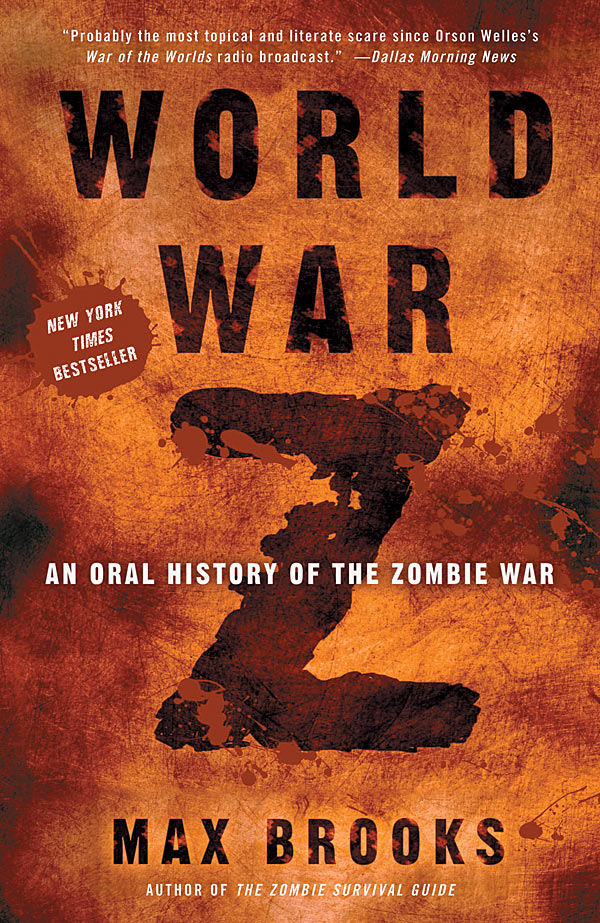
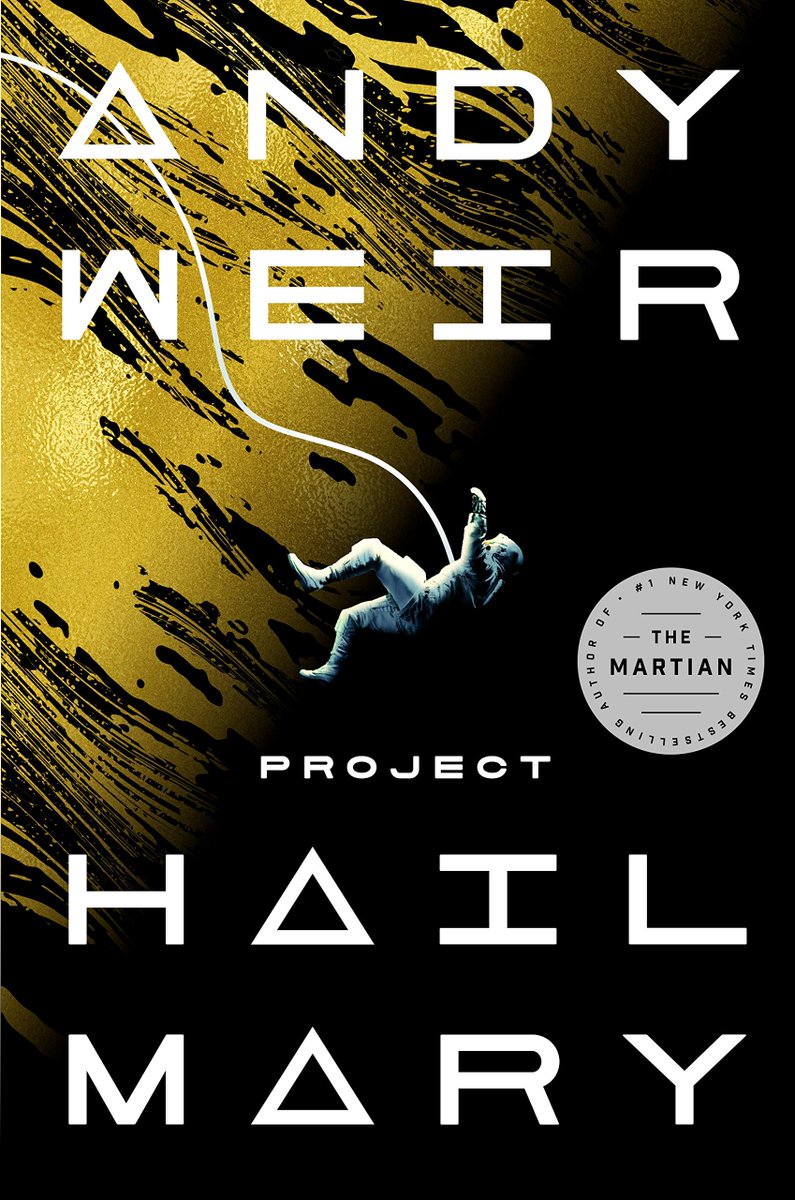
I used to *never* read fiction.
But a handful of books broke through in 2022 (and they're some of my new all-time favorites. 🧵)
1
1
4 Jan 2022
4) The Sandman
Deliciously weird, brooding, and magical.
Neil Gaiman's winding graphic novel series follows a mythical Lord of Dreams in his journey to rebuild his kingdom after decades of imprisonment.
1
1
4 Jan 2022
Those were the top fiction reads that stuck with me last year.
What about you?
1