
Investor #AI #Fintech, Father, Speaker, Author paper.li/maxjcm/1360812…
Joined June 2011
- Tweets 46,706
- Following 5,669
- Followers 10,174
- Likes 32,605
3,765 Photos and videos




John C. Maxwell, III retweeted

Jun 8
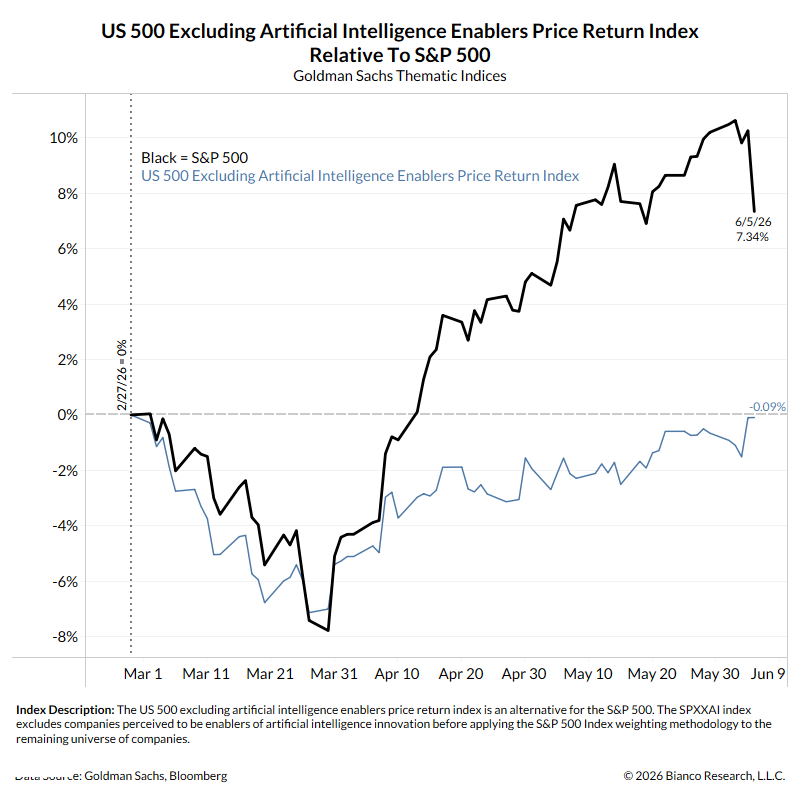
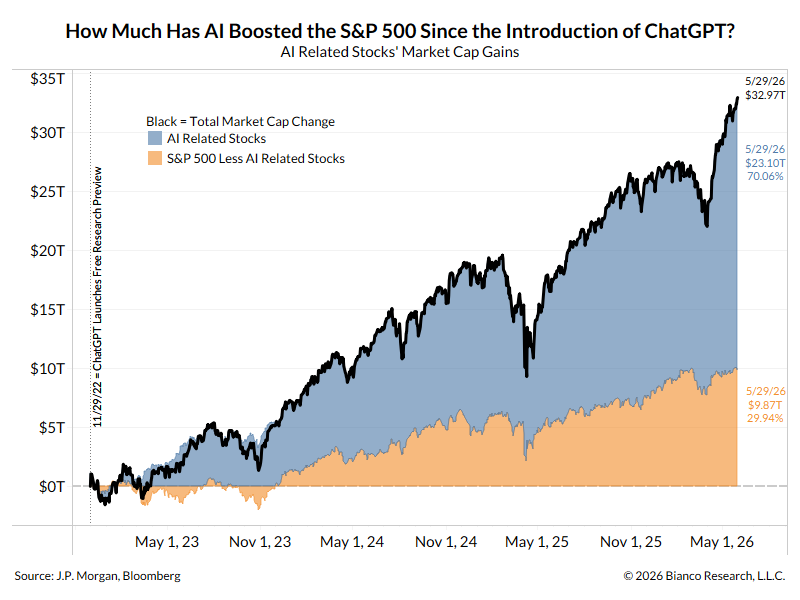
Since the War began on Feb 27th, the S&P 500 (black) is up 7.34%. But the S&P 500 without AI stocks (blue) is effectively unchanged. So, the entire S&P 500 Index rally since February has been driven by AI stocks.
But look at what happened on Friday, June 5th!
The S&P 500 was down 2.6%, its biggest daily loss since last October.
The S&P 500 without AI was up 0.02% (call it unchanged).
So, the entire sell-off on Friday was AI stocks. The "normal world" did nothing on Friday.
69
194
1,040
117,171
John C. Maxwell, III retweeted

Jun 9
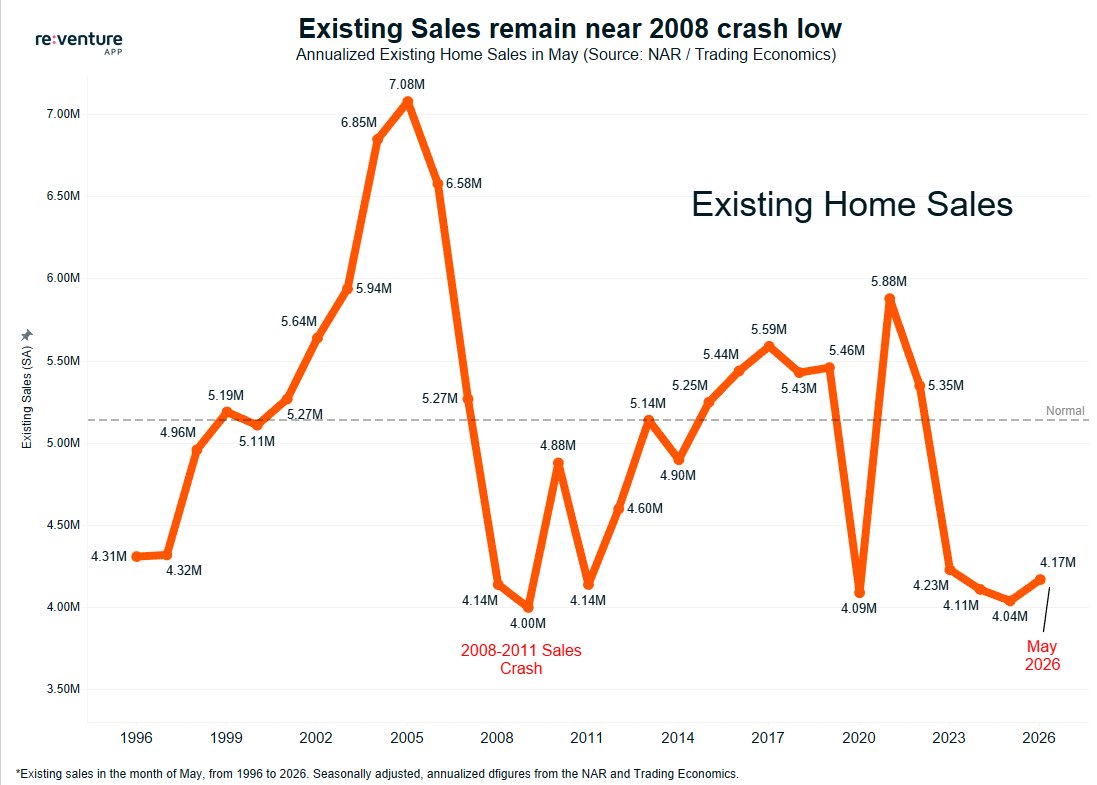
The spring 2026 housing market is off to a rough start.
In May, 4.17 million existing sales took place according to NAR.
That's about 20% below the 30-year average, and near the record-low levels of the last four years.
In fact, sales this May were roughly in line with the volume we saw in 2008, 2009, and 2011, during the worst housing market downturn in history.
Some in real estate are getting excited about a supposed recovery in sales ( 3% YoY). However, when you look at the long-term graph, you can see a real recovery is a long way off.
Prices need to drop meaningfully before buyers will come back in meaningfully.
To sales by ZIP code in your area at reventure.app/mobile.
16
24
159
50,869
John C. Maxwell, III retweeted

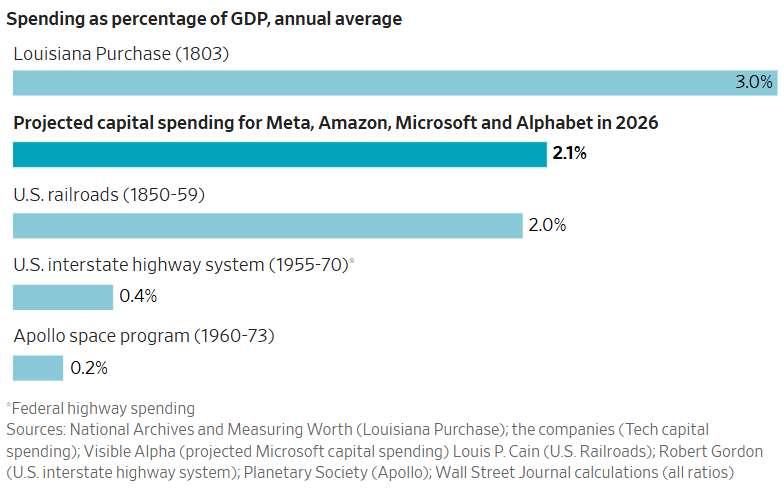
Spending on data centers and other AI infrastructure by Google, Amazon, Microsoft and Meta is expected to hit $670 billion this year.
At 2.1% of GDP, that would represent a higher share of the economy than the investment in the US railroad expansion during the 1850s.
63
146
538
67,038
John C. Maxwell, III retweeted

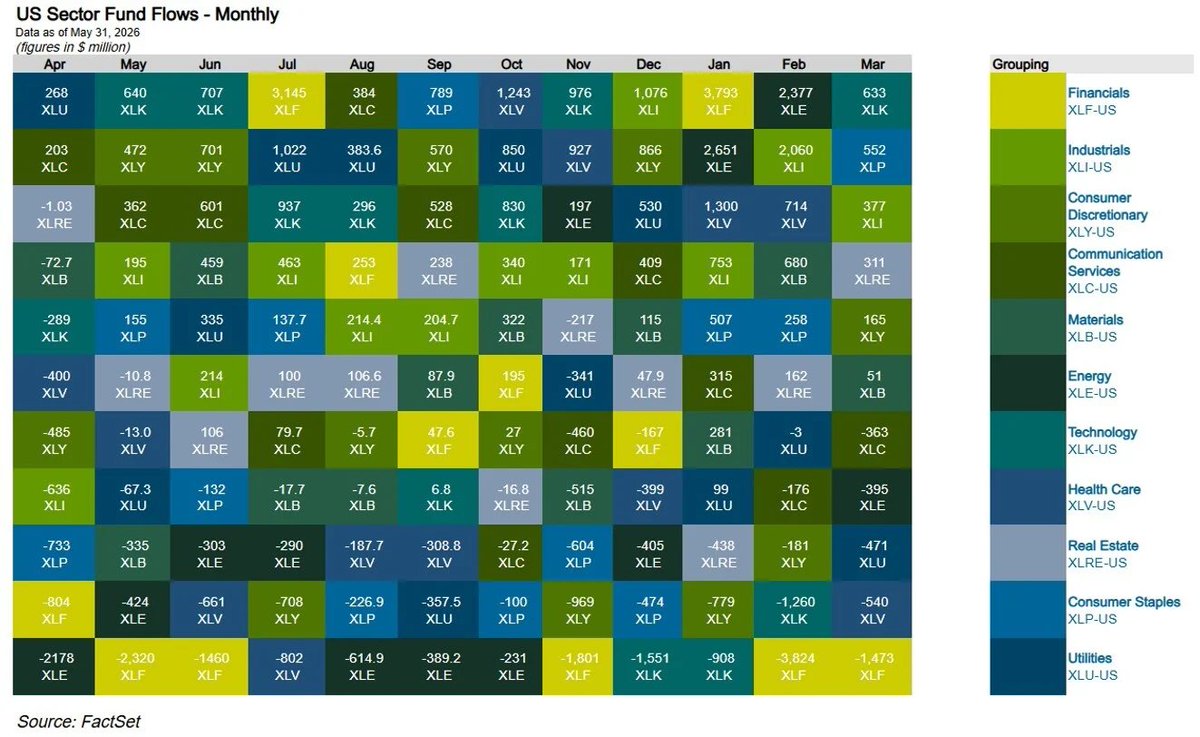
"In terms of sector flows, May was mixed. Technology, Consumer Staples, Industrials, and Real Estate had positive inflows. Money flowed out of Financials, Health Care, Utilities, and Energy."
@FactSet
4
17
4,620

John C. Maxwell, III retweeted

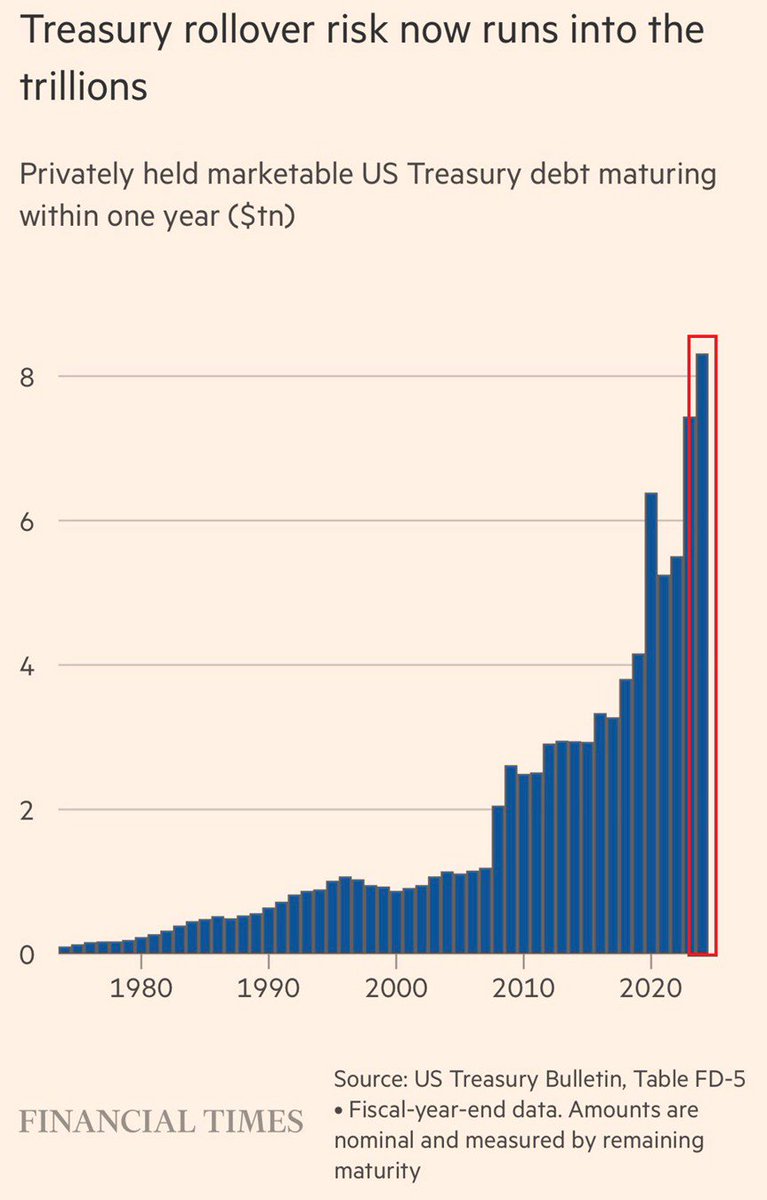
The US government is becoming increasingly dependent on private investors to finance its growing debt burden:
Privately held US Treasury debt maturing within 1 year is up to a record $8.3 trillion.
This figure has DOUBLED over the last 5 years, reflecting the government's growing reliance on short-term financing from private investors.
As more debt shifts into Treasury bills, a larger amount must be refinanced every year, leaving borrowing costs increasingly sensitive to interest rates and investor demand.
At the same time, foreign central banks are reducing their share of Treasury holdings, making private investors absorb a larger portion of new issuances.
As a result, the Treasury market is becoming increasingly dependent on investor demand and liquidity conditions rather than the stable long-term buyers that have traditionally anchored it.
With US public debt at an all-time high, even modest disruptions in funding markets could have an outsized impact on borrowing costs.
Treasury refinancing risks are intensifying.
316
442
2,080
225,157
John C. Maxwell, III retweeted

Jun 1
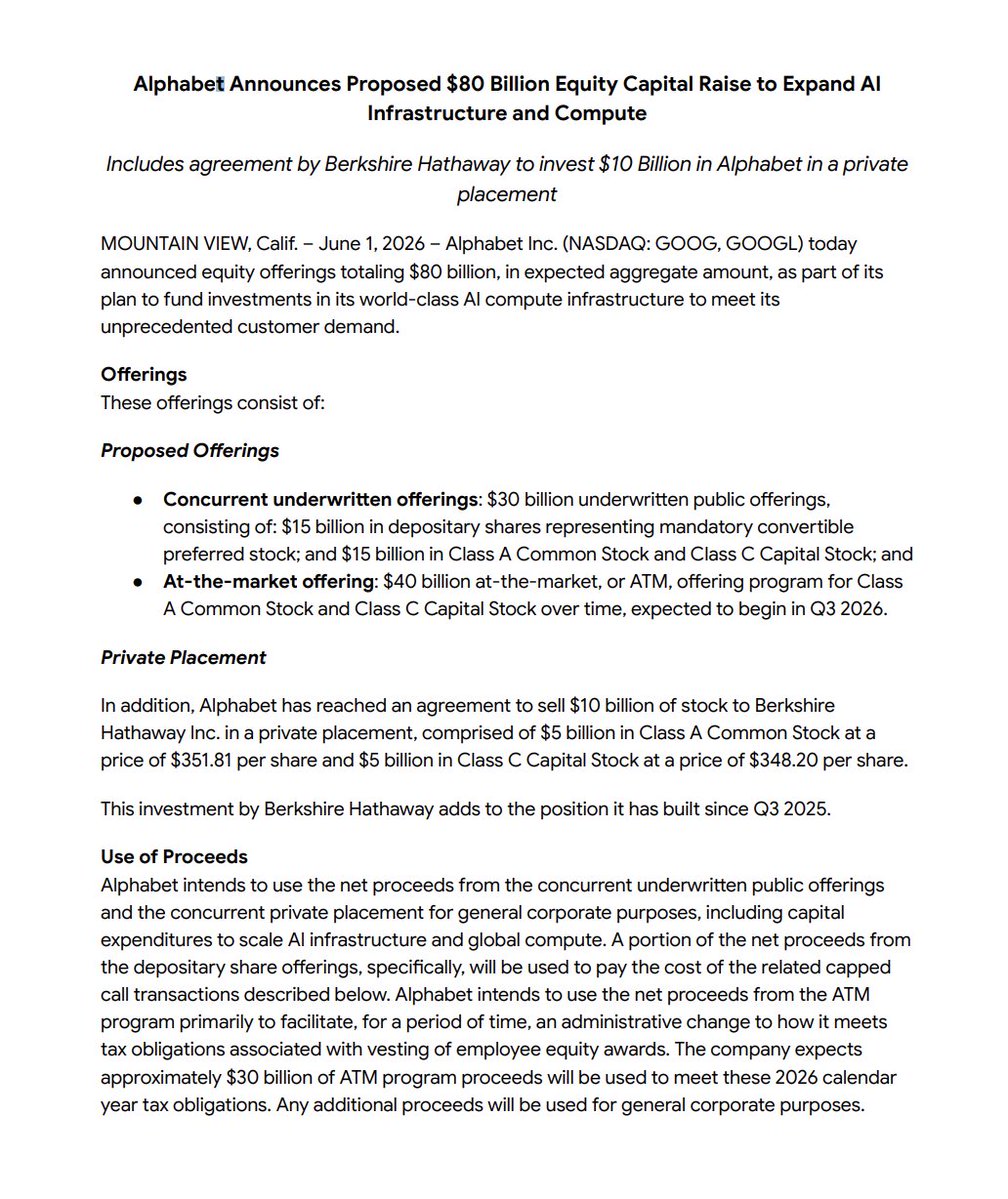
JUST IN: GOOGLE $GOOGL JUST ANNOUNCED AN $80 BILLION CAPITAL RAISE TO BUILD AI INFRASTRUCTURE
And Berkshire Hathaway $BRK.B is writing a $10 billion check to get in.
Here's the full breakdown:
THE DEAL:
- $30B in underwritten public offerings
- $40B through an at-the-market stock program starting Q3 2026
- $10B private placement to Berkshire Hathaway
THE BERKSHIRE PIECE:
- $5B in Class A Common Stock at $351.81 per share
- $5B in Class C Capital Stock at $348.20 per share
- Berkshire has been building this position since Q3 2025
THE PURPOSE:
- Scale AI compute infrastructure to meet "unprecedented customer demand"
- Approximately $30B of the ATM proceeds will cover 2026 employee equity tax obligations
- Remaining proceeds go directly to AI infrastructure buildout
178
341
2,115
831,151
John C. Maxwell, III retweeted

Jun 1
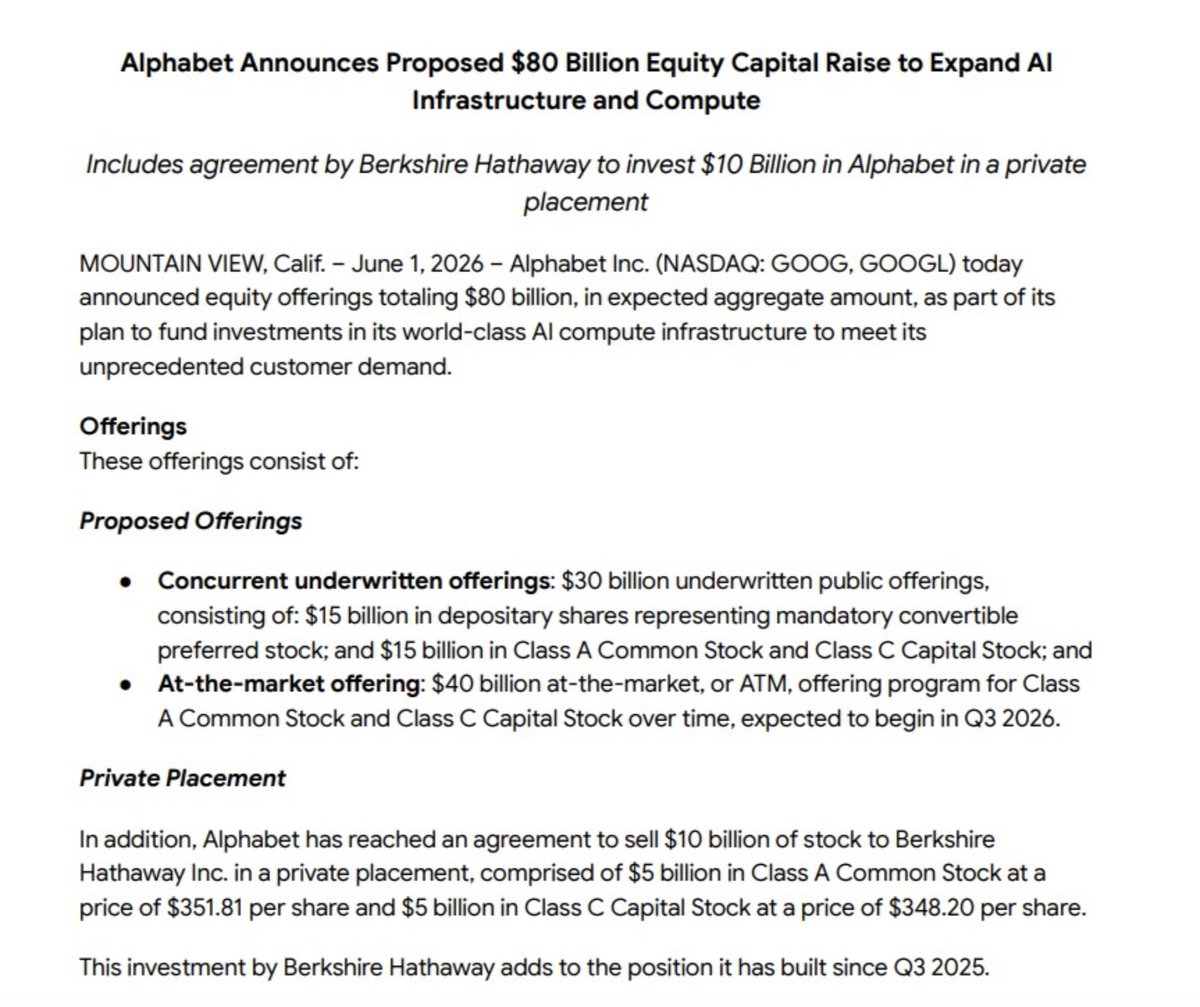
Google just opened up the floodgates for the Mag 7 to begin doing ATM offerings.
The Mag 7 used to buy back stock. Now they are dumping shares in the open market.
Why? AI infrastructure.
As long as the capex delivers an ROI, the market may reward it, but it looks like Google feels they have tapped the debt markets enough and now need to visit the equity markets.
They also got Berkshire to buy $10B at $350, showing that Berkshire is supporting the move.
This is incredible to witness...but my question is...will this give the other Mag 7 companies the freedom to do ATM offerings if the market is willing to let them?
This incredible to witness.
$GOOGL $META $AMZN $MSFT
234
209
2,009
552,047
John C. Maxwell, III retweeted
The US fiscal situation is much worse than that of other major economies:
The US federal budget deficit stands at -6.0% of GDP, the largest among all G7 nations.
The budget gap is also more than TWICE as big as the G7 average of -3.0%.
By comparison, France and the UK are running deficits at -5.0% of GDP.
By 2028, the US deficit is expected to widen to -7.5% of GDP, near the highest since 2021.
At the same time, Italy and Canada are projected to run deficits at -2.0% of GDP over the same period.
The UK, France, Germany, and Japan are all expected to hold deficits below -5.0%.
The US is on an unsustainable fiscal path.

152
453
1,836
171,279
John C. Maxwell, III retweeted

May 28
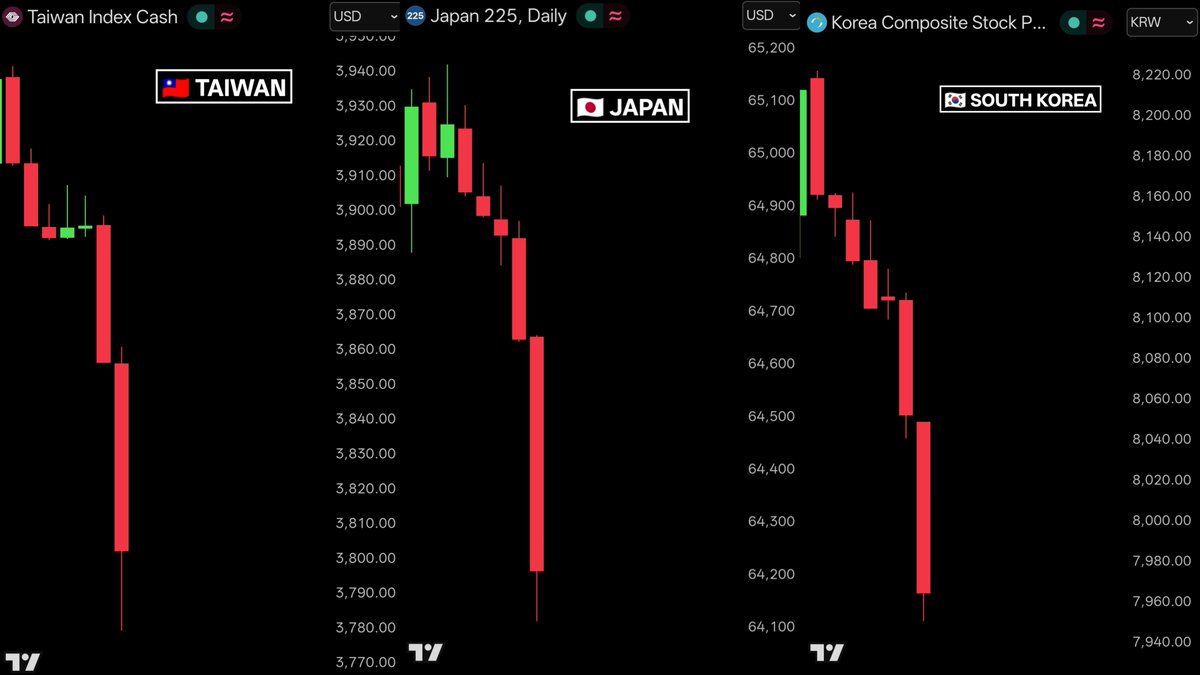
BREAKING: BLOODBATH in Asian Markets
TAIWAN's stock market down 3% erasing NT$3,990,000,000,000 ($133 BILLION)
SOUTH KOREA's KOSPI down 3% wiping out ₩95,000,000,000,000 ($70 BILLION)
JAPAN's NIKKEI down 1.5% erasing ¥14,250,000,000,000 ($99 BILLION)
157
476
2,421
456,161
John C. Maxwell, III retweeted
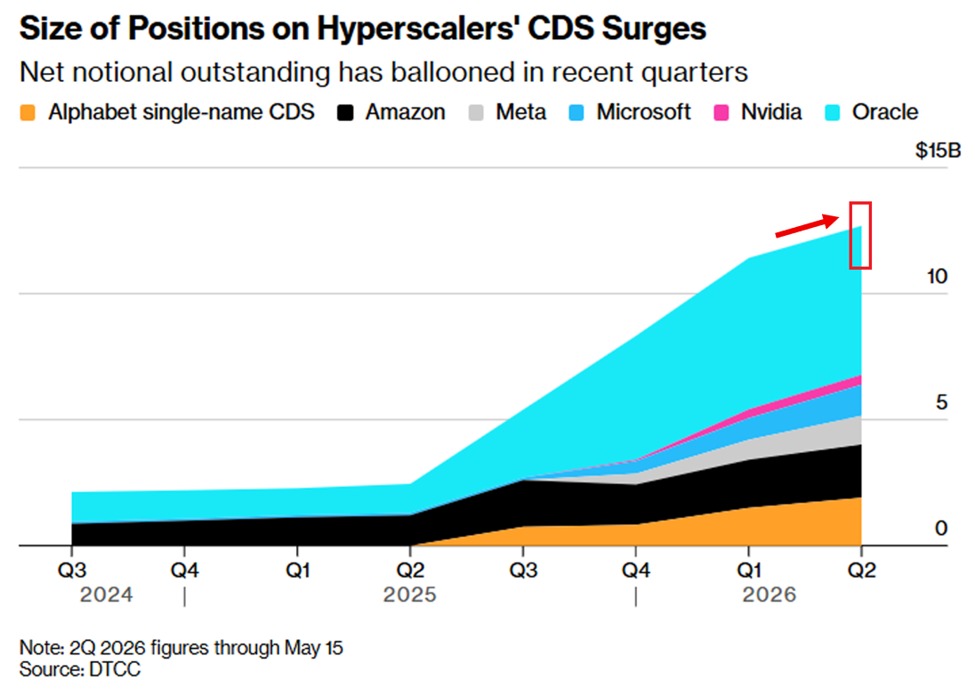
Wall Street is ramping up hedges against Big Tech:
The total net notional value of credit default swaps (CDS) outstanding on major tech firms is up $1.0 billion so far in Q2 2026, to a record $12.5 billion.
The total value of debt being insured against default on these companies is up 500% since Q2 2025.
Oracle, $ORCL, leads with ~$6.5 billion, followed by Amazon, $AMZN, at ~$2.0 billion, and Alphabet, $GOOGL, at ~$2.0 billion.
At the same time, Microsoft, $MSFT, stands at ~$1.0 billion, Meta, $META, at ~$800 million, and Nvidia, $NVDA, at ~$200 million.
Furthermore, monthly notional trading volumes of Big Tech CDS trading at Bank of America are up 900% since the start of 2025.
For context, most of these CDS contracts did not trade actively until 2025.
Corporate borrowing tied to AI is exploding.
221
256
1,108
203,485
John C. Maxwell, III retweeted

May 21
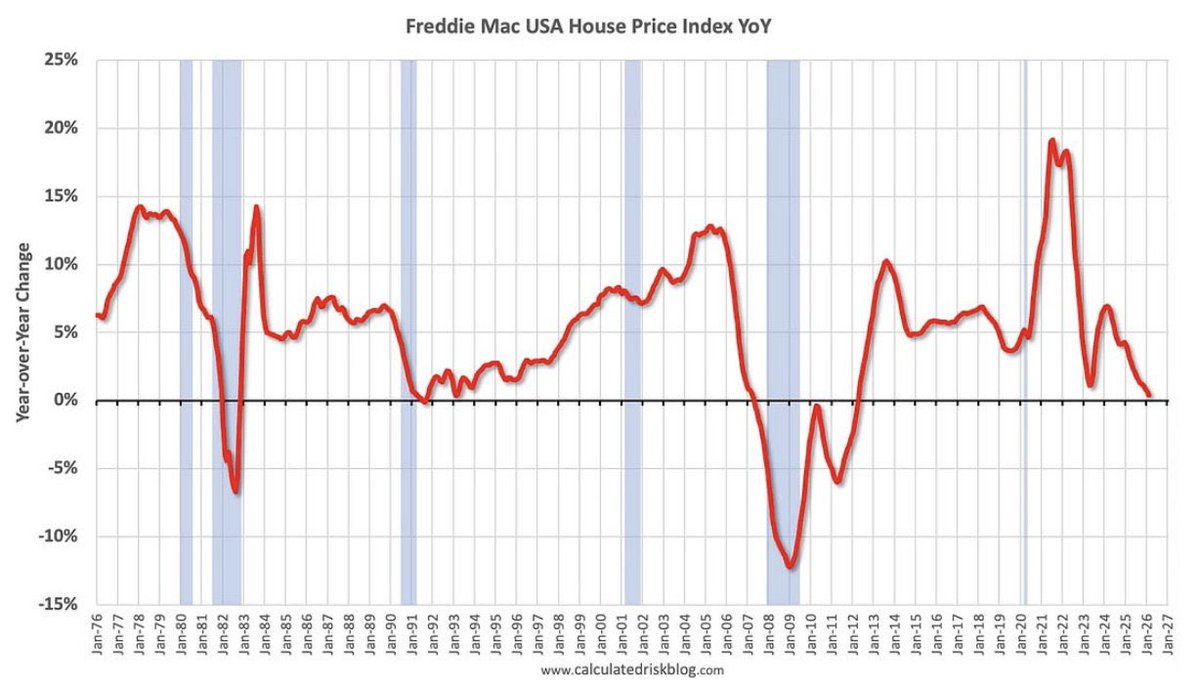
The housing market is about to go negative for the first time since… 2007
163
397
2,483
257,265
John C. Maxwell, III retweeted
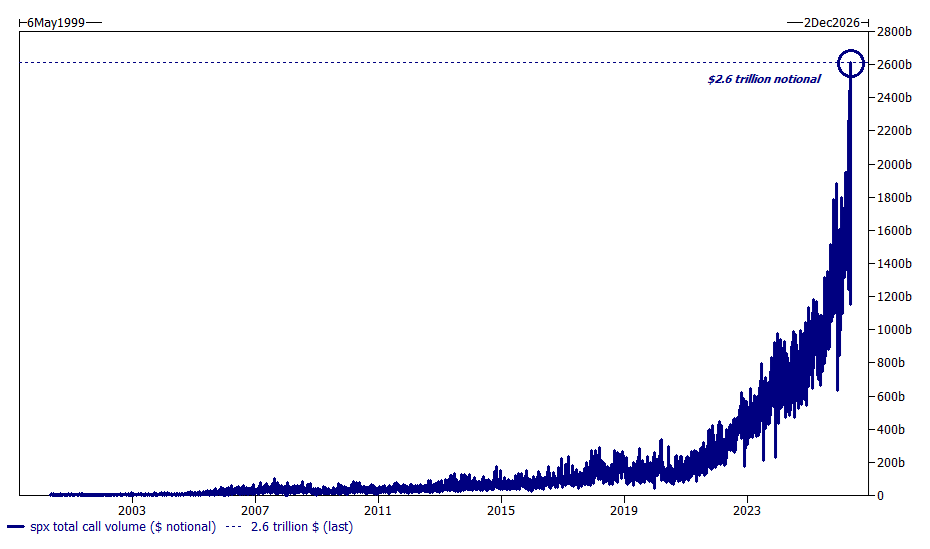
Investor demand for downside protection is plummeting:
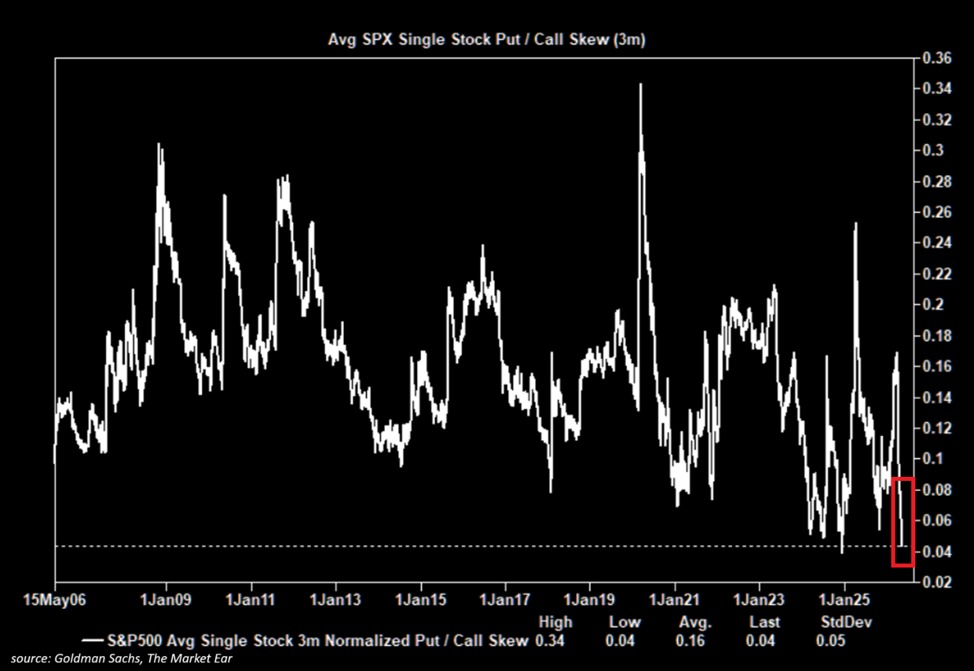
The average 3-month put-to-call skew of S&P 500 single stocks is down to 0.04, the 4th-lowest reading over the last 20 years.
This measures how much more investors are paying for downside protection via put options than for upside exposure through call options.
The lower the reading, the less investors are paying to protect themselves against a market decline.
The average 3-month put-to-call skew has fallen -75% since March, posting the sharpest drop since April-May 2025.
This metric is even lower than during the 2021 meme stock frenzy.
Investors are no longer thinking about downside risk.
198
254
1,641
254,197
John C. Maxwell, III retweeted

May 21
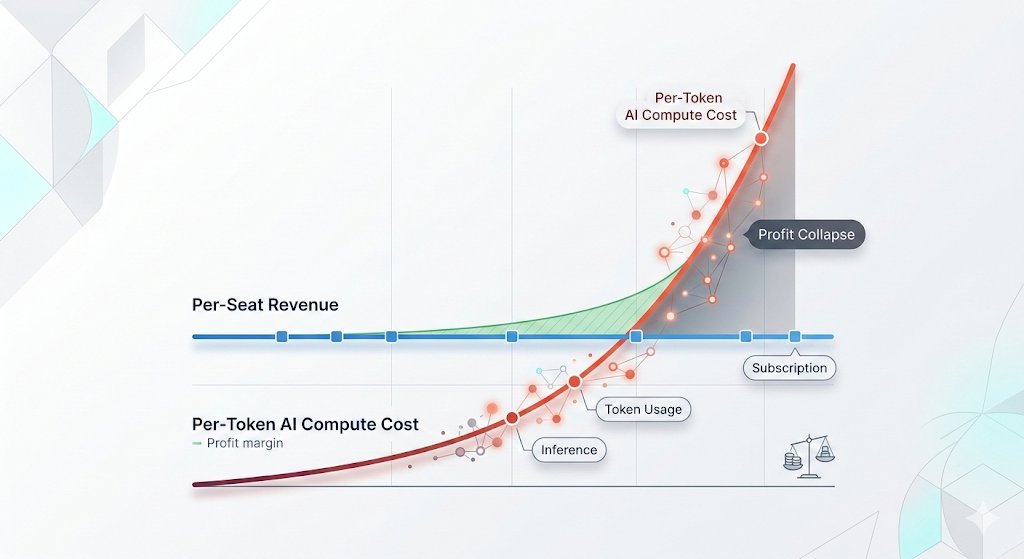
🦔Microsoft canceled its internal Claude Code licenses this week after token-based billing made the cost untenable, even for a company with effectively infinite cloud resources. Uber's CTO sent an internal memo warning the company burned through its entire 2026 AI budget in just four months. American AI software prices have jumped 20% to 37%, and GitHub (owned by Microsoft) is dropping flat-rate plans for usage-based billing across its products.
My Take
The AI subsidy era is ending in real time. The same company that put $13 billion into OpenAI and built the Azure infrastructure powering most of Anthropic's compute just looked at the bill from a competitor's coding tool and decided it was not worth paying. That is not a productivity failure on Anthropic's end. Token-based pricing is forcing every enterprise customer to confront the actual cost of running these models at scale, and the number turns out to be far higher than the flat-rate experiments suggested.
This ties directly to my Gemini Flash post yesterday. Anthropic, OpenAI, and Google all raised effective prices in the last six months. Enterprises that built workflows assuming AI costs would keep falling are now watching annual budgets evaporate in months. Two outcomes look likely from here. Either enterprises scale back AI usage to fit budgets, which slows the revenue ramp the labs need to justify their valuations ahead of IPOs, or the labs cut prices and absorb the losses, which makes the unit economics worse at exactly the wrong moment. Both paths land in the same place, the numbers stop working, and somebody has to take the writedown.
Hedgie🤗
1,076
4,000
19,922
8,324,686
John C. Maxwell, III retweeted

May 16
Keir Starmer does NOT want the World to see how badly British Patriots want their country back
Would be a shame if it went viral on 𝕏
1,813
76,471
169,798
1,270,214