
Joined October 2012
- Tweets 41
- Following 184
- Followers 221
- Likes 266
1 Photos and videos
Max Libbrecht retweeted

28 Mar 2024
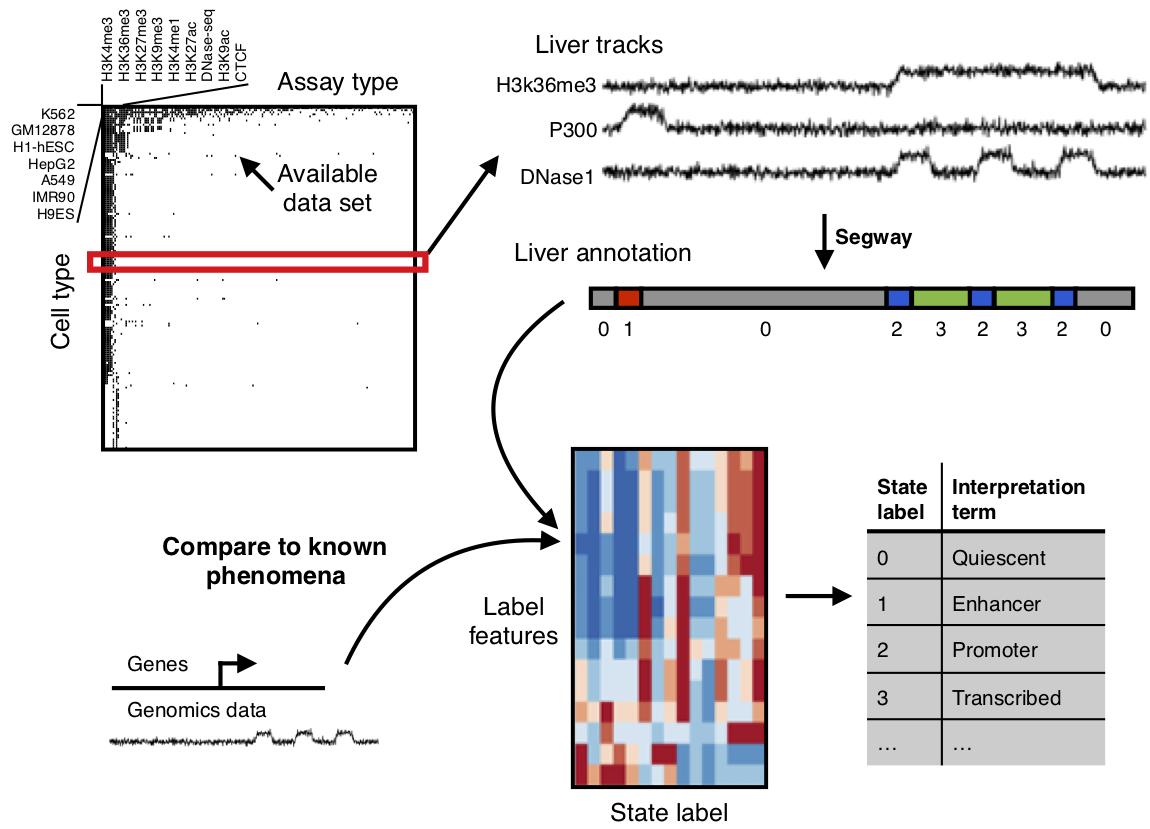
🧬 Excited to share our paper "Robust chromatin state annotation," now in Genome Research, @mforoozz, @marjanfarahbod, @maxlibbrecht.
Paper: bit.ly/scgrp
Blog Post: bit.ly/scmbp
Follow this thread for details. (1/6)👇
2
2
6
979
Max Libbrecht retweeted

7 Nov 2023
New preprint: "Integrative chromatin state annotation of 234 human ENCODE4 cell types using Segway reveals disease drivers" @marjanfarahbod @mforoozz @HDaneshpajouh @bonscotthoughts @JMichaelCherry1 @maxlibbrecht biorxiv.org/content/10.1101/…
1
8
12
2,028

26 Sep 2023
It's official, I've been granted tenure and promoted to Associate Professor! A huge thank you to my students, colleagues, mentors and collaborators.
10
4
40
3,319
Max Libbrecht retweeted
19 Dec 2022
New paper in @OUPBioinfo: "Integrative chromatin domain annotation through graph embedding of Hi-C data", Neda Shokraneh, Mariam Arab, @maxlibbrecht.
1
6
627
16 Nov 2022
Presenting on "Accurate and interpretable prediction of drug resistance in M. tuberculosis using deep learning" at the Mathematics and Statistics of Genomic Epidemiology workshop. Thanks to the organizers for the opportunity to present. @BIRS_Math
birs.ca/events/2022/5-day-wo…
1
7
Max Libbrecht retweeted

Happy to share that our survey of the current interpretable methods for deep learning models in genomics is finally out in Nature Reviews Genetics! 1/7
nature.com/articles/s41576-0…
3
84
331
Max Libbrecht retweeted

3 Oct 2022
Nice overview from @sara_mostafavi on how to unlock genetic and mechanistic insights from biological data using explainable AI, with many applications in regulatory genomics @NatureRevGenet nature.com/articles/s41576-0…
21
83
3 Oct 2022
Review on "Obtaining genetics insights from deep learning via explainable artificial intelligence" out now in @NatureRevGenet! Thanks to co-authors @NovakovskyG, Nick Dexter, @WyWyWa, @sara_mostafavi nature.com/articles/s41576-0…
1
7
24
Max Libbrecht retweeted

24 May 2022
Maxwell Libbrecht has joined our Editorial Board, and will be handling papers in our Genomics section!
You can find out more about Max's research here:
plos.io/3LLuoJb
1
2
1
17 Sep 2021
I'm honored to have been selected for the Michael Smith Scholar award -- thank you, @msfhr!
msfhr.org/1/news_article/ena…
2
2
18
Max Libbrecht retweeted
28 Jun 2021
3\ The paper is available here:
pubmed.ncbi.nlm.nih.gov/3416…
1
3
Max Libbrecht retweeted
28 Jun 2021
2\ bacterial pathogen within a single human host has important implications for public health. In this research, we introduce SplitStrains, a novel method grounded in a rigorous statistical model, estimates mixed strains' proportions and deconvolves them.
1
1
4
Max Libbrecht retweeted
28 Jun 2021
1\ Einar Gabbassov, Miguel Moreno-Molina, Iñaki Comas, Maxwell Libbrecht, and Leonid Chindelevitch published their work on "SplitStrains, a tool to identify and separate mixed Mycobacterium tuberculosis infections from WGS data". Since the occurrence of multiple strains of a
1
1
5
Max Libbrecht retweeted
20 Apr 2021
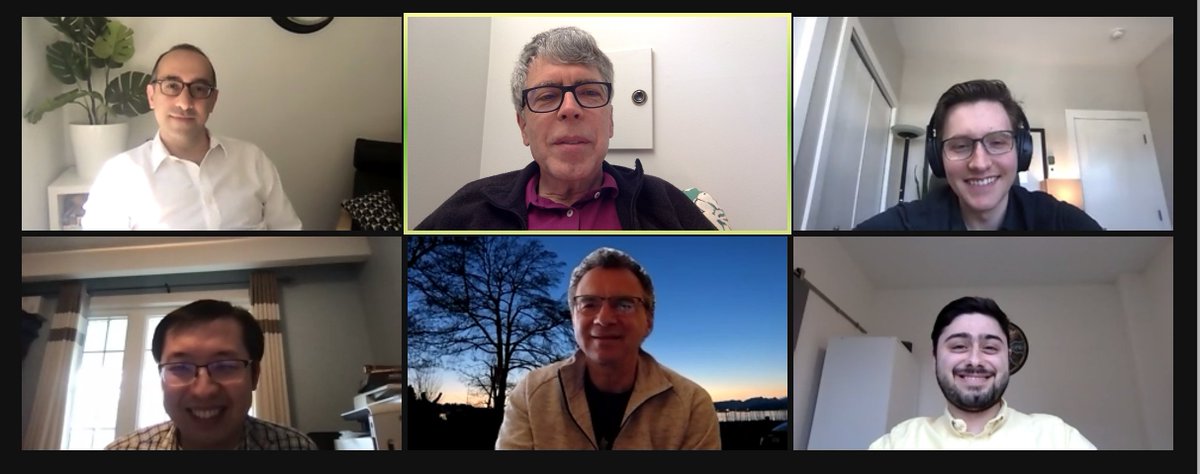
Mohammad Sadegh Saberian defended his MSc thesis on Using DNNs in multiple instance learning to identify putative treatments effective against SARS-CoV-2 based on morphological analysis. Congratulations, Mohammad Sadegh!
1
7
Max Libbrecht retweeted
17 Mar 2021
1\ Kevin Dsouza, and Adam Li submitted a paper on " Latent representation of the human pan-celltype epigenome through a deep recurrent neural network". In this research, we propose Epi-LSTM, a deep long short-term memory (LSTM) recurrent neural network autoencoder to capture the
1
2
3
Max Libbrecht retweeted
5 Jan 2021
@maxlibbrecht, @rachelcwchan and @michaelhoffman just submitted a review of segmentation and genome annotation (SAGA) algorithms such as Segway and ChromHMM. Check out the preprint here: arxiv.org/abs/2101.00688
2
4
16 Feb 2020
New preprint from my student Faezeh Bayat on variance-stabilized units for sequencing-based genomics assays! We found that currently-used log and arcsinh transformations do not correctly stabilize variance and developed a method called VSS that does so. biorxiv.org/content/10.1101/…
12
27
2 Sep 2019
Genome annotations of 164 human cell types with Segway, plus new methods for analysis and visualization -- now out in Genome Biology! @michaelhoffman @ZhipingWeng @thabangh
genomebiology.biomedcentral.…
1
19
36
Max Libbrecht retweeted

At the #ICML19 Workshop on Computational Biology @rachelcwchan will present a poster on a new approach for "Semi-supervised learning in Segway"! Work with @mickael_mendez @maxlibbrecht sites.google.com/view/icml-c…
1
3
9