
Head of Crypto @PlugandPlayTC 🚀 || 🇨🇴🇺🇸
Joined August 2015
- Tweets 556
- Following 4,576
- Followers 994
- Likes 5,169
70 Photos and videos






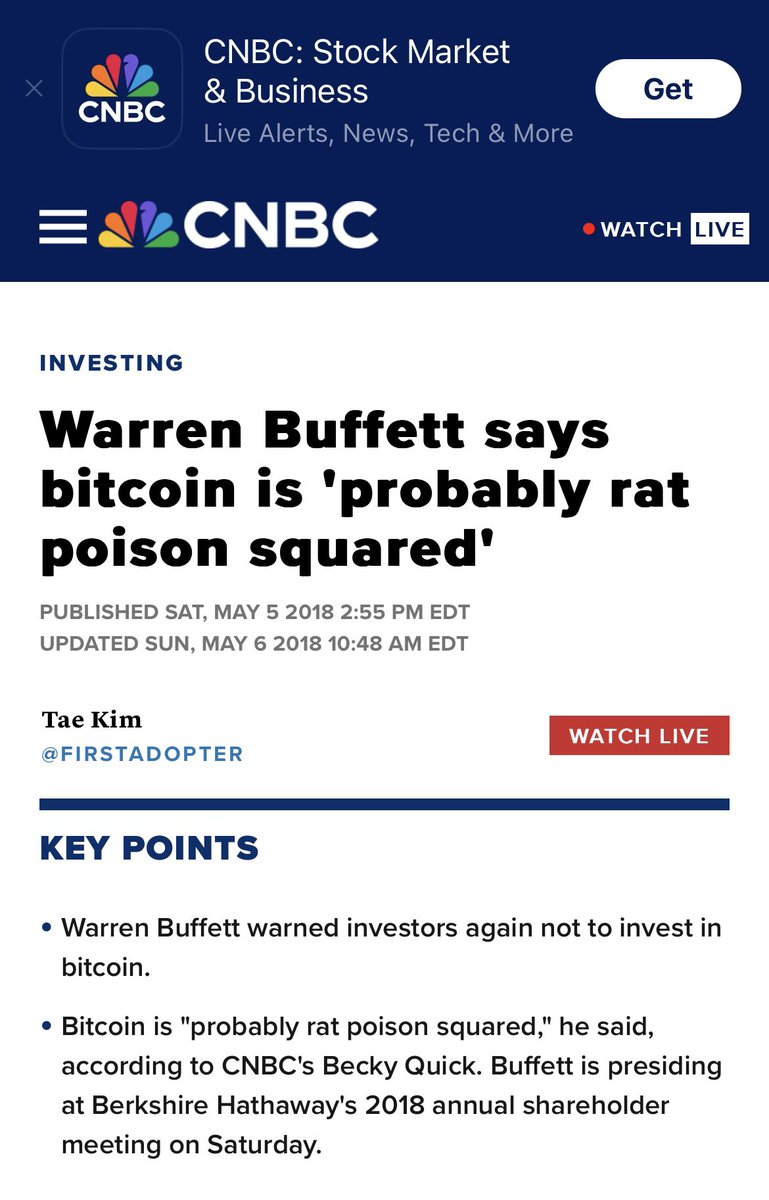
Every platform shift has redefined how money moves. From the web to mobile, and now to AI and global-first businesses.
We at @PlugandPlayTC are excited to back @princdann & @Hanafi_Iss as they continue on their mission to rebuild the stack 💪
Mar 24

Introducing Inflowpay.
Collect one-time and recurring card payments from anywhere in the world. No punishing fees, no settlement delays, no chargeback hell, no local tax nightmares. Live in under an hour.
The first payment infrastructure built natively for a borderless world.
1
1
6
399
Maximillian Jungreis || jungreis.eth retweeted

Mar 11
As a lifelong Floridian, it’s amusing to see a place go from being universally mocked by the business and cultural elite for hanging chads and Florida Man to becoming the shining example of good governance.
That said, it’s sad (and a bit cowardly) to see so few of our famous newcomers acknowledge the real reasons why they’re uprooting their family offices and businesses and social lives after years of exporting West Coast morality to everywhere but here.
Just admit why you’re coming. No one is moving here for the weather.
160
290
3,267
120,904
What a novel concept…

BITWISE CIO MATT HOUGAN SAYS TRADITIONAL ALTCOIN SEASONS ARE OVER, FUTURE CYCLES WILL FAVOR TOKENS WITH REAL-WORLD UTILITY
133
Proud Floridian 🥹
Mar 6

🍊 Florida goes FULL CRYPTO! 🚀
Florida just became the 1st state to pass a dedicated #Stablecoin framework. SB 314 is officially headed to @RonDeSantis for signature.
What’s changing?
✅ Legal clarity for issuers (not a security!)
✅ Consumer protections & 1:1 reserve audits
✅ Pilot program to pay govt fees in stablecoins
✅ Aligned with the federal GENIUS Act
Prediction: major businesses will begin accepting Stablecoins in Florida, bypassing merchant fees.
122
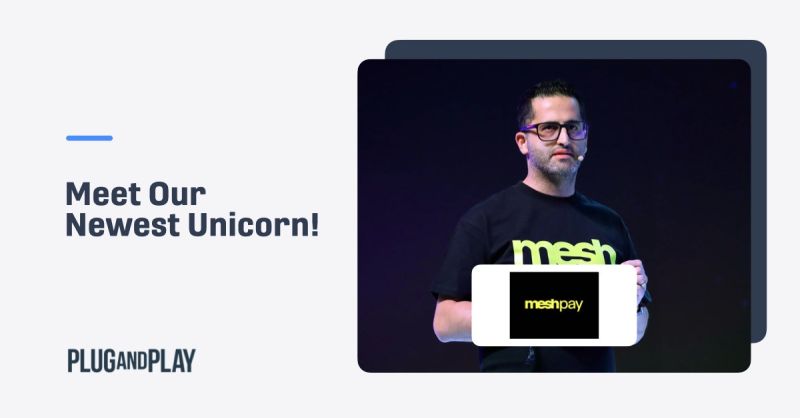
Huge congrats to @meshpay and to @bamazizimesh on closing a $75M Series C and reaching unicorn status 🦄
What’s validating to see right now is why this is happening. Many of the corporate partners I work with are all-in on stablecoins and programmable payments as core infrastructure, not experiments. The shift toward compliant, interoperable, borderless rails is real.
Bam is a tremendous operator, and Mesh has been focused from the inception on abstraction, compliance, and usability — making crypto payments work inside existing systems rather than forcing behavior change.
Proud that @PlugandPlayTC was a day-1 supporter. Across Plug and Play Crypto & Digital Assets, we work with Layer 1 ecosystems on ecosystem development and with early-stage founders on finding true product-market fit.
Our Web2.5 thesis is finally coming to fruition and unicorns like Mesh are the proof.
1
1
6
657
While most people focus on financial services, core infrastructure like energy, wireless and compute are all moving onchain and flying massively under the radar…
Congrats to the EV3 guys @danconia_crypto @moneromahesh for helping pioneer this space and getting it to a scale that's useful for the world's largest companies
Excited to continue partnering on this journey 🚀
Jan 29

1/ We’re thrilled to announce EV3 Venture Fund II, an oversubscribed $61.74M early-stage venture fund dedicated to backing entrepreneurs with generational drive and ambition. We’re tripling down on crypto with bigger checks and deeper involvement.
Watch the EV3 Vision Below:
1
8
783
Maximillian Jungreis || jungreis.eth retweeted

Jan 15
the worst person you know is planning a trip to japan right now
316
1,588
26,143
2,523,143
A major step forward for on-chain institutional credit and how modern lending will continue to scale 🚀
Happy to be a day 1 supporter
Jan 15

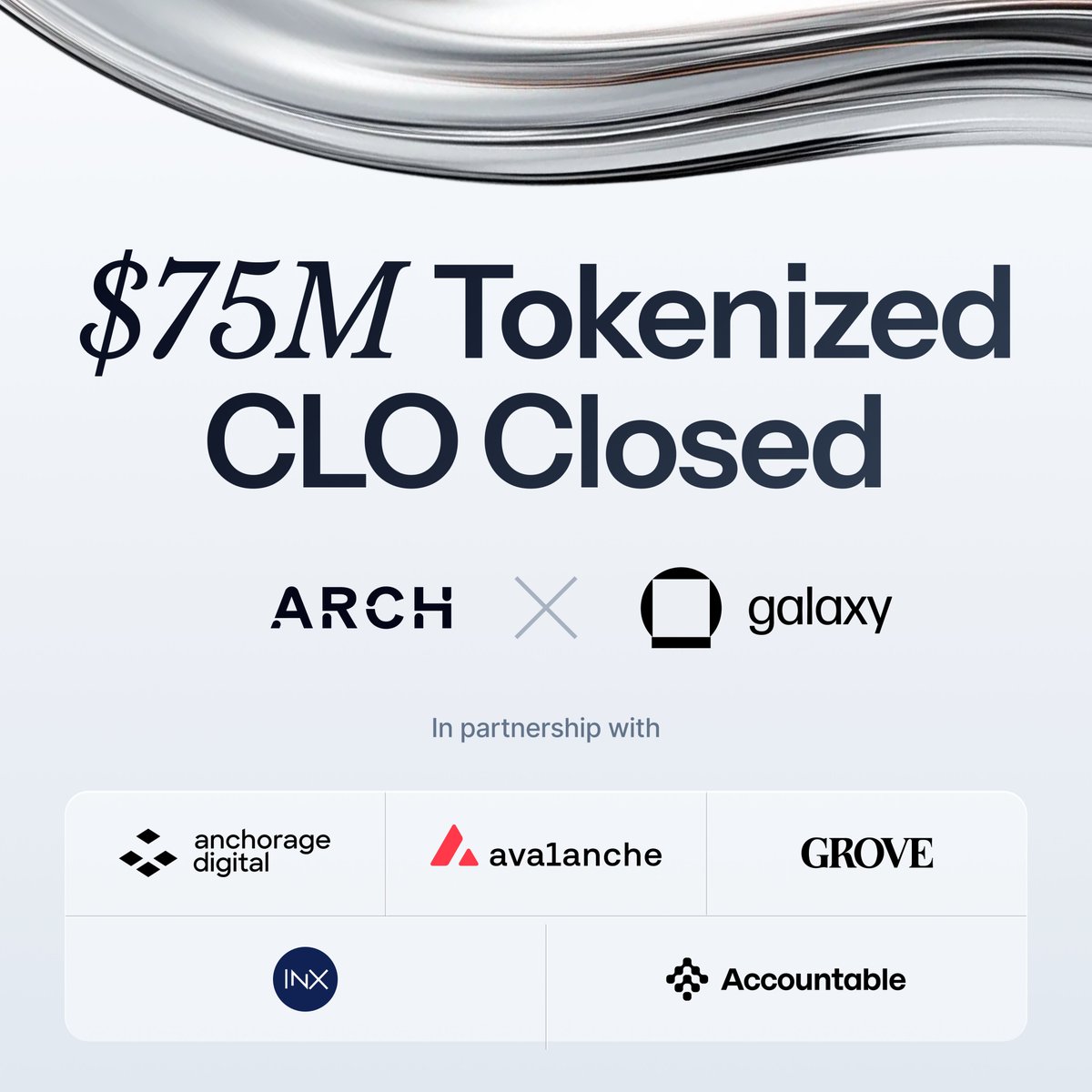
Today, Arch is happy to announce the closing of a $75M tokenized CLO with @galaxyhq issued on @avax, to continue to finance our crypto-backed loans.
This is institutional credit infrastructure on modern rails.
Tokenization is finally moving from theory to production.
1
1
5
285

8 Dec 2025
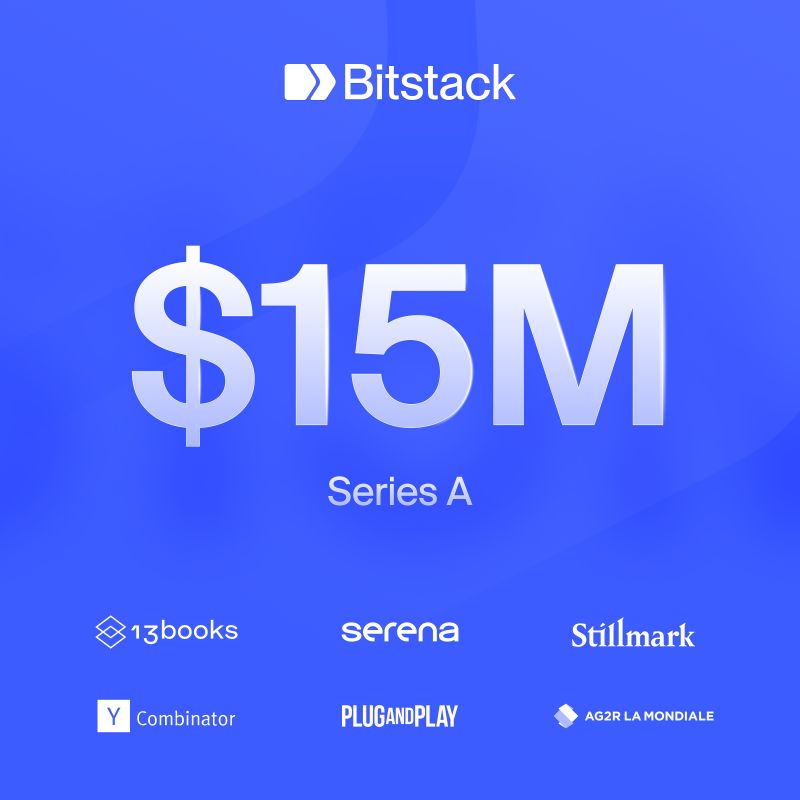
We at @PlugandPlayTC are proud to back @bitstack as they announce their $15M Series A and take a major step forward in reshaping consumer finance across Europe.
Bitstack was one of the very first investments I made as an investor, and I still remember that first meeting in September 2021.
@alexroubaud, fresh off the acquisition of Moka, already had a rare conviction: Bitcoin wasn’t just an asset. It was a financial innovation that could help everyday people save, spend, and build wealth more meaningfully.
Since then, Bitstack has become the #1 French crypto app. We’ve backed Alexandre Roubaud and @setkabir in every round, and we’re tripling down again in this Series A, because they’ve consistently done what great teams do: 𝐭𝐮𝐫𝐧 𝐚 𝐛𝐨𝐥𝐝 𝐭𝐡𝐞𝐬𝐢𝐬 𝐢𝐧𝐭𝐨 𝐫𝐞𝐚𝐥 𝐚𝐝𝐨𝐩𝐭𝐢𝐨𝐧.
One thing that stood out in this round is the participation of @AG2RLAMONDIALE, one of France’s largest insurance and retirement providers. Their involvement reflects a broader shift we’re starting to see more as traditional financial institutions begin integrating crypto into mainstream products.
It’s a shift that aligns closely with my Web2.5 thesis: the most impactful consumer products blend the trust and distribution of established finance with the transparency and alignment of crypto-native rails. Bitstack has embodied this from the start; now serving 300,000 users in France and expanding across Europe.
This new $15M round will fuel Bitstack’s expansion across Europe and power the launch of a first-of-its-kind Bitcoin-branded @Visa card, enabling unlimited Bitcoin “stackback” on every purchase.
Onward ⚡️
2
8
230
Maximillian Jungreis || jungreis.eth retweeted

26 Nov 2025
Maximillian “Max” Jungreis (@Maxwolfj)
Introducing Maximillian “Max” Jungreis, Head of Crypto and Digital Assets at (@PlugandPlayTC) Plug and Play Tech Center.
He founded Plug and Play’s digital assets vertical, expanded it internationally, and works with hundreds of corporate partners to drive Web3 adoption across enterprise ecosystems.

1
1
4
2,216
Maximillian Jungreis || jungreis.eth retweeted

5 Sep 2025
I can't believe I still have to say this in the year 2025, but let me explain once again why permissioned chains like Tempo (or Canton or ARC or any other corporate chain) are likely to fail.
Most people think Satoshi wanted to invent a new kind of money, but I think he was more interested in creating a new kind of payment system.
The most astute TradFi-focused observation in the Bitcoin white paper is this one about intermediaries:
"Completely non-reversible transactions are not really possible, since financial institutions cannot avoid mediating disputes. The cost of mediation increases transaction costs, limiting the minimum practical transaction size and cutting off the possibility for small casual transactions, and there is a broader cost in the loss of ability to make non-reversible payments for nonreversible services. With the possibility of reversal, the need for trust spreads"
TLDR: When everyone knows who is in charge, and that entity could plausibly be held liable in a civil court or by the government for facilitating crime, they have no choice but to censor, rollback some activity after the fact, and so on.
In modern crypto terms it means no true liveness, safety, or CR. Before Bitcoin, this is how every single settlement or payment system--save physical cash--worked.
What made Bitcoin unique was the way miners voluntarily opted into a protocol that was the final boss. They didn't have to identify themselves or be permissioned, and faced financial penalties if they didn't follow the rules.
Thus: when any Bitcoin transaction happens, we don't necessarily know who the miner is. Even if we did (much of the hash rate is known) it wouldn't change anything because they can't be held liable. If any aggrieved party sued a specific miner for a particular transaction, that miner could say "I'm just following the rules of the protocol here. If I didn't follow them, someone else would, and the same transaction would still get processed"
Thus: an open, permissionless and decentralized protocol is in charge of everything, and since you can't sue or jail or kill a protocol, we end up with liveness, safety, and censorship resistance.
Same goes for a permissionless PoS chain.
Or even a properly designed L2 with rock solid proofs and L1 defection/CR mechanisms. The sequencer can plausibly claim "I'm just following the rules here, if I try to force an irregular state change the proof won't be accepted by the permissionless L1 validator set. If I censor a particular user they'll force include via the L1"
Fifteen years ago one could wonder whether this would actually work. What if the government decided to throw some miners in jail anyway just to deter others from joining the protocol?
Well, they haven't. Probably because the US realized that going after American Bitcoin miners would achieve nothing other than making non-American miners (and the governments that tax them) richer. People like me have been telling them that for a decade.
In fact the entire arc of regulatory interaction with crypto now is to respect decentralization, and even encourage it.
Now, back to Tempo, et al:
A permissioned network does not have this form of plausible deniability. The permissioning entity has to KYC every validator - not only are they known, but their participation is not voluntary.
Given this practical reality, the protocol is not in charge, the gatekeeper is. The gatekeeper can change the protocol whenever it feels like it - and coerce all validators to go along, lest they be de-permissioned and kicked out.
In a permissioned chain, the protocol is more of a "best practice set of recommendations" than it is something inviolable.
This is a problem because it returns us back to the ass-covering hell Satoshi identified. Both the participating validators and the gatekeepers can be held liable because they have the power to violate liveness, safety and CR whenever they feel it.
And because they are all run by smart professionals, and employ conservative lawyers and GCs, they will definitely cover their ass. They will censor. They will roll back the chain if something bad enough happens. They'll even halt it if the government forces them to.
That's not a bad thing. But it's a TradFi thing. It means a permissioned blockchain is a lot closer to a database than it is a chain. A bad database, overloaded with cryptography and consensus it doesn't really need.
So why am I saying all of this? Because a really smart researcher who I respect responded to my critiques of Tempo yesterday by saying "Coinbase is a major Ethereum validator. So the same liability problem exists."
But he/she is missing a key detail: Coinbase doesn't control Ethereum transactions, the protocol does. And because the protocol is robust, and the validator set is both diverse, global, and in some cases anonymous, Coinbase can plausibly claim being a neutral participant.
Coinbase can't do that if it get's permissioned by Stripe or whoever to be a part of Tempo. In a legal preceding or government action, it could credibly be argued that "The CEO of Coinbase could have gotten @matthuang on the phone and convinced him to get the other validators to pair back the chain, at the risk of being kicked out."
That can't be argued for @VitalikButerin on Ethereum, or anyone on Bitcoin.
And of course the folks involved with Tempo/Arc/Canton etc etc know all of this, which is why they'll be buried with legal and contractual negotiations for the foreseeable future.
All of that wrangling is why every other attempt at building a permissioned chain, despite the honest attempts of really smart people and the investment of countless millions, has ended in total disaster.
Lastly, the claim that Tempo/ARC/Canton are "permissionless but public" is a fantasy. All permissionless chains will become private eventually. It's the natural order of things when a corporation, and not the protocol, is in charge.
58
95
497
44,598
Maximillian Jungreis || jungreis.eth retweeted

21 Aug 2025
EXCLUSIVE: Loop Crypto raised a strategic round co-led by VanEck and Fabric Ventures
blockworks.co/news/loop-cryp…

5
5
25
5,079
21 Aug 2025
🚀 🚀 🚀
21 Aug 2025

We’re excited to announce a new strategic funding round for @loopcrypto_xyz led by @fabric_vc & @vaneck_us with additional first-time investment from @mert (Helius) & @maxwolfj (Plug and Play) and with continued support from @a16zcrypto, @archetypevc, a_capital, & others.
This brings Loop Crypto’s total funding to over $6M. 🚀

1
4
571
Maximillian Jungreis || jungreis.eth retweeted

17 Jul 2025
Behind every chain, there’s infrastructure you can’t see.
Join @HelloMoon_io, @bioeconomy_co, and @maxwolfj from Plug & Play in this space as we discuss how our validators secure, scale, and shape the future of RWAfi.
🪶 Hosted by @0xCrabLegs
Set your reminder ⬇️

29
59
288
14,496
Maximillian Jungreis || jungreis.eth retweeted

27 Jun 2025
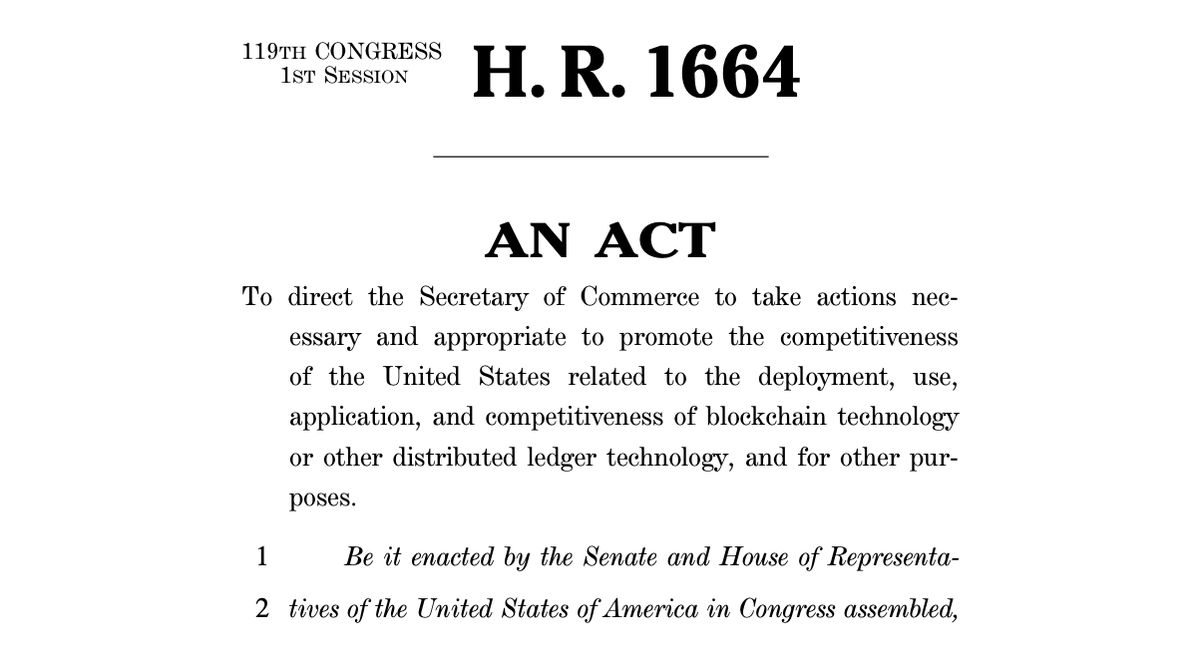
🇺🇸 TODAY: The US House has passed the Deploying American Blockchains Act of 2025 (HR1664), next heading to the Senate.
The bill directs the Secretary of Commerce to promote blockchain technology in the US.
140
671
2,376
170,322
28 May 2025
28 May 2025

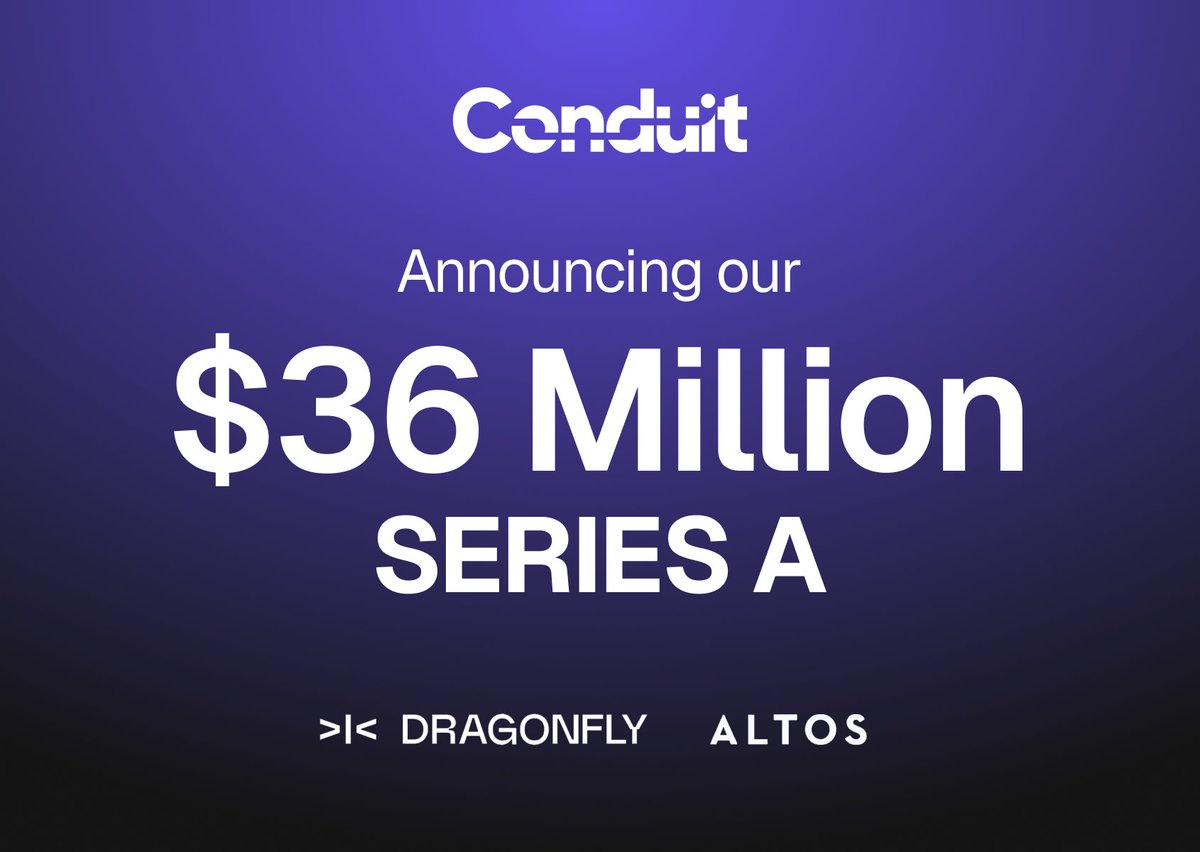
We’ve raised $36 million in Series A funding to scale global stablecoin payments – a generational change in how money moves.
The round was co-led by @dragonfly_xyz and @altosvc, with participation from @sound_ventures_, Commerce Ventures, @circle_ventures, @DCGco and existing investors Helios Digital Ventures and @portageinvest.
This milestone supports our mission to offer a faster, more reliable alternative to traditional cross-border payment rails, powered by stablecoins.
From Latin America to Africa and Asia, we’re building infrastructure that meets the needs of today’s global businesses, connecting modern domestic payment methods to a unified on-chain layer.
Check out our blog for the full story conduitpay.com/blog/conduit-…
4
683
27 May 2025
Proud investor 💪
27 May 2025

Big news: Jolly was selected by @PalantirTech to be in their first-ever Startup Fellowship cohort 🥇
We are 1 of 25 AI-native startups chosen to build alongside Palantir's world-class engineers. A defining moment as we build for the Future of Work 🏗️🦾
9
663
Maximillian Jungreis || jungreis.eth retweeted

30 Apr 2025
is this a good week to announce my new L1?
19
2
81
5,908
Maximillian Jungreis || jungreis.eth retweeted

29 Apr 2025
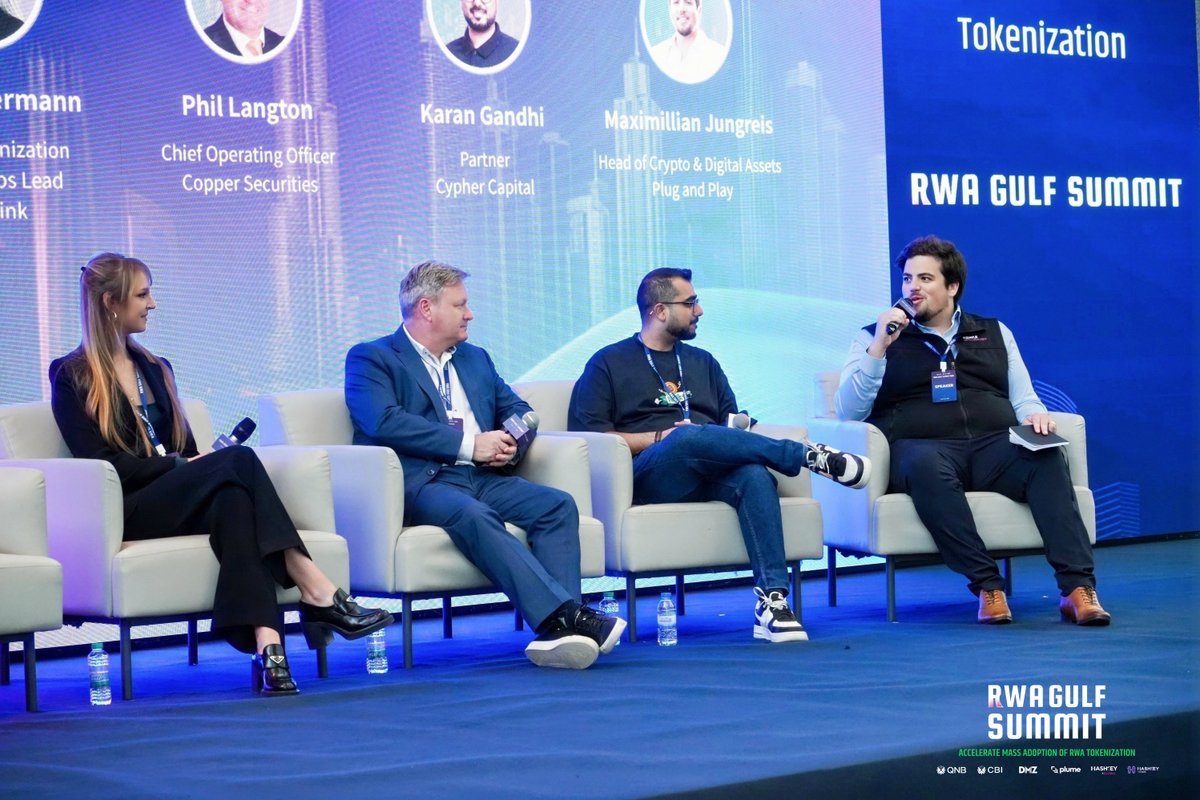
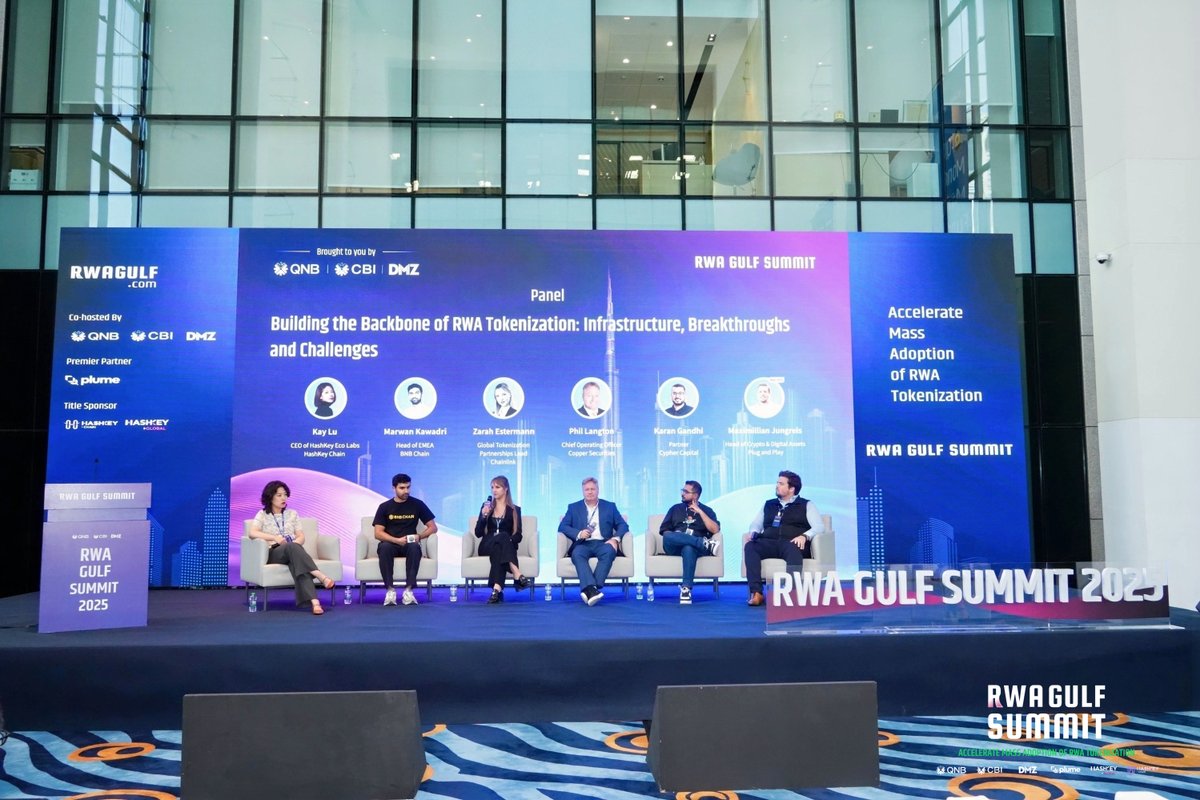
Live from Dubai! We’re at the RWA Gulf Summit 2025, exploring the future of tokenization!
Our very own @maxwolfj took the stage to discuss “Building the Backbone of RWA Tokenization: Infrastructure, Breakthroughs, and Challenges.”
Let’s keep building!🤝 @XDC_Network_
9
22
74
19,462