
co-founder @useboardwalk | advisor to @veildotcash | largest @base nft holder
Joined July 2023
- Tweets 9,966
- Following 603
- Followers 8,370
- Likes 23,337
674 Photos and videos













Pinned Tweet

Jun 13
Major ecosystems want @UseBoardwalk because they need a repeatable way to turn builders, apps, games, memes, and communities into credible native token economies.
🙋♂️How do we support native economies that are credible enough to retain users, LPs, contributors, and partners?
The pull is coming from ecosystems, not just issuers. [redacted] asked Boardwalk to deploy because chains need credible native-economy formation. Bonding curves solved token abundance. CCA improves auction mechanics. MetaDAO handles organization governance.
👉 Boardwalk gives ecosystems a repeatable market-formation layer for the many teams that need tokens but do not need a futarchic corporation.
The reason [redacted] matters is that it proves the demand is not hypothetical.
Ecosystems have a structural problem: they fund and attract builders, but they do not have a standardized way to turn those builders into durable, liquid, legible native economies. Pump-style bonding curves create spam. CCA just clears auctions. MetaDAO governs companies.
🐳 Boardwalk gives the ecosystem a repeatable launch and market-formation standard. [redacted] asking us to deploy is not just chain expansion; it is evidence that ecosystems want the Boardwalk Standard.
Chains need an operating system for credible native token economies. They’re quickly recognizing the breadth and depth @useboardwalk offers.
TLDR: Boardwalk will launch on its sixth chain this coming week, alongside our formal public launch for all chains.
6
25
976
meowphasaurus 🐳 retweeted
BMX transparency liquidity reminder:
BMX is not a new token; it has been live for years. Boardwalk is a new protocol from the same team, and BMX is used in Boardwalk protocol mechanics, including launch creation, discovery signals, and staking-based vote direction for designated protocol fees.
The BMX contract is renounced and the minter is burned, meaning no one can mint additional BMX. This does not remove market, liquidity, volatility, slippage, routing, price impact, or execution risk.
As of this post, BMX has limited liquidity and a relatively small market cap. Liquidity is spread across multiple pools, so trades may experience volatility, slippage, price impact, and routing differences. Aggregators may help compare routes but do not eliminate execution risk.
Official BMX Transparency page:
app.useboardwalk.com/bmx-tra…
Verify contracts there. Beware of fake pools/contracts and unofficial DMs. Some third-party app data, including FOMO app info, may be outdated and we are seeking to have it updated.
Nothing here is a recommendation to buy, sell, hold, or trade BMX. Informational only; not financial, investment, legal, tax, or trading advice.
13 May 2025

We are excited to announce that the BMX token ownership and minting capabilities have been renounced and burned! This is an exciting milestone for BMX, a protocol and team that believes in maximal progressive decentralization.
In addition, all BMX sent to the dead address prior, as well as 200k BMX within the oBMX contract, have been burned!
1
2
9
435
meowphasaurus 🐳 retweeted

23h
boardwalk's contract design is clean. no oracle dependencies, immutable liquidity, hardcoded token economies from genesis
2
6
304
meowphasaurus 🐳 retweeted
23h
boardwalk's zero oracle design means token economies run on hardcoded rules and internal mechanics, not external price feeds updating every millisecond
immutable contracts lock liquidity and fees at genesis. no admin keys to exploit. governance flows to $BMX stakers for directing protocol revenue
not a lending protocol so no overcollateralization required. it's pure token issuance infrastructure with transparent on-chain rules from launch
addresses all three of zeng's criteria through contract-level design choices rather than operational trust assumptions
1
3
8
492
Jun 13
Bear markets: value is created.
Bull markets: value is recognized.
Be a bull in a bear market.
14
310
Jun 13
.@useboardwalk fixes this:

A note for all @UniswapAuctions users 👇
How fills work in the CCA:
Max bid > current price → full allocation (as long as you stay above it)
Max bid == current price → pro-rata fill with everyone else at that price
Price moves above your max → you keep what you've filled, rest is refunded
Right now ~72% of each block's tokens go to the ~$2M in bids ABOVE the $76.5M clearing price.
The ~$1.8M sitting AT $76.5M is splitting the remaining ~28% pro-rata.
tldr: bid above the clearing price = full allocation. Bid at it = partial. Plenty of auction left (~83% of supply still to be released over ~5 days).
2
16
699
Jun 13
Learn how:
Jun 11

Boardwalk vs. CCA: Why Fair Launches Need More Than Auction Math
Disclosure: I am a cofounder of Boardwalk, so I am not a neutral observer. This piece reflects my perspective on launch design, market structure, and why I believe Boardwalk’s approach is better suited for fair token launches than highly configurable auction primitives like CCA. Nothing here is financial, legal, or investment advice.
Uniswap’s Continuous Clearing Auction (CCA) is a permissionless onchain auction protocol that generalizes uniform-price auctions into continuous time. It lets projects commit supply, set a floor price and duration, and run transparent price discovery that automatically seeds a Uniswap v4 pool at the discovered price. CCA has already powered major raises, most notably Aztec’s token sale.
The mechanism is mathematically elegant. It spreads bids across blocks, clears at a single price per block, reduces classic sniping games, and gives earlier bids more exposure across the auction window. Yet the same design that makes CCA flexible also leaves substantial complexity in the hands of issuers, integrators, and contributors.
A CCA launch can be shaped by variables such as floor price, sale duration, token issuance schedule, auction steps, graduation thresholds, validation modules such as ZK Passport, tick spacing, liquidity strategy, and post-auction pool configuration. That flexibility may genuinely appeal to sophisticated teams with custom tokenomics or deep integration needs, but it also creates room for outcomes to be engineered before most participants even enter the auction. Contributors must understand block-by-block clearing dynamics, bid-spreading mechanics, and whatever custom modules or verification rules the issuer chose.
Boardwalk makes the opposite design choice. It standardizes the launch process into clear, constrained paths with understandable rules. A contributor deposits into the auction. Allocations are weighted pro-rata if the launch succeeds. If it fails, contributors receive full refunds. The participant does not need to audit a custom clearing mechanism, block-by-block price formation, hook logic, or liquidity migration strategy. Simplicity here is not just a UX improvement; it is a fairness feature.
Boardwalk’s larger advantage is that it is not only issuance infrastructure. It is economy-creation infrastructure. CCA helps a project sell tokens and initialize liquidity; Boardwalk goes further by embedding the economic relationships that matter after launch. It connects contributors, issuers, LPs, fee recipients, integrators, and BMX-based discovery into one system. Liquidity is not treated as an afterthought. LP incentives, token-level fee protection, fee routing, launch pages, refunds, vesting, and post-launch participation are all part of the same design. That makes Boardwalk less like a one-time auction venue and more like a standardized framework for creating durable token economies.
Boardwalk Is Better Aligned With Clearer Consumer-Protection and Disclosure Standards
The contract design is what makes Boardwalk’s approach more credible at scale. Boardwalk launches use constrained, launch-specific contracts within a narrower, standardized configuration space. Live launch economics are fixed after creation. Issuers cannot rewrite fee percentages, change vesting terms, mint extra supply, recover locked liquidity, or redirect the auction after demand appears. Successful launches seed and lock liquidity rather than leaving core liquidity exposed to opportunistic LP or issuer withdrawal paths. BMX stakers do not govern the protocol in the broad DeFi sense; they only vote-direct designated fee flows. That avoids the familiar risk of token-holder governance controlling everything.
This positioning matters in a post-Clarity market. If digital asset issuance moves toward clearer disclosure, conflict controls, and consumer-protection standards, the winning launch format will need to be legible to a broader…
5
366
meowphasaurus 🐳 retweeted

Jun 12
Boardwalk is now open to the public for beta access!
Spend part of your weekend exploring how transparent token economies are coming to @ethereum, @base, @inkonchain, @katana, and @fraxfinance through the Boardwalk Standard.
app.useboardwalk.com
Formal launch next week! 🐳
4
16
39
1,176

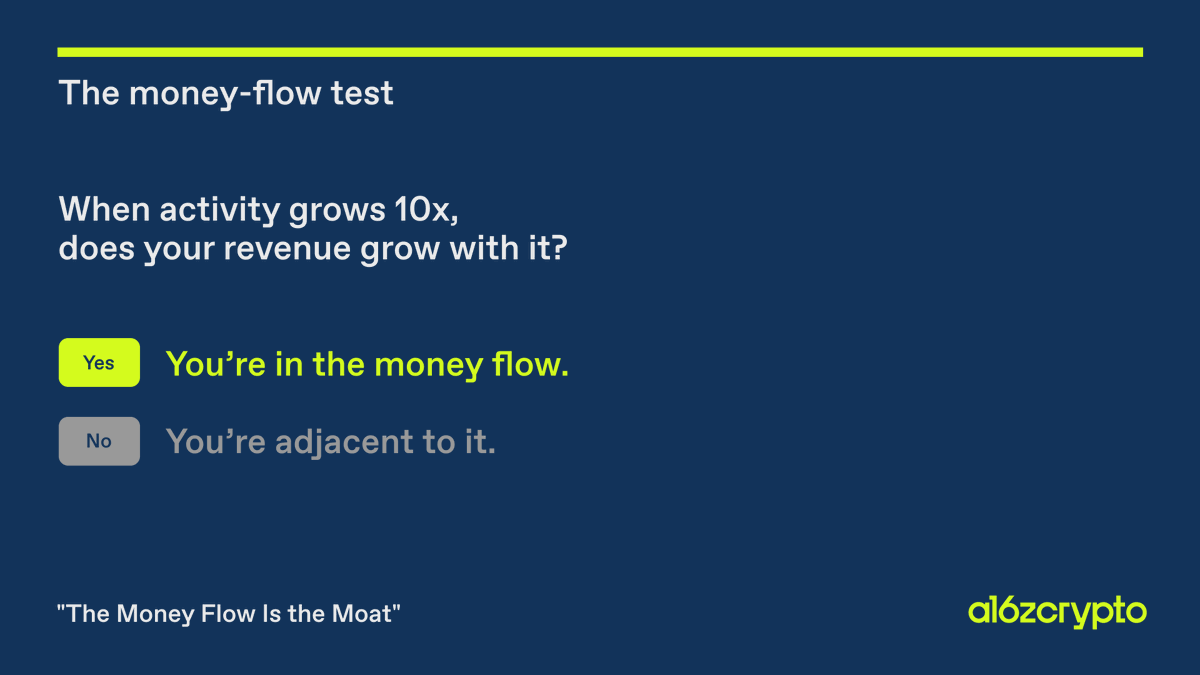
Study Network Tokens.
“Just a feedback loop between value moving through the system, and value accruing to the people who built and grew it.”
Study @useboardwalk

3
2
15
843
Jun 11
Live token issuers are starting to inquire.
@UseBoardwalk is working on a migration pathway for live tokens to become part of the Boardwalk Standard.
The design is already finalized, will hopefully (subject to change) be audited and live in 3-4 weeks.
Stay tuned 🐳
1
1
17
353
Jun 11
Will Boardwalk Help With Distribution?
Yes, Boardwalk helps issuers with distribution by giving every economy a transparent, discoverable, standardized launch surface.
But Boardwalk does not endorse, approve, rate, promote, or individually select launches. Distribution support comes from the Boardwalk Standard itself: immutable onchain mechanics, public launch pages, Café Boardwalk, transparent auction rules, locked liquidity, fee-recipient visibility, LP participation, and permissionless participation.
Issuers do not just need a place to deploy a token. They need a credible way to form a market.
That is the purpose of the Boardwalk Standard: a repeatable issuance framework that helps token economies launch with transparent mechanics, durable liquidity, and neutral distribution surfaces. It gives issuers the infrastructure to bring an economy onchain without requiring bespoke launch design, private allocation processes, or discretionary support from a chain, exchange, or launch partner.
A token economy begins with standardized onchain rules: transparent auction mechanics, defined graduation thresholds, fixed supply, permanently locked initial liquidity, immutable fee logic, contributor claims, LP staking, vesting where applicable, fee-recipient transparency, and public community surfaces through Café Boardwalk. These mechanics make the economy legible before capital enters it. Contributors can see how allocation works. LPs can understand how incentives accrue. Issuers can explain their market structure without asking users to trust offchain promises.
This is especially important for distribution.
Most emerging issuers struggle because distribution is not neutral. Attention often flows to teams with institutional backing, existing relationships, or privileged access to liquidity and marketing channels. Boardwalk does not solve distribution by endorsing projects or selecting winners. It solves distribution structurally: by giving every issuer a consistent launch format, visible auction page, discoverable profile, community discussion space, and onchain rules that participants can evaluate directly.
So who launches on Boardwalk?
The common thread is not sector. It is intent. Boardwalk is for issuers who want their economy’s rules visible up front: how supply is allocated, how liquidity is formed, how fees route, how LPs participate, how vesting works, and how the community can evaluate the economy before participating.
That could include DeFi primitives, consumer applications, infrastructure protocols, AI projects, public-goods, creator economies, gaming, real-world asset experiments, social economies, or mechanisms that do not fit existing categories yet. Boardwalk does not need to predict the winning category. It provides the standard those categories can use when they emerge.
That neutrality matters. A token appearing on Boardwalk is not an approval, rating, recommendation, sponsorship, or endorsement by Boardwalk, any chain, integrator, infrastructure provider, or protocol fee recipient. Integrations, fee-routing relationships, ecosystem support, or technical availability do not mean any third party has reviewed, approved, or recommended a specific issuer or token economy.
Support comes from immutable contract design, transparent presentation, and permissionless participation, not discretionary gatekeeping.
The result is a cleaner market for token formation. Issuers retain independence. Contributors receive clarity. LPs get recognizable incentive mechanics. Chains can support issuance at scale by supporting the Boardwalk Standard rather than endorsing individual launches. They provide credible rails for market formation, while issuers remain responsible for their own purpose, execution, community, and demand.
Boardwalk helps issuers with distribution by making launches visible, legible, and permissionless, leaving endorsement, promotion, execution, and demand where they belong, with the issuer and market.
1
4
23
2,436
Jun 11
Boardwalk vs. CCA: Why Fair Launches Need More Than Auction Math
Disclosure: I am a cofounder of Boardwalk, so I am not a neutral observer. This piece reflects my perspective on launch design, market structure, and why I believe Boardwalk’s approach is better suited for fair token launches than highly configurable auction primitives like CCA. Nothing here is financial, legal, or investment advice.
Uniswap’s Continuous Clearing Auction (CCA) is a permissionless onchain auction protocol that generalizes uniform-price auctions into continuous time. It lets projects commit supply, set a floor price and duration, and run transparent price discovery that automatically seeds a Uniswap v4 pool at the discovered price. CCA has already powered major raises, most notably Aztec’s token sale.
The mechanism is mathematically elegant. It spreads bids across blocks, clears at a single price per block, reduces classic sniping games, and gives earlier bids more exposure across the auction window. Yet the same design that makes CCA flexible also leaves substantial complexity in the hands of issuers, integrators, and contributors.
A CCA launch can be shaped by variables such as floor price, sale duration, token issuance schedule, auction steps, graduation thresholds, validation modules such as ZK Passport, tick spacing, liquidity strategy, and post-auction pool configuration. That flexibility may genuinely appeal to sophisticated teams with custom tokenomics or deep integration needs, but it also creates room for outcomes to be engineered before most participants even enter the auction. Contributors must understand block-by-block clearing dynamics, bid-spreading mechanics, and whatever custom modules or verification rules the issuer chose.
Boardwalk makes the opposite design choice. It standardizes the launch process into clear, constrained paths with understandable rules. A contributor deposits into the auction. Allocations are weighted pro-rata if the launch succeeds. If it fails, contributors receive full refunds. The participant does not need to audit a custom clearing mechanism, block-by-block price formation, hook logic, or liquidity migration strategy. Simplicity here is not just a UX improvement; it is a fairness feature.
Boardwalk’s larger advantage is that it is not only issuance infrastructure. It is economy-creation infrastructure. CCA helps a project sell tokens and initialize liquidity; Boardwalk goes further by embedding the economic relationships that matter after launch. It connects contributors, issuers, LPs, fee recipients, integrators, and BMX-based discovery into one system. Liquidity is not treated as an afterthought. LP incentives, token-level fee protection, fee routing, launch pages, refunds, vesting, and post-launch participation are all part of the same design. That makes Boardwalk less like a one-time auction venue and more like a standardized framework for creating durable token economies.
Boardwalk Is Better Aligned With Clearer Consumer-Protection and Disclosure Standards
The contract design is what makes Boardwalk’s approach more credible at scale. Boardwalk launches use constrained, launch-specific contracts within a narrower, standardized configuration space. Live launch economics are fixed after creation. Issuers cannot rewrite fee percentages, change vesting terms, mint extra supply, recover locked liquidity, or redirect the auction after demand appears. Successful launches seed and lock liquidity rather than leaving core liquidity exposed to opportunistic LP or issuer withdrawal paths. BMX stakers do not govern the protocol in the broad DeFi sense; they only vote-direct designated fee flows. That avoids the familiar risk of token-holder governance controlling everything.
This positioning matters in a post-Clarity market. If digital asset issuance moves toward clearer disclosure, conflict controls, and consumer-protection standards, the winning launch format will need to be legible to a broader…

3
5
38
1,931
Jun 11
…audience.
Boardwalk can explain its rules in plain terms: fixed supply, transparent auction, refund if failed, locked liquidity if successful, disclosed fees, limited admin powers, and defined fee routing. CCA’s flexibility makes equivalent disclosure harder because each launch can carry materially different parameters and risks.
The question remains whether Boardwalk’s token-level fee protection design gains broad acceptance. But as a fair-launch design, Boardwalk is unusually complete. It constrains issuers, protects contributors, supports LPs, and creates a clearer path from launch to durable market. CCA is elegant issuance infrastructure. Boardwalk is a productized token-economy standard built for real adoption.
4
196
Jun 11
Boardwalk: How Chains Turn Token Issuance Into Strategic Infrastructure
Most of the market today is installing traditional finance rails onchain: treasuries, credit, payments, settlement, custody, and compliant assets. That work matters. But it is not where crypto ends. Once those rails mature, attention will move again toward what blockchains uniquely enable: new assets, new markets, ownership models, coordination systems, and economies that could not have existed before.
The chains that capture that next wave will be the ones with the right infrastructure in place before the market agrees the wave has arrived.
That is the gap Boardwalk fills.
Chains want quality issuers, but most chains are not able to support token economies at scale. They can give grants, make introductions, and manually assist a few priority teams. But every serious issuer still needs the same hard things: credible distribution, transparent allocation, liquidity formation, locked initial liquidity, fee routing, contributor protections, discovery, and post-launch market design.
Without shared issuance infrastructure, every issuer improvises. Every user relearns the rules. Every LP underwrites a new incentive model. Every chain decides whether to fund another bespoke launch.
Boardwalk standardizes the market structure.
A Boardwalk economy launches through transparent auctions, defined graduation thresholds, fixed supply, permanently locked initial liquidity, immutable fee logic, contributor claims, LP staking, vesting where applicable, fee-recipient transparency, and a public community surface through Café Boardwalk. These are not cosmetic features. They are the mechanics that make an economy legible before capital enters it.
Issuance is not just token creation. Issuance is the birth of a market.
The Boardwalk Standard gives chains issuance infrastructure they can offer directly to builders. Instead of helping each issuer design market structure from scratch, a chain can point teams to a system that handles the parts most likely to break: auction fairness, liquidity seeding, fee capture, LP alignment, vesting, and post-launch participation.
The integrator fee makes that alignment economic. When Boardwalk economies launch and trade on a chain, the chain or its aligned ecosystem recipient can receive recurring fee flow from activity on its network. That changes the chain’s role from pure subsidizer to ecosystem participant. Chains no longer need to pay to attract growth; they can be economically aligned with markets forming on their chain.
The Boardwalk Standard does not make every chain or issuer the same. It allows them to be more distinct. A consumer economy may choose a chain with broader retail distribution. A DeFi-native economy may choose a specialized liquidity environment. A public-good economy may choose cultural alignment. An institutional economy may prioritize credibility, integrations, and operational trust.
What stays consistent is the economic grammar.
Contributors recognize the auction. LPs recognize the incentives. Issuers recognize the fee model. Chains recognize the solution and recurring alignment. Growth teams, referrers, public goods, integrators, and BMX stakers all understand where they fit.
This is where the network effect becomes programmable, not just social. Each launch can route value to the participants that help it grow: LPs for liquidity, issuers and growth teams for development, chains and integrators for infrastructure use, public goods and security partners for ecosystem support, and BMX stakers for protocol-level coordination. Activity on one chain does not collapse into every other chain, but it does strengthen the shared standard everyone is using.
That makes every Boardwalk launch more valuable than an isolated launch. A successful market on one chain increases trust in the mechanics for the next market on another. Contributors become familiar with the flow. LPs learn how to evaluate positions.
3
3
24
1,892
Jun 11
Issuers do not need to teach the market a new structure from scratch. Chains see how activity, liquidity, and fee routing can operate through a repeatable model.
For ecosystem participants that want to engage more deeply with Boardwalk’s protocol-level mechanics, BMX is the asset used for staking and fee-direction voting. Staked BMX, together with Voter Points accrued over time, determines voting power over the routing of designated protocol fees. BMX is also consumed in launch-related burns and community signaling. This makes BMX part of Boardwalk’s coordination design, distinct from the chain-specific integrator fee that aligns local ecosystem activity.
That distinction matters. The integrator fee creates chain-level alignment around activity on a specific network. BMX creates protocol-level participation in the fee-direction layer that coordinates Boardwalk across all chain deployments. As the Boardwalk Standard expands, BMX remains the system asset used for staking, vote-direction, burns, discovery signals, and protocol-level coordination.
The next Uniswap or Morpho will not arrive already validated. It will begin as something experimental: a new mechanism, a new market, a new way for capital or communities to coordinate. Chains that wait for consensus will find those economies after the value has already formed. Chains with Boardwalk can support them before the market knows how to categorize them.
The problem is structural. Chains cannot manually scale builder support forever. Issuers cannot keep rebuilding market structure from scratch. Users and LPs will not endlessly relearn opaque launch mechanics. The market will demand a common issuance layer that makes launches transparent, liquidity durable, incentives legible, and fee flows aligned.
Boardwalk turns issuance from a one-off opaque launch problem into repeatable economic infrastructure. The Boardwalk Standard gives chains a way to support new economies at scale, while BMX provides the protocol-level mechanism for staking, fee-direction voting, burns, and coordination around that standard. The chains that understand this early will be better positioned to attract the builders creating the next generation of onchain markets.
Disclaimer: This article is for informational purposes only and does not constitute investment, legal, tax, or financial advice, or an offer or solicitation to buy, sell, or stake any token. Participation in crypto protocols involves significant risks, including market, liquidity, smart-contract, governance, operational, and regulatory risks.
2
440
broke: but who/where are the issuers?
woke: another "launchpad", let's see how it goes...
bespoke: the boardwalk standard is scaling rapidly evidenced by large scale chain deployments, support, and fee-alignment.
2
11
689
Boardwalk will soft-open for public access this Friday.
Formal public launch kicks off next week with a @defillama_res 10-page report diving into the details of @useboardwalk.
Beta has been wildly successful. Thank you to those who provided valuable feedback and participated!
5
27
842
The biggest opportunities in finance are being built in the programmable economy right now.

The biggest opportunities in finance are being built in the programmable economy right now.
1
10
581
meowphasaurus 🐳 retweeted

Jun 9
Launching a token is the easy part.
The harder question is what happens next.
How do users evaluate it?
How does liquidity form?
How do builders and communities stay involved after launch?
That is the problem Boardwalk is designed around.
We sat down with @Meowphasaurus and @D333z from @useboardwalk to talk about how Boardwalk approaches this part of the launch lifecycle.
We covered what Boardwalk is, how fee protection works, why immutable infrastructure and permanently locked liquidity matter, how Participation Points relate to long-term LP participation, and why the Fraxtal blockchain by @FraxFinance is a strong fit.
00:35 – What is Boardwalk?
01:38 – Fee protection, explained
04:38 – Immutable infra & locked V2 liquidity
13:48 – Participation points & long-term LPs
41:21 – @useboardwalk x @fraxfinance
We're glad we could host the Boardwalk team as the platform goes live and are excited to keep building alongside them for the long run.
5
14
32
1,665